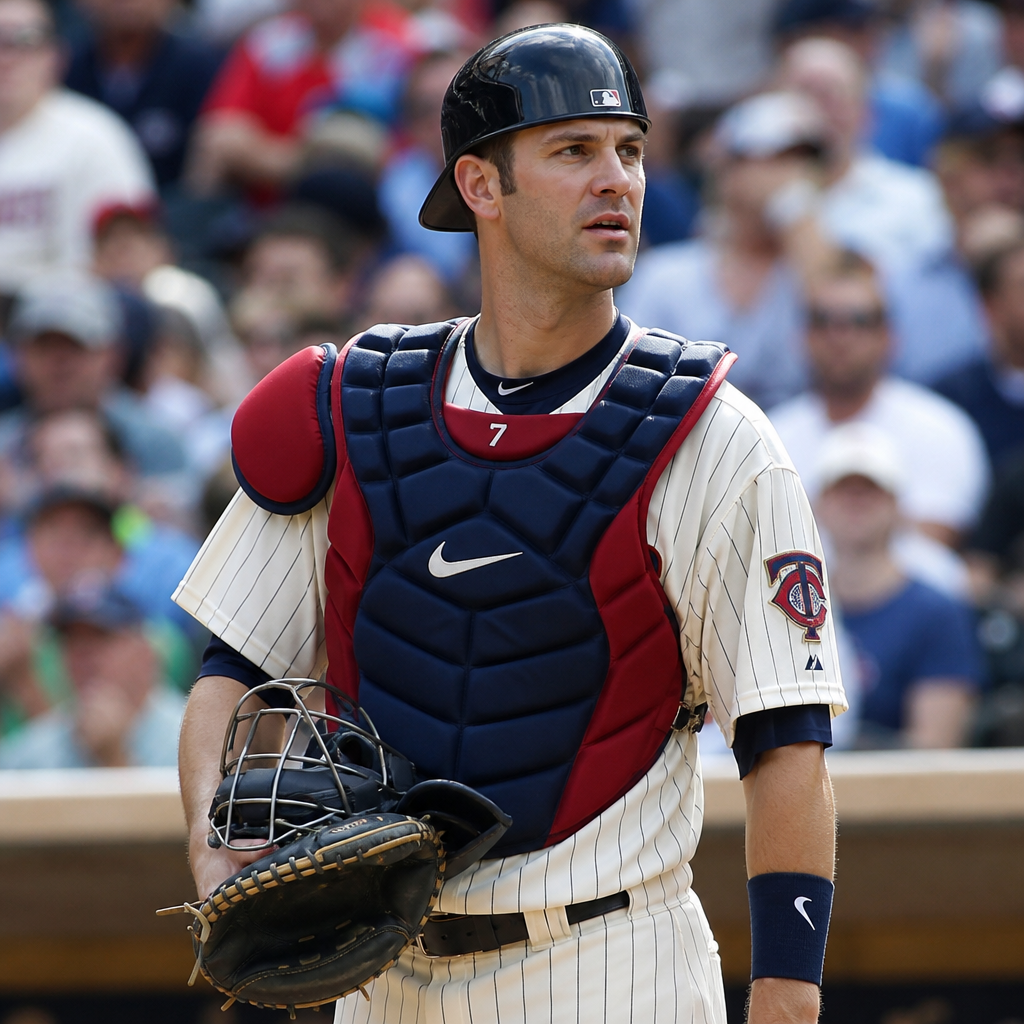
Joe Mauer’s career is one of baseball’s clearest examples of sustained excellence shaped by loyalty, adaptability, and uncommon skill at a premium position. In a sport that separates hitters, defenders, and leaders into neat categories, Mauer consistently blurred those lines. He was a batting champion who spent most of his prime behind the plate, a hometown star who carried the expectations of Minnesota without theatrics, and a franchise cornerstone who never changed uniforms. For readers exploring legendary player profiles, his story works as a model hub because it touches every major lens used to evaluate greatness: production, peak value, positional difficulty, postseason context, awards, durability, and legacy.
Understanding Joe Mauer starts with a few core terms. A batting title is awarded to the player with the highest batting average in a league, and winning one as a catcher is exceptionally rare because the position imposes physical wear that typically suppresses offensive output. Catching excellence refers to more than receiving pitches. It includes game-calling, staff management, pitch framing, blocking, controlling the running game, durability, and the mental load of handling a pitching staff over 162 games. A one-team career means spending an entire major league tenure with one franchise, a distinction that has become increasingly uncommon in modern baseball. When that career ends with Hall of Fame election, the player’s relationship with the city and the club often becomes part of the achievement itself.
I have worked through hundreds of player evaluations across eras, and Mauer remains one of the easiest stars to underestimate if a reader only scans home run totals or postseason headlines. His value came from difficult combinations. He paired elite contact quality with strike-zone control. He combined Gold Glove-caliber defense with middle-of-the-order on-base ability. He also managed a difficult late-career transition from catcher to first base after concussions and lower-body wear made everyday catching less practical. That matters because player profiles should not flatten careers into a single highlight. Mauer’s greatness is better understood as a complete baseball case study: amateur phenom, first overall draft pick, franchise face, MVP winner, three-time batting champion, defensive anchor, and Hall of Famer whose full record rewards careful reading.
For a sub-pillar hub focused on player profiles within legendary players, Mauer’s career offers a useful framework for comparing stars across positions and eras. It invites practical questions: how much offense should a team expect from a catcher, what separates a high-average hitter from a complete offensive player, how should longevity and peak be balanced, and how does a player’s context shape public memory? Answering those questions directly is why Joe Mauer still matters. He is not merely a beloved Twin. He is a benchmark for evaluating catcher offense, franchise identity, and the many ways Hall of Fame careers can look different from the stereotype.
From St. Paul prodigy to Minnesota franchise centerpiece
Joe Mauer was born in St. Paul, Minnesota, and arrived in professional baseball with unusual local expectations. At Cretin-Derham Hall High School, he became a multi-sport standout, excelling in baseball, football, and basketball. He was widely regarded as one of the best prep athletes in the country, and some evaluators believed he could have pursued major college football as a quarterback. The Minnesota Twins selected him first overall in the 2001 MLB Draft, choosing a hometown catcher with a polished left-handed bat over hard-throwing high school pitcher Mark Prior. That decision defined the franchise for more than a decade.
The risk with high school catchers is well known. The developmental demands are severe, and many elite amateur hitters lose offensive momentum while learning the professional side of catching. Mauer advanced more smoothly than most because his hit tool was exceptional from the start. Scouts praised his balance, opposite-field approach, plate discipline, and quiet mechanics. When he reached the majors in 2004, he did not arrive as a slugger in the classic power-hitting catcher mold. He arrived as a pure hitter with advanced defensive instincts and the athleticism to let both skill sets play at the highest level.
His emergence mattered beyond box scores. The Twins were operating in a smaller market and building identity around player development, contact, defense, and continuity. Mauer fit that model perfectly. He became the type of foundational player around whom front offices, coaching staffs, and fan bases can organize a competitive cycle. Because he was local, highly visible, and notably steady in temperament, he also became a cultural anchor. That is not sentimental padding. Franchises with long-term stars benefit from credibility with fans, stability in the clubhouse, and a clearer competitive identity. Mauer supplied all three.
Why three batting titles as a catcher remain historically extraordinary
Mauer won American League batting titles in 2006, 2008, and 2009, finishing those seasons at .347, .328, and .365. No catcher in major league history had won three batting titles, and no catcher before him had ever led his league with a .365 average. The rarity is the point. Catchers absorb foul tips, squat for thousands of pitches, manage game plans, and often take scheduled rest that reduces rhythm at the plate. Even elite offensive catchers usually trade some batting-average consistency for power. Mauer did not. He maintained one of the game’s best all-fields approaches while handling baseball’s most demanding defensive job.
What made him so hard to neutralize was not only bat-to-ball skill. It was swing decision quality. Mauer routinely posted high on-base percentages because he chased less than most hitters and used the entire field. Left-handed pitchers could not simply tie him up with soft stuff away because he stayed on pitches and lined balls to left field. Right-handed pitchers could not rely on velocity at the top of the zone because his timing and barrel control were too refined. In practical terms, he gave the Twins a leadoff hitter’s on-base skill and a premium catcher’s defensive value in the same player.
The 2009 season stands as the clearest offensive snapshot. Mauer hit .365 with 28 home runs, 96 RBIs, a .444 on-base percentage, and a .587 slugging percentage despite missing April with injury. He led the league in average, OBP, and slugging, won the AL MVP award, and produced one of the greatest offensive seasons ever recorded by a catcher. Modern metrics support the traditional numbers. His OPS+ that year was 171, meaning he created offense at a rate 71 percent better than league average after adjusting for park and era. For a catcher, that is historic territory.
Catching excellence beyond the box score
Offense explains Mauer’s fame, but defense explains why his profile is so complete. Evaluating catchers requires more than counting caught stealings. Teams and analysts look at receiving, blocking, transfer speed, throwing accuracy, pitcher rapport, mound management, and preparation. Mauer earned three Gold Gloves, and while Gold Glove voting in that era did not fully capture modern framing data, the broader defensive picture still supports the awards. He was consistently praised by pitchers for game-calling and composure, and his mechanics behind the plate were efficient rather than flashy.
One reason Mauer worked so well defensively was economy of movement. He set quiet targets, presented pitches cleanly, and rarely looked rushed. That matters because catchers influence strike calls at the margins and help pitchers execute with confidence. Public framing metrics became more mainstream later in his career, so early totals should be treated carefully, but contemporaneous scouting reports routinely described him as a strong receiver. He also blocked with balance and read breaking balls well enough to keep runners from taking extra bases cheaply.
His arm was solid rather than overwhelming, yet his exchange and footwork helped the throwing play up. Controlling the running game has always depended on the pitcher-catcher partnership, and Mauer’s staffs were not always ideal in that regard. Even so, he limited chaos. More importantly, he managed information. Catchers are responsible for sequencing, anticipating hitter adjustments, and recognizing when a pitcher’s delivery or command is slipping. That cognitive labor rarely appears in a stat line, but it is one reason clubs pay so heavily for trustworthy catchers and why Mauer’s complete value exceeds simple batting summaries.
The numbers that define Joe Mauer’s Hall of Fame case
Hall of Fame arguments become clearer when traditional and advanced measures point in the same direction. Mauer finished with a .306 career batting average, 2,123 hits, 143 home runs, 923 RBIs, and a .388 on-base percentage. He made six All-Star teams, won three Gold Gloves, collected five Silver Slugger Awards, earned the 2009 AL MVP, and captured three batting titles. Those are elite credentials before positional context is even added.
Advanced metrics strengthen the case. Baseball-Reference credits Mauer with 55.2 WAR, while FanGraphs places him in a similar range depending on framing adjustments and positional calculations over time. JAWS, Jay Jaffe’s Hall of Fame evaluation system, compares a player’s career and peak against the average Hall member at his position. By that standard, Mauer fits comfortably within Hall discussion for catchers because the offensive bar he cleared at the position was so high. His seven-year peak was especially valuable because it combined premium OBP with legitimate defensive responsibility.
| Category | Joe Mauer | Why it matters |
|---|---|---|
| Batting titles | 3 | Unmatched total for a catcher |
| MVP awards | 1 | Confirms elite peak value |
| Gold Gloves | 3 | Recognizes defensive quality |
| Career OBP | .388 | Shows sustained plate discipline |
| Career average | .306 | Rare benchmark for a catcher |
| Franchise tenure | 15 seasons, one team | Strengthens legacy and identity |
The common pushback is durability. Mauer’s concussion history and eventual move to first base reduced his total games caught and shaped perceptions of his second half. That is a fair limitation to acknowledge. He was not a compiler who added easy value late. But Hall evaluations are not endurance contests alone. They measure quality, peak, context, and position. Mauer dominated one of baseball’s hardest jobs long enough, and at a high enough level, to make his Cooperstown case decisive.
Adapting after concussions and the move to first base
Mauer’s career cannot be told honestly without discussing health. Catchers age under heavy strain, and repeated impacts carry lasting consequences. In 2013, Mauer suffered a concussion after a foul tip, and the incident accelerated concerns that had been building for years. The Twins moved him primarily to first base beginning in 2014, both to protect his health and preserve his bat in the lineup. For some observers, the shift created an unfair narrative that his best years had vanished. The truth is more precise. His role changed, and with it the way his offensive line was judged.
At catcher, a high-average, high-OBP profile with moderate power is star-level offense. At first base, the offensive expectations are much steeper because the position is less demanding defensively and often populated by sluggers. Mauer remained productive after the move, reaching base at strong rates and continuing to control the strike zone, but he no longer stood out in the same way relative to his positional peers. That difference is crucial when building accurate player profiles. The player did not become ordinary overnight; the evaluation context changed.
There is also a broader lesson here about baseball aging curves. Elite catchers often transition earlier than fans expect because the body cost is enormous. Buster Posey retired relatively early. Jorge Posada spent meaningful time at designated hitter. Joe Torre, Craig Biggio, and others changed positions as their careers evolved. Mauer’s transition fits that pattern. It should be read as evidence of how demanding catching is, not as an argument against what he accomplished while doing it.
Legacy, leadership, and what makes Mauer a hub-level player profile
Joe Mauer was elected to the Hall of Fame in 2024 on the first ballot, a result that reflected both statistical merit and broad respect across the sport. First-ballot status is not an official tier in Hall rules, but it functions as a strong signal of consensus. Voters saw the same thing teams and opponents had seen for years: a uniquely disciplined hitter, an elite catcher at his best, and a player whose career retained coherence from debut through retirement. He represented the Twins with unusual steadiness, wore the pressure of a hometown star lightly, and gave the franchise a rare modern example of a one-team icon.
For a broader legendary players hub, Mauer helps readers understand how baseball greatness comes in different shapes. Some Hall of Famers build cases on towering home run totals. Others are defined by postseason mythology or defensive wizardry. Mauer’s path centered on positional rarity, refined offensive skill, and sustained organizational importance. That combination makes him an ideal gateway profile because it teaches readers how to compare stars intelligently instead of relying on one flashy statistic.
The key takeaways are straightforward. Mauer’s three batting titles were historic because catchers almost never hit for average at that level. His defensive work mattered because catching value extends far beyond caught-stealing rates. His Hall of Fame case is strong because his peak, awards, advanced metrics, and positional context align. His move to first base should be understood as a health-driven adaptation, not a stain on his legacy. Most of all, his one-team career amplified everything he achieved by tying performance to place in a way modern sports rarely sustain. If you are building out your understanding of legendary player profiles, Joe Mauer is a smart place to start, then use his career as the standard for evaluating the next great catcher, hometown star, or franchise-defining Hall of Famer.
Frequently Asked Questions
Why is Joe Mauer’s career considered so unusual in modern baseball?
Joe Mauer’s career stands out because he combined traits that almost never appear together in one player. He was an elite contact hitter, a Gold Glove-caliber catcher, a respected team leader, and a lifelong face of one franchise. In modern baseball, players are usually discussed in narrower categories: some are valued for power, some for defense, some for durability, and some for clubhouse presence. Mauer managed to bring all of those elements together while playing one of the sport’s most physically demanding positions. That alone makes him unusual.
What makes his profile even more remarkable is that he was not simply a good hitter “for a catcher.” He was one of the best pure hitters in the American League, period. Winning batting titles from behind the plate is extraordinarily difficult because catchers carry heavier physical workloads, absorb more wear and tear, and often see their offensive production decline under that burden. Mauer not only handled those demands, he led the league in batting average multiple times. That is rare enough to define a career on its own.
There is also the matter of identity and loyalty. Mauer was a Minnesota-born star who became the centerpiece of the Minnesota Twins and spent his entire major league career with the organization. In an era defined by player movement, free agency, and constant roster turnover, that one-team arc gave his career a classic feel. He represented stability without becoming stagnant, and he remained central to the franchise through different competitive cycles. His story is unusual not because it was loud or dramatic, but because it was so complete: hometown star, elite player, franchise symbol, and Hall of Famer all in one.
How impressive were Joe Mauer’s batting titles, especially for a catcher?
Mauer’s batting titles are among the strongest pillars of his legacy because they were achieved under circumstances that make offensive excellence especially hard to sustain. Catching is a uniquely punishing position. A catcher must squat for hundreds of innings, manage pitchers, block pitches in the dirt, control the running game, and absorb constant foul tips and contact around the plate. Those physical demands often sap energy at the plate, which is why many catchers are judged on a lower offensive scale than players at less demanding positions. Mauer did not just clear that lower bar; he soared past it.
Winning three American League batting titles established him as a historically significant hitter, not merely a productive catcher. His ability to use the whole field, control the strike zone, and consistently square up quality pitching made him one of the toughest outs in baseball during his prime. He was not dependent on one offensive fad or one ballpark trick. Instead, his game was built on balance, discipline, and precision. That kind of offensive profile tends to age well in a historical conversation because it reflects a deep, repeatable skill set rather than a temporary hot streak.
His batting titles also changed the way people talked about catchers. Rather than seeing offense from the position as a bonus, Mauer forced observers to consider the possibility that a catcher could be the best pure hitter in the league. That is a major shift in perspective. It is one thing for a catcher to hit for power or produce a few standout seasons; it is another to lead the league in batting average more than once. In that sense, Mauer’s batting titles were not just personal accomplishments. They helped redefine what peak excellence could look like at catcher.
What made Joe Mauer such an outstanding catcher beyond his offensive numbers?
Mauer’s defensive value went far beyond statistics that casual fans usually notice. Catching is often called the game within the game because so much of the position involves quiet responsibilities that shape everything around the field. Mauer excelled in those areas. He handled pitching staffs with calm authority, gave his pitchers confidence, presented himself as a reliable target, and maintained composure in high-pressure situations. Those qualities matter enormously over the course of a season, even when they do not appear prominently in a box score.
He also had the technical polish teams want from a frontline catcher. His receiving skills, footwork, blocking ability, and arm strength contributed to his reputation as a complete defender. He was not simply an offensive star who happened to catch; he was a true catcher whose all-around game earned serious respect. That distinction matters because baseball history includes several players who moved into catching roles or delivered offense there without fully embodying the defensive demands of the position. Mauer did both, and that dual excellence is a major reason his career resonates so strongly.
Just as important was his leadership style. Mauer was not known for showmanship, and that understated approach fit his position perfectly. Catchers often set the emotional temperature of a game. They are expected to think clearly, communicate effectively, and steady the team when pressure rises. Mauer did that in a way that reflected professionalism more than drama. Teammates and observers alike saw him as dependable, prepared, and deeply aware of the game’s details. That kind of catching excellence may not always create highlight clips, but it is exactly what winning teams rely on over time.
How did Joe Mauer’s move away from catcher affect the way his career is evaluated?
Mauer’s eventual move away from catcher is an important part of his career story, but it should be viewed as a reflection of baseball reality rather than a blemish on his legacy. Catching places extreme stress on the body, and very few players can remain at the position deep into their careers without physical consequences. Mauer’s transition to first base was shaped by health concerns and durability considerations, which is a common path for accomplished catchers trying to extend their time in the major leagues. The move did not erase what he had already established at catcher; if anything, it highlighted just how much strain he had absorbed during his prime years.
When evaluating his career, the key is to separate two questions: what kind of player was he at his peak, and how did he age after the position change? At his peak, he was a truly elite catcher, one whose offensive and defensive combination placed him in rare company. After the move, he no longer carried the same positional advantage, because first base is judged by a different offensive standard. That shift can affect how some fans remember his later years, but it should not distort the full picture. Hall of Fame cases are built on complete careers, and Mauer’s best years were strong enough to define his place in baseball history.
In many ways, the position change also underscores his adaptability. Rather than fading out abruptly, he adjusted and remained useful to his team. That matters in conversations about long-term value and professionalism. His career was not a simple rise-and-fall narrative. It was a broader story of excellence, transition, and continued contribution. The move away from catcher should be understood as the final chapter of a physically demanding career, not as a reason to diminish the extraordinary standard he set while he was still behind the plate.
Why does Joe Mauer’s one-team career matter so much to his legacy and Hall of Fame story?
Mauer’s one-team career matters because it gives his accomplishments a deeper emotional and historical coherence. Great players often become associated with multiple cities, multiple uniforms, and multiple phases of reinvention. There is nothing wrong with that, but there is a special weight to a star who spends his entire career representing one franchise. In Mauer’s case, that connection was even stronger because he was not just any franchise player. He was a Minnesota native who became the defining player of the Twins for an entire era, carrying both performance expectations and symbolic importance.
That continuity made him more than a productive athlete; it made him part of the franchise’s identity. Fans did not have to separate “early Mauer” from “late Mauer” in different uniforms or imagine what his legacy might have looked like somewhere else. His entire major league story unfolded in one place, under one organizational banner, in front of a fan base that watched him grow from local phenom to established star to respected veteran. That kind of uninterrupted connection strengthens the cultural side of a Hall of Fame case because it ties numbers and awards to a lasting sense of meaning.
It also reinforces the tone of his career. Mauer was never defined by spectacle. His greatness was rooted in consistency, polish, and accountability. Staying with one team fit that image perfectly. For Hall of Fame discussions, that does not replace production, but it adds context to it. His legacy is not just that he played at a historically high level for a catcher. It is that he did so while serving as the steady, recognizable face of one franchise from beginning to end. That combination of excellence, loyalty, and local significance is a major reason his career continues to be remembered with such respect.