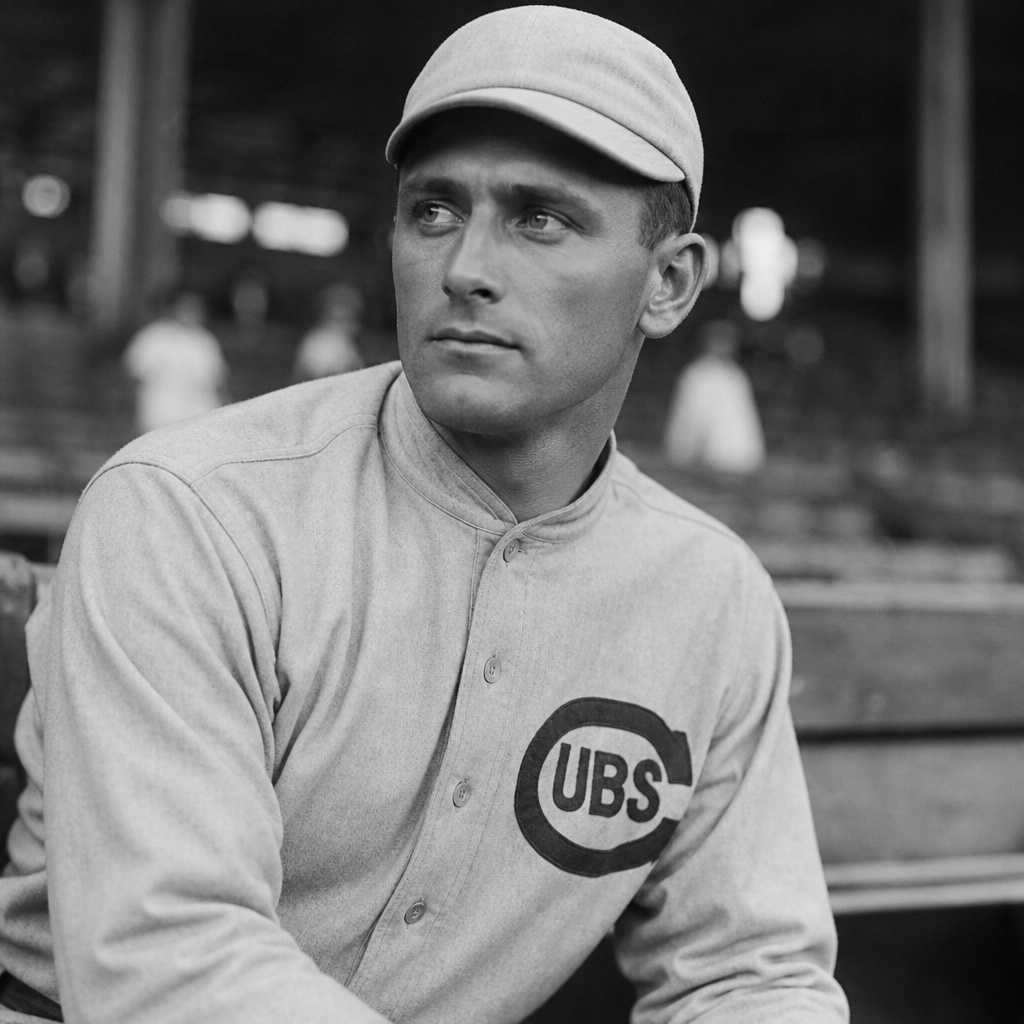
Joe Tinker stands at a rare crossroads in baseball history, where on-field excellence, literary fame, and the growth of the modern major leagues meet in one compact, hard-edged shortstop. Best known to many casual fans through the line “Tinker to Evers to Chance,” Tinker was far more than a poetic name in a famous baseball verse. He was a championship infielder, a fierce competitor, a tactical thinker, and an important figure in any serious collection of player profiles about legendary players. Understanding Joe Tinker means understanding how dead-ball era baseball worked, why middle infield defense mattered so much, and how reputation can both illuminate and obscure a player’s actual value.
In practical terms, Joe Tinker’s profile belongs at the center of the player profiles subtopic because it connects several themes that define baseball biography: skill evaluation, historical context, team chemistry, leadership, and legacy. A player profile is more than a summary of dates and statistics. It explains what a player did, how he did it, what his peers thought of him, and why later generations still talk about him. In Tinker’s case, that includes his role as the Chicago Cubs’ shortstop during one of the greatest team runs in National League history, his place in one of baseball’s most celebrated defensive combinations, and his election to the Hall of Fame decades after his playing prime. When I evaluate early twentieth-century infielders, Tinker is one of the clearest examples of why film, newspaper accounts, league conditions, and strategic context must sit beside raw numbers.
Born in 1880 in Muscotah, Kansas, Tinker reached the majors at a time when bunting, hit-and-run plays, stolen bases, and defensive precision shaped outcomes more directly than home runs. The dead-ball era generally refers to the period before the lively ball transformed offense, and it placed enormous pressure on shortstops to cover ground, handle rough infields, start double plays, and think one pitch ahead. Tinker did that at an elite level for the Cubs, primarily from 1902 through 1912, on pennant-winning clubs managed by Frank Chance. He batted right-handed, threw right-handed, and built a reputation for quick hands, strong positioning, and baseball intelligence. Those qualities matter when building a hub article on player profiles, because they show how to assess greatness even when modern highlight footage and advanced metrics are limited.
The poem made Tinker famous outside baseball circles, but the player himself earned serious respect inside the game. For readers exploring legendary players, this profile serves as a model for reading early careers properly: start with role, then production, then era, then influence. Tinker was not the biggest star of his generation, yet he was essential to a dynasty and remains one of the most recognizable names in baseball memory.
Joe Tinker’s early career and rise with the Chicago Cubs
Joe Tinker broke into professional baseball through the minor leagues before joining the Chicago Orphans, the franchise that soon became known as the Cubs. Early reports on Tinker focused on his athleticism and confidence, but also on the rough edges common to young infielders adapting to major league speed. Shortstop was one of the hardest defensive positions in baseball then and now, and young players often needed years to master angles, footwork around second base, and the release required to complete double plays with runners bearing down hard. Tinker developed quickly because he had the instincts managers could not teach: anticipation off the bat, willingness to charge bunts, and an internal clock on force plays.
By the middle of the 1900s, he had become a fixture on a Cubs club that dominated the National League. Chicago won pennants in 1906, 1907, 1908, and 1910, and captured World Series titles in 1907 and 1908. Those teams were built on pitching, defense, and aggressive baserunning, not slugging in the modern sense. Mordecai Brown, Ed Reulbach, Jack Pfiester, and Orval Overall gave the Cubs elite run prevention on the mound, while Tinker helped convert balls in play into outs behind them. On dead-ball era clubs, that relationship between pitchers and infielders was central. A shortstop’s reliability directly affected pitching strategy, because starters could pitch to contact with confidence if the middle defense was secure.
Tinker’s offensive numbers look modest by contemporary standards, but that is where historical literacy matters. His career batting average of .262 came in a low-offense environment, and his value was tied to timely hitting, bunting, baserunning, and contact management rather than power. In 1910, for example, he had one of his finest seasons, batting .309 with strong all-around play. That was not just a nice average for a shortstop; in that era, it marked him as a serious contributor on a first-place team. When building player profiles, the lesson is simple: always read statistics relative to league conditions and positional expectations.
The meaning behind “Tinker to Evers to Chance”
Franklin P. Adams published the poem “Baseball’s Sad Lexicon” in 1910, and its most famous line turned a double-play combination into American folklore. The verse lamented how often the New York Giants were frustrated by the Cubs’ infield trio of Joe Tinker at shortstop, Johnny Evers at second base, and Frank Chance at first base. The poem made their names inseparable, but it also flattened reality in one important way. It suggested a perfectly harmonious machine, when in fact Tinker and Evers famously disliked one another for years. That tension did not stop them from executing with precision on the field.
The phrase matters because it reveals how baseball memory is built. A player’s legacy can be shaped as much by a story that captures public imagination as by statistical output. In Tinker’s case, the poem elevated him from star ballplayer to cultural symbol. Yet the baseball reason the phrase lasted is straightforward: double plays were game-changing events in a low-scoring era. If a team could erase a baserunner with consistency, it could suffocate rallies before they developed. Tinker, Evers, and Chance did exactly that, and opponents felt it repeatedly.
From a scouting perspective, Tinker’s part in the sequence began with range and transfer. A shortstop starting a double play must field cleanly, decide instantly whether the force is available, feed the second baseman accurately, and avoid wasted motion. Newspapers from the period routinely praised Tinker’s speed to the ball and his throwing judgment. While modern statcast data does not exist for his prime, the descriptive evidence is consistent: he excelled at difficult infield actions that saved runs in ways box scores only partly capture.
How to evaluate Tinker as a player, not just a symbol
One of the biggest challenges in legendary player profiles is separating fame from performance. Joe Tinker was genuinely excellent, but he was not merely excellent because the poem said so. He was a durable shortstop on elite teams, posting more than 1,800 hits, 336 stolen bases, and over 250 sacrifice hits across his major league career. He also ranked strongly in contemporary assessments of fielding for his position. Defensive metrics for pre-video baseball are imperfect, but Baseball-Reference and historical research still point to significant defensive value. That aligns with what beat writers and rival managers observed at the time.
His strengths were clear. He handled bunts well, positioned himself intelligently, and completed difficult relay throws under pressure. He was also a disruptive baserunner, which mattered more in an era when one extra base could decide the entire game. His limitations were real too. He was not a superstar hitter on the level of Honus Wagner, and his on-base performance fluctuated. If you compare all shortstops across eras with no adjustments, Tinker can look less impressive than his reputation suggests. If you evaluate him against his own context, position, and role on championship teams, his case becomes much stronger.
| Category | Joe Tinker | Why It Matters |
|---|---|---|
| Primary position | Shortstop | Premium defensive role with high tactical responsibility |
| Era | Dead-ball era | Run prevention and small-ball skills carried extra value |
| Best-known team | Chicago Cubs | Anchor club of a National League dynasty |
| Signature skill | Double-play defense | Stopped rallies in a low-scoring environment |
| Offensive profile | Contact, bunting, speed | Matched strategic demands of early twentieth-century baseball |
| Legacy marker | Hall of Fame and famous poem | Blends performance with enduring cultural recognition |
When I build a player profile for a historical shortstop, I ask four direct questions. Did he control his position? Did he contribute to winning at the highest level? Did respected observers consistently identify him as central to his team? Did his skills fit the strategic realities of his era? Tinker clears all four tests. That makes him a strong hub subject for readers moving deeper into player profiles of infielders, captains, and dynasty-era stars.
Leadership, rivalry, and later baseball life
Tinker’s career also illustrates how player profiles should include personality and post-playing influence, not just game logs. He and Johnny Evers had a famous feud, reportedly starting over a relatively trivial dispute and hardening into a long-running personal split. Even so, both men remained capable of elite professional cooperation. That matters because it complicates the myth of seamless teamwork. Great clubs do not require every star to be friends. They require standards, role clarity, and execution.
After leaving the Cubs, Tinker spent time in the Federal League and served as a player-manager, most notably with the Chicago Whales. In 1915, the Whales won the Federal League pennant, giving Tinker a meaningful leadership credential beyond his Cubs years. The Federal League itself is significant in baseball history because it challenged the established major leagues and intensified battles over contracts, salaries, and player movement. Tinker’s involvement places him in another important story: the unstable business side of early professional baseball.
He later managed in the minors and remained tied to the sport, adding another layer to his profile. Many legendary players become easier to understand when you follow them after their peak. In Tinker’s case, the pattern holds. He was competitive, demanding, and deeply knowledgeable about infield play. Those are traits often seen in former shortstops who move into leadership roles, because the position naturally trains players to see the whole field and think through game situations before they unfold.
His Hall of Fame election came in 1946, long after his best seasons had passed. That delayed recognition says something important about baseball memory. Committees often reassess players once the sport gains historical distance and a fuller sense of context. Tinker’s election, alongside Evers and Chance, reflected both their shared legend and their real importance to a championship era. Some modern analysts still debate whether his Hall case rests too heavily on fame, but that debate itself is useful. It teaches readers of player profiles how to weigh peak value, championship impact, cultural legacy, and positional difficulty together rather than pretending one stat can answer everything.
Why Joe Tinker still matters in legendary player profiles
Joe Tinker still matters because he represents a type of greatness that modern fans can miss if they only scan home run totals or MVP awards. He shows how defense, coordination, and situational intelligence can define a career. He also shows how baseball history is preserved through both evidence and storytelling. The best player profiles do not choose between those things. They connect them.
As a hub article within the broader legendary players topic, Tinker’s story opens paths to several related profiles: Johnny Evers and Frank Chance as linked infield legends, Frank Chance as a player-manager, Honus Wagner as the era’s benchmark shortstop, and the great Cubs dynasty that set the backdrop for all three. It also links naturally to deeper articles on dead-ball era strategy, double-play mechanics, early National League rivalries, and Hall of Fame standards for defense-first infielders. In other words, Tinker is not a side note. He is a junction point in baseball biography.
The key takeaway is clear. Joe Tinker was not famous only because a poet made him memorable. He was memorable because his play gave the poem substance. He anchored shortstop for one of baseball’s best teams, mastered the run-saving details of dead-ball era defense, contributed enough offense to matter in context, and carried his baseball authority into leadership roles after his prime. If you are building knowledge of legendary players through detailed player profiles, start with Tinker and follow the connections his career creates. That is how baseball history becomes sharper, richer, and far more interesting.
Frequently Asked Questions
Why is Joe Tinker so closely associated with the phrase “Tinker to Evers to Chance”?
Joe Tinker is inseparable from “Tinker to Evers to Chance” because he was the first name in one of baseball’s most famous lines and a central member of the Chicago Cubs infield that inspired the poem. Written by newspaperman Franklin P. Adams in 1910, the verse captured the frustration of opposing teams watching the Cubs turn crisp, momentum-killing double plays. Tinker, playing shortstop, fed second baseman Johnny Evers, who relayed to first baseman Frank Chance, creating a phrase that became larger than the players themselves. For many readers and fans, the poem served as an entry point into early twentieth-century baseball, preserving the trio in popular culture long after their playing days ended.
What makes Joe Tinker’s role especially important is that he was not just a poetic name placed for rhythm or convenience. As the shortstop, he was often the infielder required to make split-second decisions, cover substantial ground, start or continue double-play action, and stabilize the defense between second and third base. His placement at the front of the phrase gave him a permanent public identity, but it also reflected the practical reality that he was deeply involved in the Cubs’ defensive precision. The poem immortalized a baseball combination, but Tinker earned that immortality through performance, timing, and his place at the center of one of the game’s most efficient infields.
How good was Joe Tinker as a player beyond his literary fame?
Joe Tinker was an outstanding major leaguer whose reputation should never rest on poetry alone. He played in an era when defense, baserunning, bunting, situational hitting, and toughness were essential parts of winning baseball, and he excelled in that environment. As a shortstop, Tinker was known for reliability, sharp instincts, and the ability to handle pressure in important moments. He was a key contributor on Chicago Cubs teams that dominated the National League in the first decade of the twentieth century, winning pennants and World Series titles while facing intense competition in a rough, low-scoring era.
Offensively, Tinker was not a slugger in the modern sense, but judging dead-ball era players by home runs alone misses the point entirely. He produced value through contact, speed, smart baserunning, and timely contributions. He also had a reputation for elevating his play in meaningful games, which mattered greatly in a period when every run was precious. Defensively, he was widely respected as one of the top shortstops of his time, and his overall body of work eventually led to his induction into the Baseball Hall of Fame. In short, Joe Tinker was not famous because of a poem; the poem endured because it captured a player and a team already worthy of lasting remembrance.
What made Joe Tinker important to the success of the Chicago Cubs dynasty of the 1900s?
Joe Tinker was vital to the Cubs because he embodied the style of baseball that powered their success: disciplined defense, aggressive intelligence, and consistent execution. The Cubs of that era were not built merely on star power in isolation. They won because their core players fit together exceptionally well, and Tinker was one of the connective pieces who made the machine work. At shortstop, he anchored one of baseball’s most demanding positions, supported the pitching staff by converting balls in play into outs, and worked in close coordination with Johnny Evers and Frank Chance on the infield’s most famous sequence.
His value also extended beyond fielding mechanics. Tinker was known as a fierce competitor with a sharp baseball mind, traits that mattered on teams expected to win every day. He understood positioning, game pace, and the importance of turning defensive opportunities into momentum swings. During the Cubs’ championship years, those details often separated dominant clubs from merely good ones. The team’s run of excellence was fueled by elite pitching and strong overall roster construction, but a great infield defense was one of its defining features, and Tinker stood at the center of that identity. Without a steady, battle-tested shortstop orchestrating the middle of the diamond, those Cubs teams would not have been nearly as formidable.
Did Joe Tinker and Johnny Evers really have a feud, and did it affect their play?
Yes, Joe Tinker and Johnny Evers famously had a long-running personal feud, and it has become one of baseball history’s most retold clubhouse stories. The disagreement reportedly began over an off-field dispute and developed into genuine hostility, to the point that the two men often avoided each other away from the game. The irony, of course, is that baseball fans know them best as linked names in one seamless poetic phrase, suggesting perfect harmony and mechanical teamwork. That contrast between personal conflict and professional efficiency is one reason their story remains so compelling.
Importantly, the feud does not appear to have prevented them from performing at a high level together when the game demanded it. If anything, their ability to maintain excellence despite personal dislike speaks to how seriously they took winning. On the field, they still executed double plays, coordinated defensive responsibilities, and helped power one of the best teams in baseball. Their relationship is a reminder that championship clubs do not always depend on friendship; sometimes they depend on professionalism, shared standards, and mutual respect for the job itself. In that sense, the Tinker-Evers dynamic adds another layer to Joe Tinker’s legacy: he was not only talented, but capable of operating under tension without letting it derail his contribution to a championship-caliber team.
Why does Joe Tinker still matter in baseball history today?
Joe Tinker still matters because his career sits at the intersection of baseball achievement, cultural memory, and the evolution of the major leagues. He represents more than an individual stat line. He stands for the dead-ball era’s emphasis on defense and strategy, for the rise of nationally recognized baseball stars through newspapers and mass media, and for the way storytelling can preserve athletic greatness across generations. Many players from the early 1900s risk fading from popular awareness, but Tinker remains recognizable because his name is attached to one of the sport’s most enduring literary references. That visibility invites modern fans to look deeper and discover a player of real substance.
He also matters because he helps explain what greatness looked like before the modern home run era reshaped how fans evaluate players. Tinker’s legacy encourages a fuller understanding of baseball history, one that values glove work, instincts, durability, team fit, and postseason significance. For collectors, historians, and readers interested in legendary players, he offers a case study in how a compact, hard-nosed infielder could shape winning at the highest level. His Hall of Fame status, his central role on a dynasty, and his permanent place in American sports language ensure that Joe Tinker remains far more than a footnote. He is a foundational figure in the story of early baseball and a player whose impact still resonates whenever the history of the game’s great infields is discussed.