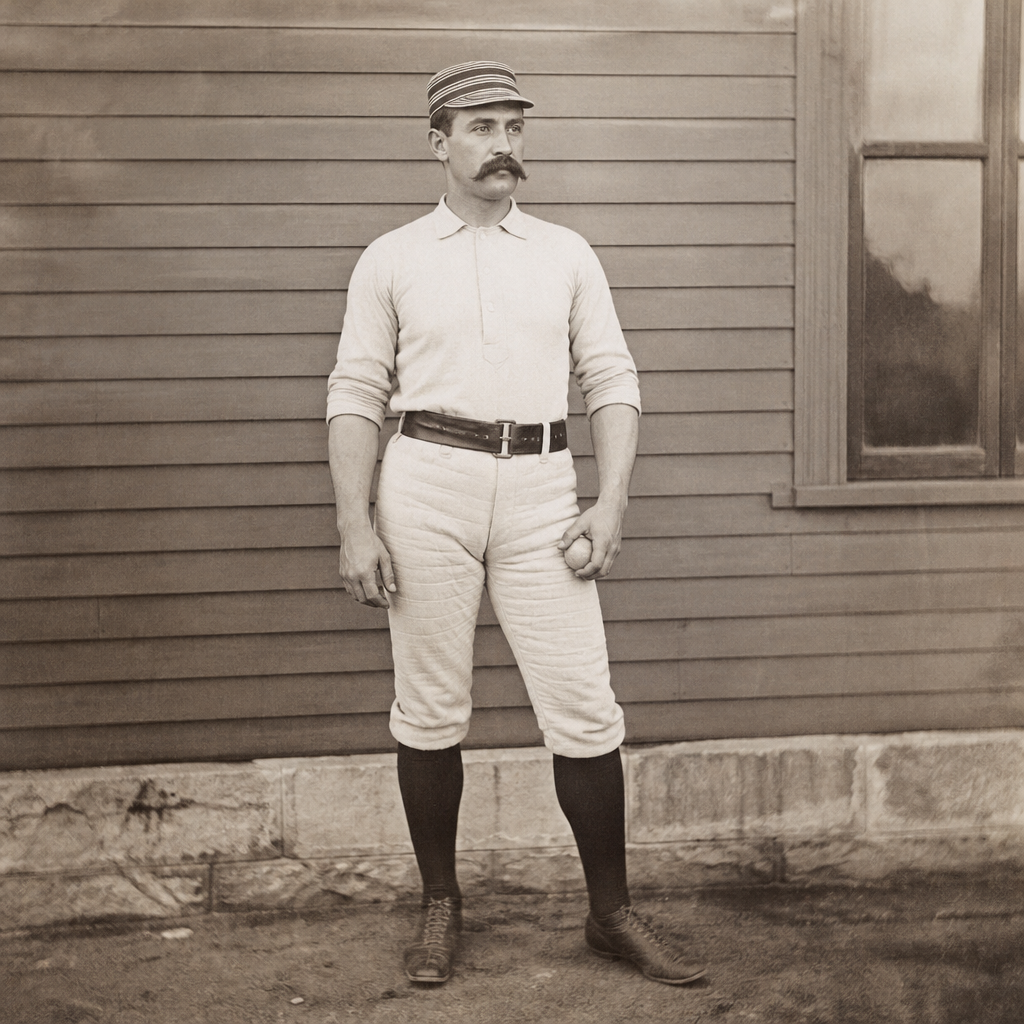
John Clarkson belongs in any serious discussion of baseball immortals, yet he is often missing from modern memory despite winning 328 major league games and dominating the sport’s formative decades. In the Legendary Players landscape, this player profiles hub examines Clarkson as both a singular ace and a gateway to understanding how 19th century baseball created many of the standards later stars inherited. A player profile, in this context, is more than a biography. It is a structured analysis of career value, playing style, historical environment, signature seasons, and long term legacy. Clarkson’s case matters because his record sits at the intersection of workload, skill, strategy, and baseball’s uneven historical preservation. When readers search for the forgotten 300-game winner of the 19th century, they are usually asking several connected questions: Who was John Clarkson, how good was he compared with his peers, why did he win so many games, and why is he less famous than Cy Young, Kid Nichols, or Old Hoss Radbourn? The answers reveal a pitcher who was elite by every meaningful measure available. He led leagues in wins, innings, strikeouts, shutouts, and run prevention at different points, starred for powerhouse Chicago and Boston clubs, and helped define the complete game workhorse model before modern pitching specialization existed. He also pitched in an era with changing mound distances, evolving rules, and defensive conditions that make simple cross-era comparison tricky. Having worked through old records, league registers, and Hall of Fame case studies, I find Clarkson compelling because the numbers hold up even after context is applied. His greatness was not a statistical accident produced only by usage. It was performance, repeated at enormous volume, under conditions few later pitchers would be asked to survive.
Who John Clarkson Was and Why His Profile Matters
Born in Cambridge, Massachusetts, in 1861, John Gibson Clarkson emerged during baseball’s chaotic professional growth and became one of the era’s defining right-handed pitchers. He debuted in the major leagues in 1882 and pitched until 1894, spending his prime with the Chicago White Stockings and Boston Beaneaters. Those club names matter because they connect Clarkson directly to two flagship National League franchises that would later become the Cubs and Braves. For a player profiles hub, Clarkson is useful because his career touches nearly every major theme that matters when evaluating early stars: heavy workloads, multi-sport athleticism, pennant race pressure, tactical pitching before the live-ball era, and the challenge of preserving fame across generations.
Clarkson finished with a 328-178 record, a .648 winning percentage, 3,978 innings, 2,486 strikeouts, and 197 complete games in his seven-year peak from 1885 through 1891 alone. Those totals are not merely impressive for the 1880s. They are inner-circle indicators of dominance relative to league norms. He won 53 games in 1885, 36 in 1887, 33 in 1888, 49 in 1889, and 33 in 1890. He had seasons with earned run averages far better than league average while carrying workloads that today would be spread across three or four pitchers. A complete player profile must therefore start from the central fact: Clarkson was not famous only because he pitched often. He was famous because he was better than almost everyone else while pitching often.
How Good Was John Clarkson Compared With His Era?
The cleanest way to evaluate Clarkson is to compare him against his own competitive environment rather than force a modern template onto an 1880s star. In that framework, he was unmistakably elite. Baseball Reference credits him with 84.8 wins above replacement, a total that places him comfortably among the greatest pitchers in history. His career ERA+ is 134, meaning he prevented earned runs at a rate 34 percent better than league average after accounting for context. For a pitcher logging nearly four thousand innings, that is extraordinary. High-volume pitchers often regress toward average because sheer workload exposes them. Clarkson maintained distance from average while handling the sport’s hardest assignment.
His black-ink case is also strong. He led his league in wins three times, strikeouts twice, shutouts three times, and innings pitched repeatedly near the top. In 1889 with Boston, he went 49-19 with a 2.73 ERA and 434 innings. In 1885 with Chicago, he threw 623 innings and posted a 1.85 ERA while winning 53 games. Those are not typographical errors; they are examples of how 19th century ace usage worked. Yet even in that context, not every top pitcher separated himself as Clarkson did. Many worked deep. Fewer sustained run prevention, command, and bat-missing ability over a decade. That distinction is why Hall of Fame voters eventually recognized him, even if broader public memory did not keep pace.
One caution matters. Wins in the 19th century depended heavily on complete games, team strength, and schedule length. Clarkson pitched for strong clubs, especially under Cap Anson in Chicago and with Boston’s pennant contenders. That support helped his win totals. But support alone cannot explain his strikeout totals, ERA+, or top-tier value metrics. The best judgment is balanced and firm: he benefited from excellent teams, and he was one of the principal reasons those teams were excellent.
Signature Seasons, Workload, and the Numbers That Define Him
Clarkson’s profile becomes vivid when you examine individual seasons. His 1885 season is one of the most demanding and productive pitching campaigns ever recorded. He started 70 games, completed 68, threw 623 innings, and struck out 308 batters. Chicago won the National League pennant, and Clarkson was the staff anchor every step of the way. Four years later, after joining Boston, he delivered another historic season with 49 wins and 434 innings, helping the Beaneaters capture the league flag. These are not just large totals from a different era; they are pennant-driving performances that altered standings directly.
Several metrics help explain why his workload translated into results. First, Clarkson missed bats. His strikeout totals regularly ranked among league leaders, a crucial skill in an era of inconsistent field conditions and primitive gloves. Second, he limited damage. ERA can be noisy in 19th century records because official scoring and defensive support varied, but his run prevention stands out even after adjustments. Third, he held up under repeated use. Durability is a skill, not merely an accident of scheduling. Pitchers who could recover quickly, maintain mechanics, and adjust pitch selection from start to start had immense value.
| Season | Team | Wins | Innings Pitched | ERA | Notable Context |
|---|---|---|---|---|---|
| 1885 | Chicago White Stockings | 53 | 623.0 | 1.85 | Pennant-winning ace, 308 strikeouts |
| 1887 | Chicago White Stockings | 36 | 516.2 | 3.08 | Heavy usage during another title run |
| 1889 | Boston Beaneaters | 49 | 434.0 | 2.73 | Immediate impact after transfer to Boston |
| 1890 | Boston Beaneaters | 33 | 458.2 | 3.33 | Top value season during unstable league period |
These seasons also illustrate the danger of evaluating him by one modern question: could anyone do that now? Of course not. Modern pitcher deployment, travel, nutrition, bullpen specialization, and injury science make the comparison meaningless. The right question is whether Clarkson maximized value under the rules and expectations of his time. He did, and at a level matched by only a handful of contemporaries.
Pitching Style, Strategy, and the 19th Century Game Environment
Clarkson succeeded because he combined power for the era with intelligence. Contemporary accounts described him as hard throwing, durable, and willing to attack hitters. Nineteenth century pitchers did not work from the exact same mound distance for Clarkson’s whole career, and the rules around deliveries evolved significantly. Earlier in the decade, pitchers operated from shorter distances and under restrictions that made deception and command especially important. By 1893, the pitching distance moved to roughly the modern 60 feet 6 inches, part of a broader effort to rebalance offense and pitching. Clarkson’s decline phase overlapped with those changes, which complicates simplistic readings of his later numbers.
Game conditions were also harsher than many modern readers realize. Fielding gloves were rudimentary, foul territory varied dramatically, infields could be rough, and official scorers interpreted errors and hits inconsistently. A pitcher who generated strikeouts and weak contact therefore had outsized strategic value. Clarkson’s strikeout record and sustained effectiveness suggest his stuff played in a way that reduced dependence on uncertain defense. He was also known as a thinking pitcher who adjusted to lineups and understood how to pace himself through immense workloads. That trait separates great workhorses from pitchers who merely survive because no bullpen exists.
Another point often overlooked in player profiles is the relationship between pitcher and captain. In Clarkson’s prime, game calling, defensive positioning, and batter-specific tactics depended heavily on experience and observation rather than scouting databases. Chicago’s structured clubs under Cap Anson and Boston’s disciplined contenders gave Clarkson environments where preparation and execution aligned. Team quality mattered, but so did Clarkson’s ability to function as the central engine inside a competitive system.
Why John Clarkson Became Forgotten
If Clarkson was this great, why is he not discussed more often? The first reason is chronology. Baseball’s 19th century stars sit behind a wall of distance for many fans, and television-era mythology naturally favors players with surviving film, richer statistics, and modern branding. Cy Young remained visible because his name is attached to an annual award. Old Hoss Radbourn gained pop-culture life through his famous 1884 workload and iconic photographs. Clarkson, despite superior career value to many better remembered names, lacked an easy shorthand.
The second reason is narrative compression. Baseball history often reduces early pitching to a few symbols: the pioneer, the iron man, the strikeout king, the namesake. Clarkson does not fit neatly into just one of those boxes, even though he overlaps several. He was exceptionally durable, but not the single-season curiosity Radbourn became. He was brilliant, but not linked to a modern trophy like Young. He won 300 games, but in an era many casual fans distrust because workloads seem alien. As a result, his achievements are respected inside research circles and overlooked in broader baseball conversation.
Record preservation also matters. Detailed pitch data, video breakdowns, and expansive newspaper syndication did not exist in forms that make easy recirculation possible today. Historians can reconstruct Clarkson’s excellence from league registers, box scores, and contemporary reporting, but that process demands effort. When memory requires work, public awareness usually fades. That is precisely why a hub article on legendary player profiles matters: it restores context and makes the case in plain language.
Legacy, Hall of Fame Standing, and How to Use This Player Profile Hub
Clarkson was elected to the Hall of Fame in 1963 by the Veterans Committee, an overdue acknowledgment of a career that had long warranted formal honor. His plaque validates what the numbers already say: he was one of the dominant pitchers of the 19th century and a legitimate all-time great. His influence reaches beyond his own stat line. He helps explain how baseball transitioned from underhand origins and loose tactical conventions toward a more recognizable professional structure built around ace starters, pennant races, and star-driven fandom.
As the hub page for Player Profiles within Legendary Players, this article should guide readers toward broader comparisons. Clarkson belongs alongside Kid Nichols, Cy Young, Tim Keefe, Pud Galvin, and Radbourn when studying 19th century pitching greatness. He also provides a useful contrast with later dead-ball masters such as Walter Johnson and Christy Mathewson, whose workloads were huge by modern standards but still lighter than Clarkson’s peak years. The lesson is not that one era was tougher in every way. The lesson is that greatness must be measured against the demands and possibilities of its own time, then translated carefully across eras using context-driven tools.
The key takeaway is simple. John Clarkson was not a trivia answer or statistical oddity. He was a foundational baseball superstar, a 328-game winner with elite rate statistics, pennant-defining seasons, and a Hall of Fame résumé that withstands serious scrutiny. If you are building a deeper understanding of legendary players, start here, then continue through related player profiles and era studies. Clarkson rewards the effort, and baseball history becomes clearer when his name returns to the front rank where it belongs.
Frequently Asked Questions
Who was John Clarkson, and why does he matter in baseball history?
John Clarkson was one of the most dominant pitchers of the 19th century and one of the most accomplished winners the game has ever produced. He finished his major league career with 328 wins, a total that places him among the elite arms in baseball history, yet his name is often far less familiar to modern fans than later legends. That gap between achievement and recognition is exactly why Clarkson matters. He was not simply a good pitcher from an old era; he was a foundational star whose career helps explain how early baseball developed many of the expectations later attached to ace pitchers.
Clarkson starred during a period when the sport was still taking shape, and that makes his accomplishments especially important. He pitched in an age of heavy workloads, evolving rules, and rapidly changing competitive standards. Rather than merely surviving that environment, he dominated it. His success illustrates what true stardom looked like before the modern game standardized schedules, pitching roles, and statistical language. In that sense, Clarkson belongs in any serious conversation about baseball immortals because he represents both individual greatness and a bridge to the sport’s formative decades.
He also matters because his career challenges modern assumptions about greatness. When fans think about legendary pitchers, they often picture 20th-century icons whose stories have been repeated for generations. Clarkson’s career reminds us that baseball excellence did not begin with the live-ball era, the Yankees, or television. It was already present in the 1800s, and Clarkson was one of its clearest embodiments. To study him is to recover a crucial chapter of the sport’s history and to recognize that the roots of baseball greatness run deeper than many people realize.
Why is John Clarkson often called the forgotten 300-game winner of the 19th century?
Clarkson is often described as a forgotten 300-game winner because his career achievements are enormous, but his public profile has faded compared with other all-time greats. Winning 300 games has long been treated as one of baseball’s signature milestones, a benchmark that usually guarantees fame, historical reverence, and repeated mention in discussions of pitching legends. Clarkson not only reached that threshold but surpassed it comfortably with 328 victories. Yet unlike later 300-game winners, he does not occupy a regular place in mainstream baseball memory.
There are several reasons for that. First, he played in the 19th century, an era that can feel distant and abstract to many modern readers and fans. The further back a player’s career sits, the more likely it is to be flattened into old statistics rather than a vivid narrative. Second, baseball history often gets retold through a relatively small group of household names, leaving even extraordinary players in the background if they were not repeatedly promoted through film, broadcasting, or later franchise mythology. Clarkson suffered from that historical drift. His accomplishments remained in the record books, but his story became less visible.
Another factor is that 19th-century baseball itself is often misunderstood. Many fans know it only in broad strokes, which can make stars from that period seem less “real” than players from more modern eras. But that perception is misleading. Clarkson’s win total, his dominance, and his stature within his own time were all very real. Calling him forgotten is not a criticism of his career; it is a reflection of how baseball memory works. His relative obscurity says more about the way history is packaged than about the value of what he achieved on the field.
How impressive are John Clarkson’s 328 wins when viewed in historical context?
Clarkson’s 328 wins are extraordinarily impressive, especially when viewed through a historical lens rather than through the narrow habits of modern comparison. On the surface, 328 victories are already enough to place him in rare company. Very few pitchers in any era reach 300 wins, and even fewer go beyond it. But the deeper significance of Clarkson’s total comes from understanding the environment in which he earned those victories. He pitched at a time when the sport was physically demanding, strategically different, and structurally unsettled. Success required not just talent but endurance, adaptability, and sustained excellence.
In the 19th century, pitchers routinely carried workloads that would be unthinkable today. The ace was expected to shoulder an enormous share of a team’s innings, and Clarkson excelled under those conditions. That means his 328 wins were not compiled in a carefully managed system designed to maximize efficiency across specialized bullpens. They were earned in a baseball world that demanded constant availability and complete command over long stretches of a season. That kind of responsibility magnifies the meaning of his total.
Historical context also matters because numbers from early baseball are sometimes unfairly dismissed without explanation. Yes, the game was different, but that is true for every era. Greatness should be measured first by how decisively a player stood above his peers and how central he was to winning in his own time. By that standard, Clarkson was exceptional. His victory total is not merely a curiosity from a bygone age; it is evidence of a pitcher who dominated his era so thoroughly that his résumé still commands attention more than a century later. When historians and serious fans revisit 19th-century baseball with care, Clarkson’s 328 wins emerge as one of the era’s defining achievements.
What makes John Clarkson important in a player profile beyond basic biography?
In a strong player profile, John Clarkson is far more than a list of dates, teams, and totals. He becomes a way to understand how baseball itself evolved. A meaningful player profile is not just a biography; it is a structured analysis of why a player mattered, what his career reveals about the sport, and how his legacy connects to bigger historical patterns. Clarkson is ideal for that kind of treatment because he stands at the intersection of personal excellence and institutional change. His career helps explain what pitching dominance looked like before the modern game settled into familiar forms.
Profiling Clarkson allows readers to see the broader mechanics of 19th-century baseball. Through his story, you can examine how pitchers were used, how workloads shaped reputations, how early stars built their legacies, and how competitive standards developed in the major leagues’ early years. He is not just an isolated great player; he is an entry point into the architecture of early baseball. That is why he belongs in the Legendary Players landscape. He serves as both a singular ace and a historical lens.
There is also interpretive value in the way Clarkson has been remembered—or not remembered. A player profile can explore why someone with 328 wins has drifted to the margins of public discussion, which opens up important questions about fame, memory, and canon formation in sports history. In other words, Clarkson’s profile is not simply about what happened during his career. It is also about how later generations decide which legends remain visible. That makes him especially compelling for readers who want more than a standard life story and are interested in how baseball history is built, preserved, and sometimes forgotten.
How should modern fans evaluate John Clarkson alongside better-known pitching legends?
Modern fans should evaluate John Clarkson with a combination of historical discipline and openness. The most important starting point is to avoid judging him solely by modern conditions while also resisting the temptation to romanticize the past. Clarkson did not pitch in the same baseball world as 20th-century or 21st-century aces, so direct one-to-one comparisons have limits. However, that does not make comparison impossible. The right question is not whether Clarkson looked exactly like a modern star, but whether he achieved the level of dominance, durability, and influence that defines all-time greatness. The answer is yes.
He should be measured by how thoroughly he excelled in his own environment and by how enduring his accomplishments remain within the full historical record. His 328 wins alone demand serious respect, but beyond the raw total, Clarkson represents the classic qualities associated with legendary pitchers: reliability, sustained excellence, workload, and the ability to shape a team’s fortunes. Those traits are timeless, even if the game around them changes. When fans approach history that way, Clarkson’s place becomes easier to understand. He may not be remembered with the same regularity as later icons, but his credentials are worthy of the same level of serious attention.
It is also useful for modern fans to see Clarkson not as a footnote before “real” baseball began, but as one of the early standards-setters from whom later traditions grew. The mythology of the ace pitcher, the reverence for monumental win totals, and the idea that a transcendent arm can define an era all have roots in the period Clarkson helped shape. Evaluating him alongside more famous legends therefore means recognizing continuity across baseball history. He may be less visible in contemporary conversation, but once his record and context are considered together, John Clarkson looks much less like an obscure old name and much more like exactly what he was: a true baseball immortal.