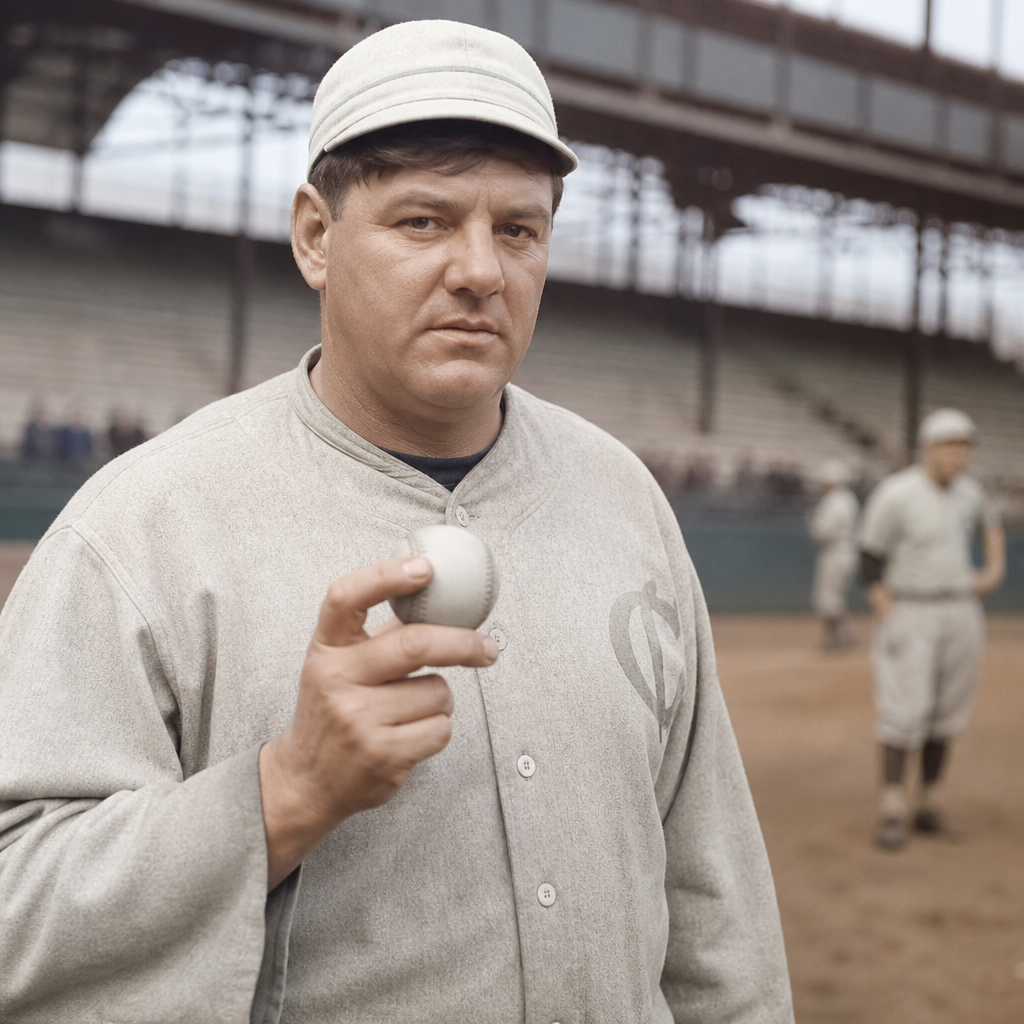
Jack Chesbro’s 41-win season stands as one of baseball’s most unreachable records, and understanding it requires more than a glance at an old stat line. It requires a close look at the pitcher himself, the strategy and workload of the dead-ball era, the controversial spitball that shaped his career, and the larger place Chesbro holds among legendary players. As a player profile hub, this article explains who Jack Chesbro was, what made his 1904 campaign extraordinary, why the spitball mattered, and how his career connects to broader baseball history. Few single seasons capture the distance between early twentieth-century baseball and the modern game so clearly. Chesbro’s 41 victories for the New York Highlanders were not simply the result of talent. They reflected a different run-scoring environment, different pitching expectations, and a style of game in which one ace could dominate an entire staff’s workload.
In practical terms, a player profile should answer the questions readers usually have: How good was he, how did he play, what was unique about his era, and why is he still discussed today? Chesbro checks every box. He was a Hall of Fame pitcher, one of the best workhorses the sport has seen, and a leading practitioner of the spitball before and after it became one of baseball’s defining debates. His story also serves as an entry point to related topics under the Legendary Players umbrella, including dead-ball pitching, pre-Babe Ruth run environments, single-season records, and Hall of Fame standards for early stars. I have worked through many early player records and game accounts, and Chesbro is one of the clearest examples of how context changes the meaning of statistics. A modern reader sees 41 wins and understandably thinks of pure dominance. That is true, but the deeper truth is that the number only makes sense when paired with innings, rest patterns, field conditions, defensive support, and a legal pitching arsenal that no longer exists.
Born John Dwight Chesbro in 1874 in North Adams, Massachusetts, he reached the majors after time in the minors and developed into a star with Pittsburgh before being traded to New York. By the time he joined the Highlanders, the American League club that would later become the Yankees, he had already established a reputation for durability and movement on the ball. His nickname, “Happy Jack,” fit the period’s affection for colorful personalities, but his pitching style was brutally practical. He induced weak contact, worked deep into games, and relied on a wet, diving pitch that hitters struggled to lift. That pitch, the spitball, became central to both his fame and the era’s identity. To understand Jack Chesbro is to understand how baseball once rewarded command, deception, and stamina in ways the modern sport cannot.
Who Jack Chesbro Was and Why His Profile Matters
Jack Chesbro belongs in any serious conversation about legendary pitchers because his value was not limited to one famous season. Across eleven major league seasons, he won 198 games, posted a 2.68 earned run average, and completed an astounding 387 of his 392 career starts. Those numbers are not a typo. They describe a pitcher used under conditions almost unimaginable today. From 1899 through 1909, managers expected their best arms to finish what they started, pitch on short rest, and adapt to changing rules, uneven baseballs, and rough infields. Chesbro excelled within that environment. He was not a novelty act attached to a single record; he was one of the defining pitchers of his generation.
His profile matters especially within a player-profiles hub because he connects several major themes. First, he illustrates how early Hall of Fame cases should be judged by dominance relative to era, not raw totals alone. Second, he gives readers a route into the tactical history of pitching before velocity became the game’s dominant fascination. Third, his career opens discussion of the Highlanders, a franchise still forming its identity years before the Yankees dynasty. Finally, Chesbro’s season is a useful corrective when modern fans compare records across centuries without adjusting for structure. Wins, innings, and workloads cannot be read the same way in 1904 and 2024.
Even his limitations are historically instructive. Chesbro did not reach 200 career wins by much, and his peak was shorter than those of some inner-circle greats. His control could wander, especially when he relied heavily on movement. In the famous final game of 1904, a wild pitch helped cost New York the pennant. Yet those details improve the profile rather than weaken it. They remind us that baseball history is not made by perfect figures. It is made by elite competitors operating under real pressure, and Chesbro’s best years were elite by any standard that respects context.
The 1904 Season: Why 41 Wins Still Stands Alone
Chesbro’s 1904 season for the New York Highlanders is the centerpiece of his legacy. He went 41-12 with a 1.82 ERA, completed 48 games, threw 454.2 innings, and carried a club that stayed in the pennant race until the final day. Since then, no pitcher has reached 40 wins in a season. The reason is not that later stars lacked greatness. It is that the conditions required for 41 victories have disappeared. Starting rotations are larger, bullpen specialization is standard, offensive conditions differ, and teams do not allow one arm to absorb that volume. In modern baseball, a Cy Young winner may make 32 to 34 starts. Chesbro made 51 starts and often pitched as if recovery were someone else’s problem.
Context sharpens the achievement. The 1904 American League was a low-scoring environment. Teams emphasized bunting, stolen bases, hit-and-run plays, and pressure baseball rather than home-run power. A dominant pitcher could therefore control games for longer stretches because one or two runs often settled the outcome. Chesbro’s heavy sinking spitball fit this environment perfectly. He forced hitters to put the ball on the ground, relied on infield conversion, and limited damaging contact. His season was not built on strikeout spectacle. It was built on suppressing offense relentlessly over an enormous workload.
The pennant race also matters. New York and Boston battled deep into the schedule, and manager Clark Griffith leaned hard on Chesbro because every game carried weight. This was common practice in the era: if an ace was healthy enough to pitch, he pitched. Chesbro won both ends of a doubleheader once that year and regularly worked with minimal rest. When readers ask whether 41 wins can ever be broken, the answer is almost certainly no, because no organization would expose a top pitcher to that burden now. The record survives not only because Chesbro was excellent but because baseball itself changed around it.
| Season Metric | Jack Chesbro, 1904 | Typical Modern Ace Season |
|---|---|---|
| Wins | 41 | 15-20 |
| Starts | 51 | 32-34 |
| Innings Pitched | 454.2 | 180-210 |
| Complete Games | 48 | 0-2 |
| ERA | 1.82 | 2.50-3.50 for elite years |
The famous ending of the season gives the record emotional force. On October 10, 1904, in the deciding game against Boston, Chesbro uncorked a ninth-inning wild pitch that allowed the pennant-winning run to score. New York lost 3-2. That moment often appears as tragedy attached to triumph, and rightly so. Yet it should not overshadow the scale of what got the Highlanders there. Without Chesbro’s unprecedented season, there would have been no final-day drama at all. One bad pitch became unforgettable precisely because one great season had raised the stakes so high.
The Spitball Age and How Chesbro Used the Pitch
The spitball was a legal pitch for most of Chesbro’s career, and it became one of the signature weapons of the dead-ball era. The basic idea was simple: the pitcher applied moisture, often saliva, to part of the baseball so it would travel with irregular spin and late drop. In practice, the pitch demanded touch, hand strength, and deception. It was not enough to wet the ball. A successful spitballer had to disguise grip, repeat release, and make the pitch look hittable until it dived under the bat. Chesbro mastered those elements. Contemporary reports regularly described his ball as heavy and hard to elevate, exactly the traits teams wanted in an era built on run prevention.
Readers often ask whether the spitball was merely a trick pitch. The answer is no. It was a skill pitch, though one that existed in a rulebook environment modern baseball no longer accepts. Like the emery ball and other doctored pitches later restricted, the spitball blurred the line between craft and manipulation. Its defenders argued that pitchers had always searched for movement and that the game’s rough, dark, frequently reused baseballs already produced unpredictable flight. Critics argued that doctoring the ball went too far and reduced fair hitting conditions. Both views contain truth. In Chesbro’s time, however, the pitch was part of mainstream strategy, not fringe cheating.
The broader spitball age extended beyond Chesbro. Hall of Famers such as Ed Walsh and Burleigh Grimes also became strongly associated with the pitch, while many others experimented with versions of it. Baseball eventually banned the spitball after the 1920 season, in part because the sport wanted cleaner, more visible baseballs and more offense after years of depressed scoring. Safety concerns after Ray Chapman’s death in 1920 also increased scrutiny of darkened, scuffed, and altered baseballs that batters struggled to see. Existing spitball specialists were grandfathered in, which is why Grimes legally continued using it into the 1930s. Chesbro’s profile therefore captures a transition point: he was a master of a style the sport later decided to leave behind.
How to Evaluate Chesbro Across Eras
Comparing Jack Chesbro with modern pitchers requires method, not nostalgia. The first rule is to separate achievement from conditions without dismissing either. Yes, his workload was made possible by era-specific usage. Yes, the dead-ball environment favored low ERAs. But those facts do not diminish him. Every player should be judged first against his contemporaries. By that standard, Chesbro was one of the most valuable pitchers in baseball, especially from 1902 through 1904. His 1904 season led the American League in wins, winning percentage, complete games, shutouts, and innings. That is comprehensive dominance.
Modern analysts often prefer ERA+, WAR, and league-adjusted comparisons because they account for context better than raw numbers. Those tools are useful here. Chesbro’s best seasons rate strongly even after adjustment, though his shorter peak and rapid decline mean he does not rank with Walter Johnson or Cy Young in career value. That nuance matters. A good player profile should neither inflate nor underrate him. Chesbro was not the greatest pitcher ever. He was, however, the owner of one of the greatest pitching seasons ever, a pioneer of movement-based run prevention, and a legitimate Hall of Famer whose record remains one of baseball’s hardest landmarks.
For readers exploring related player profiles, Chesbro also offers a model for how baseball fame works. Some legends are remembered for long excellence, some for postseason heroics, and some for one season that becomes immortal. Chesbro falls mainly into the third group, but with enough broader quality to avoid being a one-year curiosity. If you are building internal comparisons across legendary players, natural companions include Christy Mathewson for dead-ball command, Ed Walsh for workload and spitball lineage, and Cy Young for durability at scale. Chesbro may not be as universally cited as those names, yet his 1904 season forces his inclusion in any serious historical map of pitching greatness.
Legacy, Hall of Fame Case, and Why Readers Still Search for Him
Jack Chesbro was elected to the National Baseball Hall of Fame in 1946, a recognition grounded more in peak significance than in towering career totals. That makes his case especially interesting to modern readers, because Hall of Fame debates still turn on the same questions: How much should peak matter? How should era shape judgment? When does a singular accomplishment become historically decisive? Chesbro’s election suggests that baseball’s memory has long reserved space for players who define a chapter of the sport, even if their counting numbers stop short of inner-circle legends.
Readers still search for Chesbro because his 41-win season functions like a historical riddle. How could one pitcher win that often? The answer leads into everything that makes baseball history rewarding: changing rules, strategic evolution, labor expectations, equipment standards, and the fragile line between legal innovation and banned technique. His story also appeals because it includes both greatness and heartbreak. The same season that made him immortal ended with a pitch no New York fan would have wanted thrown. That contrast gives the profile narrative power beyond statistics.
As a hub page under Legendary Players, Chesbro’s profile should point readers toward broader exploration of player profiles from baseball’s formative decades. He is a gateway figure for understanding the dead-ball era, early American League pennant races, and the way a single tactic, the spitball, can define both a pitcher and an age. The main takeaway is simple: Jack Chesbro matters because he shows how records are created at the intersection of talent and context. His 41-win season was real dominance, not a statistical illusion, but it was dominance expressed through an environment the modern game no longer permits. Study Chesbro, and you understand not only one legendary player but also how baseball itself evolved. If you are exploring classic player profiles, start here, then follow the era outward to the pitchers, teams, and rule changes that made his record possible.
Frequently Asked Questions
Who was Jack Chesbro, and why is he still important in baseball history?
Jack Chesbro was one of the defining pitchers of early twentieth-century baseball and a central figure of the dead-ball era. Born John Dwight Cheesbro in 1874, he became famous for his durability, heavy workload, and mastery of the spitball, a pitch that helped him rise from a relatively modest start to historical significance. He played in the major leagues at a time when pitchers were expected to finish what they started, offenses were lower-powered, and strategy revolved around contact hitting, bunting, base running, and run prevention. In that environment, Chesbro emerged as one of the game’s most relentless workhorses.
He is remembered most of all for his 1904 season with the New York Highlanders, the franchise that later became the New York Yankees. That year, Chesbro won 41 games, a total that has become one of the sport’s most iconic and seemingly untouchable records. Modern pitchers do not come close to that number, not because talent has disappeared, but because the entire structure of baseball has changed. Rotations are smaller in individual workload, relief pitching is specialized, managers guard arms carefully, and complete games are rare. Chesbro’s achievement survives because it belongs to a completely different baseball world.
His historical importance also extends beyond one statistic. Chesbro represents a bridge to an era when pitchers carried enormous physical burdens and when legal and semi-legal pitch manipulation played a major role in shaping outcomes. He was eventually inducted into the Baseball Hall of Fame, a recognition that reflects both his peak performance and his lasting place in the story of pitching. For anyone studying how baseball evolved, Chesbro matters because his career brings together record-setting endurance, controversial technique, and the strategic realities of a vanished era.
What made Jack Chesbro’s 41-win season in 1904 so extraordinary?
Chesbro’s 41-win season was extraordinary because it combined elite performance with a level of usage that would be unimaginable today. In 1904, pitchers were not handled with modern caution. Teams relied heavily on their best arms, and Chesbro was asked to shoulder a massive share of the New York Highlanders’ season. He made an enormous number of starts, completed the vast majority of them, and regularly worked deep into games under demanding conditions. Winning 41 games required not just skill, but endurance, recovery ability, and a manager willing to keep sending the same pitcher back to the mound.
The season also stands out because Chesbro was not simply compiling wins through mediocre outings. He was one of the premier pitchers in the league that year, suppressing runs in an era where every marginal advantage mattered. Dead-ball baseball produced tight, low-scoring games, so a dominant pitcher could shape a pennant race almost single-handedly. Chesbro did exactly that. His club remained in contention until the final day of the season, and his performance was one of the main reasons.
Another reason the 41-win mark feels so monumental is that it sits at the intersection of individual brilliance and historical circumstance. A modern ace may pitch at a Cy Young level, but he will make only around thirty to thirty-three starts and may be removed after six or seven innings even when effective. Chesbro, by contrast, worked in a system designed to maximize the burden on a top starter. That does not make the record less impressive; it makes it more context-dependent. He had to be durable enough to survive that system and good enough to dominate within it.
The record remains one of baseball’s most unreachable accomplishments because the sport has permanently moved away from the conditions that made it possible. Even if a modern pitcher were somehow talented enough to win at a historic rate, he would never receive enough opportunities. That is why Chesbro’s 1904 season is not just a great year on a stat sheet. It is a benchmark from another baseball universe, preserved in the record book as a reminder of how dramatically the game has changed.
Why is the 41-win record considered essentially unbreakable today?
The simplest answer is workload. Modern starting pitchers are not given enough innings, starts, or complete games to approach 41 victories. In Chesbro’s era, a top pitcher could start constantly, finish his own games, and remain on the mound through fatigue that would trigger an immediate pitching change today. A modern ace usually works every fifth day, often under pitch-count limitations, and rarely throws complete games. Even a dominant starter may only have thirty or so decisions all season, making 41 wins virtually impossible from the start.
There are also strategic and organizational reasons the record is out of reach. Contemporary baseball values long-term arm health, matchup-based bullpen usage, advanced scouting, and careful injury prevention. Teams invest heavily in pitchers and have no incentive to push one player into the kind of volume Chesbro handled. Relief specialists now take over late innings, reducing the number of games a starter can personally finish and therefore directly influence in the win column. In addition, offense, defense, and bullpen support all shape pitcher wins, making the statistic less central to evaluating greatness than it once was.
The competitive environment matters too. League parity, deeper rosters, travel demands, and the physical intensity of the modern game create a different kind of challenge. Today’s pitchers generally throw harder and face lineups built around power, patience, and matchup exploitation. At the same time, they are managed in a way that prioritizes efficiency over accumulation. So even if a pitcher were historically dominant, his team would still limit his starts and innings rather than chase an individual win total.
That is why Chesbro’s 41 wins are often grouped with baseball’s most untouchable records. It is not merely that breaking it would be difficult; it would require the sport itself to reverse a century of evolution in pitching philosophy. The record survives because baseball no longer creates the conditions necessary for anyone to threaten it. In that sense, 41 wins is both a personal achievement and a fossil from a bygone style of play.
What was the spitball, and how did it shape Jack Chesbro’s career?
The spitball was a pitch altered by applying moisture or another slick substance to the ball, allowing the pitcher to create unusual movement and unpredictable break. In the dead-ball era, when the baseball itself was softer, dirtier, and less lively than the modern ball, pitches like the spitball could be especially effective. The altered surface affected grip and aerodynamics, helping the ball dive, fade, or behave erratically as it approached the plate. For hitters already working in a low-offense environment, that made the spitball a potent weapon.
Jack Chesbro became one of the pitch’s best-known practitioners. It was a major reason he developed into an elite pitcher and a major part of how he attacked opposing hitters. The spitball fit the dead-ball era perfectly because the game emphasized run suppression, weak contact, and deception. A pitcher who could make the ball move late and unpredictably had a tremendous advantage, particularly when combined with the kind of stamina Chesbro brought to the mound.
The pitch was also controversial, which is part of why it remains so interesting in discussions of Chesbro’s legacy. Many observers believed doctored or moistened pitches gave pitchers an unfair edge and made offense less attractive. Over time, baseball moved to clean up the game’s pitching practices, and the spitball was eventually banned for new users after the 1920 season, though a small number of existing spitball pitchers were grandfathered in and allowed to continue throwing it. That delayed prohibition illustrates how embedded the pitch had become in the sport before officials decided to phase it out.
For Chesbro, the spitball was not a side note; it was central to understanding his success and his era. It helps explain the kind of pitcher he was, the tactical environment he thrived in, and the broader tension between innovation and regulation in baseball history. When people study Chesbro today, they are really studying not just one man’s talent, but a whole period when pitchers were experimenting with ball manipulation in ways that would later be pushed out of the game.
How should fans place Jack Chesbro among baseball legends, especially compared with pitchers from other eras?
Jack Chesbro should be viewed as an era-defining great rather than judged solely through modern expectations. Comparing pitchers across baseball history is always difficult because the game’s rules, equipment, schedules, training methods, usage patterns, and statistical environments have changed so dramatically. Chesbro did not pitch in a world of five-man rotations, radar-gun readings, modern bullpens, or contemporary sports medicine. He pitched in a game that demanded extraordinary durability and rewarded pitchers who could adapt to rougher conditions and more primitive strategy. Within that world, he was one of the standout figures.
His Hall of Fame status reflects that historical standing. While some pitchers have more famous postseason moments or more broadly dominant career totals in modern categories, Chesbro’s claim to immortality rests on a combination of peak achievement, influence, and symbolic importance. The 1904 season alone guarantees that he remains part of any serious conversation about baseball records and legendary pitching feats. Just as importantly, he represents the dead-ball era in a vivid and accessible way. Through Chesbro, fans can understand what pitching looked like before the live-ball revolution transformed offense and roster construction.