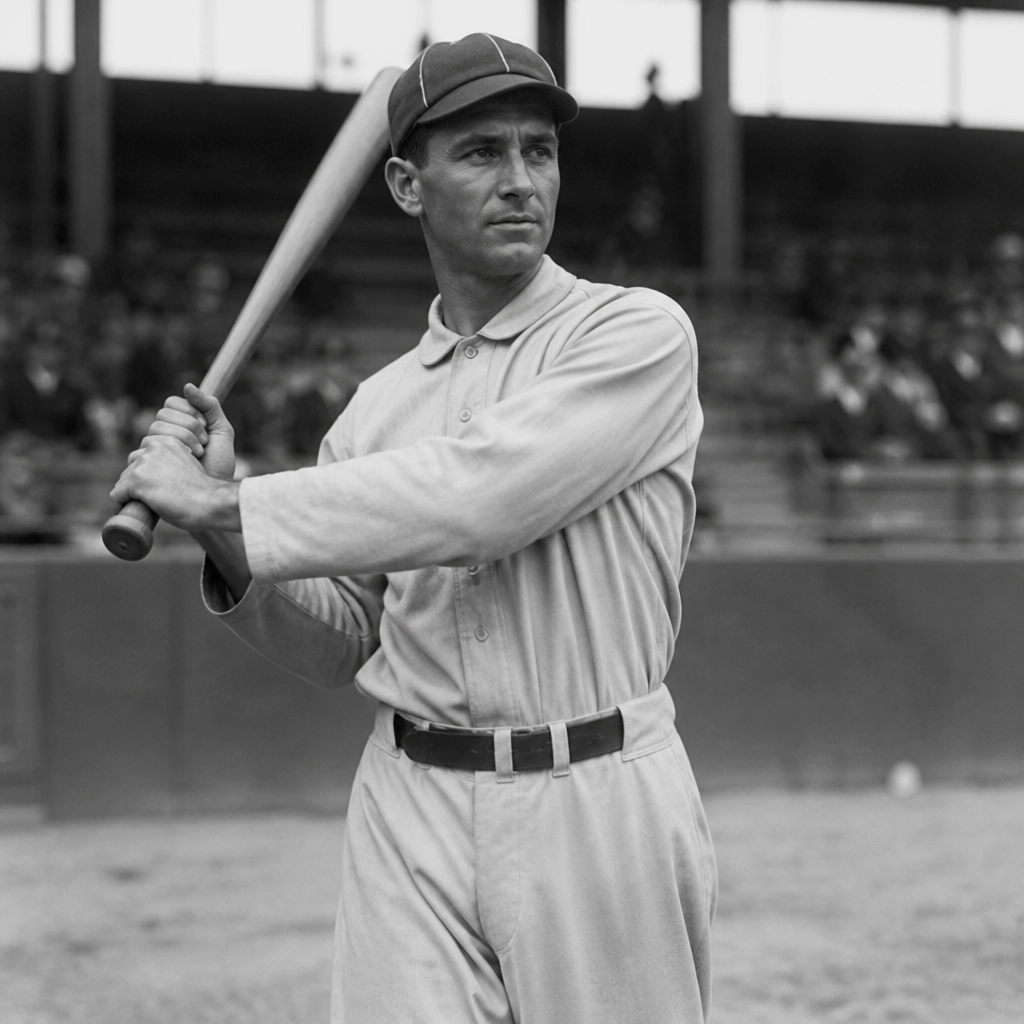
Jesse Burkett stands as one of baseball’s clearest examples of how a player can dominate an era by mastering its exact demands, and his career explains the deadball batting game better than almost any textbook summary. In player profiles of early stars, Burkett is sometimes reduced to a simple label: a .400 hitter from another age. That description is true, but incomplete. He was not merely a high-average batter who benefited from loose rules and rough fields. He was a precise tactician, an aggressive baserunner, a difficult out, and a left fielder whose flaws and strengths reflected the game’s full texture in the 1890s and early 1900s. For a Legendary Players hub focused on player profiles, Burkett deserves central attention because his career connects style, strategy, statistics, and baseball history in one figure.
Born in 1868, Burkett played in the major leagues from 1890 through 1905, primarily with the New York Giants, Cleveland Spiders, St. Louis Perfectos/Cardinals, and Boston Americans. He finished with a .338 lifetime batting average, more than 2,800 hits, and three batting titles. Most notably, he hit above .400 three times, including .423 in 1895, a season that still ranks among the finest pure hitting performances in major league history. When historians call him a deadball star, they are speaking partly about chronology and partly about method. The deadball game emphasized contact hitting, bunting, hit-and-run execution, baserunning pressure, and placement over loft power. Burkett excelled because he controlled the barrel, understood defensive positioning, and exploited every weakness that crude equipment, uneven playing surfaces, and flexible rules created.
Understanding Jesse Burkett matters because player profiles should do more than list achievements. They should show how a player won. In Burkett’s case, that means explaining why batting average carried enormous strategic value before modern home run offense, why triples and stolen bases were often more disruptive than isolated power, and how a hitter could weaponize line drives, chops, bunts, and speed. It also means seeing him honestly. He was brilliant, fiery, productive, and occasionally combative. That complexity is part of what makes him a durable subject for baseball readers. If you want one player who opens the door to the full logic of early professional offense, Jesse Burkett is the right place to start.
Why Jesse Burkett belongs near the top of early player profiles
Burkett’s case begins with production that survives every era adjustment. A career .338 average is elite in any century. So are 1,720 runs scored, 182 triples, and six seasons over .370. During his best years with Cleveland in the mid-1890s, he was not padding numbers in meaningless games; he was serving as a central engine for one of the National League’s strongest clubs. The Cleveland Spiders regularly contended because they had a roster full of impact talent, including Cy Young, and Burkett was one of the lineup’s constant pressures. He set the table, extended innings, and turned singles into immediate threats with his legs and instincts.
His three .400 seasons deserve context. Hitting .400 is always difficult, but in Burkett’s era pitchers worked under different constraints, fielders handled rougher balls and poorer gloves, and parks could create unusual outcomes. Those facts should not be used to dismiss him; they should be used to explain him. Conditions raised some averages, but they also demanded specialized skill. A batter had to read bad hops, slash at pitches he could place, run hard on nearly every ball, and handle strategic chaos that modern players rarely see. Burkett thrived precisely because his game was built for that environment.
From my own study of game accounts and statistical records from the period, what stands out is how often writers described Burkett in action terms rather than abstract praise. He chopped balls over infielders, dropped bunts where fielders were slowest, lined pitches into gaps, took extra bases aggressively, and irritated opponents with relentless pressure. That is the profile of a complete offensive operator, not a passive average collector. For a hub page on player profiles, that distinction matters. Great players are defined by repeatable methods, and Burkett’s methods were visible every day.
How Burkett mastered the deadball batting game
The deadball batting game was built on probability management. The ball itself was softer and less lively than later baseballs, foul balls were treated differently for much of Burkett’s career, and home run swings were usually inefficient compared with disciplined contact. Burkett understood that the best hitters of his time were not trying to elevate everything. They were trying to create difficult plays. A hard grounder through a hole, a bunt that forced a hurried throw, or a slicing drive to the alleys often created more value than a long fly ball.
Burkett hit left-handed, which mattered. Left-handed batters reached first a step faster and could exploit bunting angles more naturally toward the right side. He used that geometry well. Accounts from the era frequently mention his drag bunting and his ability to hit to all fields, especially when defenses shaded too aggressively. Modern fans sometimes think of deadball hitters as automatic bunters, but that oversimplifies the craft. The best of them, Burkett included, mixed punch hits, line drives, chopped balls, slash bunts, and situational placement. They turned uncertainty into offense.
He also benefited from his sharp understanding of sequencing. With runners on base, putting the ball in play was often enough to trigger fielding mistakes or advancement opportunities. Because gloves were smaller and fields rougher, every live ball carried more danger for defenders than it does now. Burkett’s offensive value came from feeding that danger repeatedly. He did not need to hit over outfield walls to control a game. He needed to make infielders move, outfielders chase, and pitchers throw under stress. He did that as well as any hitter of his generation.
| Skill | Why it mattered in Burkett’s era | How Burkett used it |
|---|---|---|
| Bat control | Contact reduced strikeouts and forced fielders to complete difficult plays | Placed grounders and liners into open space rather than selling out for power |
| Bunting | Bunts exploited slow reactions, barehand plays, and uneven infields | Used drag bunts and surprise placement to create singles |
| Speed | Extra bases often came from pressure, not slugging | Turned routine hits into doubles and pressured defenders into mistakes |
| Gap hitting | Large parks rewarded line drives into alleys with triples | Produced high triples totals and constant run-scoring chances |
The statistics that define his greatness
Burkett’s statistical record remains strong even after accounting for era. He collected 2,850 hits, scored 1,720 runs, stole 389 bases by the historical record, and totaled 182 triples. His 1895 batting average of .423 led the National League, and his other .400 seasons, .410 in 1896 and .402 in 1901, confirm that the first was not a fluke. He led the league in batting three times and in hits three times. He also topped the league in runs, triples, and on-base performance in different seasons, demonstrating that he was more than a one-category specialist.
Advanced measures reinforce the traditional numbers. Baseball-Reference credits him with a 145 OPS+, meaning he was 45 percent better than league average after adjusting for park and era. That is a major point for modern evaluation. It shows that even after neutralizing offensive context, Burkett grades as an elite hitter. His career Wins Above Replacement, depending on source and methodology, places him comfortably in Hall of Fame territory. He was inducted by the Veterans Committee in 1946, and that recognition has aged well.
The triples merit special attention because they reveal the mechanics of his value. In modern baseball, triples are relatively rare and often treated as park quirks. In Burkett’s game, they were a major weapon. Spacious parks, imperfect outfield conditions, and aggressive baserunning made the three-base hit a direct expression of offensive pressure. Burkett’s 182 triples rank among the all-time leaders, and that total is one of the best statistical windows into his style. He was not simply slapping singles. He was driving balls where fielders could not corral them cleanly and taking every available base.
Teams, context, and the competitive world around him
Burkett’s prime came during a volatile period in professional baseball. The National League of the 1890s dealt with franchise movement, labor tensions, uneven governance, and rapidly evolving tactics. That instability shaped careers. Burkett broke in with New York, gained greater prominence with Cleveland, and later starred in St. Louis before finishing in the American League with Boston. Each stop mattered because it placed him in different competitive settings, from established league powers to clubs navigating the sport’s structural changes.
His Cleveland years are usually the best starting point. The Spiders were a serious team before ownership maneuvering gutted the franchise in 1899. With Cleveland, Burkett played alongside high-level talent and in meaningful pennant races, which helps answer an important question for any player profile: did the numbers contribute to winning? In his case, yes. He was a catalyst on clubs that expected to contend, not a hollow accumulator on isolated rosters. Later, with St. Louis, he remained a premier hitter and proved his offensive model traveled.
Context also means understanding rules. In parts of Burkett’s career, foul balls did not count as strikes, giving skilled contact hitters more room to extend at-bats. Pitching distances and mound practices had changed from earlier decades but were still part of a game less standardized than today’s version. Equipment quality varied. Scoring conventions could be generous or inconsistent. Yet across those variables, Burkett kept producing. That consistency across teams and seasons is one reason his profile has lasting force.
Strengths, flaws, and the full player profile
A useful player profile is balanced, and Burkett’s full picture includes imperfections. Offensively, he was magnificent. Defensively, the record is less flattering. Contemporary reports and later statistical reconstructions suggest he was not a standout left fielder. His range and reliability were questioned at times, and some advanced defensive estimates rate him below average. That does not erase his value, but it changes the shape of it. Burkett was a bat-first star in an era that still demanded all-around toughness.
He also had a reputation for intensity that could spill into confrontation. Burkett argued, complained, and played with visible emotion. Some of that was common in nineteenth-century baseball, where players and umpires operated in a harsher public environment than modern fans might expect. Still, his personality was part of his identity. He was not a serene craftsman in the Ty Cobb mold’s opposite direction; he was a competitor who could be prickly, theatrical, and difficult. For readers exploring legendary players, those edges make him more real.
What survives all caveats is that Burkett’s strengths were bankable. He reached base, scored, stretched hits, and set an offensive tone that teammates could build around. If you were constructing a club for deadball conditions, you would tolerate average defense in left field to secure this level of table-setting and run creation. That practical roster logic is the clearest summary of his value.
What modern fans should learn from Jesse Burkett
Burkett’s legacy is not just that he hit .400. It is that he shows how baseball excellence depends on context-specific mastery. Every era rewards different skills. In the 1890s, elite offense came from contact quality, placement, speed, and tactical pressure. Burkett mastered those elements so completely that his numbers still command respect after more than a century of statistical revision. He is a reminder that greatness should be measured by how thoroughly a player solved the game in front of him.
For a Legendary Players hub focused on player profiles, Burkett also serves another purpose: he teaches readers how to read old statistics intelligently. Instead of asking whether he would hit .423 today, the better question is why .423 then was possible for him and not for most of his peers. The answer is skill. He had superior bat control, better situational judgment, and a more refined understanding of pressure baseball than almost everyone he faced. Era context explains the shape of his greatness; it does not diminish the greatness itself.
Jesse Burkett belongs in any serious discussion of baseball’s foundational stars because he turned the deadball batting game into a repeatable art. He hit for average at a historic level, generated offense in multiple ways, and helped define what an early leadoff force could be. If you are building out your knowledge of legendary players, use Burkett as a hub figure: from him, you can branch to deadball strategy, nineteenth-century league history, batting titles, triples leaders, and Hall of Fame debates. Start there, then keep exploring the player profiles that surround him.
Frequently Asked Questions
Why is Jesse Burkett considered such an important figure in understanding deadball-era hitting?
Jesse Burkett matters because he illustrates that deadball success was not accidental, primitive, or based only on strange early baseball conditions. He was a player who understood exactly what the game demanded in his time and built his offensive approach around those demands with remarkable discipline. The deadball era rewarded contact, bat control, placement, speed, pressure on the defense, and the ability to turn ordinary balls in play into stressful situations for fielders. Burkett excelled in all of those areas. Rather than chasing the kind of all-or-nothing power that would define later eras, he specialized in getting the bat to the ball, directing hits into open space, using the dimensions and conditions of the field to his advantage, and forcing mistakes.
That is what makes him more than a statistical curiosity. A .400 batting average grabs attention, but Burkett’s real value as a historical example lies in how completely his game fit the baseball environment around him. He was not simply surviving in the deadball game; he was mastering it at a high level. His career helps modern readers understand that early hitters were often sophisticated tacticians. They read defenses, understood pitcher tendencies, adjusted to rough fields and inconsistent equipment, and created offense through precision rather than brute force. Burkett stands out because he did all of that while producing numbers so strong that they still demand respect even after accounting for era and context.
Was Jesse Burkett just a product of an easier offensive era, or was he truly exceptional even by the standards of his own time?
He was truly exceptional by the standards of his own time, and that distinction is important. It is easy to look at a hitter from the nineteenth century or early deadball period and assume the numbers were inflated by chaotic rules, uneven competition, or undeveloped strategy. While context always matters, Burkett did not merely ride the conditions of his era. He separated himself from his contemporaries. Hitting .400 even once is rare in any baseball environment. Doing it multiple times signals a player with uncommon command of timing, contact quality, and consistency.
What made Burkett stand out was how reliably he converted the skills prized in his era into elite production. Many players dealt with the same fields, the same baseballs, the same travel conditions, and the same style of play. Very few produced like he did. His greatness becomes clearer when you compare him not to modern sluggers, but to the players who faced the same tactical demands he did. Burkett’s ability to keep the ball in play, hit for average, pressure the defense, and remain productive year after year shows that he was not simply benefiting from his surroundings. He was outperforming them.
In other words, era context explains the shape of his success, but it does not explain away his excellence. The proper takeaway is not that his statistics are less meaningful because they came in a different style of baseball. The proper takeaway is that he was one of the finest practitioners of the style that actually existed, and that is exactly how baseball greatness should be judged.
What specific skills made Jesse Burkett so effective as a deadball hitter?
Burkett’s effectiveness came from a blend of technical hitting skill, strategic intelligence, and competitive instinct. First, he had elite bat control. In an era when putting the ball in play was central to offensive success, the ability to make frequent, purposeful contact was everything. Burkett was not just avoiding strikeouts or poking soft singles. He understood how to meet the ball squarely, how to guide it into favorable areas, and how to use timing and placement to beat defensive alignments. That kind of precision is one of the defining traits of high-level deadball hitters.
Second, he appears to have had a strong sense of game situation. Deadball baseball was deeply situational. Hitters were expected to advance runners, exploit defensive positioning, adjust to the count, and make choices based on inning, score, and field conditions. Burkett’s reputation as a smart, aggressive offensive player fits that framework well. He was not simply taking the same swing every time. He was playing a running, thinking, pressure-based version of baseball in which each plate appearance could be shaped to the moment.
Third, speed and aggression amplified his batting value. In Burkett’s era, a ground ball or bloop was not always the end of the play. Fast runners could turn weak contact into infield hits, force rushed throws, and create cascading defensive mistakes. That meant batting average was often connected to athletic pressure as much as pure hard contact. Burkett used that dynamic effectively. His offensive game worked because it combined contact skill with movement and intent. He did not just hit the ball; he made fielders hurry, react, and sometimes fail.
Finally, toughness and adaptability mattered. Early baseball conditions were far less standardized than what modern players experience. Fields could be rough, baseballs aged quickly, and travel took a physical toll. Burkett’s sustained excellence suggests a player who adjusted constantly rather than relying on ideal conditions. That ability to function within unpredictability is a major reason he remains such a useful example of how deadball offense really worked.
How should modern fans interpret Jesse Burkett’s .400 seasons when comparing him to hitters from later eras?
Modern fans should resist the temptation to make either of the two most common mistakes: treating Burkett’s .400 seasons as directly identical to modern offensive achievements, or dismissing them as meaningless because the game was different. The better approach is to understand that his accomplishments were shaped by a different baseball logic, but they were still extraordinary. A .400 season in Burkett’s world reflected elite control over the style of play that existed then. It meant a hitter was consistently winning in an environment built around contact, placement, speed, and endurance.
The offensive landscape of Burkett’s time was not designed around home runs, launch angle, or strike-zone domination in the modern sense. It was a game in which a batter’s craft showed up through staying alive at the plate, avoiding weak easy outs, using the whole field, and creating pressure with every ball put in play. So when modern readers see .400 attached to Burkett’s name, they should read it not as a trivia note from a weaker age, but as evidence that he reached the highest level of execution in the offensive system of his day.
Cross-era comparisons are always imperfect, but the fairest measure of greatness is dominance relative to peers and mastery of the game as it was played. By that standard, Burkett compares very well to stars from any era. He may not resemble a modern middle-of-the-order slugger, but that is beside the point. He was not trying to be one. He was solving a different baseball problem, and he solved it as well as almost anyone in history.
Why does Jesse Burkett deserve more recognition today beyond simply being labeled a .400 hitter?
He deserves more recognition because the label “.400 hitter” is accurate but too narrow. It captures the result without explaining the method. Burkett was not memorable only because of a flashy batting average; he was memorable because he represented a complete offensive philosophy. He shows how baseball intelligence, precision, and adaptability can be just as historically important as overwhelming power. When he is reduced to one statistic, readers miss the richer story of how early great hitters actually operated.
Burkett also deserves attention because he helps correct a common misunderstanding about pre-modern baseball. Too often, early stars are presented as relics from a crude version of the sport, as though their numbers emerged from chaos rather than skill. In reality, many of those players were highly advanced within the tactical world they inhabited. Burkett is one of the clearest examples. His career invites readers to see deadball and pre-deadball offense not as lesser baseball, but as differently structured baseball with its own demands and forms of brilliance.
Finally, giving Burkett fuller recognition improves baseball history itself. The story of the sport is not only the story of home run kings and modern superstars. It is also the story of players who mastered earlier versions of the game so completely that they defined them. Jesse Burkett belongs in that conversation. He was a technician, a strategist, and an elite run creator in the style his era required. Remembering him that way gives a far more accurate picture of both the player and the period he helped define.