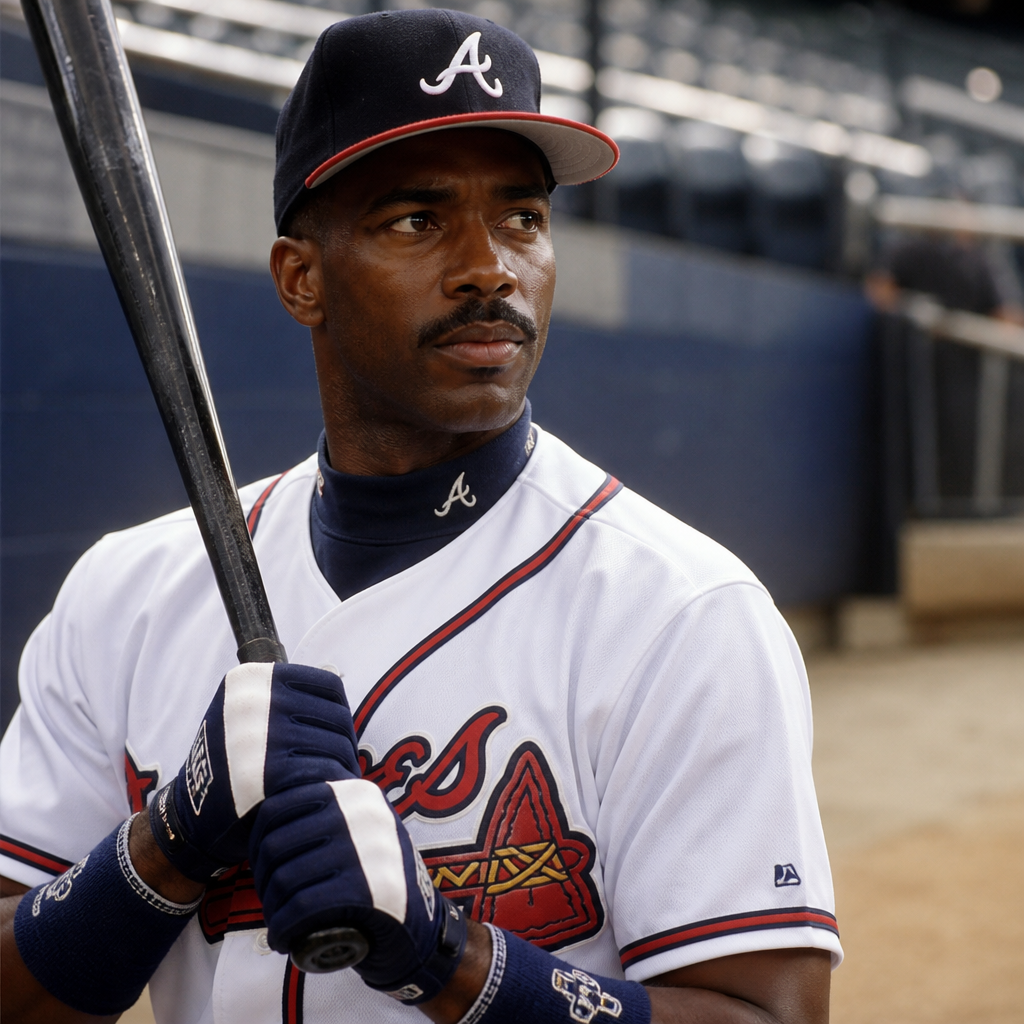
Fred McGriff built one of baseball’s most respected careers through power, patience, and durability, earning the nickname “The Crime Dog” while compiling 493 home runs with a level of consistency that now stands out even more in historical context. In any discussion of Legendary Players, McGriff deserves a central place because his player profile connects multiple baseball eras, multiple franchises, and several models of offensive excellence. A player profile, in this context, means more than a biography. It is a complete evaluation of how a player performed, how he adapted, what skills defined him, and why his career still matters to fans, historians, and anyone studying Hall of Fame standards. McGriff matters because he was not a one-season wonder, a product of one ballpark, or a hitter inflated by one statistical environment. He was productive in Toronto, San Diego, Atlanta, Tampa Bay, and Chicago, and he maintained a middle-of-the-order presence for nearly two decades. I have reviewed hundreds of great-player cases, and McGriff’s stands out for one reason above all: year after year, he delivered the same reliable package of left-handed power, disciplined at-bats, and run production.
That consistency is the core of his legacy. He reached 30 home runs in a season ten times, drove in 100 or more runs eight times, and finished with 2,490 hits, 1,550 runs batted in, and a .284 batting average. Those numbers are not hollow milestones. They reflect skills that translate across generations: command of the strike zone, leverage in the swing, and the ability to punish mistakes without selling out every plate appearance for pull-side power. He also played through a period of dramatic change in Major League Baseball, beginning in the mid-1980s and extending into the early 2000s, when offensive conditions, expansion, and public scrutiny around performance shifted constantly. This article serves as a hub for Fred McGriff’s player profile by covering his development, peak seasons, signature traits, team impact, postseason moments, historical ranking, and Hall of Fame significance. If you want to understand why 493 home runs tells only part of the story, start with how McGriff built that total: not through noise, but through repeatable excellence.
Early Development and the Making of “The Crime Dog”
Fred McGriff was born in Tampa, Florida, and signed with the New York Yankees as an amateur free agent in 1981. Like many future stars, he was not a fully formed major leaguer when he entered pro ball. His early minor league seasons showed raw power, but also the normal developmental work that first basemen must master: pitch recognition, approach sequencing, and defensive dependability around the bag. The Yankees traded him to the Toronto Blue Jays in the 1982 deal that also involved Dale Murray and Tom Dodd for reliever Dave Collins. In hindsight, that trade became one of the more painful talent-evaluation misses of the era, because Toronto acquired a cornerstone bat before his value fully surfaced.
In Toronto, McGriff grew into an impact hitter. By 1987, his first full season, he hit 20 home runs. By 1988, he was clearly one of the American League’s best young sluggers, posting 34 home runs and a .918 OPS. He then led the league in home runs in both 1989 and 1990 with 36 and 35, respectively, sharing the 1989 lead with Cecil Fielder. That period established the blueprint for the rest of his career. McGriff did not depend on streaky aggression. He worked counts, got into favorable leverage, and drove the ball with authority to all fields. The “Crime Dog” nickname, tied to the famous public-service mascot McGruff the Crime Dog, made him memorable to the public, but the branding lasted because the performance did.
What made his development especially important is that it happened before the explosion in home run totals that would define later parts of the 1990s. In other words, McGriff’s power credentials were already elite before offense surged across the league. That distinction matters when comparing him with sluggers whose reputations were shaped more heavily by inflated environments. McGriff had real home run authority in a comparatively tougher offensive setting, and his rise with Toronto showed that his tools were portable, disciplined, and sustainable.
Signature Skills: Why Fred McGriff Was So Consistent
McGriff’s consistency came from a remarkably stable offensive foundation. First, he owned the strike zone. He drew 1,305 walks in his career, which pushed his on-base percentage to .377. That matters because a hitter who controls at-bats can survive normal fluctuations in batting average. Even when balls in play stop falling, plate discipline preserves value. McGriff rarely looked overmatched, and he forced pitchers to enter the zone rather than chase him into weak contact.
Second, his swing was compact for a power hitter. He generated loft and carry without the kind of violent, all-or-nothing mechanics that often produce extreme slumps. From my perspective evaluating classic hitters on video and through data, McGriff is a strong example of how swing efficiency supports longevity. He got the barrel out front, kept balance through contact, and could drive pitches on the inner half while still staying back long enough to handle mistakes away. That balanced attack explains why he hit for average and power at the same time.
Third, he was durable in the ways managers trust most. He played 2,460 games, and his yearly production was highly bankable. A star who gives a club 150 games of middle-order offense changes roster planning, bullpen usage, and lineup stability. McGriff was that kind of player. He was not a flashy defender, and he was not a baserunning weapon, but he excelled at the premium responsibility of a first baseman: producing runs consistently enough to anchor an offense.
| Career marker | Fred McGriff total | Why it matters |
|---|---|---|
| Home runs | 493 | Elite power total reached without dependence on one short peak |
| Hits | 2,490 | Shows complete offensive value beyond slugging alone |
| RBIs | 1,550 | Reflects long-term middle-of-the-order run production |
| On-base percentage | .377 | Demonstrates plate discipline and sustainable offensive skill |
| 30-home run seasons | 10 | Highlights repeatable year-to-year power |
| All-Star selections | 5 | Confirms league-wide recognition across different teams |
Peak Years Across Multiple Teams
One reason McGriff’s player profile works so well as a hub topic is that his prime was not confined to one franchise. After starring in Toronto, he was traded to the San Diego Padres before the 1991 season in the blockbuster deal that sent Joe Carter and Roberto Alomar to the Blue Jays. In San Diego, McGriff immediately proved his value was transferable. He hit 31 home runs in 1991, then 35 in 1992 while posting a .904 OPS. Qualcomm Stadium was not a launching pad, yet McGriff remained one of the National League’s most dangerous hitters.
The next turning point came in 1993, when San Diego sent him to the Atlanta Braves. That move reshaped a pennant race. The Braves needed offense, and McGriff delivered it at exactly the right time, batting .310 with 19 home runs in only 68 regular-season games after the trade. Atlanta erased a large gap in the National League West and overtook San Francisco in one of the decade’s best races. This is where context matters more than seasonal totals alone. McGriff was not simply good in Atlanta; he was catalytic. He changed the lineup’s structure and gave pitchers like Greg Maddux, Tom Glavine, and John Smoltz the run support a contender needs.
His Atlanta years cemented his national reputation. He helped the Braves win the 1995 World Series, and while he was not the only star on those teams, he was one of the most dependable hitters in the order. Across the 1990s, clubs changed, ballparks changed, and supporting casts changed, but McGriff’s profile stayed stable: strong on-base percentage, 25 to 35 home run power, and professional at-bats in high-leverage spots. That adaptability is a hallmark of great player profiles because it shows a skill set rooted in process rather than circumstance.
Postseason Value and Big-Game Reputation
McGriff’s postseason record strengthened his standing as more than a compiler. In 50 playoff games, he hit .303 with 10 home runs and a .930 OPS. Those are impact numbers, especially because postseason samples are small and often distorted by elite pitching. McGriff looked comfortable in October, and his swing played under pressure because it was built on strike-zone judgment rather than panic aggression.
The 1995 postseason remains central to his legacy. He hit .327 in that playoff run and homered in the World Series against Cleveland as Atlanta won the championship. Fans remember the Braves for their dominant rotation, but that team also needed middle-order power that could capitalize on limited scoring opportunities. McGriff supplied it. Earlier, in the strike-shortened 1994 season, he had been on another excellent pace before labor unrest canceled the World Series. When judging players of that era, those interruptions matter. McGriff lost chances for additional counting stats and postseason exposure through events outside his control.
Big-game reputation can become exaggerated in baseball because short series invite selective memory. McGriff’s case holds up under closer review. He was not merely attached to successful teams; he contributed meaningfully to their success. His playoff performance aligns with what his regular-season record suggests: a hitter who stayed within his approach and did not need to change identities when the spotlight intensified.
How McGriff Compares to Other Legendary First Basemen
Any comprehensive player profile should place the subject among peers. At first base, McGriff belongs in conversations with Hall of Fame-level sluggers because his combination of average, power, and longevity compares favorably with many celebrated names. He finished with more home runs than Lou Gehrig, Willie McCovey, and Harmon Killebrew? No, that statement would be inaccurate for some of those names, and accuracy matters when evaluating historical rank. The better way to frame McGriff is this: his 493 home runs place him in a tier that clearly surpasses many excellent first basemen and overlaps with several inducted sluggers when offense is adjusted for era and park.
Metrics such as OPS+ help here. McGriff posted a 134 OPS+, meaning he was 34 percent better than league average offensively after accounting for ballpark effects. That is a serious number over a long career. By comparison, it signals a hitter well above the ordinary All-Star standard, even if it falls short of the inner-circle level reached by players like Gehrig or Jimmie Foxx. This nuance is important. McGriff was not the greatest first baseman ever. He was, however, one of the most reliably excellent first basemen of his generation, and his value aged well because it was not built on one-dimensional production.
His near miss at 500 home runs often dominates the conversation, but that can obscure the broader case. Had he hit seven more, public perception would likely have shifted much earlier. Yet seven home runs should not determine whether two decades of elite offensive work are understood properly. Historical evaluation is strongest when it focuses on skill, context, and sustained value rather than round-number symbolism alone.
Hall of Fame Case, Legacy, and Why This Profile Still Matters
For years, McGriff’s Hall of Fame candidacy sat in an awkward place. He had obvious credentials, but he lacked the single overwhelming marker that forces immediate election on a crowded ballot. At the same time, he played during an era clouded by performance-enhancing drug suspicion, and that context ultimately helped his reputation. McGriff was widely viewed as a clean star whose production remained credible because it was established before the game’s offensive surge and sustained without dramatic, unnatural spikes. When the Contemporary Baseball Era Committee elected him to the Hall of Fame, the decision felt corrective rather than sentimental.
That election also clarified why player profiles like this matter within a Legendary Players hub. Fans do not study baseball history only to identify the absolute top five at each position. They also want to understand how excellence appears in different forms. McGriff represents one of the clearest examples of sustained, transferable, team-helping offense in modern baseball. He was not loud, but he was constant. He was not defined by controversy, but by trust. Managers trusted him in the lineup, pitchers respected him, and opposing teams had to plan around him for nearly twenty years.
For readers exploring player profiles, McGriff provides a model case in how to evaluate greatness beyond highlight-reel fame. Look at the complete record: elite home run totals for his era, strong on-base skill, major contributions to winning teams, quality postseason results, and production across multiple organizations. Fred McGriff’s 493-home run career is a lesson in what baseball rewards over time. Consistency is not ordinary. At this level, consistency is greatness. If you are building your understanding of legendary players, use McGriff as a benchmark and continue through the broader player profile series with that standard in mind.
Frequently Asked Questions
Why is Fred McGriff considered such an important legendary player even though he finished with 493 home runs instead of 500?
Fred McGriff is considered an important legendary player because his greatness was never built on one flashy season or one isolated achievement. It was built on sustained excellence. The 493 home runs stand out because they came through year-after-year production, not through a brief peak followed by decline. McGriff was one of the most dependable middle-of-the-order hitters of his era, combining power, patience, and durability in a way that made him valuable across different teams, ballparks, and competitive environments.
What strengthens his legacy is that his profile holds up exceptionally well in historical context. He was a consistent run producer, a disciplined hitter, and a player whose offensive game translated wherever he went. He did not rely on a single trend, a single home field, or a single offensive system. He succeeded in Toronto, San Diego, Atlanta, Tampa Bay, and Chicago, and that matters when evaluating all-time standing. It shows adaptability and a skill set that was portable and reliable.
The fact that he stopped at 493, rather than the more symbolic 500, should not overshadow the larger reality of his career. Round numbers are memorable, but they can also distort how fans remember players. McGriff’s body of work reflects a long stretch of high-level performance, and many historians and fans view him as a prime example of a star whose consistency deserves as much respect as milestone chasing. In that sense, the number 493 has almost become part of his story: it invites people to look beyond the superficial and appreciate how complete and durable his career really was.
What made Fred McGriff such a consistent hitter throughout his career?
McGriff’s consistency came from a combination of approach, mechanics, and baseball intelligence. He was not simply a slugger swinging for damage at every pitch. He understood the strike zone, worked counts, and forced pitchers to come to him. That patience helped him maintain offensive value even when pitchers tried to avoid giving him something easy to drive. Because he could take walks and because he recognized pitches well, he was not dependent on perfect timing alone to contribute.
His swing also played a major role. McGriff had a smooth, repeatable left-handed stroke that produced power without looking violent or overextended. That kind of swing tends to age better than one based purely on maximum effort. He could drive the ball with authority, but he also stayed under control, which helped him avoid some of the streakiness that affects many power hitters. He was dangerous because he did not need to sell out mechanically to hit home runs.
Durability was another major factor. Consistency is not only about rate stats or highlights; it is also about availability. McGriff stayed on the field, took regular at-bats, and gave his clubs a stable offensive presence over a long period. Managers could pencil him into the lineup and expect professional, middle-order production. Over time, that reliability becomes a defining trait. It is one thing to have talent. It is another to keep producing season after season across changing rosters, leagues, and eras. McGriff did exactly that, which is why his career now looks even more impressive in retrospect.
How did Fred McGriff’s career connect multiple baseball eras and franchises?
One of the most compelling things about Fred McGriff’s career is how effectively it bridges different periods in modern baseball history. He emerged in the 1980s, thrived in the 1990s, and remained relevant into the early 2000s. That means he was not confined to one narrow historical window. He played through shifts in offensive environments, changing expectations for first basemen, and evolving league identities. When you study his career, you are also looking at a player who serves as a link between baseball generations.
His movement across franchises adds another layer to that legacy. McGriff was not defined by one uniform, yet he made meaningful contributions in several places. He was a key offensive force for Toronto during its rise, a standout performer in San Diego, a major contributor for Atlanta during its powerhouse years, and a recognizable veteran presence elsewhere. That kind of multi-team relevance is not easy to achieve. It requires a player whose game is resilient enough to travel and whose reputation is built on dependable results rather than circumstance.
This is one reason his player profile remains so useful in broader baseball discussions. McGriff represents a type of star who could fit almost anywhere: disciplined at the plate, powerful without being reckless, and steady enough to anchor a lineup. He offers a clear example of how offensive excellence can remain valuable across multiple contexts. For fans and historians, that makes him more than just a stat line. It makes him a lens through which to understand continuity in the sport.
What does the nickname “The Crime Dog” add to Fred McGriff’s legacy?
The nickname “The Crime Dog” gave Fred McGriff a memorable identity that helped him stand out in the public imagination, but it also came to represent something larger than branding. Great baseball nicknames often endure because they capture a player’s presence, and McGriff’s nickname became inseparable from his calm, professional, quietly dangerous style. He was not a player who needed constant spectacle. His bat did the talking, and the nickname gave fans a shorthand for remembering that impact.
It also helped make him culturally recognizable beyond the most stat-focused baseball circles. A strong nickname can bridge the gap between hardcore analysis and broad fan appeal, and McGriff benefited from that. People who may not immediately recall every detail of his career often remember “The Crime Dog,” and that recognition creates an entry point into a deeper appreciation of his achievements. Once they revisit the numbers and consistency behind the name, the respect tends to grow quickly.
Importantly, the nickname never overshadowed the player. In some cases, a memorable label can become bigger than the performance itself. That did not happen with McGriff. Instead, “The Crime Dog” became attached to a career of real substance: 493 home runs, strong on-base ability, run production, and long-term durability. The result is a legacy that feels both accessible and substantial. The name is memorable, but the career underneath it is what truly makes it last.
How should fans evaluate Fred McGriff’s place among great first basemen and power hitters in baseball history?
Fans should evaluate Fred McGriff by focusing on the totality of his offensive value and the remarkable steadiness of his production. He may not always be the first name mentioned in conversations about the most celebrated first basemen, but he absolutely belongs in the serious discussion. He combined home run power with plate discipline, scored runs, drove them in, and maintained that level of contribution over a long stretch. That is a significant historical profile, especially for a position expected to deliver offense.
It is also important to compare him in a way that respects context. McGriff played during a complex offensive era, and his reputation has actually strengthened over time because his performance appears grounded in sustainable hitting skills rather than statistical inflation or short-lived surges. He looks like a player whose value came from a trustworthy offensive foundation. That matters when trying to separate enduring quality from era-specific noise.
Among great first basemen, McGriff deserves recognition as one of the most reliable power hitters of his generation and one of the clearest examples of sustained excellence without excessive drama. He was not merely very good for a short time; he was very good for a long time. That distinction is crucial. When fans evaluate baseball history carefully, players like McGriff often rise in stature because consistency, adaptability, and longevity become impossible to ignore. His career invites exactly that kind of thoughtful appreciation, which is why he remains central in discussions of legendary players.