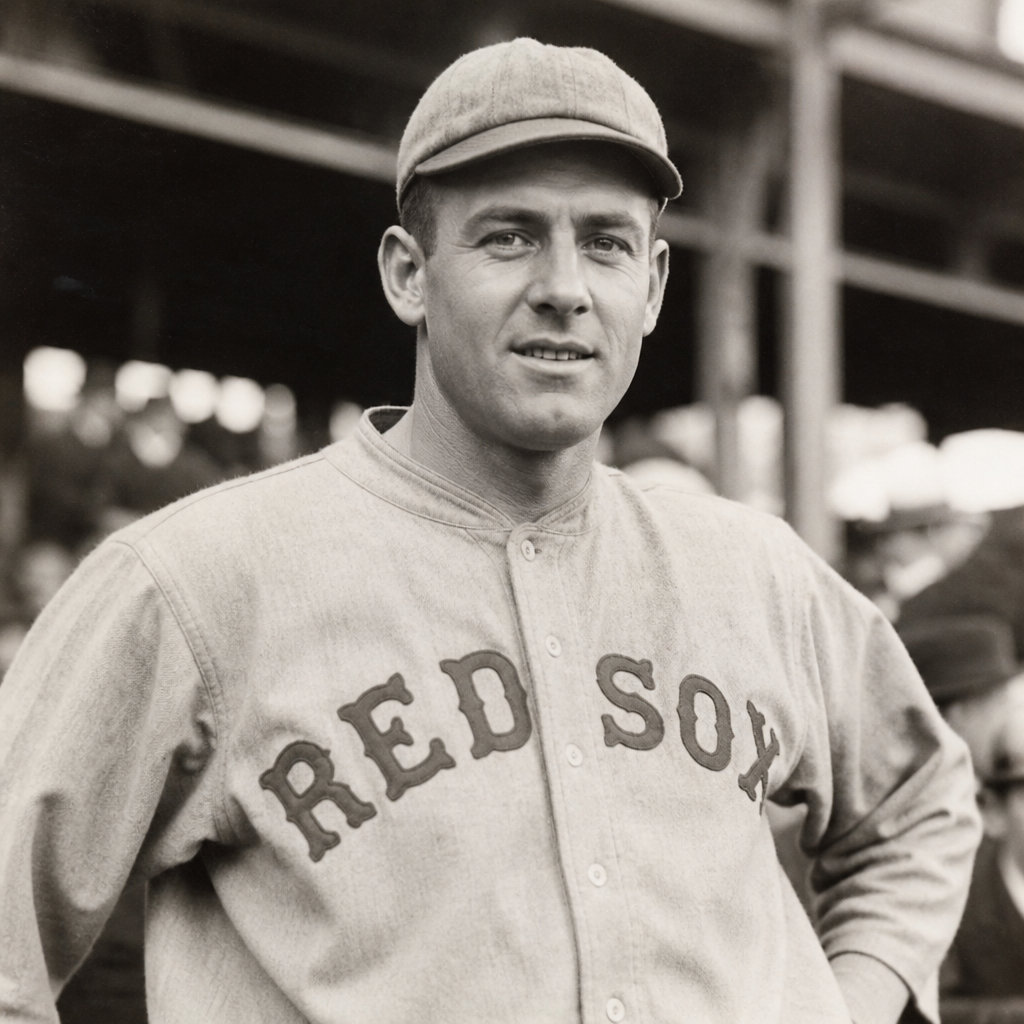
Harry Hooper stands as one of baseball’s most revealing transition figures, a Hall of Fame outfielder whose career connects the tactical, low-scoring Deadball Era with the louder, harder-hitting Live-Ball game that followed. A cornerstone of the Boston Red Sox before later starring with the Chicago White Sox, Hooper was far more than a supporting player on championship clubs. He was an elite right fielder, a disciplined leadoff presence, a smart baserunner, and one of the earliest stars to show how defense, patience, and adaptability could carry equal value across very different baseball environments. For readers exploring legendary players through detailed player profiles, Hooper offers something especially useful: his career explains not only one man’s achievements, but also how the sport itself changed from 1909 through 1925.
To understand Harry Hooper, it helps to define the eras he bridged. The Deadball Era, generally covering the years before 1920, emphasized bunting, stolen bases, hit-and-run plays, shallow fences, and a softer, dirt-stained ball that rarely traveled far. The Live-Ball Era emerged after rule changes, cleaner baseballs, and strategic shifts increased home runs and overall scoring. Hooper succeeded in both conditions. He broke in with Boston in 1909, won championships in 1912, 1915, 1916, and 1918, then remained productive long enough to play alongside the evolving offensive style of the 1920s. That makes him an ideal subject for a player profile hub, because his story touches defense, lineup construction, postseason performance, leadership, and long-term adaptation.
Hooper also matters because he is often overshadowed by louder names. Tris Speaker, Babe Ruth, and Shoeless Joe Jackson draw immediate attention, while Hooper can seem like a quieter historical figure. Yet when I review old box scores, season records, and contemporary descriptions of outfield play, Hooper keeps appearing in moments that decide games and seasons. He led by anticipation rather than spectacle. He played shallow right field with unusual confidence, cut off extra-base hits, threw accurately, and made contact decisions that fit the score, inning, and runner situation. That brand of intelligence is central to serious baseball analysis, and it is exactly why Harry Hooper deserves a comprehensive place within any Legendary Players collection.
Harry Hooper’s early life, arrival in Boston, and player profile basics
Born on August 24, 1887, in Bell Station, California, Harry Bartholomew Hooper came from a western background that set him apart from many early twentieth-century major leaguers. He attended Saint Mary’s College of California, a path that gave him a stronger educational foundation than many contemporaries, and scouts quickly noticed his speed, left-handed bat, and field awareness. The Boston Red Sox purchased him from Sacramento of the Pacific Coast League, and he debuted in the majors in 1909. At a time when clubs valued instinctive play as much as measurable output, Hooper immediately fit the roster because he read contact well, ran intelligently, and handled right field with uncommon polish.
In profile terms, Hooper was listed at 5-foot-11 and about 175 pounds, batting left-handed and throwing right-handed. That combination helped him as a leadoff or top-of-the-order hitter, especially in an era when left-handed batters could pressure infielders, bunt effectively, and make first basemen rush throws. He was not built like the sluggers who would define the 1920s, but he did not need to be. His game revolved around getting on base, lining balls into gaps, taking extra bases, and saving runs with positioning. Modern readers looking for a single-line description can think of him as a complete right fielder whose value came from all phases of the game rather than one headline tool.
One reason Hooper works so well as a hub subject for player profiles is that his career offers multiple entry points for deeper reading. If a reader wants championship history, Boston’s early dynastic years are essential. If the interest is defensive excellence, Hooper’s reputation and record stand out. If the topic is baseball’s strategic evolution, his adaptation from bunting baseball to power baseball provides a direct case study. Even his personality matters to the larger player-profiles category. He was known as thoughtful, independent, and willing to challenge assumptions, characteristics that later made him a respected veteran voice as baseball modernized around him.
Championship years with the Red Sox and the value of the famous outfield
Harry Hooper became nationally significant because the Red Sox of the 1910s were one of baseball’s strongest clubs, and their outfield helped drive that success. Alongside Tris Speaker and Duffy Lewis, Hooper formed what many historians still regard as one of the best defensive outfields ever assembled. Speaker covered immense ground in center, Lewis mastered the left field slope at Fenway Park, and Hooper brought precision to right. This alignment was not merely famous because the team won; it was effective because each player’s skills complemented the others, reducing gaps and turning potential doubles into outs. On clubs built around run prevention, that mattered as much as middle-of-the-order hitting.
Boston won the World Series in 1912, 1915, 1916, and 1918 during Hooper’s tenure. He was part of all four titles, giving him a championship résumé that immediately places him among the elite winners of his era. In the 1912 season, the Red Sox captured a dramatic pennant and then beat the New York Giants in a World Series remembered for tight margins and pressure baseball. Hooper hit the first home run ever recorded at Fenway Park that year, a useful symbol of his place in team history. In 1915 and 1916, with Babe Ruth still known more as a pitcher than a slugging legend, Hooper remained a stabilizing veteran contributor on balanced clubs.
What stands out in close study is that Hooper’s impact traveled beyond batting average. He drew walks, scored runs, advanced runners, and converted difficult right-field chances into routine outs. That profile resembles the type of player modern front offices appreciate, even if the language has changed. During Boston’s title runs, he did many of the things championship teams always need and casual retrospectives often miss. He kept innings alive, avoided reckless outs, and made pitchers more comfortable by shrinking the effective outfield. For readers building a fuller understanding of legendary players, Hooper shows why winning baseball history cannot be written only through sluggers and aces.
How Harry Hooper bridged the Deadball and Live-Ball eras
Harry Hooper’s strongest historical claim is simple: he remained effective before and after the game changed. During the Deadball years, his offensive responsibilities reflected the standard playbook. He bunted, worked counts, used speed, and accepted that a single run could decide an afternoon. When conditions shifted around 1920, he did not disappear like some players whose skills were tied entirely to the old game. Instead, he adjusted his approach, continued reaching base, and even posted strong power totals by his standards, including seasons in double-digit home runs. That adaptability is the clearest evidence that Hooper possessed underlying baseball ability, not just era-specific habits.
The transition was not cosmetic. Baseballs were replaced more often, trick pitches were reduced after the spitball crackdown, and hitters became more aggressive in driving the ball. League offense rose, and outfielders had to defend more extra-base contact. Hooper responded by blending old and new methods. He still valued patience and situational hitting, but he recognized when the game rewarded loft and pulled contact more than before. Players who survive one environment can be excellent; players who remain valuable across a structural transformation are rarer. Hooper belongs in that second group, and that fact should lead any serious Harry Hooper player profile.
| Era | Typical Style of Play | What Hooper Did Well | Why It Mattered |
|---|---|---|---|
| Deadball Era | Bunting, stealing, low scoring, contact hitting | Worked counts, handled the bat, ran smart routes and bases | Created runs without relying on power |
| Transition Years | Mixed tactics, cleaner balls, rising offense | Adjusted swing decisions and stayed productive | Proved his skills were transferable |
| Live-Ball Era | More home runs, deeper drives, higher scoring | Maintained on-base value and contributed more power | Extended his relevance as the sport changed |
This bridge between eras also explains why Hooper is useful in broader baseball discussions. He offers a clean answer to a common question: which players can tell us how the sport evolved? Ruth changed the game by overwhelming it, but Hooper helps explain how skilled everyday players experienced that same shift. He adapted in real time, without the dramatic mythology attached to bigger names. That makes his record particularly credible when evaluating strategic change. If a player rooted in the Deadball game can remain productive after the sport opens up, then his baseball intelligence deserves serious weight.
Defense, baserunning, and the baseball intelligence that defined his career
Harry Hooper was one of the premier defensive right fielders of his generation. He led American League outfielders in several fielding categories across different seasons and built a reputation for positioning that contemporaries praised repeatedly. In an era before advanced defensive metrics, the best evidence comes from consistency, team trust, and eyewitness descriptions. Managers left him in high-leverage situations because he reached balls quickly, played caroms efficiently, and released throws without wasted movement. Right field at Fenway Park demanded judgment because angles, walls, and changing light could create awkward chances. Hooper turned that complexity into an advantage.
His baserunning reflected the same intelligence. Hooper was not simply fast; he was selective. Many early players stole bases because the era encouraged it, but smart runners understood game state. Hooper read pitchers, identified moments when infielders were late covering, and avoided vanity risks that killed innings. He scored more than 100 runs multiple times because he excelled at the chain of events that leads to scoring: walk or single, advanced position, clean secondary lead, quick read on contact, and aggressive turn around third. Those details rarely survive in simple statistical summaries, yet they are often what separate good players from winning players.
From personal study of early twentieth-century roster construction, I think Hooper’s best modern comparison is not a single current star, but a category: the multidimensional table-setter who defends premium ground, reaches base, and raises the floor of an entire lineup. He was the kind of player managers pencil in every day because he improves everyone else’s job. Pitchers benefit from his glove. Middle-order hitters benefit from his on-base skills. Fellow outfielders benefit from his communication and angles. That interconnected value is sometimes harder to celebrate than 40 home runs, but over a long career it becomes impossible to ignore.
Legacy, Hall of Fame recognition, and why this player profile still matters
After his Red Sox years, Hooper joined the Chicago White Sox and continued to produce, helping confirm that his success was not solely a product of Boston’s roster context. He finished with more than 2,300 hits, over 1,400 runs scored, and a reputation as one of the game’s steadiest outfielders. He was elected to the Baseball Hall of Fame in 1971 by the Veterans Committee, an honor that arrived long after his playing days but ultimately recognized the breadth of his contribution. The delayed induction also says something important about baseball memory: players whose greatness is distributed across skills are easier to underrate than players known for one spectacular trait.
For a Legendary Players sub-pillar focused on player profiles, Harry Hooper is an ideal hub figure because his story connects so many baseball themes at once. He links team dynasties to individual skill, defense to offense, old strategy to new strategy, and famous teammates to overlooked excellence. Readers who arrive here looking for a concise answer can take this away: Harry Hooper was a championship Red Sox outfielder, a Hall of Famer, and one of the clearest examples of a player who successfully bridged the Deadball and Live-Ball eras. Readers who want more depth should use Hooper as a starting point for exploring Red Sox history, early outfield defense, and baseball’s strategic transformation. That is the lasting value of his profile. Study him closely, and the game’s evolution becomes easier to see.
Frequently Asked Questions
Why is Harry Hooper considered such an important bridge between the Deadball and Live-Ball eras?
Harry Hooper is considered one of baseball’s clearest transition figures because his career stretched across two very different versions of the sport, and he remained effective in both. He broke in during the Deadball Era, when teams emphasized bunting, base running, defense, hit-and-run execution, and run prevention far more than home-run power. In that environment, Hooper built his reputation as a sharp leadoff hitter, an intelligent baserunner, and a premier defensive right fielder. He understood how to manufacture offense, pressure defenses, and contribute in ways that did not always show up in simple batting totals.
What makes Hooper especially revealing is that he did not become obsolete when baseball changed. As the Live-Ball Era emerged in the early 1920s, offense expanded, the ball carried farther, and sluggers reshaped how teams scored. Hooper adapted. He showed a greater willingness and ability to drive the ball, posted strong offensive seasons later in his career, and demonstrated that a player formed by Deadball tactics could still thrive in a more modern offensive environment. That adaptability is a major reason historians value him. He was not simply present for the transition; he embodied it. His long career helps explain how baseball evolved from a game of subtle pressure and tactical precision into one increasingly defined by extra-base power and louder scoring.
What made Harry Hooper such a valuable player for the Boston Red Sox and later the Chicago White Sox?
Hooper’s value came from how complete he was. With the Boston Red Sox, he was a foundational piece rather than just a familiar name on talented rosters. He set the tone at the top of the lineup, worked counts, got on base, and used his speed and instincts to create scoring chances. He also brought consistency to the outfield, where his range, throwing arm, and positioning made him one of the most respected right fielders of his time. On championship-caliber teams, that kind of reliability matters enormously, because it affects the game every day in multiple ways.
His importance continued after he moved to the Chicago White Sox. Even as the game changed and he aged, Hooper remained productive because his baseball intelligence never left him. He knew situations, pitchers, hitters, and defensive alignments. He could contribute without needing to dominate headlines. That is part of why managers and teammates valued him so highly. He helped clubs win not just through talent, but through judgment and steadiness. In an era before advanced metrics were widely available, many of Hooper’s contributions were described in terms like “heads-up play” or “team baseball,” but modern readers can recognize that he offered premium defensive value, strong table-setting offense, durability, and leadership over a long period.
How good was Harry Hooper defensively, and why does his fielding reputation matter so much?
Harry Hooper was widely regarded as one of the elite defensive right fielders of his generation, and that reputation is central to understanding his legacy. Right field in the early twentieth century was demanding in ways that are sometimes easy to overlook today. Outfielders dealt with uneven fields, less predictable equipment, and a style of play that put heavy pressure on turning balls in play into outs. Hooper excelled because he combined excellent reads off the bat, efficient routes, reliable hands, and a strong, accurate throwing arm. He was not simply athletic; he was refined. He anticipated plays, minimized mistakes, and consistently converted difficult chances into routine-looking outs.
His defense matters because it reflects the type of player he was: alert, fundamentally sound, and deeply prepared. On Deadball clubs in particular, where every baserunner and every extra ninety feet could shape an entire game, preventing advancement was crucial. Hooper’s arm could discourage aggressive base running, and his glove saved runs in a lower-scoring era where run prevention carried enormous weight. Even as offensive conditions changed in the Live-Ball Era, his defensive excellence remained part of his value. For historians, Hooper’s fielding reputation reinforces the idea that he was not carried by strong teams; he helped make those teams strong. He added substance to winning clubs with a level of defensive quality that was both visible to contemporaries and meaningful in the broader context of baseball evolution.
Was Harry Hooper more than just a leadoff hitter on famous teams?
Absolutely. Labeling Hooper as only a leadoff hitter undersells both his skill set and his historical significance. Yes, he was effective at the top of the order, and that role suited his patience, contact ability, speed, and situational awareness. But his game had more depth than the traditional stereotype of a table-setter. He could score runs, handle the bat intelligently, take extra bases, and contribute surprising offensive punch, especially as conditions in baseball changed. He also brought premium defense and a high level of durability, which made him a daily asset rather than a specialist with one narrow strength.
Just as important, Hooper was one of those players who influenced the game through decision-making. He understood momentum, game state, and the small competitive edges that strong teams consistently exploit. On clubs loaded with notable names, that can cause a player like Hooper to be remembered as secondary, but that impression is misleading. Championship teams need stars, but they also need players who connect the lineup, stabilize the defense, and perform in every phase of the game. Hooper did that for years. His Hall of Fame standing reflects not celebrity alone, but the reality that he was a sophisticated all-around player whose contributions reached well beyond batting first in the order.
What is Harry Hooper’s legacy in baseball history today?
Harry Hooper’s legacy rests on a combination of excellence, adaptability, and historical timing. He is remembered as a Hall of Famer who played a key role on winning teams, but also as a player whose career helps modern fans understand how baseball changed in the early twentieth century. He represents continuity between two strategic worlds. In one, games were shaped by bunts, steals, defense, and careful execution; in the other, power hitting and a livelier ball changed offensive expectations. Hooper succeeded in both settings, which makes him uniquely useful as a lens through which to study the sport’s evolution.
He also leaves behind the model of a complete player whose value cannot be reduced to one statistic or one narrative. He was a top-tier defensive outfielder, a disciplined offensive presence, a savvy baserunner, and a dependable veteran on contenders. That blend gives his career unusual depth. Today, as baseball history is revisited with more nuanced analysis, Hooper often emerges as more significant than casual fans initially realize. He was not merely adjacent to greatness; he was part of it, and in many ways he helped define what winning baseball looked like during one of the sport’s most important transitions.