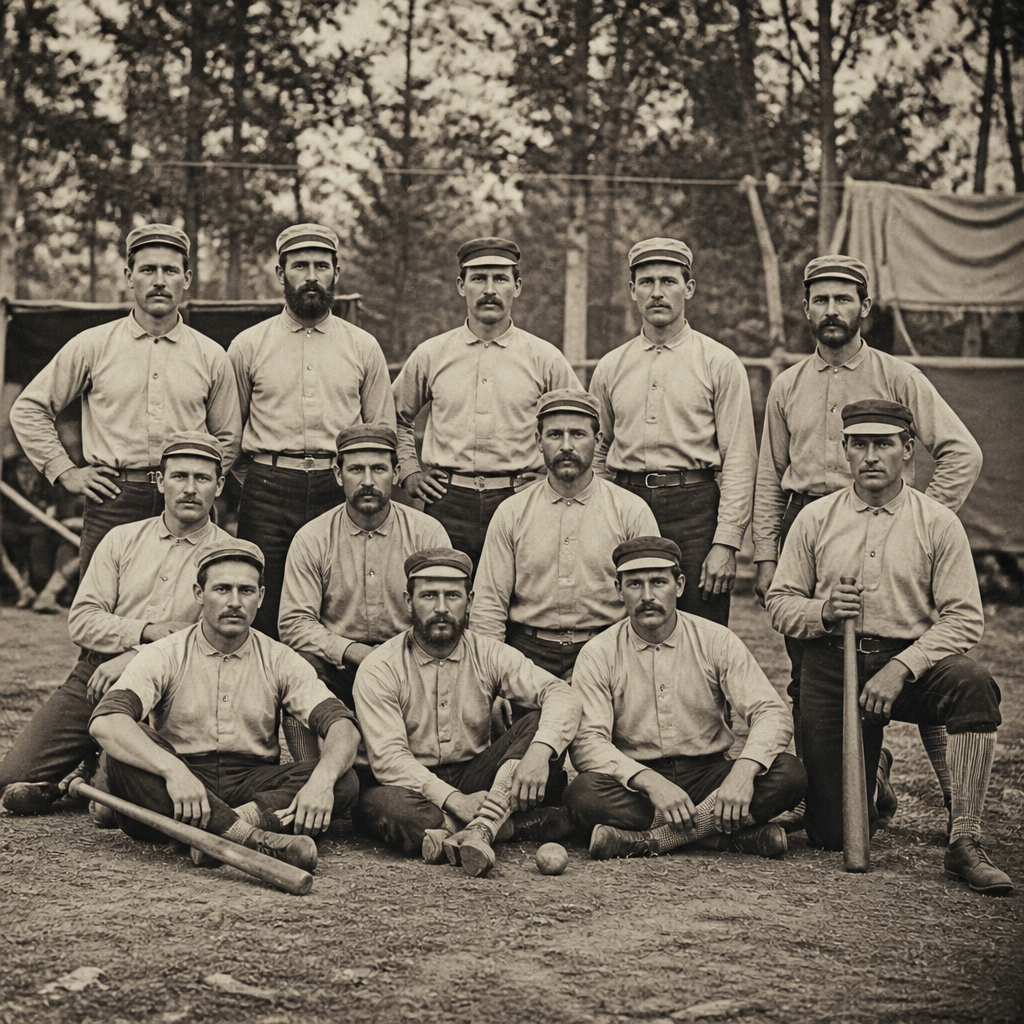
Baseball club membership in the 1850s sat at the center of the sport’s transformation from informal bat-and-ball recreation into an organized urban pastime with rules, officers, schedules, and a distinct social identity. In this decade, especially in New York and Brooklyn, amateur clubs defined who could play, how games were arranged, and what conduct counted as respectable participation. Understanding membership means looking beyond lineups and scores. It requires examining class, neighborhood ties, elections, dues, constitutions, practice habits, and the emerging distinction between club men and casual players. The phrase amateur clubs and early competition refers to the voluntary associations that adopted written rules, elected leaders, and met regularly for matches long before professional leagues existed. These clubs provided the structure that made interclub competition possible and gave baseball its first durable institutions.
This subject matters because the 1850s established patterns that shaped the sport for decades. The New York Knickerbockers, Eagle Base Ball Club, Excelsior of Brooklyn, Gotham, Atlantic, Putnam, and other prominent organizations did more than field teams. They created membership categories, codified expectations, disciplined players, and built networks with rival clubs. Many later developments in baseball administration, from scheduled fixtures to governing associations, grew directly from these amateur foundations. When I have worked through club constitutions, match reports, and newspaper notices from the period, the clearest lesson has been that early baseball was organized socially before it was organized commercially. Clubs were civic and fraternal bodies as much as athletic ones. To explain who played and how clubs were organized, this article maps the membership base, internal governance, competitive customs, and wider historical significance of amateur clubs in the 1850s.
Who Joined Early Baseball Clubs
Most baseball club members in the 1850s were adult men from the urban middle and skilled working classes, particularly clerks, merchants, bookkeepers, printers, mechanics, and small proprietors. They were not schoolboys in a modern youth system, and they were not salaried athletes. Club rosters often reflected the occupational profile of rapidly growing New York and Brooklyn, where white-collar and artisan men sought structured recreation outside work hours. Many were in their late teens through their thirties, though some clubs admitted older members and a few very young men if they had local connections. Membership usually depended less on pure athletic ability than on reputation, reliability, and social fit. A man needed to be known, proposed, and acceptable to existing members.
These clubs were overwhelmingly white and male. Black baseball organizations would emerge more visibly later, and women participated mainly as spectators in this era rather than as recognized club members. Ethnic identity mattered too, though often indirectly. Irish and German immigrants were transforming urban life, but the earliest elite clubs tended to draw from native-born or established Protestant circles. Over time, the game broadened, and clubs proliferated beyond the small social world of the Knickerbocker set. Still, the 1850s club scene remained selective. The ideal member was respectable, punctual, sober in public conduct, and willing to submit to the club’s rules. This helps explain why newspapers frequently described clubs with language borrowed from voluntary associations, not simply sports teams.
Locality shaped membership as strongly as class. Clubs often formed around neighborhoods, workplaces, or circles of acquaintances. Brooklyn’s Atlantic club, for example, gained strength from a deep local base and became a model of organized amateur power. The Eagle club likewise reflected Brooklyn identity, while Manhattan clubs developed their own rival networks. Men joined because friends belonged, because a club practiced nearby, or because belonging conferred social standing. In that sense, baseball membership functioned like membership in a debating society, fire company, or benevolent association. Playing ability mattered, but club belonging signaled discipline, sociability, and participation in an emerging metropolitan culture.
How Clubs Were Formed and Governed
Early baseball clubs were usually organized through formal constitutions and bylaws. Founders met, selected a name, elected officers, adopted rules, and established regular meeting times. This level of paperwork was not decorative. It defined how the club admitted members, collected dues, arranged games, and handled disputes. In surviving constitutions from the era, one sees standard offices such as president, vice president, secretary, treasurer, and often a playing committee or directors. The president presided over meetings and represented the club publicly. The secretary managed correspondence, issued match challenges, kept minutes, and recorded membership actions. The treasurer collected initiation fees and dues, which paid for balls, bats, scorebooks, room rentals, and occasionally grounds expenses.
Admission procedures were often deliberate. A candidate might be proposed by an existing member, seconded, and then voted on at a later meeting. Some clubs required a unanimous or near-unanimous vote, using blackball procedures common in nineteenth-century associations. That mechanism protected cohesion but also reinforced exclusivity. Once admitted, members were expected to attend meetings and practices. Fines for absence were common. Clubs in this period treated attendance as a duty, not a casual option, because regular turnout was necessary to field balanced nines and maintain credibility with other clubs. Repeated absence, unpaid dues, or misconduct could lead to suspension or expulsion.
The table below summarizes the basic organizational features found in many 1850s amateur baseball clubs.
| Club feature | Typical 1850s practice | Why it mattered |
|---|---|---|
| Membership admission | Nomination and vote by existing members | Maintained social trust and club identity |
| Officers | President, secretary, treasurer, vice president | Created accountability and handled administration |
| Dues and fees | Regular payments plus fines for absence | Funded equipment and enforced commitment |
| Rules | Written constitution and bylaws | Standardized discipline and operations |
| Playing side | Selected nine from wider membership | Separated club membership from match participation |
| Meetings | Scheduled business sessions | Turned clubs into durable institutions |
One important point is that membership and playing status were not identical. A club might have more members than it could place on the field in a match, since regulation competition centered on a nine-man side under the New York game. This distinction encouraged internal competition and gave clubs administrative depth. Men could belong, vote, pay dues, practice, and support matches even when not selected for the first nine. That structure resembles later athletic clubs more than a loose pickup game circle. It also made baseball scalable. As interest expanded, established clubs could spawn junior or satellite organizations rather than starting from zero each season.
Practice, Discipline, and Club Culture
In the 1850s, baseball clubs expected members to train through repeated practice, though the language of professionalism had not yet taken hold. Practice sessions were usually scheduled, and attendance was tracked. Club records and newspaper notes show that members met for exercise as well as matches, often on common grounds such as the Elysian Fields in Hoboken, which became famous because multiple New York area clubs used it. The Elysian Fields offered open space accessible by ferry, making it one of the most important shared sites in early baseball. Regular practice there helped standardize play among clubs and gave the amateur game a visible public stage.
Discipline was central to club culture. Bylaws commonly imposed fines for lateness, absence, or failure to perform assigned duties. This sounds severe to modern readers, but it reflected the associational culture of the time. Volunteer organizations relied on rules to survive. A club could not sustain regular competition if members treated commitments casually. Beyond attendance, clubs regulated behavior and decorum. Respectable conduct mattered in part because clubs sought legitimacy in a period when some observers considered sport frivolous or disorderly. By presenting baseball as healthy, orderly recreation for responsible men, clubs defended their place in urban civic life.
At the same time, club culture was social and convivial. Members held dinners, anniversary celebrations, and toasts after important matches. These events strengthened loyalty and deepened rivalries. The social side also reveals why amateur baseball spread effectively: a club offered fellowship, recognition, and routine. Newspapers often covered these gatherings, reinforcing the prestige of organized clubs. In practical terms, that publicity helped recruitment and gave clubs leverage when arranging contests. A well-run club with visible officers and orderly events was more likely to attract challenges from rivals and respect from the press.
How Early Competition Worked Between Amateur Clubs
Competition in the 1850s developed through negotiated matches rather than league schedules. Club secretaries exchanged letters to propose dates, locations, and terms. Once accepted, the match became a public event often announced in newspapers. The adoption of the Knickerbocker rules in 1845 and the growing influence of the New York game made contests more consistent, but local variation still existed early in the decade. A major turning point came with the formation of the National Association of Base Ball Players in 1857, which brought delegates together and accelerated standardization. Even before that, however, prominent clubs operated within an emerging shared code.
Matches were typically between first nines, though clubs sometimes fielded second nines or arranged mixed practice contests. The competitive format in the 1850s differed from the modern nine-inning game. Under prevailing rules, games were often played to a set number of runs, famously twenty-one in many New York-style matches, though this changed later. The pitcher delivered the ball underhand and was expected to initiate action rather than overpower the striker. Fielders often played barehanded or with minimal hand protection, and the ball could be put out on the bound in many circumstances under early rules. These features meant that teamwork, positioning, and clean field play mattered as much as force.
Clubs tracked prestige through challenge matches and win-loss reputations rather than league tables. The Atlantic Base Ball Club of Brooklyn became a dominant symbol of amateur excellence because it combined organizational stability with strong play over several seasons. The Excelsior club also earned notice through travel and high-level competition. Rivalry was intense but wrapped in the language of gentlemanly conduct. Match reports praised spirited play while emphasizing courtesy between sides. This duality is essential. Early competition was serious, but it was expected to remain within the norms of honorable amateur association.
The Wider Importance of Amateur Clubs in Baseball History
Amateur clubs of the 1850s made baseball scalable, repeatable, and governable. Without them, there would have been no reliable framework for regular intercity or intracity competition. They created standard offices, written records, and durable local identities. They also generated the administrative habits that later supported conventions, associations, championship debates, and eventually professional organization. When historians trace baseball’s rise, they often focus on rules or famous clubs, but membership systems are just as important. A game becomes a sport when institutions can reproduce it across time and place. That is exactly what these clubs accomplished.
Their limitations are equally important to acknowledge. Because admission was selective, early club baseball did not represent the whole population. It privileged men with time, reputation, and enough financial stability to participate in organized recreation. Yet those very constraints help explain why clubs were effective. Selective membership fostered commitment, and commitment made regular competition possible. As the game spread after the Civil War, many of these barriers weakened or changed form, but the template remained visible: elected officers, dues, scheduled fixtures, codified rules, and recognized membership.
For anyone exploring the early history of baseball, amateur clubs and early competition provide the essential hub. They explain who played, how clubs functioned, why rules spread, and how local recreation became a national game. The 1850s show baseball before salaries and leagues, but not before structure. If you want to understand later pennant races, governing bodies, or professionalism, start with the club room, the secretary’s ledger, and the practice ground. Study the Knickerbockers, Atlantics, Eagles, Gothams, and Excelsiors as organizations, not just teams. Their model turned baseball into an enduring institution. Continue through the related articles in this section to follow how amateur rivalry, standardization, and expansion carried the game into its next era.
Frequently Asked Questions
Who could become a member of a baseball club in the 1850s?
In the 1850s, baseball club membership was usually shaped by a mix of geography, reputation, and social standing rather than by modern ideas of open athletic participation. Most organized clubs, especially in New York and Brooklyn, were made up of white, native-born or established residents from the urban middle classes, including clerks, merchants, professionals, skilled tradesmen, and young men with enough leisure time to attend practices and scheduled matches. Membership often depended on personal connections. A prospective member was commonly proposed by existing members, discussed by the club, and accepted through some kind of vote or formal approval process. That system gave clubs control over who entered and helped preserve a shared sense of respectability.
Although baseball was growing as a popular pastime, not everyone had equal access to club life. Women did not participate as members in these male amateur clubs, and working-class men with irregular schedules may have found it difficult to meet the expectations of attendance, dues, and conduct. Ethnic, racial, and class boundaries also mattered, even when not always written explicitly into club constitutions. In practice, club membership reflected the social hierarchies of the city. So while the game itself was spreading, belonging to a recognized club in the 1850s often meant being accepted into a specific social world, not just joining a team.
How were baseball clubs in the 1850s organized?
Baseball clubs in the 1850s were far more structured than the informal bat-and-ball gatherings that had preceded them. Many clubs adopted written constitutions and bylaws that spelled out how members were elected, what officers were responsible for, when meetings would be held, and how disputes or disciplinary issues would be handled. Typical officers included a president, vice president, secretary, treasurer, and sometimes roles such as a director or committee members. These positions were not ceremonial. They were essential to keeping the club functioning as a stable organization rather than a loose collection of players.
The secretary often handled correspondence with other clubs, arranged matches, and recorded proceedings, while the treasurer collected dues and managed expenses related to equipment, grounds, or club events. Regular meetings reinforced the club’s administrative identity. Members might vote on new applicants, revise rules, schedule games, or settle questions of conduct. This level of organization was one of the key developments that helped transform baseball into an orderly amateur sport. The club was both an athletic body and a civic-style association, reflecting broader mid-19th-century patterns of voluntary organizations in urban America.
What did membership in a baseball club involve beyond simply playing games?
Membership involved much more than appearing for a match. In the 1850s, belonging to a baseball club meant participating in a social and moral community with expectations about behavior, attendance, and public image. Members were generally expected to pay dues, attend meetings, practice regularly, and uphold the club’s standards both on and off the field. Clubs often viewed themselves as respectable associations, and they cared deeply about discipline, decorum, and reliability. Showing up late, missing arranged matches, using improper language, or behaving in a way that embarrassed the club could become matters of concern.
There was also a strong social dimension to club life. Membership created networks of friendship, neighborhood identity, and masculine sociability. Clubs gathered not only to play but to deliberate, organize, and represent themselves in public. Matches could be social occasions that drew spectators and reinforced ties between clubs and communities. Because organized baseball was still developing, members were helping define the culture of the sport itself. Their responsibilities included sustaining the rules, preserving order, and presenting baseball as a legitimate and respectable pastime rather than mere rowdy recreation. In that sense, club membership in the 1850s was as much about belonging to an institution as it was about athletic participation.
How were games arranged between clubs, and what role did members play in scheduling them?
Interclub games in the 1850s were typically arranged through formal communication between club officers, especially secretaries. Rather than relying on casual challenges alone, clubs often sent written invitations or negotiated match terms through correspondence and meetings. This process reflected the growing administrative culture of baseball. A match had to be agreed upon in advance, with decisions about date, location, and rules handled carefully so that both sides recognized the contest as legitimate. Because clubs increasingly operated under shared standards, especially those associated with the New York game, scheduling matches helped normalize the sport across different organizations.
Ordinary members played an important role as well, because a club’s ability to commit to a game depended on dependable attendance and internal coordination. Members had to be available, prepared, and willing to represent the club properly. If too few players appeared, or if the club lacked discipline, its reputation could suffer. Scheduling was therefore not just logistical; it was tied to honor, credibility, and status within the baseball community. A well-run club demonstrated its seriousness by keeping appointments, fielding an orderly side, and following accepted rules of conduct. In that way, the calendar of matches became part of how clubs proved they were organized, respectable, and worthy opponents.
Why does baseball club membership in the 1850s matter for understanding the history of the sport?
Membership matters because it reveals how baseball became organized long before it became fully professional or nationally commercialized. The 1850s were a foundational decade in which clubs established the structures that gave the game continuity: elected officers, written rules, formal admissions, regular meetings, and scheduled competition. These clubs did not just play baseball; they built the institutions that made baseball recognizable as a modern sport. By studying membership, historians can see how order, identity, and governance entered the game and how local associations shaped what counted as legitimate participation.
It also matters because club membership exposes the social boundaries of early baseball. The sport’s growth was not simply a story of increasing popularity. It was also a story about who was welcomed, who was excluded, and what values clubs tried to project. Class, neighborhood loyalty, respectability, and urban associational culture all influenced the makeup of clubs and the meaning of belonging. Looking at membership helps explain why baseball developed the way it did in cities like New York and Brooklyn, where amateur clubs served as gatekeepers of rules and culture. In short, if scores and lineups show how the game was played, membership shows how the game was organized, who controlled it, and why it took the social form it did in the first place.