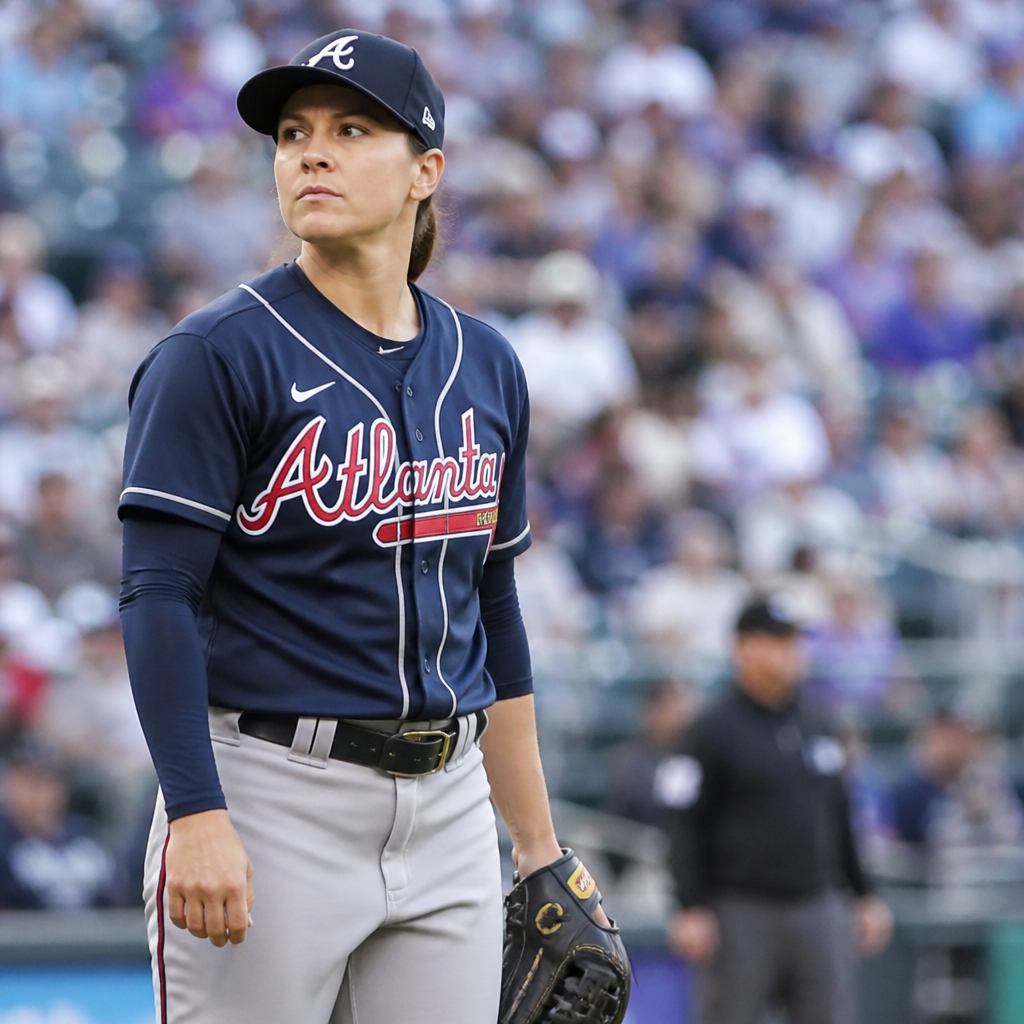
Women in baseball have moved from novelty headlines to an essential part of the sport’s present and future, yet the barriers they face remain real, visible, and worth examining closely. In baseball, “breaking the glass ceiling” means more than hiring a few women into public-facing roles. It means opening paths to influence in playing, coaching, scouting, player development, broadcasting, analytics, front office leadership, ownership circles, and grassroots participation. I have worked on baseball content and talent pipelines long enough to see a consistent pattern: when organizations treat women’s inclusion as a publicity moment, progress stalls; when they build systems, progress lasts. This topic matters because baseball is a talent industry. Any league, club, academy, or media network that overlooks half the population limits its own competitiveness. The sport also carries unusual cultural weight. Baseball traditions shape local identity, school sports, family routines, and media narratives, so representation inside the game affects who feels welcome around it. Women have always been part of baseball, from early barnstorming teams to wartime professional leagues to modern executive offices, but their contributions were often minimized or framed as exceptions. A useful way to understand the current landscape is to look at the full ecosystem rather than one headline role at a time. That ecosystem includes access, credibility, compensation, visibility, and policy. When those five factors improve together, women in baseball advance from isolated pioneers to a durable pipeline.
The history behind this shift is important. The All-American Girls Professional Baseball League, founded in 1943, proved there was public demand for women playing high-level baseball, not just softball. More recently, women have entered jobs once considered untouchable, including on-field coaching in Major League Baseball organizations, baseball operations leadership, biomechanics, strength and conditioning, umpiring development, and international scouting. Kim Ng’s appointment as general manager of the Miami Marlins in 2020 was historic not because one title solved the problem, but because it shattered a long-standing belief that baseball leadership had to follow a male template. Today, girls’ baseball programs, national team competitions, and development camps are expanding in the United States, Canada, Japan, Australia, and parts of Latin America. Still, advancement is uneven. Resources are not distributed equally, and many women remain the only one in the room, which creates pressure to overperform while representing an entire group. A serious hub article on women in baseball must therefore connect history, current roles, barriers, and next steps in one place.
How Women Built a Place in Baseball
Women’s presence in baseball is not new; what is new is the level of institutional recognition. In the nineteenth and early twentieth centuries, women played on local clubs, toured in exhibition settings, and appeared in newspaper accounts that often treated them as curiosities rather than athletes. During World War II, the All-American Girls Professional Baseball League filled a labor and entertainment gap while many men served in the military. At its peak, the league drew strong attendance and developed recognizable stars, demonstrating that women’s baseball could be commercially viable when backed by infrastructure. Yet after the war, baseball power centers returned to male norms, and the women’s game lost sustained investment.
That pattern repeated for decades. Individual women earned breakthroughs, but baseball rarely converted them into broad structural change. Ila Borders pitched professionally in independent baseball in the 1990s, proving that women could compete in men’s leagues under the right circumstances. Rachel Balkovec’s rise through strength and conditioning, hitting, and player development roles culminated in her becoming the first woman to manage an affiliated minor league team in 2022 with the New York Yankees organization. Alyssa Nakken became the first woman to coach on the field in a regular-season MLB game with the San Francisco Giants. These milestones matter because they moved women from symbolic association with baseball to direct competitive authority. In practical terms, they changed who players take instruction from, who evaluates talent, and who influences game preparation.
Where Women Work in Baseball Today
Modern baseball careers for women now span nearly every department. Front offices include women in contract analysis, amateur scouting, research and development, player personnel, baseball strategy, and international operations. On the performance side, women work in hitting labs, pitch design environments, nutrition, athletic training, sports psychology, and biomechanics. Media roles also matter because broadcasters, writers, podcasters, and studio analysts shape public understanding of the game. When women are visible only in sideline or lifestyle coverage, audiences absorb a narrow message. When women break down swing decisions, roster construction, and bullpen usage, they normalize expertise.
At the youth and amateur levels, women are increasingly serving as coaches, instructors, tournament organizers, and nonprofit leaders. This layer is crucial because the pipeline starts long before a major league internship. Girls who play baseball, not just softball, often need access to travel teams, proper competition, and coaches who understand the distinct development path for female baseball players. Organizations such as Baseball For All have helped fill this gap by running tournaments and creating networks for girls who might otherwise be isolated on boys’ teams. USA Baseball’s women’s national team program has also provided legitimacy and international competition, which is vital for athlete retention. Without these touchpoints, many players leave baseball simply because they cannot see a future in it.
What Progress Looks Like in Practice
Progress in women in baseball is measurable when it changes daily operations, not just headlines. In my experience, the strongest organizations do four things consistently: they recruit beyond familiar networks, formalize mentorship, define promotion criteria, and tie inclusion goals to business outcomes. Baseball has long relied on referrals and informal trust, which can preserve expertise but also replicate exclusion. A club that posts openings widely, recruits from sports science programs, and values transferable skills from softball, cricket, data science, or athletic training broadens its talent pool immediately.
Mentorship is equally important, but it only works when paired with sponsorship. A mentor gives advice; a sponsor advocates for assignments, introductions, and promotions. Women in baseball often get the first and not the second. Training can solve technical gaps, but opportunity solves visibility gaps. For example, giving a female coordinator ownership of an offseason development program, a draft model, or a complex travel operation provides evidence of leadership under pressure. That evidence matters more than symbolic inclusion panels.
| Area | Common Barrier | Practical Fix | Real-World Effect |
|---|---|---|---|
| Hiring | Referral-based shortlists | Structured interviews and wider recruiting | More qualified candidates enter the pipeline |
| Player Development | Limited authority for new hires | Assign ownership of measurable programs | Credibility grows through results |
| Club Culture | Isolation as the only woman in a department | Peer networks and manager accountability | Higher retention and better communication |
| Youth Access | Few girls’ baseball teams | Dedicated events, camps, and national team pathways | More athletes stay in baseball longer |
The Barriers That Still Hold Women Back
The biggest barriers are structural, not individual. Access is still uneven, especially in youth baseball where girls may be steered toward softball regardless of their actual preference. Softball is a respected sport with its own rich tradition, but it is not a substitute for baseball. The two games differ in mound distance, pitching mechanics, field dimensions, strategy, and developmental pathways. When baseball programs assume girls should simply switch sports, they eliminate choice and shrink the future labor pool for women in baseball.
Another barrier is credibility bias. Women are often expected to prove technical competence repeatedly in areas where men are presumed competent by default. This shows up in meetings, on fields, and in media. A woman explaining bat path, seam-shifted wake, CBA implications, or defensive positioning may face more scrutiny before being accepted as authoritative. There are also logistical issues, including travel demands, clubhouse design, staffing policies, and inconsistent reporting structures. These sound operational, but they directly affect who can do the job effectively. If an organization has never considered locker room access protocols, overnight travel safety, or equitable parental leave, it is not fully prepared to retain top talent.
Compensation and visibility remain problems too. Women are sometimes hired into lower-paid support roles without a clear path to decision-making power. Public celebration of firsts can mask this reality. A title alone does not guarantee influence. The meaningful question is whether a woman controls budget, personnel decisions, strategic direction, or player outcomes. If not, the glass ceiling has only moved upward.
Why Representation Improves Baseball Itself
Representation is often framed as fairness, and it is that, but in baseball it is also a competitive advantage. Better organizations make better decisions because they evaluate more information from more perspectives. In analytics, for example, the sport improved once teams challenged conventional wisdom about bunting, lineup construction, pitch usage, and defensive alignment. The same principle applies to staffing. Homogeneous groups tend to recycle assumptions. Diverse groups ask sharper questions, especially when organizational culture allows debate without penalty.
Women also expand baseball’s audience and commercial potential. Families deciding where to spend money on tickets, camps, streaming packages, and travel ball often respond to whether the sport feels welcoming. Girls who see women coaching first base, leading player development, calling games on television, or running front offices gain a concrete sense of belonging. That matters for participation numbers, sponsor alignment, and long-term fan loyalty. Brands increasingly care about credible inclusion, not token campaigns. Baseball entities that invest seriously in women’s participation can build stronger community trust and attract partners that value measurable social impact.
How Teams, Leagues, and Communities Can Accelerate Change
Baseball does not need vague promises; it needs systems. Teams should audit hiring funnels, promotion rates, pay bands, and retention by department. Leagues should fund girls’ baseball events, coach education, and international competition with the same seriousness they bring to other development priorities. Communities can support local girls’ teams, push schools to recognize baseball opportunities, and create volunteer networks that reduce travel and equipment costs.
The most effective approach is to treat women in baseball as a long-term infrastructure project. That means building entry points, not waiting for extraordinary individuals to survive exceptional odds. It also means linking this subject to related topics across the wider women in baseball hub: girls’ baseball development, women coaches, female executives, broadcasting careers, international women’s baseball, leadership pathways, pay equity, and the difference between baseball and softball pathways. Each of those subtopics deserves its own deep article, but the central message is simple. Progress becomes durable when participation, authority, and visibility rise together.
Women in baseball are not asking the sport to lower standards. They are asking it to apply standards fairly, widen access intelligently, and stop mistaking tradition for merit. The evidence is already on the field and in front offices: when women receive real opportunity, they perform, lead, innovate, and stay. Baseball gains better thinkers, better communicators, broader talent identification, and a larger future fan base. The glass ceiling in baseball has cracked many times, but cracking is not the same as removing. The next phase is less about celebrating isolated milestones and more about building repeatable pathways from youth baseball to the highest levels of the sport. If you run a team, league, academy, or content platform, review your pipeline now and fix the barriers you can actually control.
Frequently Asked Questions
What does “breaking the glass ceiling” mean for women in baseball?
In baseball, “breaking the glass ceiling” means far more than increasing visibility or placing a few women in symbolic positions. It refers to removing the structural barriers that have historically limited women’s access to influence, advancement, and decision-making across the sport. That includes on-field roles, coaching staffs, scouting departments, player development systems, analytics teams, front office leadership, broadcasting booths, ownership groups, and youth baseball pipelines. True progress happens when women are not treated as exceptions or publicity milestones, but as fully integrated professionals whose expertise shapes how the game is taught, evaluated, managed, and promoted.
It also means addressing the subtle forces that slow progress even when formal opportunities appear to exist. Women in baseball often face higher scrutiny, fewer informal networking opportunities, assumptions about credibility, and pressure to constantly prove that they belong. Breaking the glass ceiling requires changing both policy and culture. Organizations need fair hiring and promotion practices, mentorship pathways, inclusive workplace environments, and a commitment to evaluating talent without bias. When women have genuine access to leadership, baseball becomes stronger, smarter, and more representative of the communities that support it.
Why is the role of women in baseball important to the future of the sport?
The role of women in baseball is important because the sport’s future depends on expanding who gets to participate, lead, and innovate within it. Baseball is at its best when it draws from the widest possible pool of talent, and that includes women at every level of the game. Excluding or underusing half the population limits fresh ideas, narrows leadership pipelines, and weakens the sport’s ability to grow. Women bring expertise in coaching, performance analysis, communication, player development, operations, media, and strategy, and those contributions are not secondary to baseball’s future; they are central to it.
There is also a fan development and cultural relevance component. Young players and young fans notice who is visible in baseball and who is not. When girls and women see people like themselves coaching, calling games, working in front offices, or participating in baseball communities, the sport becomes more accessible and more believable as a place where they belong. That matters for grassroots growth, long-term audience engagement, and the overall health of the game. A more inclusive baseball culture does not dilute tradition; it strengthens it by ensuring the sport continues to evolve and remain meaningful to new generations.
What barriers do women still face in baseball today?
Women in baseball continue to face a combination of visible and invisible barriers. Some are structural, such as limited hiring pipelines, underrepresentation in leadership, fewer advancement opportunities, and uneven access to development roles that often lead to senior positions. Others are cultural, including skepticism about expertise, outdated assumptions about who “looks” like a baseball authority, exclusion from informal networks, and workplace environments that can be isolating or dismissive. In many cases, women are welcomed in theory but still judged by different standards in practice, especially in high-pressure, high-visibility roles.
Another major barrier is the burden of representation. Women in baseball are often expected to stand for an entire gender rather than simply perform their jobs as individuals. That can create intense pressure and limit room for normal professional learning curves. There are also challenges at the grassroots level, where girls may have fewer opportunities to continue in baseball rather than being redirected into other sports, even when their interest and ability are clear. If the sport wants lasting change, it has to address not just headline-worthy access, but the day-to-day conditions that determine whether women can build sustainable, respected careers in baseball over time.
How are women making an impact across different areas of baseball?
Women are making meaningful contributions across nearly every major area of baseball, and their impact is growing as organizations recognize the value of broader expertise. In coaching and player development, women are helping athletes improve mechanics, communication, preparation, and mental performance. In scouting and analytics, they are contributing to talent evaluation, data interpretation, and strategic planning that directly affect roster construction and game decisions. In front office and executive roles, women are influencing organizational culture, long-term planning, business strategy, and operational leadership. Their work is not peripheral; it is increasingly embedded in how modern baseball functions.
Women are also reshaping how baseball is experienced and understood by the public. In broadcasting, journalism, and digital media, they bring strong analysis, storytelling, and perspective that deepen fan engagement and broaden the conversation around the sport. At the youth and community levels, women are helping expand participation, mentorship, and access, which is essential to baseball’s future talent and fan base. The most important point is that women are not succeeding in just one lane. Their influence is showing up across technical, strategic, developmental, and public-facing parts of the game, proving that baseball benefits when opportunity is connected to skill rather than tradition-bound assumptions.
What needs to happen next to create more opportunities for women in baseball?
Creating more opportunities for women in baseball requires intentional, sustained action rather than occasional gestures. Organizations need to build stronger pipelines by recruiting women into baseball operations, coaching, analytics, scouting, and leadership development early and consistently. That means internships with real growth potential, mentorship programs, transparent promotion standards, and hiring practices that look beyond familiar networks. It also means making sure women are placed in roles that lead to influence, not only roles that are visible but limited in power. Representation matters most when it includes authority, responsibility, and a realistic path upward.
Just as importantly, baseball must continue working on culture. Inclusion is not only about getting women through the door; it is about making sure they are heard, respected, retained, and promoted once they are there. Leaders need to confront bias, support accountability, and create environments where women do not have to spend extra energy proving they belong. At the developmental level, the sport should invest more in girls’ baseball participation, coaching access, and competitive opportunities so that the next generation has stronger foundations than the last. The next phase of progress will come from turning isolated breakthroughs into normal, repeatable pathways. That is how women in baseball move from being seen as pioneers to being recognized simply as part of the sport’s leadership and future.