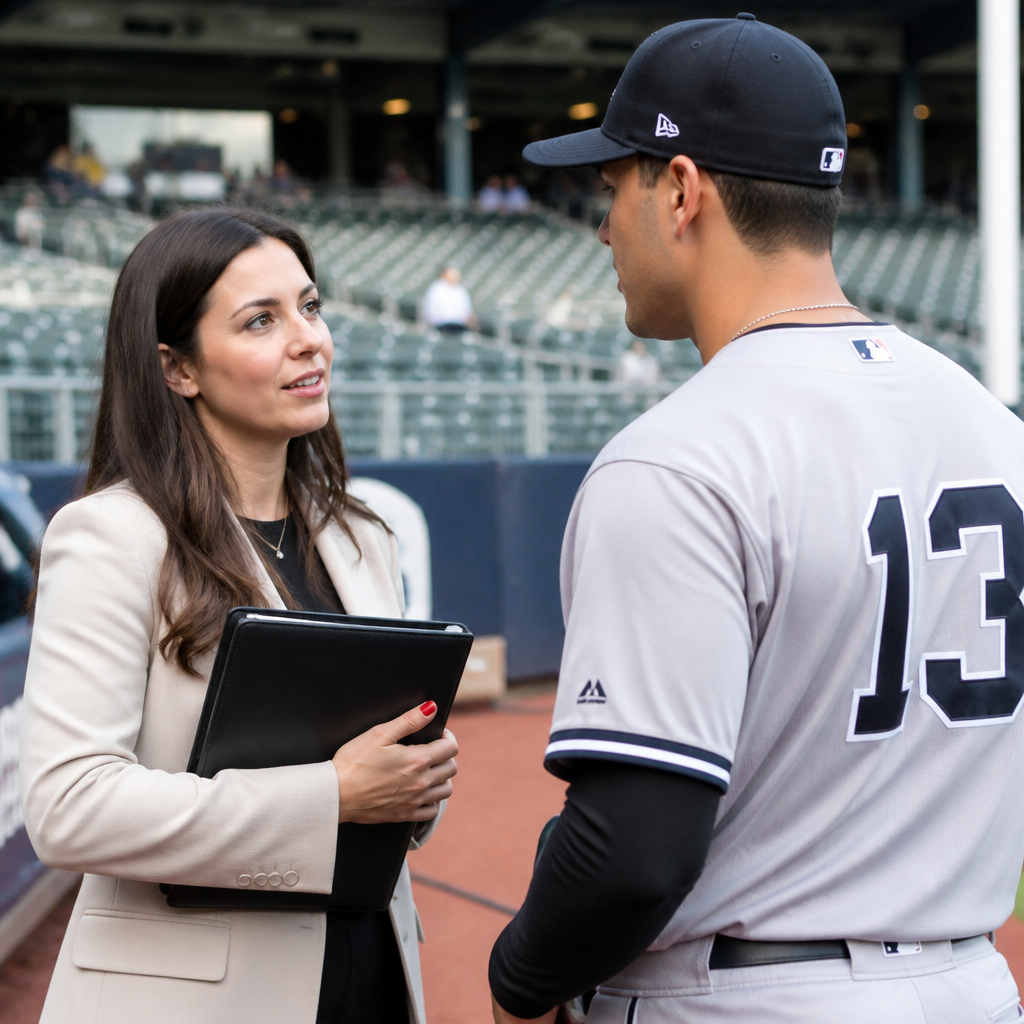
Women sports agents are reshaping baseball’s power structure, expanding who negotiates contracts, manages careers, and influences front-office decision-making across the sport. In baseball, a sports agent represents players in salary talks, endorsement deals, arbitration, free agency, and long-term career planning. For decades, that role was overwhelmingly male, mirroring the wider demographics of club ownership, scouting, coaching, and player development. The emergence of women sports agents in baseball matters because agents do far more than broker salaries. They interpret the collective bargaining agreement, protect clients from exploitative terms, coordinate legal and tax advisers, shape public narratives, and often become the most consistent strategic voice in a player’s professional life. When more women enter that space, baseball gains broader perspective, stronger competition among agencies, and new models of leadership.
I have worked around baseball business operations long enough to see that the agent’s job is frequently misunderstood. Fans notice the headline contract figure, but the real work starts much earlier and continues long after a deal is signed. A capable baseball agent evaluates service-time implications, option years, bonus structures, no-trade protection, injury contingencies, housing logistics, offseason training arrangements, and post-career planning. The agent also translates baseball’s dense labor system into practical choices for players and families. That is why the rise of women in baseball representation is not symbolic alone. It changes the profession at a structural level, creating more access points for players who want different communication styles, more collaborative advising, or representation grounded in relationship management rather than old-boy network assumptions.
This article serves as a hub for the miscellaneous side of women in baseball by explaining how women agents entered the game, what barriers they faced, which figures and firms helped normalize their presence, and where the profession is headed. It also connects the topic to related areas readers often explore next, including women executives, baseball law, player marketing, labor negotiations, and athlete brand management. If you want to understand where influence really sits in modern baseball, study the people who guide players through every major business decision. Women sports agents now belong firmly in that conversation, and their emergence is one of the clearest signs that baseball’s professional ecosystem is changing from within.
How women entered baseball representation
Women did not arrive in baseball representation through a single pipeline. Some came from sports law, some from baseball operations, some from marketing and sponsorship, and some from larger multi-sport agencies that gradually built baseball divisions. The key development was credentialed expertise. As agencies became more sophisticated in the 1980s, 1990s, and 2000s, they needed professionals who could handle salary arbitration research, contract analytics, media strategy, and international recruiting compliance. That created room for lawyers, negotiators, and client-service specialists whose value could be measured by results rather than by fitting baseball’s traditional image of who belongs in a clubhouse or boardroom.
One of the most important early examples is Arn Tellem’s agency environment, where women gained visibility in meaningful roles, not just support positions. From there and elsewhere, women built resumes in contract administration, player relations, and sponsorship strategy before leading negotiations themselves. The larger sports business world also mattered. As agencies such as IMG, Octagon, Excel Sports Management, Wasserman, and Creative Artists Agency expanded, baseball clients expected integrated services. They wanted contract advice plus endorsement strategy, charitable foundation planning, social media guidance, immigration help for international players, and family office coordination. Women who were trained across those disciplines proved indispensable.
Progress was uneven. Entry-level opportunities existed, but advancement to lead-agent status often depended on access to player acquisition channels. In baseball, recruiting clients can hinge on deep relationships with amateur players, trainers, college coaches, Latin American academies, and family advisers. Historically, many of those networks were male dominated. Women entering the field therefore had to outperform peers on preparation and trust-building while also proving they could navigate environments that were not always welcoming. The result is that the women who broke through tended to be exceptionally skilled negotiators, organizers, and communicators, because the standard for credibility was unfairly high.
What baseball agents actually do for players
A baseball agent’s central responsibility is advocacy, but that broad term includes several specialized functions. First, the agent negotiates employment contracts under Major League Baseball’s labor framework, including the reserve system, salary arbitration, pre-arbitration extensions, and free-agent bidding. Second, the agent manages off-field business opportunities such as equipment partnerships, card and memorabilia licensing, appearance fees, and regional advertising. Third, the agent coordinates a network of experts: attorneys, accountants, financial planners, strength coaches, publicists, visa specialists, and mental performance professionals. Fourth, the agent provides decision support at inflection points, such as whether to sign out of the draft, accept an extension, proceed to arbitration, or test the open market.
In practical terms, good representation in baseball often comes down to detail. For a pre-arbitration player, an agent may assemble comparable contracts to argue for an early extension that buys out arbitration years while preserving upside. For a free agent, the agent may sequence meetings to create leverage among clubs with different payroll cycles. For an international player, the agent may need to coordinate language support, immigration compliance, tax residency planning, and winter-ball commitments. Women who entered the profession succeeded because they mastered these operational realities. Players do not stay with an agent because of a title; they stay because calls get returned, options are explained clearly, and negotiated terms reflect the player’s priorities.
| Agent function | What it includes | Why it matters in baseball |
|---|---|---|
| Contract negotiation | Draft bonuses, extensions, arbitration cases, free-agent deals | Baseball careers are governed by service time and rigid labor rules |
| Career strategy | Timing of promotions, market entry, risk assessment | A wrong decision can cost years of earning power |
| Off-field business | Endorsements, licensing, appearances, media planning | Many players earn meaningful income beyond salary |
| Support coordination | Legal, tax, training, wellness, relocation, family guidance | Players need integrated advice through constant movement |
This is also where women agents have frequently differentiated themselves. Many players describe valuing responsiveness, organization, and direct communication over theatrical salesmanship. That does not mean women agents all work the same way, nor that men do not provide the same strengths. It means the profession rewards substance, and baseball’s long season magnifies that reality. Representation is not a one-day negotiation. It is a year-round management practice.
Barriers, bias, and the credibility test
The emergence of women sports agents in baseball cannot be understood without addressing the barriers they faced. The most persistent obstacle was credibility bias. Women were often presumed to be less knowledgeable about roster construction, arbitration precedent, or clubhouse culture before they had spoken a word. In meetings, some were mistaken for publicists or assistants rather than lead negotiators. In recruiting settings, they had to answer subtle questions male peers were rarely asked: Can you handle tough conversations? Will front offices take you seriously? Do players trust you in a male environment? Those questions reflected stereotype, not job performance.
Another barrier was access. Baseball is relationship dense. Agents recruit at showcases, in college programs, in the draft process, and through personal referrals across the Dominican Republic, Venezuela, Japan, and the United States. Exclusion from informal social spaces can have professional consequences. If major contacts are developed on golf courses, at private dinners, or in circles where women are treated as outsiders, then advancement slows regardless of talent. I have seen capable professionals lose opportunities not because they lacked technical skill but because legacy gatekeepers still confused familiarity with merit.
There are also practical safety and lifestyle considerations. Agency work requires extensive travel, late-night communication, and regular presence in male-dominated settings, including clubhouses and hotel bars during winter meetings. Those environments can expose women to harassment or dismissive behavior. Progress has come partly because leading agencies imposed clearer professional standards and because players themselves became more open to judging representatives by competence rather than stereotype. Even so, the burden of proving authority remains heavier for women than it should be. The significance of today’s leading women agents lies not just in their success but in the professional norms they have helped change for those coming behind them.
Notable women agents and the firms that expanded opportunity
Several women have become visible symbols of change, though the full story includes many executives working behind public headlines. Rachel Luba is the most frequently cited recent example because she built high-profile visibility, most notably through her representation of Trevor Bauer and her aggressive use of digital media, personal branding, and direct audience engagement. Her approach demonstrated that a modern baseball agent could build market presence outside traditional pathways. Luba’s rise also showed the double standard clearly: self-promotion that is accepted as savvy in male agents is often criticized as disruptive when practiced by women.
Another important figure is Lonnie Murray, who worked at major firms and represented baseball talent while building a broader profile in athlete marketing and representation. Her career reflected a pattern common among women agents: excellence across multiple business functions, not only pure contract negotiation. Emily Anderson, among others in established agencies, helped normalize women as baseball-certified representatives whose work extends across client management, arbitration preparation, and sponsorship strategy. These names matter, but so do the institutional settings that allowed women to grow books of business. Agencies with stronger cross-functional teams often gave women more routes to leadership than firms built entirely around one rainmaker’s personal network.
The MLB Players Association certification process also matters. Certification does not erase bias, but it establishes formal professional standing. In baseball, where labor rules are complex and highly codified, certification signals that an agent can operate within a regulated representational environment. Women who earned that status and then delivered measurable outcomes helped shift player perceptions. Over time, successful negotiations, retained clients, and strong referrals became the most effective rebuttal to skepticism.
Why players choose women agents
Players choose agents for personal reasons, but several themes come up repeatedly. First is communication. Many clients want clear explanations instead of performative confidence. Baseball careers are uncertain, and players often need an adviser who can discuss uncomfortable possibilities: demotions, injuries, non-tenders, arbitration losses, or a weak free-agent market. Second is trust. For young professionals dealing with sudden wealth and public attention, a trustworthy representative who is organized and candid can be more valuable than a loud recruiter. Third is customization. Some women agents have been especially strong at building holistic service models that include family communication, brand positioning, scheduling discipline, and life-planning support.
That preference is not about gender essentialism. It is about fit. Some players respond better to a collaborative adviser than to a hard-charging persona. Others want both in the same representative: someone who is relational privately and relentless in negotiation. I have watched agency selections turn on surprisingly specific issues, such as whether the agent could explain a vesting option in plain language to a player’s parents or whether the representative understood the commercial appeal of a bilingual athlete in two regional markets. These are not soft factors. They are decision-making factors, and women agents have increasingly won business by excelling at them.
The changing demographics of athletes also play a role. Younger players are often more comfortable questioning tradition and evaluating agencies like service businesses. They compare responsiveness, digital sophistication, wellness resources, and cultural fluency. In that environment, women agents compete effectively because many built their practices around modern expectations from the start.
Where this topic connects across women in baseball
As a hub within the broader women in baseball conversation, women sports agents connect to nearly every adjacent topic. They intersect with women executives because both groups influence roster economics and labor outcomes. They connect with women in sports law because contract drafting, grievance strategy, name-image-likeness questions for amateurs, and international compliance all sit near legal practice. They link to women in player development and performance because agents increasingly advise on offseason programs, rehabilitation vendors, and mental skills resources. They also connect to women in media and marketing because a player’s public image can affect endorsement value, award narratives, and long-term post-career opportunities.
Readers exploring this subtopic should also look at the pipeline question. How do women move from internships, law school clinics, baseball operations roles, or marketing departments into certified representation? What mentorship structures exist? Which agencies invest in internal advancement instead of token visibility? Another useful angle is global baseball. Representation in Latin America and Asia raises distinct issues around identity, recruiting ethics, trainer relationships, posting systems, and cross-border taxation. Women who build expertise there will shape the next phase of the profession.
The central lesson is straightforward. Baseball changes when influence changes hands. Agents sit at a crucial junction between players, clubs, sponsors, and the media ecosystem. The emergence of women sports agents in baseball is therefore not a side story. It is a business story, a labor story, and a leadership story. For fans, it reveals how careers are really managed behind the box score. For players, it expands the pool of qualified advocates. For the sport, it creates a more competitive and professional representation market. If you are building your understanding of women in baseball, keep this topic on your core reading list and follow the people doing the negotiating, advising, and decision-shaping work.
Frequently Asked Questions
What does a baseball sports agent do, and why is that role so influential?
A baseball sports agent serves as a player’s business representative, negotiator, strategist, and long-term advisor. At the most visible level, agents handle contract negotiations, arbitration cases, free-agency discussions, endorsement opportunities, and bonus structures. However, their influence extends far beyond salary talks. A strong agent helps shape the trajectory of a player’s career by advising on timing, market positioning, team fit, injury risk, public image, offseason opportunities, and post-playing plans. In many cases, agents are also central figures in communication between players and club executives, especially when major decisions involve trades, extensions, opt-outs, roster roles, or international opportunities.
In baseball, this role is especially significant because player careers are often long, nonlinear, and highly dependent on timing. A prospect may need guidance on draft strategy, a pre-arbitration player may need help understanding leverage, and a veteran free agent may need a broader view of team competitiveness, taxes, geography, and legacy. Agents interpret complex labor rules and financial structures that most players should not have to manage alone while performing at an elite level. Because they influence where talent goes, how much it costs, and how players navigate the industry, agents affect not only individual careers but also competitive balance, payroll strategy, and front-office planning throughout the sport.
Why is the emergence of women sports agents in baseball such an important development?
The rise of women sports agents in baseball matters because it reflects a meaningful shift in who holds influence within one of the sport’s most powerful and historically exclusive roles. For decades, baseball’s decision-making ecosystem was heavily male-dominated, from ownership and front offices to scouting, coaching, and player representation. As more women enter and succeed in player representation, they are changing expectations about who can lead negotiations, build trust with athletes, and shape the business side of the game. That is important not simply as a symbolic breakthrough, but because representation affects real outcomes: contracts, endorsements, career choices, and access to opportunity.
This emergence also broadens the culture of baseball itself. Women agents bring professional expertise, negotiation skill, legal knowledge, and relationship-building ability to an industry that has long benefited from more varied perspectives. Their presence challenges old assumptions about authority and access, especially in spaces where influence has traditionally been concentrated among familiar networks. As women agents become more visible, younger professionals see a clearer pathway into baseball operations, sports law, player services, and executive leadership. In that sense, their growth is not limited to one profession; it helps reshape the power structure around the sport by expanding who gets to participate in high-stakes decisions and who is seen as credible at the negotiating table.
How are women sports agents changing baseball’s power structure and front-office dynamics?
Women sports agents are helping reshape baseball’s power structure by expanding the range of voices involved in negotiations and strategic player decisions. Agents already sit at the intersection of player interests and team interests, so when a more diverse group enters that space, the balance of relationships throughout the sport begins to evolve. Women agents are not just signing clients; they are influencing how teams communicate, how player value is framed, and how career planning is approached. Their work can affect negotiation tone, business priorities, branding strategy, and even the broader expectations clubs have when interacting with player representatives.
Front offices are increasingly sophisticated, data-driven, and collaborative, and successful agents must be equally prepared. Women agents who thrive in baseball often do so by combining legal fluency, analytics awareness, market insight, and strong interpersonal skills. That combination can make them particularly effective in an era when negotiations are no longer based only on traditional stats or reputation, but on service time, projection models, health assessments, positional value, and long-term roster planning. As clubs encounter more women operating successfully in these high-level conversations, the industry gradually normalizes female authority in spaces once treated as closed networks. Over time, that can influence hiring patterns, mentorship structures, and executive culture well beyond the agent profession itself.
What challenges have women sports agents faced in baseball, and how are those barriers changing?
Women sports agents in baseball have often had to navigate barriers rooted in access, credibility, and tradition. Because the profession developed within a male-dominated sports business culture, many of the most important relationships, mentorship channels, and networking circles were historically harder for women to enter. In practical terms, that could mean fewer early-career opportunities, more skepticism during negotiations, limited visibility, or the burden of constantly having to prove expertise in rooms where male counterparts were assumed to belong. In an industry where trust and relationships matter deeply, exclusion from informal networks can be just as limiting as formal discrimination.
Those barriers are changing, although not disappearing overnight. As more women build successful client rosters, negotiate meaningful deals, and establish respected reputations, the old assumptions lose credibility. The sports industry has also become more publicly accountable, with greater attention paid to inclusion, workplace culture, and leadership diversity. In addition, the growth of sports law programs, agency internships, analytics departments, and player-development careers has created more entry points into baseball’s business side. Players are also increasingly open to selecting representatives based on trust, results, communication style, and strategic fit rather than outdated expectations about who an agent is supposed to be. The result is gradual but real change: women agents still face challenges, but they are gaining influence through performance, persistence, and visibility.
What does the future look like for women sports agents in baseball?
The future appears increasingly promising, especially as baseball continues to modernize its business operations and talent pipelines. Women sports agents are likely to become more visible not only in contract negotiations but also in branding, media strategy, international representation, and long-term career management. As player representation grows more complex, agencies need professionals who can navigate labor rules, data-driven valuation, cross-platform marketing, and athlete wellness with equal confidence. Women who excel in these areas are well positioned to expand their influence, attract high-profile clients, and shape broader industry standards.
Just as important, their continued rise may have ripple effects throughout baseball. More women succeeding as agents can encourage broader acceptance of women in executive and decision-making roles across front offices, legal departments, player development, and league operations. That creates a stronger ecosystem in which talent is recognized more on merit and less through legacy assumptions. For players, this means a wider choice of representation styles and expertise. For the sport, it means a healthier and more competitive professional environment. The emergence of women sports agents in baseball is therefore not a short-term trend; it is part of a larger redefinition of who holds power, who influences careers, and who helps shape the future of the game.