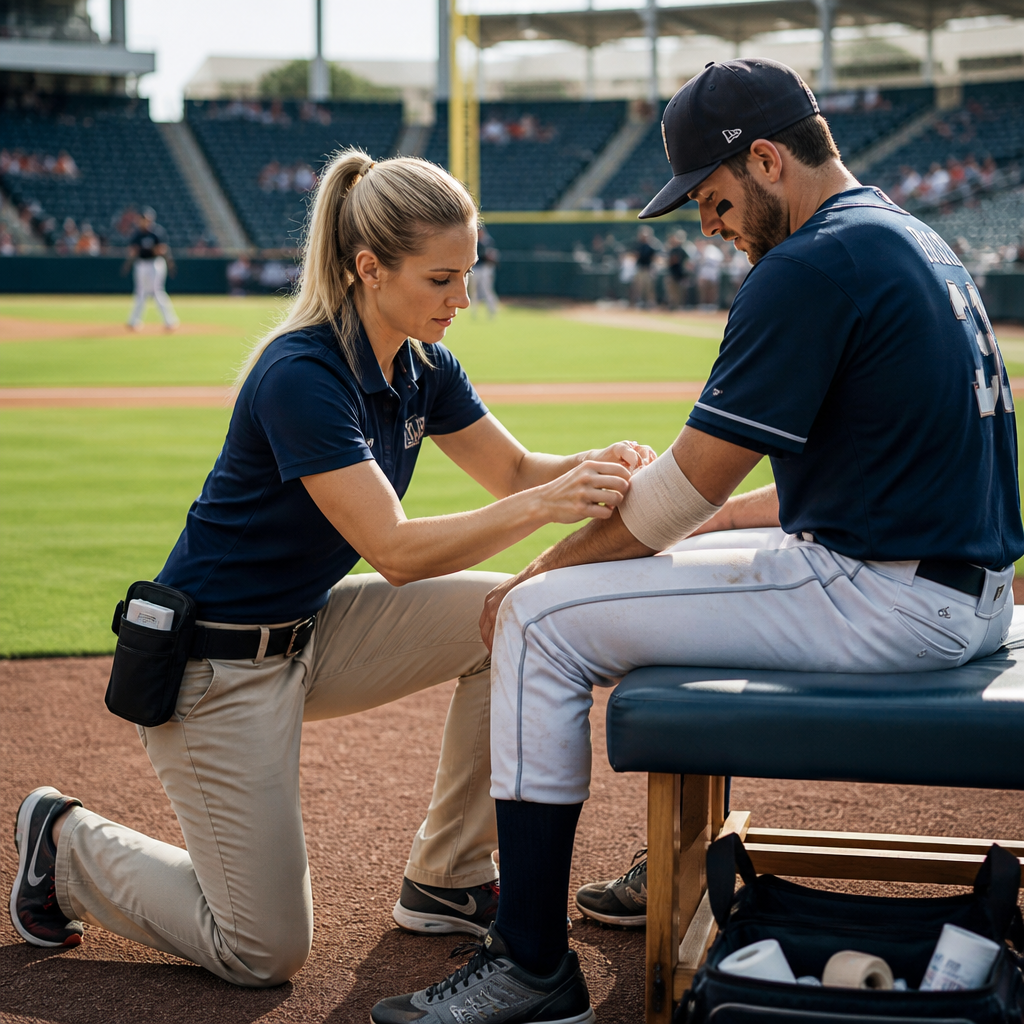
Women’s health and fitness contributions to baseball have shaped the sport far beyond the visible roles of players on the field. The phrase covers training science, injury prevention, nutrition, mental performance, rehabilitation, and the advocacy work that has pushed baseball organizations to take women athletes seriously. In practical terms, it means the systems that help girls and women throw harder, move better, recover faster, and stay in the game longer. It also includes the coaches, athletic trainers, strength specialists, physical therapists, sport dietitians, and researchers whose work has improved standards for everyone in baseball.
This topic matters because baseball was built around male participation, male data, and male development models for more than a century. When I have worked with baseball programs that began opening structured opportunities for women, the same pattern appeared repeatedly: facilities existed, but programming did not. Athletes were expected to adapt to equipment, schedules, training loads, and medical assumptions designed around men. That gap affected performance, confidence, and injury risk. Closing it has required both evidence and persistence.
Women in baseball need the same fundamentals as any athlete: technical skill, progressive strength training, power development, adequate energy intake, sleep, and smart recovery. Yet they also benefit from support that acknowledges sex-based physiology without reducing athletes to stereotypes. A pitcher needs an individualized throwing progression, not generic “light weights.” A catcher needs hip mobility and trunk strength, not assumptions that she should avoid heavy resistance training. Better health and fitness practice has therefore become one of the most important contributors to women’s participation and success in baseball.
As a hub within the broader Women in Baseball topic, this article maps the miscellaneous but essential areas that connect performance and health. It explains how strength and conditioning, sports medicine, nutrition, menstrual health, mental skills, and inclusive program design have expanded women’s baseball pathways from youth leagues to national teams.
Strength, conditioning, and performance development
One of the biggest contributions to women’s baseball has been the normalization of structured strength and conditioning. For years, many girls in baseball were told to rely on skill alone, while boys were introduced earlier to velocity training, medicine ball power work, sprint mechanics, and periodized lifting. That difference mattered. Baseball performance depends on force production through the ground, efficient transfer through the trunk, and precise sequencing at high speed. Women benefit from the same evidence-based training principles that guide elite men’s programs.
A strong baseball program for women usually includes lower-body strength, rotational power, shoulder care, grip strength, deceleration training, and repeated sprint work. Exercises such as trap-bar deadlifts, split squats, pull-ups, lateral lunges, med-ball scoop tosses, and anti-rotation trunk drills build the qualities that support hitting and throwing. The goal is not bodybuilding. The goal is usable strength that improves bat speed, arm health, and resilience across a long season.
I have seen one especially important shift at the youth and collegiate levels: coaches now measure outcomes. Instead of vague feedback, they track sprint times, vertical jump, medicine ball distance, exit velocity, throwing velocity, and workload tolerance. That data helps athletes see progress and helps staff make better decisions. It also challenges outdated myths that women should train differently in ways that limit development. They may need individualized programming, but not lowered expectations.
Sports medicine, injury prevention, and rehabilitation
Health support has arguably contributed as much to women’s baseball as performance training. Baseball places high stress on the shoulder, elbow, spine, hips, knees, and hands. Throwing athletes require careful monitoring of volume, intensity, and recovery. Position players need management for sprinting load, rotational stress, and repetitive impact. Historically, girls in baseball often played without baseball-specific medical oversight, especially outside elite tournaments. That has changed as more athletic trainers, physical therapists, and sports medicine physicians have applied established return-to-throw and return-to-play principles to women’s baseball.
Arm care is central. Well-run programs use pre-throw screening, scapular strength work, rotator cuff loading, thoracic mobility, and progressive throwing plans rather than guessing. Tools such as the rate of perceived exertion scale, wellness questionnaires, and simple workload logs help identify fatigue before it becomes injury. In rehabilitation, clinicians increasingly avoid the mistake of rushing athletes back based only on pain reduction. Functional strength, range of motion symmetry, throwing mechanics, and confidence all matter.
Concussion awareness, ACL prevention, and bone stress management also deserve attention. While baseball is not discussed like soccer or basketball in these areas, women players still face collision, cutting, and overuse risks. Better screening and rehab standards have helped athletes return more safely and remain in competition longer.
Nutrition, recovery, and menstrual health support
Nutrition has been a major but often underestimated contribution. Many women in baseball juggle school, travel, work, and limited access to team meals or sport dietitians. Under-fueling is common, especially when athletes train hard but do not increase carbohydrate, protein, fluids, and total energy intake enough to match output. In baseball, that can show up as slower recovery, reduced power, impaired concentration, and elevated injury risk. Practical support matters more than perfect meal plans: pregame carbohydrate, postgame protein, hydration routines, and consistent fueling across doubleheaders can change performance quickly.
Menstrual health support has improved the sport by replacing silence with planning. Athletes may experience cycle-related changes in symptoms, sleep, cramping, iron status, or perceived exertion, but responses vary widely. Good practice does not assume every player is affected the same way. Instead, staff create an environment where tracking symptoms is normal, access to products is basic, and medical evaluation is available for concerns such as severe pain, irregular cycles, or low energy availability. In my experience, even simple conversations can reduce anxiety and improve readiness because athletes stop feeling that normal physiology must be hidden.
| Area | Common challenge | Practical baseball solution |
|---|---|---|
| Fueling | Long gaps between games | Portable carbohydrates, recovery shakes, scheduled snacks |
| Hydration | Tournament heat and travel | Individual bottle targets, electrolyte use, weigh-in checks |
| Menstrual health | Symptoms ignored or stigmatized | Private tracking, product access, clinician referral when needed |
| Recovery | Back-to-back competition | Sleep plan, cooldown, mobility, protein within two hours |
Recovery extends beyond food. Sleep quantity and quality influence reaction time, decision-making, mood, and tissue repair. Baseball schedules often interfere with both, so the best programs teach wind-down routines, travel strategies, and realistic recovery habits rather than expensive gimmicks.
Mental performance, confidence, and athlete retention
Women’s health contributions to baseball also include mental performance support. Baseball is a failure-heavy sport built on public evaluation and repeated adjustment. For girls and women who have often had to defend their place in baseball spaces, the mental load can be heavier. Confidence is not a slogan in this context; it is a trainable performance factor linked to preparation, social support, and psychological safety.
Sport psychologists and skilled coaches help athletes manage pressure, recover from mistakes, and stay process-focused. Useful methods include pre-pitch routines, cue words, breathing drills, imagery, attentional control training, and postgame reflection with clear learning goals. These tools are not abstract wellness trends. They improve at-bat quality, defensive consistency, and command on the mound by reducing cognitive overload.
Retention is another health issue. Many talented girls leave baseball not because they lack ability, but because the environment becomes exhausting. They face limited roster spots, few female role models, and constant comparison with boys who have had better access to instruction. When programs offer mentorship, qualified coaching, and visible pathways to women’s baseball events, dropout rates fall. Mental health support and community building therefore contribute directly to the talent pipeline.
Leadership, research, and inclusive program design
Some of the most durable contributions have come from women working behind the scenes. Female athletic trainers, physicians, strength coaches, biomechanics analysts, and administrators have improved baseball by asking better questions. Where are the data gaps for women throwers? Are uniform policies, travel arrangements, and recovery spaces actually usable? Do coaching cues reflect current biomechanics, or old assumptions? These questions lead to practical change.
Research remains an area where baseball must keep improving. Much of the published work on pitching mechanics, elbow torque, bat swing kinematics, and workload management has focused on male athletes. That does not make the research useless, but it does mean women’s baseball needs more direct study. Motion-capture labs, force plates, markerless video systems such as KinaTrax, and wearable technologies can help build better normative data for women players. The point is not to isolate women from the sport’s broader science. It is to ensure recommendations are based on relevant evidence.
Inclusive program design is where health and participation come together. Effective organizations provide appropriate changing spaces, access to qualified medical care, uniforms that fit, transparent reporting systems, and staff education on respectful communication. They also create links to related resources within a women in baseball content network, such as player development, coaching, history, and opportunity pathways. These operational details may seem miscellaneous, but they determine whether athletes can train consistently and safely. In baseball, consistency is development.
Why these contributions matter for the future of women in baseball
The long-term significance of women’s health and fitness contributions to baseball is simple: they turn access into sustainability. A girl may gain entry to a league because a door opens, but she stays and improves because her body is supported, her training is progressive, her injuries are treated properly, and her environment respects her as an athlete. Better systems produce better baseball.
That benefit extends beyond women’s programs. When teams improve screening, recovery education, communication, and workload management for women, they often raise standards for everyone. Baseball has repeatedly advanced when it has applied stronger science and better care across the board. Women have been part of that progress as athletes and as professionals building the infrastructure around the sport.
For readers exploring the broader Women in Baseball landscape, this miscellaneous hub should serve as a practical foundation. Health and fitness are not side topics. They connect player development, coaching quality, injury reduction, performance consistency, and long-term participation. If you are building a program, start with basics that are proven: qualified strength training, baseball-specific medical support, consistent fueling, open menstrual health conversations, mental skills coaching, and inclusive operations. Those steps create measurable results, and they help more women thrive in baseball for the long run.
Frequently Asked Questions
1. What does “women’s health and fitness contributions to baseball” actually include?
Women’s health and fitness contributions to baseball include much more than participation on the field. The term covers the full performance and support system that helps girls and women develop as baseball athletes, including strength and conditioning, throwing mechanics, mobility training, injury prevention, nutrition, recovery, rehabilitation, mental performance, and long-term athlete development. It also includes the work of women coaches, athletic trainers, physical therapists, sports dietitians, exercise scientists, psychologists, and advocates who have helped baseball programs better understand what female athletes need in order to perform safely and consistently.
In practical terms, these contributions have changed how athletes train and how organizations think about player care. Better conditioning programs help athletes generate more force, improve running speed, and maintain durability over long seasons. Smarter throwing progression plans reduce overload and improve arm health. Nutrition guidance supports energy availability, muscle repair, hydration, and recovery. Mental skills training helps players handle pressure, build confidence, and stay focused through setbacks. Advocacy has also played a major role by pushing baseball institutions to provide more resources, better coaching access, and more serious development pathways for female athletes. Together, these contributions have expanded both performance opportunities and the overall legitimacy of women in baseball.
2. How have women’s health and fitness research and training methods improved baseball performance?
Women’s health and fitness research has improved baseball performance by replacing generic training approaches with methods that are more individualized, evidence-based, and responsive to the needs of female athletes. For years, many baseball development systems were built around male athlete data, assumptions, and coaching models. As more attention has been given to women’s physiology, biomechanics, workload tolerance, and recovery patterns, training has become more precise. This has helped athletes improve power output, movement efficiency, throwing velocity, balance, reaction time, and resilience across a season.
For example, modern strength and conditioning programs now place greater emphasis on movement quality, rotational power, lower-body force production, scapular stability, core control, and deceleration ability. Those areas are especially important in baseball because hitting, throwing, sprinting, and fielding all depend on how efficiently force moves through the body. Coaches and sports performance professionals have also become more careful about monitoring fatigue, structuring progressive overload, and sequencing speed, skill, and recovery work so athletes can improve without breaking down. These changes are not just about training harder; they are about training smarter.
Another major improvement has come from integrating performance support disciplines rather than treating them separately. When strength coaches, medical staff, therapists, and nutrition professionals work together, athletes benefit from a more complete development plan. A player recovering from shoulder stress, for instance, may need modified throwing volume, strength work for the posterior chain and scapular muscles, sleep support, and fueling adjustments at the same time. That holistic model has helped many female baseball athletes stay healthier, return faster from setbacks, and reach higher levels of performance than would have been possible under older, less coordinated systems.
3. Why are injury prevention and rehabilitation such important parts of women’s contributions to baseball?
Injury prevention and rehabilitation are central because they directly affect whether athletes can continue developing and competing over time. Baseball places repeated stress on the shoulder, elbow, spine, hips, knees, and hamstrings, especially through throwing, rotational hitting, sprinting, and sudden changes of direction. Women working in sports medicine, physical therapy, athletic training, and performance science have helped bring more attention to workload management, movement screening, prehab routines, post-throw recovery, and return-to-play standards. Their contributions have strengthened the idea that durability is a trainable quality, not just a matter of luck.
Preventive work often includes identifying mobility restrictions, strength imbalances, poor deceleration mechanics, and overuse patterns before they become major problems. In baseball, this might mean monitoring shoulder range of motion, evaluating hip rotation, improving single-leg stability, strengthening the forearm and rotator cuff, or adjusting throwing volume when signs of fatigue appear. These interventions can make a significant difference, especially for athletes who may not have had the same developmental resources or medical support traditionally available in more established baseball pipelines.
Rehabilitation has also become more sophisticated and athlete-centered. Instead of focusing only on pain reduction, modern rehab aims to restore full function, rebuild confidence, and prepare the athlete for the exact demands of baseball competition. That means a return from injury should include progressive loading, sport-specific movement, throwing progression, and psychological readiness, not simply a clearance date. Women professionals and advocates in this area have helped shift baseball culture toward better care standards, emphasizing that athlete health is essential to performance, retention, and long-term participation.
4. What role do nutrition and mental performance play in supporting women in baseball?
Nutrition and mental performance are foundational because they influence nearly every aspect of training, recovery, and competition. Proper nutrition supports energy levels, muscle repair, immune function, hydration, focus, and hormonal health. For baseball athletes, this is especially important because the sport combines explosive movements with long practices, repeated games, travel demands, and inconsistent schedules. Women’s sports nutrition specialists have helped highlight the importance of adequate fueling rather than under-eating, showing that performance suffers when athletes do not consume enough total energy, protein, carbohydrates, fluids, and key micronutrients to match training demands.
This work matters because female athletes are sometimes exposed to mixed messages about body image, performance, and eating habits. A strong nutrition framework helps shift the conversation toward strength, recovery, and resilience. Instead of chasing appearance-based goals, athletes can focus on eating in ways that support power, concentration, tissue repair, and consistent output. Guidance around pre-game meals, post-workout recovery, hydration strategy, iron intake, and travel nutrition can significantly improve how players feel and perform throughout a season.
Mental performance is equally important. Baseball is a sport of failure, adjustment, and constant evaluation, which means confidence and emotional regulation can have a major effect on results. Women contributing in sport psychology, coaching, and athlete advocacy have helped normalize mental skills training as part of complete player development. Techniques such as breath control, self-talk, visualization, pre-pitch routines, reset strategies, and goal setting help athletes manage pressure and recover from mistakes more effectively. This not only improves performance in key moments but also supports long-term well-being, motivation, and retention in the sport.
5. How have women advocates, coaches, and health professionals changed the future of baseball?
Women advocates, coaches, and health professionals have changed the future of baseball by expanding access, raising standards, and forcing the sport to take women’s development seriously. Their influence can be seen in better training environments for girls, increased visibility for women in baseball operations and performance roles, stronger medical and wellness support systems, and broader recognition that female athletes belong in baseball at every level. This progress did not happen automatically. It came from years of education, program building, mentoring, research, and public advocacy aimed at challenging outdated assumptions about who baseball is for and what resources women deserve.
Coaches and performance professionals have helped create athlete pathways that are more technically sound and more sustainable. They have introduced stronger development models for throwing, hitting, speed, mobility, and recovery. Health professionals have improved injury care and brought more scientific rigor to training recommendations. Advocates have pushed organizations to invest in facilities, staffing, competitive opportunities, and athlete support structures that make continued participation possible. These combined efforts have helped more girls and women not only enter the sport, but remain in it long enough to thrive.
Looking ahead, their contributions will continue to shape baseball through better research, more inclusive program design, and stronger integration of health and performance services. As organizations recognize that athlete development must be individualized and evidence-based, women’s expertise will remain essential. The lasting impact is bigger than wins and losses. It is the creation of a baseball culture where girls and women are better trained, better supported, healthier, and more fully recognized as athletes, leaders, and professionals within the game.