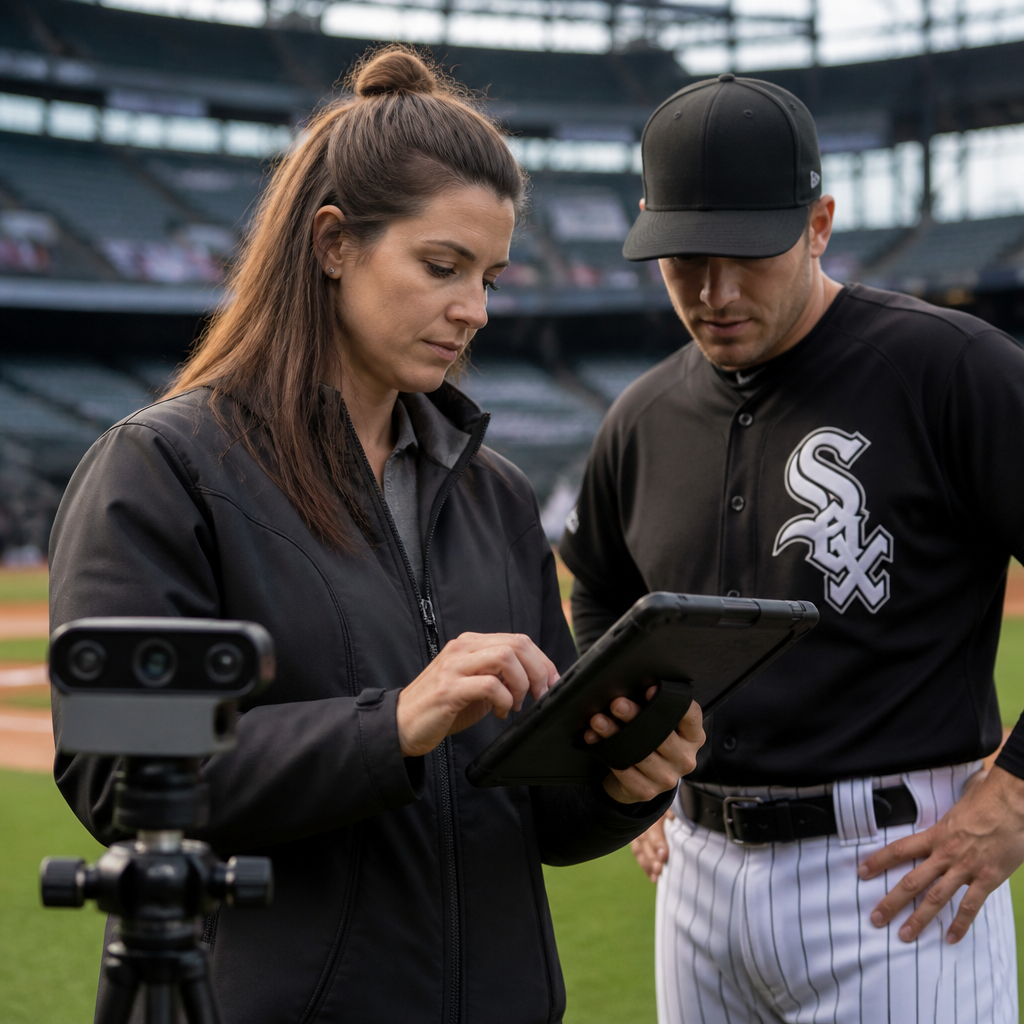
Baseball technology has changed the sport from a game judged mostly by instinct and box scores into one shaped by high-speed cameras, radar-based tracking, biomechanical modeling, wearable sensors, data engineering, and digital storytelling. Women have been central to that transformation. Their impact on baseball technology spans research labs, major league front offices, broadcast booths, startup companies, software teams, university programs, and player-development departments. When people ask how women influence modern baseball beyond the field, this is one of the clearest answers: they build the systems that measure performance, improve health, explain strategy, and widen access to the game.
In practical terms, baseball technology means the tools and methods used to capture, analyze, and communicate information about pitching, hitting, fielding, training, scouting, fan behavior, and business operations. That includes well-known systems such as Statcast, Hawk-Eye, Rapsodo, Blast Motion, TrackMan, force plates, markerless motion capture, and cloud-based video platforms. It also includes the less visible work behind those tools: data governance, model validation, user-interface design, machine learning pipelines, privacy controls, and the translation of technical findings into coaching decisions. I have worked with teams that relied on these systems daily, and the pattern is obvious. The best technical environments improve because women are not just participating in them; they are setting priorities, asking better questions, and raising the standard for what useful analysis looks like.
This matters for three reasons. First, technology now affects nearly every baseball decision, from pitch design to return-to-play timelines. Second, inclusive technical teams produce better products because they challenge assumptions and design for a wider range of users. Third, women’s visibility in baseball technology changes who sees a future in the sport. A hub article on women’s impact on baseball technology therefore needs to do more than list names. It should explain where women are shaping the field, what technologies they influence, how that work reaches players and fans, and why this subtopic connects to the broader story of women in baseball.
How women helped redefine baseball analytics and decision-making
Women have made baseball analytics more rigorous, more actionable, and more connected to player development. In earlier eras, analysts often worked in isolation, generating reports that coaches did not trust or could not use. Over time, women in baseball operations, research, and quantitative analysis helped bridge that gap by turning raw data into decision support. That shift matters because a model is only valuable when it changes behavior. In front offices, women have contributed to forecasting systems, valuation models, roster optimization, opponent scouting, and in-game strategy frameworks. Their work often combines statistics, programming, and communication, which is exactly what modern baseball requires.
A clear example is the evolution from descriptive metrics to predictive models. Batting average and ERA describe outcomes, but player-development departments need measures that isolate skill. Women working in analytics have helped teams focus on variables such as swing decisions, bat speed, release characteristics, vertical approach angle, spin efficiency, chase rate, and contact quality. Those terms are now common, but they became useful because analysts tested whether they actually predicted future performance. In my experience, some of the strongest analysts in baseball are the ones who question whether a metric is stable, whether it is biased by context, and whether a coach can reasonably influence it. That skeptical discipline has improved the quality of baseball decisions.
Women have also helped normalize interdisciplinary workflows. Instead of treating scouting and analytics as rival camps, better organizations combine subjective evaluation with objective measurement. A scout may identify athleticism, mound presence, or a hitter’s adjustability; a data scientist can test whether those observations align with measurable traits. When those perspectives reinforce each other, teams draft and develop players more effectively. This integrative work is not glamorous, but it is foundational. It is one reason the conversation has moved from “stats versus eyes” to “how do we make every source of information more reliable?”
Women advancing player development through tracking, biomechanics, and health technology
One of the most important areas in baseball technology is player development, where women have had a measurable influence on how organizations train athletes and reduce injury risk. Pitching labs and hitting centers now use synchronized video, ball-flight data, force plates, wearable sensors, and biomechanical reports to build individualized plans. Women working as biomechanists, sports scientists, physical therapists, strength specialists, and coordinators of performance technology have improved both the science and the day-to-day usability of these systems.
Consider how a pitching intervention works in practice. A pitcher arrives with reduced velocity or recurring elbow discomfort. A modern lab records motion with high-speed cameras, assesses workload history, captures force-production data, and compares release and arm-action variables against prior baselines. The technology itself does not solve the problem. Someone has to interpret whether the issue is timing, mobility, trunk rotation, shoulder external rotation, stride direction, fatigue, or an equipment change. Women in these roles often succeed because they connect technical evidence to the athlete’s lived experience. That translation is what turns data into trust.
Tools such as Hawk-Eye and TrackMan quantify pitch movement and release, while Rapsodo can support quick bullpen feedback on spin axis and efficiency. Force plates reveal how a hitter or pitcher generates and transfers power. Markerless systems reduce setup time and let staff collect movement data in more natural environments. The performance gain is not just precision; it is repeatability. If a player can be measured consistently over weeks and months, staff can tell whether a change is real or just noise. Women contributing to this work have pushed for cleaner protocols, better baseline testing, and more careful communication about uncertainty.
Health technology is just as important. Baseball faces persistent concerns about overuse injuries, especially among pitchers. Workload monitoring, return-to-throw programs, acute-to-chronic load concepts, and kinetic-chain assessments all rely on careful data handling. The best practitioners do not treat athletes like spreadsheets. They combine objective markers with soreness reports, sleep patterns, travel stress, and competition schedules. That balanced approach is often where excellent staff members stand out, and many women in performance departments have helped make baseball less reactive and more preventative.
Women shaping baseball media technology, fan experience, and digital products
Baseball technology does not stop at player evaluation. Women have also shaped the tools that explain the game to audiences and make fan engagement more interactive. Broadcast graphics, second-screen apps, automated highlights, social media clips, personalized notifications, and ticketing analytics all depend on software, product management, and data design. In baseball media, the challenge is not simply gathering information; it is presenting it in a way that is accurate, fast, and useful to casual and expert fans alike.
Statcast changed fan expectations by making once-hidden elements visible: sprint speed, catch probability, expected statistics, and route efficiency. But metrics only matter when people understand them. Women working in content strategy, editorial analytics, visualization, and broadcast production have played a major role in translating advanced data into plain language. A well-designed graphic can show why a four-seam fastball at the top of the zone pairs with a low glove-side slider. An explainer video can turn a dense concept like seam-shifted wake into something a youth coach can discuss. That communication layer is a technology function, not just a storytelling one.
Digital product work also broadens access. Team websites, mobile apps, streaming platforms, and community tools are more useful when they are built with accessibility in mind. Searchability, captioning, color contrast, localization, and intuitive navigation determine whether a product serves everyone. In my work around sports platforms, the strongest product teams are the ones that treat accessibility and audience diversity as design requirements from the start. Women in these teams have consistently pushed for practical improvements that help real users, not hypothetical ones.
Key areas where women are influencing baseball technology
| Area | Primary tools | Typical contribution | Real-world impact |
|---|---|---|---|
| Analytics | SQL, Python, R, visualization platforms | Build models, dashboards, scouting reports | Better roster decisions and game planning |
| Biomechanics | Hawk-Eye, high-speed video, force plates | Assess movement patterns and efficiency | Velocity gains and injury-risk reduction |
| Sports medicine | Wearables, workload software, rehab tracking | Monitor readiness and recovery progression | Safer return-to-play decisions |
| Product and media | Statcast feeds, app analytics, CMS platforms | Design fan-facing features and visuals | Clearer storytelling and stronger engagement |
| Scouting technology | Video systems, databases, mobile capture tools | Standardize reports and integrate observations | More consistent talent evaluation |
Why representation changes the quality of baseball technology
Representation is often discussed as a social issue, but in baseball technology it is also a product-quality issue. Tools are better when the people building them bring different professional backgrounds, communication styles, and assumptions to the work. A data platform designed only for analysts may fail coaches. A rehab interface built without clinician input may miss critical context. A fan feature designed without considering new audiences may confuse the very people it hopes to attract. Diverse teams catch these problems earlier.
There is also a pipeline effect. When women are visible as analysts, engineers, biomechanists, and product leaders in baseball, students can map a realistic career path into the sport. That matters because baseball technology draws talent from many disciplines: computer science, kinesiology, statistics, engineering, journalism, graphic design, and medicine. The industry becomes stronger when it recruits from that full talent pool instead of limiting itself through habit or outdated assumptions. Several clubs, league offices, and independent training centers have improved internships and fellowship pathways, but sustained progress depends on hiring managers who evaluate technical skill and communication ability without bias.
Representation further improves the conversations around ethics and policy. Baseball technology raises legitimate questions about surveillance, biometric privacy, data ownership, and competitive fairness. Who controls an athlete’s movement data after a trade? How should teams handle wearable information gathered during rehabilitation? What standards should govern youth-player data? Mixed teams are not automatically ethical teams, but broader representation often leads to more careful questioning of who benefits, who bears risk, and what guardrails are needed. In a field moving this quickly, that caution is a strength.
Challenges women still face in baseball technology careers
Progress is real, but barriers remain. Baseball has historically been relationship-driven, and informal networks still influence who gets interviews, mentorship, and stretch assignments. Women in technical roles may also face credibility tests that male peers avoid, especially in environments where coaching language and engineering language already compete for authority. Early-career professionals often have to prove both their technical competence and their fluency in baseball operations culture.
Another challenge is role ambiguity. Many organizations say they want innovation, then underinvest in documentation, staff training, or cross-functional process. That can leave technical employees doing excellent work that never reaches the field. I have seen talented analysts and sports scientists become frustrated when no one owns implementation. This is not a women-only problem, but it can be harder for underrepresented staff to push change without executive sponsorship. Strong organizations solve this by defining decision rights, assigning translators between departments, and rewarding collaboration instead of territorial behavior.
There is also the issue of visibility. Fans hear about star players and top executives, but they rarely see the analysts, coordinators, engineers, and clinicians whose work shapes outcomes. That can make women’s contributions easier to overlook. Better public recognition, conference speaking opportunities, bylines, and professional development support all help correct this. So does building clearer subtopic coverage under women in baseball, because hub pages like this one connect scattered stories into a coherent record of influence.
Women’s impact on baseball technology is not a side note to the history of the sport. It is one of the clearest ways baseball has modernized. Women are helping teams evaluate players more accurately, develop athletes more safely, explain the game more intelligently, and build digital products that reach wider audiences. Their work spans analytics, biomechanics, health technology, scouting systems, media platforms, and governance. Just as important, they are improving how these areas connect, which is where many organizations either gain an edge or fall behind.
For readers exploring women in baseball, this miscellaneous technology hub should serve as a starting point and a framework. The central lesson is simple: innovation in baseball is not only about new devices or bigger datasets. It is about the people who ask better questions, validate what matters, and turn information into action. Women across baseball are doing that every day. Follow the specialists, read the case studies, and look closely at the systems behind the game. That is where much of baseball’s future is being built.
Frequently Asked Questions
How have women influenced the development of baseball technology?
Women have helped shape baseball technology at nearly every level, from early research and data analysis to product design, implementation, and communication. Their influence can be seen in the tools teams now rely on every day: pitch tracking systems, bat and ball measurement platforms, biomechanical evaluations, player workload models, injury-risk monitoring, video analysis software, and fan-facing broadcast enhancements. In many cases, women have not simply used these systems; they have built the workflows around them, translated raw information into decision-making tools, and pushed organizations to adopt more rigorous, evidence-based processes.
One of the most important parts of that influence is interdisciplinary thinking. Baseball technology is not just about hardware or code. It sits at the intersection of engineering, physics, kinesiology, computer science, medicine, psychology, and storytelling. Women working in baseball have often helped connect those fields, making complex systems more usable for coaches, front office leaders, players, and fans. A high-speed camera setup, for example, is only valuable if someone can turn its output into clear development goals. Radar data only matters if it can be interpreted within context. Wearables only help if their metrics are trusted, validated, and applied responsibly. Women have played central roles in making that entire chain work.
They have also expanded what innovation looks like in baseball. Innovation is not only inventing a new tracking device; it also includes improving data pipelines, refining injury-prevention models, building internal apps, optimizing scouting databases, developing better visualizations, and creating broadcast tools that explain the game more effectively. In that sense, women’s impact on baseball technology is both technical and strategic. They have contributed to the architecture behind modern baseball operations while also helping the sport communicate those advances to broader audiences.
What areas of baseball technology have seen especially strong contributions from women?
Women have made meaningful contributions across several major categories of baseball technology, especially in analytics, biomechanics, health and performance science, software development, and media technology. In analytics, women have helped teams move beyond traditional box score thinking into deeper models of player value, pitch design, defensive positioning, swing decisions, and player projection. They have worked as data scientists, quantitative analysts, research specialists, and decision-support leaders, often building the systems that help front offices transform large volumes of information into practical baseball decisions.
Biomechanics and performance science are also major areas of impact. Baseball has increasingly embraced motion capture, force plates, markerless tracking, and wearable sensor data to understand how players move, generate power, and manage stress on the body. Women working in sports science, kinesiology, athletic training, and medical research have contributed to how these technologies are used in player development and injury prevention. Their work helps answer critical questions such as how a pitcher’s delivery changes under fatigue, how a hitter’s mechanics affect bat speed and contact quality, and how recovery protocols can be individualized.
Another key area is software and systems design. Teams and technology companies need more than raw data collection; they need clean interfaces, reliable infrastructure, and tools that fit into daily baseball workflows. Women working as engineers, product managers, developers, and operations specialists have helped create the platforms that deliver video, metrics, reports, and alerts to coaches and executives in real time. In broadcasting and digital storytelling, women have also played a major role in translating advanced technology for fans, using visual overlays, telestration, interactive graphics, and statistical context to make the modern game more understandable and more engaging. That combination of scientific expertise, technical development, and communication has made their contributions especially powerful.
Why does women’s leadership matter in the future of baseball innovation?
Women’s leadership matters because the future of baseball innovation depends on bringing together diverse perspectives to solve increasingly complex problems. Modern baseball technology is no longer a niche side project within a front office. It affects scouting, player development, medical planning, game strategy, roster construction, fan engagement, and even league-wide policy. As the sport becomes more dependent on integrated systems and multidisciplinary teams, organizations benefit when leadership includes people with different experiences, communication styles, and approaches to problem-solving. Women leaders have been instrumental in building collaborative environments where technical findings can actually be implemented rather than left sitting in reports and dashboards.
Leadership also matters because innovation requires trust. A new model or device is not automatically useful just because it is sophisticated. Players have to believe in it. Coaches have to understand it. Executives have to know when to act on it and when to question it. Women in leadership roles often help bridge those gaps by translating across departments, aligning incentives, and ensuring that technology serves baseball goals instead of distracting from them. In many organizations, some of the most valuable innovation work happens not at the moment data is collected, but at the moment it becomes understandable, actionable, and sustainable. That is where strong leadership is essential.
There is also a broader long-term effect. When women are visible in baseball technology leadership, they expand the talent pipeline. Students, early-career analysts, engineers, and scientists are more likely to see a place for themselves in the sport when they can point to real examples of women shaping strategy and technology at high levels. That visibility strengthens recruiting, improves workplace culture, and helps baseball access a wider range of expertise. In a field where competitive advantage often comes from seeing what others miss, that expanded perspective is not just socially important; it is strategically important.
How are women helping translate complex baseball data into practical decisions for teams and players?
One of the most valuable contributions women make in baseball technology is acting as interpreters between data systems and real baseball action. The sport now produces enormous amounts of information through tracking systems, motion analysis, bat sensors, wearable devices, and video tools. But information alone does not improve performance. Someone has to decide which metrics matter, how much confidence to place in them, and how to present them in a way that actually helps a pitcher, hitter, coach, or executive make a better decision. Women across baseball operations and performance departments have been central to that translation process.
In practical terms, this often means turning highly technical findings into clear development plans. A biomechanical report might identify inefficiencies in a pitcher’s kinetic chain, but the real challenge is connecting that insight to drills, recovery strategies, and communication that the athlete can use. A hitting analyst may detect changes in attack angle, swing decisions, or contact quality, but the coach and player need that information framed in a way that is timely and relevant rather than overwhelming. Women working in these roles frequently combine quantitative skill with communication skill, helping teams avoid a common problem in modern sports: collecting more data than they can meaningfully apply.
This translation work is equally important in front offices and on the media side. In front offices, it can mean creating decision models for acquisitions, promotions, game planning, or medical risk while making sure leadership understands the assumptions and tradeoffs involved. In broadcasting and digital media, it means presenting advanced concepts such as spin efficiency, pitch tunneling, launch angle, expected outcomes, and defensive range in ways that inform rather than confuse fans. That ability to move fluently between technical depth and practical clarity is one reason women have had such a lasting impact on baseball technology.
What challenges remain, and how can baseball continue supporting women in technology roles?
Although women have made major contributions to baseball technology, challenges remain in hiring, retention, advancement, recognition, and workplace culture. Technology roles in baseball can be highly competitive and often draw from fields that have historically underrepresented women, including engineering, computer science, and quantitative analysis. That means baseball organizations have to think not only about who they hire, but also about how they recruit, mentor, evaluate, and promote talent over time. Without intentional support, it is easy for qualified women to be overlooked, isolated, or concentrated in narrower roles even when they have the expertise to lead larger projects and departments.
Another challenge is visibility. Many of the most important technology contributions happen behind the scenes in labs, codebases, research groups, player-development meetings, and internal software systems. When that work is not publicly recognized, it becomes harder for the broader baseball world to understand how deeply women are already shaping the game. Greater visibility through conference speaking opportunities, professional profiles, media coverage, and leadership appointments can help correct that gap. It not only gives credit where it is due, but also sends a clear signal that baseball values expertise wherever it is found.
To continue supporting women in baseball technology, organizations can invest in mentorship networks, paid internships, university partnerships, inclusive hiring practices, and transparent advancement pathways. They can create cross-functional development opportunities so women in analytics, biomechanics, software, or operations are able to gain broader organizational experience and move into decision-making roles. Just as importantly, teams and companies can build cultures that reward collaboration, curiosity, and communication rather than gatekeeping. Baseball’s technological future will be strongest when it draws from the widest possible pool of talent, and supporting women is a core part of making that future smarter, more innovative, and more effective.