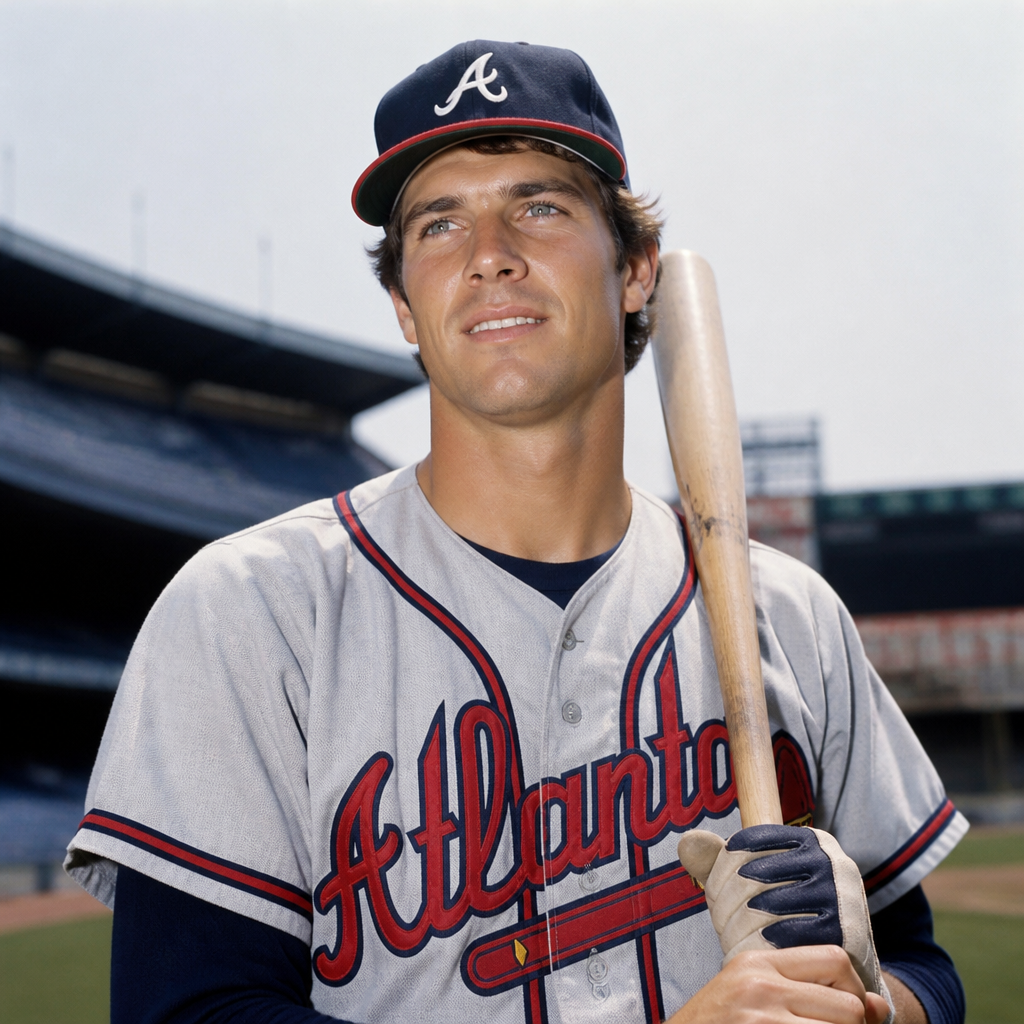
Dale Murphy’s story explains why a player profile can be more than a biography: it can be a map of a franchise’s identity, a record of peak performance, and a guide to the values fans still celebrate decades later. In the Atlanta Braves’ long history, few players connect excellence, durability, leadership, and era-defining importance as clearly as Murphy. Best known for winning back-to-back National League Most Valuable Player Awards in 1982 and 1983, he became the face of the Braves during years when the club often lacked broader success, yet still drew loyalty because one star played the game the right way every day. For readers exploring legendary players, Murphy is an essential hub topic because his career touches hitting development, defensive versatility, award voting, clubhouse leadership, and the difficult question of how greatness is measured when championships are missing.
A strong player profile should answer direct questions quickly. Who was Dale Murphy? He was a two-time MVP, seven-time All-Star, five-time Gold Glove winner in center field, and one of the most respected stars of the 1980s. Why does he matter? Because from the late 1970s through the mid-1980s, he carried the Braves offensively and symbolically, posting elite power numbers while representing consistency and professionalism in a period before Atlanta’s 1990s dynasty changed the franchise’s national image. What made his peak special? A rare combination of home run power, run production, athletic defense, arm strength, and everyday reliability. He was not a one-dimensional slugger. At his best, he was a complete player whose value showed up in traditional counting stats and in modern evaluative frameworks such as Wins Above Replacement, park-adjusted production, and defensive reputation.
Murphy also matters because his career illustrates baseball’s central tension between peak and longevity. Hall of Fame debates often focus on milestone numbers, postseason visibility, and advanced metrics. Murphy’s candidacy has always inspired discussion because his peak was brilliant, but his decline came earlier than many expected. That tension makes him especially useful in a comprehensive player profile hub. Studying Murphy helps readers understand how to evaluate stars across multiple dimensions: raw statistics, era context, positional difficulty, team quality, narrative weight, and personal influence. I have always found that when comparing legendary players, Murphy is one of the clearest examples of a player whose prime can define a franchise even if his final totals fall short of conventional Hall thresholds. His best seasons were not empty accomplishments. They were central to how baseball in Atlanta was experienced and remembered.
This article examines Murphy as both an individual great and a cornerstone of the Braves’ player-profile landscape. It covers his development, his MVP seasons, his defensive and offensive strengths, his leadership reputation, his statistical case, and his long-term legacy within the Braves organization and among baseball historians. For anyone building a deeper understanding of legendary players, Dale Murphy stands as a model of how peak value, character, and franchise importance can combine into enduring icon status.
From Catcher Prospect to Franchise Centerpiece
Dale Murphy was drafted fifth overall by the Braves in 1974 out of high school in Oregon, originally as a catcher. That detail matters because it shows how unusual his athletic path was. Catching requires toughness and game management, but it also places enormous strain on the body. Murphy’s early knee problems and the practical demands of the position pushed Atlanta to reconsider his long-term fit. The Braves moved him first to first base and later to the outfield, where his size, speed, and arm strength could play more freely. Position changes can derail prospects, yet for Murphy they unlocked his career. By the time he settled in center field, Atlanta had discovered not just a lineup regular but a premium athlete capable of anchoring the roster.
His early major league seasons were uneven. Murphy debuted in 1976, and like many future stars, he did not arrive fully formed. He struck out often, searched for mechanical consistency, and had to adjust to major league pitching patterns built around exploiting swing length. What stands out in hindsight is that the Braves stayed patient enough to let his tools mature. By 1980, Murphy hit 33 home runs, signaling that his raw power had translated into game power. In 1982 he fully broke through, and the Braves were no longer developing him. They were building around him. That transition from prospect to franchise centerpiece is a key part of any player profile because it explains that greatness often emerges through adaptation, not immediate dominance.
The Two MVP Seasons That Defined His Peak
Murphy’s peak is inseparable from his National League MVP Awards in 1982 and 1983. In 1982, he hit .281 with 36 home runs, 109 runs batted in, and strong defense in center field while leading Atlanta to its first division title since moving from Milwaukee. The Braves started that season 13-0 under manager Joe Torre, and Murphy was the club’s stabilizing force as expectations rose. MVP voting can sometimes hinge too heavily on team success, but in Murphy’s case the award reflected both elite individual value and visible impact on a first-place club. He was the player opponents game-planned around and the one teammates counted on in the biggest spots.
The 1983 season was even better from a pure offensive standpoint. Murphy batted .302 with 36 home runs, 121 RBI, 131 runs scored, and a league-leading .540 slugging percentage. He also led the league in total bases and games played, demonstrating the durability that made his value so substantial. When a star combines middle-of-the-order production with daily availability, the effect compounds across an entire season. That was Murphy’s greatness in practical terms. He did not help once or twice a week. He was there nearly every day, providing power, presence, and defensive credibility up the middle.
These seasons also age well under modern analysis. While MVP voting in the early 1980s leaned heavily on batting average, home runs, and RBI, Murphy’s broader profile holds up because he added defensive value and played a demanding position. Center field offense of that caliber is rare in any era. It becomes even more valuable when paired with leadership and workload. Murphy was not simply the best hitter on a mediocre defensive corner. He was a legitimate two-way star in the middle of the diamond.
Why Murphy Was More Than a Slugger
One mistake in older player summaries is reducing Murphy to home runs and awards. His complete game deserves more attention. Defensively, he won five consecutive Gold Gloves from 1982 through 1986. Gold Gloves are imperfect measurements, especially from that era, but they still indicate sustained league-wide respect for his range, reads, and throwing ability. Murphy was 6-foot-5, unusually large for a center fielder, yet he moved well enough to handle the position and took efficient routes on balls hit into the gaps. His arm also limited extra bases, a trait scouts and opponents consistently noted.
At the plate, Murphy’s value came from more than raw power. He generated loft without selling out entirely for pull-side home runs, and during his peak he handled fastballs in the zone with authority. He could drive mistakes to all fields, which helped him avoid becoming too predictable in hitter’s counts. Strikeouts were part of his game, and his walk rates were solid rather than extreme, so he was not an on-base machine in the mold of Wade Boggs or later plate-discipline specialists. Still, he was far from a simplistic free swinger. He understood situation hitting, stayed durable through the grind of full seasons, and consistently occupied a lineup role where pitchers had no margin for error.
| Season | AVG | HR | RBI | Runs | Notable Result |
|---|---|---|---|---|---|
| 1982 | .281 | 36 | 109 | 113 | NL MVP, Braves won division |
| 1983 | .302 | 36 | 121 | 131 | NL MVP, league leader in slugging |
| 1984 | .290 | 36 | 100 | 94 | Maintained elite power peak |
| 1985 | .300 | 37 | 111 | 118 | Finished second in MVP voting |
The table shows why Murphy’s peak should be discussed as a multi-year run, not just a two-season spike. From 1982 through 1985, he averaged 36.25 home runs and 110.25 RBI per season while remaining an everyday player. In a lower-offense environment than the late 1990s or early 2000s, those numbers carried real weight. Context matters. League scoring, ballpark factors, travel demands, and medical recovery standards all affect how statistics should be interpreted. Murphy’s production came before teams optimized rest patterns and before public analytics gave players constant swing and positioning feedback. He earned his output the hard way: repetition, adjustment, and durability.
The Face of the Braves Before the Dynasty
For Atlanta fans, Murphy’s significance goes beyond metrics because he represented the Braves during a transitional era. Before Greg Maddux, Tom Glavine, John Smoltz, Chipper Jones, and the sustained winning of the 1990s, the franchise often struggled for national relevance. Yet Murphy gave the team a recognizable standard of excellence. He made the Braves watchable, marketable, and credible. Local broadcasts, national highlight shows, and All-Star selections consistently brought attention back to him. In practical terms, that matters for franchise history. Every club needs players who hold fan interest through lean years, and Murphy did that as well as anyone Atlanta has had.
His reputation for sportsmanship amplified that role. Murphy won the Roberto Clemente Award and the Lou Gehrig Memorial Award, honors associated with character, integrity, and community respect. Those recognitions are not decorative footnotes. They explain why his popularity endured even when team results disappointed. Fans trusted him as the public face of the organization. In club history, that is part of value. A player profile should not confuse likability with greatness, but when elite performance and strong public leadership exist together, they deepen the player’s legacy.
There is also a practical baseball lesson here. Stars on middling teams are often underrated because they receive fewer October moments. Murphy’s career reminds us that regular-season excellence is still the foundation of the sport. A 162-game season reveals quality through consistency. Atlanta did not always give him enough support, but that does not diminish what he accomplished. If anything, it highlights how much of the competitive burden he carried.
Hall of Fame Debate, Decline, and Lasting Legacy
No complete Dale Murphy player profile can avoid the Hall of Fame question. His supporters point to the dominant peak, the two MVPs, the seven All-Star selections, five Gold Gloves, and 398 career home runs. His critics note that his decline after age 31 was steep and that his career totals, while impressive, stopped short of the automatic markers that often sway voters. Both views contain truth. Murphy’s prime was Hall of Fame caliber. His full statistical record sits in the gray area where peak value and career accumulation collide.
I think the fairest way to frame his case is this: Murphy was one of baseball’s best players for a meaningful stretch, and he was the defining Brave of the 1980s, but his shorter top tier kept him from easy induction. That assessment is balanced, not dismissive. Baseball history is full of players whose greatness burned brightest in a concentrated period. Murphy belongs in that conversation. Even without a plaque in Cooperstown, his place in Braves memory is secure, and his profile remains essential for anyone studying legendary players.
The lasting benefit of revisiting Murphy is clarity. He shows how to judge a player beyond simple milestones: examine position, era, team context, durability, awards, and influence. He shows why peak seasons matter, why leadership counts, and why franchise icons are not always defined by championships alone. If you are exploring player profiles within the Legendary Players hub, start with Dale Murphy, then use his career as a benchmark for comparing other stars across generations. That is how baseball history becomes richer, sharper, and more meaningful.
Frequently Asked Questions
Why are Dale Murphy’s 1982 and 1983 MVP awards considered so important in Braves history?
Dale Murphy’s back-to-back National League MVP Awards in 1982 and 1983 represent one of the defining peaks in Atlanta Braves history because they came at a time when the franchise badly needed a player who could symbolize excellence, credibility, and hope. Murphy was not simply putting up impressive individual numbers; he was establishing himself as the central force of the team. In 1982, he helped lead Atlanta to a division title, and his combination of power, defense, and everyday reliability made him one of the most complete players in baseball. Winning one MVP is an achievement that places a player among the elite of his era. Winning two in a row puts Murphy in even rarer company and confirms that his greatness was not a fluke or a brief hot streak, but a sustained period of dominance.
For the Braves specifically, those awards mattered because Murphy became the public face of the franchise during a period when the team did not consistently enjoy national prestige. His MVP seasons gave fans a reason to believe the Braves had a true superstar, someone who could stand alongside the biggest names in the sport. The awards also helped define the identity of the club in the early 1980s: tough, competitive, and anchored by a player who did everything the right way. When people look back at Murphy’s career, the two MVPs are the clearest shorthand for his peak, but in Braves history they also stand for something larger: a reminder that one exceptional player can shape how an entire era of a franchise is remembered.
What made Dale Murphy such a complete player at his peak?
At his best, Dale Murphy was valuable in nearly every phase of the game, which is exactly why his peak remains so respected. Offensively, he brought legitimate middle-of-the-order power, driving the ball with authority and producing the kind of home run and RBI totals teams build lineups around. But he was not just a slugger. Murphy also contributed with patience, consistency, and the ability to carry an offense for long stretches. He was the sort of hitter opponents had to plan around, and that pressure changed the way games were managed.
Defensively, Murphy added another dimension that separated him from many other star hitters. As an outfielder, particularly in center field during much of his prime, he covered ground well, played with intelligence, and earned Gold Glove recognition. That matters because premium defensive value paired with major offensive production is the profile of a truly elite player. He was not being hidden in the field to preserve his bat; he was actively helping the team prevent runs as well as score them. Add in his durability and willingness to play every day, and the result was a player whose influence stretched across a full season. Murphy’s peak was so impressive because it blended star-level production with all-around dependability, making him one of the most complete and respected players of his generation.
How did Dale Murphy become the face of the Atlanta Braves during his era?
Dale Murphy became the face of the Atlanta Braves because he combined on-field excellence with the personal qualities fans and organizations want to rally around. During his prime, he was clearly the team’s biggest star, the player most associated with Atlanta’s competitiveness, and the athlete opposing teams knew they had to account for every night. In baseball, becoming the face of a franchise requires more than statistics. It means representing the club’s aspirations, carrying expectations, and giving fans a figure they can identify with over multiple seasons. Murphy did all of that.
His visibility was strengthened by his consistency and professionalism. He played hard, carried himself with humility, and developed a reputation for leadership that extended beyond the box score. That made him especially important to Braves fans, who saw in Murphy not just a great player but a standard-bearer for the organization. He embodied traits that remain central to how many people remember him: durability, integrity, and a team-first mindset. Even as the Braves evolved in later decades and new stars emerged, Murphy’s place as an icon endured because he represented an era in which one player gave the franchise both legitimacy and identity. That is why his profile still feels bigger than biography alone; it tells the story of what the Braves valued and what their fans still celebrate.
Why does Dale Murphy remain so admired even beyond his statistics?
Dale Murphy remains admired because his legacy has always been about more than numbers, even though the numbers themselves are impressive. Fans remember the home runs, the MVP awards, the Gold Gloves, and the years of high-level production, but they also remember the kind of person and teammate he appeared to be. Murphy built a reputation as one of baseball’s most respected figures, and that reputation gave his career a lasting emotional resonance. In many cases, former stars are remembered mainly for highlights. Murphy is remembered for the way he represented the game.
That broader admiration matters because sports legacies are often shaped by trust and affection as much as performance. Murphy was seen as reliable, grounded, and worthy of the captain-like role he played for the Braves, whether or not he held that title formally. He stood for professionalism in an era that gave Atlanta fans a player they could proudly claim as their own. For many, he symbolizes a version of baseball excellence rooted not only in production but in character. That is why discussions of Murphy so often return to values like leadership, work ethic, and class. His enduring popularity comes from the rare combination of elite achievement and personal example, which gives his career a special place in Braves history and in the memory of baseball fans more broadly.
What does Dale Murphy’s career reveal about the identity of the Braves franchise?
Dale Murphy’s career reveals how deeply one player can reflect and shape the identity of a franchise. In the Braves’ case, Murphy’s years in Atlanta highlight a period when the team’s public image was tied to resilience, star-driven hope, and respectability earned through individual excellence. He became the bridge between team history and fan loyalty, showing that even when a club was not always dominant in the standings, it could still possess a player whose greatness gave the organization national relevance. That is one reason Murphy’s story works so well in a player profile: it helps explain not just who he was, but what the Braves were during his peak.
His legacy also reveals the values many Braves fans continue to prize. Murphy represented effort, accountability, consistency, and leadership without unnecessary drama. Those qualities became part of how supporters understood the team and what they wanted it to stand for. In that sense, Murphy’s career acts almost like a cultural reference point for the franchise. He was a superstar, but also a symbol of steadiness and pride. Looking back, his era reminds readers that baseball history is not only built from championships. It is also built from players who define standards, carry teams through difficult stretches, and leave behind an identity that survives long after their final game. For the Braves, Dale Murphy remains one of the clearest examples of that kind of lasting importance.