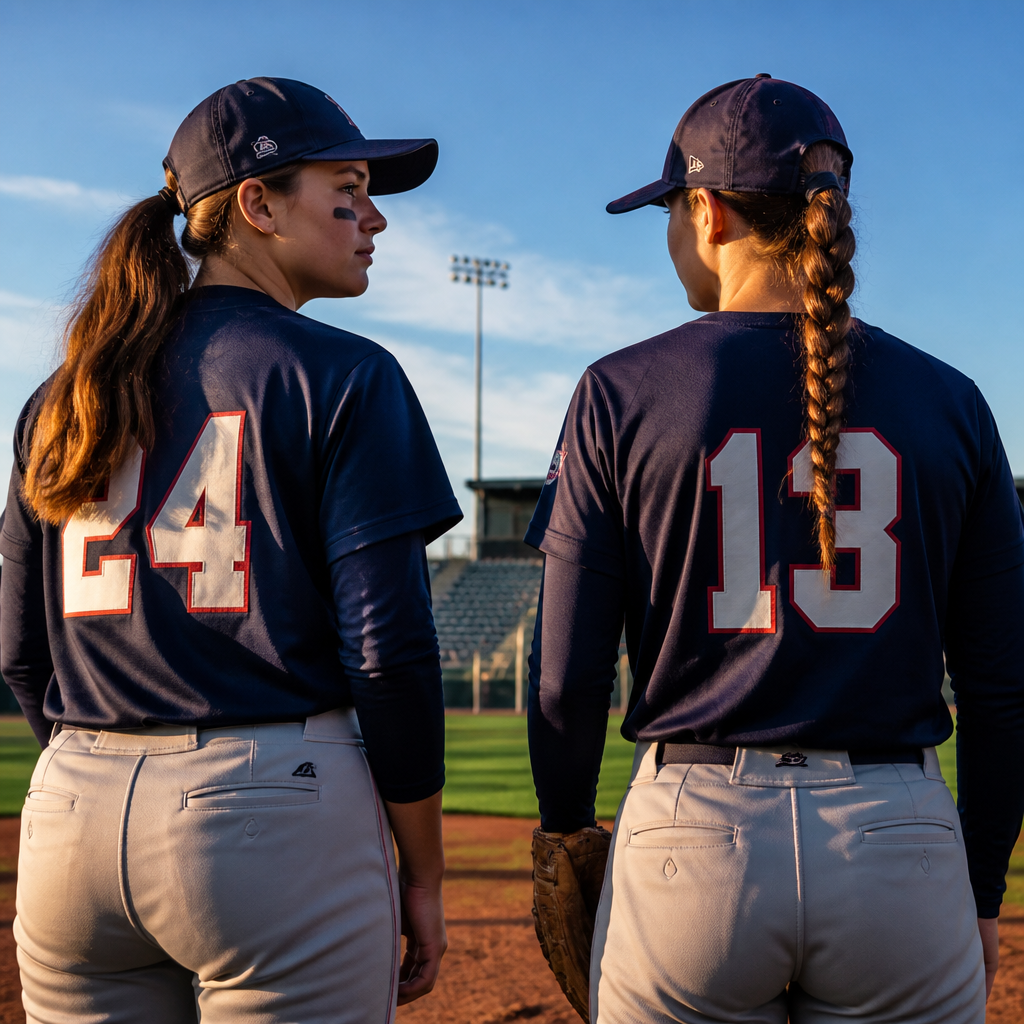
Celebrating the first female college baseball players means recognizing pioneers who entered a level of competition long treated as a male preserve and proved, with performance and persistence, that baseball ability is not confined by gender. In this context, female college baseball players are women who made official rosters, appeared in sanctioned intercollegiate games, or sustained college baseball careers within NCAA, NAIA, junior college, or club-based men’s programs before women’s varsity baseball existed on a broad scale. Their stories matter because college baseball sits at a critical junction in the sport’s pipeline: it shapes coaching careers, scouting visibility, administrative policy, and public beliefs about who belongs on a diamond. I have spent years tracking women in baseball records, cross-checking media reports with box scores, school archives, and governing-body releases, and one lesson remains constant. Milestones that looked isolated at the time often become turning points later. The first female college baseball players did more than make teams. They forced institutions to clarify eligibility, challenged lazy assumptions about strength and skill, and gave younger players tangible examples of what was possible. This hub article surveys the miscellaneous side of that history: trailblazing roster breakthroughs, notable game appearances, recurring barriers, and the legacy now visible in coaching, player development, and expanding opportunities across the women in baseball landscape.
The term first can be complicated, and accuracy matters. Some athletes were the first woman at a specific school, conference, or division. Others were the first to pitch in a game, record a hit, earn a scholarship, or complete a four-year career. Because media coverage was inconsistent for decades, especially at small colleges and junior colleges, new archival work still corrects the record. That uncertainty does not weaken the achievement; it shows how often women’s baseball history went underdocumented. A strong account therefore focuses on verified milestones and places them in context. The broader point is not only who arrived first, but how each breakthrough changed access for those who followed.
How women first broke into college baseball rosters
Women entered college baseball through several routes, and understanding those paths helps explain why their numbers remained small for so long. Some grew up playing on boys’ travel teams because softball did not match their skills or ambitions. Others came from American Legion, Babe Ruth, or high-level summer baseball and walked on to college tryouts. A third group developed through community college systems, where roster flexibility and local recruiting sometimes created more openings than tightly controlled NCAA programs. In every case, a player needed more than talent. She needed a coach willing to judge mechanics and competitiveness instead of defaulting to convention.
In practice, the first barrier was often the tryout itself. Coaches sometimes assumed a woman was a manager candidate, not a player. I have seen archived accounts where female athletes were asked whether they meant softball, then insisted on taking batting practice or fielding in order to be evaluated seriously. Once that initial skepticism was overcome, baseball criteria became familiar: bat speed, arm strength, command, footwork, velocity, and game IQ. The women who stuck usually offered a carrying tool. For pitchers, that might mean location and movement rather than overpowering velocity. For position players, it might mean elite defense, contact ability, speed, or exceptional baseball instincts.
Several names stand out because they created visible precedents. Lizzie Murphy played men’s semipro baseball decades earlier, but the college game lagged behind. By the late twentieth century, Ila Borders became the most widely recognized female college baseball pioneer, first at Southern California College and later at Whittier College, where she pitched against men and drew national attention. Her college success mattered because it was sustained, not ceremonial. She logged real innings, earned wins, and showed that command, deception, and competitive poise could neutralize hitters at that level. After Borders, players such as Tiffany Brooks, Julie Croteau, Laura Groves, and others in different institutions expanded the map of what participation could look like, even when their stories received only local coverage.
Key milestones that changed the conversation
The history of first female college baseball players is best understood through milestone categories rather than a single headline. A woman making a roster is one breakthrough. Starting a game is another. Recording a hit, stealing a base, pitching meaningful innings, receiving conference recognition, and returning for multiple seasons each represent deeper integration into competitive baseball life. These steps changed public perception because they moved women from novelty status to contributor status.
One of the clearest examples is Ila Borders. At Southern California College in the mid-1990s, she became the first woman to pitch in a men’s college varsity game and later the first to win one. Her left-handed delivery, precise control, and maturity under pressure turned every appearance into a referendum on women in baseball. Reporters often framed her as an exception, but the more important truth was structural. Once a college publicly competed with a woman on the mound, the sport could no longer claim the concept was impossible. Borders eventually transferred to Whittier, where she continued to pitch effectively and strengthened the legitimacy of female participation.
Julie Croteau represents a different kind of milestone. At St. Mary’s College of Maryland, she became the first woman to play NCAA men’s baseball, appearing as a utility player and pinch hitter. Her achievement was significant because it expanded the discussion beyond pitching. Position-player opportunities have historically been rarer for women in baseball because coaches often assume middle-game physical demands, especially throwing across the diamond or bat speed against velocity, create a higher threshold. Croteau showed that baseball sense, preparation, and situational execution could earn a place on a college roster and in actual games.
Community colleges also supplied important breakthroughs that deserve more attention. Junior college baseball has long been a proving ground for nontraditional athletes, late developers, and overlooked recruits. Women who made those teams demonstrated durability in environments where roster churn is constant and coaching decisions are tightly linked to immediate results. Although national media often prioritized NCAA milestones, junior college participation was crucial because it broadened access geographically and competitively.
| Milestone type | Why it mattered | Example of impact |
|---|---|---|
| Making a roster | Established eligibility and opened institutional precedent | Future players could point to an existing case at that school or level |
| Appearing in a game | Moved participation from symbolic to competitive | Box scores and statistics created durable records |
| Recording success | Countered claims that women could not contribute on merit | Wins, hits, or defensive outs changed coaching attitudes |
| Staying multiple seasons | Proved sustainability under routine team demands | Women were seen as teammates, not one-off stories |
These milestones also shaped media language. Early stories often used words like novelty, experiment, or publicity. As women accumulated real statistics, that framing became harder to sustain. The record itself became evidence. Once a pitcher’s ERA, innings total, or strikeout-to-walk ratio sat in a media guide, the conversation had to engage baseball terms instead of stereotypes.
The obstacles female college baseball players had to overcome
The first female college baseball players overcame barriers that were technical, cultural, and administrative. Technically, they had to meet college-level baseball standards while often receiving less specialized development than male peers. Because girls were frequently redirected into softball at young ages, many female baseball players lacked the same volume of age-group pitching, catching, and infield repetitions. That developmental gap was not about ability; it was about access. A girl who cannot find a baseball team at twelve arrives at eighteen with fewer live reps than a boy who played year-round.
Culturally, clubhouse acceptance could be uneven. Some teammates were supportive from day one, judging only whether a player could help win. Others tested boundaries, doubted motives, or treated female athletes as media distractions. The women who lasted usually describe a simple formula for respect: prepare hard, know your role, and compete well in practice. Once teammates trusted that a woman could execute signs, back up plays, run PFPs, and handle failure like everyone else, the temperature often changed. Performance did not solve every issue, but it cut through much of the noise.
Administrative obstacles could be just as stubborn. Colleges had to address travel logistics, locker room arrangements, and compliance questions, even though no rule prohibited women from playing men’s baseball. Title IX is sometimes misunderstood in this context. It does not bar women from men’s teams when there is no comparable women’s opportunity, and schools cannot exclude athletes solely by sex in ways inconsistent with governing rules and federal law. Still, fear of controversy often discouraged coaches from engaging the issue. In other words, the challenge was frequently not formal illegality but informal resistance.
Media attention created another tradeoff. Publicity could validate a player’s achievement, attract sponsors, and inspire girls nationwide. It could also magnify every bad outing. A male freshman pitcher can struggle anonymously; a female pioneer might see one rough inning turned into a verdict on all women in baseball. That burden was unfair, but it was real. Many of these athletes carried representational pressure while trying to handle normal college demands such as class schedules, strength training, travel, and limited playing time.
What these pioneers proved about baseball development and opportunity
The strongest legacy of the first female college baseball players is developmental, not symbolic. They proved that when girls receive real baseball instruction, they can perform in advanced environments. Baseball rewards repeatable mechanics, pitch design, strike-zone control, decision-making, anticipation, and emotional steadiness. Those are coachable qualities. Raw power matters, but it is not the only currency. College baseball has always made room for players who win through command, timing disruption, defense, baserunning, and tactical awareness.
Pitching offers the clearest case study. Borders succeeded with command, changing speeds, and deception from the left side. That profile is familiar across baseball. Plenty of successful college pitchers thrive without premium velocity if they hit spots, spin breaking balls efficiently, and sequence hitters intelligently. Women who pitch baseball at a high level often lean into exactly those strengths because they have had to become technicians early. Their path underscores a larger truth coaches know well: polished skills can outperform louder tools.
These pioneers also exposed a scouting blind spot. For years, evaluators simply did not look for female baseball talent, so they concluded it barely existed. Once women entered tournaments, showcases, and national-team pathways, more examples appeared. The Women’s Baseball World Cup, organized under the World Baseball Softball Confederation, further demonstrated that female baseball talent is global and structured, not anecdotal. College programs paying attention today can recruit from a wider pool than previous generations imagined.
The ripple effects now extend beyond players. Former female baseball athletes have become coaches, instructors, scouts, and advocates. Julie Croteau later coached in professional baseball and on the U.S. women’s national team. That matters because representation inside baseball operations changes who gets identified, mentored, and believed. When a young player sees a woman coaching hitting, calling pitches, or running infield drills, the idea of belonging becomes ordinary rather than exceptional.
How this hub connects the wider women in baseball story
As a sub-pillar hub under women in baseball, this miscellaneous college history connects several adjacent topics that deserve deeper reading. One branch covers pioneers by level: NCAA, NAIA, and junior college. Another examines role-specific breakthroughs, including female pitchers, catchers, infielders, and two-way players. A third follows the pipeline from youth baseball to college rosters, including travel ball, showcase access, and national-team exposure. There is also a policy branch, where Title IX, roster management, and institutional support shape outcomes more than many casual fans realize.
This history also intersects with women’s professional baseball, girls baseball development, and the growth of organized opportunities such as Baseball for All. College milestones do not exist in isolation. They are part of a longer continuum stretching from barnstorming players and the All-American Girls Professional Baseball League to modern women’s national teams and emerging collegiate club models. The athletes celebrated here occupy a key middle ground. They connected grassroots participation to institutional baseball, and that connection is why their stories continue to matter.
For readers building out a fuller understanding of women in baseball, the practical takeaway is simple. Track the records, but also track the systems around the records. Ask who got tryouts, who received coaching, who was allowed to stay in baseball long enough to develop, and who had an advocate when resistance appeared. Those questions reveal why firsts are rare and why they carry outsized historical weight.
The first female college baseball players changed the sport by converting abstract possibility into documented fact. They earned roster spots, took the field, and handled the scrutiny that comes with being first, often without the support systems available to athletes today. Their impact reaches far beyond a headline or a commemorative list. They expanded who coaches consider recruitable, who teammates can imagine beside them, and who young girls can picture when they dream about baseball instead of being redirected away from it. That is why celebrating them is not merely ceremonial. It is a way of preserving an accurate baseball history and using it to improve the future.
The key lessons are clear. First, access drives development. When girls get baseball reps, instruction, and competition, talent surfaces. Second, precedent matters. Every verified college milestone reduces the burden on the next player. Third, institutions shape opportunity as much as individuals do. Coaches, athletic departments, and governing bodies can either widen the path or quietly narrow it. The pioneers discussed here succeeded because they were skilled and resilient, but also because at least one decision-maker chose evaluation over assumption.
If you are exploring women in baseball, use this hub as a starting point and keep digging into the linked subtopics around pioneers, policy, player development, and modern pathways. Share these stories, cite them accurately, and support programs that keep girls in baseball longer. The best way to honor the first female college baseball players is to make sure they are no longer the last.
Frequently Asked Questions
Who were the first female college baseball players, and why are they historically important?
The first female college baseball players were trailblazers who earned places on intercollegiate baseball rosters at a time when the sport was widely viewed as an exclusively male space. Their importance goes far beyond a single game appearance or a headline-making roster spot. These athletes proved that women could compete in college baseball environments governed by the same standards, expectations, and pressure faced by male players. In practical terms, that meant trying out against men, winning a role through skill and persistence, and then performing in settings where every inning carried symbolic weight.
Historically, these pioneers matter because they challenged one of the most persistent assumptions in American sports: that baseball ability is naturally divided by gender. By making official rosters, appearing in sanctioned games, or sustaining careers in NCAA, NAIA, junior college, and club-based men’s programs, they created visible examples that talent evaluation should be based on performance rather than tradition. Their stories also gave younger players something they had rarely seen before—proof that a path, however difficult, actually existed. In that sense, the first female college baseball players were not simply participants; they were precedent-setters whose presence helped expand the way coaches, institutions, media, and fans understood who belongs on a baseball field.
What kinds of barriers did early female college baseball players have to overcome?
Early female college baseball players had to overcome both practical and cultural barriers, and in many cases the cultural obstacles were the most exhausting. On the practical side, they often had fewer opportunities to develop within traditional baseball pipelines because girls were frequently encouraged to move into softball rather than remain in baseball as they got older. That meant fewer travel teams, fewer showcases, fewer scouting opportunities, and less sustained instruction in baseball-specific competition. By the time they reached college, many were not only trying to make a team but also trying to bridge gaps created by years of limited access.
Culturally, these athletes faced skepticism from nearly every direction. They had to deal with assumptions that they were novelty players, publicity stories, or symbolic additions rather than serious competitors. Some encountered doubt from coaches, opposing players, or spectators before they ever took the field. Others felt pressure to be nearly flawless, knowing that a mistake might be interpreted not as an individual error but as supposed proof that women did not belong in college baseball. That kind of scrutiny created a double burden: they had to compete athletically while also carrying the expectations and prejudices attached to being “the first” or “the only” woman in the dugout.
There were also social and emotional barriers. Being one of very few women in a men’s baseball setting could be isolating, especially when facilities, traditions, and team culture had never been designed with female players in mind. Yet many of these pioneers stayed the course, earned respect through work ethic and results, and changed minds by showing that discipline, baseball IQ, and competitive toughness are not gendered traits. Their ability to endure those barriers is a major reason they are remembered as pioneers rather than simply unusual exceptions.
How did female college baseball players prove themselves in men’s intercollegiate programs?
Female college baseball players proved themselves the same way any respected player does: by earning opportunities and contributing when those opportunities came. In most cases, they were not handed spots for symbolic reasons. They had to attend tryouts, demonstrate baseball fundamentals, compete under pressure, and convince coaches that they could help the team. That could mean showing command as a pitcher, defensive reliability in the field, speed on the bases, discipline at the plate, or the kind of day-to-day consistency that coaches value in practice as much as in games.
What made their achievements especially powerful was the environment in which they occurred. College baseball is highly structured and competitive, and roster decisions are typically driven by performance needs. When women made official rosters, appeared in sanctioned games, or maintained a role over multiple seasons, they were proving that they belonged within that competitive framework. For some, that proof came through measurable game action. For others, it was demonstrated through sustained participation, trusted practice roles, bullpen depth, leadership, or versatility that helped a program function effectively.
Just as importantly, they proved themselves by withstanding scrutiny that many male teammates never had to face. A male player might be allowed to develop quietly. A female player in a men’s college baseball program was often watched as if she represented a broader debate. Performing in that environment required unusual mental strength. Over time, the athletes who succeeded did so because they matched persistence with preparation. They learned the system, accepted the grind, and showed that they could compete on baseball terms. That is the heart of their legacy: not that they were allowed to participate, but that they earned credibility in spaces where many expected them to fail.
Why is it important to celebrate the first female college baseball players today?
Celebrating the first female college baseball players matters because recognition preserves history, honors courage, and helps shape the future of the sport. These athletes were pioneers in a setting where visibility was limited and support was not always guaranteed. If their stories are overlooked, the broader history of college baseball remains incomplete. Recognizing them ensures that progress is not treated as accidental or inevitable. It happened because real people took risks, absorbed criticism, and persisted in environments that were not built to welcome them.
There is also a practical reason their stories matter today: representation influences participation. When young athletes, families, and coaches see examples of women who played college baseball in sanctioned intercollegiate settings, the idea becomes more realistic and less abstract. That visibility can encourage girls to stay in baseball longer, motivate programs to evaluate talent more openly, and push institutions to think more carefully about inclusion, resources, and opportunity. Historical recognition can have present-day effects by widening the imagination of what is possible.
Celebration is also about giving proper credit. The first female college baseball players did not simply cross a line first; they changed the meaning of the line itself. Their presence helped move the conversation from whether women should be allowed in baseball spaces to whether talent is being fully recognized wherever it exists. Honoring them today is a way of acknowledging that sports progress is often driven by individuals willing to compete before systems are ready for them. Their accomplishments deserve celebration not only as milestones for women in sports, but as meaningful chapters in college baseball history overall.
What legacy did the first female college baseball players leave for future generations?
The legacy of the first female college baseball players is both symbolic and structural. Symbolically, they showed that baseball at the college level is not inherently off-limits to women. That may sound simple, but for decades it was a deeply contested idea. By appearing on rosters, entering sanctioned games, and sustaining roles in competitive programs, they established a visible standard that future generations could point to. They transformed possibility from theory into documented fact.
Structurally, their presence helped create momentum for broader conversations about access, development, and recognition in baseball. Once women had competed in college baseball settings, it became harder to argue that the issue was impossibility rather than opportunity. Their experiences prompted questions about scouting, player development pathways, media coverage, and the relationship between baseball and softball in schools and colleges. Even where systems did not change overnight, these pioneers pushed institutions and audiences to reconsider long-held assumptions.
Their legacy also lives in the confidence they passed forward. Future players entering college baseball spaces no longer had to imagine themselves without precedent. They could look back at earlier women who navigated tryouts, earned respect, and competed under pressure. That matters in sports because confidence is often strengthened by lineage. Today, the first female college baseball players stand as examples of resilience, competence, and historic breakthrough. They left behind more than inspirational stories; they created a foundation for future athletes, coaches, and programs to think more expansively about who can play the game at the collegiate level.