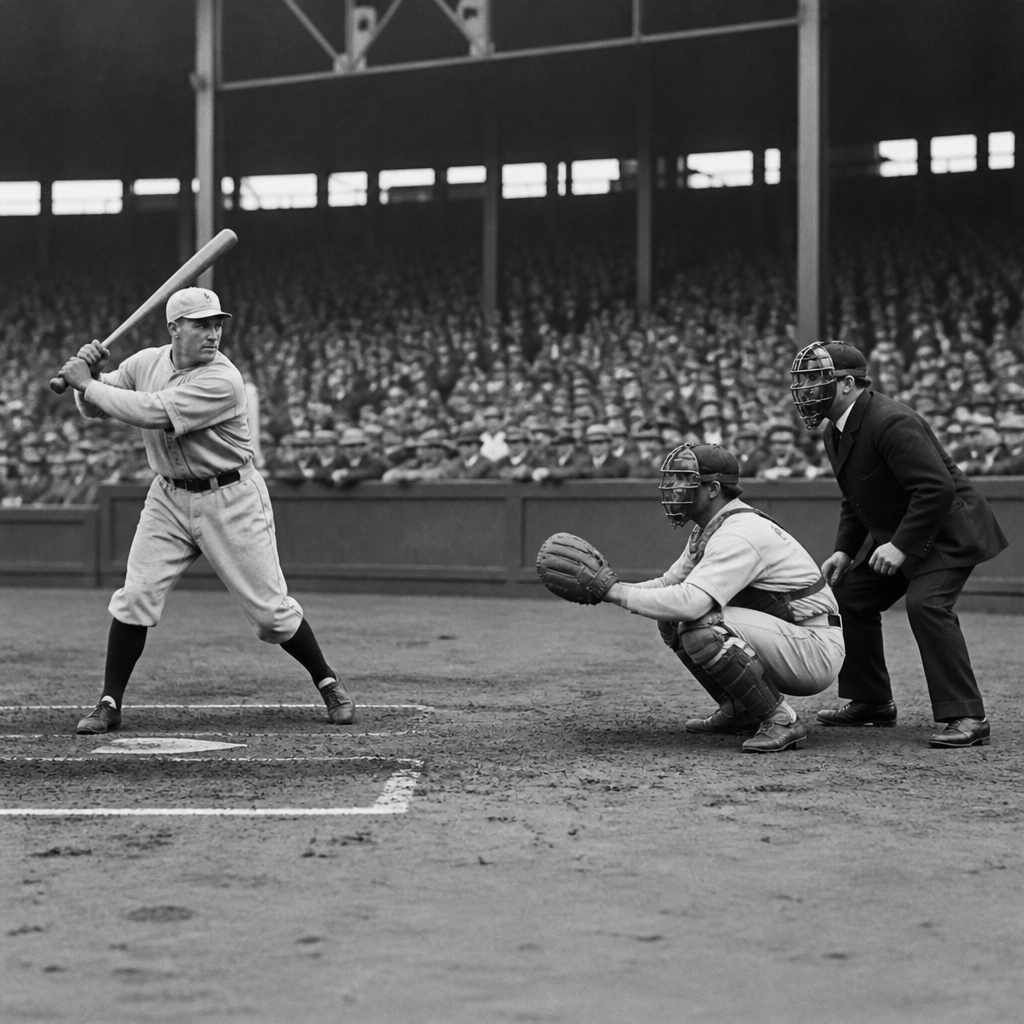
The Deadball Era was baseball’s low-scoring, small-ball age, a period roughly spanning 1900 through 1919 when teams manufactured runs with bunts, steals, hit-and-runs, and relentless baserunning because home run power was scarce. The term “Deadball Era” refers to more than a style preference. It reflects the actual conditions of the sport: loosely wound balls, inconsistent replacement of scuffed baseballs, larger ballparks, uneven fields, and rules that favored contact pitchers and daring runners over sluggers. When I study box scores and play-by-play accounts from this period, the same pattern appears again and again: offenses were built to scratch out one run, protect it, and pressure opponents into mistakes.
That approach matters because this era sits at the center of baseball history. It explains why Ty Cobb, Honus Wagner, Eddie Collins, Max Carey, and Willie Keeler became offensive models, why managers obsessed over sacrifice bunts, and why pitchers such as Walter Johnson, Christy Mathewson, and Mordecai Brown dominated with command and movement rather than fear of the long ball. It also sets up the dramatic shift that followed when the live-ball game emerged in the 1920s. For readers exploring Baseball Eras as a larger subject, this Deadball Era hub is the foundation, because it connects strategy, equipment, rules, player development, and scoring environment into one coherent picture.
To manufacture runs means to create scoring chances without waiting for extra-base power. In practical terms, a team sought a baserunner by single, walk, error, or hit batsman; moved him with a bunt, steal, or hit-and-run; then brought him home on a well-placed single, sacrifice fly equivalent, squeeze, wild pitch, passed ball, or defensive misplay. In modern baseball, that sequence often looks inefficient because run expectancy models show that giving away outs can lower total scoring over nine innings. In the Deadball context, however, run environments were so depressed that one run carried disproportionate value. In 1908, for example, major league teams averaged fewer than four runs per game, and league home run totals were tiny by later standards.
Why the Deadball Era Suppressed Home Run Offense
Several structural factors explain why teams could not rely on home run power. Baseballs were softer and less lively than later versions, and the same ball often stayed in play until it became discolored, misshapen, or partially unraveled. That made it harder to drive with authority and harder for hitters to track. Pitchers also used legal and semi-tolerated doctored deliveries, including the spitball, shine ball, and emery ball, which reduced clean contact. Ballparks were expansive, with deep alleys and distant fences; inside-the-park home runs were more common than balls hit over the wall. Add in poor travel, inconsistent field maintenance, and minimal night-game infrastructure, and offense naturally tilted toward placement and speed.
The statistical record supports this. In 1908, both leagues produced a combined home run rate that would look microscopic today. Even elite sluggers posted totals that modern middle infielders can exceed. Yet batting average, bunt-for-hit skill, and stolen base volume remained central offensive currencies. This is why strategy was not merely conservative custom. It was a rational adaptation to environment. If a lineup lacked any realistic chance of stringing together doubles and homers, then taking the extra base, forcing a rushed throw, or deadening a bunt toward third became essential forms of run creation.
The Core Blueprint for Manufacturing Runs
Deadball teams generally followed a repeatable offensive blueprint. First, they prioritized leadoff men who could reach base through contact, drag bunts, and line drives. Second, they demanded immediate pressure once a runner reached. The runner threatened a steal, the batter showed bunt, middle infielders crept toward the bag, and the defense began making rushed decisions. Third, clubs sought to move runners into scoring position with one out or fewer. Fourth, they relied on contact hitters to punch the ball through vacated spaces. Finally, they treated every loose play as an invitation to take another ninety feet. The entire system was designed to convert tension into mistakes.
I have always found that modern readers understand this best when they think in terms of leverage rather than aesthetics. A stolen base in a three-homer environment is optional. A stolen base in a two-to-three-run environment can change the game’s center of gravity. Managers such as John McGraw built rosters around that reality. McGraw’s New York Giants repeatedly used speed, bunting, aggressive first-to-third decisions, and defensive pressure to win pennants. Connie Mack’s Philadelphia Athletics blended similar tactics with elite pitching and defense, proving that manufactured offense worked best when paired with run prevention.
Bunting, the Hit-and-Run, and the Running Game
The bunt was the signature tool of the era, but not all bunts served the same purpose. Sacrifice bunts intentionally traded an out to advance a runner. Drag bunts allowed fast left-handed hitters to exploit charging infielders. Push bunts aimed for open grass between pitcher and first baseman. Squeeze bunts brought a runner home from third. In newspapers of the time, a successful bunt was often described less as a timid concession than as a skilled offensive weapon. Deadening the ball softly on rough infields demanded bat control, timing, and nerve. Willie Keeler’s famous “hit ’em where they ain’t” philosophy fit this logic exactly.
The hit-and-run was equally important because it solved two Deadball problems at once: limited slugging and the risk of double plays on primitive but improving infields. With the runner in motion, middle infielders vacated holes, opening lanes for ground-ball singles. Batters shortened swings, focused on contact, and tried to shoot the ball behind the moving fielder. Teams drilled this constantly. A missed sign could ruin an inning, but when executed well, the play turned average contact into advancement and occasional chaos. Ty Cobb’s Detroit clubs used it to complement stealing threats, while Eddie Collins mastered the timing required to turn movement into pressure.
Stealing was not reckless exhibition. It was a calculated transfer of value from feet to position. Cobb, Collins, Carey, and Wagner did not simply run often; they read pitchers, counted looks, studied leg lifts, and exploited catchers with slow exchanges. The stolen base leaderboards from the 1900s and 1910s show that speed shaped entire offensive identities.
| Tactic | Primary Purpose | Typical Situation | Deadball Advantage |
|---|---|---|---|
| Sacrifice bunt | Advance runner into scoring position | Runner on first, none out | One hit could score the run |
| Drag bunt | Reach safely on speed | Fast batter, corners deep | Forced hurried throws on rough fields |
| Hit-and-run | Create holes and avoid double play | Runner on first, one or no outs | Converted contact into movement |
| Steal of second | Turn single into scoring chance | Good baserunner, readable pitcher | Reduced need for extra-base hit |
| Squeeze play | Score runner from third | One out or late-game pressure | Captured a run without deep contact |
Player Profiles That Defined Deadball Offense
Ty Cobb is the clearest example of how Deadball Era teams manufactured runs without home run power. Although Cobb could drive the ball, his greatness came from his blend of bat control, speed, angles, and intimidation. He bunted for hits, slashed line drives, stole bases, and took extra bases so aggressively that fielders rushed plays before they needed to. In 1911 he hit .420, stole 83 bases, and turned countless singles into immediate scoring threats. He was not waiting for a three-run homer. He was creating run expectancy almost every time he reached first.
Honus Wagner offered a slightly different model. Bigger and stronger than many contemporaries, Wagner still thrived within Deadball constraints by mixing contact, baserunning intelligence, and situational execution. Eddie Collins represented the polished middle-infield version of the style: selective at the plate, exceptional on the bases, and brilliant in the hit-and-run game. Max Carey embodied the pure speed archetype. These stars reveal an important point for any Deadball Era hub: the style was not monolithic. Some clubs leaned on raw speed, some on precision contact, and some on tactical discipline, but all accepted that offense required orchestration more than slugging.
How Managers, Rules, and Ballparks Shaped Tactics
Managers exerted unusual direct influence in this era because tactical choices occurred pitch by pitch. Bench leaders flashed bunt signs, steal signs, decoy signs, and safety indicators in nearly every close game. John McGraw became famous for squeezing maximum pressure out of every roster spot. Hughie Jennings’ “Ee-Yah” Tigers played frenetically. Connie Mack’s Athletics balanced aggression with judgment, often waiting for the highest-percentage moment rather than running blindly. Because rosters were smaller and information traveled slowly, successful managers gained edges through observation, discipline, and preparation more than through formal analytics.
Rules and environments also mattered. Before 1920, foul balls had only gradually been counted as strikes, changing plate appearances and extending at-bats for top contact hitters earlier in the broader period. The spitball remained legal, depressing offense. Park geometry encouraged line-drive placement and speed. Forbes Field, the Polo Grounds, South Side Park, and spacious American League venues all reduced over-the-fence outcomes. Uneven outfields created strange caroms, rewarding alert runners who rounded bases aggressively. Infield grass, dirt quality, and maintenance standards varied, so clubs with quick runners could exploit bad hops and force throwing errors that official scorers sometimes judged harshly, but that still changed games.
Why the Strategy Worked, and Where It Failed
Manufacturing runs worked because it matched context. In low-scoring baseball, one run had premium value, and pressure baseball increased the odds of extracting that run from limited contact quality. It also fit roster construction. Many players were smaller, faster, and trained from youth to handle the bat rather than lift the ball. Defenses, meanwhile, had fewer specialized gloves and less pristine surfaces, so forcing repeated clean plays was smart offense. I have gone through enough game stories from 1905 to 1915 to say confidently that opponents often unraveled not from hard contact, but from sequence pressure: bunt, steal, infield hit, misthrow, run scored.
Still, the style had limits. Giving away outs could backfire badly when hitters behind the bunt lacked contact skill. Steals carried risk, especially against strong-armed catchers. Wet fields could kill bunts too completely, turning ideal tactics into easy outs. The strategy also depended on nerve and execution; one failed sign sequence could erase the inning. These weaknesses help explain why the live-ball transition changed thinking so quickly. Once cleaner balls, rule enforcement, and Babe Ruth’s demonstration of concentrated power altered scoring economics, many old calculations no longer held.
The best way to use this Deadball Era hub is to treat it as a map for deeper reading across baseball history. Start with the conditions that muted power, then follow the chain to tactics, player archetypes, managerial choices, and statistical outcomes. That framework makes the era much easier to understand than the simple cliché that “they just bunted a lot.” Deadball teams manufactured runs because the game rewarded precision over force, and because every ninety feet had strategic value. Their offenses were deliberate systems built around contact, speed, pressure, and execution.
The key takeaway is straightforward: Deadball Era baseball was not primitive baseball. It was adaptive baseball. Teams scored without home run power by mastering bunts, steals, hit-and-runs, first-to-third judgment, and situational hitting within a run environment that punished empty swings and rewarded constant pressure. Stars such as Cobb, Wagner, Collins, and Carey succeeded not by ignoring power, but by recognizing that the most reliable path to scoring ran through placement and movement. Managers such as McGraw and Mack turned that insight into repeatable winning strategy.
For anyone building a broader understanding of Baseball Eras, this topic is indispensable because it explains both what came before the home run boom and why the sport changed so sharply in the 1920s. Explore the related player, team, rule, and ballpark stories within this subtopic, and the Deadball Era stops looking quaint. It starts looking like one of the most sophisticated strategic periods baseball has ever produced.
Frequently Asked Questions
What made the Deadball Era so different from later power-driven periods in baseball?
The Deadball Era, generally dated from about 1900 to 1919, stood apart because offense had to be created through precision, pressure, and timing rather than through extra-base power. Home runs were rare not simply because hitters chose not to swing for them, but because the conditions of the game made long-ball offense far less practical. Baseballs were loosely wound, they softened quickly during play, and they were often kept in use even after becoming scuffed, misshapen, and discolored. That meant hitters were frequently trying to drive a ball that was literally harder to hit hard. Add in expansive ballparks, rough playing surfaces, and pitching rules that gave pitchers room to manipulate the ball, and it becomes clear why teams emphasized singles, bunts, stolen bases, and smart advancement.
In that environment, one run carried enormous value. Managers built offenses around getting a man on base, moving him into scoring position, and finding any possible way to push him across the plate. A walk, a bunt, a stolen base, and a well-placed single could be the equivalent of a modern three-run homer in terms of game impact. The style was aggressive but also highly calculated. Teams studied fielders, exploited defensive positioning, and forced mistakes through constant motion on the bases. The era rewarded bat control, speed, nerve, and tactical discipline. Rather than waiting for a slugger to change the scoreboard with one swing, clubs expected the entire lineup to participate in manufacturing offense one ninety-foot gain at a time.
How did Deadball Era teams manufacture runs when home run power was scarce?
They manufactured runs by chaining together small advantages and treating every base as something to be actively won. The process usually began with simply putting the ball in play or reaching base by any means possible. Once a runner got aboard, offenses became highly dynamic. Sacrifice bunts were used to advance runners into scoring position, hit-and-run plays were called to open holes in the defense, and stolen bases were attempted not just for excitement but because moving from first to second dramatically increased the chance of scoring in a low-offense game. Batters were expected to shorten up, make contact, and place the ball intentionally rather than swing for maximum force.
Baserunning itself was a major offensive weapon. Runners took wide turns, bluffed steals, distracted infielders, and looked to advance on any hesitation, bobble, or weak throw. Teams also used squeeze plays and double steals to create scoring chances that would seem high-risk by modern standards but made perfect sense in an era when waiting for multiple hard-hit balls in the same inning was unrealistic. Even the bunt had multiple uses. It could move a runner, force a hurried throw, exploit a third baseman playing deep, or generate pure chaos on an uneven field. In short, manufacturing runs meant applying nonstop pressure until the defense cracked. The offense was less about one dramatic blow and more about orchestrating several interconnected plays that turned one baserunner into one valuable run.
Why were bunts, steals, and the hit-and-run so important during the Deadball Era?
Those tactics were important because they fit the scoring realities of the time. If a team could not reasonably expect frequent doubles into the gap or home runs over the fence, then it had to create movement by design. The bunt was especially valuable because it could instantly change an inning. A successful sacrifice moved a runner into scoring position, while a drag bunt or push bunt could become a hit if fielders were slow to charge. On rough infields, even routine bunts could lead to bad hops and rushed errors. Managers saw the bunt as both a strategic tool and a psychological one, since it forced defenses to play alert and often pulled fielders out of their preferred spots.
Steals and hit-and-run plays served a similar purpose. A stolen base turned a single into an immediate scoring threat, and it also distracted pitchers and catchers who were already working with imperfect equipment and variable field conditions. The hit-and-run helped avoid double plays, opened vacated spaces in the infield, and let offenses use contact hitting to support runner movement. It required timing, trust, and a high level of execution, but Deadball Era lineups were built for exactly that kind of baseball intelligence. These tactics mattered because they transformed passive offense into active offense. Instead of waiting for a big hit, teams forced defenders to react quickly under pressure, and in a low-scoring game, one misplay or one well-executed tactical sequence could decide the outcome.
Did the actual equipment and playing conditions really shape how teams scored runs?
Yes, absolutely. The style of the Deadball Era was deeply rooted in physical conditions, not just philosophy. The baseball itself was central to the issue. It was less lively than later versions, and because balls were not replaced as frequently, they became softer, darker, and harder to track as games went on. Hitters often faced a ball that was difficult both to see and to drive with authority. Meanwhile, pitchers benefited from looser enforcement around ball doctoring and could use spitballs and other manipulations that made contact even less damaging. Under those circumstances, stringing together hard extra-base contact was much more difficult than modern fans might assume.
The ballparks also mattered. Many were large, with deep alleys and odd dimensions, which reduced over-the-fence power and encouraged line drives, placement hitting, and aggressive running. Uneven infields increased the usefulness of ground-ball tactics, especially bunting and slash hitting. Defenses were more vulnerable to bad hops and rushed exchanges, so smart offenses exploited that fact constantly. In practical terms, the environment rewarded teams that could think a few steps ahead. A slow roller to the right side, a carefully placed bunt toward third, or an aggressive turn around second was not merely old-fashioned baseball theater. It was a rational response to the conditions of the sport. The era’s run-scoring methods were shaped by the equipment, the parks, the rules, and the surfaces just as much as by the players’ skills.
What can modern fans learn from how Deadball Era teams created offense?
Modern fans can learn that run creation has never depended on one formula. The Deadball Era shows that baseball strategy evolves in direct response to context. When power was hard to produce, teams emphasized contact, placement, speed, and pressure. That does not mean the players lacked ambition or strength. It means they understood the most efficient path to scoring in their environment. Their approach highlights how valuable fundamentals can be: advancing runners intelligently, avoiding empty outs, understanding defensive tendencies, and turning routine situations into high-pressure moments for the opposition.
It also offers a useful reminder that offense is about leverage as much as spectacle. A stolen base, a productive bunt, or a first-to-third advance may not look as dramatic as a home run, but in the Deadball Era those plays often carried enormous strategic weight. Studying this period helps fans appreciate baseball as a game of adaptation and problem-solving. It reveals how managers and players used the tools available to them to maximize every scoring chance. In that sense, the Deadball Era was not simply low-scoring baseball. It was a highly inventive brand of baseball, one that relied on precision, daring, and relentless situational awareness to manufacture runs when brute force was not a reliable option.