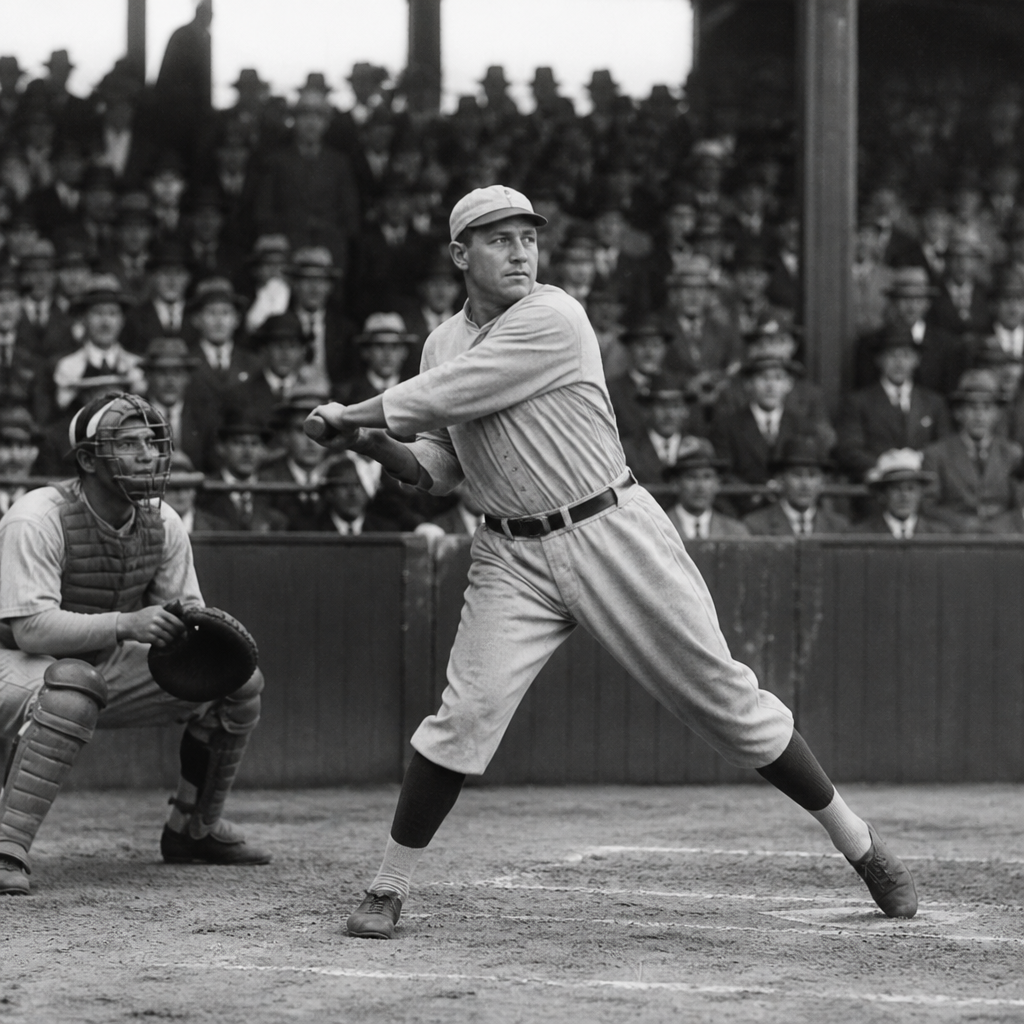
The Deadball Era produced triples at a rate modern fans can barely imagine because the game’s equipment, fields, tactics, and rules all pushed batted balls into open space and forced defenders to chase them. In baseball history, the term Deadball Era usually refers to the period from about 1900 through 1919, although some historians stretch the boundaries slightly earlier or later depending on league conditions and the impact of rule changes after World War I. It was an era defined by low home run totals, aggressive baserunning, bunt-heavy offenses, scuffed and softened baseballs, sprawling outfields, and a style of play built around pressure rather than power. If you want to understand why triples were so common in the Deadball Era, you have to understand why the entire run-scoring environment rewarded speed, contact, and daring advancement.
A triple is recorded when the batter reaches third base safely on a fair hit without the aid of an error or fielder’s choice. Today, triples are relatively rare because outfields are tighter, walls are more predictable, defenders are faster and better positioned, and hitters are often trying to drive the ball over the fence rather than into gaps. During the Deadball Era, that equation looked completely different. League home run leaders sometimes finished with totals that would seem tiny now, but triples leaders routinely piled up numbers that remain startling. Owen Wilson hit 36 triples in 1912, Sam Crawford hit 309 for his career, and the league leaders in many seasons reached the 20s with regularity. Those were not statistical flukes. They were the natural result of a baseball ecosystem that made extra-base advancement a central offensive weapon.
This matters because triples are one of the clearest statistical windows into how baseball strategy changes over time. When people picture the Deadball Era, they often focus on bunts, stolen bases, and low scores, but triples tell a fuller story. They show how park dimensions shaped offense, how uneven field conditions turned routine hits into adventures, and how baserunners were trained to take every available base. They also reveal why comparing players across eras requires context. A hitter who slugged with triples in 1910 was not doing the same job as a modern power hitter, even if both created run value through extra-base hits. As the central hub for the Deadball Era within the broader Baseball Eras topic, this article explains the environmental, tactical, and statistical reasons triples flourished, while connecting those causes to the larger identity of early twentieth-century baseball.
Large ballparks created more room for triples
The single biggest reason triples were so common in the Deadball Era was simple: there was far more outfield territory to defend. Many early parks had deep power alleys, odd angles, distant center fields, and irregular wall lines because stadium construction was constrained by city blocks, street grids, and available land. The Polo Grounds is the classic example. It had famously short foul lines but a cavernous center field that stretched beyond 450 feet depending on the configuration. Detroit’s Bennett Park and later Navin Field, Boston’s Huntington Avenue Grounds, and many other parks across both leagues featured dimensions that created huge alleys where line drives could roll for a long time.
I have always found that when modern fans watch diagrams of these parks, the reaction is immediate: they stop thinking in terms of home run distance and start seeing the outfield as acreage. That acreage matters. A ball hit into a gap in a modern park often reaches a wall quickly, letting an outfielder play the ricochet and hold the batter to a double. In the Deadball Era, the same ball might keep rolling on grass or dirt with no nearby barrier, turning a clean extra-base hit into a race. Outfielders had longer recovery routes, relay throws covered more ground, and runners had more time to accelerate out of the box and challenge for third.
Park asymmetry amplified the effect. Unusual corners and angled fences produced awkward caroms, and not every outfield had warning tracks or consistent surface conditions. In some parks, ropes or temporary barriers marked boundaries, making ball retrieval less efficient than it is in the modern wall-to-wall outfield. Even when a park did not have extreme advertised dimensions, practical depth could still be large because field maintenance standards were inconsistent. Every extra step an outfielder had to cover increased the probability of a triple.
The baseball itself was softer, darker, and less lively
The phrase “dead ball” refers partly to the character of the baseball. Balls were used longer, became misshapen during play, and were commonly darkened by dirt, tobacco juice, grass stains, and scuffs. A softer, less resilient ball did not carry like a modern tightly wound baseball, especially after repeated contact. That reduced home runs, but it did not suppress all extra-base hits. Instead, it redirected offensive value toward balls in play that landed safely and stayed away from defenders long enough for aggressive runners to take extra bases.
Pitchers were also allowed more freedom to manipulate the ball. Before the spitball and other trick pitches were restricted, pitchers routinely scuffed, shined, and otherwise altered the ball’s surface. A discolored ball was harder for batters to see cleanly, contributing to weaker contact overall, but when hitters squared one up, the result was often a hard grounder or low line drive into a huge outfield rather than a towering home run. That contact profile matters for triples. Low trajectory drives split fielders and kept rolling. On imperfect surfaces, even routine-looking hits could skid or bound unpredictably beyond an outfielder’s reach.
The replacement frequency of baseballs changed significantly after the 1920 season, when cleaner balls were introduced more often. That one operational shift helped hitters see the ball better and increased offensive liveliness. It is not an accident that the live-ball transition brought a rise in home runs and a relative decline in triples as a centerpiece of offense. A livelier, brighter ball changed the geometry of run creation. In the Deadball Era, however, the muted carry of the baseball pushed offenses to seek value on the bases after contact rather than through over-the-fence power.
Speed-first offensive strategy turned doubles into triples
Deadball offenses were built to force movement. Managers emphasized bunting, hit-and-run plays, stolen bases, first-to-third advancement, and pressure on defenders. In that environment, players were coached to run hard on virtually every ball in play because one extra ninety-foot gain often changed an inning. A triple was not treated as a lucky bonus. It was often the intended outcome once a ball got through the infield or into a gap. The batter’s first step out of the box, his turn around first, and his willingness to challenge an outfielder were all part of the offensive plan.
That approach was reinforced by roster construction. Teams valued speed, instincts, and durability. Outfielders and middle infielders covered a lot of ground, but so did baserunners. Ty Cobb is the era’s defining example. He led the American League in triples six times and treated every hit as an opportunity to pressure the defense into a rushed throw or misplay. Sam Crawford, another Detroit great, remains the career leader in triples because he combined line-drive contact with enough speed and aggression to keep stretching hits. Chief Wilson’s 36 triples in 1912 remain the single-season major league record, and that number makes sense only within a context where runners were conditioned to attack third base relentlessly.
| Deadball factor | How it increased triples | Example |
|---|---|---|
| Deep outfields | More space for balls to land and roll before recovery | Polo Grounds center field and expansive alleys |
| Less lively baseballs | Fewer home runs, more driven balls staying in play | Pre-1920 reused and scuffed balls |
| Aggressive baserunning | Batters routinely tried for third on any clean gap hit | Ty Cobb and Sam Crawford stretching hits |
| Uneven field conditions | Bad bounces and slow recovery turned doubles into triples | Irregular grass, dirt, and boundary setups |
| Weaker fences and caroms | Less predictable rebounds delayed outfield plays | Odd angles in early urban ballparks |
Field conditions and equipment made defense less efficient
Modern baseball defense is shaped by manicured grass, standardized warning tracks, refined gloves, advanced positioning data, and consistent wall construction. Deadball Era defense operated with fewer advantages. Gloves were smaller and less specialized, making difficult pickups and transfers harder, especially in the outfield. Surfaces were rougher, with variations in grass height, dirt firmness, drainage, and maintenance from park to park. On some grounds, a ball could take an odd hop, slow unexpectedly, or shoot past a fielder who had read it correctly off the bat.
Those details added up. A triple often came from a tiny defensive delay: a bobble on the pickup, a poor bounce off an incline, or a longer-than-expected chase into a far alley. Outfield throwing mechanics also became more demanding when the retrieval point was deeper and less controlled. A modern outfielder often fields a ball near a wall, gathers, and throws to a known relay spot. In the Deadball Era, the pickup might happen on open ground with momentum carrying the fielder away from the infield. That made strong, accurate relays harder and gave the runner a better chance to arrive at third standing up or in a close play.
Even scorer judgment worked against defenses. Official scorers in the era could be conservative about awarding errors on difficult distant plays, especially when a ball reached a place where recovery was already challenging. That did not create triples out of nothing, but it did help preserve them in the statistical record. The larger truth remains that the physical act of converting a gap hit into an outfield assist was substantially harder than it is in today’s cleaner, more standardized game.
Triples fit the scoring logic of low-run baseball
In a low-scoring environment, a triple had enormous tactical value because it almost guaranteed a prime scoring chance without requiring multiple clean hits. One deep drive into the gap could instantly place a runner ninety feet from home, where a sacrifice fly, bunt, groundball, wild pitch, passed ball, or squeeze play might bring him in. That made triples one of the most efficient offensive outcomes available in an era with limited home run production. Managers knew it, players knew it, and pitchers feared it because preventing one extra base often determined the inning.
The statistics support that role. During the 1900s and 1910s, league slugging percentages were modest by modern standards, yet triples remained a meaningful share of total extra-base hits. In 1912, major league teams combined for more than 1,500 triples, a total unimaginable in the contemporary game. The same season produced only a fraction of the home run totals now expected from one powerful modern club over a full year. That imbalance shows how offense was distributed differently. Instead of waiting for one swing to clear the fence, teams assembled runs through placement, speed, and advancement.
Triples also reflected the psychology of the period. Because one run mattered so much, defenses sometimes played shallower to cut off singles, bunts, and bloops, which created opportunities behind them. Hitters did not need launch-angle optimization to create damage. They needed hard contact into space and immediate acceleration. That is why triples were not a side effect of weak hitting; they were evidence of an offense adapted precisely to its conditions.
Why triples declined after the Deadball Era
Triples did not disappear after 1919, but their frequency dropped as baseball changed structurally. The live-ball era introduced cleaner baseballs, more frequent ball replacement, and a more visible hitting environment. Babe Ruth’s power revolution changed offensive incentives across the sport. Rather than valuing contact that split deep outfields and set up one-run tactics, teams increasingly pursued fly-ball authority that could leave the yard. Ballparks were also gradually redesigned or modified with more regular dimensions and more manageable outfield spaces, reducing the amount of open ground where triples thrived.
Defensive quality improved as equipment evolved. Better gloves, more professionalized training, and eventually more systematic scouting and positioning reduced the number of balls that turned into three-base hits. Stadium architecture became more predictable, with walls built to contain balls and produce readable caroms. Turf management improved. Relay play became cleaner. Each incremental gain cut into the triple’s natural habitat.
The decline of triples is therefore one of the best markers of baseball’s transition from territorial chaos to controlled power. When you see enormous triple totals in the Deadball Era, you are seeing the imprint of old parks, old balls, old tactics, and old assumptions about how runs should be scored. Those numbers are not quaint curiosities. They are direct evidence of a fundamentally different game.
Triples were so common in the Deadball Era because every major condition of play favored them: giant outfields, softer baseballs, aggressive baserunning, imperfect field conditions, and a run-scoring strategy built around pressure instead of home run power. Understanding that pattern helps place stars like Ty Cobb, Sam Crawford, and Chief Wilson in proper context, while also explaining why Deadball baseball looked and felt different from what came later. If you are exploring Baseball Eras in depth, use triples as a guidepost. They reveal how rules, equipment, ballparks, and tactics combine to shape what happens on the field, and they make the Deadball Era easier to read as a complete system rather than a collection of odd old statistics.
Frequently Asked Questions
Why were triples so much more common during the Deadball Era than they are today?
Triples were common in the Deadball Era because almost every part of the sport encouraged them. The baseball itself was softer, less lively, and often misshapen from extended use, so hitters did not drive many balls over the fence. Instead, they produced line drives and long bounding hits that stayed in play. At the same time, many outfields were enormous by modern standards, with deep power alleys, odd angles, uneven terrain, and little of the wall-to-wall standardization fans now expect. A ball that got past an outfielder or kicked into a strange corner could roll for a long time.
Just as important, teams played a style built around speed and pressure. Runners were expected to take extra bases aggressively, and defenders had to cover more ground with less specialized equipment. Gloves were smaller and less effective, field conditions were rougher, and communication in sprawling outfields was more difficult. Put all of that together and a well-placed hit often became a race rather than a routine play. In that environment, triples were not unusual accidents. They were a natural product of how the game was played.
How did the baseball itself contribute to the high number of triples?
The baseball was a major reason triples flourished. During the Deadball Era, the ball was not replaced nearly as often as it is today. One ball might remain in use for long stretches, becoming softer, dirtier, scuffed, and harder to see. As a result, it did not jump off the bat the way a modern baseball does. That reduced home runs, but it did not necessarily reduce the number of difficult balls in play. Instead, hitters often sent balls into the gaps or down the lines where fielders had to chase them.
Because the ball had less carry, outfielders could not simply position themselves for frequent deep flies clearing the fence. More deep contact stayed in play, and that meant more opportunities for baserunners to stretch hits. A hard shot into a huge outfield was often exactly the kind of batted ball that turned into a triple. In other words, the “dead” ball did not kill offense altogether. It redirected offense away from over-the-fence power and toward speed, placement, and extra-base advancement.
Did ballpark design in the Deadball Era make triples easier to hit?
Yes, ballpark design played an enormous role. Early twentieth-century parks were often vast, irregular, and highly idiosyncratic. Outfield fences could be extremely deep, especially in center field and the alleys, and some parks featured unusual corners, awkward caroms, slopes, or large expanses of open grass. In such spaces, a ball hit past an outfielder could travel a great distance before being recovered and thrown back in.
Modern ballparks are comparatively uniform and intentionally designed around more predictable dimensions, safer surfaces, and cleaner sightlines. By contrast, Deadball Era parks frequently rewarded pure placement and speed. A batter did not need home run power to do damage. He only needed to split the outfielders or find a strange bounce. Once that happened, the runner had room to keep going. This is one of the biggest reasons triple totals from that era look so startling today: the architecture of the game itself created far more three-base opportunities.
What role did strategy and style of play have in producing so many triples?
Strategy was central to the triple-heavy environment. The Deadball Era emphasized what is often called “inside baseball,” a style focused on bunting, hit-and-run plays, stolen bases, contact hitting, and relentless baserunning pressure. Teams were not waiting around for three-run homers because home runs were relatively rare. Instead, they tried to manufacture runs by taking every extra ninety feet available.
That mentality mattered when balls reached the outfield. Runners were coached to be aggressive, and third-base coaches often sent them whenever there was the slightest opening. Outfield arms were not uniformly overpowering, relay systems were less refined than in the modern game, and the larger fields gave runners more chances to challenge the defense. A triple, then, was not just a lucky bounce. It was often the result of an intentional offensive philosophy that valued daring baserunning and constant motion. In a game built around speed rather than slugging, triples became one of the clearest expressions of offensive success.
When did triples start to decline, and what changed after the Deadball Era?
Triples began to decline as baseball moved out of the Deadball Era and into a livelier offensive period in the early 1920s. Several developments pushed the game in a new direction. Cleaner, newer baseballs were introduced more regularly, making the ball easier to see and livelier off the bat. Rule changes and enforcement also reduced some of the old pitching advantages, and hitters increasingly embraced a more powerful swing designed to drive the ball in the air. The rise of sluggers helped transform offensive priorities across the sport.
At the same time, ballparks gradually became more standardized, equipment improved, and defensive play became more efficient. Many deep drives that once stayed in play and became triples later turned into home runs, doubles off the wall, or more manageable plays for outfielders in better-designed parks. The triple did not disappear, but it stopped being a defining feature of the game. That is why Deadball Era triple numbers stand out so sharply in baseball history: they reflect a version of the sport in which conditions, tactics, and field geometry all pointed runners toward third base.