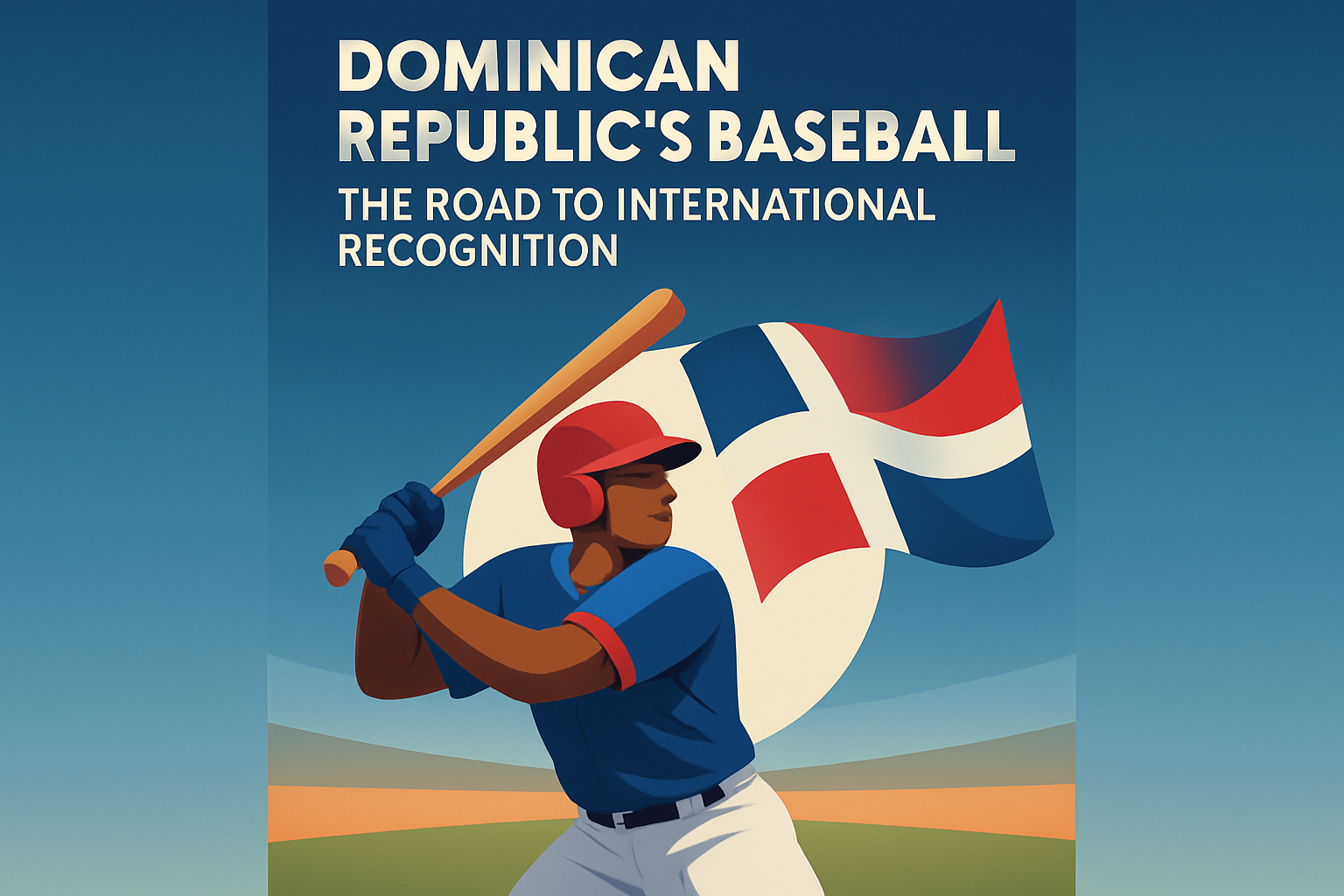
Baseball is more than just a sport in the Dominican Republic; it is a way of life, a national passion, and a source of pride. While the game may have been born in America, it has found an equally fervent home in the Caribbean, particularly in the heart of the Dominican Republic. The country has produced some of the world’s most renowned baseball players who have dazzled fans on the international stage. Dominican baseball is significant not only because of the impressive talents it showcases but also due to its socio-economic impact and cultural deeper meanings. For a nation like the Dominican Republic, gaining international recognition through baseball means celebrating their identity, improving economic conditions, and showcasing the resilience and spirit of its people.
The term “international recognition” speaks to the country’s ability to foster talents that compete and excel on a global scale, particularly in Major League Baseball (MLB) in the United States, which is the pinnacle of professional baseball. This journey from local fields of sand and stone to thriving baseball academies reflects a systemic nurturing of potential that echoes the aspirations of many young Dominicans. Exploring this path unveils not only the nation’s love affair with baseball but also the societal structures and economic dynamics that it has influenced.
The Origins and Rise of Baseball in the Dominican Republic
To comprehend the fervor of baseball in the Dominican Republic, we begin at the roots. Baseball was first introduced to the island in the mid-19th century by Cuban immigrants who fled the Ten Years’ War. The game swiftly captured the local populace’s interest, integrating smoothly with the Dominican spirit that resonates with competitive sports. By the early 20th century, Dominican town and city teams were forming, and the island hosted its first official league in 1890, establishing an early and solid foundation of organized play.
The significant turning point for the Dominican Republic’s baseball scene was the professionalization of the game. This shift became more pronounced around the middle of the 20th century, facilitated by political and economic changes on the island. During this time, international talent scouts began to recognize the immense potential within Dominican players, marking the starting line for the influx of Dominican talent into MLB. Juan Marichal, Pedro Martínez, and David Ortiz are notable examples of players whose careers started in the Dominican Republic before bringing their exemplary skills to international arenas, highlighting the upward trajectory and recognition of Dominican baseball prowess.
The Role of Baseball Academies
Baseball academies have played an integral role in shaping Dominican talent, acting as both training grounds and talent funnels to MLB. These academies exist in abundance throughout the country and are supported both by local governance and MLB investment. The goal is to identify and nurture young talents, offering them not only athletic training but also education and life skills necessary to navigate the potential transition to international careers. The Athletics Academy, for instance, has been pivotal in its contributions by training athletes who later make it to MLB ranks.
These academies focus on honing technical skills and physical fitness and provide vital support systems to a generation of aspiring players. These institutions remain a testament to the collaborative efforts between the Dominican Republic and international bodies, working towards a shared vision of elevating local talent to a global platform. These ventures reflect the nation’s commitment to supporting its young athletes in achieving prominence on an international scale.
Impact on the Economy and Local Communities
Baseball’s influence extends far beyond sport, impacting the Dominican Republic’s economy significantly. The sport’s popularity has created a booming industry around it, involving sports equipment manufacturing, infrastructure development, tourism, and employment opportunities tied to teams and games. Local economies benefit directly from the game, as tournaments draw crowds and revenue, energizing both small businesses and larger corporate sponsors.
Moreover, the international success of Dominican players has led to a flow of financial remittances back into local communities. Players who go on to become high-earning stars in MLB often reinvest in their hometowns, founding charities and funding local projects, schools, and facilities. This economic benefit transforms communities, creating a cycle of opportunity and growth, thus making a significant impact on alleviating poverty and promoting education and health domestically.
| Aspect | Impact on Economy | Impact on Communities |
|---|---|---|
| Sports Industry Growth | Job Creation, Tourism Boost | Improved Infrastructure |
| Player Remittances | Increased Spending Power | Community Development Projects |
| International Reputation | Investment Attraction | Cultural Pride and Identity |
Challenges and Opportunities
Despite the success stories, the road to international recognition hasn’t been without its challenges. Issues such as corruption, exploitation of young athletes, and inadequate regulatory frameworks have occasionally overshadowed the sport’s positive impact. Many young athletes face exploitation from opportunistic agents or suffer from insufficient support if their baseball aspirations do not materialize as planned.
However, these challenges present opportunities for reform and systemic improvement. There is a growing movement towards better regulation and protection of young athletes to ensure fair treatment and the safeguarding of their interests. Organizations and policy-makers are advocating for ethical conduct and transparency within the sport, thereby promising a brighter and more equitable future for the next generation of Dominican players.
Bringing it All Together: Celebrating Dominican Pride
The path to international recognition for Dominican baseball highlights more than just athletic prowess; it validates the cultural and historical journey of the Dominican people. Baseball has become a medium through which the Dominican Republic’s resilience, creativity, and vibrancy are displayed globally. The sportsmanship exhibited is, in many ways, representative of the nation’s broader potential for international collaboration and positive representation.
Real-world examples abound, such as when the Dominican Republic triumphed in the 2013 World Baseball Classic, asserting their dominance and capability to the world. Such milestones are celebrated as deep sources of national pride, invigorating the Dominican spirit and rooting it prominently within the global community. In this way, the game acts as both an expression and a catalyst for national identity and unity.
A Path Forward
For the Dominican Republic, baseball serves as a bridge that connects its rich past with a promising future. As it continues to cultivate excellent players and promote community-based initiatives fueled by the sport’s success, the country stands as a testament to the power of sports in driving national recognition and economic growth. The next chapter for Dominican baseball may involve enhanced collaborations, particularly in education and technology within the training processes.
Future challenges will undoubtedly arise, but with them come opportunities to innovate and grow. The emphasis remains on creating sustainable avenues for talent development and ensuring that all involved benefit equitably from the fruits of their labor. From grassroots levels to international fields, Dominican baseball continues its ascendant journey, steadfast in its goal to keep flourishing as a leading force on the global stage.
Conclusion: The Global Conquest of Dominican Baseball
In conclusion, the journey of Dominican Republic’s baseball to achieve international recognition is one of passion, perseverance, and potential. It is a testament to how cultural identity and economic opportunity can intertwine to forge a distinct presence on the world stage. The sport provides far-reaching impacts, from enhancing the national economy to uplifting local communities, showcasing the brilliant synergy between culture and commerce.
For fans and aspiring players alike, the path charted by Dominican baseball offers inspiration and hope. It encourages both a celebration of past achievements and an enthusiastic anticipation for future milestones. The true benefit to the reader lies in understanding the power of sports as a vehicle for socioeconomic change and international engagement, specifically within the context of the Dominican Republic’s rich baseball heritage.
To further participate in this celebration and support the growth of Dominican baseball, one may consider engaging with local sports charities, attending games, or even visiting the vibrant academies. Each of these actions contributes to nurturing the future of a game that serves as a beacon of Dominican pride and global connection. The call to action is simple: embrace and support Dominican baseball, and in doing so, join in the journey of a nation on the rise through its beloved sport.
Frequently Asked Questions
1. What is the historical significance of baseball in the Dominican Republic?
Baseball’s roots in the Dominican Republic trace back to the late 19th century when the sport was introduced by Cuban immigrants and American military personnel stationed in the country. Over the years, baseball transcended its status as a mere sport to become a cultural institution deeply embedded in the national identity. The influence of baseball in the Dominican Republic blossomed during the early 20th century, coinciding with the sport’s growing popularity in North America. The Dominican Republic embraced baseball as a platform for its youth to aspire towards international success, and clubs began sprouting across the nation. This sowed the seeds for the Dominican baseball passion that persists today. Baseball fields became community hubs where people would gather to watch, play, and celebrate the spirit of the game. It is this rich history, combined with a relentless pursuit of excellence, that fuels the nation’s steadfast devotion to the sport and its global recognition. By the mid-20th century, the Dominican Republic had firmly established itself as a cradle of baseball talent, contributing significantly to Major League Baseball (MLB) and propelling the country’s international reputation in the sport.
2. How did the Dominican Republic become a powerhouse for producing Major League Baseball (MLB) players?
The path to becoming a powerhouse in Major League Baseball (MLB) for the Dominican Republic was paved by a combination of cultural fervor, well-established grassroots systems, and robust developmental programs. The Dominican Republic’s love for baseball translates into a rigorous training regime from a young age, with many children starting to play in local leagues and academies long before entering professional circles. These academies, often backed by MLB teams, are crucial in honing the skills of young talents. They provide high-quality coaching, facilities, and competitive opportunities. The dedication to youth development is striking; children as young as five or six are spotted honing their skills, and by their teens, many are scouted for top-tier prospects. The influence of prominent Dominican MLB stars like Juan Marichal, Pedro Martínez, and David Ortiz also inspires emerging players. This interconnected system of local passion, expert training, and international exposure not only feeds the pipeline of talent flowing into MLB but continuously bolsters the Dominican Republic’s status as a preeminent source of baseball talent.
3. What are some of the challenges faced by Dominican baseball players on their road to international recognition?
The journey for Dominican baseball players aspiring for international stardom is fraught with multiple challenges. The socioeconomic hurdle is perhaps the most significant, as a substantial number of players come from economically disadvantaged backgrounds. Many young athletes and their families invest heavily in their training, hoping that baseball will be their ticket out of poverty. Additionally, the fierce competition to stand out among thousands of prospects can be daunting, with many athletes vying for limited spots in domestic and international teams. Language barriers and cultural adjustments also pose challenges as players transition from the Dominican leagues to MLB or other international platforms. This transition often requires young players to move away from home, adapt to new environments, and juggle fame with the professional and personal responsibilities that come with it. Despite the allure of success, the pressure to perform consistently at an elite level is a continuous challenge for these players. Overcoming these obstacles demands resilience, discipline, and unwavering determination, and it’s a testament to the indomitable spirit of many Dominican players who ultimately achieve international acclaim.
4. How has the Dominican Republic’s success in baseball impacted its culture and economy?
The success the Dominican Republic enjoys in baseball significantly impacts both its culture and economy. On the cultural front, baseball is interwoven with the national consciousness and identity, functioning as a source of immense pride and unity. The country celebrates its baseball stars as national heroes, and their achievements on the international stage are taken as collective triumphs. Ceremonial games and public events often see whole communities gathering, fostering a sense of shared joy and solidarity. Economically, baseball serves as a vital driver by promoting tourism, attracting investments, and generating employment opportunities. MLB academies provide jobs for coaches, trainers, and support staff, while related industries such as sports equipment, broadcasting, and merchandise flourish. Moreover, successful players often reinvest in their communities, funding local initiatives, building infrastructure like schools and sports facilities, and thereby uplifting local economies. These developments underscore the essential role baseball plays in the socioeconomic fabric of the Dominican Republic, cementing its status not only as a beloved sport but as a catalyst for positive change and progress.
5. What is the future outlook for Dominican baseball on the international stage?
The future of Dominican baseball on the international stage looks exceptionally promising as the nation continues to nurture and produce world-class talents. With ongoing investments in youth academies and training facilities, the Dominican Republic is well-positioned to maintain its status as a fertile ground for elite baseball players. Additionally, innovations in training techniques and the growing trend of Dominican players involving themselves in the mentoring and development of new talent underscore a vibrant future for the sport in the country. As MLB and other international leagues further expand their scouting and developmental reach, the flow of Dominican talent to international platforms is likely to increase. With a continued emphasis on education and personal development, players will be more equipped to handle the demands of international careers both on and off the field. The globalization of baseball as a sport provides new opportunities for Dominican players to shine on different stages, including international tournaments such as the World Baseball Classic. Overall, the blend of cultural passion, institutional support, and individual dedication heralds a bright horizon for Dominican baseball as it looks to remain a powerhouse in the years to come.