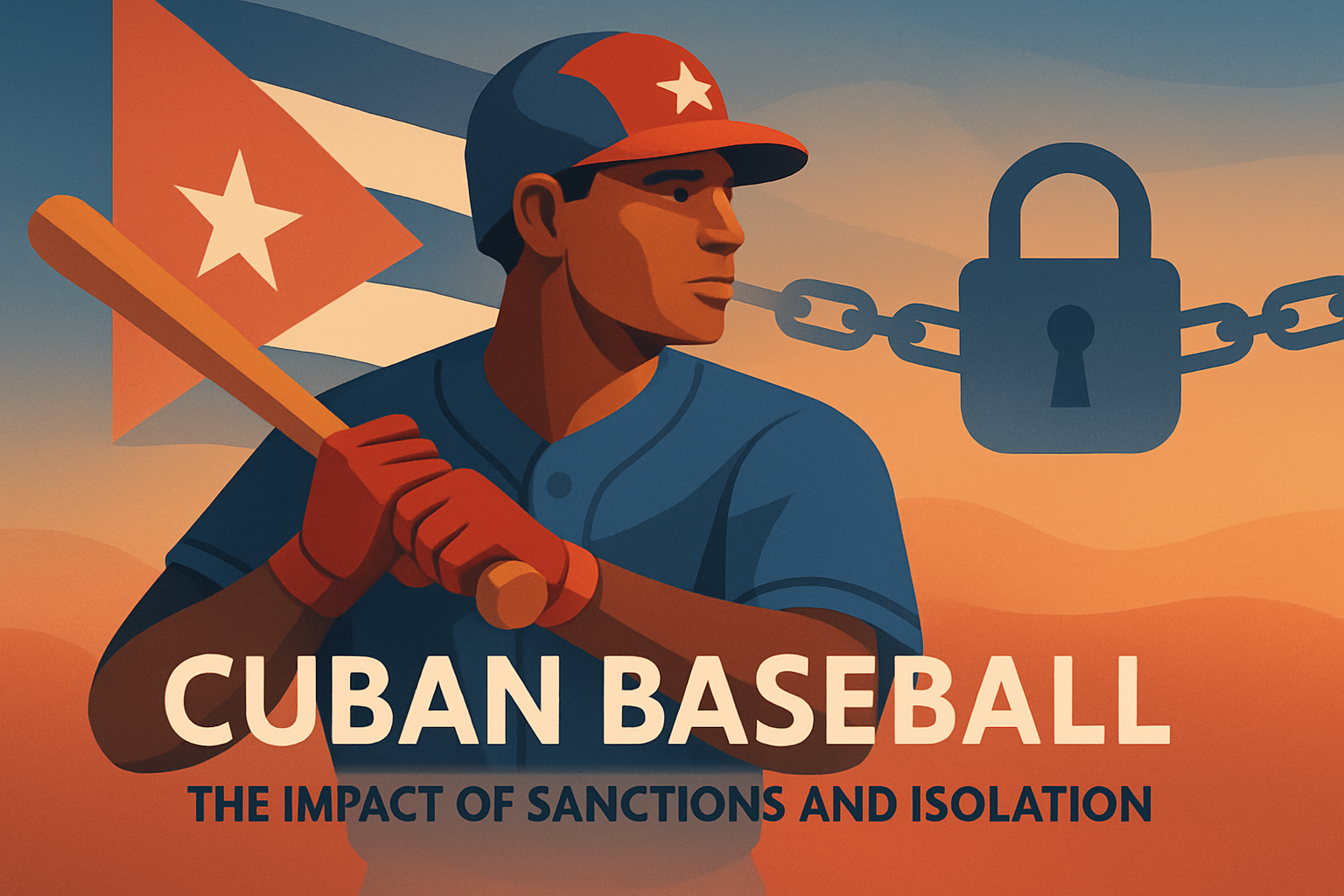
Baseball is more than just a sport in Cuba; it is an integral part of the nation’s cultural identity. Since its introduction in the late 19th century, baseball has captivated the hearts of millions of Cubans, producing some of the most talented and iconic players in the world. However, the development of baseball in Cuba has not been without its challenges. Primarily, international sanctions and isolation have critically impacted the sport’s evolution and the athletes involved. Understanding the profound effects of these sanctions and isolation is crucial, not only for appreciating the resilience displayed by Cuban players but also for comprehending broader geopolitical influences on global sports. This article delves deep into how sanctions and isolation have shaped Cuban baseball, providing insight into the sport’s present environment and offering a glimpse of its potential future.
The Historical Context of Cuban Baseball
To fully grasp the current state of Cuban baseball, one must first understand its rich history. The sport was embraced in Cuba during the late 1800s, rapidly growing in popularity and becoming a symbol of national pride. However, the political landscape shifted dramatically following the Cuban Revolution in 1959. As the island nation embraced a socialist government under Fidel Castro, its relationship with the United States soured, leading to a stringent trade embargo.
The embargo, formally initiated in 1960, curtailed Cuba’s ability to participate in the global baseball arena. Previously, Cuban players frequently transitioned to Major League Baseball (MLB) in the United States. However, subsequent restrictions meant that talented Cuban players were increasingly isolated, often having to defect to pursue careers abroad. Such departures, while ensuring individual prospects in foreign leagues, also stripped Cuba of its premier talent, affecting the standard of domestic play.
Economic Sanctions and Their Impact on Baseball Infrastructure
Economic sanctions have played a decisive role in shaping the landscape of Cuban baseball. The lack of resources has directly impacted the quality and availability of equipment, stadium maintenance, and player facilities. Stadiums that were once bustling with life have deteriorated over the years due to inadequate upkeep.
Take the Estadio Latinoamericano, for example. Located in Havana and considered one of the largest baseball stadiums in the world, it once symbolized the glory of Cuban baseball. Today, however, it struggles with limited funding for necessary renovations. Rusting seats, outdated equipment, and inadequate training facilities are a testament to the limitations imposed by ongoing sanctions.
Isolation and Its Consequences on Player Development
The isolation resulting from political friction has also had severe consequences on player development. Unlike their counterparts in other countries who often experience international play, Cuban athletes are largely limited to competing within domestic leagues. Such restrictions curtail exposure to diverse playing styles and strategies, essential components in refining competitive skills.
| Challenges | Impact on Players |
|---|---|
| Limited Access to International Competitions | Reduces exposure and learning opportunities |
| Defection of Talent | Loss of mentors and higher-level competition |
| Obsolete Training Facilities | Hampers skill development and innovation |
An illustration of this can be seen in the careers of players like Yasiel Puig and Yoenis Céspedes who defected to the U.S. Upon entering MLB, these players demonstrated exceptional talent, quickly adapting to and excelling in the league. Their success stories highlight the latent potential within Cuba but also underscore the constraints placed on those who remain.
The Social Impact of Baseball Amidst Sanctions
Beyond the tangible effects on play and infrastructure, Cuban baseball serves as a crucial social apparatus. It is a source of national pride and a vital tool for community cohesion. Sanctions and isolation have had profound societal implications, influencing community morale and national identity.
In numerous Cuban neighborhoods, baseball remains a pivotal social fabric. Families gather around radios and televisions to follow games, while children imitate their favorite players in dilapidated fields. Despite economic hardships, baseball offers a semblance of normalcy and joy, serving as an escape and a rallying point for national unity.
Adaptation and Innovation Within Constraints
In spite of the multitude of challenges, Cuban baseball showcases incredible adaptation and innovation. The scarcity of resources has led to creative solutions in training methods and game strategies, often employing unconventional means to cater to standard preparation protocols.
For instance, player training has had to compensate for the lack of modern equipment. Using makeshift tools such as old tires for agility drills or bricks for weight training, coaches and players have developed inventive techniques to maintain competitiveness. Furthermore, local leagues have experimented with rule variations and tactics to optimize performance within existing constraints.
The Future Prospects and Potential Pathways
The future of Cuban baseball is a topic steeped in speculation. Potential changes in diplomatic relations and adjustments to existing sanctions could redefine the landscape significantly. There are hopeful signs of increased collaboration and exchanging of knowledge with leagues beyond its borders.
A notable opportunity lies in fostering partnerships with international organizations to revitalize infrastructure and training facilities. Additionally, easing travel restrictions could facilitate knowledge transfer and integrate aspiring Cuban players into global networks, enhancing their exposure and career prospects.
Conclusion: Embracing Change for a Brighter Tomorrow
In conclusion, the impact of sanctions and isolation on Cuban baseball is profound, manifesting in various spheres from infrastructure limitations to player development challenges. However, the resilience of Cuban players and their ingenuity within these constraints should not be understated. As global dynamics continue to shift, there is a promising horizon for Cuban baseball.
The key takeaway for enthusiasts and policymakers alike is the importance of fostering international cooperation to provide Cuban talents with the platform they deserve. Recognizing the rich cultural heritage and potential of Cuban baseball can pave the way for transformative developments. Support for such initiatives could see the global baseball community benefit from a more inclusive representation of talent.
As an actionable step, readers are encouraged to advocate for equitable sporting opportunities and appreciate the complex interplay between politics and sports. By doing so, we can contribute to a sporting world that values diversity and fosters international camaraderie through shared love for the game.
Frequently Asked Questions
1. How have international sanctions affected Cuban baseball?
The impact of international sanctions on Cuban baseball has been profound and multifaceted. Since the U.S. trade embargo against Cuba was imposed in 1960, along with various other international restrictions, Cuban baseball has faced numerous challenges. One of the most significant effects is the lack of access to resources. These sanctions have made it difficult for Cuban sports officials and teams to obtain high-quality baseball equipment, training facilities, and the latest technology, which are crucial for developing and maintaining competitive standards.
Moreover, the sanctions have limited Cuban players’ opportunities and visibility on the international stage. Due to travel and visa restrictions, Cuban baseball players often find they are unable to participate in international tournaments and leagues. This isolation means less exposure to diverse playing styles and strategies, which can hinder the development of well-rounded athletic skills. Such missed opportunities inevitably impact the personal growth and professional advancement of many Cuban athletes, perpetuating a cycle where homegrown talent remains largely underrepresented in the global baseball arena.
The sanctions have also had an economic impact. The inability to engage fully with international markets means a loss of potential revenue from merchandise, the broadcast of games, and sponsorships that could be invested back into developing Cuban baseball infrastructures. Furthermore, the hardships faced by players under these conditions often drive them to defect in pursuit of better opportunities, weakening the national talent pool.
2. How has isolation shaped the development of baseball players in Cuba?
Isolation has distinctly shaped the evolution and development of baseball players in Cuba, creating a unique environment that builds resilience but also imposes limitations. On one hand, Cuban baseball players are renowned for their incredible talent and passion for the game, cultivated through sheer dedication and the rich cultural importance of baseball in the country. Playing in local stadiums and engaging in community-related baseball culture fosters an intense work ethic and camaraderie among players.
However, the isolation prevents many players from experiencing the rigors of different playing styles and strategies prevalent in international leagues. Without regular interaction and competition against international teams, Cuban players may not develop the same tactical versatility that comes from exposure to varied game dynamics.
Additionally, the constraints imposed by isolation often result in limited access to advanced training methodologies and resources. New developments in sports science, nutrition, and conditioning – readily available to players in more globally connected countries – are slower to reach Cuban athletes. This can hinder progression in their athletic performance and skills, potentially leading to early plateaus in their careers.
Despite these challenges, isolation has also necessitated an adaptable approach to training, with Cuban coaches and players finding innovative ways to maximize their potential using limited resources. This determination and creativity are hallmarks of Cuban baseball, contributing to the unique style and flair that Cuban players bring to the game.
3. What role does baseball play in Cuban culture?
Baseball is deeply embedded in Cuban culture, serving as one of the most cherished and common pastimes. Often referred to as a national passion, baseball acts as a unifying force across generations, fostering a deep sense of national pride and community. It transcends mere entertainment, contributing significantly to the cultural fabric of the nation.
Historically, baseball was introduced to Cuba in the late 19th century during a time of struggle for independence. It quickly became emblematic of Cuban identity and solidarity, providing a contrast to colonial influences. Over the years, baseball has become more than a sport – it is a social institution where political and social narratives often intersect with the game, serving as a potent outlet for personal and collective expression.
Cubans of all ages participate in or follow baseball, from informal street games in neighborhoods to major league games featuring local teams. Baseball heroes and legends are celebrated and immortalized, not only for their on-field achievements but for their embodiment of Cuban spirit and determination. The sport also plays a critical role in social settings and community bonding, with stadiums functioning as vibrant social hubs and the backdrop for many familial and communal gatherings.
4. Why do Cuban baseball players often defect to other countries?
The defection of Cuban baseball players to other countries is driven largely by the pursuit of better opportunities, both athletically and economically. Due to the U.S. trade embargo and associated restrictions, as well as the government’s control over its athletes, Cuban players face limited prospects within their home country, often being underpaid and restricted from participating in lucrative overseas leagues.
In other countries, especially the United States, there are immense prospects for personal and professional growth. Major League Baseball (MLB) offers substantial financial rewards, as players can sign multi-million dollar contracts that are unimaginable under Cuba’s economic system. These opportunities are enticing enough for many players to endure the risk and difficulties associated with defecting.
Moreover, playing in internationally renowned leagues allows Cuban players to compete against a higher caliber of talent, further hone their skills, and gain worldwide recognition. Such exposure can significantly advance their careers, fostering a sense of achievement that is often out of reach within Cuba due to its isolation and the limitations imposed by sanctions.
However, defections come with an enormous personal cost. Players must leave behind their homes, families, and communities, often permanently. This separation can be emotionally challenging, adding a layer of complexity to their pursuit of career success on foreign soil.
5. What measures could help alleviate the impact of sanctions and isolation on Cuban baseball?
Alleviating the impact of sanctions and isolation on Cuban baseball requires a multifaceted approach. International collaboration and dialogue are critical first steps. Initiatives aimed at easing travel and visa restrictions for Cuban athletes can facilitate greater participation in international events, fostering skill development and cultural exchange.
Furthermore, creating pathways for Cuban teams to engage in tournaments and training sessions abroad would expose players to varying styles and techniques, enriching their experience and competitive edge. Supporting joint training camps or friendly matches with international teams can provide Cuban players access to advanced resources, knowledge, and strategies that are currently hard to come by within Cuba.
On a broader scale, re-evaluating the existing international sanctions and designing policies that specifically allow for sports and cultural interactions can be instrumental. Encouraging partnerships with organizations that specialize in sports development could also bridge significant gaps in training and infrastructure. This can be achieved through targeted support aimed at upgrading facilities and providing necessary equipment.
Finally, within Cuba, promoting grassroots development and ensuring that talented young players are nurtured in an environment that supports their growth is crucial. This includes investing in local programs that provide training, mentorship, and opportunities for aspiring athletes to thrive despite existing challenges. By combining these internal efforts with increased international engagement, the barriers posed by sanctions and isolation could be significantly mitigated, leading to a flourishing baseball ecosystem in Cuba once again.