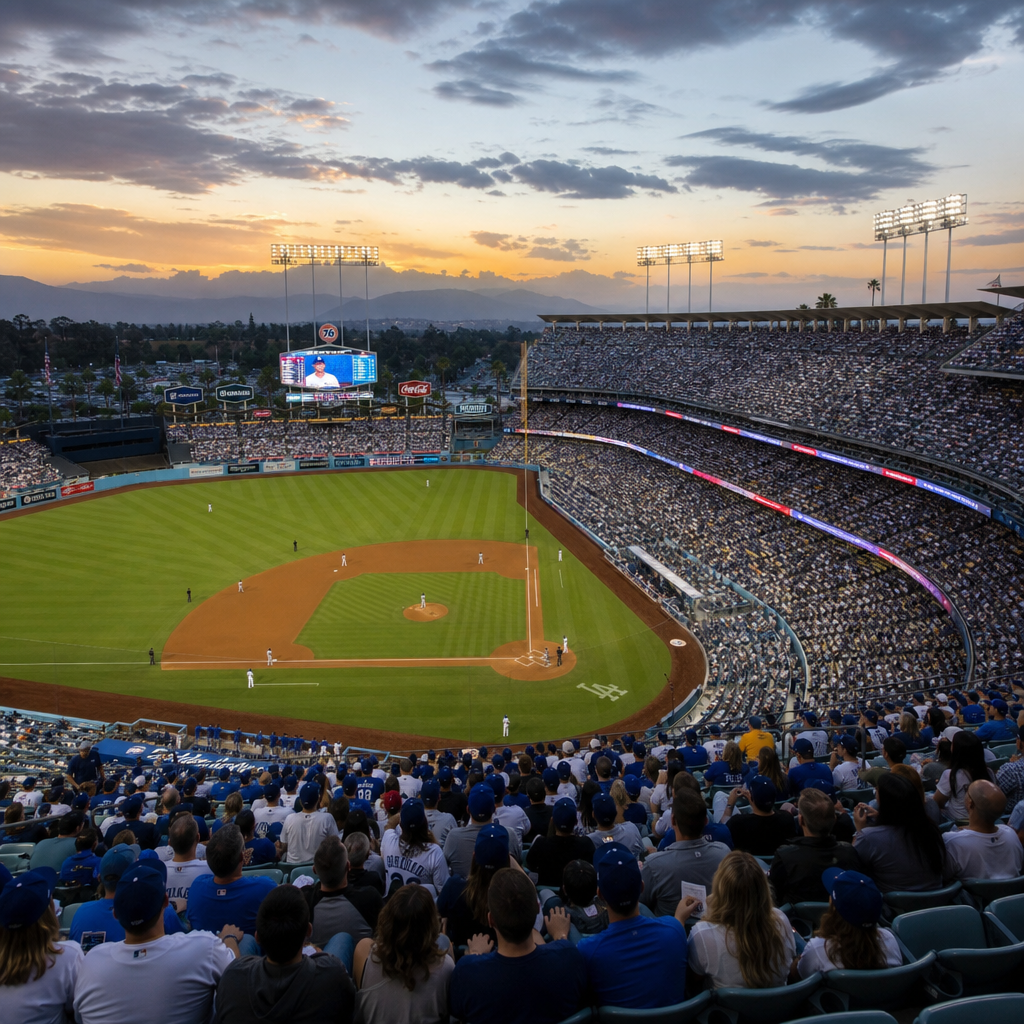
Major League Baseball’s postseason expansion has reshaped the sport’s financial model, turning October from a short championship tournament into a larger revenue engine that affects clubs, players, broadcasters, cities, and the league office. In simple terms, postseason expansion means increasing the number of playoff teams and, as a result, the number of playoff games available to sell, sponsor, and televise. MLB has moved through several formats over the decades, but the modern shift is most significant: the field grew from ten teams to twelve beginning with the 2022 season, adding an extra Wild Card round and creating more inventory for media partners and more meaningful late-season games for additional franchises.
The financial impact of postseason expansions in MLB matters because baseball’s economics are unusually layered. National television money is shared differently than local media revenue. Gate receipts from playoff games are distributed under rules negotiated with the players’ union. Sponsorship value rises when national audiences increase, but operational costs also rise when clubs host more high-intensity games with added staffing, security, travel, and event production. Expansion can also change incentives during the regular season. A wider playoff field may keep more teams in contention, encourage deadline spending, and sustain attendance in August and September. At the same time, critics argue that broader access can dilute regular-season urgency and allow average teams to claim a disproportionate share of October-generated value.
Having worked on baseball business analysis projects, I have seen that postseason expansion is rarely just a scheduling decision. It is a capital allocation and risk management decision. Owners evaluate national media rights growth, franchise valuation effects, and playoff probability. Team executives weigh whether a marginal win is now worth more because the path to a berth is easier. Municipal stakeholders consider hotel occupancy, restaurant traffic, and transit demand tied to extra home dates. For readers exploring economic innovations and challenges in baseball, this topic is a useful hub because it connects labor relations, media strategy, competitive balance, stadium operations, and franchise finance. Understanding postseason expansion clarifies how MLB monetizes scarcity, how it balances tradition against commercial growth, and why playoff format debates are fundamentally debates about money, incentives, and the future structure of the sport.
How MLB Postseason Expansion Changes the Revenue Model
The clearest economic effect of postseason expansion is the creation of additional premium inventory. Every added playoff game can generate national broadcast fees, higher advertising rates, elevated sponsorship demand, and, when hosted in a ballpark, premium ticket pricing far above regular-season levels. In MLB, postseason games are not merely extra dates; they are higher-yield events. Clubs can charge substantially more for tickets, suites, concessions, parking, and merchandise because demand intensifies in a win-or-go-home environment. For broadcasters, October baseball provides live programming that remains valuable in a fragmented media market, especially because live sports preserve real-time viewing and premium ad pricing better than most entertainment formats.
The 2022 expansion to twelve teams added four best-of-three Wild Card Series, replacing the previous single-game Wild Card format in each league. That gave MLB more nationally relevant content and gave more markets a reason to keep watching. A single elimination game is dramatic, but a series creates at least two games and as many as three, increasing inventory and reducing randomness. Financially, that matters. More games mean more commercial spots, more branded integrations, more shoulder programming, and more opportunities for betting-related partnerships in legal markets. It also smooths revenue projections because a series format creates a higher minimum number of events than a one-game structure.
Expansion also affects league-wide financial planning by broadening engagement deeper into the regular season. If more teams have a realistic shot at qualifying, more front offices remain active at the trade deadline, more local broadcasts retain relevance, and more fan bases continue buying tickets instead of disengaging by mid-August. This indirect effect can rival the direct value of the playoff games themselves. MLB benefits when more regional sports networks, streaming packages, and club marketing departments can sell meaningful games late in the year. That dynamic is central to the financial impact of postseason expansions in MLB: the value is not confined to October. It begins months earlier by making more regular-season inventory matter.
National Media Rights, Advertising, and Platform Strategy
Postseason expansion strengthens MLB’s leverage in national media negotiations because playoff inventory is among the league’s most bankable assets. National rights partners such as Fox, ESPN, and TBS have historically paid premiums for postseason windows because elimination games and pennant races deliver concentrated attention. As traditional cable economics weaken, premium sports rights become more important, not less, because they attract subscribers, support streaming bundles, and anchor advertising packages. Additional Wild Card Series games help MLB present a broader package of must-carry content to legacy broadcasters and digital platforms alike.
Advertisers value postseason baseball differently from a typical summer game. Audience intensity is higher, average minute retention is stronger, and brand association with championship moments carries extra weight. Sponsors can attach themselves to series naming rights, in-game features, pregame shows, statcast segments, and social clips that continue circulating after the final out. In practice, expanded playoffs increase the number of nationally visible moments available for sale. That allows MLB and its partners to segment inventory more precisely, offering different packages to auto brands, sportsbooks, financial services firms, and technology companies. The result is a more diversified commercial base around October content.
Streaming strategy adds another layer. Expanded postseason formats give MLB more flexibility to experiment with digital-exclusive windows, authenticated streaming, and international distribution. While baseball has been more cautious than some other leagues, the commercial logic is clear: if a platform wants premium live sports to attract subscribers, playoff baseball is a stronger acquisition tool than a regular Tuesday night game in June. The challenge is balancing reach and revenue. Putting games behind too many paywalls can limit total audience, but broad linear distribution can undersell the strategic value of streaming rights. Expansion makes that balancing act more consequential because the number of premium windows increases.
Club-Level Economics: Tickets, Operations, and Local Spillovers
For individual franchises, hosting postseason games can be financially meaningful, but the gains are more complex than fans often assume. Ticket demand spikes, especially for lower-seeded clubs that rarely reach October or for large-market teams with established postseason traditions. Clubs can raise prices across seating tiers, sell standing-room inventory, and monetize premium hospitality at a much higher rate than in the regular season. Merchandise per capita also rises in postseason settings, and sponsorship activations inside the ballpark become more valuable because of larger audiences and the significance of the event.
However, clubs do not keep every postseason dollar in a simple, unrestricted way. MLB has long had gate receipt rules that allocate portions of early-round receipts to the players’ pool, while later rounds and ancillary revenues have different distributions. Operational expenses also rise sharply. Teams add security staff, credentialing personnel, media operations, entertainment production, transportation support, and contingency planning for weather and crowd control. From my experience reviewing event budgets, a playoff game can require a materially different staffing model from a regular-season game, particularly when national television compounds production complexity.
Local economies can benefit from expanded playoffs through hotel stays, bar and restaurant traffic, rideshare usage, parking, and retail demand near the stadium district. Cities with walkable ballpark areas often capture the most visible gains. Yet economists are right to be cautious: the net regional impact is usually smaller than headline estimates suggest because some spending is substituted from other local entertainment options rather than created from scratch. Even so, for businesses clustered around a stadium, postseason games are often genuinely incremental, especially when fans travel from out of market. That localized lift can matter politically when public officials debate stadium investments, infrastructure upgrades, or special-event policing costs.
| Financial Area | Primary Benefit of Expansion | Main Limitation or Cost |
|---|---|---|
| National media rights | More playoff inventory increases rights leverage and ad slots | Audience fragmentation can reduce per-game value if windows are oversaturated |
| Club ticket revenue | Higher prices, suites, and premium demand for home playoff dates | Revenue-sharing rules and event costs reduce net retention |
| Late-season attendance | More teams stay in contention, sustaining demand in August and September | Regular-season urgency may decline for top clubs with comfortable margins |
| Trade deadline activity | More teams buy, increasing local interest and short-term spending | Some clubs may overpay for marginal upgrades with limited championship odds |
| Local business activity | Hotels, restaurants, and transit see postseason traffic spikes | Part of the spending substitutes for other local entertainment |
Competitive Balance, Incentives, and Deadline Economics
One of the strongest arguments for postseason expansion is that it improves competitive engagement across the league. When more teams remain within realistic striking distance of a berth, more owners have a reason to authorize payroll additions, and more baseball operations departments pursue short-term upgrades. That can stimulate the trade market, increase player movement, and keep fan bases invested. A club hovering around .500 in July might previously have acted as a seller; under an expanded format, the same club may trade prospects for bullpen help or a rental bat because the playoff path is wider.
This shift has financial consequences beyond the standings. Buyers often see a boost in ticket sales, local ratings, and season-ticket renewals when they signal intent at the deadline. Even a modest increase in playoff odds can justify millions in added payroll if the expected value of a berth includes ticket revenue, sponsor retention, and stronger offseason marketing. Baseball decision-makers increasingly model this through playoff probability curves and marginal revenue per projected win. Expanded playoffs flatten the threshold. The 88-win target that once felt necessary in some years may no longer be the only benchmark, which changes how clubs price wins in both free agency and trade discussions.
There are drawbacks. Expansion can encourage mediocrity if front offices believe an 84-win roster is “good enough” to reach October. That may reduce pressure to build elite regular-season teams and could widen the gap between teams that optimize for entry and teams that optimize for championships. It also complicates the value of division titles and byes. MLB’s recent format tries to preserve incentives by rewarding top seeds with rest and automatic advancement past the Wild Card round, but that introduces debate about layoff effects and competitive rhythm. Financially, the system must preserve enough scarcity that top-end regular-season performance still matters.
Labor, Revenue Distribution, and Franchise Valuation
No assessment of economic innovations and challenges in baseball is complete without labor considerations. Postseason expansion touches the collective bargaining relationship because added games create added revenue, and players reasonably seek a defined share of that growth. The current environment reflects a long-running tension in MLB economics: owners often emphasize franchise risk, stadium debt, and long investment cycles, while players focus on the immediate value produced by on-field labor and the fact that premium events are impossible without their performance. Expanded playoffs intensify this debate because the added revenue is easy to see, even if the exact distribution is less transparent to the public.
The players’ pool remains an important mechanism, but not the only one. Expanded postseason exposure can boost individual player endorsement opportunities, raise arbitration narratives, and enhance the marketability of stars in smaller markets who otherwise receive limited national attention. A breakout Wild Card Series can alter a player’s commercial profile quickly. For owners, meanwhile, a more forgiving playoff structure can lift franchise valuations because it increases the number of clubs with plausible annual postseason revenue upside. In valuation models, optionality matters. Investors pay for recurring media revenue, but they also pay for the chance that a mid-tier club can monetize meaningful October appearances more often.
Franchise valuation effects are especially important in MLB because sale prices increasingly reflect expectations about future media rights, mixed-use development around stadiums, and long-term brand durability. Expanded playoffs strengthen the last of those elements by giving more clubs reasons to market themselves as contenders. Still, valuation gains are uneven. Large-market teams with strong local media deals may benefit less proportionally from expansion than smaller-market clubs for whom a postseason berth produces a larger relative jump in attention and revenue. That asymmetry is one reason expansion can be defended as a competitive-balance tool as well as a commercial strategy.
The Bigger Economic Picture for Baseball’s Future
The financial impact of postseason expansions in MLB is best understood as a strategic tradeoff rather than a simple windfall. Expansion creates valuable national inventory, keeps more markets engaged, supports club-level revenue opportunities, and can enhance franchise values. It also strengthens baseball’s position in a crowded media economy where premium live events are increasingly scarce and therefore increasingly expensive. For a sport managing shifting viewing habits, RSN instability, and competition from football and basketball for attention, those advantages are substantial.
But expansion is not free money. The league must protect the meaning of the 162-game schedule, maintain credible competitive incentives, and distribute postseason gains in ways that do not inflame labor tensions. Too much expansion would reduce scarcity and could weaken the regular season, which is still the foundation of baseball’s local business. The current format attempts a middle path: more revenue and more inclusion without fully abandoning the premium attached to division winners and top seeds. Whether that balance holds will depend on ratings, attendance behavior, bargaining outcomes, and fan acceptance over several cycles.
As a hub within Innovations and Changes in Baseball, this topic connects to nearly every major economic question in the sport: media rights reform, payroll strategy, revenue sharing, stadium district development, labor negotiations, and the evolving value of live sports content. The core takeaway is straightforward. Postseason expansion increases MLB’s earning capacity because it sells more meaningful games to more audiences in more markets. The smarter question is not whether it makes money, but how that money is created, shared, and sustained without weakening the product. If you are mapping baseball’s economic future, start here, then follow the links into the deeper subjects that postseason expansion brings into focus.
Frequently Asked Questions
How does postseason expansion change MLB’s overall revenue picture?
Postseason expansion increases MLB’s revenue potential by creating more games that can be monetized at premium rates. Every added playoff round or series gives the league and its partners more inventory to sell across national television rights, digital streaming packages, sponsorship placements, in-stadium ticket sales, concessions, parking, and merchandise. Unlike much of the regular season, postseason baseball tends to command stronger national attention, higher ad rates, and greater urgency from fans, which makes each game especially valuable from a business standpoint. That is why expanding the field is not just a competitive format decision; it is also a financial strategy.
From a leaguewide perspective, more playoff games can increase central revenues that are shared among clubs, helping strengthen MLB’s broader economic model. Networks benefit from additional live sports programming, advertisers gain more high-engagement windows, and MLB gains leverage in future media negotiations by offering a larger and more flexible postseason product. At the club level, teams that qualify receive access to meaningful new income streams and local economic buzz. In practical terms, postseason expansion turns October into a larger commercial platform, extending baseball’s most valuable content window and increasing the number of stakeholders who can profit from it.
Why are broadcasters and media partners so important to the financial impact of an expanded MLB postseason?
Broadcasters sit at the center of the postseason expansion business model because live playoff games are among the most valuable assets in sports media. Audiences are typically larger, more concentrated, and more likely to watch in real time than they are during the regular season. That matters because live viewership supports premium advertising prices and gives networks highly desirable programming that can anchor entire schedules. When MLB adds more postseason games, it effectively creates more top-tier media inventory, and that can significantly improve the value of national broadcast, cable, and streaming agreements.
The importance of media partners goes beyond traditional television. Expanded postseason formats also help MLB address changing viewing habits by supplying more must-watch content for digital platforms, authenticated apps, and streaming services that want exclusive or partially exclusive sports rights. In an era where leagues compete fiercely for media dollars, more playoff inventory can strengthen MLB’s negotiating position and diversify how games are distributed. This also gives sponsors more postseason ad slots, branded integrations, and cross-platform opportunities. In short, broadcasters and streamers help turn a larger playoff bracket into immediate revenue today and into stronger rights valuations in future contract cycles.
What financial benefits do individual teams and host cities receive from more playoff games?
For individual teams, the biggest financial benefit is access to additional high-demand home dates. Postseason tickets are usually priced above regular-season levels, and those crowds also generate strong spending on concessions, premium hospitality, parking, and team merchandise. A playoff appearance can create a surge in local interest, boost brand visibility, and deepen fan engagement in ways that carry over into the next season through season-ticket renewals, sponsorship discussions, and retail sales. Even a short postseason run can increase a club’s profile and reinforce the value of being a competitive franchise.
Host cities also benefit because playoff baseball can stimulate nearby economic activity. Restaurants, bars, hotels, rideshare services, and other local businesses often see increased traffic when games draw visiting fans, media, and regional attention. While the exact economic impact can vary and is sometimes debated, there is little question that postseason games create a concentrated burst of spending and publicity for the local market. The visibility of hosting October baseball can also support tourism branding and civic pride. Taken together, expanded playoffs do not just raise MLB’s national revenue potential; they can also distribute financial gains to clubs and local economies in a more visible and immediate way.
Does postseason expansion affect player compensation and labor economics in MLB?
Yes, postseason expansion can influence player compensation and labor economics, although the effects are more layered than simply saying players earn more because there are more games. MLB players receive postseason shares from a defined pool that is tied to gate receipts from certain playoff games, so a larger playoff structure can affect how much money enters that pool and how it is distributed. More importantly, an expanded postseason changes the economic environment in which owners, the league, and the players’ union negotiate broader issues. If playoff expansion meaningfully increases league revenues, players will naturally scrutinize how much of that new value flows to labor versus ownership.
There are also indirect labor effects. A wider playoff field can change front-office incentives, encouraging more teams to stay competitive deeper into the season rather than fully rebuilding, which may influence spending decisions on free agents, trade-deadline acquisitions, and roster depth. At the same time, critics sometimes argue that if more teams can reach the postseason without elite regular-season performance, some clubs may feel less pressure to invest aggressively in payroll. That tension makes postseason expansion an important labor topic: it can create more revenue, but the key question is how that revenue is shared and whether the new format encourages stronger or weaker spending behavior across the league.
Are there any financial risks or downsides associated with expanding the MLB postseason?
There are clear financial upsides to postseason expansion, but there are also potential risks and tradeoffs. One concern is product dilution. If too many teams qualify, some fans and executives worry that the regular season loses urgency, which could weaken the value of regular-season games over time. MLB plays a long schedule, and part of the regular season’s commercial logic is that it helps identify the strongest teams. If expanded playoffs make regular-season excellence feel less important, there could be downstream effects on attendance, local ratings, and fan perception, especially in markets where the distinction between elite and merely adequate teams becomes less meaningful.
Another risk is that short-term revenue gains may not always align perfectly with long-term brand value. More playoff games can be profitable immediately, but leagues must be careful not to overextend the postseason at the expense of competitive integrity or viewer fatigue. There are also operational considerations, including scheduling complexity, travel demands, weather concerns, and the challenge of fitting more games into an already crowded sports calendar. Financially, the expansion model works best when added games remain premium events that audiences and advertisers truly value. If the postseason grows to the point where exclusivity declines, the marginal value of each added game could begin to flatten. So while expansion is a powerful revenue engine, MLB still has to balance scale, scarcity, and competitive credibility to maximize the long-term financial return.