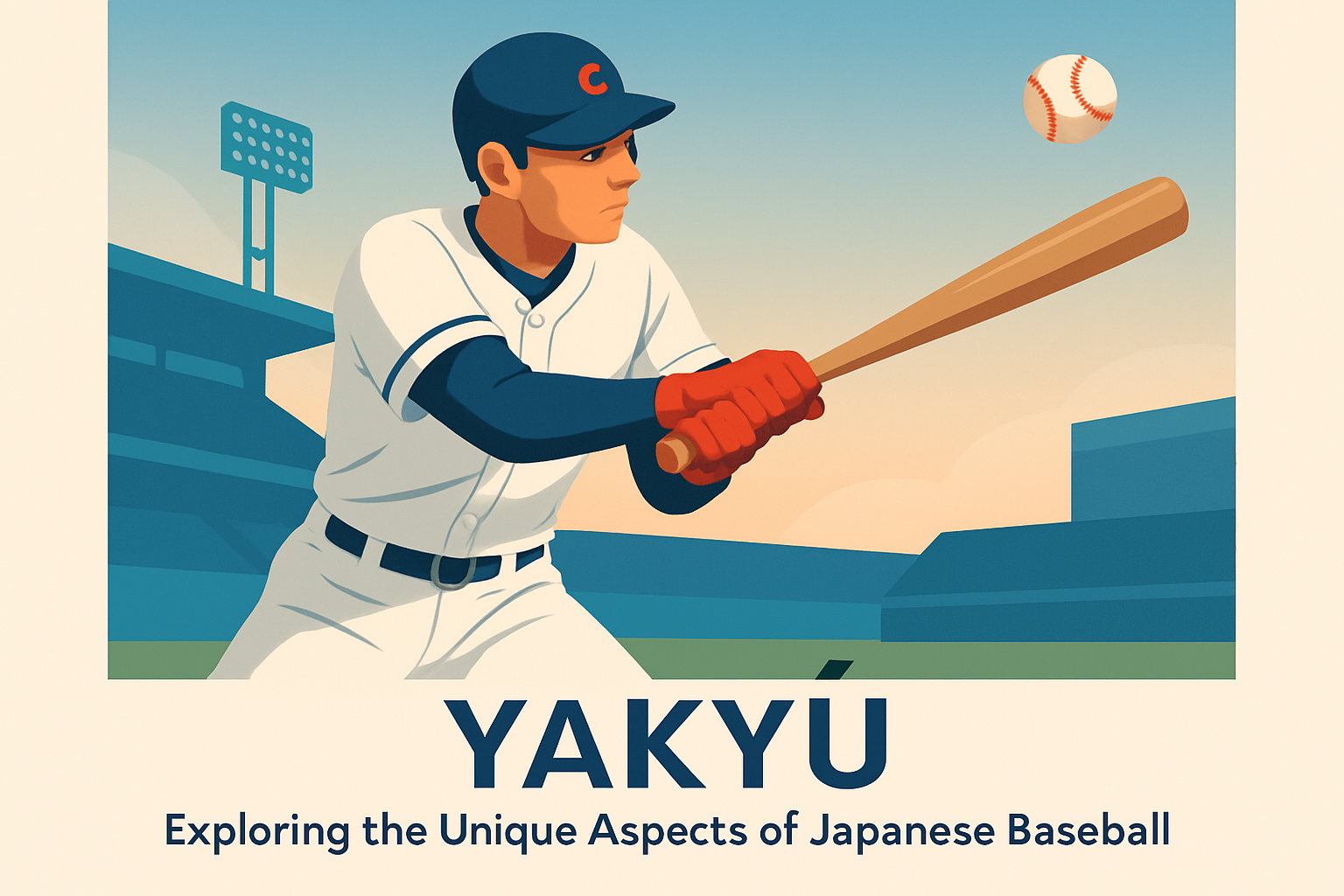
Baseball, a sport with deep roots in American culture, was introduced to Japan in the late 19th century and has since evolved into a national pastime known as “yakyu.” The term “yakyu” combines the Kanji characters for “field” (ya) and “ball” (kyu), symbolizing the sport’s intrinsic connection to the land and its people. While baseball’s fundamental rules remain the same worldwide, the Japanese have infused the game with distinctive cultural and strategic elements, making yakyu a fascinating variant of the international sport. This exploration into yakyu is essential for sports enthusiasts and cultural historians alike as it showcases the uniqueness of Japan’s adaptation of baseball—a sport that transcends simple recreation and speaks volumes of national identity.
The Japanese style of baseball offers vital insights into cultural values such as teamwork, perseverance, and honor—all of which are emphasized over individual accolades. Understanding this allows outsiders to appreciate the subtleties that give yakyu its unique flair. From the design of stadiums and the role of fans to specific game strategies and organizational structures, everything about yakyu offers a fresh perspective on competition, sportsmanship, and community. Through this exploration, we aim to uncover what makes yakyu not merely a sport, but a cultural institution that resonates deeply with Japanese society and offers valuable lessons for audiences worldwide.
The Cultural Significance of Yakyu
Japan’s deep cultural connection to yakyu extends far beyond the baseball diamond. Yakyu embodies a spirit of teamwork and discipline that aligns closely with traditional Japanese values. The cultural significance of this sport is evident in the grand spectacle of the summer Koshien tournament—Japan’s annual high school baseball championship. This national event captures the nation’s attention and illustrates the ambitions of young players whose dream is to play for prestigious clubs in Japan and potentially in Major League Baseball (MLB) abroad.
The fervor that surrounds Koshien reflects how yakyu has become a rite of passage for many Japanese youths. Young athletes spend countless hours honing their skills, not just for individual glory but to bring honor to their schools and local communities. By emphasizing teamwork and discipline, yakyu becomes a microcosm of Japanese society, illustrating how sports can teach life skills. This dedication is manifest in a distinctly Japanese approach to training, such as waking up at dawn for regimented practices and meticulous attention to skill refinement.
Innovation in Coaching and Training Methods
Japanese coaches are known for their innovative techniques and strict disciplines that shape not only the physical but also the mental aspects of their athletes. The commitment to training is intense, with practices that emphasize precision and repetition. A common saying in Japanese baseball is “Daruma-Kun,” which refers to perseverance and never giving up, analogous to the resilient Daruma doll.
An interesting real-world example is Shohei Ohtani, one of the brightest stars in both the NPB (Nippon Professional Baseball) and MLB. Ohtani’s success on the field stems from a unique Japanese training method that focuses on both pitching and hitting, a dual role seldom pursued in American baseball circles. His remarkable stamina and versatility are testament to the rigorous yet effective Japanese training practices.
- Emphasis on dual-role training for pitchers and hitters
- Advanced statistical analysis implemented during training
- Adoption of old-school discipline intertwined with new-age analytics
- Morning training sessions focused on refining skills
Impact of Fan Culture on Yakyu
Japanese fan culture around yakyu is unmatched in its enthusiasm and community involvement. Spectators play a significant role in the ambiance of the game, turning stadiums into arenas of unyielding support and collective passion. Fans are not mere observers; they actively participate in the game’s atmosphere by coordinating chants, waving flags, and performing synchronized claps.
A standout example of this is the Hanshin Tigers’ fan base, known for their unwavering support and distinctive cheering style. Tigers fans bless the stadium with “Jet Balloons,” a ritual where thousands of balloons are released into the sky, symbolizing support and unity. This collective enthusiasm underscores the deep relational aspect of yakyu, where the bond between teams and their fans transcends wins and losses, becoming an expression of regional pride and community belonging.
Organizational Structure and Game Dynamics
Japanese baseball’s organizational structure differs from its American counterpart in fundamental ways. The NPB consists of two leagues with six teams each: the Central League and the Pacific League. Unlike in America, the two leagues have different rules regarding the use of a designated hitter. The Central League, like MLB’s National League, does not employ the designated hitter, allowing the pitcher to bat, while the Pacific League does. This divergence in rules adds layer to the strategies employed by different teams.
An example of innovative game dynamics can be seen in how small-ball is often favored over power-hitting. Strategy in Japanese baseball tends to prioritize meticulous execution over brute strength. Techniques like the sacrifice bunt and hit-and-run strategies are commonly used, reflecting an emphasis on precision and on-point execution. The Osaka-based Orix Buffaloes, known for their strategic prowess, have frequently employed these techniques to great success in recent seasons, illustrating strategic differences.
| League | Designated Hitter | Popular Strategy |
|---|---|---|
| Central League | No | Small-ball |
| Pacific League | Yes | Hit-and-run |
Comparison with Major League Baseball
While Japanese yakyu and Major League Baseball share the same fundamental rules, the contrasting approaches underline the meaningful cultural variations. MLB is characterized by a more commercialized and individual-focused environment, epitomized by an emphasis on home runs and star power. In contrast, NPB’s enduring focus remains on cohesive team-oriented gameplay and consistent performance.
The distinction becomes especially apparent in player transitions between the two leagues. Japanese players entering MLB often undergo an adjustment period transitioning to the longer 162-game schedule, a stark contrast to NPB’s 143-game season. Contrarily, American players moving to Japan must adapt to intense media scrutiny and the rigorous expectations from Japanese coaches focused on technique over physical prowess.
A famous instance of this cultural crossover is Ichiro Suzuki, whose ground-breaking move to MLB saw him successfully adapting and eventually becoming an embodiment of the perfect balance between Japanese precision and American flair. Ichiro’s journey illustrates how the amalgamation of these two baseball cultures can create legends who bind sporting legacies across continents.
Innovation and Global Influence
Japanese baseball continues to innovate both on and off the field, contributing to baseball’s global influence. Technological advances in player performance analysis have become staples in training and games. The introduction of wearable tech and advanced biometrics allows teams to monitor players’ physical conditions during games to make informed decisions about player rotations and conditioning schedules.
Moreover, yakyu’s global influence is evident through international tournaments such as the World Baseball Classic. Japan has consistently performed outstandingly in these tournaments, showcasing not only player talent but also tactical ingenuity that often challenges conventional wisdom. Their wins in 2006 and 2009 were defining moments that highlighted the rise of Japanese baseball on the world stage.
This international dimension of yakyu invites exploration into the synergies between global baseball cultures, fostering an exchange of talent, strategies, and fan experiences. Baseball as a shared language bridges cultural divides, cultivating a broader appreciation for the sport.
Lessons and Practice Insights
Examining Japanese baseball through the lens of yakyu provides invaluable lessons that transcend the sport itself. The emphasis on discipline and perseverance offers a model that works in various aspects of life, from personal development to team management. The notion that success lies in the details of preparation is a principle businesses and organizations can adopt universally.
By embracing the values of precision, strategy, and community spirit, individuals and organizations alike can strive for excellence in their respective fields. The consistency featured in the training regimens adopted by Japanese players demonstrates how continuous learning and adaptation can create unparalleled standards of achievement.
For the casual fan and professionals alike, understanding and appreciating yakyu offers a chance to see how cultural integration can lead to unique expressions of a global sport. As yakyu continues to enrich the tapestry of baseball, it calls for a unified celebration of diversity in competitive pursuit and communal enjoyment.
Conclusion
Yakyu stands as a remarkable testament to how Japan has tailored baseball to reflect its cultural ethos, offering a fresh perspective on a classic sport. Through an exploration of its unique practices, fan culture, and innovation, we’ve observed how yakyu maintains a delicate balance between tradition and modernity. It encourages a deeper appreciation for teamwork, discipline, and the game’s social impacts.
This knowledge enriches the global community’s understanding and admiration for the sport, inviting baseball fans to delve deeper into how cultural nuances influence gameplay and fan interaction. The next time you tune in to a baseball game or catch a glimpse of Koshien highlights, consider the underlying values that shape yakyu and how they might inspire ways to pursue excellence and unity in your own journey. Whether a fan, player, or student of cultural history, let this exploration of Japanese baseball inspire a deeper connection to the heart of the sport.
Frequently Asked Questions
1. What are the key differences between Japanese baseball (yakyu) and American baseball?
While American and Japanese baseball share the same foundational rules, several distinguishing elements make yakyu unique. Firstly, Japanese baseball places a strong emphasis on teamwork and strategy. This cultural focus is reflected in the way teams often prioritize small-ball tactics, such as bunting and base-stealing, over power hitting, which is more dominant in the U.S. Furthermore, Japanese baseball games are known for their lively and enthusiastic fan participation. Fans actively engage by performing organized chants and songs specific to each player, creating an electric atmosphere within the stadium.
In terms of gameplay, one of the notable differences is the size of the baseball itself; in Japan, the ball is slightly smaller and softer than the one used in Major League Baseball (MLB). Additionally, the strike zone in Japan tends to be narrower. The approach to training and preparation also differs; Japanese players often undergo rigorous and disciplined training regimens. The unyielding dedication is reflective of the Japanese work ethic, which demands perfection and resilience. Another difference worth mentioning is the existence of the “koshien” tournaments, which are high school competitions that enjoy significant attention nationwide, akin to the popularity of March Madness in the U.S.
2. How has the cultural aspect of yakyu influenced the global perception of baseball?
Yakyu has played a significant role in shaping the global perception of baseball as a sport that can be adapted and embraced by different cultures. The meticulous attention to detail and the intense respect paid to the sport, reminiscent of traditional Japanese customs, have positioned yakyu as an embodiment of cultural artistry and discipline. This has inspired a level of admiration from baseball enthusiasts worldwide who respect the unique Japanese approach to the sport.
The inclusion of traditional elements, such as the prioritization of etiquette, ceremonial first pitches, and honoring of senior players, fosters a sense of reverence within the game. This cultural blend broadens the understanding of baseball as not just a pastime but as a comprehensive experience that encompasses ceremonial, strategic, and entertainment aspects. Over the years, notable Japanese players who have successfully transitioned to MLB, such as Ichiro Suzuki and Shohei Ohtani, have further cemented respect for yakyu on the global stage, highlighting how seamlessly Japanese discipline and American flair can intertwine in the playing field.
3. What role do the Japanese baseball fans play in the experience of yakyu?
The contribution of Japanese baseball fans to the ambiance of yakyu is pivotal. Known for their fervor and loyalty, fans create an unparalleled stadium experience that elevates the enjoyment of the game. Fans engage in coordinated cheering, singing unique fight songs tailored to individual players, and performing synchronized claps or moves, which are sometimes led by oendan, or cheer squads. This collaborative spirit fosters a communal atmosphere where spectators are not just passive observers but integral participants in the narrative of the game.
Moreover, the dedication of Japanese fans extends beyond the games themselves. Fan culture includes creating and exchanging memorabilia, attending training sessions, and even supporting international exhibits or promotions related to yakyu. This commitment contributes to the perception of baseball in Japan as more than a sport—it’s a passion and a communal celebration.
4. How does the Japanese approach to sportsmanship differ from other baseball cultures?
Sportsmanship in yakyu is deeply rooted in respect, humility, and loyalty, reflecting broader Japanese societal values. Players, coaches, and fans are expected to conduct themselves with dignity, both on and off the field. This includes acknowledging opponents with sincere bows, avoiding showboating, and emphasizing team success over individual accolades. Such behavior illustrates a commitment to collective harmony and respect for all participants, including referees and fans.
Beyond interpersonal conduct, the principle of ganbatte (doing one’s best) is paramount in yakyu. Players are encouraged to display relentless effort and determination, regardless of the game’s outcome. This reflects a broader cultural belief in perseverance and continuous improvement. Additionally, seniority and experience are respected, with younger players often guided by veterans and expected to listen and absorb wisdom patiently. These aspects contribute to the perception of yakyu athletes as disciplined, respectful, and dedicated characters, which resonates well beyond the confines of the sport itself.
5. What impact has yakyu had on international baseball development and exchange?
Yakyu has significantly contributed to international baseball through cultural exchange and the growing visibility of Japanese players in global leagues. The establishment of the Nippon Professional Baseball (NPB) league, with its established stars and competitive play, has propelled Japanese baseball to international recognition. This visibility has fostered numerous exchange programs and international tournaments, providing opportunities for players from different countries to experience the distinctive style of yakyu.
The exchange has also seen Japanese coaching techniques influencing international practices. Specialized training regimens, which emphasize precision and discipline, have gained interest beyond Japan’s borders. Moreover, the success of Japanese players like Hideki Matsui and Hideo Nomo in the MLB has driven greater respect and acknowledgment for Japanese talent. This reciprocal influence has not only enriched the tactical approaches within baseball worldwide but has also nurtured mutual respect and collaboration between different baseball cultures. Through this, yakyu continues to play a pivotal role in carving out a niche in the world baseball landscape, fostering a spirit of unity and shared passion for the sport.