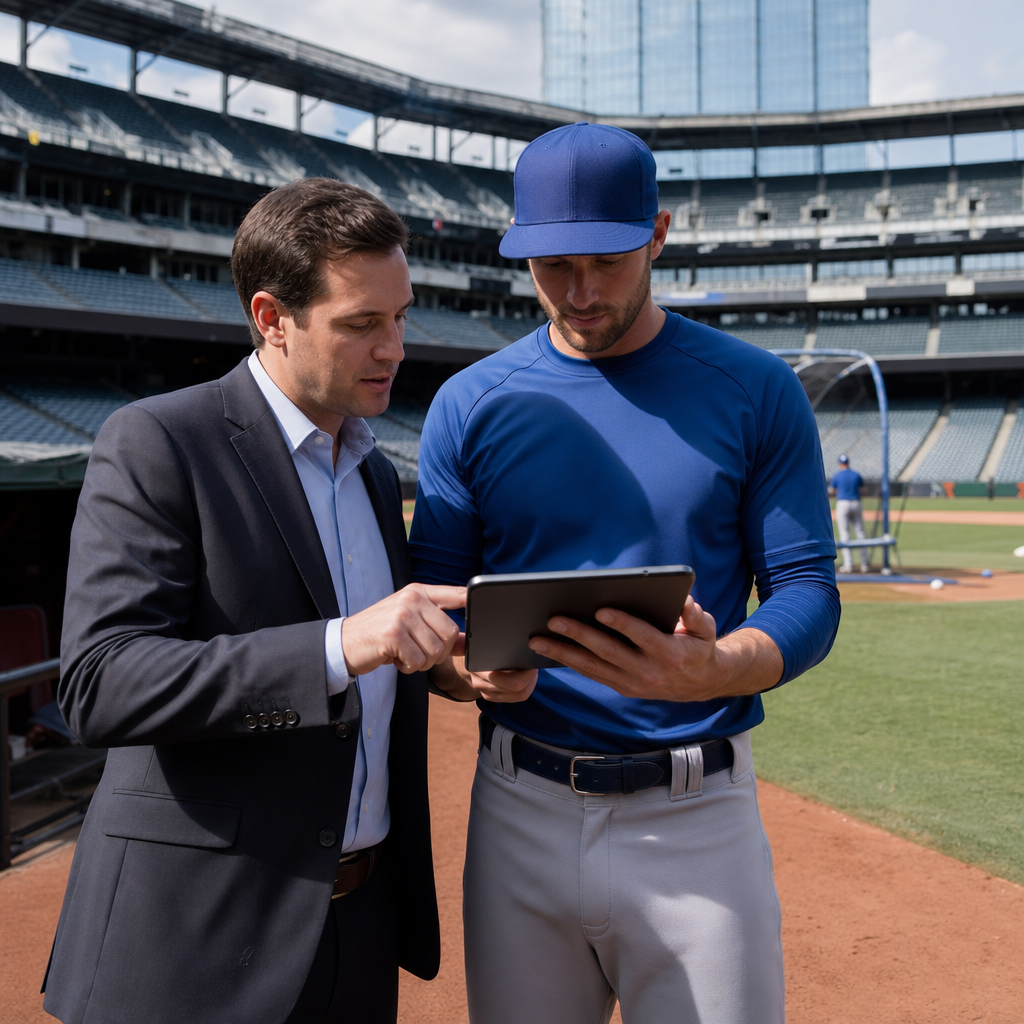
Tech startups and baseball are building one of the most important partnerships in modern sports. What began with radar guns, basic video review, and back-office accounting software has become a broad technology economy that touches player development, ticketing, media rights, venue operations, fan engagement, sponsorship valuation, and even how clubs forecast revenue. In practical terms, this partnership means young companies use baseball as a proving ground for products, while teams, leagues, broadcasters, and stadium operators use startup innovation to solve expensive, high-stakes problems faster than traditional vendors usually can.
When discussing the synergy of technology and economics in baseball, two ideas matter most. Technology refers to the tools, platforms, data systems, hardware, and software that improve performance or business results. Economics refers to the incentives, costs, returns, labor dynamics, pricing, capital allocation, and market structures that determine whether those tools create sustainable value. The reason this topic matters is simple: baseball is no longer shaped only by scouting, coaching, and attendance. It is shaped by data infrastructure, intellectual property, cloud computing, wearable sensors, subscription platforms, and venture-backed companies trying to capture a share of the sports industry.
I have worked with teams and sports-adjacent operators evaluating baseball technology vendors, and the lesson is consistent. The best startup partnerships are not about novelty. They are about measurable outcomes. A club does not buy a biomechanics platform because the dashboard looks modern; it buys because reducing one pitcher injury or improving one prospect decision can save millions in guaranteed salary, insurance exposure, and development cost. A ballpark does not adopt frictionless checkout because it sounds futuristic; it adopts because shorter lines increase per-cap spending, improve fan satisfaction, and reduce staffing pressure on busy game days.
Baseball is particularly suited to startup collaboration because it generates structured events at massive scale. Every pitch, swing, sprint, transaction, concession sale, and streaming session can become a data point. Major League Baseball, MiLB affiliates, college programs, training facilities, and independent clubs all create environments where products can be tested in real settings. That makes baseball a natural laboratory for sports innovation. It also creates a hub topic that connects related subjects across the broader innovations and changes in baseball landscape, including analytics, smart stadiums, athlete health technology, digital media, sports betting integration, and new fan monetization models.
Why baseball is a strong market for startup innovation
Baseball attracts startups because its problems are clear, repeatable, and expensive. Team executives need better player valuation, cleaner medical data, more efficient travel logistics, stronger cybersecurity, dynamic ticket pricing, and personalized fan marketing. Those needs are not abstract. They are budget lines. A startup that can improve one of them has a path to recurring revenue through software subscriptions, licensing, consulting, or transaction fees. Compared with less measurable sports settings, baseball offers dense game data, long seasons, and a culture that already accepts quantitative analysis, making product validation easier.
The rise of Statcast accelerated this trend. By tracking pitch velocity, spin rate, launch angle, route efficiency, and other advanced metrics, MLB normalized the idea that competitive advantage comes from deeper information. Once teams became comfortable making roster and coaching decisions from granular datasets, the commercial side followed. Marketing departments wanted the same precision for customer segmentation. Venue operators wanted operational dashboards. Ownership groups wanted forecasting tools. In other words, baseball analytics created cultural permission for broader digital transformation.
Economic structure also matters. Baseball organizations operate with a mix of fixed and variable costs: player salaries, coaching staff, stadium maintenance, technology licenses, insurance, and media operations. Startups often promise either cost reduction or revenue growth. For example, computer vision tools can automate aspects of player tagging that once required manual labor. Customer relationship management platforms can improve renewal rates for season-ticket members. Sponsorship analytics tools can quantify signage exposure across broadcasts and social clips, helping clubs defend higher partnership prices. Each case ties a technical capability to a financial outcome.
Another advantage is baseball’s layered market. A startup does not need to win all of MLB on day one. It can begin with academies, private labs, youth showcases, college programs, or minor league clubs. That lower-entry pathway is one reason companies such as Rapsodo, Driveline-connected vendors, and video analysis providers gained traction. They refined products where decision cycles were shorter, then moved upward into more demanding enterprise environments. For founders, baseball offers both prestige and a practical customer ladder.
Where technology creates economic value across the baseball ecosystem
The most durable startup opportunities in baseball sit at the intersection of operational pain and measurable return. Player development is the clearest example. Motion-capture systems, force plates, bat sensors, high-speed cameras, and workload monitoring platforms help teams refine mechanics and manage injury risk. A club investing in these tools is making a capital allocation decision: spend now to improve future wins, preserve pitcher availability, and avoid sunk costs tied to injured players. Because baseball contracts can be large and prospects take years to mature, small improvements in development efficiency compound quickly.
Commercial operations offer equally important value. Dynamic ticket pricing platforms adjust prices based on opponent, weather, seat location, demand history, and day of week. This protects against underpricing premium games and overpricing low-demand dates. Mobile wallet integrations and app-based loyalty systems increase conversion by reducing purchase friction. Concession technology, including self-order kiosks and frictionless retail, raises throughput during short pregame and inning-break windows. In stadium economics, speed matters because every lost minute can become lost revenue.
Media and content technology have become central to baseball economics as regional sports networks face pressure and direct-to-consumer models expand. Startups help clubs and broadcasters automate highlight clipping, subtitle generation, ad insertion, and audience segmentation. A team can now tailor video content for social platforms, streaming apps, sponsors, and international viewers with less manual production labor. That lowers distribution cost while expanding inventory. The same content asset can produce value multiple times when managed with the right platform.
| Technology area | Baseball use case | Primary economic benefit |
|---|---|---|
| Biomechanics and wearables | Pitcher workload monitoring and swing analysis | Lower injury risk and better player development efficiency |
| Dynamic pricing software | Real-time ticket price adjustment | Higher yield per seat and improved sell-through |
| Computer vision | Automated tagging of pitches, plays, and practice sessions | Reduced labor cost and faster insight delivery |
| Fan data platforms | Personalized offers, renewals, and loyalty campaigns | Higher retention, spend, and sponsorship value |
| Venue automation | Checkout, staffing, and crowd-flow management | Higher per-cap revenue and operating efficiency |
Sports betting and sponsorship technology are also reshaping the market. As regulated betting expands in many jurisdictions, startups provide integrity monitoring, microdata products, engagement features, and attribution tools for sportsbook partnerships. At the same time, brands increasingly ask teams to prove return on sponsorship spending. That demand has fueled startups that measure logo visibility, social engagement, audience quality, and conversion performance. Baseball partnerships are no longer sold on intuition alone; they are increasingly sold with evidence.
How startups, teams, and investors structure successful partnerships
Not every baseball startup succeeds, and the failures are instructive. The strongest partnerships begin with a defined workflow problem, not with a vague promise to disrupt sports. A pitching lab may need a system that integrates force-plate outputs with high-speed video and athlete management notes. A club’s business department may need a customer data platform that unifies ticketing, concessions, parking, and merchandise transactions. If the startup cannot fit into existing systems such as Salesforce, Tableau, AWS, Microsoft Azure, or the team’s proprietary databases, adoption usually stalls.
Pilots are common, but poorly designed pilots waste time. Effective trials set a baseline metric before deployment. For player technology, that might be session tagging time, injury reporting lag, or pitch-design iteration speed. For commercial tools, it might be average transaction value, email conversion rate, or ticket renewal percentage. Without baseline measures, executives cannot separate genuine value from excitement around a new product. In my experience, baseball operators are more willing to expand contracts when a startup produces one or two undeniable financial wins quickly.
Data governance is another major factor. Teams handle sensitive biometric information, proprietary scouting models, contract details, and customer payment data. A startup that ignores security reviews, access controls, retention policies, or compliance expectations will struggle to win enterprise trust. This is especially true as more systems connect through APIs and cloud services. One weak vendor can create reputational and legal risk well beyond the size of its contract. Serious founders treat security architecture as part of the product, not as a late sales objection.
Investors evaluate baseball startups differently depending on the business model. Hardware-heavy companies may face long sales cycles, manufacturing risk, and support complexity. Pure software businesses can scale more efficiently, but only if the product solves a pain point broad enough to extend beyond elite clubs. The most attractive companies often use baseball as a beachhead market. They prove product performance in a demanding environment, then expand into softball, cricket, golf, military training, physical therapy, entertainment venues, or enterprise analytics. That larger total addressable market is often what justifies venture capital interest.
The limits, tradeoffs, and future of tech-driven baseball economics
Technology improves baseball, but it does not erase tradeoffs. Wealthier organizations can often adopt more tools, hire larger data staffs, and build custom integrations that smaller clubs cannot match. That can widen competitive and commercial gaps. There is also the risk of information overload. Coaches and executives do not need every available metric; they need decision-ready insight. A startup that floods users with dashboards but fails to support practical action may add cost without adding value. In baseball, usability is a competitive feature.
Labor implications deserve attention as well. Automation can reduce repetitive tagging, manual editing, and checkout staffing needs, but it can also change job design rather than eliminate work entirely. Teams still need translators between raw data and field decisions. Ballparks still need hospitality staff even when payment becomes digital. The economic question is not whether technology replaces people in a simple way. It is whether organizations redeploy labor toward higher-value tasks such as relationship management, strategic analysis, premium service, and individualized coaching.
Regulation and ethics will shape the next phase of the market. Biometric privacy, AI model transparency, athlete consent, gambling-related integrity controls, and antitrust questions around data access are all real issues. Baseball has already seen how rule changes and league policies can alter the value of a technology category almost overnight. Founders and club executives must account for those policy risks when building product roadmaps or signing multiyear deals. Durable innovation in baseball is not just technically impressive; it is operationally compliant and culturally accepted.
Looking ahead, the strongest opportunities are in connected systems rather than isolated tools. Teams want fewer dashboards and more interoperability. They want scouting reports linked to biomechanics trends, medical histories connected to workload forecasts, and ticketing data tied to in-venue behavior and content consumption. That favors startups that can integrate, normalize, and explain data across departments. It also favors companies that understand baseball’s rhythms: spring training ramp-up, trade deadline urgency, postseason pressure, and the long development timelines that define player economics.
Tech startups and baseball form a partnership for the future because each side gives the other something essential. Startups gain a demanding, data-rich environment where products can prove real-world value. Baseball gains faster innovation, sharper decision-making, and new ways to grow revenue while controlling cost. The synergy of technology and economics is the core story of this subtopic, connecting player development, fan engagement, venue modernization, media strategy, and commercial operations into one larger transformation.
The key takeaway is that successful baseball technology is never just about gadgets or software. It is about outcomes that matter to clubs, leagues, investors, players, and fans: healthier athletes, smarter spending, better experiences, and more resilient business models. As this hub for innovations and changes in baseball, this page points to every major branch of the subject, from analytics systems to smart stadium tools and digital media platforms. If you are evaluating where baseball is headed next, follow the money, follow the data, and study the startups turning both into competitive advantage.
Use this hub as your starting point, then explore the connected articles in this series to understand which technologies are delivering measurable returns, which business models are sustainable, and where the next wave of baseball innovation is likely to emerge. The future of baseball will be built as much in product labs, cloud platforms, and startup offices as on the field. Teams that understand that connection will make better decisions now and hold stronger positions later.
Frequently Asked Questions
Why are tech startups and baseball such a strong fit for long-term partnership?
Tech startups and baseball align well because the sport offers a rare combination of tradition, measurable performance, and operational complexity. Baseball generates enormous amounts of structured and unstructured data, from pitch movement and bat speed to ticket sales, concession traffic, media consumption, and sponsorship impressions. That makes it an ideal environment for startups that want to test products in real-world conditions and prove they can solve meaningful business problems. For teams and leagues, working with startups creates access to new tools without waiting for slow, enterprise-style innovation cycles. A club can pilot a platform for player health, fan personalization, dynamic pricing, venue logistics, or content automation and quickly determine whether it improves outcomes.
The partnership is also strong because baseball operates as both a sport and a year-round business. On the field, teams want better player development, scouting, injury prevention, biomechanics analysis, and performance forecasting. Off the field, they need more efficient ticketing, CRM systems, fraud detection, sponsorship measurement, retail optimization, and broadcast innovation. Startups can enter at any of these points, validate their technology, and scale from one club to a league-wide or multi-sport opportunity. In that sense, baseball serves as a proving ground. If a startup can succeed in an environment where competitive pressure, fan expectations, and operational stakes are high, it gains powerful credibility in the broader sports and entertainment market.
How is technology changing player development and on-field decision-making in baseball?
Technology has transformed player development from a largely observational process into a highly integrated system built on measurement, feedback, and predictive analysis. Today, startups and established vendors provide tools that capture motion data, biomechanics, workload patterns, recovery indicators, spin efficiency, swing paths, pitch tunneling, reaction times, and defensive positioning. Coaches and player development staff no longer rely only on traditional scouting notes or basic statistics. They can now combine video, sensor data, force-plate readings, and machine learning models to identify how a player moves, where inefficiencies exist, and what adjustments are most likely to improve performance.
This matters because baseball performance is often shaped by very small margins. A few inches of horizontal pitch break, a slightly cleaner kinetic chain in a hitter’s swing, or a better understanding of fatigue risk can affect results over the course of a season. Startups help convert those subtle patterns into usable coaching insights. Instead of simply telling a pitcher that his command is slipping, a system might show that his release point consistency has changed after a certain workload threshold. Instead of just noting that a hitter struggles with high velocity, a platform might reveal the exact bat-path issue and recommend training interventions supported by comparable player data.
On-field decision-making is changing as well. Clubs increasingly use analytics platforms to support lineup construction, bullpen management, defensive alignment, opponent preparation, and amateur or professional player evaluation. The best technology does not replace coaches, scouts, or front-office executives; it strengthens their judgment with faster, clearer information. That blend of human expertise and technical precision is what makes the startup-baseball relationship so valuable. Teams gain a competitive edge, and startups gain the chance to refine products in one of the most demanding performance environments in sports.
What role do startups play in improving the fan experience at games and across digital platforms?
Startups play a major role in modernizing how fans discover, attend, experience, and remember baseball games. The fan journey now begins long before first pitch and continues well after the final out, which creates many opportunities for technology companies to add value. In ticketing, startups help teams implement smarter pricing, mobile delivery, resale controls, fraud prevention, and personalized offers based on fan behavior. In the ballpark, technology can streamline parking, entry, concessions, merchandise purchases, seat upgrades, and loyalty rewards. These improvements may sound operational, but they directly shape fan satisfaction by reducing friction and making the entire experience feel more convenient and personalized.
Digital engagement is just as important. Startups support clubs with mobile apps, streaming enhancements, highlight automation, second-screen features, social content tools, and fan data platforms that help teams understand what different audiences actually want. A family attending a weekend game, a fantasy baseball enthusiast following player trends, and an international fan watching clips online all interact with the sport differently. Technology allows teams to serve those audiences more precisely. Fans can receive tailored content, relevant promotions, exclusive behind-the-scenes access, and more interactive forms of storytelling that make the relationship with the club feel ongoing rather than occasional.
For baseball organizations, this is not only about entertainment; it is also about retention, revenue, and brand strength. A better fan experience can increase repeat attendance, improve app engagement, boost merchandise sales, and make sponsors more valuable because activations become more measurable. Startups that solve these problems help clubs compete not just with other sports, but with every other entertainment option fighting for consumer attention.
How do tech startups help baseball teams make better business and revenue decisions?
One of the most important but less visible aspects of the startup-baseball partnership is its impact on business intelligence and revenue planning. Baseball teams are managing increasingly complex commercial ecosystems that include ticket inventory, premium seating, local and national media revenue, sponsorships, merchandising, food and beverage operations, parking, special events, and community programming. Startups provide software and analytics that help organizations connect these revenue streams instead of managing them in isolated systems. When teams can see customer behavior, spending patterns, renewal risk, and campaign performance in one place, decision-making becomes far more accurate and proactive.
For example, a club can use predictive models to identify which season-ticket members are most likely to churn, which corporate partners are receiving strong measurable exposure, or which promotions drive attendance from specific audience segments. Sponsorship technology has become especially important because brands now expect proof of value, not just logo placement. Startups can measure digital impressions, broadcast visibility, in-stadium engagement, and fan response, giving teams more credible data during renewals and sales discussions. The same principle applies to pricing strategy, where machine learning tools can help clubs adjust ticket offers based on opponent quality, weather patterns, purchase timing, seating demand, and historical attendance behavior.
These tools also help teams forecast more effectively. Revenue forecasting is critical because baseball organizations make long-term decisions on payroll, staffing, capital projects, and partnership investments. Better forecasting reduces risk. It allows clubs to model scenarios, respond faster to market changes, and operate more strategically. In practical terms, startups help front offices and business executives move from reactive reporting to forward-looking planning, which is a major advantage in a competitive sports industry.
What does the future look like for partnerships between tech startups and baseball organizations?
The future is likely to be broader, deeper, and more integrated than many people realize. Baseball is no longer adopting technology only in isolated areas such as scouting or replay review. The next phase is about connected systems that unify performance data, business operations, fan engagement, media distribution, and commercial measurement. Startups that can build tools across these touchpoints, or connect previously separate data environments, will be especially valuable. Teams want fewer silos, faster insights, and platforms that can support multiple departments at once.
We can also expect more experimentation in artificial intelligence, computer vision, automation, immersive media, and venue intelligence. AI will likely play a larger role in content creation, sales support, customer segmentation, coaching workflows, and video analysis. Computer vision and sensor technology should continue improving player tracking, health monitoring, security, and crowd management. At the venue level, startups may help clubs optimize staffing, energy use, maintenance, and real-time traffic flow. On the media side, personalized broadcasts, localized highlight packages, and interactive viewing experiences could become more common as teams and leagues look for new ways to serve fragmented audiences.
Just as important, the relationship will probably become more strategic. Instead of teams simply buying software, more organizations may act as development partners, pilot customers, or innovation collaborators. That approach benefits everyone. Startups gain access to a demanding live environment where products can be refined quickly, and baseball organizations gain earlier influence over the tools shaping the future of the sport. In the long run, this partnership is not just about efficiency or novelty. It is about building a smarter, more adaptive baseball ecosystem that improves competition, strengthens business performance, and creates a better experience for fans, players, partners, and operators alike.