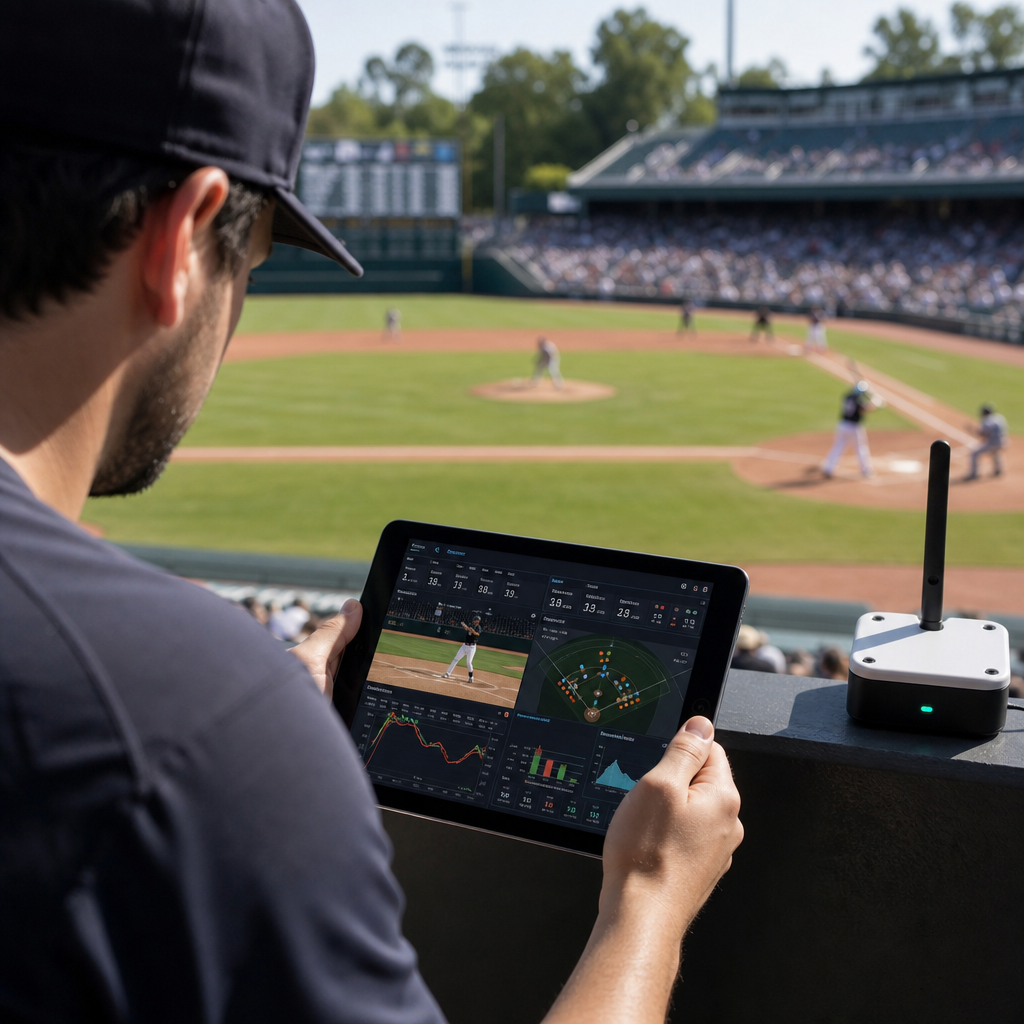
Baseball and the Internet of Things are now tightly linked, turning a tradition-rich game into a connected sport built on sensors, networks, and data-driven decisions. In this context, the Internet of Things means physical objects embedded with chips, accelerometers, gyroscopes, RFID tags, cameras, and wireless connectivity that collect and transmit information in real time. In baseball, those connected objects include baseballs, bats, wearables, radar systems, smart cameras, pitching lab devices, stadium infrastructure, and even concession equipment. I have worked with player development staffs and technology vendors around connected training environments, and the central lesson is simple: the hardware matters only when it solves a baseball problem. Teams are not buying technology for novelty. They use connected systems to improve pitch design, monitor workload, sharpen swing decisions, manage injuries, optimize field operations, and enhance the fan experience without disrupting the pace and identity of the sport.
This matters because baseball generates countless discrete events that are ideal for instrumentation. Every pitch has a release point, spin axis, induced vertical break, velocity band, seam interaction, and location outcome. Every swing has bat speed, attack angle, connection score, rotational acceleration, and decision quality. Every player movement can be timed, located, and compared over weeks or seasons. IoT in baseball turns those moments into usable operational data. It also creates a common language across coaches, analysts, trainers, front offices, broadcasters, and venue operators. When done well, connected baseball systems shorten feedback loops. A pitcher throws a bullpen, sees movement profiles immediately, adjusts grips, and throws again. A hitter takes batting practice, reviews contact metrics on a tablet, and changes setup before the next round. A grounds crew tracks irrigation and field conditions to improve safety. A ballpark operations team monitors refrigeration, point-of-sale traffic, and gate flow in real time.
As a sub-pillar hub within innovations and changes in baseball, this topic sits at the intersection of biomechanics, data engineering, performance science, and stadium technology. It includes elite systems such as Statcast, Hawk-Eye, TrackMan, Rapsodo, K-Motion, Blast Motion, Catapult, and wearable heart rate or sleep platforms, but it also reaches youth and amateur baseball through affordable sensors and app-connected devices. The important distinction is that connected sport is not just analytics. Analytics interprets data; the Internet of Things produces it continuously from the physical environment. That distinction shapes how clubs invest, how players train, how leagues write rules, and how fans consume the game. Understanding baseball and the Internet of Things is essential for anyone following where the sport is heading next.
How Connected Devices Changed Player Development
The clearest impact of baseball IoT appears in player development. Modern organizations build connected training ecosystems in which data flows from mound, cage, weight room, and recovery areas into shared dashboards. Pitchers use ball-flight systems such as TrackMan, Hawk-Eye, and Rapsodo to measure velocity, spin rate, spin efficiency, release height, horizontal break, vertical break, extension, and location tendency. High-speed cameras and wearable biomechanics systems add information about hip-shoulder separation, lead leg block, arm timing, trunk tilt, and elbow stress indicators. The practical benefit is not abstract. Coaches can identify why a sweeper is backing up, why a four-seam fastball lacks ride, or why command deteriorates late in sessions.
Hitters have seen an equally dramatic shift. Bat sensors from Blast Motion and swing-capture systems tied to tablets provide instant readings on bat speed, attack angle, time to contact, and plane efficiency. Connected pitching machines and vision-training tools can randomize pitch type and location while preserving detailed logs of swing decisions. In professional settings, these streams are often paired with video synchronization so a coach can show the exact frame where a hitter’s barrel entered the zone late or where posture drifted. In my experience, hitters respond best when one or two connected metrics are tied directly to a game objective. Bat speed alone is not enough; bat speed tied to hard-hit contact on elevated velocity is actionable.
Workload management is another major use case. Wearable devices can track heart rate variability, sleep duration, sprint counts, and recovery markers. Not every team uses the same stack, and some players resist constant monitoring, but the broad trend is established. Clubs want to know when fatigue is accumulating before performance collapses or injury occurs. During the long baseball season, that matters more than any single bullpen innovation. Connected systems also support return-to-play protocols by comparing current force production, mobility, and throwing outputs against an athlete’s baseline instead of relying only on subjective feel.
IoT Tools Used Across Baseball Operations
Baseball’s connected ecosystem includes several categories of technology, each serving a different operational purpose. The systems are most valuable when they are integrated rather than isolated. A front office might combine ball-tracking data, wearable outputs, medical records, and practice logs to produce a fuller picture of readiness and skill change. That integration is difficult because vendors use different formats and update cycles, but clubs that solve it gain clearer decision support.
| Technology | Primary Use | Common Baseball Example | Main Limitation |
|---|---|---|---|
| Ball-tracking radar and optical systems | Measure pitch and hit characteristics | Statcast, Hawk-Eye, TrackMan, Rapsodo | Needs calibration and context |
| Wearable motion sensors | Track biomechanics and workload | K-Motion, Catapult, arm-care sleeves | Player comfort and compliance vary |
| Bat sensors | Capture swing metrics | Blast Motion, Diamond Kinetics | Cannot replace game outcome analysis |
| Smart stadium sensors | Monitor facilities and crowd flow | HVAC, refrigeration, gate, lighting systems | Requires strong network infrastructure |
| RFID and location systems | Track equipment and movement | Uniform tags, asset tracking, restricted-zone access | Privacy and policy concerns |
At the league level, connected systems support officiating, replay, and broadcast enhancement. Optical tracking creates defensive positioning maps, jump metrics, route efficiency scores, and ball trajectory visualizations that broadcasters turn into understandable stories. Clubhouses and training complexes use networked tablets, smart TVs, and cloud dashboards to distribute reports instantly. The result is operational speed. Information that once took a video coordinator hours to compile can now reach coaches between innings or immediately after batting practice.
Amateur baseball is following the same path at a lower cost. Youth academies use pocket radar devices, app-based scorekeeping, bat sensors, and affordable pitch-tracking units to bring connected feedback into daily instruction. The risk is over-measurement. Young players can become obsessed with metrics they do not yet understand. Good programs treat IoT tools as teaching aids, not verdicts on talent.
Smart Stadiums and the Connected Fan Experience
IoT in baseball extends far beyond the foul lines. A smart stadium uses connected devices and networked control systems to improve safety, efficiency, sustainability, and fan convenience. Sensors can monitor crowd density at gates, concession lines, restroom usage, lighting performance, refrigeration temperatures, air handling, and even waste management patterns. Major venues increasingly connect these systems to centralized building management platforms. That allows operators to respond faster to bottlenecks, reduce energy consumption, and keep food service within safety standards set by public health rules.
For fans, the most visible effects are convenience and personalization. Mobile ticketing links entry systems, fraud prevention, and seat-level validation. Cashless concessions connect point-of-sale data with inventory forecasting, helping operators know when a stand is running low on high-demand items. In-seat ordering, wayfinding through team apps, and real-time parking updates all rely on connected infrastructure. During high-attendance games, these features can materially improve the ballpark experience by reducing waiting time and uncertainty. Baseball’s long game format makes comfort and convenience especially important because fans spend several hours in the venue.
Connected broadcast experiences also matter. Statcast-era television overlays, in-stadium visualizations, and app-based second-screen features depend on rapid data transmission from tracking systems to production teams and user interfaces. Fans now expect immediate access to pitch velocity, expected batting average, catch probability, and spray charts. Those are not just analytics outputs; they are products of networked sensing and processing. The challenge is making data additive rather than distracting. The best clubs and broadcasters use connected information to clarify what happened on the field, not bury the game under jargon.
Benefits, Risks, and Governance Challenges
The core benefit of baseball and the Internet of Things is faster, more precise feedback. Connected systems can reveal patterns invisible to the naked eye, support individualized coaching, and create measurable links between training interventions and game outcomes. They also make organizations more efficient. Asset tracking reduces equipment loss. Smart facility monitoring cuts utility waste. Medical and performance teams can coordinate around shared baselines instead of scattered notes. For teams seeking marginal gains over a 162-game season, those advantages accumulate.
But the risks are real. Data quality is the first issue. A sensor that is poorly calibrated, worn incorrectly, or used in a different environment can generate misleading conclusions. Privacy is another concern. Biometric and sleep data are sensitive, and players need clear policies governing consent, access, retention, and use in contract or roster decisions. Labor considerations follow naturally. If a team uses wearables to monitor fatigue, can that data affect playing time or negotiations? Professional leagues and player associations have had to address those questions carefully.
Cybersecurity is equally important. Connected ballparks and training facilities expand the attack surface for ransomware, credential theft, and service disruption. Best practice requires segmented networks, role-based permissions, vendor review, regular patching, and incident response planning. Governance also includes standardization. Baseball technology vendors measure similar things in different ways, and teams must define their own reference metrics so coaches are not comparing incompatible numbers. In my experience, the most successful organizations appoint translators: analysts or coordinators who can move between engineering language and baseball language without losing accuracy.
Where Connected Baseball Goes Next
The next phase of baseball IoT will be more integrated, less visible, and more predictive. Instead of standalone devices producing isolated reports, teams will build connected environments in which throwing, hitting, strength, recovery, nutrition, and medical systems feed a common model of player readiness. Computer vision will continue replacing manual tagging. Edge processing will allow faster feedback directly on the field or in the cage. Digital twins, already discussed in elite performance settings, could let clubs simulate how mechanical changes alter outcomes before making larger training decisions.
Equipment itself may become smarter within regulatory limits. Bat manufacturing already relies on advanced testing, and connected prototypes can accelerate design insights even when game bats remain uninstrumented. Baseballs used in development settings can help pitchers study seam orientation and release consistency. Venue operations will also advance through predictive maintenance, where connected chillers, lighting rigs, and escalators are serviced before failure based on sensor patterns rather than fixed schedules. That saves money and reduces game-day disruptions.
The broader implication is that baseball will remain human but become increasingly measurable. Coaches will still teach, players will still adjust through feel, and scouts will still evaluate makeup and competitiveness. Yet the connected sport model is now permanent. The organizations that benefit most will not be the ones with the most devices. They will be the ones that ask better questions, build trustworthy workflows, protect player data, and translate measurements into better decisions on the field and throughout the ballpark.
Baseball and the Internet of Things together represent one of the most distinctive innovations in the modern game because they connect performance, operations, and fan experience under one technological framework. Sensors, wearables, tracking platforms, and smart stadium systems are no longer experimental extras. They are core infrastructure for many professional clubs and increasingly common tools at college, high school, and youth levels. The key idea is straightforward: connected devices turn baseball’s many repeatable actions into timely information that people can use. When that information is accurate, well governed, and tied to clear goals, it improves coaching, health decisions, operational efficiency, and the spectator experience.
The biggest takeaway is not that more data always creates better baseball. The real advantage comes from matching the right connected tool to the right baseball question. A pitcher may need seam-shifted wake insight, not a dozen unrelated dashboards. A hitter may need swing decision tracking, not endless bat-speed alerts. A stadium operator may gain more from refrigeration monitoring and crowd-flow sensors than from flashy app features. Effective connected baseball stays practical. It respects player trust, acknowledges measurement limits, and keeps the game itself at the center.
As this hub within innovations and changes in baseball, the subject opens into many deeper articles: smart stadium design, wearable biomechanics, pitch-tracking systems, connected coaching workflows, player privacy, and the future of automated officiating. Start by evaluating where connected technology already touches your baseball experience, whether you are a coach, fan, player, or operator. Then follow those subtopics to see how a connected sport is reshaping baseball from bullpen to ballpark.
Frequently Asked Questions
1. What does the Internet of Things mean in baseball?
In baseball, the Internet of Things, or IoT, refers to a network of connected physical devices that collect, share, and analyze data from players, equipment, and the playing environment. Instead of relying only on observation, radar readings, or handwritten scouting notes, teams can now use smart baseballs, sensor-equipped bats, wearable trackers, RFID tags, high-speed cameras, force plates, and pitching lab devices to measure what is happening in real time. These tools capture information such as bat speed, swing path, spin rate, arm motion, running mechanics, player workload, and even environmental factors like field conditions or weather.
The value of IoT in baseball comes from how those devices work together. A single sensor can provide useful data, but a connected system can reveal patterns across training, player development, game strategy, injury prevention, and fan engagement. For example, a pitcher’s wearable may track stress on the arm, while smart cameras analyze release point and movement profile, and a connected baseball helps validate spin efficiency. When all of that information is integrated, coaches and analysts gain a much clearer picture of performance than they would from isolated metrics alone. In that sense, IoT is not just about gadgets; it is about building a continuous, data-rich view of the game.
2. How are connected devices like smart baseballs, bats, and wearables used by teams and players?
Teams and players use connected devices to improve performance with a level of precision that was difficult to achieve in earlier eras. Smart baseballs and radar systems can track velocity, spin, seam orientation, movement, and release characteristics. Sensor-equipped bats measure bat speed, attack angle, time to contact, and barrel path. Wearables placed on the body can monitor workload, recovery, heart rate, sleep quality, sprint effort, and biomechanical patterns during throwing, hitting, or fielding. Together, these devices help turn practice sessions into measurable performance labs.
In a pitching environment, for example, a player may throw in front of smart cameras and radar units while wearing motion sensors. Coaches can then compare arm slot, stride length, hip-shoulder separation, spin axis, and pitch movement from one session to the next. For hitters, bat sensors and video systems can identify whether a mechanical adjustment improved timing and contact quality or merely changed the look of the swing without improving results. Fielders can be evaluated through wearable tracking and positioning data to understand reaction time, route efficiency, and acceleration.
These tools are also useful because they shorten feedback loops. Instead of waiting for a game sample or a coach’s subjective impression, players can receive immediate, objective feedback after a single drill or bullpen session. That does not replace coaching instincts or player feel, but it gives both a stronger foundation. The result is a more informed training process where decisions are based on evidence, repeatability, and measurable progress.
3. How is IoT changing coaching, scouting, and in-game decision-making in baseball?
IoT is changing baseball operations by giving coaches, scouts, and analysts access to richer and faster information. In coaching, connected technologies make it easier to detect subtle changes in mechanics, fatigue, or movement quality before they become major problems. A hitting coach can see whether a player’s bat path is getting longer. A pitching coach can track whether release consistency is drifting. A strength and conditioning staff can use wearables to monitor workload and recovery. This creates a more proactive development model, where coaches can intervene early and tailor plans to each individual player.
Scouting has also become more detailed and more objective. Traditional scouting still matters enormously, especially when it comes to evaluating competitiveness, instincts, and adaptability, but connected devices add another layer of evidence. Scouts and player development staffs can compare players across leagues, levels, and training settings using common data points. That helps organizations identify under-the-radar talent, confirm whether tools translate into measurable performance traits, and reduce uncertainty in player evaluation.
During games, IoT-driven systems support decision-making by supplying near-real-time insight into pitch design, defensive positioning, baserunning tendencies, and player readiness. Teams can use connected camera and tracking systems to identify matchup opportunities, optimize defensive alignments, and manage pitcher usage based on workload trends. Importantly, the best organizations do not treat the data as automatic instructions. They combine connected-device outputs with coaching context, competitive awareness, and player communication. IoT works best when it informs human decisions rather than attempting to replace them.
4. Can IoT technology help prevent injuries and manage player health?
Yes, one of the most important applications of IoT in baseball is player health and injury risk management. Baseball places repetitive stress on the body, especially on the shoulder, elbow, back, hips, and lower half. Connected wearables, motion sensors, force-measurement tools, and camera systems can help teams identify potentially risky patterns before they lead to lost time. For pitchers, that may include tracking arm stress, changes in throwing mechanics, recovery markers, and cumulative workload across bullpens, games, and training sessions. For position players, IoT devices can monitor sprint load, rotational force, asymmetry, and fatigue-related movement changes.
The major benefit is that teams are no longer limited to broad estimates of workload. They can create individualized baselines for each player and notice when someone begins moving differently, recovering more slowly, or showing signs of elevated stress. A drop in lower-body force production, a change in shoulder rotation, or unusual fatigue data may prompt an adjustment in training volume, throwing intensity, or recovery protocols. That kind of early warning system can be especially valuable over a long season where small issues often become larger ones if ignored.
That said, IoT does not guarantee injury prevention. Baseball injuries are influenced by many factors, including anatomy, mechanics, previous injury history, conditioning, scheduling, and chance. Connected devices improve visibility, but they do not eliminate uncertainty. Their real strength lies in supporting smarter workload management, better communication between coaches and medical staffs, and more personalized training decisions. In practical terms, IoT helps organizations move from reactive treatment to more informed risk management.
5. What are the biggest challenges and future opportunities for IoT in baseball?
The biggest challenges involve data quality, integration, privacy, and interpretation. Baseball now has access to an enormous amount of connected data, but more information is not automatically better. Devices must be accurate, reliable, and calibrated properly. Systems also need to communicate with each other so that a team is not stuck with disconnected streams from bats, balls, wearables, cameras, and medical platforms. If the data cannot be trusted or combined meaningfully, its practical value drops quickly.
Privacy and governance are equally important. Player data can include sensitive biometric, health, and performance information, so organizations must handle it responsibly. Questions about who owns the data, who can access it, and how it may affect contracts, roster decisions, or public evaluation are critical. Players and teams need clear policies, strong security practices, and mutual trust if connected technologies are going to be used ethically and effectively.
Looking ahead, the opportunity is enormous. IoT in baseball is likely to become more seamless, predictive, and personalized. Devices will continue getting smaller, faster, and more accurate. Artificial intelligence will help turn raw sensor readings into clearer recommendations for training, recovery, and game planning. Smart stadiums may further connect the sport by improving fan experiences through real-time statistics, interactive content, and better venue operations. At the player level, connected systems could one day create highly individualized development models that adapt continuously based on biomechanics, fatigue, skill progress, and competitive performance. In short, the future of baseball and IoT is not just more technology; it is a more connected, responsive, and intelligent version of the sport.