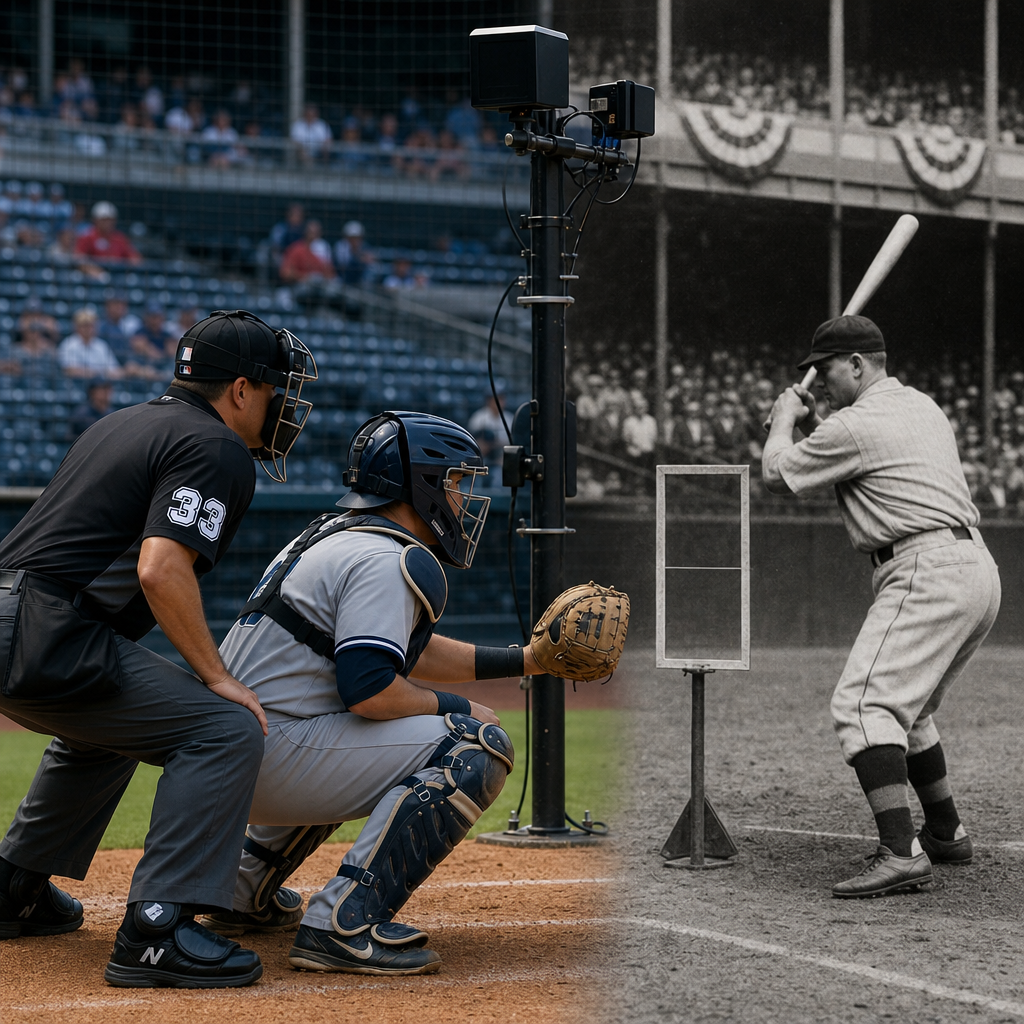
Automated strike zones have moved from experimental concept to central baseball debate because they sit at the intersection of rules, technology, competitive fairness, and the game’s identity. In simple terms, an automated strike zone uses tracking systems to determine whether a pitch passed through the rule-book strike zone, while a challenge system lets human umpires make calls unless a team appeals to technology. I have worked with pitch-tracking data, scouting reports, and player development staffs long enough to see why this topic matters beyond headlines: the strike zone shapes pitcher arsenals, hitter swing decisions, catcher framing value, game tempo, and trust in officiating. For a sport built on precision, even a one-inch discrepancy can change an at-bat, a roster decision, or a postseason series.
The rule-book strike zone is defined by the batter’s stance and by vertical boundaries from the hollow beneath the kneecap to the midpoint between the shoulders and the top of the uniform pants. That sounds exact, but in practice it has always been interpreted by a human umpire standing behind a moving catcher, tracking a ball traveling roughly ninety miles per hour with late break. Automated strike zone systems attempt to reduce that variability through optical tracking and calibrated models. Modern implementations generally rely on Hawk-Eye, the camera-based system used by Major League Baseball to track ball and player movement throughout the field. The technology can estimate pitch location in three dimensions, compare it to a modeled strike zone, and return a ruling quickly enough to matter in live play.
Why has the issue become so prominent now? First, television and public pitch plots exposed how inconsistent zone calls can be. Second, front offices increasingly build teams around measurable edges, and inconsistent officiating directly affects those edges. Third, labor and competition concerns have changed the conversation. Players want a zone they can trust. Umpires want a role that respects game management and on-field judgment. Fans want fewer obvious misses without turning baseball into a sterile simulation. That tension explains why the future may not be a fully robotic game but a layered system that blends human authority with machine precision.
As a hub article within innovations and changes in baseball, this guide covers where automated strike zones came from, how the systems actually work, what the minor leagues have taught the sport, and what the next decade is likely to bring. It also connects the topic to related innovations such as pitch tracking, replay review, biomechanics, and data-driven player development. If you want to understand whether automated strike zones are good for baseball, the right starting point is history. Baseball has always adjusted its methods of judging the strike zone, from evolving umpire mechanics to electronic tracking. The current debate is not about whether technology belongs in the sport. It is about how much authority technology should have over a rule that defines every pitch.
From Rule-Book Ideal to Tracking Era
The history of the strike zone is really a history of trying to translate a written standard into a repeatable live call. In the nineteenth century, the strike zone and the concept of called strikes evolved gradually as baseball tried to balance offense and pitching. Over time, the zone was redefined repeatedly, often in response to league-wide run environments. By the late twentieth century, the official language looked stable, but enforcement still varied widely by umpire, count, hitter reputation, catcher skill, and game context. Anyone who has reviewed old plate maps knows the same pitch might be called differently depending on whether it was framed by an elite catcher or taken by a rookie hitter with no established zone credibility.
The first major technological shift came not with automation, but with visibility. QuesTec, introduced in parts of Major League Baseball in the early 2000s, did not call pitches in real time. Instead, it graded umpires after the fact. Many traditionalists disliked it, but QuesTec changed behavior. Umpires became more accountable to a monitored zone, and clubs started thinking more carefully about where called strikes were actually earned. Then came PITCHf/x in 2006, developed by Sportvision, which brought broad public access to pitch location and movement data. Analysts could now compare called strikes to precise trajectories, and research showed persistent variation by zone edge, catcher framing, and umpire tendencies.
Statcast and Hawk-Eye pushed the field further. Statcast integrated ball-tracking and player-tracking into one ecosystem, while Hawk-Eye’s multi-camera system offered better precision and richer three-dimensional modeling. Once leagues could measure pitch location reliably and quickly, using technology for live adjudication became plausible. Independent leagues and affiliated minor leagues became testing grounds. The Atlantic League, often used by MLB as a laboratory for rule changes, experimented with automated ball-strike systems. The Arizona Fall League and selected Triple-A leagues later tested both full automation and challenge formats. Those pilots mattered because they moved the conversation from theory to observed outcomes. Baseball no longer had to ask whether an automated strike zone could function. It could ask which version created the best game.
How Automated Strike Zones Actually Work
An automated strike zone is not a laser box hovering over home plate. It is a decision pipeline. First, a tracking system captures the ball’s flight with calibrated cameras positioned around the stadium. Second, software reconstructs the pitch trajectory in three dimensions and identifies where the ball crossed the front plane of home plate. Third, the system compares that crossing point to the modeled strike zone for the batter. Fourth, the ruling is transmitted to the home plate umpire, usually through an earpiece, or held in reserve if the league is using a challenge system instead of full automation.
The most important technical issue is not horizontal width. Home plate is seventeen inches wide, and the ball counts as a strike if any part of it passes over any part of the plate within the zone. The harder issue is vertical boundaries. The strike zone changes with each batter’s stance, so the system must determine the player-specific top and bottom in a way that is consistent and resistant to manipulation. This has been one of the biggest lessons from testing. Hitters can alter crouch depth, hand position, or setup rhythm, and if the model uses the wrong reference frame, the zone can feel unnatural. Leagues have therefore adjusted calibration methods and, in some pilots, standardized the top and bottom more than the pure rule-book language would suggest.
Latency and communication also matter. If a ruling reaches the umpire too slowly, the rhythm of the at-bat suffers. In successful trials, the transmission is nearly immediate, allowing the umpire to signal the call naturally. Accuracy alone is not enough. The technology must be auditable, fast, and understandable to players. In every implementation I have studied, acceptance improves when stakeholders know exactly what the system is measuring and when replay-style graphics explain disputed calls clearly.
What the Minor Leagues Have Taught Baseball
Minor league experiments have shown that automated strike zones solve some problems quickly while creating new questions just as quickly. The clearest benefit is reduction in obvious misses. Players generally accept machine rulings on pitches at the top and bottom of the zone better than inconsistent human calls. Pitchers gain confidence that a correctly located breaking ball clipping the edge can be rewarded. Hitters gain confidence that a ball off the plate will not become a strike because a catcher stole it with presentation.
At the same time, full automation can produce outcomes that feel technically correct but visually strange. A called strike at the hollow of the knee may be in the rule-book zone even if players, fans, and broadcasters have spent decades treating that pitch as borderline. That gap between written law and baseball convention is one reason the challenge system has earned support. It preserves the human umpire’s game flow, presence, and conflict management while giving players a direct tool to correct important misses.
| Model | How it works | Main advantage | Main drawback |
|---|---|---|---|
| Full automated zone | Every pitch is ruled by tracking technology and relayed to the umpire | Maximum consistency pitch to pitch | Can feel rigid on borderline vertical calls |
| Challenge system | Umpire calls pitches; batter, pitcher, or catcher can challenge immediately | Preserves pace and human feel while correcting clear misses | Not every bad call gets corrected |
| Postgame grading only | Technology reviews umpire performance after the game | Improves accountability without changing live play | Does not fix in-game mistakes |
Triple-A testing has suggested that challenge-based systems can be intuitive. A player taps a helmet immediately after the call, the review happens within seconds, and the stadium display shows the pitch location. Because unsuccessful challenges are limited, teams must choose moments carefully. That creates strategy without the prolonged delays associated with manager-led replay reviews. From a development perspective, clubs also get cleaner feedback. If a prospect is learning to attack the zone with ride fastballs or sweepers, he needs to know whether his target location will be called consistently at the next level.
Impact on Players, Umpires, and Team Strategy
Automated strike zones would reshape player value, not just officiating. Catcher framing is the most obvious example. Over the last decade, public metrics from Baseball Prospectus, FanGraphs, and team models showed that elite framers could save significant runs by turning borderline pitches into strikes. If a full automated zone becomes standard, that skill loses much of its value. Catchers would still matter enormously through receiving, blocking, game calling, throwing, and pitcher relationships, but roster construction would shift. A bat-first catcher with average framing becomes easier to justify when the machine decides edge pitches.
Pitching strategy would also adjust. Some pitchers currently rely on an umpire’s tendency to expand the zone with back-foot sliders, front-door sinkers, or elevated fastballs just above the belt. Automation reduces dependence on persuasion and increases dependence on actual command. That could help command artists and hurt pitchers whose profiles depend on chase calls near the margins. Hitting plans would change as well. Batters could take more confidently in certain areas if they trust the system, but they might also face a larger effective zone in spots where human umpires historically gave leniency to hitters.
For umpires, the issue is often framed too narrowly. Plate umpires do much more than call balls and strikes. They manage pace, check swings, foul tips, catcher interference, substitutions, mound visits, and the general emotional temperature of a game. In the challenge model, that broader authority remains intact. In my experience, many baseball people who oppose full automation are not anti-technology. They are pro-context. They know the plate umpire is a central part of order on the field, especially in high-stress moments when players need fast decisions and clear communication.
The Future: Hybrid Systems, Better Models, and Broader Change
The most likely future is a hybrid path rather than an immediate league-wide jump to a fully automated strike zone in every Major League game. MLB has already shown through replay expansion, pitch clocks, disengagement limits, and other rule changes that it prefers staged implementation backed by test data. A challenge system fits that pattern. It answers the public demand for fewer obvious misses while avoiding the cultural shock of removing the umpire from every pitch. If the system performs cleanly over multiple seasons, the league can decide whether to expand automation, refine the modeled zone, or keep the hybrid format permanently.
Better zone modeling is coming regardless. As player-tracking improves, systems will become more individualized and more stable. Expect leagues to standardize stance capture, define when the batter’s zone is locked in, and reduce opportunities for crouch manipulation. Expect broadcasts to improve visual explanations too. Right now, many on-screen strike zones are approximations that do not match the adjudication model exactly. That disconnect confuses fans. A more transparent future will require synchronized graphics, published standards, and accessible explanations from the league.
Automated strike zones also connect to broader baseball innovation. They influence how teams teach receiving, how analysts evaluate command, how amateur showcases present pitchers, and how fans understand fairness. They may even affect health and performance indirectly. If pitchers can trust the top of the zone to be called consistently, pitch design priorities may continue shifting toward induced vertical break and attack angles that play at the letters. If lower-edge calls become more precise, sinker specialists may regain value in certain run environments. Technology does not freeze strategy; it redirects it.
The long-term question is not whether baseball can automate the strike zone. It can. The real question is what version best serves competition, credibility, and entertainment at once. History suggests the sport succeeds when it adopts technology that clarifies rules without stripping away the human structure that makes games feel alive. That is why automated strike zones should be judged less as a novelty and more as infrastructure. Done well, they can create a clearer standard, reduce unnecessary arguments, and give players confidence that the field is level. Done poorly, they can replace one kind of frustration with another. Follow the minor league tests, compare the challenge and full-automation models, and watch how teams adapt, because the future of automated strike zones will help define the next era of baseball innovation.
Frequently Asked Questions
What is an automated strike zone, and how is it different from a challenge system?
An automated strike zone, often called ABS, is a technology-driven method for determining whether a pitch is a ball or a strike based on the rule-book zone rather than a human umpire’s visual judgment alone. In practice, the system relies on tracking cameras and software that measure the pitch as it crosses home plate, then compares that path to a defined strike zone based on the batter’s stance and height. The goal is straightforward: create more consistency from pitch to pitch and from game to game. Instead of relying entirely on the individual tendencies of an umpire, the system applies the same standard every time.
A challenge system is different because it keeps the home plate umpire at the center of the action. Under this model, umpires still make the initial call, but a batter, pitcher, or catcher can appeal certain pitches to the tracking system. The technology then confirms or overturns the original ruling. That approach is important because it blends two priorities that have often been in tension: preserving the traditional rhythm and human presence of baseball while still using technology to correct the most important misses. For many people in the sport, that compromise feels more realistic than a fully automated game.
The distinction matters because these are not just different tools; they represent different philosophies about officiating. A full ABS model prioritizes uniformity above all else. A challenge model prioritizes selective correction while preserving the umpire’s broader role in game management, pace, and communication. That is why debates around automated strike zones are really debates about what baseball wants to optimize: precision, tradition, speed, entertainment, or some combination of all four.
How did automated strike zones evolve from an experiment into one of baseball’s biggest debates?
The idea of using technology to judge the strike zone gained traction as pitch-tracking systems became more sophisticated and more visible to teams, broadcasters, and fans. Early tracking tools helped front offices evaluate pitchers, catchers, and umpires, but once the public began seeing graphical pitch locations during broadcasts, a major shift happened. Fans no longer had to rely only on the naked eye. They could compare an umpire’s call to a digital representation of the zone in real time. That visibility changed expectations. Missed calls that might once have been forgotten became part of a broader conversation about fairness, accountability, and whether technology should play a larger officiating role.
As the data improved, teams and player-development departments began using pitch-location information more aggressively in scouting, coaching, and game planning. That made the strike zone feel less abstract and more measurable. Pitchers learned which edges they could attack. Hitters learned how their zones were being called. Catchers were evaluated partly through framing, which itself became a flashpoint in the automated zone discussion. Supporters of ABS argued that if a pitch is either in the zone or out of it, then a skill built around influencing an umpire’s perception should matter less than the actual location. Critics, however, argued that framing, presentation, and receiving have long been legitimate parts of catching, and that removing them would fundamentally change the position.
The debate became even more serious once professional baseball began testing automated systems in affiliated leagues. At that point, ABS stopped being a theoretical idea and became a practical policy question. Players, managers, executives, and fans were no longer asking whether the technology existed. They were asking how it should be used, where it should be used, and what tradeoffs came with it. That is why the history of automated strike zones is really a story about baseball confronting modern technology at a moment when the sport already feels pressure to improve accuracy, maintain pace, and preserve its identity.
Why is the automated strike zone so controversial if the goal is simply to get calls right?
On the surface, the argument for automation sounds almost impossible to oppose: use better tools to produce more accurate calls. But baseball’s strike zone has never been just a technical measurement. It is also a lived part of the game’s strategy, psychology, and aesthetics. Umpires manage interactions, maintain authority, and establish the feel of a game. Pitchers and catchers work the edges of the zone. Hitters make adjustments based on how the zone is being called that day. So when technology enters that space, it does more than increase precision; it changes how everyone on the field behaves.
One major source of controversy is that the rule-book strike zone itself is more complicated in practice than many people assume. The top and bottom boundaries depend on the batter’s stance, and hitters do not always set up the same way. Different systems must decide exactly when to measure a hitter’s posture and how to standardize that measurement. Even if the tracking technology is excellent, baseball still has to define the strike zone operationally in a way that players trust. That is a big reason some objections are not anti-technology at all; they are concerns about implementation, calibration, and transparency.
Another reason the topic is so contentious is that it affects player value and roster construction. Catcher framing becomes less important in a fully automated environment. Some pitchers may benefit from a more consistent upper-zone or lower-zone call, while others may lose the gray-area edges they have learned to exploit. Hitters may gain confidence that borderline pitches will be judged more consistently, but they may also need to adjust to a zone that feels stricter in certain locations than the zone they have experienced for years. In other words, ABS does not just change officiating. It potentially changes development models, contract value, game strategy, and even the kind of players organizations prioritize.
How could automated strike zones change the way baseball is played in the future?
If automated strike zones are adopted more broadly, the effects could ripple through nearly every layer of the sport. At the major league level, pitchers might become more aggressive in attacking the true boundaries of the zone because they would have greater confidence that a correctly located pitch will be rewarded. Hitters, in turn, might adjust their swing decisions based on a more stable standard, especially on pitches at the top and bottom edges. Over time, that kind of consistency could influence strikeout rates, walk rates, pitch selection, and even how teams teach command in the minor leagues.
The catcher position could see some of the biggest changes. If a full ABS system minimizes the value of framing, organizations may place more emphasis on blocking, throwing, game-calling, athleticism, and pitcher relationships. That would not make catching easier; it would simply redistribute which skills carry the most value. Likewise, player development departments could revise how they train pitchers to target certain shapes and locations if they know that the called zone will more closely match the rule-book version rather than the tendencies of individual umpires.
There are also broader effects on fan experience and the presentation of the game. A challenge-based model could create moments of drama without requiring constant interruptions, especially if only the pitcher, catcher, or hitter can initiate an appeal immediately after the call. A full ABS model could reduce arguments over balls and strikes, but some fans may feel that it removes part of baseball’s human theater. The future likely depends on which version of technology the sport believes best balances trust, entertainment, and competitive legitimacy. In that sense, the future of automated strike zones is not only about replacing a call. It is about redesigning one of baseball’s most fundamental relationships: the one between the written rule, the official enforcing it, and the players trying to beat it.
Will automated strike zones eventually replace human umpires behind the plate?
The most likely answer is no, at least not in the way people sometimes imagine. Even if technology takes on a larger role in calling balls and strikes, home plate umpires still perform many essential responsibilities that extend far beyond the strike zone. They manage the game, enforce pace and procedure, rule on plays at the plate, handle checked swings through crew coordination, maintain order during disputes, and serve as a visible authority figure on the field. Baseball is too complex to reduce the umpire’s role to a single binary task, even one as central as the ball-strike call.
What is more plausible is a redefined role for human umpires. In a challenge-system environment, the umpire remains the primary caller while technology acts as a backstop. In a full ABS environment, the umpire may relay the technology’s ruling while continuing to oversee the broader structure of the game. That distinction matters because it suggests that the future is not really human versus machine. It is more likely to be human plus machine, with the sport deciding where each provides the most value.
From an institutional standpoint, baseball tends to adopt major officiating changes gradually, especially when those changes affect the sport’s culture and public trust. That is why testing, player feedback, and league experimentation are so important. The question is less whether technology can call pitches and more whether the sport can integrate that technology in a way that players, umpires, and fans believe improves the game. Based on how these systems have been discussed and tested, the long-term future probably involves more technological assistance, not the disappearance of the home plate umpire. The deeper issue is not replacement. It is calibration: deciding how much automation baseball wants, when it wants it, and what kind of game it wants to preserve in the process.