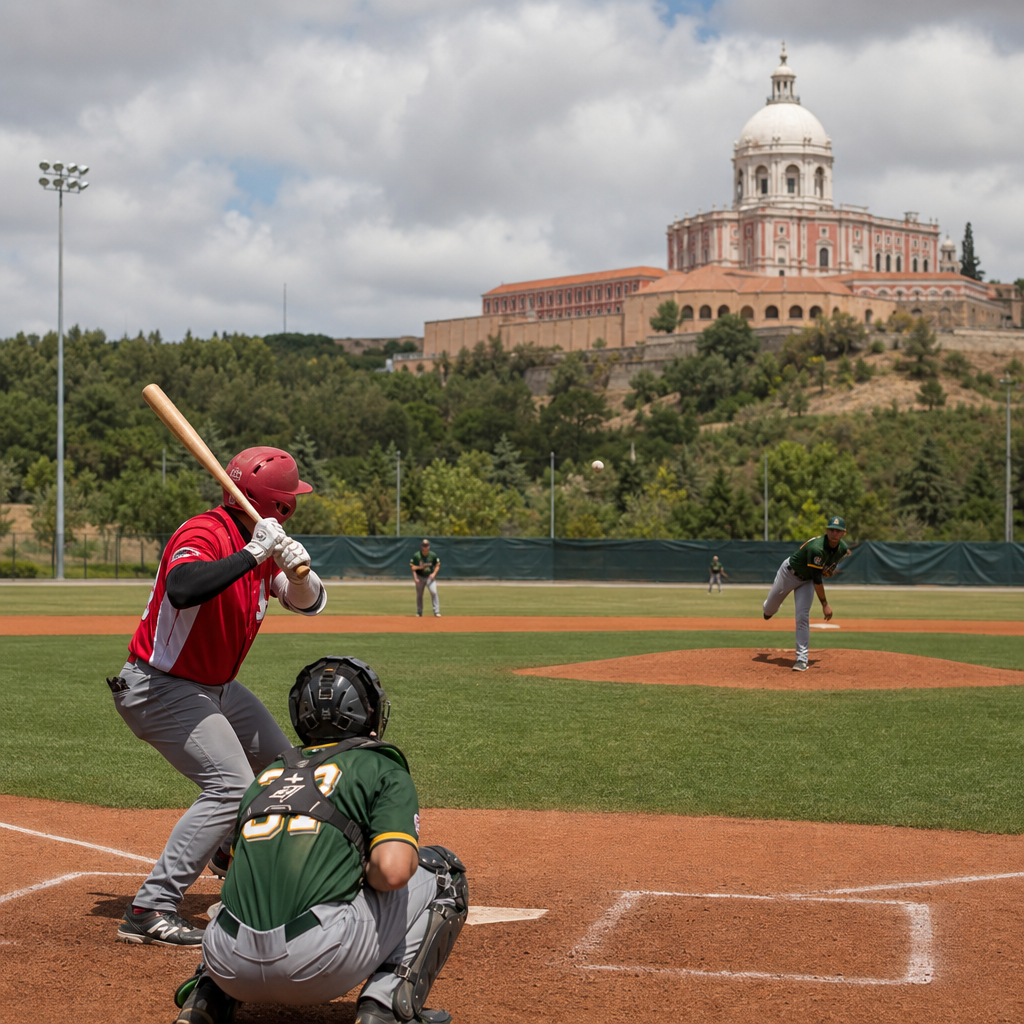
Baseball in Portugal has never arrived with the fanfare seen in football, futsal, or even basketball, yet its story is more interesting than raw participation numbers suggest. Baseball’s presence in Portugal is a quiet progression shaped by immigration, school programs, municipal sports initiatives, and the determination of a small network of coaches and volunteers who have kept diamonds active despite limited infrastructure. In the context of international baseball, Portugal belongs to the category of emerging nations: countries where the sport is not embedded in mainstream culture, but where organized play exists, national teams compete, and development pathways are slowly becoming clearer.
To understand the landscape, it helps to define a few terms. When people discuss Portuguese baseball, they often use baseball and softball together because the same federation, facilities, coaches, and community networks usually support both. Grassroots development refers to beginner participation in schools, clubs, and youth sessions. Domestic competition means local leagues and tournaments played within Portugal. International competition refers to events sanctioned under the World Baseball Softball Confederation structure, where Portuguese teams face more established European programs. These distinctions matter because a country can show real progress at the grassroots level even before it produces a strong senior national team.
This topic matters for two reasons. First, Portugal offers a useful case study in how niche sports grow in football-dominated markets. Second, this page serves as a hub for the broader miscellaneous branch of international baseball, connecting readers to questions about origins, infrastructure, diaspora influence, coaching standards, tournament participation, and future opportunities. I have seen this pattern in several developing baseball countries: the sport advances not through one breakthrough moment, but through repeated, practical wins such as finding a playable field, training one more coach, or retaining teenagers for another season. Portugal fits that pattern closely, and its baseball story deserves to be understood on those terms rather than judged against major baseball nations.
How baseball took root in Portugal
Baseball in Portugal did not develop through a deep historical tradition dating back a century, as happened in parts of Latin America or East Asia. Instead, it grew in small pockets, often influenced by expatriate communities, returning migrants, foreign students, and local sports organizers who wanted to broaden club offerings. The game benefited from Portugal’s international connections, especially with countries where baseball and softball are more established. In practice, that meant knowledge transfer was often informal: one coach had prior experience abroad, one family introduced children to the sport, or one municipal program added a baseball clinic to a larger community sports schedule.
Because football dominates public attention, baseball in Portugal has had to compete for field access, media coverage, and sponsor interest. That pressure shapes every stage of development. New clubs usually begin by sharing multiuse spaces rather than building dedicated diamonds. Equipment is reused carefully. Player recruitment depends heavily on word of mouth, school demonstrations, social media outreach, and crossover athletes from athletics, handball, or cricket. This creates a different growth curve from countries with entrenched baseball ecosystems. Progress tends to be gradual but resilient, because each surviving club learns how to operate efficiently under constraints.
Another important factor is administration. In emerging baseball nations, growth depends as much on governance as on talent. Registration systems, coaching certification, umpire education, insurance, scheduling, and international eligibility rules all matter. Portugal’s baseball activity has often advanced when organizers treated these tasks seriously rather than viewing them as background details. Strong administration helps a small sport appear credible to municipalities, schools, and potential partners. Without that credibility, clubs struggle to secure training slots or public funding. With it, even a niche sport can build a sustainable footprint.
The current ecosystem: clubs, leagues, and national structure
Portugal’s baseball ecosystem is modest, but it is organized enough to support recurring activity. The practical core consists of clubs, local training groups, federation oversight, and periodic domestic competition. In countries like Portugal, the number of active participants can fluctuate significantly from year to year, so the healthiest indicator is not a single season’s standings but whether clubs continue to train, recruit, and enter competitions over time. Stability matters more than short-term expansion.
Most players encounter the sport through club sessions rather than school leagues, although school outreach is often the entry point. Clubs become anchors for retention because baseball requires repetition, not just casual exposure. Hitting mechanics, throwing efficiency, infield footwork, and game awareness all improve slowly. A child who attends one clinic may enjoy the sport, but a child who trains weekly with a club begins to understand it. That is why club continuity is the key metric in Portugal’s baseball development.
At the national level, organization typically blends baseball and softball administration, a practical approach in smaller markets where resources overlap. Shared leadership reduces costs and allows coaching education, officiating, and event logistics to serve both sports. This is not a compromise unique to Portugal; it is standard across many developing European baseball environments. The challenge is that dual administration can stretch volunteers thin. When one tournament, age group, or discipline demands urgent attention, another area may stall.
| Development Area | Typical Portuguese Reality | Why It Matters |
|---|---|---|
| Facilities | Mostly shared or adapted fields rather than dedicated baseball complexes | Limits scheduling, field quality, and advanced training |
| Player recruitment | Relies on outreach, expat communities, and crossover athletes | Determines whether clubs can sustain youth and senior rosters |
| Coaching base | Small pool, often volunteer-led, sometimes internationally influenced | Directly affects skill development and retention |
| Competition calendar | Intermittent but structured when enough teams commit | Game repetition is essential for tactical growth |
| International pathway | National teams and tournament entries provide visibility | Helps justify investment and motivates serious players |
This environment can look fragile from the outside, but I have learned that niche sports often become stronger precisely because participants understand every resource constraint. Coaches know how to run productive sessions with limited equipment. Administrators know how to condense travel costs. Parents and volunteers understand that line marking, scorekeeping, and transport are part of keeping the sport alive. Portugal’s baseball community has relied on that practical culture.
What is driving quiet progress
The strongest driver of baseball’s growth in Portugal is persistence at the local level. Quiet progression usually comes from repeated, small actions: a club keeps the same youth practice slot for three years, a municipality lends space more consistently, a coach completes formal training, or a national-team player returns to help younger athletes. These developments rarely generate headlines, but they produce the conditions under which a real baseball culture can form.
International exposure also matters. European baseball is stratified, and nations such as Italy, the Netherlands, Germany, Spain, France, and the Czech Republic have deeper systems. For Portugal, competing within that broader ecosystem creates benchmarks. Players and coaches can see the gap in pitching command, defensive execution, base running instincts, and roster depth. That comparison is useful when it leads to targeted planning. Instead of saying Portugal needs to improve generally, effective programs identify specifics: better catching instruction, more under-12 participation, stronger strength and conditioning, or more certified umpires.
Diaspora influence has been especially important in many emerging baseball countries, and Portugal is no exception. People who have lived in baseball-active regions often bring back technical knowledge and expectations about training structure. Even one experienced instructor can change a local program by teaching proper throwing progressions, infield prep steps, bullpen routines, or game management principles. In developing systems, expertise compounds quickly because there are fewer layers between a knowledgeable coach and the broader player base.
Digital media has helped too. Twenty years ago, a Portuguese beginner might have struggled to find reliable hitting or pitching instruction in their own language network. Today, coaches can access clinic footage, federation materials, WBSC resources, MLB development content, and video examples from European academies. Access to information does not replace in-person coaching, but it reduces isolation. It also helps local organizers explain the sport to parents who may know almost nothing about baseball’s rules, safety standards, or long-term value for children.
The main barriers holding baseball back
The biggest barrier is infrastructure. Baseball needs space designed for baseball, and adapted football grounds or generic open fields can only take a program so far. Infield dimensions, mound condition, backstop quality, dugout safety, and outfield consistency all shape training quality. Poor facilities make it harder to teach fundamental skills correctly and harder still to host regular competition. They also make the sport look temporary, which undermines recruitment.
Funding is the second major challenge. A baseball program needs bats, helmets, gloves, balls, bases, catcher gear, uniforms, travel support, field preparation tools, and insurance. These costs accumulate quickly, especially when a club is trying to launch youth divisions instead of relying only on adults who already own equipment. In Portugal, as in many smaller baseball markets, volunteer labor offsets some of the burden, but not all of it. Sustainable progress requires predictable financial support, not just enthusiasm.
The third barrier is visibility. When young athletes in Portugal think about sport, football dominates imagination and pathways. Families understand what football training looks like, how competition works, and where it might lead. Baseball must explain itself from the beginning. That communication burden is heavy. Coaches need to reassure parents about safety, describe the season format, and clarify that baseball develops coordination, patience, decision-making, and teamwork. Without consistent public visibility, every new recruitment cycle starts almost from zero.
There is also the issue of competitive density. Baseball players improve by playing meaningful games, not only by drilling. If there are too few teams, athletes may train for long periods without enough live competition. That slows tactical development. Pitchers need regular innings. Fielders need real reads. Hitters need to adjust to different arm angles and velocities. Portugal’s challenge is therefore not merely attracting players, but creating enough stable teams to make a calendar worth preparing for.
Portugal in the wider international baseball picture
Within international baseball, Portugal occupies an emerging tier rather than a leading one, but that position is still significant. Global baseball growth does not depend only on elite countries; it depends on a wider map of competent, organized national programs that can host events, field teams, and introduce the sport to new participants. Portugal contributes to that map. Every functioning federation, club network, and youth pipeline strengthens Europe’s baseball ecosystem.
Portugal’s value also lies in geographic and cultural connections. The country sits at an intersection of European competition, Atlantic travel routes, and Lusophone relationships. That creates opportunities for exchanges, coaching visits, and future partnerships. In my experience, nations with strong international ties often progress faster once they identify the right development partners. A clinic series with Spanish coaches, a youth event linked to another Iberian program, or a municipal exchange involving softball and baseball can have disproportionate impact in a smaller market.
For readers exploring this miscellaneous hub under international baseball, Portugal is a reminder that the sport’s global story is not only about established powers or dramatic expansion headlines. It is also about patient institution-building in countries where baseball remains unfamiliar. If you are mapping baseball around the world, Portugal deserves attention for its steady work: modest clubs, committed volunteers, recurring outreach, and a structure that continues to function despite obvious constraints. Follow the related articles in this subtopic to explore comparable emerging nations, development models, federation strategies, and the local conditions that shape how baseball grows outside its traditional centers.
Baseball’s presence in Portugal is best understood as a long game. The sport remains small, but it is organized, real, and more durable than casual observers often assume. Its progress has come through clubs that keep training, coaches who teach fundamentals carefully, administrators who maintain structure, and players who choose a less familiar sport because they enjoy the challenge and community. Those are not minor details; they are the foundation of every successful baseball nation before scale arrives.
The main takeaway is simple: Portugal does not need overnight transformation to matter in international baseball. It needs continuity. Better facilities, stronger youth retention, more competition dates, more trained coaches, and clearer public visibility would each produce measurable gains. None of those steps is glamorous, but together they build a credible pathway from introduction to club play to national representation. That is how niche sports become established.
For anyone following international baseball, Portugal is worth watching precisely because its development is quiet. Quiet progress often signals real substance. Use this hub as your starting point for the miscellaneous side of the topic, then explore related articles on emerging baseball countries, federation development, youth pipelines, and grassroots strategy to see how the same principles appear in different settings.
Frequently Asked Questions
Why is baseball considered a “quiet progression” in Portugal rather than a mainstream sports success story?
Baseball in Portugal is often described as a quiet progression because its development has taken place gradually, without the media attention, commercial investment, or broad cultural visibility enjoyed by football, futsal, or even basketball. Unlike sports with long-established domestic leagues and deep-rooted fan traditions, baseball has advanced through smaller, less visible channels. These include immigrant communities bringing familiarity with the game, school-based introductions to bat-and-ball activities, municipal sports departments experimenting with alternative programming, and a committed group of coaches and volunteers who have kept the sport alive year after year.
What makes this progression meaningful is that baseball’s growth in Portugal is not built on hype, but on persistence. The sport has had to adapt to limited field space, relatively low awareness among the general public, and a competitive sports environment dominated by more popular options. Even so, clubs and local organizers have continued to create opportunities for young players and newcomers. In that sense, the story is less about explosive expansion and more about sustained groundwork. Portugal may not be a major baseball nation, but the sport’s survival and incremental development reflect a real, organized effort that deserves attention within the broader European baseball landscape.
How did baseball first gain a foothold in Portugal?
Baseball’s foothold in Portugal emerged through a combination of international influence and local initiative rather than through a single defining moment. Immigration played an important role, especially as people from countries where baseball is more established brought knowledge of the sport, interest in playing, and in some cases direct experience as athletes or coaches. That influence helped introduce baseball into communities that otherwise had little direct exposure to it.
At the same time, educational and municipal settings created practical entry points. Schools occasionally incorporated baseball-inspired activities into physical education or after-school sports programming, and local authorities looking to diversify recreational options sometimes supported introductory clinics or multi-sport initiatives. These settings mattered because they lowered the barrier to participation. Children and teenagers did not need to come from baseball families to try the game; they just needed access to a coach, equipment, and a place to play.
Portugal’s baseball development has also depended heavily on dedicated organizers willing to build from the ground up. In countries where baseball is not yet mainstream, administrative effort can be just as important as athletic talent. Volunteers often take on several roles at once: recruiting players, securing training space, handling federation or club logistics, and promoting events. That kind of all-purpose commitment has been central to establishing baseball’s modest but genuine presence in Portugal.
What are the biggest challenges facing baseball in Portugal today?
The most significant challenge is infrastructure. Baseball requires specialized space that is not always easy to find in a country where football facilities dominate public and private sports investment. Many Portuguese teams and programs have had to adapt existing fields rather than rely on purpose-built baseball diamonds. That affects training quality, scheduling consistency, and the ability to host competitions under ideal conditions. Limited infrastructure can also make the sport seem temporary or improvised to newcomers, even when local organizers are highly committed.
Another major challenge is visibility. Baseball in Portugal competes for attention in a market where football is not just popular but culturally central. That means fewer media mentions, fewer sponsorship opportunities, and a smaller pipeline of casual participants. In practical terms, many people simply do not encounter baseball often enough to become interested in it. Recruitment therefore depends heavily on outreach, demonstrations, school programs, and personal networks.
There is also the issue of scale. Because the player base remains relatively small, clubs often work with limited resources and narrow margins for growth. A few injuries, relocations, or coaching changes can have a noticeable impact on a local program. Yet this challenge also reveals the resilience of the Portuguese baseball community. The sport continues not because conditions are easy, but because those involved have learned how to build gradually, collaborate across small networks, and prioritize sustainability over spectacle.
Who is helping baseball grow in Portugal?
Baseball’s growth in Portugal depends on a mix of stakeholders rather than a single institution. Coaches and volunteers are arguably the backbone of the sport. In developing baseball environments, these individuals do far more than lead practices. They introduce the rules to beginners, organize teams, maintain equipment, coordinate with local authorities, and often serve as the public face of the sport in their communities. Their work is essential because grassroots baseball rarely expands on its own; it needs constant, hands-on advocacy.
Schools and municipal sports programs are also important contributors. When baseball is included in youth sports festivals, physical education sessions, or local development initiatives, it gains visibility among families who might never otherwise seek it out. Even short introductory sessions can make a difference, especially in younger age groups. They help normalize the game and create a first point of contact that clubs can build upon later.
In addition, immigrant communities and internationally connected players have helped strengthen the sport’s base. They often bring practical understanding of how baseball culture works, from training habits to game organization. That experience can raise standards and give emerging players in Portugal a clearer pathway into structured competition. Taken together, these contributors form the ecosystem that supports baseball in the country. It may be small, but it is active, collaborative, and more durable than outside observers often assume.
What does Portugal’s future in baseball realistically look like?
Portugal’s realistic baseball future is unlikely to resemble the rapid rise of a major European football nation, but that does not mean the outlook is limited or unimportant. A more plausible and encouraging path is steady expansion through youth development, stronger club continuity, improved access to training facilities, and more consistent competition. If baseball can continue to establish itself in schools and municipalities while retaining players beyond the introductory stage, the sport’s base can become more stable over time.
Internationally, Portugal belongs to the category of developing baseball nations rather than established powers, and that context matters. Progress should be measured not only by elite-level results, but also by the ability to sustain leagues, train coaches, create regular playing opportunities, and attract new participants year after year. In smaller baseball countries, institutional durability is often the real milestone. A functioning network of clubs, youth pathways, and local support can do more for long-term growth than one isolated competitive success.
There is reason for cautious optimism. Baseball already has a presence in Portugal, however modest, and that presence has survived because it is rooted in committed local effort. With better coordination, modest infrastructure gains, and continued outreach, the sport can strengthen its position and become a more recognizable part of the national sports conversation. It may never rival Portugal’s dominant sports, but it does not need to. Its future lies in becoming sustainable, credible, and steadily more visible.