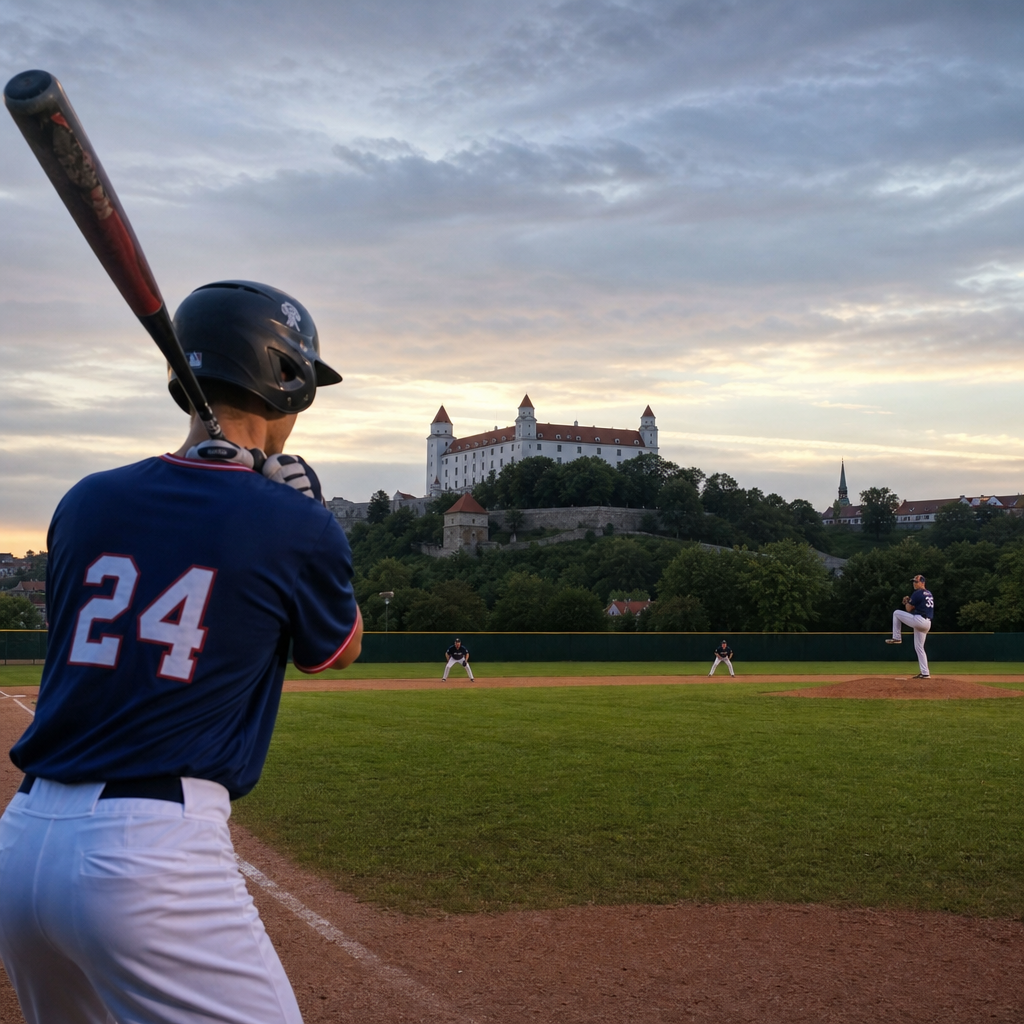
Baseball in Slovakia occupies a modest corner of the country’s sporting landscape, yet the game has built a durable identity through committed clubs, volunteer coaches, youth programs, and a tight network of players who keep the sport moving forward. Slovakia’s baseball scene is small in participation compared with football, ice hockey, or basketball, but size alone does not define significance. In practical terms, a small baseball community means limited fields, lean budgets, and fewer media opportunities; it also means close relationships, multi-role volunteers, and a culture where nearly everyone contributes beyond the lineup card. Having worked with emerging baseball markets, I have seen that these environments often produce unusually resilient organizations because every win, every new player, and every facility upgrade is earned through persistent local effort.
To understand Slovakia’s baseball scene, it helps to define what the ecosystem includes. It is not only the top senior clubs competing domestically. The full picture includes youth development, school outreach, softball overlap, coaching certification, umpire training, federation governance, field access, sponsorship, international competition, and links to neighboring baseball countries such as the Czech Republic, Austria, and Hungary. A hub article on this topic must therefore cover the miscellaneous but essential layers that determine whether a baseball culture survives. Those layers include how clubs recruit beginners, how they travel for competition, how they share equipment, and how they adapt rules or scheduling to fit a smaller talent pool. These practical details matter because they explain why baseball in Slovakia endures despite structural disadvantages.
The topic matters for two reasons. First, Slovakia shows how baseball can exist and slowly develop outside its traditional global strongholds. That makes it useful for anyone studying international baseball growth, federation strategy, or grassroots sports management. Second, the Slovak example highlights a truth familiar to administrators across Europe: when participation is limited, community quality matters as much as quantity. Clubs become social centers, not just teams. Parents become organizers. Senior players coach children. Rivalries remain competitive, but collaboration is often necessary for the sport’s survival. If you want to understand international baseball beyond headline nations, Slovakia offers a valuable case study in how passion, structure, and regional cooperation can keep a niche sport alive.
How baseball developed in Slovakia
Modern baseball in Slovakia emerged in the post-communist era, when greater openness to international sport created opportunities for new federations and club structures. Like several Central and Eastern European countries, Slovakia did not inherit a deep domestic baseball tradition, so the game had to be introduced deliberately through schools, expatriate influence, cross-border relationships, and a small number of enthusiasts willing to build clubs from scratch. In practice, that meant teaching basic rules to complete beginners, adapting available football or multipurpose fields, and relying heavily on volunteer administration. The sport’s early growth was never linear. Clubs appeared, paused, merged, or restarted depending on local leadership and facility access.
Regional geography shaped this development. Bratislava, because of its size and proximity to Austria and the Czech Republic, naturally became a key center. That location matters. In smaller baseball countries, international proximity can substitute for limited domestic depth. Slovak teams and players have long benefited from exposure to stronger neighboring environments, especially the Czech baseball system, which is one of Europe’s most established. Cross-border games, training exchanges, and informal knowledge transfer helped Slovak coaches learn practice design, player development structure, and competition standards. That influence is visible in how clubs organize youth categories and in the emphasis on fundamentals rather than showcase-style recruiting.
Another defining feature of Slovak baseball has been overlap with softball. In emerging markets, baseball and softball often share administrators, fields, and development pathways. This shared infrastructure is not a weakness; it is usually the only realistic way to sustain diamond sports before participation numbers justify specialization. The result is a broader but interconnected community where experience in one code often supports the other. That dynamic also helps with gender inclusion, event planning, and federation continuity. When baseball in Slovakia has remained stable, it has usually been because the wider bat-and-ball community, not one isolated team, carried the load.
What the current community looks like
Today, Slovakia’s baseball community is best described as concentrated, relationship-driven, and developmental. Participation is limited compared with larger European federations, and the number of clubs is small enough that many people know one another across teams, age groups, and administrative roles. That scale creates constraints, but it also encourages accountability. When a coach, umpire, or board member leaves, the absence is immediately felt. When a club succeeds in recruiting children or improving a field, the impact is equally visible across the whole community. The scene functions less like a mass-market sports industry and more like a network of committed local operators.
The player base usually spans several categories at once. Senior squads may include veterans who also coach youth sessions, while teenagers can accelerate into higher-level competition earlier than they would in a deeper talent market. This can be beneficial if managed properly. Players gain experience quickly, and clubs can maintain continuity across age groups. The downside is overextension. A talented person may be asked to play, coach, score games, assist with social media, and help prepare the field. In my experience, this is common in small federations and is one of the main reasons burnout becomes a hidden threat.
Competition quality varies, but the commitment level is rarely in doubt. Even where domestic schedules are short or uneven, clubs train seriously and travel extensively relative to their resources. The goal is not merely to stage games. It is to create enough meaningful repetition for players to improve. That often requires creative solutions: combined age-group tournaments, friendly series with foreign clubs, indoor winter training, and selective participation in regional events. The community survives because it treats every event as development, not just entertainment.
| Area | Typical reality in Slovakia | Why it matters |
|---|---|---|
| Clubs | Small number, concentrated in key cities | Limits domestic depth but strengthens local identity |
| Youth pipeline | Essential for survival, often coach-led and parent-supported | Without youth intake, senior teams decline quickly |
| Facilities | Shared or adapted fields are common | Field quality affects safety, training frequency, and retention |
| International links | Important connections with neighboring countries | Raises competition standards and coaching knowledge |
| Volunteers | Core operating force behind every event | Administration and game delivery depend on them |
Clubs, facilities, and everyday operating realities
In large baseball nations, fans often evaluate a club by wins, signings, or attendance. In Slovakia, a more useful question is whether the club can consistently secure practice space, maintain equipment, and run youth sessions year-round. Facilities remain one of the biggest practical barriers. Baseball requires specialized dimensions, infield maintenance, backstops, bullpen space, storage, and safe dugout areas. Many smaller European clubs, including Slovak ones, operate on shared municipal grounds or adapted fields where baseball is one of several users. That arrangement lowers costs but introduces scheduling conflict and technical compromise. A field built mainly for another sport changes how baseball is taught and played.
Equipment logistics are equally important. Bats, catcher’s gear, baseballs, pitching mounds, bases, portable screens, and field tools are expensive when spread across a small membership base. Well-run Slovak clubs offset this with phased purchasing, sponsorship outreach, member dues, and creative reuse of equipment. New players often rely on club-owned gear at the beginning, which is essential for recruitment. Few families will commit to a niche sport if the upfront cost is too high before a child even knows whether they enjoy it. The clubs that understand this tend to retain more beginners.
Operationally, volunteer labor fills the gaps that money cannot. I have seen this pattern repeatedly in developing baseball environments: a parent handles transport, a former player repairs the cage, a board member negotiates municipal access, and coaches mark lines before games. Slovakia is no exception. This labor should not be romanticized, because overreliance on unpaid work creates fragility. Still, it is a central reason the game continues. The clubs that last are usually the ones that convert goodwill into systems, documenting tasks, sharing responsibility, and preparing successors instead of depending on one heroic organizer.
Youth development and player pathways
If there is one decisive factor in Slovakia’s baseball future, it is youth development. Senior competition gives the sport visibility, but youth programs determine whether clubs will exist in ten years. Effective youth development in a small baseball country does not begin with elite performance metrics. It begins with access, repetition, and enjoyment. Children need regular contact with the game, age-appropriate drills, and coaches who can simplify throwing, catching, hitting, and base running without diluting technical quality. The countries that grow steadily are the ones that turn first contact into weekly habit.
Slovak clubs typically rely on schools, community events, summer camps, and word-of-mouth recruiting to find new players. School outreach is especially valuable because baseball is not culturally automatic in Slovakia. Unlike football, it is rarely the sport children absorb passively from media, neighborhood play, or family tradition. That means clubs must actively explain the game, demonstrate it, and make the first session feel approachable. Modified forms such as tee-ball, soft baseballs, and smaller-sided practice formats are useful here. They reduce intimidation and allow children to experience success quickly.
Player pathways in Slovakia often include faster age-group advancement than in deeper systems. A talented teenager may train with older athletes earlier simply because roster depth is limited. This can accelerate learning if coaching support is strong and workloads are managed. It becomes risky when physical development, throwing volume, or confidence is ignored. The best developmental approach balances opportunity with protection: pitch counts, careful position rotation, and attention to movement quality. Named standards from international youth baseball practice, including progressive throwing loads and structured warm-up routines, are not optional in small communities. They are how clubs prevent losing their best athletes to avoidable injury or frustration.
Competition, regional ties, and national representation
Domestic baseball in Slovakia cannot be evaluated in isolation. Because the internal player pool is small, the competitive environment is shaped heavily by regional ties. Games against foreign opponents, tournament weekends, and links with neighboring federations help close the gap between local ambition and available competition. This is particularly important for pitchers, catchers, and advanced hitters, who need exposure to varied styles and stronger game speed. Training quality matters, but competitive calibration matters too. Players only understand their level when they face opponents outside their familiar circle.
For Slovak clubs, nearby baseball nations provide both challenge and reference points. The Czech Republic is the clearest example because of its mature league structure, coaching depth, and broader public visibility for the sport. Austria also offers accessible competition and organizational examples. These connections support more than game scheduling. They influence coaching language, club administration, scoring standards, and expectations around youth tournaments. In practical terms, a Slovak club that regularly engages cross-border competition is more likely to retain ambitious players because it can offer a clearer development horizon.
National team participation gives the community another focal point. Even when Slovakia enters international baseball from an underdog position, national representation matters symbolically and operationally. It creates shared purpose across clubs, raises the standard for training camps, and gives younger players a visible target. At the same time, international participation exposes structural limits. Depth can be an issue, and results may fluctuate based on player availability, dual-national eligibility, and preparation time. None of that diminishes the value of competing. In emerging baseball countries, national teams do more than chase wins. They define the sport’s public face and help justify future investment.
Why the community matters and where it can grow next
Slovakia’s baseball scene proves that a sport does not need massive scale to create real value. Its strength lies in commitment, adaptability, and the social fabric built around clubs that teach, compete, travel, and solve problems together. The key takeaway is simple: baseball in Slovakia survives because people treat development as a shared responsibility. Clubs recruit patiently, volunteers cover operational gaps, and players accept that growth comes through fundamentals, not shortcuts. For readers exploring international baseball, this makes Slovakia more than a minor footnote. It is an example of how niche sports build durable communities through consistency and cooperation.
The next phase of growth is clear. Slovakia benefits most from better field access, stronger school partnerships, more coach education, and a wider youth base that can support sustainable senior competition. Digital visibility also matters. Smaller federations gain outsized value from clear schedules, updated results, player stories, and simple introductory content that helps new families understand how to join. None of these improvements require unrealistic spending. They require steady organization, municipal relationships, and a long-term view of player retention. In my experience, that is exactly how small baseball markets make durable progress: one team, one field improvement, and one youth cohort at a time.
For anyone following international baseball, Slovakia is worth watching because it captures the sport in its most hands-on form. Every training session, tournament, and volunteer shift helps shape whether the game expands or stalls. If you want to explore this subtopic further, use this hub as your starting point for club profiles, youth development stories, regional comparisons, and national team coverage across the wider International Baseball landscape.
Frequently Asked Questions
Why is baseball considered a small but passionate sport in Slovakia?
Baseball in Slovakia is considered small because it operates on a much more modest scale than the country’s dominant sports such as football, ice hockey, and basketball. There are fewer clubs, fewer purpose-built facilities, less mainstream media coverage, and a smaller player base overall. However, what makes the sport notable is the level of commitment behind it. The people involved in Slovak baseball often wear multiple hats at once: coaches may also organize events, parents may help with transport and field preparation, and club leaders may manage development, fundraising, and promotion at the same time. That kind of hands-on involvement creates a culture that feels close-knit and highly dedicated.
The passion comes from the fact that baseball in Slovakia is sustained by people who truly believe in its value. Players and supporters are not participating because the sport dominates headlines or guarantees major financial rewards. They are involved because they enjoy the game, appreciate its strategy and discipline, and want to keep building something meaningful. In many ways, that gives the Slovak baseball community a strong identity. It may be smaller in numbers, but it often benefits from personal connections, a strong volunteer ethic, and a genuine sense of shared purpose. That combination is what allows baseball to endure and slowly develop even in a competitive sporting environment.
What challenges does the baseball community in Slovakia face?
The biggest challenges are structural and financial. A small baseball scene usually means limited access to suitable fields, smaller club budgets, fewer sponsorship opportunities, and less public visibility. Baseball requires space, equipment, regular maintenance, and organized competition, so even basic operations can become demanding when resources are tight. Clubs may have to share facilities, adapt multipurpose grounds, or rely on volunteer labor to keep playing conditions usable. Compared with larger sports that have stronger institutional support, baseball in Slovakia often has to do more with less.
Another major challenge is awareness. Because baseball is not deeply rooted in the national sports culture in the same way as football or hockey, many people simply have less exposure to it. That affects recruitment, attendance, and long-term growth. Youth development can become especially important under these conditions, because every new player matters. Keeping young athletes engaged also requires consistent coaching, family support, and a clear pathway for improvement. On top of that, a smaller player pool can make competition depth harder to sustain. Even so, these challenges have not stopped the game. In fact, they have often strengthened the community’s resilience, forcing clubs and organizers to become creative, cooperative, and persistent in order to keep baseball moving forward.
How do Slovak baseball clubs and coaches help the sport grow?
Clubs and coaches are the foundation of baseball’s survival and development in Slovakia. In a smaller sporting ecosystem, local clubs are more than just places to train and compete; they are the main engines of community-building, education, and recruitment. They introduce new players to the game, teach the fundamentals, create team culture, and provide the structure needed for athletes to continue improving over time. For many players, the club is the first and most important point of contact with baseball, so its role extends far beyond match days.
Volunteer coaches are especially important because they often serve as mentors as much as instructors. They help young players understand the technical side of hitting, pitching, fielding, and base running, but they also teach patience, discipline, teamwork, and responsibility. In small baseball communities, those relationships can be especially strong because the environment is more personal and direct. Coaches may work with the same athletes for years, helping them progress from beginners to more experienced competitors. Clubs also support growth by organizing youth programs, school outreach, local tournaments, and beginner-friendly sessions that reduce the barrier to entry. In practical terms, this grassroots work is what gives baseball in Slovakia continuity. Without committed clubs and coaches, the sport would struggle to maintain momentum from one generation to the next.
Is youth development important to the future of baseball in Slovakia?
Yes, youth development is absolutely central to the future of baseball in Slovakia. In a country where baseball is not one of the largest sports, long-term progress depends heavily on introducing the game to children and teenagers early, then giving them a reason to stay involved. Youth programs are where skills are built, interest is sustained, and the next generation of players, coaches, and supporters begins to form. Because the overall player pool is smaller, every successful youth initiative can have a meaningful impact on the strength of the sport nationally.
Strong youth development also helps solve several challenges at once. It builds continuity for clubs, creates a wider talent base, and increases the sport’s visibility through schools, families, and local communities. Just as importantly, it helps normalize baseball as a real sporting option in Slovakia rather than a niche curiosity. When children enjoy the game and parents see a welcoming, organized environment, clubs are more likely to retain players over time. That retention is crucial. A sustainable baseball culture is not created by occasional interest alone; it grows when young athletes have regular coaching, opportunities to compete, and a clear path forward. In that sense, youth development is not just helpful for Slovak baseball—it is the key mechanism through which the entire scene can remain stable and continue evolving.
What makes Slovakia’s baseball scene meaningful despite its small size?
Its meaning comes from the strength of the community behind it. Baseball in Slovakia may not command the same crowds, media attention, or infrastructure as the country’s biggest sports, but it represents something valuable: the ability of a dedicated group to preserve and grow a sport through commitment, cooperation, and shared enthusiasm. There is a distinct character to a small sporting community where people know one another, celebrate incremental progress, and invest in the game for reasons that are deeply personal rather than purely commercial. That creates an atmosphere that many participants find rewarding and authentic.
Slovakia’s baseball scene is also meaningful because it shows how sports development often happens in real life—not through instant expansion, but through steady work over time. Every youth practice, local tournament, volunteer effort, and club initiative contributes to a larger process of building tradition. In that sense, the significance of baseball in Slovakia is not measured only by size. It is measured by persistence, by the opportunities it gives players to belong to a committed community, and by the fact that the sport continues to exist and grow despite limited resources. That endurance is a powerful achievement in itself, and it is exactly what makes the Slovak baseball scene worth paying attention to.