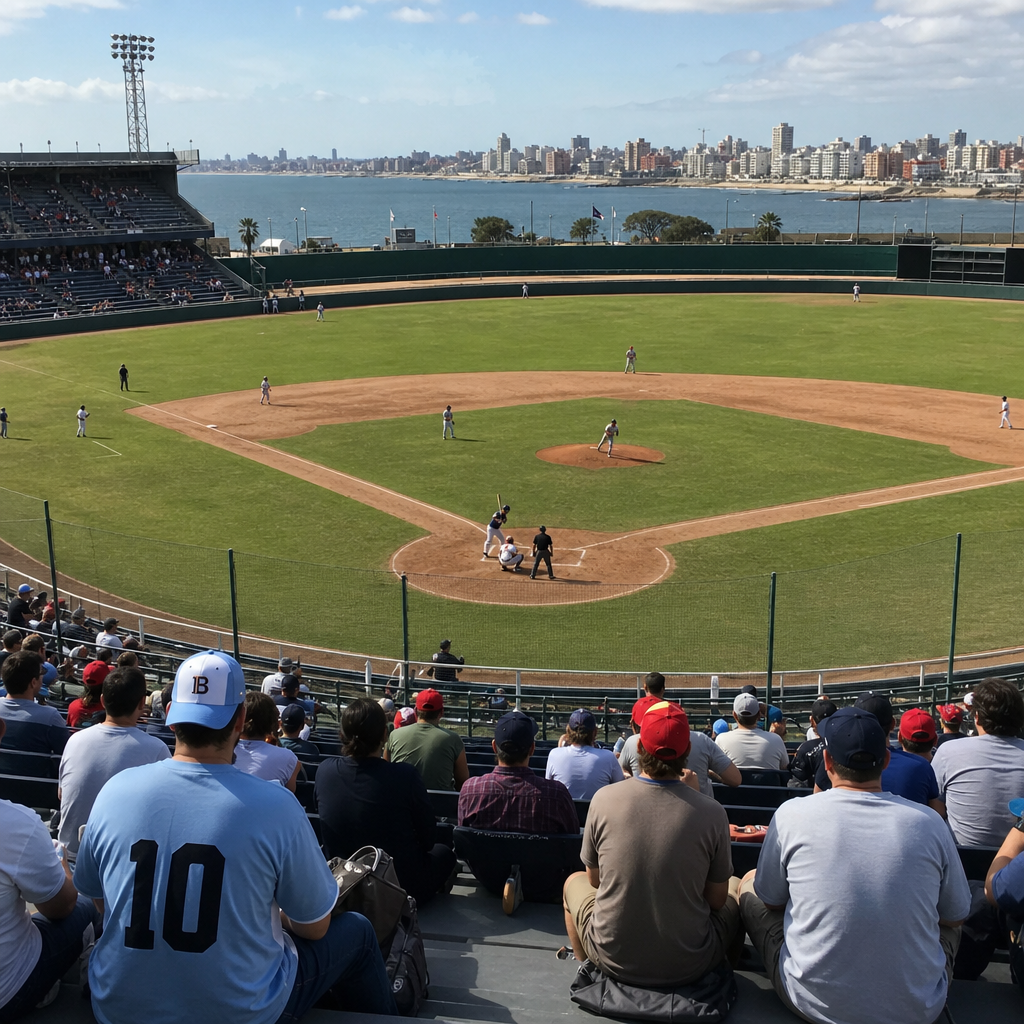
Baseball’s story in Uruguay is a small but revealing chapter in international baseball, showing how a sport can take root far from its traditional power centers through migration, education, diplomacy, and persistent local effort. In Uruguay, baseball has never rivaled football or basketball in participation, media coverage, or commercial backing, yet it has maintained a presence for decades and continues to attract players, schools, and community organizers who value its structure, skill development, and global connections. For readers exploring international baseball, Uruguay matters because it illustrates what growth looks like in a nontraditional market: uneven, volunteer-driven, and closely tied to institutions rather than mass fandom. Understanding baseball in Uruguay requires defining a few terms clearly. When people refer to organized baseball there, they usually mean youth programs, school-based participation, amateur clubs, and small federated competitions rather than a fully professional domestic league. Softball also overlaps with the baseball ecosystem, often sharing fields, administrators, and development resources. This miscellaneous hub brings those threads together, offering a practical overview of origins, governance, facilities, player development, regional competition, and the barriers that still shape the sport’s future in the country today.
How baseball first reached Uruguay
Baseball arrived in Uruguay through the same channels that introduced it to many smaller markets: foreign residents, educational exchange, and contact with neighboring countries where the sport had a stronger foothold. Unlike in the Caribbean, where baseball became part of national identity, Uruguay encountered the game as an imported activity competing against already dominant sports. Football was entrenched early and built powerful clubs, packed stadiums, and a deep social role. Baseball therefore developed on the margins, usually where teachers, expatriates, or embassy-linked communities could provide equipment and instruction. In my experience reviewing South American baseball development patterns, that institutional pathway is typical. The sport survives first in schools, military or diplomatic circles, and binational communities before it reaches wider public visibility.
Uruguay’s geography also shaped the sport’s path. The country sits between Argentina and Brazil, two large neighbors with their own uneven baseball histories. That position helped expose Uruguayan players to regional events, but it also meant baseball was not entering from one overwhelmingly dominant cultural source. Instead, interest came in waves. Some were tied to Latin American migration. Others came from educators who had seen baseball abroad and treated it as a useful teaching sport because it develops hand-eye coordination, tactical thinking, and discipline. The result was not a dramatic founding moment but a gradual accumulation of programs. That matters because the sport’s identity in Uruguay remains practical rather than mythical. It is sustained by organizers building opportunities piece by piece.
The role of schools, universities, and community clubs
In Uruguay, schools and educational institutions have been central to baseball’s survival. Where a country lacks a large club structure for a minor sport, the school calendar effectively becomes the competition calendar. Physical education teachers can introduce throwing mechanics, batting basics, and modified game formats without requiring a full nine-inning setup. That lowers the barrier to entry. I have seen this pattern repeatedly in emerging baseball environments: once students can play simplified versions using shared fields and portable bases, the sport gains a workable foundation. In Uruguay, this has been especially important because dedicated baseball diamonds are limited and public awareness is relatively low.
Community clubs fill the next layer. These organizations often operate with multipurpose facilities and volunteer coaches, adapting football grounds or municipal spaces for baseball and softball sessions. A club might run youth practices on weekends, host mixed-age training groups, and coordinate friendly matches rather than maintain a deep age-segmented league structure. That may sound modest, but it is how many durable baseball systems begin. Repetition matters more than scale at this stage. If children can train weekly, learn positional responsibilities, and play regular games, the sport becomes real to them. In Uruguay, clubs have also served as social bridges for families connected to Cuba, Venezuela, the Dominican Republic, and other baseball cultures, bringing knowledge that local programs can absorb.
Universities have potential value as well, even where baseball is not a varsity sport. They can provide fields, kinesiology expertise, and student-led administration. A university recreation department that supports baseball clinics or intramural play can influence coaching quality and event organization. For Uruguay, where resource efficiency matters, partnerships between schools, clubs, and higher education institutions are one of the clearest growth paths.
Governance, federation work, and regional competition
No minor baseball market grows without organized administration, and in Uruguay that responsibility has fallen to federation-style leadership and affiliated volunteers. The core tasks are unglamorous but decisive: registering teams, aligning with international rules, training scorers and umpires, securing insurance, scheduling tournaments, and maintaining eligibility for regional play. Baseball governance in smaller countries often overlaps with softball governance because the player base, field inventory, and sponsor pool are limited. That overlap can be efficient if managed well, though it sometimes creates competition for time and funding.
Uruguayan baseball’s external relationships are especially important. International legitimacy comes from participating in continental structures, following World Baseball Softball Confederation standards, and entering events when budgets allow. For players, regional tournaments are more than competition; they are proof that training at home connects to a wider baseball world. A trip to face teams from Argentina, Brazil, Peru, or other South American programs can expose athletes to better pitching depth, stronger defensive routines, and more advanced game management. Those lessons often accelerate development faster than months of isolated practice.
Administration also determines whether enthusiasm turns into retention. If a federation can publish a calendar early, communicate clearly with families, and ensure basic officiating consistency, participants are more likely to stay. If dates shift constantly and equipment is unavailable, attrition rises. In Uruguay, where the baseball community is small enough that each lost player matters, stable governance is not a side issue. It is the infrastructure that keeps the sport credible.
| Development area | Why it matters in Uruguay | Practical example |
|---|---|---|
| Youth recruitment | Small player pool requires continuous intake | School clinics feeding weekend club sessions |
| Coach education | Few experienced baseball specialists are available | Regional workshops on throwing progression and practice planning |
| Facility access | Dedicated diamonds are scarce | Shared municipal fields with portable mounds and temporary fences |
| International competition | Raises standards and player motivation | Travel to South American qualifiers and invitational events |
| Equipment supply | Import costs can slow growth | Donated gloves, helmets, and catcher gear distributed through clubs |
Facilities, equipment, and the realities of training
The biggest practical challenge for baseball in Uruguay is not teaching the rules. It is creating a playable environment often enough for skills to stick. Baseball asks for more specialized space than many sports. A safe infield, a hitting area, backstop protection, bullpen space, and storage for gear all make a difference. In a country where football fields dominate public sports infrastructure, baseball programs frequently improvise. Portable bases, temporary foul lines, batting tees, L-screens, and soft toss stations become essential tools. This is common across developing baseball markets, and it can work, but only if coaches understand how to adapt practice design to constrained space.
Equipment access is another recurring issue. New players need gloves that fit, bats of appropriate weight, batting helmets, and catcher gear that meets basic safety standards. Those costs add up quickly. In countries with large baseball industries, families can buy used gear through abundant resale channels. In Uruguay, imports can be expensive and local supply inconsistent. That is why donation pipelines matter so much. A single shipment of youth gloves, baseballs, and chest protectors can expand participation immediately. The challenge is sustainability. Programs that rely entirely on irregular donations may struggle to size equipment properly or replace worn safety gear.
Training quality depends on more than equipment volume. It depends on using equipment intelligently. When I evaluate emerging programs, I look for coaches who teach progressions: wrist work before full swings, receiving drills before game catching, structured long toss before max-effort throwing. Uruguay’s baseball future will depend on increasing that coaching sophistication. Good instruction can offset limited infrastructure for longer than most people assume.
Player development, coaching standards, and competitive level
Player development in Uruguay is best understood as a staircase rather than a pipeline. In powerhouse nations, a talented child may move from grassroots baseball to travel ball, academy training, elite tournaments, and professional scouting exposure in a structured sequence. Uruguay’s reality is more fragmented. Players often enter late, train in mixed-age groups, and learn from coaches with varied backgrounds. That does not prevent progress, but it changes priorities. The first objective is broad athletic literacy: throwing mechanics, catching fundamentals, base running awareness, and situational understanding. The second is repetition under competitive conditions.
Pitching development is a good example. In a mature baseball system, pitchers might track bullpens, velocity trends, strike percentages, and recovery protocols. In Uruguay, many programs are still focused on simpler milestones: throwing strikes consistently, fielding the position, and avoiding arm overuse. That is appropriate. Arm care should follow established sports medicine principles, and younger players need workload management before they chase velocity. The same applies to hitting. Exit velocity data can be useful, but contact quality, swing decisions, and confidence against live pitching matter more in early-stage environments.
Coaching standards vary widely, which is normal in a small baseball country. Some coaches bring experience from stronger baseball nations and can teach advanced concepts such as pitch sequencing, cutoff responsibilities, and practice periodization. Others are learning as they teach. The most effective federations address this by standardizing entry-level coaching education. Even a short certification covering warm-up structure, safety checks, age-appropriate drills, and game management can raise the floor quickly. For Uruguay, improving the average quality of coaching may be more impactful than trying to produce a few elite prospects immediately.
Culture, visibility, and the challenge of building an audience
Baseball in Uruguay faces a cultural challenge that statistics alone cannot solve. Football occupies the emotional center of Uruguayan sport, backed by history, heroes, daily conversation, and broad media infrastructure. Basketball and rugby also command recognition. Baseball therefore must compete for attention in a crowded environment where families make practical decisions about time, travel, and cost. The sport’s growth depends on making participation feel accessible and worthwhile even without mainstream celebrity.
That is why visibility strategies matter. A youth tournament with clear signage, social media highlights, and family-friendly scheduling can do more for local awareness than a generic publicity campaign. Demonstration events work best when people can see the action up close and understand it immediately. Coaches explaining the strike zone, the purpose of each defensive position, and the rhythm of an inning help first-time spectators stay engaged. In my experience, baseball wins newcomers when they recognize its tactical depth and individual accountability, not when organizers assume the game will sell itself.
Broadcast exposure and digital content also influence legitimacy. Even short-form video from practices and games can help parents, sponsors, and municipal officials view baseball as organized rather than improvised. For a small market like Uruguay, credibility often arrives before popularity. Once people see standards, uniforms, schedules, and safe instruction, they are far more willing to support the sport.
What Uruguay’s baseball future depends on
Uruguay’s baseball future will not be determined by a single breakthrough. It will depend on coordinated progress across a few practical areas: reliable youth recruitment, coach education, field access, equipment supply, and regular competition against stronger opponents. Those may sound basic, but they are exactly the factors that separate short-lived enthusiasm from sustainable growth. Countries with small baseball footprints do not need to copy the Dominican Republic, Japan, or the United States. They need a model suited to their own scale and resources.
For Uruguay, the smartest path is targeted expansion. Focus first on Montevideo and other population centers where transport links, schools, and multipurpose sports facilities already exist. Build recurring youth programs rather than one-off exhibitions. Create a visible annual calendar. Use softball partnerships where helpful. Seek support from embassies, diaspora communities, and international baseball development networks. Most importantly, give players enough games to make practice meaningful. Training without competition eventually drains motivation.
The broader lesson for anyone studying international baseball is clear: Uruguay demonstrates how the sport spreads through persistence, not inevitability. It grows when dedicated people solve ordinary problems repeatedly and well. If you are exploring this miscellaneous branch of international baseball, use Uruguay as a reference point for how emerging programs function in real conditions. Follow the clubs, federations, school initiatives, and regional tournaments connected to the country, and keep watching how small systems build lasting sporting culture over time.
Frequently Asked Questions
How did baseball first arrive in Uruguay?
Baseball reached Uruguay through a gradual mix of international influence rather than through a single dramatic founding moment. Like in many countries outside the sport’s traditional strongholds, the game was introduced by people moving across borders for work, education, and community life. Migrants, visiting teachers, foreign residents, diplomats, and travelers helped expose Uruguayans to the rules and culture of baseball over time. This pattern is important because it explains why the sport developed as a grassroots activity rather than a mass spectacle. Instead of entering the country through major professional clubs or large-scale commercial investment, baseball in Uruguay grew in smaller circles where enthusiasm, instruction, and social connection mattered more than ticket sales or media contracts.
Educational and cultural exchange also played a meaningful role. Schools, youth programs, and community organizations often serve as the first point of contact for sports that are not already deeply established in a country, and baseball in Uruguay followed that path. People encountered the game through organized activities, demonstrations, or local advocates willing to teach fundamentals and keep the sport visible. That means Uruguay’s baseball history is closely tied to persistence. It was never simply handed a ready-made audience. Instead, each generation of organizers and players had to introduce the game again, recruit newcomers, and create opportunities for practice and competition.
This slow arrival shaped the character of Uruguayan baseball. Because it was not built on immediate mass popularity, its survival depended on committed individuals and institutions that believed in its value. The sport’s early presence may have been modest, but it laid the foundation for a lasting, if niche, baseball culture. In that sense, the story of baseball’s arrival in Uruguay is less about sudden expansion and more about steady planting: a sport carried in by global movement and kept alive by local effort.
Why has baseball remained a minority sport in Uruguay?
The simplest answer is that Uruguay already has deeply rooted sporting traditions, especially football, which dominates public attention, identity, and infrastructure. Basketball also holds a strong and familiar place in the country’s sporting culture. In that environment, baseball has had to compete for field space, institutional support, coaching resources, media coverage, and young athletes’ time. When a sport lacks a broad professional structure and isn’t widely seen on television or in daily conversation, it naturally faces greater barriers to mainstream growth. Baseball in Uruguay has therefore remained a smaller sport not because it lacks appeal, but because it has developed in a crowded and highly competitive athletic landscape.
Another major factor is infrastructure. Baseball requires specific equipment, coaching knowledge, and appropriately designed playing areas, all of which can be difficult to secure consistently in a country where the sport is not a top priority. Unlike football, which can be played almost anywhere with minimal setup, baseball depends more heavily on organized spaces, proper instruction, and regular access to gear. That makes early participation more demanding. For a sport trying to build momentum, those practical hurdles matter a great deal. Even interested players may struggle to find teams, leagues, or training environments close to home.
Media and commercial realities have reinforced this pattern. Sports gain legitimacy and momentum when people see them regularly covered, sponsored, and celebrated. Baseball in Uruguay has not enjoyed the same commercial ecosystem that supports bigger sports, so its growth has often relied on volunteers, schools, and small clubs rather than major investors or broadcasters. Yet this minority status should not be mistaken for irrelevance. In many ways, it has made the baseball community more intentional and resilient. The sport continues because the people involved genuinely care about it, and that kind of commitment has helped sustain baseball’s presence over decades despite limited visibility.
What has kept baseball alive in Uruguay over the years?
Baseball has endured in Uruguay because of persistent local commitment. At the center of its survival are players, coaches, parents, school leaders, and community organizers who have treated the sport as something worth preserving even without major rewards. This kind of continuity matters enormously in smaller sporting communities. When there is limited funding and little mainstream attention, the game survives through relationships: someone teaches a new group of children, a volunteer helps organize practices, a school lends space, or a local leader keeps a club functioning through difficult periods. These recurring acts of effort are often the real backbone of a sport’s history.
Schools and youth development have been especially important. Baseball often gains stability when it becomes part of structured learning environments, where students can encounter the game regularly and build basic skills over time. In Uruguay, educational settings have helped introduce baseball to young people who might otherwise never come into contact with it. Once that introduction happens, the sport’s appeal becomes clearer. Baseball offers discipline, teamwork, concentration, strategic thinking, and highly specific skill development. Those qualities make it valuable not only as a competitive activity but also as a teaching tool, which helps explain why dedicated educators and community mentors have remained central to its survival.
International connections have also contributed. Because baseball is a global sport with strong traditions across the Americas and beyond, Uruguayan baseball has benefited from contact with broader networks of knowledge, equipment, and encouragement. Exchanges, regional competitions, visiting coaches, and links to migrant communities can all strengthen a local baseball scene. Even modest external support can make a meaningful difference when paired with local dedication. Ultimately, what has kept baseball alive in Uruguay is not one institution or one era, but a recurring pattern of people choosing to invest in the sport’s future. That steady commitment is the clearest reason the game still has a place in the country today.
What makes Uruguay’s baseball story significant in the broader history of international baseball?
Uruguay’s baseball story matters because it shows how the sport spreads beyond its best-known centers and adapts to different cultural environments. International baseball history is not only about powerhouse nations, major leagues, or world-famous tournaments. It is also about smaller communities where the game survives through patient development and local interpretation. Uruguay offers a revealing example of that process. The sport never became dominant there, but it did establish continuity, and that continuity says something important about baseball’s global character. It demonstrates that baseball can take root far from the places most commonly associated with it when people are willing to teach it, organize it, and build institutions around it.
This makes Uruguay an instructive case in sports diffusion. Baseball’s presence there reflects patterns of migration, education, diplomacy, and community exchange that have shaped the game worldwide. Rather than expanding only through commercial force, baseball has often traveled through human networks: students, families, cultural programs, and local enthusiasts. Uruguay fits that model well. Its experience reminds us that sports history is not always measured by crowd size or professional revenue. Sometimes the most revealing stories come from places where a sport has had to justify itself year after year and still managed to endure.
There is also a broader lesson about resilience. In countries where another sport overwhelmingly dominates national identity, minority sports can still create meaningful spaces for participation and belonging. Uruguay’s baseball journey illustrates that success does not always mean replacing established traditions. Sometimes success means building a durable community, offering an alternative path for athletes, and maintaining a sport’s presence across generations. For anyone interested in the global history of baseball, Uruguay is significant precisely because it highlights these quieter forms of growth. It adds depth to the larger story by showing that the game’s international reach depends not only on famous successes, but also on modest, sustained efforts in places where baseball has had to earn every inch of its ground.
What is the future of baseball in Uruguay likely to look like?
The future of baseball in Uruguay will probably be defined by gradual, community-based growth rather than sudden transformation. It is unlikely to overtake football or become a dominant commercial sport, but that does not mean its prospects are weak. In fact, niche sports often develop most effectively through stable youth programs, school partnerships, local clubs, and regional collaboration. If baseball in Uruguay continues to strengthen these foundations, it can expand its reach in practical and lasting ways. Growth may come through more consistent coaching, better access to equipment, improved facilities, and stronger pathways for young players to stay involved as they get older.
One promising area is youth development. When children encounter baseball early in structured, welcoming settings, the sport has a better chance of building continuity from one generation to the next. That includes not just teaching rules and techniques, but also creating a sense of belonging. Parents, teachers, and organizers play an essential role here. If they see baseball as a valuable outlet for discipline, teamwork, focus, and personal development, they are more likely to support its expansion. Community visibility matters as well. Demonstration events, school tournaments, and local outreach can help baseball feel accessible rather than unfamiliar.
Regional and international connections are likely to remain important. Uruguay does not need to grow in isolation. Support from broader baseball networks across Latin America and beyond can help with coaching education, competition opportunities, and organizational development. At the same time, the sport’s future will still depend on local leadership. Sustainable progress comes when Uruguayans themselves shape the game in ways that fit local realities. So the most realistic and encouraging forecast is this: baseball in Uruguay will continue as a smaller but meaningful sport, sustained by committed communities and strengthened by patient institution-building. Its future may not be loud, but it can be durable, valuable, and increasingly organized.