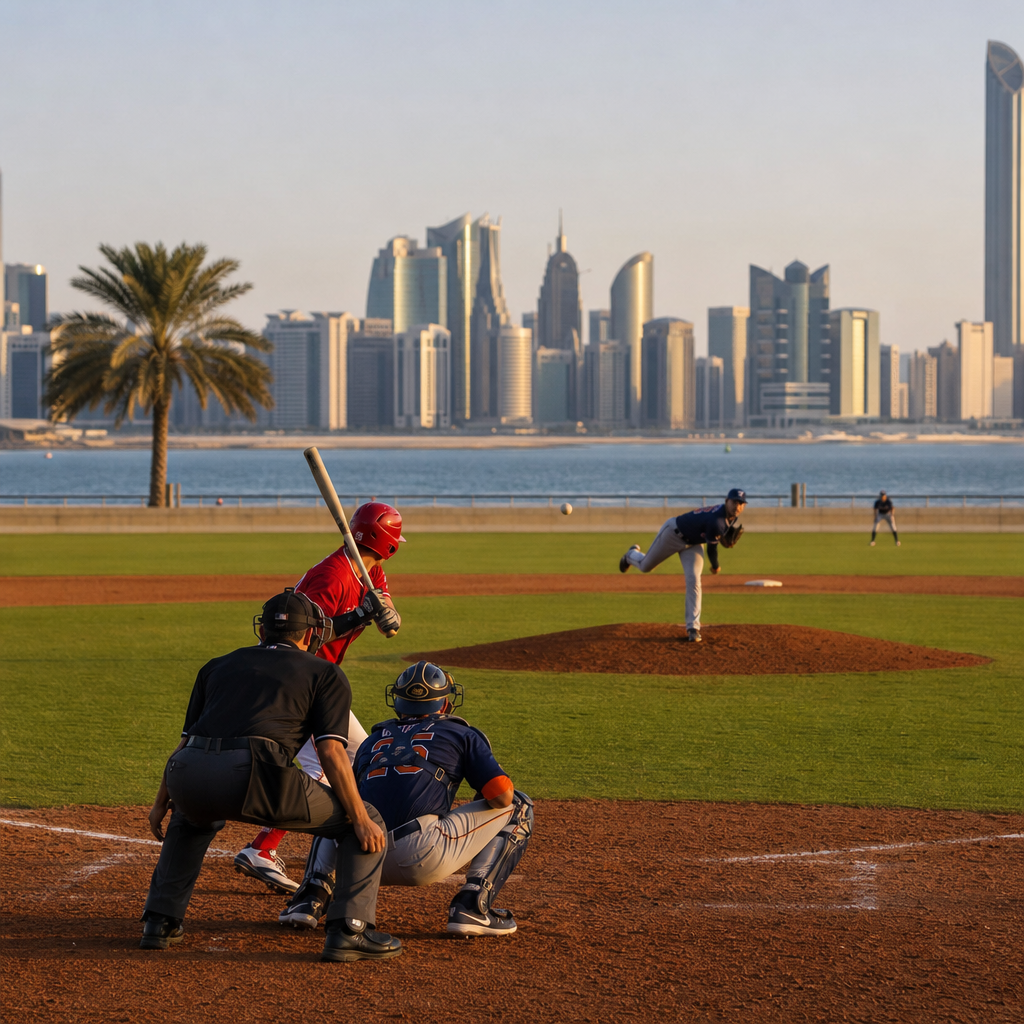
Baseball in the Gulf States is no longer a novelty project or a one-off exhibition; it is an emerging sports ecosystem shaped by climate, migration, infrastructure investment, and the search for year-round training hubs. In this context, the Gulf States refers primarily to Bahrain, Kuwait, Oman, Qatar, Saudi Arabia, and the United Arab Emirates, with most organized baseball activity concentrated in the UAE, Saudi Arabia, and Qatar. A sub-pillar hub on this topic must do two jobs at once: explain where the game stands today and map the many related storylines that define this miscellaneous corner of international baseball. Having followed baseball development projects across emerging markets, I have seen the same pattern repeatedly: participation begins with expatriate communities, stabilizes through school and company leagues, and only grows sustainably when federations create coaching, officiating, and facility standards. That pattern is now visible across the Gulf.
Why does baseball in the Gulf matter? First, the region sits at a crossroads between Asia, Africa, and Europe, making it strategically important for tournaments, training camps, and talent identification. Second, Gulf governments have spent heavily on sports infrastructure as part of broader diversification plans, which creates opportunities for niche sports that can show participation, tourism value, and media potential. Third, the Gulf’s expatriate populations include large communities from the Philippines, Japan, South Korea, India, Pakistan, Latin America, and North America, all of which contribute players, volunteers, and fans. Baseball and softball often arrive together, sharing fields, administrators, and youth pathways. The result is a complex picture: fast growth in some places, fragile structures in others, and significant room for expansion if the right institutions take shape.
This hub article covers that full picture. It defines the key forces behind baseball development in the Gulf, identifies the strongest national markets, explains how leagues and facilities are built, outlines the role of schools and companies, and highlights the practical barriers that still limit mainstream adoption. It also serves as a gateway topic for deeper articles on national federations, youth baseball, women’s softball, expatriate leagues, coaching pathways, tournament hosting, and facility design in hot climates. If you want a concise answer, here it is: baseball in the Gulf States is growing because imported playing cultures are meeting local investment capacity, but long-term success depends on creating local player pipelines rather than relying only on expatriate participation.
Where baseball is strongest in the Gulf today
The United Arab Emirates remains the most mature baseball market in the Gulf. Dubai, Abu Dhabi, and Sharjah offer the region’s best combination of population density, corporate sponsorship potential, school networks, and multi-sport complexes. In practice, that means more regular leagues, more visiting teams, and better access to maintained diamonds or adapted fields. The UAE has also benefited from a sports events model that welcomes international tournaments and training camps. When I evaluate whether a baseball market is truly established, I look for recurring league calendars, functioning umpire crews, age-group competition, and a federation that can communicate schedules and regulations clearly. The UAE checks more of those boxes than any neighboring state.
Saudi Arabia is the Gulf’s biggest long-term opportunity. Its scale alone changes the equation. Riyadh, Jeddah, and Dammam each have enough population to support localized baseball communities, and the country’s broader investment in sports creates a stronger financial backdrop than most emerging baseball nations can access. The challenge is organizational consistency. Saudi baseball activity has often depended on dedicated clusters of expatriate players and volunteers. That can produce excellent competitions for a period, but durable growth requires formal coaching education, youth outreach, and field access that does not disappear when a sponsor or organizer leaves. If Saudi administrators align baseball with school sport and municipal facility planning, the country could become the region’s largest baseball market within a decade.
Qatar and Kuwait occupy the next tier. Qatar’s advantage is compactness: it is easier to convene leagues, centralize training, and host regional events when teams are not separated by vast geography. Its sports infrastructure and event management capabilities are already internationally recognized. Kuwait has a long history of expatriate sport, including baseball and softball communities linked to embassies, companies, and migrant networks. Oman and Bahrain have smaller ecosystems but remain relevant, particularly for recreational leagues, company tournaments, and regional federation building. In every Gulf state, softball often develops alongside baseball and can be an important entry point, especially in schools and mixed expatriate communities.
How the game grows: expatriates, schools, and federations
Baseball in the Gulf usually starts with expatriates because they bring the game with them. Filipino workers organize weekend leagues. Japanese and Korean communities create youth practice groups. North American educators introduce baseball units in international schools. Latin American players and coaches add competitive experience. That foundation is valuable, but it has limits. Expatriate-heavy leagues can be vibrant without being rooted. I have seen leagues with strong play quality vanish within two years because organizers moved away, visa patterns shifted, or access to a rented field ended. Real growth begins when institutions absorb the sport.
Schools are the most effective bridge from imported pastime to local participation. International schools already understand baseball’s rules, equipment, and season planning, making them natural early adopters. More importantly, schools create repeatable calendars, safeguard access to basic facilities, and expose children who do not come from baseball families to the sport. In emerging markets, tee-ball and coach-pitch formats matter more than elite showcase events. They reduce the skill barrier, improve safety, and let schools share fields with other sports. Once enough schools play regularly, federations can establish interscholastic tournaments, coach certification requirements, and player registration databases. Those are the administrative building blocks of any serious baseball system.
Federations determine whether progress becomes measurable. A functioning national body should manage affiliation with the World Baseball Softball Confederation, publish competition rules, certify umpires and scorers, coordinate with ministries or Olympic committees, and maintain player eligibility records. It should also distinguish between baseball and softball needs while leveraging shared logistics. In the Gulf, the strongest federations are the ones that understand participation data, not just events. Hosting one international series looks impressive, but a federation that can show 400 youth players, 30 trained coaches, and three active venues is in a better position to secure funding and political support.
Facilities, climate, and the practical reality of playing in the Gulf
The Gulf offers excellent construction capacity but difficult playing conditions. Summer heat, humidity in coastal cities, dust, and limited natural grass all affect baseball operations. A regulation baseball field requires more than open space. It needs infield grading, reliable mound dimensions, fencing, dugouts, safe warning areas, lighting if games are played after sunset, and maintenance expertise. In many Gulf cities, baseball survives by adapting cricket grounds, football pitches, or multi-sport spaces. That approach lowers entry cost, but it can distort play and discourage pitchers, catchers, and infield development because the field never quite behaves like a true diamond.
The best solution is not always a fully dedicated stadium. In emerging markets, modular baseball infrastructure often works better: portable mounds, temporary fencing, convertible backstops, shaded dugout areas, and synthetic infield systems designed for heavy use. Artificial turf can make sense in the Gulf because it reduces irrigation demands, though it must be specified carefully for heat performance and ball behavior. Night scheduling is essential. Many successful Gulf baseball events start after sunset, especially from May through September. Training plans also need heat protocols, hydration rules, and pitch-count management adapted to local conditions. These are not minor details; in hot-weather baseball, player welfare determines whether parents, schools, and sponsors stay involved.
| Development factor | What works in the Gulf | Main limitation |
|---|---|---|
| Expatriate leagues | Fast startup, strong volunteer base, immediate playing standard | Turnover can destabilize teams and leadership |
| School programs | Reliable youth pipeline, repeatable calendar, easier parent engagement | Needs trained PE staff and age-appropriate equipment |
| Dedicated facilities | Improves skill development, hosting potential, and credibility | High capital and maintenance costs |
| Convertible fields | Lower cost and faster expansion across cities | Compromises field quality and game integrity |
| National federations | Creates standards, funding pathways, and international recognition | Can become event-focused without grassroots depth |
For readers exploring related articles within this miscellaneous hub, facilities deserve special attention because they affect every other topic: youth retention, tournament hosting, coach education, injury risk, and media presentation. A nation may have enough athletes and money to support baseball, but without stable field access the sport remains episodic. The Gulf’s comparative advantage is that infrastructure can be built quickly once officials are convinced the sport has a credible participation base. That makes data collection and visible community use more important than grand promises.
Competition structures, talent pathways, and regional opportunity
League structure is where many Gulf baseball projects either mature or stall. Adult recreational leagues are easy to launch, but they do not automatically produce national teams or youth development systems. A healthy competition model usually includes beginner clinics, youth divisions, school competitions, open adult leagues, and selective representative squads. The Gulf has enough population and air connectivity to support more regional competition than currently exists. Short-haul flights between Dubai, Doha, Riyadh, Kuwait City, Muscat, and Manama make weekend tournaments realistic, especially if organizers use compact formats with two or three game guarantees.
Talent pathways remain uneven. In established baseball countries, a player progresses through Little League or school ball, travel teams, high school seasons, academies, and national programs. In the Gulf, that ladder is often incomplete. Promising players may have strong athletic ability but limited game repetitions, weak defensive fundamentals, or little exposure to quality pitching. The fastest way to improve is not importing a professional exhibition team for one weekend. It is building a calendar of coached repetitions: bullpen sessions, live at-bats, catcher development, base-running instruction, and age-specific competition. I have seen dramatic improvements within a year when young athletes simply receive regular, structured reps instead of sporadic scrimmages.
Regional partnerships can accelerate that process. Gulf federations benefit from technical exchanges with baseball organizations in Japan, South Korea, Taiwan, the Philippines, and the United States because those systems offer coaching curricula, umpire education, and player development models that can be adapted locally. WBSC-recognized competitions and continental pathways also matter because they provide legitimacy and targets. For a developing baseball nation, qualifying standards, ranking systems, and officiating requirements are not bureaucracy; they are incentives to professionalize. The Gulf should also think beyond men’s baseball. Women’s softball, baseball5, and youth introductory formats can expand participation faster than traditional nine-inning adult baseball alone.
Barriers to mainstream adoption and what must happen next
The biggest barrier is not lack of interest. It is competition for attention, facilities, and institutional support. Football dominates public imagination across the Gulf, while cricket commands enormous expatriate followings and is easier to stage on adaptable grounds. Basketball, padel, and combat sports also compete for urban leisure space. Baseball therefore has to justify itself clearly. It succeeds when organizers present it as a safe, structured, family-friendly sport that develops coordination, concentration, teamwork, and decision-making. It struggles when it appears insular, overly dependent on one nationality group, or disconnected from schools and community recreation systems.
Another barrier is technical capacity. Baseball requires more specialized knowledge than many casual observers realize. Field layout, pitching mechanics, catcher safety, scorekeeping, umpiring, and equipment fitting all matter. In several Gulf markets, enthusiasm has outpaced instruction, leading to avoidable errors such as poor mound construction, mismatched age divisions, and overuse of pitchers. These are solvable problems. Coaching clinics, translated rule resources, and partnerships with experienced development staff can raise standards quickly. The point is not to imitate the United States perfectly. It is to build context-appropriate quality that players, parents, and officials can trust.
Baseball in the Gulf States now stands at a decisive stage. The foundation exists: expatriate communities, ambitious sports agendas, improving facilities, and geographic advantages for regional competition. The next horizon is local ownership. That means more Gulf-born players, more school programs, more trained coaches and umpires, and more federations judged by participation numbers rather than ceremonial launches. For readers using this page as a hub within international baseball, the key takeaway is simple: the miscellaneous stories are no longer minor. They are the mechanisms through which baseball either becomes rooted in the Gulf or remains a rotating expatriate pastime. Explore the connected articles on national development, youth systems, facilities, softball, and regional tournaments to see where this transformation is already underway.
Frequently Asked Questions
1. Why is baseball gaining traction in the Gulf States now?
Baseball is gaining traction in the Gulf States because several long-term forces are finally aligning at the same time. First, the region has large and highly mobile expatriate populations from countries where baseball is already part of everyday sporting culture, including the Philippines, Japan, South Korea, Taiwan, Latin America, and North America. Those communities create an immediate player base, coaching base, and fan base without requiring the sport to start from zero. Second, governments and private investors across the Gulf have spent heavily on sports infrastructure, event hosting, and international branding, which makes it easier for newer sports to secure fields, indoor facilities, academies, and tournament support. Third, the climate, while demanding in summer, creates a compelling case for winter baseball and shoulder-season training, especially for teams, academies, and traveling players looking for warm-weather development environments.
Just as important, baseball in the Gulf is no longer viewed only as a novelty or a symbolic exhibition sport. In places such as the United Arab Emirates, Saudi Arabia, and Qatar, organized leagues, youth programs, and community competitions are giving the game more structure. That matters because sports ecosystems grow when players can progress from casual participation to coaching, league play, tournament competition, and eventually regional or national representation. The Gulf also benefits from being globally connected through major airlines and logistics networks, making it easier to host clinics, invite foreign coaches, and stage international events. In practical terms, baseball’s rise in the region reflects a broader pattern: the Gulf States are using sport not just for entertainment, but for tourism, youth development, international engagement, and economic diversification.
2. Which Gulf States are most active in baseball, and what does the regional landscape look like?
While baseball activity exists across Bahrain, Kuwait, Oman, Qatar, Saudi Arabia, and the United Arab Emirates, the most visible and organized activity is generally concentrated in the UAE, Saudi Arabia, and Qatar. The UAE has often served as the clearest entry point for organized baseball because of its sizable expatriate communities, strong logistics, and broader experience hosting international sports events. Dubai and Abu Dhabi, in particular, have the advantage of visibility, accessibility, and established sports infrastructure, which can support leagues, academy training, and visiting competition. Saudi Arabia is increasingly important because of its scale, policy emphasis on sports development, and capacity to build new facilities and attract international partnerships. Qatar also plays a notable role thanks to its event-hosting capabilities and investment in high-performance sports environments.
The wider regional landscape is still uneven, which is normal for an emerging sport. Some countries may have active amateur communities, school-level participation, or expatriate-led leagues without yet having a deeply rooted domestic pipeline. In other words, baseball in the Gulf is not developing in a perfectly uniform way across all six states. Instead, it is forming through a hub-and-spoke model: a few countries act as primary anchors for tournaments, facilities, and visibility, while neighboring states contribute players, community clubs, and developmental activity. This is why it is useful to think of Gulf baseball as an ecosystem rather than a single league or federation story. Growth depends on cross-border movement, shared training opportunities, and gradual expansion from community participation into more permanent institutions.
3. How does climate affect baseball development in the Gulf States?
Climate is one of the most important factors shaping baseball in the Gulf, and it acts as both a challenge and an opportunity. The obvious challenge is extreme summer heat, which can limit outdoor training schedules, increase facility costs, and require careful planning around player safety, hydration, and recovery. Baseball is a sport built around repeated practice, long sessions, and technical repetition, so intense heat can affect everything from youth participation to tournament viability. That means successful baseball programs in the region need more than enthusiasm; they need smart scheduling, access to shaded or indoor training environments, and conditioning protocols suited to the local environment.
At the same time, the Gulf’s climate offers a major strategic advantage during cooler months. From roughly late autumn through early spring, many Gulf locations become attractive for training camps, youth showcases, regional tournaments, and international development programs. This is especially relevant for teams and academies from colder climates looking for reliable winter training hubs. In that sense, the Gulf can position itself less as a year-round outdoor baseball paradise and more as a specialized seasonal destination supported by modern infrastructure. Facilities with lighting, indoor cages, strength and conditioning spaces, and sports science support can turn climate from a barrier into a competitive edge. The regions most likely to succeed are the ones that plan around the weather rather than trying to ignore it.
4. What role do migration and expatriate communities play in Gulf baseball?
Migration is central to the story of baseball in the Gulf States. In many cases, the sport’s earliest organized forms in the region have come from expatriate communities who brought the game with them and sustained it through local leagues, weekend clubs, informal coaching networks, and community tournaments. That foundation is crucial because baseball is a sport that depends heavily on technical knowledge, repetition, and culture. You need people who understand not just the rules, but the rhythms of practice, the importance of youth development, the structure of positions, and the long process of skill building. Expatriate communities often supply that expertise from day one.
But their role goes beyond simply populating teams. They also help create continuity, which is what turns scattered participation into a real sports ecosystem. Parents introduce children to the sport, adult amateurs help organize leagues, former players become coaches, and community leaders connect with schools, sponsors, and facility operators. Over time, that creates a bridge between imported sporting culture and locally rooted participation. For baseball to truly expand in the Gulf, however, the next step is broader integration: more school exposure, more youth outreach beyond expatriate circles, more local coach development, and more institutional support from sports authorities. In other words, migration has been the engine of baseball’s arrival, but long-term growth will depend on translating expatriate energy into durable, inclusive regional structures.
5. What would it take for baseball to become a lasting sport ecosystem in the Gulf States?
For baseball to become a lasting sport ecosystem in the Gulf States, it needs depth, not just visibility. One-off exhibitions and international events can generate awareness, but sustainable growth comes from systems that connect participation at every level. That means youth programs, school partnerships, coach education, umpire development, league administration, facility access, and reliable competition calendars. It also means building pathways so that a child who first encounters baseball through a clinic can continue into regular training, age-group competition, academy development, and higher-level play. Without those pathways, interest tends to spike and fade. With them, baseball can gradually establish itself alongside more familiar sports.
Infrastructure will also be decisive. The most successful Gulf baseball markets are likely to be the ones that invest in adaptable, climate-aware facilities: multi-use fields, indoor batting and pitching spaces, recovery and fitness support, and venues that can host both community leagues and international events. Equally important is institutional legitimacy. National federations, school sport frameworks, municipal partnerships, and private academies all have roles to play in making baseball easier to access and easier to sustain. Finally, the Gulf has a chance to define a distinct niche in global baseball by emphasizing winter training, regional tournaments, sports tourism, and development programs that connect Asia, Europe, Africa, and the Middle East. If that strategy is executed well, baseball in the Gulf States can move from promising experiment to durable regional sports sector.