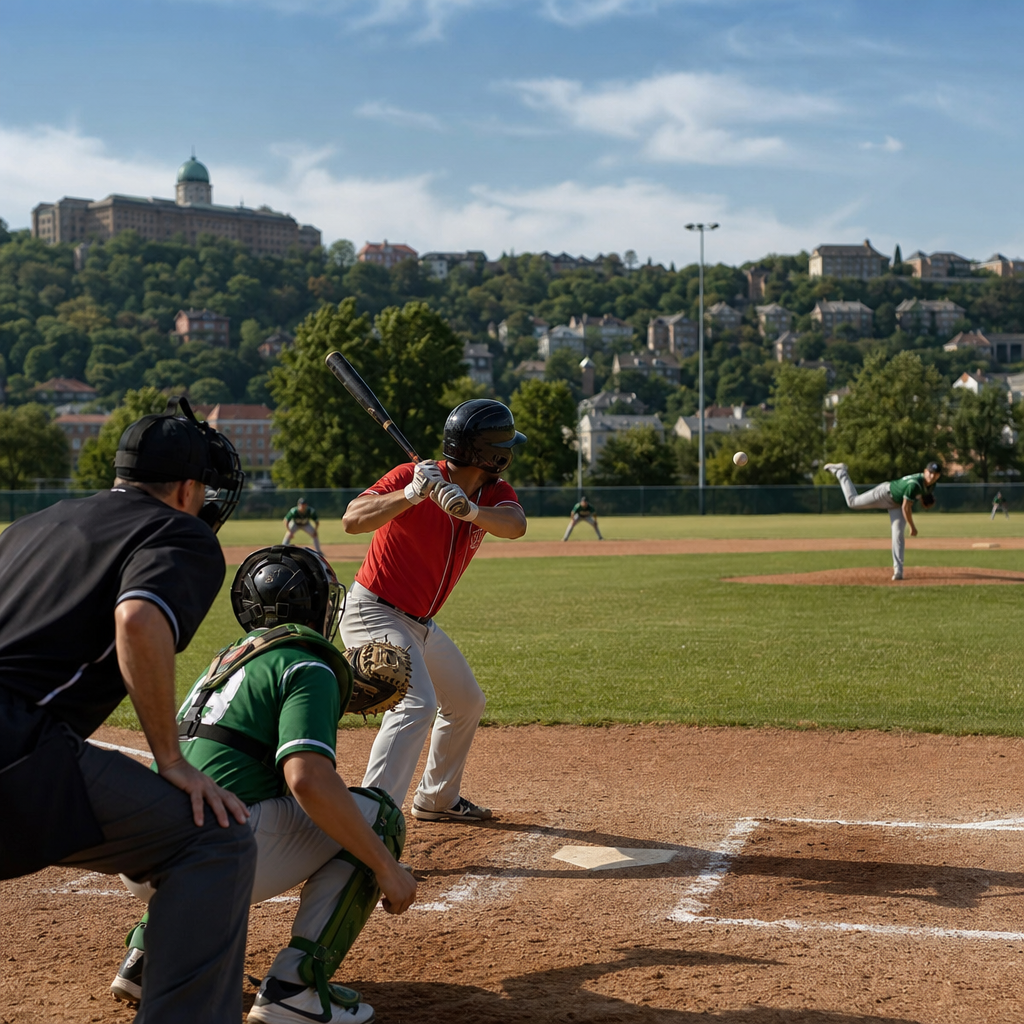
Baseball in Hungary is no longer a novelty discussed only by expatriates and niche sports fans; it is a developing competitive scene with clubs, youth programs, national-team ambitions, and a small but increasingly organized infrastructure. When we talk about baseball in Hungary, we mean the full ecosystem around the sport: local leagues, softball activity, coaching, fields, federation support, school outreach, and the difficult work of building a baseball culture in a country where football, handball, water polo, and athletics already command attention. That broader definition matters because baseball does not grow in Europe through professional franchises alone. It grows through volunteer administrators, multi-use diamonds, imported equipment, regional tournaments, and players who often discover the game through family ties, travel, films, or other bat-and-ball sports.
Hungary matters in the international baseball conversation because it represents the challenge and promise of developing baseball markets. It is not Japan, the Dominican Republic, or even Italy and the Netherlands, where the sport has deep historical roots. Hungary sits in the category of emerging European baseball nations: countries where participation numbers are modest, resources are uneven, and every gain requires persistence. I have worked with emerging baseball communities before, and the pattern is familiar. Progress rarely looks dramatic from the outside. Instead, it shows up in better coaching certification, more age-group competitions, steadier federation calendars, stronger ties to neighboring countries, and a national team that becomes harder to beat over time.
For readers exploring international baseball, Hungary is especially useful as a hub topic because it connects several recurring themes. It shows how baseball travels across borders, how softball and baseball often develop together, how governing bodies and clubs share responsibility, and how infrastructure can determine whether interest becomes lasting participation. It also highlights a key reality: in smaller baseball countries, one committed club or one municipal partnership can change the trajectory of an entire region. Understanding baseball in Hungary, then, is not just about one nation. It is about how the sport expands globally when conditions are challenging but not impossible.
The most important question is simple: is baseball actually growing in Hungary? The answer is yes, but growth is uneven and must be measured carefully. Growth does not necessarily mean large crowds or fully professional teams. In Hungary, growth means more consistent domestic competition, improved youth access, occasional international visibility, and a broader awareness that baseball is not just an imported curiosity. It also means the sport is learning to position itself intelligently, often by emphasizing skill development, community, and opportunities for international competition rather than trying to imitate major-market professional models that do not fit local realities.
How baseball took root in Hungary
Baseball’s development in Hungary followed the broader post-Cold War pattern seen across parts of Central and Eastern Europe. The sport gained organizational form after political and economic changes opened the country more fully to international cultural and sporting exchange. Early growth depended on a small number of enthusiasts, foreign contacts, and players willing to learn a sport that had little domestic tradition. In practical terms, that meant early clubs often shared facilities, borrowed equipment concepts from softball, and relied heavily on translated rules, imported coaching knowledge, and regional competition to stay active.
Unlike in traditional baseball countries, where local memory and inherited fan loyalty sustain the sport, Hungary had to build baseball almost from zero public familiarity. That created obvious obstacles, but it also produced one advantage: clubs and organizers could shape the culture deliberately. In many developing baseball nations, Hungary included, the game is introduced as accessible, tactical, and family friendly. Coaches often explain baseball by relating it to familiar European concepts: positional discipline, structured team defense, and incremental strategy. New players who arrive from cricket-free environments usually need time with fundamentals such as force plays, cutoffs, pitch counts, and situational hitting, so teaching quality becomes a decisive factor.
International governing structures also mattered. European baseball competition, along with support pathways linked to continental and global federations, gave Hungary a calendar and a benchmark. Even when domestic numbers were small, Hungarian clubs and national teams could measure themselves against Austria, Slovakia, Croatia, Serbia, and other regional programs. That external competition is critical. Without it, emerging countries often stagnate because players do not face enough game speed, and administrators lack evidence for what better development actually looks like.
The role of clubs, leagues, and federation structure
In Hungary, baseball growth depends less on mass media and more on club durability. The country’s baseball ecosystem has historically revolved around dedicated local organizations that manage recruitment, training, scheduling, and community presence. Some clubs field both baseball and softball teams, which is common in smaller European markets because shared administration reduces cost. The federation’s role is to coordinate competitions, standardize rules, support national teams, and connect domestic baseball to European structures, but clubs remain the practical engine of participation. If clubs are stable, baseball has a future. If clubs lose facilities or volunteers, progress can reverse quickly.
Domestic leagues in emerging baseball countries typically face three recurring issues: travel cost, roster depth, and fixture reliability. Hungary is no exception. A club may have enough talent for a competitive top side yet struggle to maintain junior teams or second squads. Another may recruit energetically but lack a regulation field. I have seen this repeatedly across Europe: the strongest organizations are not always the most talented on paper; they are the ones that answer emails, renew youth pipelines, keep score properly, train coaches, and stage games on time. Administrative competence is competitive advantage.
League structure also matters because too few games slow development, while too many poorly staged games exhaust limited budgets. Hungary’s challenge is to offer enough meaningful competition for senior players and prospects without overextending clubs. Regional scheduling, doubleheaders, and cooperation with neighboring baseball communities can help. So can linking baseball and softball development strategically rather than treating them as separate worlds competing for the same volunteers. In countries with modest participation bases, shared logistics are often more important than ideological purity.
Youth development and the importance of schools
If baseball is going to gain real momentum in Hungary, it must keep expanding through youth channels. Adult beginners are valuable and often become long-term volunteers, but sustained national growth comes from introducing children to the game early enough that baseball techniques become natural rather than foreign. Throwing mechanics, glove work, base running, and strike-zone awareness all improve dramatically when players start young. That is why school visits, after-school programs, summer camps, and beginner-friendly equipment are essential, not optional extras.
One of the most effective methods I have seen in emerging programs is modified entry baseball. Coaches use tennis balls, softer safety balls, plastic bats, and simplified base-running rules to teach movement patterns before introducing full hardball complexity. This matters in Hungary because schools and parents may be more receptive to a low-risk introductory version than to a sport they assume requires specialized fields and expensive gear. Once children enjoy the throwing and hitting actions, clubs can transition the most interested players toward formal baseball and softball pathways.
Teacher engagement is another overlooked factor. A school demonstration creates curiosity for one afternoon; a PE teacher who understands the basics can keep the game alive for a term. Hungarian baseball benefits when clubs equip teachers with drill plans, portable bases, and clear explanations of rules. That approach turns baseball from a one-off novelty into a repeatable activity. It also helps in towns that do not yet have a full club but may have enough interested students to justify one in the future.
| Development area | What works in Hungary | Main limitation | Best practical response |
|---|---|---|---|
| Youth recruitment | School demonstrations and summer camps create first contact | Low public understanding of rules | Use simplified games and parent-friendly introductions |
| Coaching | Motivated volunteers can build strong local programs | Limited access to advanced certification | Partner with regional federations and online clinics |
| Facilities | Multi-use fields can host baseball with adaptation | Few purpose-built diamonds | Prioritize safe infields, backstops, and reliable maintenance |
| Competition | Regional games raise standards quickly | Travel costs strain club budgets | Cluster fixtures and schedule doubleheaders |
Facilities, equipment, and the reality of building infrastructure
Ask any Hungarian baseball organizer what slows growth, and facilities will appear near the top of the list. Baseball can be introduced almost anywhere, but sustained competition needs safe, predictable spaces. A quality field does not have to resemble a Major League stadium, yet it does need basic standards: a usable infield, secure fencing or backstop protection, clear foul territory, mound and plate consistency, dugout space, and maintenance routines. Where those elements are missing, player development suffers because drills do not transfer cleanly into games, and injuries become more likely.
Equipment is a related pressure point. In established baseball countries, replacing balls, catcher’s gear, helmets, nets, and bats is routine. In Hungary, import cost and distribution can make even ordinary equipment management difficult. That is why donations, second-hand gear networks, and relationships with overseas clubs can have outsized impact. Still, hand-me-downs are not a complete strategy. Developing programs eventually need reliable purchasing, inventory planning, and standards for safe youth equipment. A club cannot build trust with families if protective gear is inconsistent or visibly outdated.
Municipal partnerships can transform this area. When local authorities see baseball as a youth sport with educational and community value, they are more likely to allocate training space or permit field adaptation. The strongest proposals are specific. Rather than asking vaguely for support, successful clubs present participation numbers, school partnerships, event plans, and modest phased facility requests. A town is more likely to fund fencing, drainage, or lighting if it can see regular usage and social benefit.
National teams, international competition, and visibility
National-team baseball is one of the clearest indicators of momentum in countries like Hungary. Even if domestic attendance remains limited, international results create legitimacy. Players train harder when they can represent their country. Federations attract more attention when there is a visible pathway from youth baseball to senior international competition. Media outlets that ignore local league games may still cover a European championship appearance or a notable win against a regional rival.
Hungary’s national teams operate in a competitive tier where progress is measured by consistency, run prevention, and the ability to stay close against stronger programs. Emerging teams often lose not because of one glaring weakness but because they lack depth: one thin bullpen, one defensive inning with extra outs, one stretch of poor situational hitting. Closing that gap requires more than motivation. It requires regular high-level repetitions, structured player identification, and coaching continuity. Baseball punishes inconsistency, especially in tournament settings where roster management and pitching usage are unforgiving.
Visibility from international play also helps recruitment at home. A teenager who sees Hungary competing abroad can imagine a future in the sport. Parents are more willing to commit weekends when they understand baseball offers travel, discipline, and national representation. That symbolic value should not be underestimated. In developing markets, the national team often serves as the sport’s public face long before domestic league brands become widely recognized.
What will decide the next stage of growth
Baseball in Hungary has enough structure to move beyond survival mode, but the next stage will depend on disciplined choices. First, youth retention matters more than one-time recruitment spikes. It is better to keep fifty players for three years than introduce five hundred children to baseball once and lose nearly all of them. Second, coaching education must keep improving. Good intentions are not enough; players stay in the sport when practices are organized, safe, and clearly developmental. Third, clubs need predictable local support, whether from municipalities, sponsors, universities, or community partners.
Digital communication is another practical lever. Smaller sports grow when they make participation easy to understand. Clubs should publish beginner guides, season schedules, training times, and equipment expectations clearly. Video clips explaining basic rules can remove the intimidation barrier for new families. So can bilingual communication in places where international residents may strengthen local player pools. These are not glamorous tasks, but in my experience they matter as much as on-field wins.
Hungary does not need to become a major baseball power to count as a success story. It needs a stable, credible, and expanding baseball culture: more children playing, more adults volunteering, better fields, stronger clubs, and national teams that continue to rise. That is what momentum looks like in an emerging baseball nation. For readers following international baseball, Hungary deserves attention precisely because it shows the sport being built in real time. Watch the clubs, support the grassroots game, and follow the national teams. That is where Hungary’s baseball future will be decided.
Frequently Asked Questions
Is baseball really growing in Hungary, or is it still just a niche sport?
Baseball in Hungary is still a niche sport compared with football, handball, basketball, or water polo, but it is absolutely growing in meaningful ways. The clearest sign of progress is that the sport is no longer sustained only by expatriates or a handful of enthusiasts. Hungary now has a more structured baseball ecosystem that includes clubs, youth development efforts, organized competition, softball activity, federation-level coordination, and ongoing attempts to improve coaching and facilities. That may not sound dramatic when compared with established baseball countries, but in an emerging market for the sport, those are the foundations that matter most.
Growth in Hungary should be understood less as a sudden boom and more as steady institutional development. Clubs are working to recruit and retain young players, local organizers are building competitive opportunities, and supporters of the game are creating a more visible pathway from beginner participation to league play and even national-team involvement. In practical terms, that means more people know what baseball is, more players can find a team, and more communities are treating the sport as something permanent rather than experimental. For a country building baseball culture almost from scratch, that kind of momentum is significant.
What does the baseball structure in Hungary actually look like?
The baseball structure in Hungary includes several interconnected parts rather than just a single top-tier league. At the center are local clubs that run training sessions, recruit players, and participate in domestic competition. Around them is the broader ecosystem: softball programs, youth teams, coaching education, federation support, and efforts to maintain or improve playing fields. This is important because in an emerging baseball country, development does not happen through elite competition alone. It depends on whether children can be introduced to the sport, whether coaches understand the game well enough to teach it properly, and whether clubs have access to spaces where regular training can happen.
There is also a national development dimension. A functioning federation helps organize leagues, set standards, coordinate competition, and support national-team ambitions. Even when budgets are limited, that administrative structure gives clubs a framework in which to operate. Hungary’s baseball scene is therefore best viewed as a layered system: community clubs at the base, organized competition in the middle, and representative national-level goals at the top. The sport is still developing, but the fact that these layers exist and are becoming more organized is one of the strongest indicators that baseball in Hungary has moved beyond the novelty stage.
What are the biggest challenges facing baseball in Hungary today?
The biggest challenge is cultural competition. In Hungary, baseball must compete for attention, athletes, funding, media coverage, and public space in a sports environment dominated by more established games. That makes everything harder, from recruiting children to convincing municipalities to invest in fields. A family is naturally more likely to choose a sport they already understand, can easily watch on television, and can find in almost every town. Baseball has to work harder to explain itself, introduce its rules, and prove that it offers real long-term value as both a recreational and competitive activity.
Infrastructure is another major issue. Baseball needs specialized space, and not every community has suitable fields, equipment, or training facilities. Coaching depth can also be a limiting factor, because a developing sport needs knowledgeable instructors to turn curiosity into sustained participation. On top of that, small player pools can make league organization difficult, especially when clubs are spread out geographically. But these challenges are also exactly why the current progress in Hungary matters. Every youth program, coaching clinic, school outreach event, and field improvement project directly strengthens the sport’s long-term future. In emerging baseball countries, growth is often defined by overcoming these logistical barriers one step at a time.
How important are youth programs and school outreach for baseball in Hungary?
Youth programs and school outreach are essential. In a country where baseball is not part of the traditional sporting mainstream, the sport cannot rely on passive discovery. It has to be introduced deliberately. That usually happens through youth training sessions, school demonstrations, beginner clinics, local recruitment events, and community-based programs that make the game accessible to children who may have never seen baseball played before. Without that entry point, the talent pipeline remains too small to support healthy clubs, strong domestic leagues, and credible national-team ambitions.
These initiatives also matter because they help normalize baseball within Hungarian sports culture. A child who encounters baseball at school may later join a club. A parent who watches a beginner session may become more open to the sport. A school partnership can create recurring opportunities that make participation easier and more affordable. Over time, that process builds familiarity, and familiarity is one of the most valuable resources an emerging sport can have. If baseball in Hungary is to keep gaining momentum, youth development will remain the single most important investment area, because it creates not just future players, but future coaches, supporters, and advocates for the game.
Can Hungary realistically develop strong national teams and a lasting baseball culture?
Yes, but it requires patience, continuity, and realistic expectations. Strong national teams are rarely built overnight, especially in countries where the sport is still developing. What Hungary needs is sustained progress across the full baseball ecosystem: more youth participation, better coaching, reliable club structures, improved facilities, and regular competition that helps players gain experience. When those elements are in place, national-team quality improves naturally because there is a broader and better-trained player base to select from. The pathway from local club baseball to international representation becomes clearer and more credible.
As for a lasting baseball culture, that is possible as well, but it grows through repetition and visibility rather than sudden popularity. A lasting culture means that baseball becomes recognizable in communities, that clubs endure from one generation to the next, and that the sport develops its own local traditions, rivalries, and supporters. Hungary is still in the building phase, but that phase matters enormously. Baseball does not need to become the country’s biggest sport to be successful. It needs to become a stable, respected, and self-sustaining part of the national sports landscape. Judged by that standard, the momentum behind baseball in Hungary is promising, and the work being done now could have long-term impact well beyond the current player base.