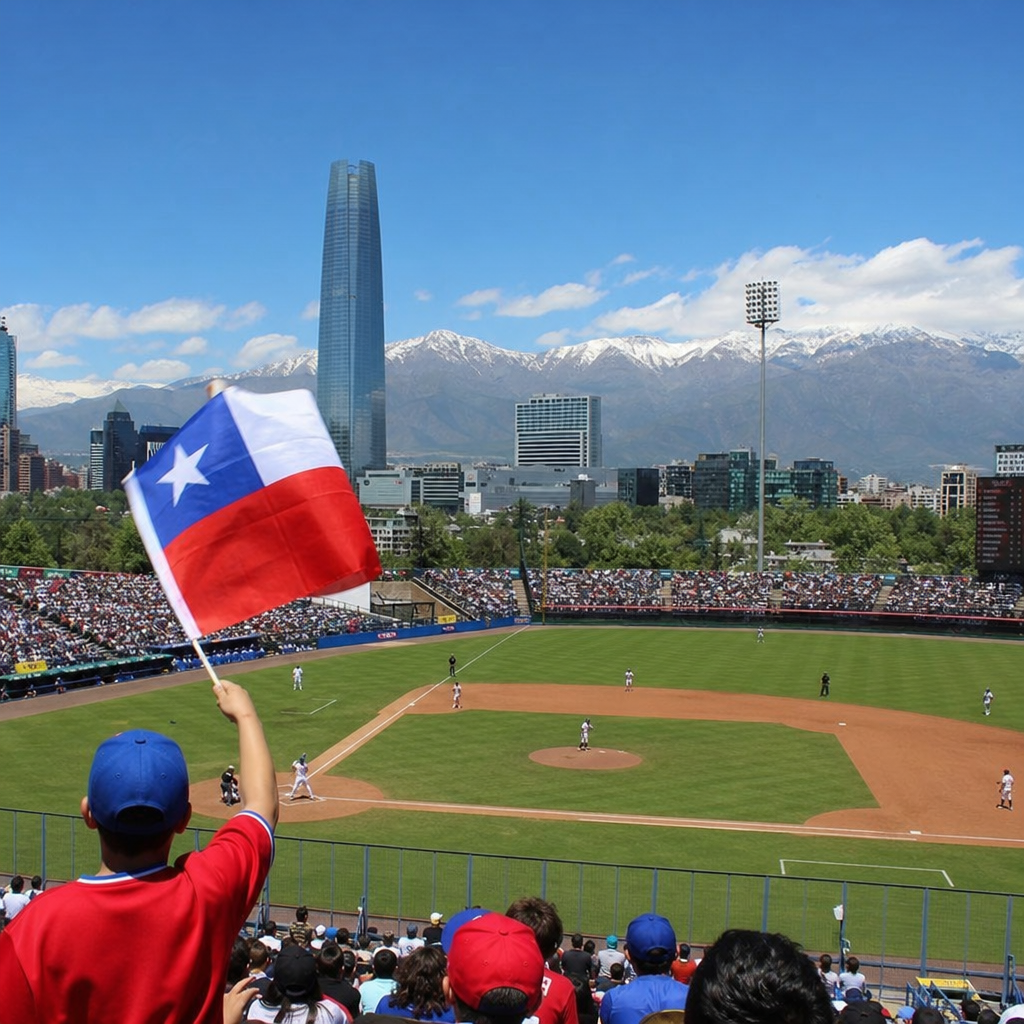
Chile’s growing interest in baseball reflects a broader shift in how the country engages with global sport, youth development, and international culture. For decades, Chilean sports identity centered on football, with strong followings for tennis, rodeo, and basketball, while baseball remained a niche activity practiced mainly by immigrant communities and a small circle of local enthusiasts. That is changing. More schools, municipalities, and private clubs are experimenting with baseball programs, and Chilean fans now have easier access to Major League Baseball broadcasts, highlights, statistics, and instruction than at any point in the past. As someone who has worked with emerging baseball markets, I have seen the same pattern repeatedly: once equipment, coaching, and visible role models become available, curiosity quickly turns into organized participation.
Baseball in Chile still sits far behind football in participation, facilities, and media exposure, but growth does not require dominance. It requires consistent access, credible instruction, and a pathway that makes sense for children, parents, and local organizers. In this context, interest means more than casual fandom. It includes youth clinics, municipal recreation programs, social leagues for adults, school demonstrations, links with expatriate communities, and digital communities that follow MLB, the World Baseball Classic, and international tournaments. It also includes softball, which often grows alongside baseball because shared fields, coaching methods, and equipment make development more practical.
Why does this matter? Because baseball offers Chile another scalable team sport with strong educational value. It teaches reaction time, tactical decision-making, throwing mechanics, patience, and accountability within a defined structure of innings, positions, and situational play. It is adaptable to small spaces through tee-ball, soft toss, and modified games. It also connects Chile to a large international ecosystem across the Americas, East Asia, and the Caribbean. For a country looking to diversify sport participation and strengthen grassroots programming, baseball is no longer an oddity. It is an emerging opportunity.
How baseball took root in Chile
Baseball’s presence in Chile has historically depended on pockets of migration, diplomatic exchange, and local initiative rather than national tradition. Venezuelan, Dominican, Cuban, and North American communities have played an outsized role in introducing the sport, organizing informal games, and supplying early coaching knowledge. In several Chilean cities, particularly Santiago and northern zones with more international labor movement, these communities created the first reliable player base. That pattern mirrors what happened in parts of Europe and the Middle East, where baseball spread first through diaspora networks before attracting local participants.
From my experience evaluating development programs, this origin matters because imported sports often fail when they remain socially isolated. In Chile, baseball has started to move beyond that stage. The transition happens when local children join mixed teams, when schools borrow equipment for physical education sessions, and when municipal sports offices see that baseball can fit within existing recreation calendars. A sport becomes durable only when it stops being “for a community” and becomes “available in the community.” Chile is now in that transition phase.
The rise of global sports media accelerated that shift. A decade ago, finding regular baseball coverage in Chile required effort. Today, social platforms, streaming services, YouTube coaching channels, and multilingual highlight packages make the sport legible to new audiences. Fans can follow Shohei Ohtani, Ronald Acuña Jr., Aaron Judge, or Fernando Tatis Jr. without needing a local broadcaster to explain the rules every night. That visibility reduces the educational barrier that once slowed baseball’s adoption.
Why Chileans are becoming more curious about baseball
Several forces are converging. First, Chile’s youth sports market is more diverse than it was twenty years ago. Parents increasingly seek alternatives to overcrowded football pathways, especially options that emphasize coordination, discipline, and lower direct contact. Baseball meets that need. Second, migration has changed Chile’s sporting landscape. Venezuelan migration in particular has brought baseball culture into neighborhoods, schools, and amateur leagues, creating organic exposure for Chilean families who previously had no connection to the game.
Third, digital fandom is powerful. Baseball is unusually well suited to data-driven consumption. Statcast clips, spray charts, velocity readings, pitch movement graphics, and fantasy-style analysis give fans clear hooks, even before they fully understand every rule. I have seen beginners become committed followers because modern baseball media presents the sport visually and analytically. In Chile, where younger audiences consume sport heavily through phones rather than traditional television, that matters.
Fourth, baseball offers a realistic entry point for both boys and girls when local organizers pair it with softball and introductory forms like tee-ball. A municipality does not need a professional diamond to begin. It needs a safe open space, a basic infield layout, a few gloves, batting tees, reduced-impact balls, and coaches who understand age-appropriate progression. That lower starting threshold makes experimentation possible, especially where field infrastructure is limited.
| Growth driver | Why it matters in Chile | Practical example |
|---|---|---|
| Migration | Introduces players, coaches, and baseball culture | Community-led weekend leagues expanding into mixed local teams |
| Digital access | Makes rules, stars, and training methods easy to discover | Young fans learning from MLB highlights and Spanish-language tutorials |
| Youth development demand | Parents want alternatives to football-only pathways | Schools testing tee-ball units in physical education classes |
| Shared softball infrastructure | Reduces cost and expands participation | Municipal programs using one field setup for both sports |
Where the game is developing on the ground
Most baseball growth in Chile is grassroots, not top-down. That means progress is uneven, but it can also be resilient. In practical terms, development tends to happen in three places: community leagues, school-based programs, and private or municipal sports academies. Community leagues are often the first point of stability because adults with prior playing experience can organize games quickly. They create visible activity, which helps recruit children and sponsors. School programs are harder to launch but more important long term, because schools normalize the sport and expose it to families outside the initial baseball network.
Academies and clinics then become the bridge between casual introduction and skill development. A child who hits off a tee in physical education may not continue unless a local club offers weekly sessions. In emerging markets, that continuity is where many sports fail. Coaches need curriculum, equipment management, and age-based progression plans. USA Baseball’s long-term athlete development principles, MLB’s grassroots clinic models, and standard throwing progression frameworks are useful here, even when adapted to local conditions and budgets.
Santiago remains the logical center because population density, transport links, and access to private sports infrastructure make scheduling easier. But regional growth matters more than a capital-city bubble. Northern Chile, with stronger international movement, can sustain multicultural leagues. Coastal cities can support summer clinics linked to tourism and municipal recreation. The key is not trying to copy the Dominican Republic or Japan. Chile needs a version of baseball development that matches its geography, school calendar, and sports funding realities.
The main challenges slowing baseball’s expansion
The biggest obstacle is infrastructure. A full baseball field requires space, maintenance, backstops, mound care, fencing considerations, and scheduling protection from other sports. Multi-use parks can host introductory baseball, but consistent development needs reliable access and safe surfaces. Equipment is the second barrier. Gloves, bats, catcher gear, helmets, and balls cost far more than a football and a patch of grass. In every emerging market I have worked with, the first serious bottleneck appears when participation rises faster than equipment inventories.
Coaching depth is another issue. Baseball technique is not intuitive for beginners, especially throwing mechanics, bat path, defensive footwork, and game management. Poor instruction can cause frustration and arm injuries. Chile therefore needs coach education as much as player recruitment. Even a handful of trained instructors can raise the quality of entire local ecosystems if they run certification workshops, produce Spanish-language teaching materials, and mentor volunteer parents.
Competition for attention is also real. Football dominates public space, sponsorship, and emotional loyalty. Basketball and volleyball often have easier school integration because facility demands are simpler. Baseball cannot grow by pretending those realities do not exist. It grows by positioning itself differently: as a complementary option, a family-friendly weekend sport, and a pathway tied to international exchange. That is a practical message, not a romantic one, and it usually works better with municipalities and schools.
What Chile can learn from other emerging baseball nations
Chile does not need to invent a development model from scratch. Countries such as Brazil, Argentina, Germany, and the Czech Republic show that baseball can gain traction outside traditional power centers when organizers focus on fundamentals. Brazil benefited from strong community roots and athlete conversion, especially from sports requiring speed and coordination. Argentina demonstrated the value of concentrated local hubs where one city or region becomes a talent engine. The Czech Republic showed how disciplined federation work, coach education, and visible international competition can lift standards over time.
The lesson is clear: start local, train coaches early, and create recurring competition. Players stay engaged when leagues are predictable and standards rise gradually. One-off exhibition events generate publicity, but weekly structure builds athletes. Chile can also learn from softball development worldwide. Shared diamonds, joint introductory sessions, and combined administrative planning reduce costs and increase participation. In practice, some of the strongest baseball regions globally grew because softball created organizational stability first.
Another lesson is to celebrate national identity rather than copy another country’s baseball culture wholesale. Chilean baseball will succeed if it feels Chilean in scheduling, community rituals, and youth programming. That could mean integrating school calendars, summer municipal festivals, family recreation days, and local coaching language. Authenticity helps retention. Imported aesthetics may attract attention, but local ownership sustains the sport.
Why this page matters within international baseball coverage
As a hub within international baseball, Chile belongs in the miscellaneous category because it represents an emerging market with multiple overlapping storylines rather than a single dominant narrative. The country’s baseball scene touches migration, youth development, softball crossover, municipal sport policy, digital fandom, and regional competition. A hub article is useful because readers often arrive with basic questions: Is baseball popular in Chile? Who plays it? Where is it growing? What are the barriers? What should they read next? This page answers those questions while pointing naturally toward deeper coverage of leagues, facilities, youth pathways, and Latin American baseball development.
Chile is also important because emerging markets reveal how baseball spreads in the twenty-first century. It no longer depends only on traditional federations or legacy clubs. Growth now comes through streaming media, diaspora communities, social clips, low-cost training tools, and crossover participation from other sports. Chile captures that modern pattern clearly. Watching its progress helps explain how baseball can expand in countries without long professional histories.
The outlook is promising but conditional. Baseball in Chile will not surge because of one tournament or one viral clip. It will grow if organizers build consistent youth access, if communities share fields intelligently, if coaches teach the game well, and if local institutions treat baseball and softball as durable parts of the sports ecosystem rather than novelty programs. Those are solvable problems. The interest is already visible. The next step is structure.
For readers following international baseball, keep Chile on your map. Track local leagues, school initiatives, softball partnerships, and any national-team progress. If you run a program, support exchange clinics, donate quality equipment, or connect Chilean organizers with proven coach education resources. Emerging baseball nations advance when attention becomes action, and Chile has reached the point where practical support can make a measurable difference.
Frequently Asked Questions
Why is baseball becoming more popular in Chile now?
Baseball’s growing visibility in Chile is the result of several overlapping trends rather than one single breakthrough. For many years, Chile’s sports culture was dominated by football, with tennis, rodeo, and basketball also holding strong positions in public life. Baseball existed on the margins, often sustained by immigrant communities and a relatively small number of dedicated local players. What has changed is the country’s broader openness to international sports culture, especially among younger generations who are exposed to global leagues, digital media, and new forms of athletic training. As a result, baseball is no longer seen as unfamiliar or inaccessible in the way it once was.
Another important factor is the growing interest in youth development programs that emphasize coordination, teamwork, discipline, and technical skill. Schools, municipalities, and private sports clubs are increasingly willing to test baseball as part of broader physical education or extracurricular offerings. Because baseball can be adapted for different age groups and levels of competition, it appeals to organizations looking to diversify sports participation beyond traditional options. This experimentation is helping introduce the game to children and families who may have had no prior connection to it.
International influence also plays a major role. The spread of baseball content through streaming platforms, social media, and international tournaments has made the sport easier to follow and understand. Chilean audiences can now watch Major League Baseball, regional competitions, and instructional content online, which lowers the barrier to entry for both fans and beginners. Over time, this increased exposure helps build familiarity, and familiarity often leads to curiosity, participation, and community support. In that sense, Chile’s interest in baseball reflects a larger transformation in how the country engages with global sport and cultural exchange.
Who is driving the development of baseball in Chile?
The growth of baseball in Chile is being driven by a mix of grassroots organizers, educators, local governments, private clubs, and community advocates. Unlike sports that expand through a single powerful institution, baseball’s development in Chile has been more decentralized. Coaches, parents, volunteers, and sports administrators have all played a meaningful role in introducing the game to new participants. In many cases, the first step has not been elite competition but simple access: creating spaces where children can try the sport, learn the basic rules, and practice regularly.
Schools and municipalities are especially important because they provide the structure needed for sustained participation. When a school adds baseball to its sports offerings or a municipality supports a local training program, the sport gains legitimacy and consistency. Young players benefit from regular instruction, and families become more aware of baseball as a viable activity rather than a novelty. Private clubs also contribute by investing in coaching, equipment, and organized play, which helps create a more stable pathway for athletes who want to continue beyond the beginner level.
Immigrant communities and long-time enthusiasts remain central to this process as well. In many countries where baseball is still emerging, these groups preserve the sport’s culture, technical knowledge, and organizational experience. In Chile, they have helped maintain continuity during periods when baseball had little mainstream visibility. Their contribution is especially valuable because they often serve as mentors, coaches, and advocates who can bridge local interest with international traditions of the game. Together, these different actors are building the foundations of a baseball culture that is more local, more inclusive, and more sustainable than in the past.
How does baseball fit into Chile’s traditional sports culture?
Baseball does not replace Chile’s traditional sports identity, but it does add something new to it. Football remains the country’s dominant sport by a wide margin, and activities such as tennis, rodeo, and basketball continue to carry strong historical and cultural importance. What baseball offers is diversification. As Chilean society becomes more globally connected, there is increasing room for sports that may once have seemed peripheral. This does not weaken established traditions; instead, it broadens the overall sporting landscape and creates more options for participation and community engagement.
One reason baseball can fit into Chile’s sports culture is that it aligns with values already appreciated in other sports. It rewards discipline, strategic thinking, teamwork, repetition, and mental resilience. While its pace and structure differ from football, those differences can actually be part of the appeal. Baseball provides a distinct rhythm, one that emphasizes anticipation, precision, and situational awareness. For athletes and fans looking for an alternative experience, that contrast can be refreshing rather than confusing.
There is also a cultural dimension to baseball’s emergence. As Chile engages more deeply with international education, media, migration, and tourism, new sports naturally gain visibility. Baseball can act as a point of contact between local communities and broader global influences, especially within youth sports and multicultural environments. Over time, if the sport continues to grow through local clubs and development programs, it may become less of an imported curiosity and more of a recognized part of Chile’s evolving athletic identity.
What challenges does baseball still face in Chile?
Despite the positive momentum, baseball in Chile still faces several structural challenges. The most obvious is competition for attention, funding, and facilities in a country where football dominates the sports ecosystem. Established sports benefit from stronger institutional support, more extensive infrastructure, deeper fan bases, and greater media coverage. For baseball to grow sustainably, it must continue building its own networks rather than relying on short-term bursts of interest. That takes time, coordination, and consistent investment.
Access to equipment and suitable playing spaces is another major issue. Baseball requires specialized gear, including gloves, bats, balls, protective equipment, and properly organized fields or adapted training spaces. For new programs, especially in schools or underserved communities, these costs can limit expansion. Coaching development is equally important. A sport cannot grow on enthusiasm alone; it also needs trained instructors who understand technique, safety, and player progression. Without enough qualified coaches, early interest may not translate into long-term participation.
Awareness remains a challenge as well. Many Chileans are still unfamiliar with the rules, structure, and appeal of baseball, which can make the sport feel less accessible to new audiences. Building a fan culture requires storytelling, local role models, community events, and media visibility. The good news is that these challenges are common in emerging sports environments and are not signs of failure. In fact, recognizing them is part of the maturation process. If local organizations continue to strengthen youth programs, create partnerships, and make the sport more visible, baseball will be better positioned to move from promising growth to lasting presence.
What could the future of baseball look like in Chile?
The future of baseball in Chile will likely depend on whether current interest can be transformed into lasting systems of participation, training, and competition. If schools, municipalities, and private clubs continue to invest in introductory programs, the country could see a steady expansion of youth baseball over the next several years. That would be a significant development because youth engagement is the foundation of any sport’s long-term success. Once children begin playing regularly, the next stages become possible: local leagues, regional tournaments, improved coaching standards, and eventually stronger national representation.
There is also real potential for baseball to develop as part of Chile’s broader international sports profile. As more athletes gain exposure to the game and more communities build baseball infrastructure, Chile could become increasingly connected to regional and international baseball networks. This may include friendly competitions, training exchanges, and participation in development initiatives with countries where baseball is more established. Those relationships would not only raise playing standards but also help Chilean coaches and administrators learn how to build the sport more effectively at home.
Just as importantly, the future of baseball in Chile is about cultural integration as much as competitive success. A growing baseball scene can create spaces for inclusion, multicultural exchange, and community identity, especially in urban areas where diverse influences are already shaping local life. If the sport continues to grow in a way that is accessible and community-based, it may earn a meaningful place within Chile’s sports culture. The most realistic outlook is not that baseball will suddenly rival football, but that it will become a respected and increasingly visible option for players, families, and fans across the country.