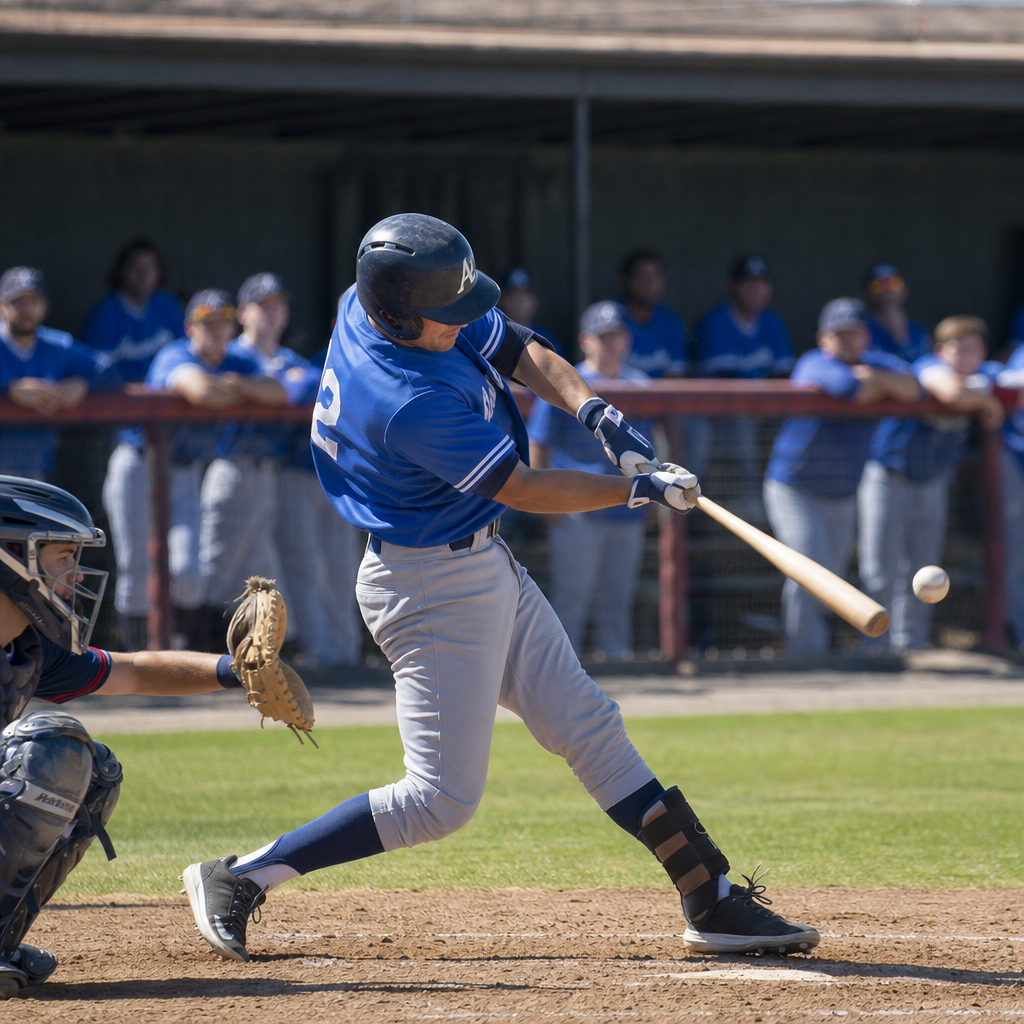
Argentinian baseball is an emerging sport with a small but resilient footprint, growing through youth development, immigrant influence, international competition, and steady community work across several provinces. In a country where football dominates attention, baseball remains a minority game, yet it has built institutions, leagues, and national teams that give it a real future. When discussing Argentinian baseball, it helps to define the landscape clearly: the sport includes organized youth and adult leagues, school-based introductory programs, club development, national federation activity, and Argentina’s participation in South American and Pan American competition. This matters because emerging baseball nations often follow a recognizable path. First comes community adoption, then structured coaching, then regional results, then broader public awareness. I have worked with international baseball development projects long enough to see that Argentina fits that pattern closely. Its challenge is not whether baseball can exist there; it already does. The real question is how the country can turn scattered enthusiasm into a sustainable national ecosystem. For readers exploring international baseball, Argentina is an important case study because it shows how a nontraditional baseball country can build momentum without the financial and cultural advantages enjoyed by established powers.
The foundations of baseball in Argentina are tied to migration, local club culture, and regional sports administration rather than mass-market professional investment. Unlike nations with century-old professional leagues, Argentina’s baseball story is decentralized. Different areas have sustained the game for different reasons, including family tradition, school programs, and support from local associations. That makes the sport harder to track casually, but it also makes the development story more interesting. A hub article on Argentinian baseball should therefore cover the full miscellaneous picture: history, geography, governing structures, player pathways, competition levels, facilities, and barriers to growth. It should also explain why this subtopic deserves attention within the broader international baseball conversation. Emerging countries matter because they widen the talent map, create new fan communities, and strengthen continental tournaments. When Argentina improves, South American baseball becomes deeper overall. That has implications not only for regional championships but also for scouting, coaching exchange, and cross-border club partnerships. Understanding Argentinian baseball means looking beyond headlines and focusing on the underlying system that is gradually turning an overlooked pastime into a credible developing sport.
How baseball developed in Argentina
Baseball in Argentina has never followed the simple path seen in Cuba, the Dominican Republic, or Venezuela, where the sport became deeply embedded in national identity. Instead, development has been intermittent, regional, and highly dependent on committed local leaders. In practical terms, that means periods of progress have often been followed by plateaus when funding, fields, or administrative continuity weakened. Still, the sport endured. Over time, clubs and federated structures created enough stability to support youth leagues, provincial competition, and national team participation.
One of the most important facts about baseball growth in Argentina is that it has relied on community persistence rather than commercial momentum. Parents organized transport. Coaches often learned through clinics and international partnerships instead of a large domestic certification pipeline. Clubs shared facilities with other sports or adapted multiuse spaces. That do-it-yourself culture is common in emerging baseball nations, and in Argentina it has produced a player base that is small but unusually committed. In my experience, countries built this way often produce disciplined athletes because participation requires intentional effort from families.
Historical progress also reflects broader Latin American baseball connections. Argentine teams and administrators have long looked outward for competition and technical influence, especially toward neighboring baseball countries. Exposure to higher-level play has been essential. Without regular strong opposition, player development stagnates. Argentina’s incremental gains have come when local training was paired with regional tournament experience.
Where the sport is strongest today
Argentinian baseball is not evenly distributed across the country. The strongest activity has traditionally centered in specific provinces and urban areas where clubs, coaches, and federation links have had time to mature. Salta is frequently cited as one of the game’s main centers, and it illustrates a pattern seen in many developing baseball nations: one region becomes the anchor for talent, infrastructure, and competition, then serves as a model for expansion elsewhere. Buenos Aires also matters because of population, visibility, and administrative access, even if baseball there competes with a crowded sports market.
Regional concentration has advantages and drawbacks. The advantage is efficiency. When teams, coaches, and facilities are close enough for regular play, athletes get the repetition they need. The drawback is national imbalance. If most meaningful competition happens in only a few pockets, talented players elsewhere may never enter the pathway. This is why geographic mapping is one of the most useful ways to understand Argentine baseball. A country can have a functioning federation and still struggle if its player base is isolated.
For clubs outside the main hubs, travel cost is often the defining obstacle. Baseball development depends on game volume. A pitcher needs innings, hitters need live at-bats, and fielders need repetition under pressure. When teams can only travel occasionally, training quality alone cannot replace competition. That is why regional mini-leagues and youth festivals matter so much in Argentina: they create affordable game environments where the sport can compound its gains.
The role of clubs, schools, and the national federation
No emerging baseball country grows through one institution alone. In Argentina, progress depends on the interaction between clubs, schools, municipal authorities, and the national governing body. Clubs provide continuity. They hold equipment, maintain volunteer networks, and preserve local baseball culture over years. Schools provide access. They introduce children who would never otherwise swing a bat. The federation provides structure. It sanctions tournaments, connects provinces, supports coaching standards, and represents Argentina in international competition.
The key operational challenge is alignment. If schools introduce baseball but clubs are too far away, participation drops. If clubs produce athletes but there are too few federation-run events, advanced players leave the sport. If the federation sets ambitious plans without municipal field support, implementation stalls. The countries that break through are the ones that coordinate these parts. I have seen this repeatedly: baseball grows fastest when school exposure leads directly into local club membership within the same community.
Argentina has also benefited from international baseball development frameworks that emphasize grassroots coaching, safe play standards, age-group structure, and event-based talent identification. Tools such as coach education clinics, pitch-count management, and age-specific skill progression are especially important in emerging markets because they prevent avoidable injuries and accelerate learning. Strong governance is not glamorous, but it is foundational. Countries do not sustain baseball growth through tournaments alone. They sustain it through schedules, records, coaching pathways, safeguarding policies, and reliable communication with families.
Competition levels and player pathways
The player pathway in Argentinian baseball is still developing, but its shape is clear. Most athletes first encounter the sport through family, local clubs, or school sessions. From there, stronger players move into youth leagues, regional tournaments, and national-team identification camps. The pathway is narrower than in traditional baseball countries, yet that can sometimes work in Argentina’s favor. Talented players are often visible earlier because the system is smaller.
What matters most is progression from informal play to structured repetition. Young hitters need hundreds of quality swings, not occasional novelty sessions. Catchers need technical instruction in receiving, blocking, and throwing footwork. Pitchers need development plans that balance velocity, command, workload, and arm care. In a mature baseball nation, these layers are built into the system. In Argentina, they often depend on whether a club has enough trained adults and regular opponents. That is why development can vary sharply by region.
| Development stage | Main objective | Typical Argentine challenge | Practical solution |
|---|---|---|---|
| Introductory youth | Teach basic throwing, hitting, and game rules | Limited school exposure | Club-school partnerships and festival days |
| Competitive youth | Build repetition and tactical understanding | Too few regular games | Regional leagues and weekend clusters |
| Advanced amateur | Refine position-specific skills | Limited specialist coaching | National clinics and cross-border exchange |
| National team pool | Prepare for international tournaments | Inconsistent high-level competition | Frequent camps and stronger regional scheduling |
This pathway explains both the promise and the constraint of Argentine baseball. The promise is that dedicated athletes can progress quickly when identified early. The constraint is that each stage requires structure, and missing one stage weakens the next. The strongest systems make advancement predictable, not accidental.
International competition and Argentina’s profile abroad
Argentina’s standing in world baseball is modest, but international tournaments remain central to its development. For emerging baseball countries, these events are more than medal opportunities. They are benchmarking exercises. Coaches see whether defensive fundamentals hold up under pressure. Players learn how game speed changes against stronger nations. Administrators discover what preparation gaps matter most. In plain terms, international baseball tells Argentina exactly where it stands.
South American competition has particular importance because it is the most realistic arena for sustained progress. Argentina does not need to compare itself immediately to Japan or the United States to measure success. It needs to improve within its own competitive band, strengthen against regional opponents, and gradually raise the standard. That is how baseball nations climb. A credible win over a stronger regional rival can have more development value than a lopsided loss to a global powerhouse.
Argentina’s baseball identity abroad also depends on consistency. One strong tournament result helps visibility, but repeated respectable performances build reputation. Scouts, development officials, and partner organizations pay attention when a country shows organization over time. They look for clean fundamentals, athletic versatility, coachability, and administrative reliability. Argentina can strengthen its international profile by sending prepared teams, hosting quality events, and maintaining continuity between age groups rather than treating each tournament cycle as a reset.
Facilities, equipment, and the real barriers to growth
The biggest obstacles facing Argentinian baseball are practical, not theoretical. Fields are limited. Equipment is expensive relative to many family budgets. Travel consumes resources. Volunteer burnout is real. These are ordinary problems in emerging baseball environments, but they have direct consequences for player retention. A child who enjoys baseball may still leave if training times are inconvenient, bats are shared poorly, or the nearest competitive game requires long-distance transport.
Facilities are especially decisive. Baseball needs safe, usable space with enough room for proper infield and outfield dimensions, bullpen work, and repetitive defensive training. Shared fields can keep the sport alive, but dedicated spaces help it grow. The same is true for batting cages, storage areas, mound maintenance, and lighting. None of this is glamorous, yet infrastructure determines whether clubs can move from survival mode to development mode.
Equipment access also shapes equity. Catcher’s gear, quality balls, helmets, and gloves are not optional. Emerging federations often depend on donations, import channels, or rotating club inventories. That can work temporarily, but long-term growth requires predictable supply. The most successful development programs I have seen treat equipment as part of participation strategy, not an afterthought. If Argentina wants more players, especially in new areas, reducing the entry cost for families will be essential.
Why Argentinian baseball has real upside
Despite its constraints, Argentinian baseball has meaningful upside because the ingredients for growth already exist. There is organized play, regional concentration, federation activity, youth interest, and international exposure. More importantly, there is cultural room for the sport to define its own value. Baseball does not need to replace football in Argentina to succeed. It needs to become durable, visible, and locally relevant in the communities where it is played.
The clearest opportunity is youth development tied to education and municipal support. When cities back introductory programs and clubs provide the next step, participation becomes repeatable. Another opportunity is women’s and girls’ baseball, which can expand the player base and strengthen the sport’s social footprint. Digital visibility matters too. Emerging sports grow faster when match results, player stories, and development pathways are easy to find. A stronger online presence can help parents, sponsors, and potential athletes understand that baseball in Argentina is organized and worth joining.
For anyone following international baseball, Argentina deserves attention not as a novelty but as a serious developing case. The country shows how a sport grows when built from the ground up by clubs, families, and patient organizers. The key takeaway is simple: Argentinian baseball is emerging because committed people have already created a base, and that base can expand with better coordination, facilities, and competition. The main benefit of understanding this landscape is that it reveals where future progress will come from: youth pathways, regional hubs, and smarter support systems. If you cover, coach, invest in, or simply follow international baseball, keep Argentina on your radar and explore the connected articles in this subtopic to see how the broader ecosystem is taking shape.
Frequently Asked Questions
Why is baseball considered an emerging sport in Argentina?
Baseball is considered an emerging sport in Argentina because it exists outside the country’s traditional sporting mainstream, yet it continues to expand through organized effort, local commitment, and long-term development. Football dominates most of the national sports conversation, which means baseball does not enjoy the same media attention, sponsorship opportunities, or cultural visibility. Even so, the sport has established a meaningful presence through youth programs, amateur clubs, regional leagues, and national team participation. That combination of limited scale but genuine structure is exactly what makes it “emerging” rather than simply obscure.
What stands out about Argentinian baseball is its resilience. The sport has survived and grown through community-based leadership, volunteer coaching, and institutions that keep training and competition active across several provinces. Instead of relying on a single boom period, baseball in Argentina has developed gradually, often through grassroots work and immigrant influence. This slower path has helped build a foundation that includes organized youth baseball, adult competition, and a growing awareness of international opportunities. In practical terms, Argentina is not yet a baseball power, but it is no longer a country where the sport is invisible. It has enough infrastructure, history, and momentum to justify serious attention.
How did baseball develop in Argentina in the first place?
Baseball in Argentina developed through a mix of international influence, migration, and local adaptation. As in many countries where baseball is not the leading sport, the game gained traction through communities with cultural ties to places where baseball was already established. Immigrant influence played an important role in introducing the sport, maintaining interest, and helping create organized spaces for play. Over time, clubs and community groups became essential in turning casual participation into formal competition.
The sport never expanded in Argentina in the same way football did, so its growth depended more on continuity than mass popularity. That means baseball’s history in the country is closely tied to people willing to build fields, organize leagues, train younger players, and preserve the game even when public attention was minimal. This kind of development often produces smaller but more dedicated sporting communities. In Argentina’s case, baseball has benefited from exactly that model. The result is a sport with modest reach but real roots, especially in areas where local leaders and clubs have sustained participation across generations. That history matters because it explains why the game still exists, why it remains organized, and why its current growth has credibility.
Where is baseball played in Argentina, and what does the local structure look like?
Baseball in Argentina is played across several provinces, with activity concentrated in communities that have built stable club and league systems. While the sport does not have nationwide prominence, it does have organized pockets of participation where training, games, and development take place on a regular basis. These local ecosystems are the backbone of Argentinian baseball. They typically include youth categories, amateur senior competition, coaching networks, and club-based administration. In many cases, the strength of baseball in a given area depends on how active local institutions are and how successful they have been at bringing in new players.
When discussing the structure of the sport, it is important to think beyond just top-level competition. Argentinian baseball includes organized youth baseball, local clubs, regional leagues, and pathways that connect domestic participation to national representation. That means the sport functions through a layered system rather than a single professional spotlight. Young players often begin in community programs, develop through regular club training, and then compete in increasingly organized environments. This structure may not be as large or financially powerful as those seen in major baseball countries, but it is significant because it gives the sport continuity. A real future for baseball in Argentina depends on these local systems remaining healthy, accessible, and connected to broader development goals.
What role do youth development and community work play in the future of Argentinian baseball?
Youth development and community work are absolutely central to the future of baseball in Argentina. In a country where baseball must compete with far more visible sports, long-term growth depends on introducing the game early, keeping participation affordable, and giving young athletes a clear reason to stay involved. Youth programs are where the sport builds its player base, teaches fundamentals, and creates a sense of identity around local clubs. Without consistent youth development, baseball would struggle to replace players, deepen its talent pool, or build stronger national teams over time.
Community work matters just as much because emerging sports usually grow through relationships before they grow through commercial power. Coaches, parents, volunteers, and club organizers often do the practical work that keeps baseball alive: maintaining facilities, arranging competitions, recruiting children, and building partnerships with schools or local institutions. In Argentina, that kind of steady effort has been one of the sport’s greatest strengths. It creates stability in places where resources may be limited and public exposure may be low. Just as important, community-driven growth gives baseball a more durable foundation. Instead of depending on temporary hype, it develops around habit, belonging, and local pride. That is often the most reliable way for a minority sport to become stronger over time.
Can Argentina become more competitive internationally in baseball?
Yes, Argentina can become more competitive internationally in baseball, but that progress will likely come through sustained development rather than sudden transformation. International competitiveness depends on several linked factors: the number of active players, the quality of coaching, the strength of domestic competition, access to facilities, and the ability to expose players to higher-level opponents. Argentina already has some of the essential ingredients, including organized leagues, national teams, and a committed baseball community. Those elements give the country a legitimate base from which to improve.
The key challenge is scale. Countries that perform consistently well in baseball usually benefit from large player populations, deep professional traditions, or strong institutional investment. Argentina does not yet have those advantages at the same level, so it must be strategic. Continued youth development, stronger provincial programs, better coach education, and more frequent international competition would all help raise standards. Success at the national team level can also be important because it increases visibility and gives younger players something concrete to aspire to. In that sense, international progress is not just a result of domestic growth; it can also accelerate it. Argentina may still be in the early stages compared with established baseball nations, but its steady institutional work suggests that greater competitiveness is realistic if development remains consistent.