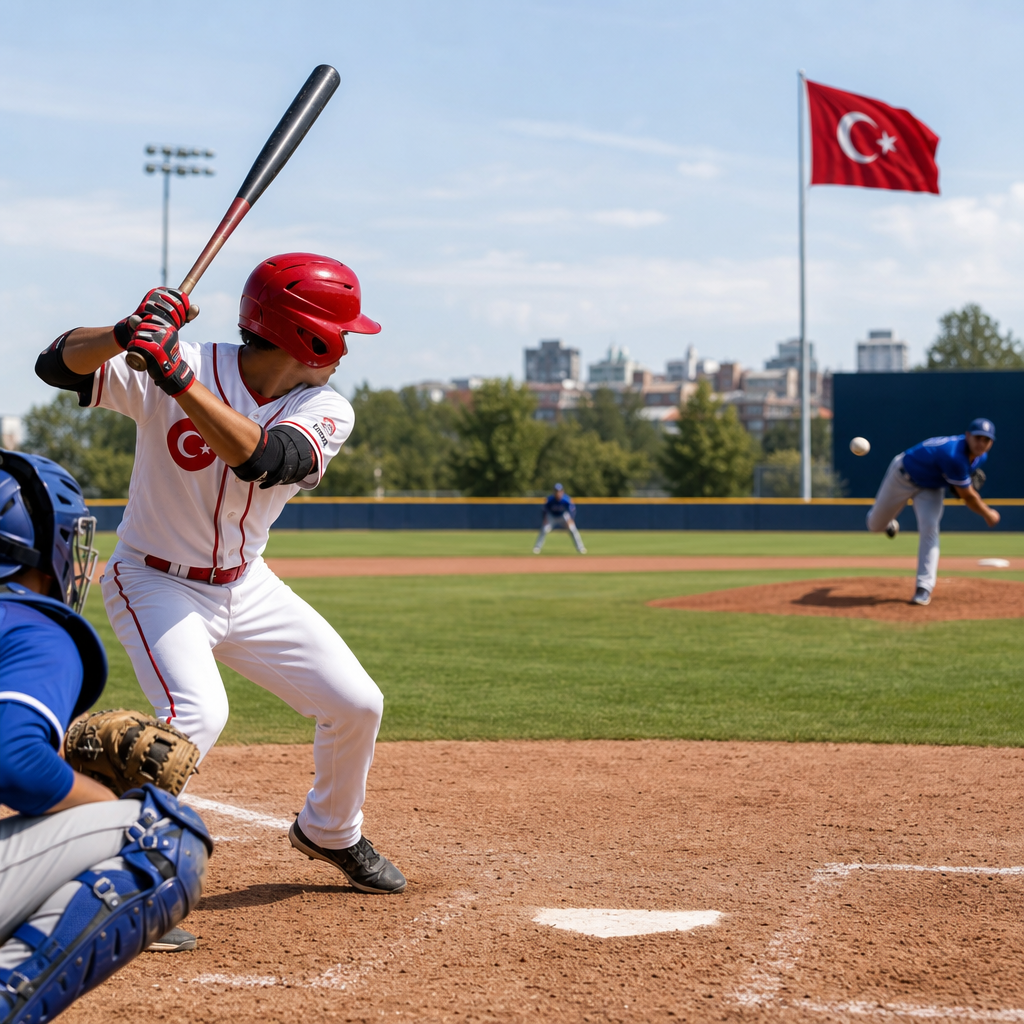
Turkish baseball is small, young, and easy to overlook, yet it represents one of the most revealing case studies in how a global sport tries to take root far from its traditional centers. In this context, Turkish baseball means the organized effort to introduce, teach, govern, and expand baseball in Turkey through schools, clubs, universities, municipal programs, and national-team structures. It sits inside the broader world of international baseball, where countries with limited infrastructure often rely on multi-sport federations, volunteer coaches, imported equipment, and a long horizon for growth. I have worked with emerging baseball communities, and the same pattern appears repeatedly: interest comes first, then instruction, then facilities, then competition, and only later does a stable baseball culture emerge. Turkey is moving through those stages now. That matters because the sport’s future will not be decided only in the United States, Japan, the Dominican Republic, or South Korea. It will also be shaped in places where baseball is still learning the language, school rhythms, budget realities, and athletic habits of a new country.
For readers exploring international baseball, Turkey belongs in the miscellaneous hub because its story touches nearly every development question at once: governance, youth recruitment, facility scarcity, coaching education, softball crossover, diaspora influence, and media visibility. It is also a useful lens for understanding what success really looks like in a nontraditional market. Success is not immediately producing Major League talent. Success is creating repeat participation, trained coaches, playable fields, scheduled fixtures, and enough local ownership that the sport continues without constant outside rescue. Turkish baseball is at that practical stage. The opportunity is real, but so are the constraints. To assess Turkish baseball honestly, you need to understand where the game came from, how it is organized, why participation remains limited, and which signals would indicate genuine progress over the next decade.
How Baseball Reached Turkey and Why Its Arrival Was Slow
Baseball arrived in Turkey later than many other imported sports because it lacked the institutional pathways that helped football, basketball, and volleyball spread nationally. Those sports entered schools, municipalities, military settings, and broadcast schedules much earlier, creating generations of familiarity. Baseball had no such advantage. In most Turkish cities, there were no dedicated diamonds, no local traditions of glove-and-bat play, and no steady television exposure to teach the rules passively. The sport therefore depended on enthusiasts, visiting coaches, university clubs, and federation-level experimentation rather than organic mass adoption.
Another reason for the slow arrival is cultural fit at first contact. In countries where baseball is unfamiliar, newcomers often find the stop-start rhythm confusing compared with football’s continuous motion or basketball’s rapid scoring. I have seen this repeatedly in introductory clinics: athletes enjoy throwing and hitting, but parents and administrators still ask basic questions about innings, outs, force plays, and the strategic pauses that make baseball compelling. Without patient explanation, the game can appear less accessible than it really is. That educational burden is especially heavy in Turkey, where sporting attention is already dominated by football and, to a lesser extent, basketball and volleyball.
Turkey’s geography also matters. As a bridge between Europe and Asia, the country is well positioned for international sport exchange, but travel costs between cities can still be significant for a niche game. Emerging baseball programs need frequent, affordable competition. If a team practices for months and then plays only a handful of meaningful games, retention suffers. That is why the development history of Turkish baseball is best understood not as a single national launch but as scattered local efforts trying to connect into a sustainable network.
Governance, Federations, and the Role of Organized Structure
In emerging baseball nations, governance determines whether enthusiasm becomes a real sport ecosystem. Turkey’s baseball activity has typically existed within broader bat-and-ball or softball administrative frameworks rather than as a large, standalone baseball institution with deep resources. That is common internationally. Countries with small player pools often combine baseball and softball oversight, sometimes alongside related disciplines, to share budgets, staff, officiating pathways, and event management. The advantage is administrative efficiency. The downside is that baseball can struggle for attention when resources are limited and multiple sports compete for the same calendar and funding.
Organized structure matters because baseball is rules-intensive and logistics-heavy. You need trained coaches who understand pitch counts, safe throwing progressions, lineup rules, and age-appropriate instruction. You need scorekeeping, umpires, insurance considerations, and scheduling discipline. You also need alignment with international standards if national teams are going to compete credibly in European events. Bodies connected to the World Baseball Softball Confederation framework and European competition systems provide that reference point. Without those standards, local leagues may function casually but fail to produce players prepared for external competition.
From practical experience, the strongest sign of a serious national project is not a social media page or one exhibition tournament. It is a calendar. When a federation can publish coaching courses, youth events, regional camps, and national-team selections on a reliable schedule, trust grows. Clubs can recruit. Families can plan. Municipalities can justify field access. Turkish baseball still needs more of that routine predictability. Growth in this sport rarely comes from one dramatic breakthrough; it comes from repeated, boring competence in administration.
Youth Development, School Programs, and First Contact With the Game
If Turkish baseball is going to expand, youth development will decide it. In countries without a longstanding baseball culture, almost nobody grows up playing informal sandlot baseball. That means the sport must create first contact deliberately. Schools are the most effective entry point because they already gather children, physical education staff, and community trust in one place. Modified baseball formats using tennis balls, softer training balls, plastic bats, and cones can teach the basic logic of hitting, fielding, base running, and teamwork before a child ever sees a regulation field.
I have found that the best introductory sessions in new markets avoid starting with full-rule baseball. Instead, they begin with transferable skills: throwing mechanics, catching with two hands, tracking flight, rotational hitting, and simple reaction games. Turkey has a real opportunity here because many young athletes already come from handball, athletics, football, and basketball backgrounds. Those sports build movement qualities that translate well to baseball, especially sprint speed, coordination, and arm strength. The challenge is converting curiosity into repeat participation after the first clinic.
Universities can help bridge that gap. Campus clubs often become the first semi-stable environments where coaching, peer recruitment, and regular training coexist. In several emerging baseball countries, university programs have produced the earliest generation of coaches and national-team players because students are open to new sports and willing to organize around limited facilities. Turkey’s large university population is therefore an underused asset. When university clubs connect with local schools, they create a pipeline: children discover the sport, students help coach it, and federations gain volunteers and players at the same time.
Facilities, Equipment, and the Reality of Playing Without Diamonds
The biggest practical barrier to Turkish baseball is facilities. Baseball can be introduced almost anywhere, but it is difficult to institutionalize without dependable field space. A full diamond requires room, maintenance, fencing considerations, and local permission. In Turkey, as in many developing baseball markets, teams often adapt football grounds, open fields, or multi-use complexes. That flexibility keeps the game alive, but it also limits defensive repetition, pitcher development, and game realism. You cannot fully teach wall play, mound work, cutoffs, and proper base-path geometry on improvised surfaces every week.
Equipment is the second barrier. Gloves, catcher’s gear, helmets, bats, bases, and portable screens are expensive when imported in small quantities. Entry-level programs can survive with shared gear, but shared gear also constrains growth. A player who never owns a glove practices less at home and develops more slowly. Municipal support, sponsor donations, and partnerships with foreign clubs can make a meaningful difference, especially when aid is tied to coaching plans rather than one-time publicity events.
| Need | Typical problem in Turkey | Practical solution |
|---|---|---|
| Playing space | Few dedicated diamonds | Use multi-sport fields with portable bases and marked infields |
| Equipment | High import cost and limited supply | Shared starter kits, donation channels, bulk federation purchasing |
| Coaching | Small pool of experienced instructors | Short certification clinics and mentorship from foreign coaches |
| Competition | Long travel and few opponents | Regional mini-leagues and clustered weekend tournaments |
The key point is that facilities should not be treated as an excuse for inactivity. Baseball development usually starts with adaptation. But adaptation must lead somewhere. A country begins to look serious when one or two anchor venues become reliable homes for leagues, camps, and national-team preparation. Turkey does not need dozens of stadiums to progress. It needs a small number of consistent baseball spaces used well.
Competition Levels, National Teams, and International Benchmarks
Domestic competition in Turkish baseball remains limited compared with established European programs, but even a modest league structure serves an essential purpose: it turns training into performance. Players improve faster when games create accountability for throwing strikes, executing relays, making situational decisions, and handling pressure. In weak competition environments, athletes can look technically sound in drills and then unravel in game conditions because they have not built baseball instincts through repetition.
National teams provide a second benchmark. For emerging baseball countries, international competition is not just about winning medals. It exposes players and coaches to game speed, tactical discipline, and organizational standards they may not encounter at home. European Baseball Championship qualifiers and other continental events often reveal the real gap between developmental enthusiasm and competitive readiness. Turkey’s results have generally reflected the expected challenges of a newer baseball nation: inconsistent depth, limited experience against stronger opponents, and dependence on a small core of committed players.
Still, international exposure matters. I have seen players from developing programs return from tournaments with a much clearer understanding of tempo, preparation, and detail. They suddenly appreciate why pre-pitch movement, first-step reads, bunt defense communication, and bullpen routines matter. Those lessons can accelerate an entire local community if coaches capture them and apply them at home. For Turkey, the realistic benchmark is not immediate parity with Italy or the Netherlands. It is steady improvement in fundamentals, roster depth, and competitiveness against peer nations building under similar constraints.
Softball, Gender Pathways, and Cross-Sport Opportunity
Any serious discussion of Turkish baseball should also include softball, because the two sports often develop together in emerging systems. Shared governance, equipment overlap, coaching knowledge, and facility use make that connection practical rather than symbolic. In many countries, softball has actually created stronger school or university entry points than baseball because it can be easier to organize quickly and explain to new participants. Ignoring softball would mean ignoring one of the clearest pathways for expanding bat-and-ball participation in Turkey.
Gender pathways are especially important. A niche sport cannot afford to recruit from only half the population. When girls and women have visible access to coaching, competition, and representation, the overall ecosystem becomes healthier. More participants justify more field time, more teacher interest, and more federation attention. In my experience, mixed introductory clinics are often the smartest first step in new markets, followed by clearer competition pathways as numbers grow. Turkey can benefit from that approach, particularly in school settings where introducing both baseball and softball broadens the appeal and makes funding arguments stronger.
Cross-sport recruitment also offers real upside. Athletes from cricket, handball, athletics, and even martial arts often adapt well to baseball or softball because they already understand rotational power, body control, or competitive discipline. Countries that succeed in new sports usually stop waiting for a pure grassroots culture to appear and instead recruit athletes intentionally from adjacent disciplines. Turkey has enough sporting diversity to do exactly that.
Media Visibility, Community Building, and What Growth Would Look Like
Media visibility for Turkish baseball remains modest, and that is a problem because unfamiliar sports need repeated explanation, not just occasional highlights. People follow what they understand. Short video clips showing a home run are useful, but they do not build a fan or parent base on their own. Better growth content explains rules, introduces players, shows training sessions, and demonstrates where beginners can join. Community building is similarly practical. A healthy baseball culture is not just a national team announcement; it is parents at weekend games, schools returning every year, local coaches sharing drills, and clubs communicating clearly.
What would real growth look like over the next decade? First, a stable youth calendar in multiple cities. Second, more coaches with recognized training rather than only former players improvising. Third, at least a few dependable venues configured regularly for baseball or softball. Fourth, stronger ties between school programs, university clubs, and national-team scouting. Fifth, consistent storytelling in Turkish that makes the sport legible to newcomers. If those conditions appear, Turkish baseball will move from novelty to durability.
That is why this topic belongs in any serious international baseball hub. Turkey shows how the sport expands in the real world: unevenly, locally, and through persistent organization rather than hype. The country may not produce instant headlines, but it offers a valuable template for understanding baseball development beyond established powers. For readers following miscellaneous international baseball markets, the lesson is simple. Watch the infrastructure, not just the scores. When coaching, fields, youth access, and competition begin to align, the game has a future. Keep Turkish baseball on your radar, explore related international baseball stories, and track the programs building the sport from the ground up.
Frequently Asked Questions
What does “Turkish baseball” actually refer to?
Turkish baseball refers to the organized effort to introduce, teach, regulate, and expand baseball across Turkey, even though the sport remains much smaller than football, basketball, or volleyball. In practical terms, it includes school-based instruction, local clubs, university teams, municipal sports initiatives, youth development projects, coaching education, federation-level governance, and the creation of national-team pathways. Rather than describing a long-established professional baseball culture, the term points to a developing ecosystem that is still building its foundations.
This is what makes Turkish baseball especially interesting. It is not simply about who wins games or how many teams exist today. It is about how a global sport attempts to establish itself in a country where it does not yet have deep historical roots, dedicated facilities in every region, or a broad base of lifelong fans. Because of that, Turkish baseball offers a clear example of how sports spread internationally: first through education and outreach, then through local organization, then through competition and identity-building. In other words, Turkish baseball is less a finished product and more an active project of growth.
Why is Turkish baseball considered important if the sport is still so small in Turkey?
Its importance comes from what it reveals about sports development, cultural adaptation, and international expansion. Baseball in Turkey may be easy to overlook because it lacks the visibility and commercial scale seen in major baseball countries, but that is precisely why it matters. Turkey provides a case study in how a sport grows outside its traditional power centers, where there may be limited infrastructure, fewer trained coaches, modest funding, and little public familiarity with the rules. Watching baseball develop under those conditions helps explain what is truly required for a sport to take root.
Turkish baseball also matters because small emerging baseball nations are essential to the future of the game globally. If baseball is to become more internationally resilient, it cannot depend only on a handful of dominant countries. It needs new regions to build grassroots participation, develop local expertise, and create competitive opportunities. Turkey sits at an interesting geographic and cultural crossroads, which gives it potential significance beyond its current size. Even when the level of play is still developing, the existence of clubs, youth programs, and national structures shows that baseball can gain traction in unexpected places when there is enough organization and persistence behind it.
What are the biggest challenges facing baseball development in Turkey?
The biggest challenges are structural rather than purely athletic. One major issue is infrastructure. Baseball requires suitable fields, specialized equipment, and training spaces, all of which can be difficult to secure in a country where public and private sports investment naturally prioritizes more established games. A second challenge is awareness. Many young athletes, parents, teachers, and local administrators may know very little about baseball, which means the sport often has to begin with basic explanation before it can even start recruiting players.
Coaching and continuity are also central concerns. Emerging baseball systems need knowledgeable instructors who can teach rules, skills, tactics, and long-term player development. Without a sufficient number of trained coaches and officials, progress can be uneven. Competition opportunities present another difficulty. Players improve fastest when they have regular, meaningful games against organized opponents, but in a small baseball environment, leagues may be limited and travel may be costly. Finally, there is the broader issue of sustainability. For Turkish baseball to grow, it needs more than enthusiasm. It needs institutions that can endure: clubs that keep operating, schools that keep teaching, governing bodies that keep organizing, and communities that keep supporting the sport year after year.
How is baseball being introduced and expanded in Turkey?
Baseball in Turkey is typically introduced through a combination of grassroots outreach and formal organization. Schools often play an important role because they provide direct access to young athletes who may be trying the sport for the first time. University programs can help as well, since they create a bridge between beginner participation and more structured competition. Clubs then become critical for players who want to continue developing beyond introductory sessions, while municipal sports programs can supply facilities, visibility, and local legitimacy.
Expansion usually depends on layering these efforts together rather than relying on a single breakthrough. A federation or governing structure may help standardize rules, certify coaches, organize tournaments, and form national teams. At the same time, local coaches and volunteers often do the daily work of teaching fundamentals, finding practice spaces, recruiting players, and maintaining momentum. Growth in a country like Turkey rarely happens in a straight line. It is usually incremental: one school starts a program, one city supports a club, one university hosts competition, one generation of players becomes the next generation of coaches. That gradual process may seem modest from the outside, but it is exactly how durable sports cultures are built.
What does the future of Turkish baseball look like?
The future of Turkish baseball will likely depend less on sudden popularity and more on steady institutional growth. If the sport can continue to strengthen its coaching base, expand youth participation, increase the number of active clubs, and create more reliable competition structures, it can become significantly more stable and visible over time. For a developing baseball nation, success should not be measured only by elite performance. It should also be measured by whether more children can access the sport, whether players have reasons to stay involved, and whether local organizations can operate consistently from season to season.
There is realistic room for optimism. Global baseball has become increasingly aware that its long-term health depends on nurturing emerging markets, not just celebrating established ones. That broader international environment can benefit Turkey through knowledge-sharing, development models, and opportunities for competition. If Turkish baseball continues building through schools, clubs, universities, municipal backing, and national-team structures, it can become a stronger and more credible part of the international baseball map. It may remain a developing scene for some time, but that does not make it insignificant. On the contrary, its future value lies in showing how a sport grows patiently, locally, and strategically where no deep baseball tradition existed before.