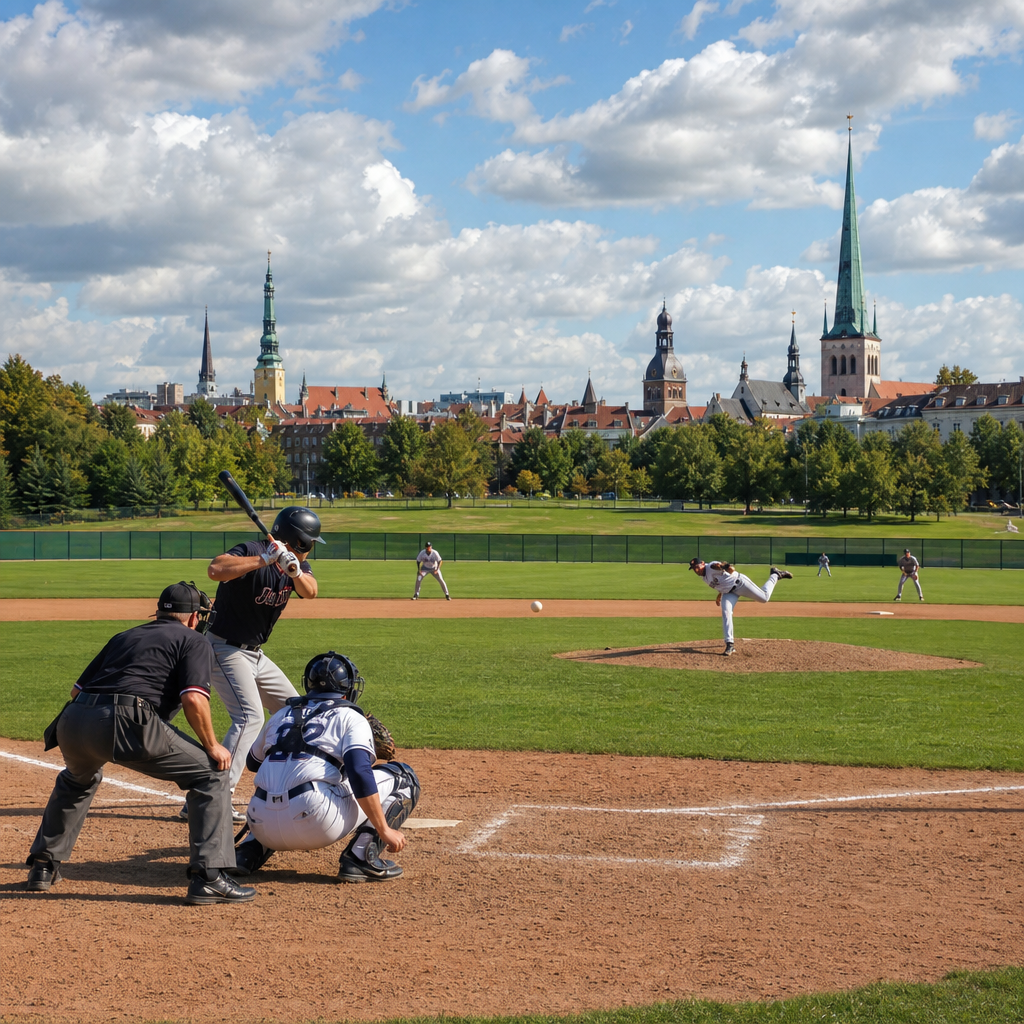
Baseball in the Baltic States remains a niche sports story, yet Estonia, Latvia, and Lithuania offer one of Europe’s most revealing case studies in how a global game takes root far from its traditional centers. The Baltic States are the three small northeastern European nations on the eastern shore of the Baltic Sea, each with distinct languages, institutions, and sports cultures, but with shared histories of Soviet rule, post-1991 independence, and integration into European and transatlantic systems. In baseball terms, that shared history matters because organized development in the region has depended less on inherited tradition and more on volunteer coaching, federation building, imported equipment, and links with wider European competitions. I have worked with emerging baseball markets and the pattern is familiar: interest exists, but growth depends on fields, governance, youth pipelines, and patient local champions. For readers exploring international baseball, the Baltics matter because they show how the sport expands beyond headline countries. They also serve as a hub topic for understanding miscellaneous baseball development across smaller nations, where federation strategy, school outreach, and regional cooperation often matter more than raw population. Estonia, Latvia, and Lithuania do not yet produce the depth seen in Italy, the Netherlands, or Germany, but their baseball ecosystems reveal where European expansion can succeed, where it stalls, and what practical steps move the game forward.
How baseball reached Estonia, Latvia, and Lithuania
Baseball arrived in the Baltic region through a mix of post-Cold War openness, expatriate influence, travel, and contact with larger European baseball networks. Unlike countries with prewar club traditions, the Baltic States largely built the sport from scratch after regaining independence in 1991. In practical terms, that meant the first generation of organizers often had to act as coaches, administrators, groundskeepers, fundraisers, and translators at the same time. The sport competed for attention against entrenched favorites such as basketball in Lithuania, ice hockey in Latvia, and a mix of football, basketball, and athletics in Estonia. That competition shaped everything from media coverage to municipal funding.
In my experience, new baseball countries tend to develop through three entry points: schools, expatriate communities, and multi-sport clubs willing to add a baseball section. The Baltic States have seen all three. Early programs often relied on borrowed football fields, improvised backstops, and secondhand gloves donated from abroad. Coaches translated drills from English-language resources or learned directly through clinics run by European baseball bodies. This matters because technical development is cumulative. If a country lacks experienced youth coaches, players reach adulthood with weak throwing mechanics, limited game awareness, and little exposure to structured competition. Baltic baseball has had to solve those basics first.
European baseball governance has also been important. Confederation-level tournaments, development camps, umpire education, and coaching certifications give smaller federations a ladder. Even when Baltic national teams are not competing for top European honors, those events provide regular benchmarks. Players face better opposition, administrators see how established programs operate, and federations can justify funding by pointing to official competition pathways. That is one reason baseball in the Baltic States deserves broader attention within international baseball coverage: it sits at the intersection of grassroots sport, national identity, and continental development structures.
Estonia: small player base, determined development
Estonia’s baseball scene has historically been small, but the country’s strengths are organizational culture, digital literacy, and openness to international collaboration. Those traits can help a niche sport survive. Clubs and federations in small markets need efficient communication, volunteer coordination, and the ability to promote events without large budgets. Estonian baseball has benefited from those conditions, even while facing obvious limitations in player numbers and facility access. The largest obstacle is scale. A modest population means fewer athletes to recruit, and baseball must compete against sports with stronger domestic visibility and school presence.
What I have seen in similar environments is that Estonia’s path depends on concentration rather than diffusion. Instead of trying to place baseball everywhere, it works better to build a few stable centers with trained coaches and regular youth sessions. Quality repetition matters more than geographic spread in the early stages. If a club can offer consistent practices, basic strength work, pitching instruction, and game opportunities, retention improves. Estonian programs have often had to emphasize fundamentals because new athletes may come from athletics, cricket, or other bat-and-ball sports but still need baseball-specific skills such as reading hops, turning double plays, and situational baserunning.
National team participation, even at lower competitive levels, plays an outsized role in Estonia. For niche sports, the national jersey is a recruitment tool. It signals legitimacy to players, parents, and local sponsors. When athletes can see a pathway from youth practice to representing Estonia in European competition, they are more likely to stay engaged through the difficult early years when local leagues are thin. That symbolic value should not be underestimated. In emerging baseball countries, aspiration often arrives before infrastructure, and federations must use that aspiration carefully to build infrastructure that lasts.
Latvia: balancing baseball with a strong sporting culture
Latvia presents a different profile. It has a sports culture shaped by ice hockey, basketball, and strong community club traditions, which creates both competition and opportunity for baseball. Competition is obvious: athletes, sponsors, and municipal attention are pulled toward established sports. The opportunity lies in the fact that Latvians understand club structures, youth sport routines, and the value of representing city or country. Baseball can fit into that framework if it offers disciplined coaching and visible progress. The challenge is convincing families that the sport is not just a novelty but a serious developmental environment.
Latvian baseball and softball structures have generally benefited from being linked to broader federation models used elsewhere in Europe. That linkage matters because baseball rarely stands alone in smaller countries; softball participation, mixed-use facilities, and shared administrative resources often help keep the overall bat-and-ball ecosystem viable. From a development standpoint, Latvia needs regular domestic competition more than occasional showcase events. Players improve when they see live pitching every week, not only during short tournament windows. Hitting timing, defensive communication, and pitcher-catcher rapport are all repetition skills.
One practical issue in Latvia, as in much of northern Europe, is climate. Outdoor baseball seasons are short, and indoor training space is expensive. Serious development therefore requires winter programming built around throwing progression, mobility, tee work, front toss, and small-space defensive drills. I have seen clubs make real gains when they stop treating winter as downtime and instead use it for skill consolidation. For Latvia, sustained progress will come from year-round structure, not from hoping summer alone can produce polished players. That is true for youth development, coaching education, and umpire training alike.
Lithuania: the strongest Baltic foundation
Lithuania is generally regarded as having the most established baseball base among the Baltic States, though it still operates on a much smaller scale than Europe’s leading countries. Its relative edge comes from more durable club activity, a somewhat deeper player pool, and stronger continuity across age groups. Basketball overwhelmingly dominates Lithuanian sport, but baseball has managed to carve out a persistent niche through local dedication and international competition exposure. That persistence is significant. In small baseball countries, continuity is often the dividing line between a recurring startup and a functioning sports system.
Lithuania’s advantage can be seen in how clubs use competition to retain players. Athletes are more likely to commit when they can enter domestic leagues, youth championships, and European club or national-team events with regularity. Development is not only about coaching quality; it is also about context. Players need meaningful games to test command, approach, and game management. A pitcher may look competent in bullpen sessions, but only game environments reveal whether he can locate under pressure, vary tempos, and handle baserunners. Lithuanian baseball has been more successful than its Baltic neighbors at creating enough competitive context to make those lessons stick.
That does not mean Lithuania is free of constraints. Facilities remain limited, media exposure is narrow, and the sport still relies heavily on committed volunteers and modest budgets. But if a reader asks which Baltic country currently offers the clearest model for baseball growth, Lithuania is the practical answer. Its example shows that small-market baseball can stabilize when clubs persist long enough to produce second-generation players, youth coaches, and administrators who understand both the game and the local environment.
What holds Baltic baseball back and what moves it forward
The main barriers across Estonia, Latvia, and Lithuania are consistent: limited facilities, small player pools, short outdoor seasons, weak media visibility, and competition from established sports. Equipment costs are also real. Gloves, bats, catcher’s gear, portable mounds, and protective screens strain small club budgets, especially when participation fees must stay affordable. Another barrier is coaching depth. One enthusiastic organizer can launch a program, but scaling requires multiple trained coaches who can teach age-appropriate fundamentals safely and consistently.
The encouraging reality is that the solutions are also clear and repeatable.
| Challenge | Why it matters | Most effective response |
|---|---|---|
| Few baseball fields | Limits game scheduling and training quality | Use adaptable multi-sport spaces, portable backstops, and municipal partnerships |
| Small youth base | Reduces long-term player retention and talent depth | Run school clinics, beginner festivals, and parent-friendly entry programs |
| Short season | Cuts live game reps and slows skill development | Build structured winter training with throwing plans and indoor hitting work |
| Low visibility | Makes sponsorship and recruitment difficult | Publish schedules, results, player stories, and national-team content consistently |
| Thin coaching ranks | Creates uneven instruction and burnout | Invest in certifications, clinics, mentorship, and shared regional resources |
Regional cooperation is especially important. The Baltics are small enough that cross-border tournaments, shared coaching clinics, and combined development weekends can produce outsized returns. Instead of treating each country as an isolated market, baseball leaders should view the region as one interconnected development corridor. That approach reduces costs, increases playing opportunities, and raises standards faster than purely domestic scheduling can. In my experience, that is how niche sports become durable: they stop operating as isolated projects and start behaving like networks.
Why the Baltic States matter in international baseball
For anyone building a serious understanding of international baseball, the Baltic States are more than a curiosity. They reveal how baseball spreads in places without historic pipelines, major media contracts, or dense club ecosystems. They show that growth is usually administrative before it is competitive. Federations need calendars, insurance, coaching pathways, youth outreach, and stable relationships with municipalities long before they can expect standout results on the field. That lesson applies across miscellaneous baseball markets from northern Europe to the Caucasus and beyond.
The Baltics also matter because they sit in a strategically useful part of Europe. Travel links to Scandinavia, Central Europe, and eastern European baseball communities make cross-border play possible. Their education systems, urban concentration, and strong civic organization can support smart grassroots planning if baseball leaders use those assets correctly. There is no shortcut. The next step is not dreaming about major stars appearing suddenly from Tallinn, Riga, or Vilnius. It is building reliable youth participation, coach education, and annual competition that survives leadership changes.
Baseball in Estonia, Latvia, and Lithuania is still developing, but the foundations are visible. Lithuania offers the strongest current model, Latvia has the club culture to support steady gains, and Estonia has the organizational strengths to build efficiently if it concentrates resources. Across all three countries, the formula is straightforward: recruit children early, train coaches well, create regular games, communicate professionally, and collaborate regionally. That is how niche baseball becomes credible baseball.
If you follow international baseball, keep the Baltic States on your map. Use this hub as your starting point for the miscellaneous side of the sport, then explore country-specific leagues, federations, and national-team pathways in greater detail. The story here is not finished, and that is exactly why it is worth following now.
Frequently Asked Questions
Why is baseball still considered a niche sport in Estonia, Latvia, and Lithuania?
Baseball remains a niche sport in the Baltic States largely because it developed outside the region’s traditional athletic culture and had to compete with deeply rooted favorites such as basketball, football, ice hockey, athletics, and other long-established European sports. Estonia, Latvia, and Lithuania each built their modern sports identities around games that were already embedded in schools, clubs, and national culture long before baseball had any meaningful presence. During the Soviet period, sports systems were organized around state priorities, and baseball never became a major institutional focus in the way basketball or ice hockey did. After independence in 1991, the three countries had to rebuild sports governance, public institutions, and national leagues with limited resources, which meant emerging sports like baseball often operated on the margins.
Another major reason is infrastructure. Baseball needs specialized fields, equipment, coaching knowledge, and competition structures that are not easy to create from scratch in small markets. In countries with relatively modest populations and limited player pools, even sustaining a few clubs can be difficult. Travel costs also matter: to develop, Baltic baseball teams often need cross-border games, regional tournaments, and international partnerships, all of which require funding and organizational consistency. That creates a cycle in which baseball struggles for visibility because it is small, and stays small because it lacks visibility.
At the same time, calling baseball “niche” should not be mistaken for calling it insignificant. In the Baltic context, baseball is especially interesting because its survival shows how global sports can gain a foothold through volunteer-driven clubs, youth outreach, and international connections rather than mass popularity. The sport’s niche status is exactly what makes the Baltic case so revealing: it shows how baseball can persist and gradually grow even in places where it is not part of the mainstream sports conversation.
How did baseball first take root in the Baltic States after independence?
Baseball’s development in Estonia, Latvia, and Lithuania is closely tied to the post-Soviet transition period, when these countries reopened themselves to wider European and transatlantic cultural influences after regaining independence. The early 1990s were a moment of experimentation across many sectors, including sport. New federations were established, international partnerships became possible, and communities became more receptive to activities that had previously been peripheral or inaccessible. Baseball benefited from that opening, not as a mass movement, but as one of many imported or newly organized sports trying to build local roots.
In practical terms, the game often spread through a combination of enthusiasts, educators, expatriate contacts, foreign coaches, and national sports organizers willing to introduce something different. In some cases, physical education teachers or local sports leaders encountered baseball through travel, media, exchange programs, or international federations. In others, embassies, development initiatives, or baseball advocates from abroad helped provide equipment, coaching clinics, or exhibition events. That kind of grassroots transfer is common in countries where baseball does not emerge organically from a long domestic tradition.
The post-1991 environment was especially important because it allowed Baltic sports institutions to connect directly with European governing bodies and international competition networks. Even small baseball communities could now seek recognition, hold organized training, and enter regional tournaments. This mattered enormously: without competition and institutional legitimacy, a niche sport tends to fade quickly. While baseball never exploded into the mainstream, the independence era gave it the basic conditions necessary to exist, organize, and slowly develop in all three countries.
What are the biggest differences in how Estonia, Latvia, and Lithuania have approached baseball?
Although Estonia, Latvia, and Lithuania are often grouped together geographically and historically, their approaches to baseball reflect meaningful differences in national sports culture, administrative priorities, and local community structures. Lithuania, for example, is widely associated with a dominant basketball identity, which means baseball has had to define itself in a sporting environment where one game occupies a huge share of public attention and emotional investment. Latvia’s sports profile has historically leaned strongly toward ice hockey and football, while Estonia has often had a more varied sporting ecosystem that includes strong participation in athletics and other individual sports. In all three countries, baseball occupies a secondary or tertiary position, but the shape of that marginality differs.
Another difference lies in how local clubs, municipal support, and youth development have evolved. Because baseball communities are small, the presence of even one energetic club or a handful of committed coaches can significantly shape the sport’s national profile. In one country, progress may depend on school-based outreach; in another, it may depend more on club continuity or international tournament participation. These differences are often less about ideology and more about practical realities: who is available to coach, where fields can be secured, how federations are staffed, and whether young players have a pathway to regular games.
There are also subtle distinctions in international orientation. One Baltic baseball community might be more connected to nearby European leagues, another more dependent on federation-led initiatives, and another more influenced by personal networks with coaches or supporters abroad. That means “Baltic baseball” is best understood not as a single model, but as three related national stories shaped by common historical conditions and different local responses. Taken together, those differences make the region especially useful for understanding how niche sports adapt to diverse small-state environments.
What challenges does baseball face in the Baltic States today?
The biggest challenges are scale, continuity, and competition for attention. Estonia, Latvia, and Lithuania are all relatively small countries, so the number of potential players, coaches, umpires, and volunteers is limited from the start. For a niche sport, that reality can be decisive. A mainstream sport can absorb fluctuations in participation, but baseball often cannot. If a few players age out, a coach moves away, or a club loses access to a field, the impact can be immediate and severe. This makes long-term stability one of the sport’s central concerns across the region.
Funding and facilities are also persistent issues. Baseball requires bats, gloves, protective gear, properly maintained playing areas, and enough administrative support to run leagues and tournaments. In countries where municipalities and sponsors naturally prioritize more popular sports, baseball organizations may struggle to justify investment. Even when there is enthusiasm, practical barriers can slow momentum. Indoor training during long winters can be difficult, field dimensions may need to be improvised, and travel to find competitive opponents can become expensive. These are not glamorous obstacles, but they are exactly the kind that determine whether a sport grows or remains fragile.
There is also the challenge of awareness. Many people in the Baltic States may know baseball mainly through American media, films, or general cultural recognition rather than firsthand experience. That means clubs and federations often have to teach the sport and market it at the same time. They are not just recruiting players; they are explaining rules, creating local interest, training coaches, and persuading parents that baseball is worth trying. Despite these challenges, that educational role can also be a strength. Because the sport is still being introduced to many audiences, there is room to build welcoming, community-driven programs from the ground up.
What does the future of baseball in Estonia, Latvia, and Lithuania look like?
The future of baseball in the Baltic States is likely to be gradual rather than dramatic, but that does not mean it lacks promise. In a region like this, success is not measured only by mass popularity or professional leagues. It is measured by whether clubs survive, whether youth players continue into adulthood, whether national federations remain active, and whether regular competition can be sustained. If Estonia, Latvia, and Lithuania can continue building coaching capacity, youth engagement, and regional partnerships, baseball can become a durable part of the sporting landscape even without becoming a headline sport.
One of the most encouraging signs is that modern sports growth no longer depends entirely on traditional media exposure. Social media, online coaching resources, international federation support, and easier cross-border networking make it more realistic for small baseball communities to learn, organize, and promote themselves. A motivated club in Tallinn, Riga, or Vilnius can now connect with European baseball networks, share training methods, recruit beginners, and publicize local events far more effectively than would have been possible in earlier decades. That kind of connectivity matters enormously for niche sports.
In the long term, the Baltic States may become less important as “unlikely baseball countries” and more important as examples of how the game spreads through persistence, local leadership, and institutional patience. Their value lies not only in how many players they produce, but in what they show about sports development in smaller nations with complex histories and limited resources. Baseball’s future in Estonia, Latvia, and Lithuania will probably remain modest in scale, but if current foundations continue to strengthen, it can also remain meaningful, visible, and steadily more sustainable.