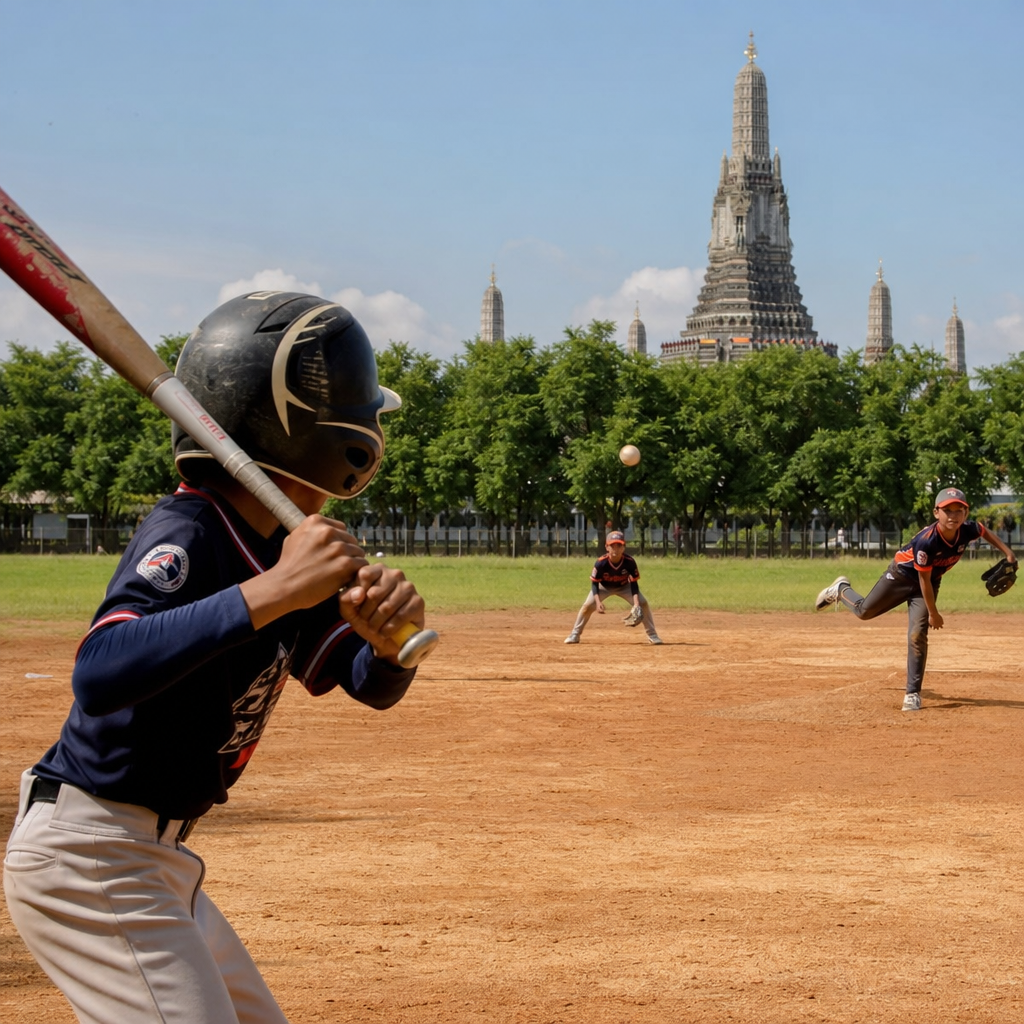
Baseball’s reach into Southeast Asia is uneven, fascinating, and far more important to the global game than many casual fans realize. In this region, baseball exists as a mix of school sport, expatriate pastime, national development project, and aspirational professional pathway. Southeast Asia includes diverse markets such as the Philippines, Thailand, Indonesia, Singapore, Malaysia, Vietnam, Cambodia, Laos, Myanmar, Brunei, and Timor-Leste, and each approaches baseball through different histories, budgets, climates, and sporting cultures. When I have worked on international baseball coverage and development research, this is one of the clearest lessons: there is no single Southeast Asian baseball story. There are instead overlapping stories about colonial influence, military presence, youth coaching, federation governance, media visibility, and access to fields and equipment. Understanding those forces matters because the region sits between established baseball powers in East Asia and massive untapped participation markets. For anyone tracking international baseball, player development, or future fan growth, Southeast Asia is a strategic frontier rather than a curiosity.
To understand baseball in Southeast Asia, it helps to define a few terms clearly. Participation refers to how many people actually play, usually through schools, clubs, and youth programs. Infrastructure means fields, indoor training spaces, lighting, equipment supply, and coaching systems. Governance refers to the national federations that organize leagues and represent countries in events sanctioned by the World Baseball Softball Confederation. Visibility includes television coverage, streaming access, social media, and whether local media treat baseball as newsworthy. Competitive depth describes whether a country has enough players, coaches, and regular games to sustain progress beyond a single tournament cycle. Those categories explain why a nation can have passionate baseball communities without yet producing broad domestic impact. They also show why progress is usually slower than outsiders expect. Baseball competes with football, basketball, badminton, volleyball, sepak takraw, and combat sports, while also demanding more specialized space and equipment than many rivals.
The good news is that Southeast Asia already has credible baseball footholds. The Philippines has the region’s deepest historical base and the strongest claim to baseball tradition. Thailand has built meaningful structures through schools and national teams. Indonesia and Singapore have sustained organized communities despite limited mainstream attention. Malaysia, Vietnam, and Cambodia have shown intermittent growth through youth initiatives, university clubs, and international support. Even where baseball is still niche, the sport benefits from digital instruction, inexpensive training aids, and stronger links to Japan, South Korea, Taiwan, and the United States. This article serves as a hub for the miscellaneous side of international baseball in Southeast Asia: the history, leading countries, development barriers, tournament ecosystem, and practical reasons the region deserves closer attention.
How baseball first took hold in Southeast Asia
Baseball entered Southeast Asia through multiple channels rather than one clean historical pipeline. In the Philippines, American colonial influence in the early twentieth century gave baseball an early institutional foothold through schools and public recreation. That matters because sports with school integration gain habits, not just publicity. In Singapore and other port cities, expatriate communities and international schools helped sustain baseball and softball even when local participation remained limited. Across parts of mainland Southeast Asia, military presence, diplomatic exchange, and later development outreach from Japanese, Korean, and Taiwanese partners introduced coaching methods, equipment donations, and tournament opportunities.
History alone, however, does not guarantee lasting popularity. I have seen this pattern repeatedly in emerging baseball markets: a country may have old roots but still lack regular competition, coach education, or media support. The Philippines is the clearest case. Baseball has heritage there, but basketball became more dominant commercially and culturally. That does not erase baseball’s significance; it simply means baseball’s growth depended on committed federations, schools, and local advocates instead of automatic national attention. In Thailand and Indonesia, the sport developed more through concentrated communities than broad cultural adoption. This created pockets of quality but also made expansion fragile when funding shifted or leadership changed.
The countries that matter most right now
The Philippines remains the most consequential baseball country in Southeast Asia. It combines historical legitimacy, a larger player base than most neighbors, and a realistic connection to higher-level international competition. Filipino players have benefited from diaspora links, overseas coaching influences, and domestic youth systems that, while inconsistent, still produce competitive teams. The country has also appeared regularly in regional and Asian competitions, which is critical because international repetition exposes weaknesses in pitching depth, defensive fundamentals, and conditioning standards.
Thailand is the other major anchor. The Thai baseball community has built recognizable national team programs and youth participation pathways, often centered around schools and local clubs in Bangkok and surrounding areas. Thailand’s advantage is organizational persistence. Even when baseball is not mainstream, it has maintained enough continuity to field teams and host development activity. Singapore occupies a different category: smaller population, stronger facilities in some cases, and a structured environment shaped by schools, universities, and expatriate leagues. Indonesia has comparable potential because of its scale, but scale only matters if federation work, regional leagues, and coaching networks are strong enough to convert population into players.
Several emerging countries deserve attention because they illustrate how baseball expands in practical terms. Malaysia has had recurring development cycles and can be competitive regionally when programs are stable. Vietnam has seen baseball and softball interest grow through university communities and foreign coaching support. Cambodia has periodically benefited from grassroots initiatives and nonprofit-led youth exposure. None of these countries should be judged only by current rankings. In baseball development, momentum often starts with one city, one school network, or one federation leader who can create regular games and reliable instruction.
| Country | Current baseball profile | Main strength | Main constraint |
|---|---|---|---|
| Philippines | Most established tradition in the region | History, player base, diaspora ties | Mainstream attention lags behind other sports |
| Thailand | Stable regional competitor | School and club continuity | Limited national visibility |
| Singapore | Organized niche ecosystem | Facilities, schools, expatriate structure | Small domestic player pool |
| Indonesia | Promising but uneven | Large population, urban hubs | Fragmented development pathways |
| Malaysia | Intermittent growth market | Youth development potential | Inconsistent long-term investment |
| Vietnam | Emerging participation base | University and grassroots interest | Limited competitive infrastructure |
Why growth is hard: fields, coaching, and sporting competition
The biggest barrier to baseball in Southeast Asia is not interest. It is friction. Baseball requires a playable field, safe infield surfaces, backstops, protective gear, enough gloves and bats, and coaches who understand throwing progression, hitting mechanics, game management, and injury prevention. Football can start with a ball and open space. Basketball can use one hoop. Baseball has a higher startup burden, and that burden multiplies in dense cities where land is expensive and weather is disruptive. Heavy rain, poor drainage, and limited groundskeeping can wipe out practice schedules quickly.
Coaching is equally decisive. In developing baseball markets, one good coach can transform a city, while one weak coach can teach bad habits that take years to correct. I have seen national programs improve rapidly once they introduced standardized warm-up routines, pitch-count awareness, age-appropriate throwing loads, and repeatable defensive terminology. Recognized development systems such as WBSC coaching resources, USA Baseball teaching principles, and Japanese school-based discipline models all help, but they must be adapted locally. A plan that works in Tokyo or California may fail in Manila or Jakarta if travel, heat, school schedules, and equipment access are different.
Then there is the competition for athletes. Southeast Asian countries already have sports with entrenched fan bases, commercial sponsors, and simpler access. Basketball is especially significant in the Philippines. Badminton has deep prestige in Malaysia and Indonesia. Football dominates broad popular attention across much of the region. Baseball therefore cannot rely on tradition alone. It has to offer a convincing development pathway: regular games, scholarships, travel opportunities, and visible national representation. Without those incentives, talented athletes often choose sports with clearer returns.
The tournament ecosystem and why it matters
International baseball grows where competition is regular and meaningful. In Southeast Asia, the key competitive layers include national championships, school tournaments, invitational club events, the Southeast Asian Games when baseball is on the program, Asian-level championships, and WBSC-sanctioned qualification pathways. These events matter because they create deadlines, justify funding, and reveal the difference between training and true game readiness. A team may look polished in local workouts and still struggle badly against better pitching, game speed, and defensive pressure.
The Southeast Asian Games have been especially important whenever baseball appears, because inclusion raises visibility and often unlocks government support. National Olympic committees and sports ministries respond differently when medals are at stake. That can mean better camps, travel budgets, and athlete recruitment. The downside is inconsistency. When a sport is not regularly included, momentum can stall between cycles. That is why domestic leagues and school structures are more important than one-off tournament peaks. Sustainable baseball nations are built on weekly repetition, not occasional ceremonies.
Asian competition also provides an essential benchmark. Facing Japan, South Korea, Taiwan, or stronger continental programs exposes exactly what Southeast Asian teams must improve. Usually the gaps show up in command pitching, catcher defense, situational hitting, and routine execution under pressure. Those are coachable areas, but only if federations treat losses as diagnostic tools rather than embarrassments. The countries making progress are the ones that schedule more games, collect better player data, and build age-group continuity instead of reinventing rosters every tournament.
Grassroots development, schools, and the role of partners
If Southeast Asia is going to matter more in global baseball, the growth will come from youth programs. Grassroots baseball works best when children can enter through schools, community clinics, or low-cost introductory formats. Tee-ball, soft-baseball adaptations, and simplified throwing-and-catching games are especially useful in places without full diamonds. They reduce intimidation and let coaches teach movement patterns before formal competition. This matters because beginners who struggle immediately with hard balls, long throws, or complex rules often leave the sport before they experience its appeal.
Schools are the strongest multiplier. A federation-run weekend clinic may inspire interest, but a school-based program creates habit, parent buy-in, and scheduling stability. In several Southeast Asian countries, the most durable baseball pockets are attached to private schools, universities, or international education networks. That can produce quality, but it can also narrow access if fees are high or transport is difficult. The better model combines school entry points with community clubs so players can continue beyond one academic institution.
External partners have helped significantly. Japanese coaches, Taiwanese baseball connections, Korean development efforts, nonprofit groups, and diaspora volunteers have all contributed equipment, instruction, and exposure trips. These partnerships are valuable when they build local capacity rather than dependency. The best programs train local coaches, establish simple maintenance routines for fields and gear, and create calendars that continue after visitors leave. Imported enthusiasm is useful; local ownership is what lasts.
What success would look like over the next decade
Success for baseball in Southeast Asia should be measured realistically. It does not require immediate professional leagues with large payrolls or stadiums full of spectators. The first signs of durable progress are more basic and more meaningful: year-round youth leagues, certified coaches in multiple cities, consistent national age-group teams, functional scorekeeping and statistics, and regular live streams that make players visible to families and sponsors. Once those pieces exist, stronger outcomes follow.
Over the next decade, the Philippines can consolidate its role as the regional leader if it strengthens domestic competition and keeps talented athletes in the baseball pathway longer. Thailand can widen its base beyond core hubs. Singapore can continue to serve as a model for organization and event hosting. Indonesia and Malaysia have the demographic and institutional potential to produce much larger participation if they align schools, clubs, and federation planning. Vietnam and Cambodia can make meaningful gains through urban youth development and university engagement.
For readers exploring international baseball, the key takeaway is simple: Southeast Asia is not a peripheral footnote. It is a collection of baseball markets at different stages of maturity, connected by real opportunity and real constraints. Follow the federations, youth tournaments, school programs, and regional championships, because that is where the next stage of growth will be visible first. If you cover, coach, support, or invest in international baseball, keep Southeast Asia on your map and dig deeper into the country-specific stories that branch from this hub.
Frequently Asked Questions
Why is baseball’s presence in Southeast Asia so uneven from country to country?
Baseball developed in Southeast Asia through very different historical channels, which is why its visibility varies so widely across the region. In some countries, the game arrived through American influence, missionary schools, military connections, or overseas education. In others, it spread through Japanese, Korean, or Taiwanese business networks, expatriate communities, and youth development programs rather than through mass media or domestic tradition. That means baseball did not grow under one unified regional system; it emerged in separate pockets, often tied to local institutions such as schools, private clubs, universities, or national sports bodies.
Infrastructure also plays a major role. Baseball requires specialized space, coaching knowledge, equipment, and regular competition. Countries with stronger school-sport cultures or better access to urban sports facilities have found it easier to sustain leagues and youth programs. Meanwhile, nations where land is limited, public sports funding is stretched, or football, basketball, badminton, volleyball, or combat sports dominate public attention often struggle to prioritize baseball. Even when interest exists, the lack of diamonds, trained coaches, and structured tournaments can slow growth significantly.
Cultural familiarity matters as well. In places such as the Philippines, there is a longer if sometimes underappreciated baseball tradition, while in Singapore and Thailand the sport has often depended on organized communities and institutional support. In Indonesia, Malaysia, Vietnam, Cambodia, Laos, Myanmar, Brunei, and Timor-Leste, baseball’s footprint tends to be smaller and more localized, though that does not mean it is insignificant. In many of these countries, the sport survives through committed volunteers, school initiatives, and national teams that compete regionally despite limited domestic ecosystems. In short, the unevenness is not a sign that baseball has failed in Southeast Asia; it is evidence that the game has taken root in highly specific and locally shaped ways.
Which Southeast Asian countries have the strongest baseball traditions or development potential?
The Philippines is usually the first country mentioned in any serious discussion of baseball in Southeast Asia, and for good reason. It has one of the deepest historical connections to the sport in the region, dating back to the American colonial era. Baseball has long existed there as part of school athletics and local competition, even if it has often been overshadowed by basketball in the national imagination. That foundation gives the Philippines an important advantage: the sport is not entirely foreign, and there are historical precedents for rebuilding stronger player pathways, coaching systems, and national-team depth.
Thailand and Singapore are also notable, though for different reasons. Thailand has had periods of meaningful youth and international engagement, and it benefits from a sports environment where organized development programs can gain traction if support is sustained. Singapore, despite its small size, has strengths in administration, education-based sport, and international connectivity. It may not produce the largest player base, but it can serve as a strategic hub for training, tournaments, and regional baseball networking. Malaysia and Indonesia are interesting as emerging or underdeveloped baseball spaces because their large populations offer long-term upside if facilities, coaching, and competitive structures improve.
Vietnam, Cambodia, Laos, Myanmar, Brunei, and Timor-Leste are generally earlier in the baseball development cycle, but that should not be mistaken for a lack of potential. In global baseball, growth often begins with small, highly committed communities rather than mass popularity. A country does not need millions of casual fans to become meaningful; it needs repeatable youth instruction, access to equipment, coaching education, and regular game opportunities. That is why development potential in Southeast Asia is often less about current fame and more about whether a country can build sustainable systems. In that sense, several markets in the region remain strategically important because even modest progress can create entirely new baseball pathways over time.
What role do schools, expatriate communities, and national federations play in growing baseball in Southeast Asia?
They are absolutely central to the sport’s survival and expansion. In many Southeast Asian countries, baseball does not grow first through major professional leagues or television popularity. It grows through institutions. Schools are especially important because they provide young players with regular practice space, scheduled competition, and a framework for coaching. When baseball enters a school system, even at a small scale, it gains consistency. Students can learn fundamentals, teams can form annually, and talent identification becomes much easier. Without that school-based structure, many countries end up relying on occasional clinics rather than true development.
Expatriate communities often act as early catalysts. American, Japanese, Korean, Taiwanese, and other foreign communities have introduced equipment, technical knowledge, volunteer coaching, and organizational energy in multiple Southeast Asian settings. They can help establish leagues, youth camps, and local clubs, especially in major cities. Just as importantly, they can connect local players to broader baseball cultures and standards. However, expatriate support works best when it helps empower local leadership rather than creating a closed scene that disappears when personnel change. Sustainable growth happens when domestic coaches, teachers, and administrators take ownership of the sport.
National federations are the bridge between grassroots interest and long-term legitimacy. A federation can organize domestic championships, standardize coaching methods, enter teams in international competitions, secure government recognition, and form relationships with bodies such as the World Baseball Softball Confederation and neighboring baseball associations. In developing baseball countries, administration is often as important as on-field talent. A well-run federation can multiply opportunities even with limited resources, while a weak or inactive one can stall progress despite passionate local interest. In Southeast Asia, where baseball ecosystems are often fragile, the coordination between schools, expatriate support networks, and national governing bodies can determine whether the sport remains niche or gradually becomes embedded in the national sports landscape.
Can Southeast Asia realistically produce professional baseball talent for the global game?
Yes, but the pathway is selective and still developing. Southeast Asia is unlikely to become a uniform talent factory overnight, yet it can absolutely contribute meaningful players, especially as scouting networks become more global and development models become more flexible. Professional baseball today is no longer limited to a handful of traditional powers. Teams and academies increasingly look for athletic upside in emerging markets, and that opens the door for players from countries that may not yet have famous domestic leagues. The challenge is not a lack of ability; it is a lack of repeated, high-level developmental exposure from an early age.
For a Southeast Asian player to reach professional baseball, several things typically need to align. First, the player must gain access to quality coaching and enough competitive repetitions to build strong fundamentals. Second, there must be opportunities to face better competition, whether through regional tournaments, overseas training, exchange programs, or academy systems. Third, the player needs visibility. Scouts cannot sign talent they never see, so international events, video analysis, partnerships with foreign programs, and federation-supported travel all matter. In some cases, athletes may also move through educational routes, including schools or universities abroad, before reaching professional consideration.
It is also important to understand that professional impact does not have to mean immediate Major League Baseball success. Southeast Asian players can enter the global game through club systems in Japan, Korea, Taiwan, independent leagues, developmental circuits, or collegiate pipelines. Those routes still matter enormously because they prove that baseball talent from the region is viable and worth investing in. Over time, even a small number of successful players can transform local perception, attract sponsors, inspire younger athletes, and justify stronger domestic development. That is how emerging baseball regions build credibility: not through instant mass breakthroughs, but through a gradual accumulation of real pathways and visible success stories.
Why does Southeast Asia matter to baseball’s global future even if the sport is still niche there?
Southeast Asia matters because global sports growth rarely comes only from places where a sport is already dominant. The region represents a large, youthful, diverse population with expanding economies, growing urban centers, and increasing cross-border connectivity. From a global baseball perspective, that combination is strategically valuable. Even if baseball remains niche in many Southeast Asian countries, niche does not mean irrelevant. A sport can gain major long-term benefits from building strong secondary markets, developing new talent pipelines, and establishing cultural footholds before mainstream popularity arrives.
The region also offers baseball something it continually needs: adaptability. In Southeast Asia, the sport has had to survive in nontraditional conditions, often sharing space with more popular sports and relying on hybrid models of development. That has encouraged creative approaches such as school-centered growth, community coaching, embassy and expatriate support, baseball-softball integration, and targeted youth outreach. Those experiments are important because they show how baseball can expand beyond its traditional strongholds. If the sport wants to become more globally resilient, it needs successful examples of how to grow in places where it is not already the default choice.
There is also a geopolitical and commercial dimension. Southeast Asia sits at the intersection of major Asian baseball influences, including Japan, South Korea, Taiwan, and broader international sports investment. That makes the region an important connective zone for tournaments, coaching exchanges, sponsorship, media partnerships, and grassroots development initiatives. A stronger baseball presence there would not simply add new fans; it would deepen the sport’s Asian network and create more routes for participation and competition. In other words, Southeast Asia matters not because it already resembles an established baseball powerhouse, but because it represents one of the most important frontiers for the game’s next stage of international growth.