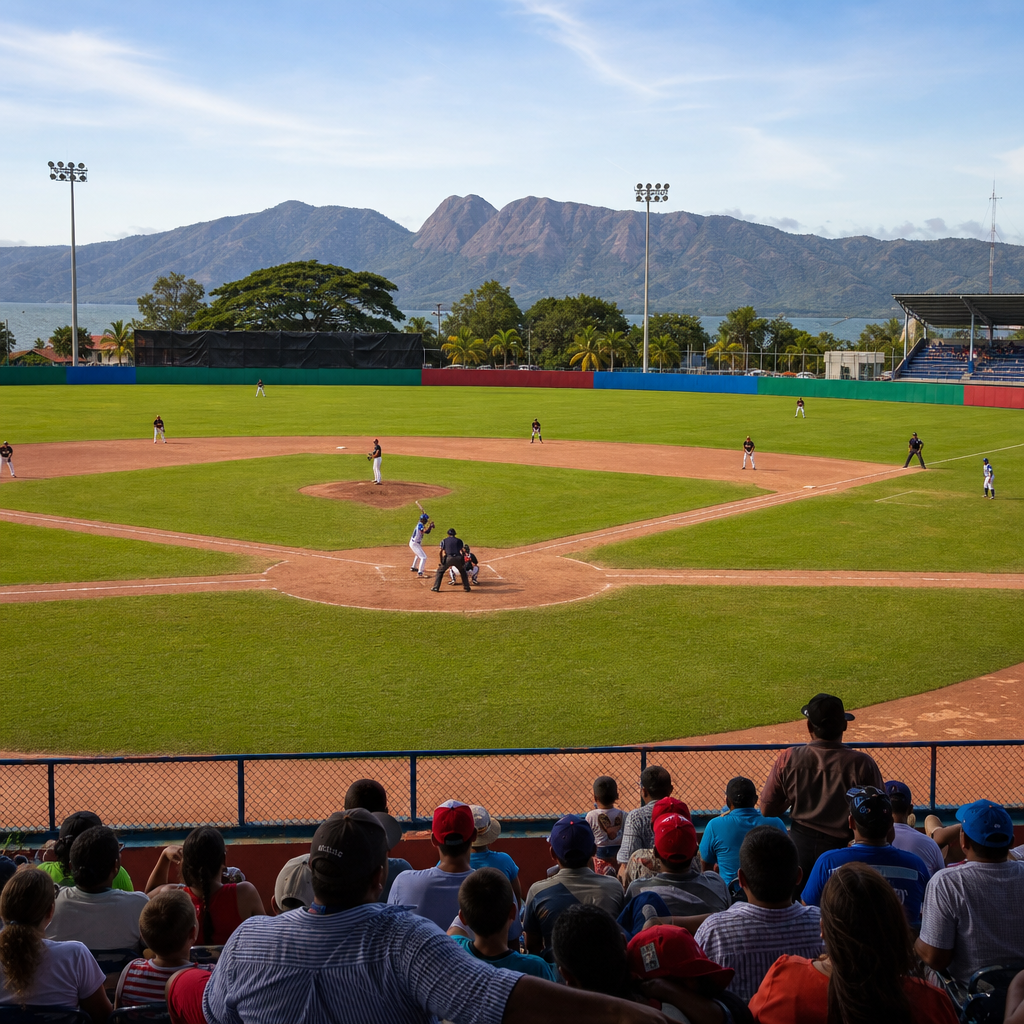
Central American baseball sits in a fascinating middle ground within the international game: not as globally visible as Major League Baseball in the United States, yet deeply rooted in local identity, migration, coastal history, and national pride across the isthmus. In this regional overview, Central American baseball refers primarily to the sport’s development, structures, fan culture, and player pipelines in Panama, Nicaragua, Costa Rica, Honduras, El Salvador, Guatemala, and Belize, while also acknowledging the Caribbean and North American influences that shaped each country differently. The topic matters because Central America has produced Hall of Fame-level talent, sustained vibrant winter and amateur traditions, and served as an important scouting territory, but it is still too often treated as an afterthought in global baseball coverage. Having worked through international player research and cross-border baseball histories, I have seen how often the region gets flattened into a few familiar names. A proper overview shows something richer: countries with distinct baseball geographies, uneven infrastructure, competing sports cultures, and real opportunities for future growth.
Baseball arrived in Central America through shipping routes, canal labor, U.S. commercial influence, Caribbean migration, military presence, and educational exchange rather than through one single origin story. That matters because the game spread most successfully in port cities, canal zones, and Caribbean-facing communities where English-speaking West Indian workers and contact with Cuba, Puerto Rico, and the United States were strongest. In practice, this means Panama and Nicaragua developed the most durable baseball cultures, while Costa Rica, Honduras, and Guatemala built more localized traditions, and countries such as El Salvador and Belize retained smaller but meaningful baseball footprints. A regional hub article must therefore explain both the common thread and the national differences. Readers exploring international baseball need answers to practical questions: which countries are strongest, why Panama produces elite talent, why Nicaragua remains baseball-centered despite limited resources, where leagues operate, how youth development works, and what challenges prevent wider regional growth. Those answers reveal Central America not as a minor sidebar, but as one of baseball’s most historically significant and strategically important crossroads.
How baseball took root across Central America
The regional map of baseball in Central America is easiest to understand by following trade and migration. On the Caribbean side, workers from Jamaica, Barbados, and other British West Indian communities brought cricket and baseball cultures into Panama, Costa Rica, Honduras, and Belize during the late nineteenth and early twentieth centuries. In Panama, the construction eras surrounding the railroad and later the canal accelerated the sport’s spread, especially in Colón and Panama City. U.S. influence was powerful, but so was the Afro-Caribbean community that made baseball part of everyday life. Nicaragua’s baseball story developed differently, with sustained adoption through urban clubs, national competition, and a political-cultural embrace that eventually made the game the country’s leading sport over soccer for long stretches.
These origins still shape modern geography. Baseball is strongest where historical networks stayed active: Panama City, Colón, Chiriquí, and Herrera in Panama; Managua, León, Chinandega, Masaya, Granada, and the Caribbean coast in Nicaragua. In Costa Rica, Limón’s Afro-Caribbean history is central, while in Honduras the Bay Islands and northern coast preserved the game more visibly than the interior. Guatemala and El Salvador have long been more soccer-dominant, yet both developed federations, youth competitions, and national teams that compete in regional events. Belize, because of its English-speaking Caribbean ties, occupies a unique cultural space where baseball, softball, basketball, and soccer all compete for attention. The broad lesson is simple: Central American baseball never spread evenly, and that unevenness explains both the region’s standout success stories and its developmental gaps.
Panama and Nicaragua as the region’s baseball anchors
If someone asks which Central American countries matter most in baseball, the direct answer is Panama and Nicaragua. Panama’s case rests on elite player production, long institutional history, and international credibility. It produced Rod Carew, a Hall of Famer born in Panama City; Mariano Rivera, the greatest relief pitcher in baseball history from Puerto Caimito; and stars such as Carlos Lee, Manny Sanguillén, Ben Oglivie, Rubén Tejada, and Christian Bethancourt. Panama also built deep traditions in provincial competition, especially through its national championship structure and youth tournaments. When I evaluate baseball ecosystems, Panama stands out because it combines grassroots passion with a proven record of moving players into professional systems abroad.
Nicaragua is the region’s other pillar, though in a different way. Baseball there is not just a successful sport; it has often functioned as a core part of national identity. The country’s top domestic competitions, including the Campeonato Germán Pomares Ordóñez, draw meaningful local interest and maintain stronger visibility than many leagues in similarly sized markets. Nicaragua has produced major leaguers such as Dennis Martínez, the first Latin American pitcher to throw a perfect game in MLB, Vicente Padilla, and Jonathan Loáisiga. More importantly, it sustains a broad base of fans, local clubs, youth academies, and municipal rivalries. While Panama has historically produced more top-end global stars, Nicaragua arguably offers the strongest example of baseball as a daily national habit in Central America.
| Country | Baseball profile | Notable strengths | Main constraint |
|---|---|---|---|
| Panama | Regional powerhouse | Elite player production, deep history, strong provinces | Competition for attention from soccer and basketball |
| Nicaragua | Nationally prominent baseball culture | Large fan base, active domestic competition, strong identity | Limited funding and infrastructure depth |
| Costa Rica | Localized tradition | Caribbean coast roots, organized federation structure | Soccer dominance |
| Honduras | Smaller regional presence | Coastal communities, youth participation pockets | Limited facilities and visibility |
| Guatemala | Developing niche sport | International participation, youth pathways | Low national profile |
| El Salvador | Modest organized scene | Federation activity, regional competition | Resource constraints |
| Belize | Small but distinct baseball footprint | Caribbean cultural ties, multi-sport adaptability | Scale and funding |
Leagues, federations, and how the sport is organized
Central American baseball does not revolve around one unified regional league. Instead, it depends on national federations, provincial championships, youth systems, amateur clubs, and periodic international tournaments. That fragmented structure can be confusing, but it is normal outside the largest baseball markets. In Panama, organized baseball runs through national federation oversight, age-group competition, and highly competitive provincial play. The country’s youth tournaments are especially important because they act as both community events and scouting windows. In Nicaragua, the federation and domestic competitions maintain year-round relevance, with the Germán Pomares league serving as a major platform for player development and fan engagement. Winter ball and professional experiments have appeared at different moments, but the amateur and semi-professional backbone remains essential.
Elsewhere in the region, federations carry even more responsibility because commercial league revenue is limited. Costa Rica’s baseball governing bodies support youth and national-team participation despite operating in a soccer-first market. Guatemala and El Salvador similarly rely on federation-led development, school partnerships, and international qualification events to keep baseball visible. Honduras and Belize often depend on local organizers and municipal initiatives as much as national institutions. In practical terms, this means Central American baseball survives through persistence rather than television money. Fields are shared, equipment budgets are tight, and coaching education can be inconsistent. Yet the decentralized model also builds strong local ownership. Many of the best-run programs I have reviewed in the region succeed because committed volunteers, former players, and local business sponsors fill gaps that larger sports systems would cover centrally.
Player development, scouting, and the path to professional baseball
The most important question for many readers is how a Central American player reaches professional baseball. The answer varies by country, but the common route begins in youth tournaments, national championships, and regional showcases. In Panama, this pipeline is relatively mature. Players are identified early through provincial competition, national team play, and training programs tied to respected coaches and academies. Scouts from MLB organizations and independent evaluators pay close attention because Panama has a proven history of producing instinctive defenders, advanced baseball IQ, and polished middle infielders, catchers, and pitchers. Mariano Rivera’s rise from a modest background to global greatness remains the iconic example, but the broader pattern is what matters: Panamanian talent has been trusted for generations.
Nicaragua’s pathway is more layered. Because baseball is so culturally embedded there, many players develop through extensive game repetition in local environments before entering formal showcase settings. Pitching has been a notable strength, reflected not only by Dennis Martínez and Loáisiga but also by the country’s reputation for durable, competitive arms. The challenge is exposure. Compared with the Dominican Republic or Venezuela, Nicaragua has had fewer large-scale academy systems tied directly to MLB clubs. That does not mean talent is missing; it means the evaluation network can be thinner and more dependent on events, personal relationships, and national-team competition. Costa Rica, Honduras, Guatemala, and El Salvador face similar but steeper challenges. Talented athletes exist, yet fewer fields, less specialized coaching, and smaller scouting footprints reduce the odds of international signing. For this reason, regional tournaments under WBSC and continental structures are disproportionately important. They give players from smaller baseball nations the chance to be seen against stronger opposition.
National teams, regional rivalries, and international performance
International baseball gives Central American countries their clearest shared stage. Panama has historically been the strongest regional representative in global competition, including the Baseball World Cup era, Olympic qualification cycles, and WBSC events. Nicaragua has also been highly competitive at the regional level and increasingly respected internationally because of disciplined pitching, aggressive defense, and continuity in roster building. When these two countries meet, the games carry weight far beyond standings. They are contests over regional supremacy, development models, and baseball identity. Panama often brings the deeper professional pedigree; Nicaragua often counters with cohesion and relentless national support.
The broader Central American field matters too. In events such as the Central American Games and qualifiers for continental championships, Costa Rica, Guatemala, Honduras, and El Salvador use baseball to build international visibility. Their medal chances vary by generation, but competitive participation is valuable because it justifies investment at home. Belize’s appearances are smaller in scale but still important for sustaining organized baseball. One pattern appears consistently across the region: international success depends less on one star and more on continuity in youth coaching, roster preparation, and federation administration. Countries that keep age-group players in the system, schedule regular competition, and maintain usable facilities outperform countries with comparable raw talent but weaker organization. That is why Panama and Nicaragua remain ahead. Their advantage is not only talent; it is baseball continuity.
Challenges, opportunities, and why the region matters in international baseball
Central American baseball faces clear obstacles. Soccer dominates media attention in most countries. Basketball has gained urban traction. Public funding is inconsistent, and baseball infrastructure ranges from solid in select provinces to inadequate in many communities. Weather and maintenance are constant issues; tropical rainfall can quickly turn poor fields unusable. Equipment costs matter as well. Bats, gloves, catcher’s gear, mound upkeep, lighting, and travel all strain local budgets. Another challenge is the fragmented jump from youth promise to adult opportunity. Without enough competitive adult leagues, some players leave the sport before they reach their peak development years.
Still, the upside is substantial. Central America occupies a strategic place in international baseball because it connects Caribbean baseball culture with continental competition and North American scouting. The region continues to produce intelligent, adaptable players, particularly in Panama and Nicaragua, and there is room for growth in every country through coach education, field renovation, school-based programs, and stronger tournament calendars. Modern development does not require copying the Dominican academy model exactly. In several Central American contexts, the smarter approach is to strengthen federation-run youth leagues, improve strength and conditioning standards, and create more consistent competition between neighboring countries. For readers using this page as a hub within international baseball, the key takeaway is straightforward: Central American baseball is diverse, historically important, and still evolving. Follow Panama and Nicaragua first, but do not ignore Costa Rica, Honduras, Guatemala, El Salvador, or Belize. Together they show how baseball survives, adapts, and occasionally flourishes far beyond the sport’s biggest headlines. Explore the country-specific histories, leagues, and player pathways next to understand the region in full.
Frequently Asked Questions
What makes Central American baseball distinct from other baseball regions in the Americas?
Central American baseball is distinct because it developed at the intersection of geography, migration, port-city commerce, Caribbean cultural exchange, and national identity. Unlike the United States, where baseball became a dominant commercial major league system, or parts of the Spanish-speaking Caribbean where the sport developed highly visible international professional circuits, Central America’s baseball story is more regionally varied and often more localized. In countries such as Panama and Nicaragua, baseball has long held deep cultural significance and has produced recognizable international talent, while in Costa Rica, Honduras, El Salvador, Guatemala, and Belize, the sport has historically occupied a more uneven position alongside football and other recreational traditions.
Another distinguishing feature is how strongly baseball in Central America is tied to coastal history and migration patterns. Port communities, canal labor routes, U.S. commercial influence, Afro-Caribbean populations, and transnational movement all helped introduce and sustain the game in different parts of the isthmus. That means baseball did not spread in a uniform way. In some countries, it became embedded in school systems, amateur leagues, and community celebrations; in others, it remained concentrated in certain provinces, neighborhoods, or social networks. This creates a regional baseball culture that is both interconnected and highly fragmented.
Central American baseball also stands out for its middle-ground status in the global game. It is not as commercially dominant or internationally marketed as Major League Baseball, but it is far from marginal in the communities where it matters most. Fans often follow local clubs, national teams, youth tournaments, and international player development stories with intense pride. The result is a baseball culture that may receive less worldwide media attention, yet remains deeply meaningful at the local and national levels. That combination of under-recognized history and strong grassroots attachment is one of the defining traits of baseball across Central America.
Which Central American countries have the strongest baseball traditions?
Panama and Nicaragua are generally considered the two strongest baseball nations in Central America, both in terms of historical depth and cultural visibility. Panama has a long and influential baseball tradition shaped by canal-era contact, Caribbean links, urban and provincial competition, and a sustained record of producing high-level players. It has contributed notable talent to professional baseball abroad and has maintained a strong relationship between local leagues, youth development, and national representation. Baseball in Panama is not just a sport; in many communities it is part of civic identity and intergenerational memory.
Nicaragua also has a deeply rooted baseball culture and, in many areas, the sport rivals or surpasses football in emotional importance. The Nicaraguan baseball tradition is especially notable for the passion of its domestic fan base, the enduring relevance of amateur and semi-professional structures, and the central role of the national team in public imagination. Games can carry strong regional and social meaning, and local rivalries often matter as much as international competition. Nicaragua’s baseball identity is reinforced by the way the sport is woven into daily life, public conversation, and community recreation.
Beyond those two countries, baseball has important histories in the rest of the region, even if the sport is less dominant nationally. Costa Rica has had meaningful baseball communities, particularly linked to specific regions and immigrant influences, though football has generally overshadowed it. Honduras, El Salvador, Guatemala, and Belize each have baseball traditions that are real but more localized, often tied to coastal populations, schools, military or expatriate influence, and community clubs rather than broad national commercial systems. So while Panama and Nicaragua are the regional leaders, the wider Central American baseball landscape is more nuanced than a simple ranking suggests. The sport’s strength often depends on where you are, which communities you are looking at, and whether you are measuring professional output, grassroots participation, or cultural depth.
How did baseball spread throughout Central America?
Baseball spread throughout Central America through a combination of maritime trade, labor migration, foreign commercial presence, military contact, education networks, and Caribbean cultural circulation. Port cities and coastal zones were especially important because they served as entry points for ideas, goods, and recreational practices moving between the Caribbean, North America, and Latin America. Sailors, dockworkers, merchants, railway laborers, canal employees, teachers, and migrants all played roles in introducing the game to new populations. In this sense, baseball’s expansion was not a single organized campaign but a series of overlapping local adoptions.
Panama offers one of the clearest examples of this process. The construction and strategic importance of the canal, together with the movement of workers from the Caribbean and the United States, created fertile ground for baseball’s growth. In Nicaragua, the game took root through long-term community adoption and eventually became a defining part of national sporting culture. Elsewhere in the region, baseball often arrived through schools, expatriate communities, religious institutions, or localized sporting clubs before developing more formal federations and competitions.
It is also important to understand that baseball did not spread evenly or replace existing sports in every country. Football’s rise across the region limited baseball’s national reach in several places, especially where infrastructure, media coverage, and public funding favored football. As a result, baseball often survived through committed local networks rather than broad institutional dominance. This uneven development is part of why Central American baseball today appears as a mosaic: some nations built stronger federations and player pipelines, while others maintained the game through dedicated pockets of support. That historical pattern explains both the resilience of baseball in the region and the differences in visibility from one country to another.
What role do youth development, amateur leagues, and international pipelines play in Central American baseball?
Youth development, amateur leagues, and international pipelines are absolutely central to the structure of baseball in Central America. In many parts of the region, the sport’s foundation is not a large domestic professional economy but rather a network of community teams, age-group programs, school competitions, provincial championships, and national federations. Young players often begin in local environments where coaching, family support, and municipal or volunteer-run organizations matter enormously. These grassroots systems do more than teach technique; they also preserve baseball as a living cultural tradition passed down across generations.
Amateur baseball is especially important because it serves multiple functions at once. It provides competitive opportunities, creates regional rivalries, identifies talent for national teams, and gives communities a focal point for civic pride. In countries with strong baseball cultures, amateur and semi-professional competitions can attract serious interest and act as stepping stones for players seeking higher levels of play. Even in countries where baseball is less nationally prominent, amateur leagues often keep the sport viable and visible. Without them, the regional game would lose much of its developmental base.
International pipelines are equally significant because many of the region’s most promising players look beyond domestic competition for advancement. Scouts, academies, cross-border tournaments, and connections to professional systems abroad can shape career paths early. For some athletes, the route may lead to leagues in North America or elsewhere in Latin America; for others, it may involve college opportunities, regional tournaments, or national team exposure. These pipelines bring opportunity, but they also highlight inequality. Access to quality facilities, coaching, travel, nutrition, and visibility varies widely across Central America. That means player development is not only about talent but also about infrastructure and opportunity. Understanding Central American baseball requires recognizing this dual reality: it is a deeply local sport sustained by community systems, yet it is also part of a larger international talent economy.
Why is Central American baseball important in broader discussions of sports, culture, and identity?
Central American baseball matters because it reveals how sport can function as a record of historical movement, social belonging, and national imagination. The game is not just about wins, losses, or player exports. It reflects the legacy of ports, labor systems, migration routes, racial and ethnic communities, foreign influence, and local adaptation. In many places, baseball became meaningful precisely because communities made it their own, folding it into celebrations, rivalries, memory, and regional identity. Looking at baseball in Central America therefore helps explain larger cultural patterns that a purely league-centered view of the sport would miss.
It is also important because it complicates simplistic maps of global baseball. Too often, conversations about the sport focus only on the United States, the Dominican Republic, Cuba, Japan, Mexico, or Venezuela. Central America can be overlooked despite its long and layered relationship with the game. A regional overview restores that missing context by showing that baseball’s international history is not built only by the biggest markets or the most televised leagues. It is also built by local stadiums, youth coaches, municipal tournaments, neighborhood loyalties, and national teams that carry symbolic weight far beyond their media footprint.
Finally, Central American baseball is important because it demonstrates how sport can endure even without constant global attention. In the region, baseball often survives through passion, continuity, and community commitment rather than through massive commercial machinery. That makes it a powerful lens for understanding resilience in sports culture. Whether in Panama’s established baseball tradition, Nicaragua’s intense public attachment to the game, or the smaller but meaningful baseball communities elsewhere in the isthmus, the sport continues to express pride, aspiration, and connection. For readers trying to understand Central America beyond stereotypes or headline-level summaries, baseball offers a rich and revealing entry point.