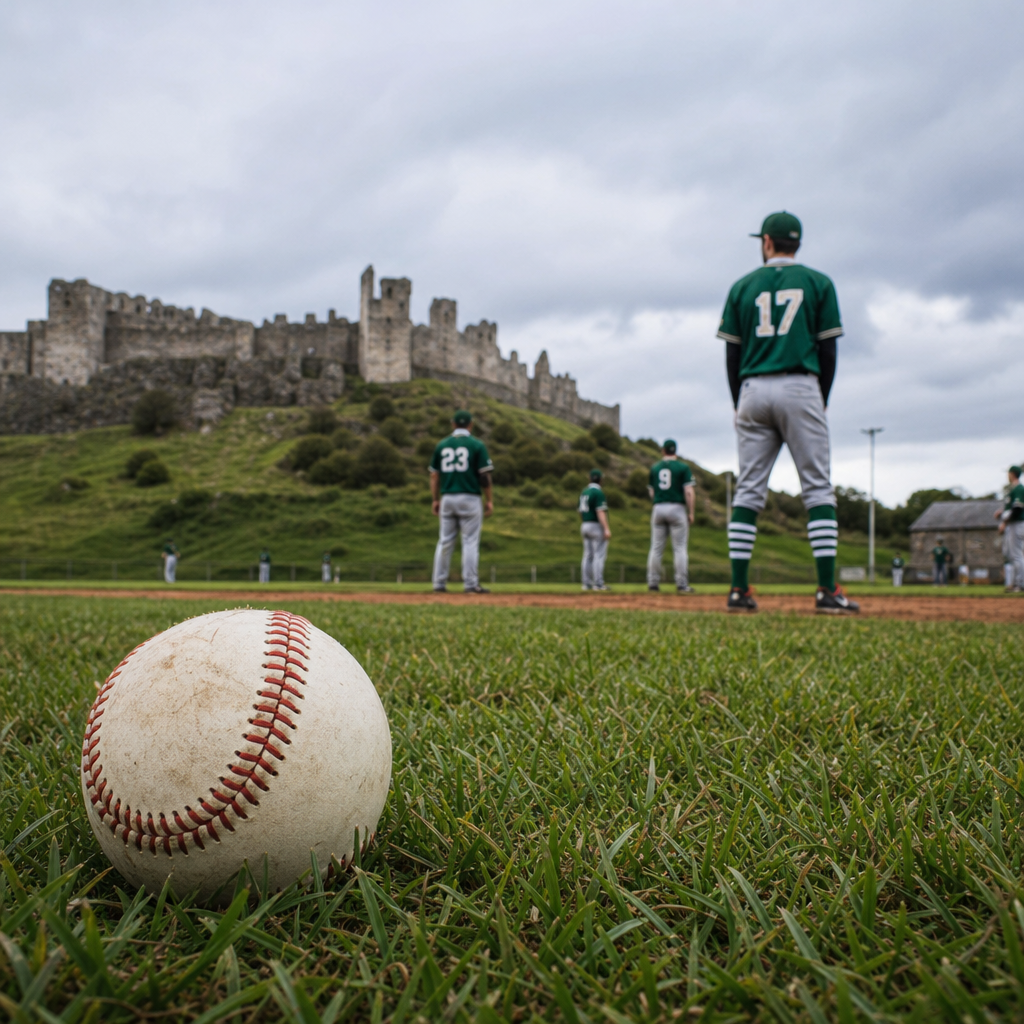
Ireland’s baseball journey is an unlikely tale shaped by migration, volunteer effort, borrowed diamonds, and a steady belief that a traditionally American game can find a durable home on the island. In the context of international baseball, “miscellaneous” should not mean scattered or trivial; for Ireland, it describes a broad ecosystem that includes adult leagues, youth development, university clubs, women’s participation, facilities, governance, diaspora links, and national team ambition. I have worked with emerging baseball communities, and Ireland stands out because progress rarely comes from one breakthrough moment. It comes from hundreds of small, practical decisions: securing a training field for six winter Sundays, finding secondhand catcher’s gear, convincing multi-sport athletes to try batting practice, and teaching scorekeeping to volunteers who previously knew only Gaelic games, rugby, or football.
That makes Ireland important within the wider international baseball conversation. Baseball’s global map is usually drawn around powerhouses such as Japan, the Dominican Republic, Mexico, South Korea, Cuba, Venezuela, and the United States, with growing attention on Britain, Germany, the Netherlands, Italy, France, and the Czech Republic in Europe. Ireland sits outside that first and second tier, yet its experience explains how baseball expands in countries without a deep domestic tradition. The central questions are practical: how do new players discover the sport, how do clubs survive, what level can a national team realistically reach, and what infrastructure turns curiosity into continuity? Ireland offers useful answers precisely because its baseball culture is still being built in public view.
The Irish version of baseball depends on adaptability. Players may arrive through American family connections, time spent abroad, exposure to Major League Baseball highlights, softball crossover, or simple curiosity after seeing a local club on social media. Coaches often teach fundamentals to mixed-experience groups ranging from complete beginners to former collegiate or minor-level players who moved to Ireland for work. Administrators must think like startup operators, balancing registration systems, insurance, field permits, equipment imports, and federation priorities. For readers exploring international baseball, this hub article maps the full Irish picture so that related topics, from league history to facilities and player development, make sense within one coherent framework.
How Baseball Took Root in Ireland
Baseball in Ireland never followed the mass-participation path of native sports. Instead, it developed through pockets of enthusiasm, often led by expatriates, returning Irish players, and local converts willing to organize from the ground up. The modern structure is associated with Baseball Ireland, the sport’s governing body, which has helped coordinate leagues, national teams, and development work. Earlier eras of baseball activity existed, but continuity was fragile. What changed in more recent decades was not sudden popularity; it was better organization. Clubs gained more regular competition, communication improved, and participation became less dependent on one charismatic founder.
In practical terms, establishing baseball in Ireland meant solving very unglamorous problems. A field suitable for soccer or rugby is not automatically suitable for baseball. Backstops, mound areas, base anchors, storage, and safe outfield dimensions matter. I have seen emerging programs lose momentum because they treated facility details as secondary; Ireland’s clubs learned that logistics are strategy. Dublin became a natural focal point because population density, transport links, universities, and expatriate communities made recruitment easier. Cork, Greystones, Belfast, and other areas also played roles, but critical mass remained a recurring challenge. When a club folds in a mature baseball country, another often absorbs its players. In a small market, one club’s collapse can remove an entire regional pathway.
The sport also had to explain itself culturally. Irish sports fans understand tactical games, local identity, and volunteer administration, so baseball is not alien in those respects. What is unfamiliar is the rhythm: no clock, inning structure, pitcher-batter duel, statistical language, and long-term skill acquisition. Successful Irish baseball advocates usually avoid selling the game as exotic. They explain it in plain terms, connect it to familiar concepts such as club culture and county pride, and let newcomers experience the appeal of hard contact, defensive plays, and strategic tension firsthand.
Leagues, Clubs, and the Competitive Structure
Ireland’s domestic baseball scene is modest in scale but meaningful in function. A small league can still be valuable if it offers regular fixtures, clear standards, and pathways for beginners. The Irish baseball calendar has typically revolved around club competition in spring and summer, with indoor training or skills work in colder months. Teams often include a wide range of ages and backgrounds, which changes the coaching environment. A manager may write a lineup featuring an experienced import at shortstop, a former cricket player in the outfield, and a novice first baseman still learning cut-off responsibilities. That mixture is common in developing baseball nations and can be productive if expectations are managed well.
Clubs matter more than standings alone because they are the sport’s recruiting engine. They run social media accounts, organize open days, lend gloves to newcomers, and create a sense of belonging that statistics cannot capture. In Ireland, that community function is essential. Many adult players discover baseball after childhood, so retention depends on club culture as much as competitive quality. The strongest organizations typically do three things well: they train consistently, communicate clearly, and reduce barriers to entry. A player who misses two sessions because of work or weather should feel invited back, not excluded by insider knowledge.
| Area | What Irish clubs need most | Why it matters |
|---|---|---|
| Recruitment | Beginner-friendly sessions and loaner equipment | Most new players have never played organized baseball |
| Coaching | Repeatable fundamentals and simple terminology | Mixed-experience rosters need consistent teaching |
| Facilities | Reliable field access, safe backstops, storage | Irregular venues disrupt training and match quality |
| Administration | Scheduling, insurance, registration, volunteer roles | Small sports fail when admin rests on one person |
| Youth pathway | School outreach and age-grade programs | Long-term growth requires players developed early |
Because the player pool is limited, competitive balance can swing quickly. One or two experienced pitchers can change a season. That reality makes depth development more important than importing short-term quality. The healthiest leagues are not the ones with a single excellent team; they are the ones where several clubs can field stable rosters, train young players, and finish the season with momentum intact.
National Teams and International Ambition
The clearest measure of Ireland’s baseball progress is international competition. National teams provide visibility, standards, and urgency. They also expose structural gaps immediately. A domestic player who looks polished in local league play may discover at European level that velocity, defensive precision, baserunning reads, and game tempo are far higher. That gap is not a failure; it is a benchmark. Ireland’s senior national team has competed within European baseball’s tiered system, where countries move through championships and qualification events rather than jumping directly into elite status. For an emerging program, the realistic target is sustained competitiveness against peer nations, not overnight qualification for major global tournaments.
International baseball in Europe is shaped by established leaders such as the Netherlands and Italy, with Spain, Germany, the Czech Republic, France, Belgium, Great Britain, and others providing varying levels of depth. Ireland operates below that upper band, but national team participation still matters because it creates aspiration for domestic players and gives administrators evidence for funding conversations. In my experience, nothing sharpens a development plan like returning from an international tournament and realizing exactly where outs were lost: missed relay throws, shallow pitch counts, weak strike-zone control, or poor situational hitting with runners on base.
Ireland also benefits from diaspora connections. Eligibility rules in international baseball often allow countries to involve heritage players, and that can raise standards quickly. Used well, diaspora recruitment is an accelerator, not a substitute for domestic work. The best model blends both: heritage talent strengthens the roster while local players absorb higher expectations and training habits. Used poorly, it creates a disconnected national team with little impact on the grassroots game. Ireland’s long-term success depends on linking senior representation to local coaching, youth clinics, and visible role models.
Youth Development, Universities, and Player Pathways
If Irish baseball is to move from novelty to permanence, youth development is the hinge. Adult recruitment can build a league, but school-age participation builds a sport. Young players learn throwing mechanics, glove work, hitting timing, and baseball instincts more naturally than adults starting from zero. They also create family engagement, which is often the difference between a club and a community institution. In practical terms, this means after-school programs, summer camps, introductory PE sessions, and partnerships with schools that already support multiple sports. Baseball does not need to displace Gaelic games to succeed; it needs a seasonal and developmental lane of its own.
University baseball can be especially valuable in Ireland because campuses gather internationally minded students, provide access to sports societies, and offer low-friction entry points for newcomers. A university club can introduce dozens of players who later join senior teams in Dublin, Cork, or elsewhere. I have seen this model work in other emerging baseball countries: students start casually, a handful become committed, and within three years they are coaching beginners. That multiplier effect is powerful. It turns temporary interest into institutional memory.
Player pathways should be explicit. A beginner must know what comes next after an introductory session. Can they join a developmental squad? Is there a beginner league day? Are there indoor winter reps? Is coaching available for pitchers and catchers? Ambiguity drives dropout. Baseball is technically dense, and newcomers can feel overwhelmed by rules, positions, and terminology. The clubs that retain players are the ones that break progression into understandable steps and celebrate small milestones, from learning to receive ground balls cleanly to executing a sacrifice bunt defense correctly.
Facilities, Funding, and the Real Constraints
Every developing baseball nation says facilities are a challenge, but in Ireland the issue is unusually central. Weather limits outdoor consistency, field inventory is finite, and few venues are purpose-built for baseball. Shared facilities can work, yet baseball suffers when dimensions, markings, or safety features are improvised every week. Players need repetition in stable environments. Pitchers need usable bullpens. Catchers need secure areas for warm-up. Infields need predictable surfaces to teach footwork honestly. Without that base, development becomes theoretical.
Funding follows the same pattern: progress depends on persistence more than windfalls. Governing bodies and clubs often rely on membership fees, volunteer labor, grants, sponsorship, and careful budgeting. Equipment is not trivial. Bats, helmets, balls, catcher’s gear, pitching screens, portable mounds, bases, and storage all cost money, especially when imported. Coaches in Ireland often stretch resources impressively, but thrift has limits. A club cannot develop catchers safely without proper gear, and it cannot run quality youth sessions if every child shares one usable glove.
The realistic answer is phased investment. First secure regular access to safe playing space. Then improve training density through storage, screens, and portable infrastructure. Then expand youth inventory and coaching education. Chasing prestige facilities before basic consistency usually backfires. I have seen clubs gain more from one dependable training site than from a larger venue available only intermittently. Reliability beats occasional grandeur in baseball development.
Why Ireland’s Baseball Story Matters
Ireland’s baseball journey matters because it reveals how international baseball actually grows: not only through elite tournaments and headline signings, but through habit, patience, and local credibility. The Irish game shows that a country without a long baseball tradition can still build meaningful structures if clubs prioritize fundamentals, administrators think long term, and national programs connect elite goals to grassroots reality. That lesson applies across the miscellaneous side of international baseball, where many of the most important stories are about systems, not stars.
The key takeaways are clear. First, baseball in Ireland is sustained by clubs, and club health depends on recruitment, coaching, and volunteer administration. Second, national team progress is valuable, but it must reinforce domestic development rather than distract from it. Third, youth and university pathways are the best route to permanence because they create repeat players, future coaches, and community buy-in. Fourth, facilities and funding are not background issues; they are the operating conditions that determine whether enthusiasm survives winter and whether beginners return after first contact.
For readers using this page as a hub within international baseball, Ireland offers a practical lens on everything that sits outside the usual power centers. Explore the related topics under this subtopic with that lens in mind: how leagues form, how players enter the game, how federations set priorities, and how small baseball nations turn scattered interest into lasting structure. If you follow international baseball seriously, keep watching Ireland. Its progress will not always be loud, but it will be instructive, and that makes this unlikely tale worth following closely.
Frequently Asked Questions
Why is Ireland’s baseball story often described as an “unlikely” journey?
Ireland’s baseball story is considered unlikely because the sport developed outside the country’s traditional athletic mainstream. Unlike Gaelic games, soccer, rugby, or even cricket, baseball did not grow from a deep native institutional base or from generations of established local clubs with permanent grounds and broad public recognition. Instead, its progress has largely depended on migration, international influence, and the persistence of a relatively small but committed community. Players, coaches, and organizers have often come from diverse backgrounds, including Irish returnees, Americans living in Ireland, Latin American players, and other international residents who brought both knowledge of the game and a willingness to build it from the ground up.
That “unlikely” label also reflects the practical realities of development. Baseball in Ireland has frequently relied on borrowed fields, adapted facilities, volunteer administrators, and shared resources rather than purpose-built infrastructure. In many countries where baseball is more established, the pathway from youth participation to adult leagues to national representation is visible and well funded. In Ireland, those pathways have had to be assembled piece by piece, often through community initiative rather than large-scale institutional support. That makes every gain—whether it is a stronger domestic league, a new youth program, or improved national team performance—more significant.
At the same time, the term should not be misunderstood as meaning accidental or fragile in a dismissive sense. Ireland’s baseball journey is unlikely precisely because it has endured despite obstacles that might have stopped the sport elsewhere. It has survived through adaptability, international connections, and a steady belief that baseball can belong in Irish sporting life. That combination of improbability and resilience is what makes the story compelling.
What does “miscellaneous” mean in the context of baseball in Ireland?
In the Irish baseball context, “miscellaneous” should be understood as broad and interconnected rather than random or insignificant. It refers to the many supporting parts of the sport that together create a functioning baseball ecosystem. Baseball growth is not only about first teams and headline international fixtures; it is also about youth coaching, university clubs, women’s participation, umpire training, volunteer administration, equipment access, governance, scheduling, facilities, and outreach. In a developing baseball nation, these elements are especially important because each one can determine whether interest turns into long-term participation.
For Ireland, this wider ecosystem matters because the sport does not yet benefit from the automatic visibility and infrastructure enjoyed by more established games. Adult leagues provide continuity and competitive standards, but they need younger players coming through. Youth development introduces the game to new communities, but it depends on schools, local organizers, and accessible venues. University clubs can serve as entry points for both Irish and international students, often acting as hubs for recruitment and cultural exchange. Women’s baseball and softball participation broadens the sport’s reach and signals that the game is being developed inclusively rather than narrowly.
Facilities are another major part of this so-called miscellaneous picture. A sport can have enthusiasm and talent, but without suitable places to train and play, growth remains limited. Governance is equally important: rules, league administration, safeguarding, coaching standards, and international affiliations all help turn informal enthusiasm into a durable national structure. Diaspora links also matter in Ireland’s case, as they can strengthen coaching, visibility, fundraising, and player pathways. So when discussing baseball in Ireland, “miscellaneous” really means the full framework that supports lasting development. It is not a side note; it is the foundation.
How have migration and the Irish diaspora influenced baseball’s development on the island?
Migration has been one of the defining forces in Irish baseball. Because baseball is not historically rooted in Ireland in the same way as some other sports, many of the people who introduced, taught, organized, and sustained it had direct experience of baseball cultures elsewhere. American professionals, students, diplomats, military families, and international workers have all played roles in bringing the sport into Irish communities. Likewise, players and coaches from Latin America, Asia, and other baseball-playing regions have contributed technical knowledge, competitive standards, and cultural energy that helped clubs develop beyond novelty status.
The Irish diaspora has also shaped the game in more subtle but equally important ways. Ireland has long maintained strong links with emigrant communities, particularly in the United States, where baseball is deeply woven into national culture. Those diaspora ties can help Irish baseball access coaching expertise, equipment donations, exhibition opportunities, and networks that would otherwise be difficult to establish. In some cases, players with Irish heritage may also become eligible for international representation, expanding the talent pool available to the national program. That can be especially valuable for a smaller baseball nation trying to compete against countries with deeper domestic structures.
Just as importantly, migration has influenced the social identity of baseball in Ireland. The sport often functions as a meeting point between locals curious about something new and newcomers seeking a familiar game. That gives baseball a distinctive role within Irish sport: it can be both a competitive activity and a bridge between communities. In practical terms, that means clubs often become highly international environments where experience is shared across backgrounds. Far from weakening the sport’s local identity, this exchange has helped baseball find a specifically Irish form—one shaped by openness, improvisation, and community-building.
What are the biggest challenges facing baseball in Ireland today?
The biggest challenge remains infrastructure. Baseball requires space, field maintenance, and specialized dimensions that are not always easy to secure in a country where land use is competitive and many sports are already established. As a result, Irish baseball has often depended on adapted grounds or temporary arrangements rather than dedicated diamonds. That affects training quality, match scheduling, player development, spectator experience, and the overall visibility of the sport. A game that lacks a stable physical presence can struggle to feel permanent, even when the community behind it is committed.
Another major challenge is scale. Baseball in Ireland is still a developing sport, which means the player pool, coaching base, officiating network, and financial resources are more limited than in larger federations. Volunteer effort has been essential, but volunteer-led systems can be stretched by the demands of governance, league administration, recruitment, youth coaching, media work, and international competition planning. Sustaining momentum over time requires not just enthusiasm but organizational depth. That includes training more coaches and umpires, building junior pathways, improving club retention, and creating leadership structures that can survive generational change.
Visibility is also a serious issue. Many people in Ireland may have some awareness of baseball through American media, films, or travel, but awareness does not automatically translate into participation. The sport still has to explain itself to new audiences, compete for attention, and demonstrate that it offers a credible and welcoming pathway for beginners. Financial constraints amplify this challenge, since equipment, travel, and field access can all be costly. Yet these obstacles are balanced by opportunity. Because baseball is still growing, there is room for smart development, targeted youth outreach, partnerships with schools and universities, stronger digital storytelling, and more deliberate inclusion across age groups and genders. The challenge is real, but so is the potential.
What would long-term success for baseball in Ireland actually look like?
Long-term success would not simply mean a single headline result at international level, although strong national team performances would certainly be part of the picture. Real success would mean building a stable baseball culture that can sustain itself year after year. That starts with strong domestic leagues where clubs are well organized, competition is reliable, and players have a clear pathway from beginner participation to serious competitive play. It also means that youth baseball becomes more common, with children introduced to the sport early enough to develop skills in a structured environment rather than discovering the game only in adulthood.
Success would also involve institutional maturity. That includes effective governance, qualified coaches and umpires, sound safeguarding practices, consistent development programs, and better access to facilities. Ideally, more clubs would have regular access to suitable diamonds, batting areas, and training spaces. Universities would continue acting as entry points for new players, while women’s participation and inclusive development would be treated as central to the sport’s future rather than secondary concerns. In other words, success would be measured by depth and resilience, not just isolated moments of attention.
At the national level, long-term success would mean Ireland becoming increasingly competitive and credible in European and international baseball. That does not require abandoning the sport’s grassroots identity; in fact, the opposite is true. National team ambition is strongest when it grows from a healthy domestic base supported by clubs, youth systems, and knowledgeable volunteers. If baseball in Ireland can continue turning scattered interest into organized opportunity—through diaspora links, local commitment, and better infrastructure—then the sport will no longer seem like an outsider’s curiosity. It will look what its supporters have long believed it can become: a durable, distinctly Irish chapter in the global baseball story.