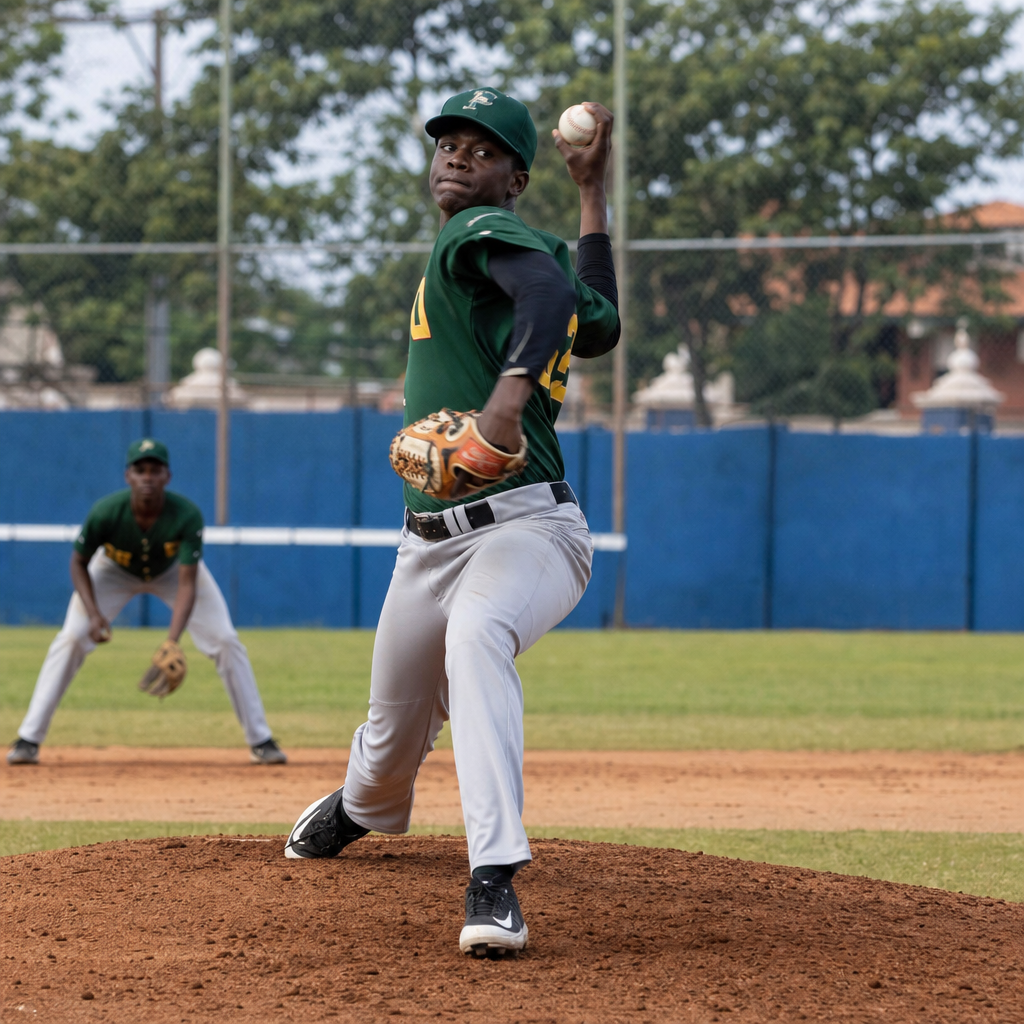
African nations in baseball occupy a small share of the global game today, yet their story is far richer than most fans realize. In this international baseball hub, “Miscellaneous” means the countries, programs, migration routes, and development efforts that sit outside the sport’s usual power centers but still shape its future. Baseball in Africa includes organized national federations, school clinics, academy systems, diaspora pathways, and improvised community play using limited equipment. It matters because the continent holds one of the world’s youngest populations, because talent identification is expanding beyond traditional markets, and because baseball’s governing bodies increasingly treat Africa as a long-term growth region. I have followed African baseball projects closely for years, and the pattern is consistent: progress rarely comes from one dramatic breakthrough. It comes from patient coaching, tournament access, equipment supply, and local leaders who keep programs alive between funding cycles. Understanding African baseball requires looking at pioneers, institutions, obstacles, and the countries building real foundations.
The first key term is development pathway, which refers to the route a player takes from first exposure to higher competition. In Africa, that pathway may begin at a school clinic in Uganda, a community league in South Africa, or a federation program in Nigeria, then move through regional championships, academy invitations, or overseas education. Another key term is baseball infrastructure, meaning not only fields and backstops but also scorekeeping, coaching certification, umpire training, transport, and governing capacity. A third term is talent export, the movement of standout players into foreign leagues, colleges, or training centers. These concepts explain why African baseball cannot be judged only by Major League Baseball signings. A country may be making real progress long before it produces a famous professional. The bigger question is whether it is building repeatable systems. That is why this topic matters within international baseball: Africa shows how the sport grows when passion exists before resources do, and how national progress depends on institutions as much as individual stars.
Pioneers, early adopters, and the countries that built visible baseball cultures
When people ask which African nations matter most in baseball history, South Africa usually comes first, and for good reason. South Africa has had the continent’s most sustained competitive presence, appearing in the World Baseball Classic and maintaining a longer formal structure than most peers. Its relative advantage came from stronger sports administration, better access to facilities, and ties to international competition. South African baseball never became a mass sport, but it built enough continuity to produce national teams, age-group programs, and recognizable export stories. Gift Ngoepe, though celebrated mainly as a South African baseball pioneer because he became the first African-born player to reach Major League Baseball, also symbolized how difficult the climb remained. His development passed through an academy environment linked to the Pittsburgh Pirates, proving that elite talent in Africa often needed external bridges to be fully seen.
Uganda is another essential case because it demonstrates grassroots durability. Baseball took hold there through school-based growth, missionary connections, and local coaching networks, especially around Luwero. Over time, Uganda developed into one of Africa’s strongest baseball communities, particularly at youth level. The country has produced Little League World Series participants and strong age-group national teams, not by chance but through repetition. Coaches created routines, schools embraced the sport, and communities learned the rules deeply enough to sustain regular play. In practical terms, Uganda shows what happens when baseball becomes embedded in school life rather than operating only as a top-down federation project. That model has limits, especially when players age out and need advanced competition, but it creates volume and cultural familiarity, which are often the hardest things to establish in emerging markets.
Nigeria, Kenya, Tanzania, Ghana, Burkina Faso, and Zimbabwe belong in any serious overview because each has hosted meaningful baseball activity at different times. Nigeria has drawn attention for its size, athletic base, and diaspora links, with federations and private actors trying to convert raw potential into organized competition. Kenya and Tanzania have benefited from East African proximity, coaching exchanges, and regional tournaments. Ghana and Burkina Faso have periodically appeared in development discussions through federation efforts and youth participation. Zimbabwe, despite economic instability, has maintained enough baseball engagement to remain part of the continental conversation. None of these countries has yet created a fully mature domestic baseball economy, but that is not the right standard. The more useful measure is whether there are trained coaches, regular youth events, federation legitimacy, and pathways to higher-level exposure. By that measure, several African nations have progressed further than casual observers assume.
How baseball develops in Africa: schools, federations, academies, and international support
Baseball develops in Africa through a patchwork model rather than a single pipeline. In countries where I have seen programs operate, schools are often the first stable entry point because they provide a ready-made schedule, a place to gather children, and trusted adult supervision. A coach can introduce throwing mechanics, base running, and simple game rules with very little equipment. That matters in environments where dedicated baseball fields are scarce. Federations then serve as the next layer, organizing selections, championships, and formal representation to continental and world events. Without a functioning federation, even a vibrant local baseball culture can stall because players have no recognized route to national competition. However, federations alone are not enough. They need volunteer energy, credible governance, and the ability to distribute equipment fairly, otherwise development remains concentrated in a few urban clusters.
International support has been decisive, especially from the World Baseball Softball Confederation, national embassies, faith-based groups, Japanese development initiatives, and Major League Baseball-linked programs. Support typically arrives in four forms: coaching education, equipment donations, tournament access, and showcase opportunities. The best projects do not simply hand out gloves and leave. They train local coaches to run practices, maintain year-round activity, and adapt drills to available conditions. Equipment still matters enormously because baseball is less forgiving than soccer when basic gear is missing. A shortage of catcher’s equipment, baseballs, or safe bats can limit game quality and player safety immediately. Yet foreign aid can also create dependency if local structures are weak. I have seen programs surge during donor attention and fade once visits stop. Sustainable growth happens when outside support strengthens local leadership instead of replacing it.
| Development channel | What it provides | Main limitation | African example |
|---|---|---|---|
| School programs | Regular participation, youth volume, basic skill learning | Limited advanced competition for older players | Uganda school-based baseball clusters |
| National federations | Official teams, championships, international entry | Funding and governance inconsistency | South Africa Baseball Union structures |
| Private academies | High-level training, scouting visibility, pro pathways | Narrow access and uneven long-term support | Pirates-linked pathway associated with Gift Ngoepe |
| International partnerships | Equipment, clinics, certification, travel support | Risk of dependence on external sponsors | WBSC and embassy-backed clinics across Africa |
The academy model deserves separate attention because it often captures headlines out of proportion to its scale. Academies can accelerate elite prospects by giving them specialized instruction, weight training, nutrition support, and direct scouting exposure. In Africa, that can be transformative for a small number of players. But academies do not substitute for broad participation. A country with one respected academy and no youth base is fragile; a country with hundreds of school players and no elite bridge is incomplete. The strongest systems connect the two. Players need local leagues to learn game instincts, then higher-performance settings to refine mechanics and compete against stronger opponents. This is why baseball leaders increasingly talk about ecosystems rather than talent alone. Raw athleticism exists almost everywhere. The scarce asset is an organized chain that converts ability into durable baseball progress.
Challenges slowing growth and the signs of real progress
The biggest challenges facing African baseball are not mysterious. They are cost, visibility, competition from entrenched sports, and limited game volume. Soccer dominates attention almost everywhere on the continent because it is cheap, culturally central, and professionally visible. Cricket matters strongly in parts of Southern and Eastern Africa. Rugby, athletics, and basketball also compete for talent. Baseball asks families and schools to commit to a sport that can appear unfamiliar and equipment-heavy. Travel creates another barrier. National championships may require long road trips or flights that federations cannot easily fund. Even where interest is high, teams often play too few meaningful games to accelerate development. A talented shortstop who sees quality pitching only a handful of times per year will improve more slowly than a peer in the Dominican Republic, Japan, or the United States. That competitive scarcity is one of the clearest hidden constraints.
Administrative inconsistency is another major issue. Some federations are energetic but under-resourced. Others suffer from weak governance, internal disputes, or irregular election cycles. In emerging baseball nations, one committed organizer can keep an entire regional program functioning; when that person burns out, activity can collapse. Reliable scorekeeping, age verification, umpire standards, and safeguarding procedures may sound secondary, but they are foundational if a country wants trust from parents, schools, sponsors, and international bodies. Field access also matters more than outsiders assume. Baseball can start on open ground, but sustained development requires mounds, base paths, fencing, and safe surfaces for repetition. Weather and maintenance add cost. Still, the picture is not bleak. Real progress is visible when countries hold annual youth tournaments, send teams to continental qualifiers, certify coaches locally, and produce players who can transition into college baseball or overseas training without starting from zero.
One sign of progress is that African baseball is no longer discussed only as a novelty. Scouts, federations, and development staff now speak in more specific terms about infield actions, bat speed, arm strength, and age-group competition standards in countries such as South Africa and Uganda. Another sign is the rise of women’s and girls’ participation through softball and shared development structures, which can strengthen facilities and coaching depth. Digital visibility has helped as well. Social media clips, federation pages, and online fundraising make local programs easier to document and support. Even modest data, such as number of registered players or certified coaches, gives donors and governing bodies a basis for decision-making. Progress in Africa remains uneven, but it is measurable. The countries moving forward are the ones turning isolated enthusiasm into calendars, coaching ladders, and institutional memory.
What this miscellaneous hub covers within international baseball
As a miscellaneous hub under international baseball, this page connects the full range of African baseball stories that do not fit neatly into one national profile or one tournament recap. Readers exploring this subject usually want answers to practical questions: Which African countries actually play baseball? Who are the pioneers? How do players get noticed? Why has growth been slower than in Latin America or East Asia? The continental overview matters because the answers are interconnected. South Africa’s competitive history, Uganda’s youth model, Nigeria’s scale, Kenya and Tanzania’s regional links, and smaller federation efforts all belong to the same developing ecosystem. A hub page should therefore guide readers toward national team histories, player profiles, youth development case studies, diaspora impact, and governing body analysis. That structure reflects how people search and how the sport really develops: across borders, through networks, and in stages rather than headlines.
The main benefit of understanding African nations in baseball is perspective. It shows where the sport’s next expansion may come from and why patience is essential when evaluating emerging regions. Africa has pioneers, committed coaches, and genuine baseball communities already. What it needs is more continuity, more competition, and stronger bridges from local play to elite opportunity. For readers following international baseball, this is not a side note. It is a live growth story with lessons about development, equity, and talent discovery. Use this hub as your starting point, then continue into country-by-country coverage, player pathways, and tournament analysis to see where African baseball has been and where it is heading next.
Frequently Asked Questions
Why is baseball in African nations less visible than in traditional baseball powerhouses?
Baseball in African nations is less visible largely because the sport developed outside the world’s usual baseball centers, such as the United States, Japan, South Korea, Cuba, the Dominican Republic, and Venezuela. For decades, international media coverage, scouting infrastructure, television rights, and major tournament attention have focused on countries with long-established professional systems and deep domestic fan bases. In much of Africa, by contrast, baseball has often grown through smaller federations, volunteer-run programs, school initiatives, missionary outreach, and local community efforts rather than through heavily financed professional leagues. That makes the sport easier to overlook, even when meaningful progress is happening on the ground.
Another reason is infrastructure. Many African baseball communities have had to build the game with limited access to dedicated fields, equipment, coaching certification, and regular competition. In some areas, players train on shared open spaces, modify existing soccer or school grounds, and use improvised gear when official equipment is scarce. That reality does not mean the game lacks seriousness or talent; it means development happens under very different conditions. Visibility often follows money, facilities, and established competition pathways, so countries working from a grassroots base naturally receive less global attention.
There is also a perception gap. Casual baseball fans may assume Africa has little connection to the sport, but the continent’s baseball story includes national teams, youth academies, international qualifiers, diaspora athletes, and long-running local organizations. The issue is not the absence of baseball, but the relative absence of coverage. As more federations strengthen their programs, more players reach international systems, and more development partnerships mature, African baseball is becoming easier for the wider baseball world to recognize.
Which African countries have played important roles in baseball development?
Several African nations have contributed meaningfully to baseball’s growth, each in different ways. South Africa is one of the most established baseball nations on the continent and has long maintained a recognizable presence in international competition. It has participated in global qualifying structures, developed organized domestic programs, and served as one of the continent’s clearest examples of sustained baseball administration. Because of that history, South Africa is often treated as a benchmark when discussing organized baseball in Africa.
Uganda has also become a widely discussed success story, especially in youth development. Its baseball community has earned attention through grassroots coaching, school-based participation, and international youth competition. Uganda’s rise demonstrates how committed local instruction and consistent player development can create momentum even without the advantages enjoyed by traditional baseball nations. Nigeria is another important example, with growing participation, stronger institutional interest, and increasing visibility in international development conversations. In recent years, Nigeria has been part of a broader narrative about baseball expansion through federations, clinics, and player identification efforts.
Beyond those countries, baseball has been present in places such as Kenya, Tanzania, Ghana, Burkina Faso, Zambia, Zimbabwe, and others at different points through federation activity, youth initiatives, and international partnerships. The level of continuity and resources varies from country to country, but that variation is part of the larger story. African baseball should not be understood as a single uniform movement. It is a patchwork of local histories, national ambitions, and development stages. Some countries have stronger competitive traditions, some are building through schools, some rely on diaspora links, and others are still establishing the basics of regular training and league play. Together, they show that baseball in Africa is broader and more dynamic than many fans expect.
How do players from African nations usually find pathways into higher levels of baseball?
Players from African nations typically reach higher levels of baseball through a combination of national team play, academy training, school and community programs, regional tournaments, and diaspora connections. Unlike prospects in countries with mature professional leagues and dense scouting networks, many African players do not grow up in an environment where scouts are constantly present. As a result, talent identification often depends on showcases, international qualifiers, development camps, or relationships with coaches and organizations linked to baseball abroad. These pathways can be less direct, but they are increasingly important as interest in new talent regions expands.
National federations play a major role in this process. When federations organize youth teams, senior national teams, and international competition opportunities, they create visibility for players who might otherwise remain unknown outside their local communities. Academy systems also matter, especially in countries where dedicated baseball instruction can help athletes refine mechanics, conditioning, and game awareness to international standards. For some players, travel abroad for education or training becomes the bridge to more advanced competition. In other cases, African-born or African-eligible athletes emerge through diaspora communities in Europe, North America, or elsewhere, then strengthen the connection between local baseball programs and the wider professional world.
It is also important to understand that the pathway is not purely athletic. Access to equipment, travel funding, documentation, coaching, nutrition, and language support can all influence whether a talented player advances. That is why development efforts in Africa often focus not only on skill training, but on building complete support systems. The long-term future of African baseball depends on making these pathways more consistent and less dependent on rare individual luck. As federations, nonprofits, international governing bodies, and private partners invest more deeply, the route from local field to global opportunity becomes more realistic for a greater number of players.
What are the biggest challenges facing baseball growth across Africa?
The biggest challenges facing baseball growth across Africa include infrastructure limitations, funding gaps, equipment shortages, limited competitive schedules, and uneven access to trained coaching. Baseball is a skill-intensive sport that benefits from repetition, specialized instruction, and suitable playing environments. In regions where fields are multipurpose or poorly maintained, and where baseball equipment is expensive or difficult to import, development can be slowed from the start. Players may have passion and athletic ability, but without regular access to bats, gloves, helmets, catcher’s gear, and quality practice space, progress becomes harder to sustain.
Another major challenge is continuity. Many baseball projects begin with enthusiasm but struggle to maintain momentum over time because they depend on a small number of volunteers, donors, or outside partners. If leadership changes, funding dries up, or equipment pipelines stop, entire local programs can weaken. This is especially important in a sport that competes for attention with soccer, basketball, athletics, and other activities that may already have stronger roots or lower startup barriers. Baseball often requires patient, long-term planning, and that kind of stability is difficult without institutional support from schools, municipalities, federations, and international governing bodies.
There is also the issue of exposure. Without frequent games against strong opponents, players and coaches can find it difficult to measure progress. Regular domestic competition is essential, but so is access to regional and international tournaments that raise standards and motivate investment. Administrative capacity matters as well. Successful baseball development depends on organized federations, scheduling, umpiring, coaching education, player safety standards, and strategic planning. The encouraging part is that many African baseball communities are already addressing these challenges creatively, using clinics, shared resources, school programs, and partnerships to keep the sport growing. The obstacles are real, but so is the commitment behind the game.
What does the future look like for baseball in African nations?
The future of baseball in African nations is promising, though it will likely grow in stages rather than through one dramatic breakthrough. The foundation is already visible in national federations, school-based programs, youth clinics, academy models, and a growing awareness among international baseball organizations that Africa represents both an athletic talent base and an important development frontier. As more communities gain access to coaching, equipment, and consistent competition, the sport’s footprint can expand steadily. Success will not be measured only by producing a few standout players, but by building durable local ecosystems where baseball can be taught, played, and administered year after year.
One of the most encouraging signs is the diversity of baseball activity across the continent. In some countries, growth is driven by organized federations and formal competition. In others, the game spreads through schools, community volunteers, faith-based programs, and improvised neighborhood play. That variety matters because it shows baseball is not dependent on a single model. It can adapt to local conditions while still connecting to the global sport. The rise of digital media also helps. Players, coaches, and federations now have more ways to share highlights, attract support, access instruction, and tell their own stories directly to international audiences.
In practical terms, the future will depend on sustained investment in fundamentals: coaching education, youth participation, field access, equipment distribution, competition structure, and clear player pathways. If those elements continue to improve, African nations can become more influential in international baseball than they are today. The continent may never mirror the development patterns of traditional baseball powerhouses, and it does not need to. Its progress is likely to come through a distinct mix of grassroots resilience, national organization, and global connection. That is what makes the story of African nations in baseball so important: it is not just about where the sport has been, but about where it can still go.