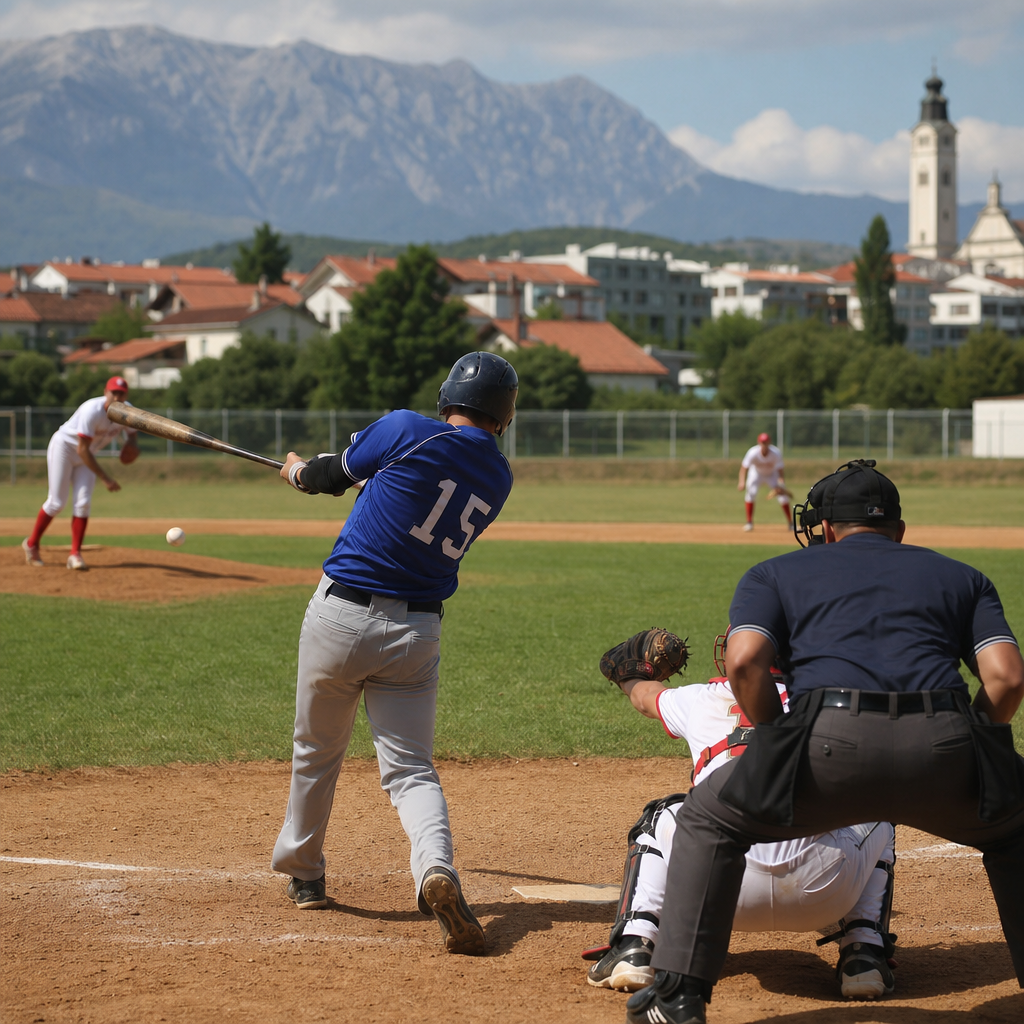
Baseball in the Balkans is no longer a novelty discussed only by expatriates and niche federations; it is an emerging regional story shaped by persistence, small budgets, volunteer coaching, and a growing network of clubs from Serbia to Bulgaria. In this context, the Balkans generally refers to southeastern European countries including Serbia, Croatia, Slovenia, Bulgaria, Romania, Greece, Bosnia and Herzegovina, North Macedonia, Montenegro, and neighboring states that share overlapping sports cultures and development constraints. Emerging teams are not simply new national squads. They include youth academies, city clubs, university programs, and rebuilt senior national teams that are learning how to recruit athletes, secure diamonds, and compete regularly. I have worked around international baseball development long enough to recognize the same pattern repeating here: one committed coach starts with borrowed equipment, a small youth group forms, local tournaments follow, and only then does a federation gain stability. This matters because international baseball growth rarely begins in established markets. It expands where committed organizers create structure before visibility arrives. The Balkans now offers one of Europe’s clearest examples of that process, making it an important hub within the broader international baseball landscape.
The Balkan baseball landscape: where the sport stands now
The current Balkan baseball landscape is uneven but unquestionably active. Serbia and Croatia have some of the region’s deepest baseball histories, with organized clubs, domestic competition, and players who have represented their countries consistently in European Baseball Championship qualification pathways. Bulgaria has maintained visible national-team activity and has periodically produced competitive youth squads. Slovenia and Greece have faced more stop-start development cycles, often tied to funding and field access, but continue to generate players through local club efforts. Romania has shown flashes of growth through youth participation and soft infrastructure building, while Bosnia and Herzegovina, North Macedonia, and Montenegro remain earlier in the developmental curve, where baseball often depends on a few organizers rather than a broad system.
Across the region, the same operational questions determine whether a team progresses. Does it have a playable field with reliable dimensions and maintenance? Can it afford baseballs, catcher’s gear, and bats without depending entirely on donations? Is there a coaching pathway beyond one passionate founder? Can players get enough game reps against external competition rather than only intrasquad sessions? These are not minor details. They decide whether a federation exists mostly on paper or develops real baseball capacity. In Balkan countries, where football, basketball, volleyball, and handball dominate public attention, baseball survives by being structurally disciplined. The strongest programs are not always the most talented; they are often the best organized.
Serbia illustrates this clearly. The country has sustained clubs in and around Belgrade and has fielded national teams with a recognizable domestic core. Croatia, particularly through Zagreb-based baseball communities, has benefited from longer institutional memory and cross-border competition. Bulgaria has leaned on tournament participation and youth engagement. These examples matter because emerging baseball nations rarely rise through a single golden generation. They rise because a few clubs keep training through winters, maintain scorekeeping standards, and teach players the details that separate raw athleticism from playable baseball: first-step reads, cut-off responsibilities, strike-zone discipline, and situational awareness.
What makes a team “emerging” in Balkan baseball
An emerging baseball team in the Balkans is not defined only by wins and losses. It is defined by capability gains. When I assess whether a Balkan program is truly emerging, I look at six markers: regular training, youth intake, coaching continuity, umpire education, domestic game volume, and cross-border competition. A team can lose heavily to a more mature European opponent and still be emerging in the healthiest sense if it fields multiple age groups and keeps the same coaching staff year to year. By contrast, a senior team built mostly from adult converts with no youth pipeline may post a short-term result but remain fragile.
Baseball development in this region often starts with athlete transfer from other sports. Infielders may come from handball or tennis because they already understand reaction speed and throwing mechanics. Outfielders often come from track or football because they can cover ground. Catchers are hardest to develop because the position requires specialized receiving, blocking, throwing, and game-management skills that few athletes encounter elsewhere. Pitching is the ultimate bottleneck. A Balkan team becomes genuinely emerging when it can train pitchers safely with planned workloads, repeatable mechanics, and some form of long-term arm care rather than improvising each weekend.
Another sign of emergence is administrative maturity. Teams need registration systems, basic safeguarding standards for youth players, travel planning, and data reporting to national federations and continental governing bodies. That back-office work sounds dull, but it determines access to grants, tournaments, and legitimacy. In practice, the clubs that survive in the Balkans are those that treat baseball as a structured program instead of a casual hobby. Once that shift happens, better athletes are more willing to join because parents, schools, and sponsors can see stability.
Country-by-country momentum and development patterns
Serbia remains one of the most important countries to watch because it combines history with developmental urgency. Clubs have produced a base of players who understand the game beyond introductory level, and national-team participation has given Serbian baseball visibility inside Europe’s second and third competitive tiers. The challenge is scaling. Serbia needs deeper youth retention, more certified coaches, and stronger club-to-club scheduling to avoid overreliance on a small player pool. Croatia’s advantage is tradition. Baseball has existed there long enough that knowledge transmission is less fragile. When a coach steps away, another person often understands practice design, scorekeeping, and player development.
Bulgaria sits in a compelling middle ground. Its baseball ecosystem has often depended on concentrated local effort, yet the country has shown it can assemble credible teams and maintain tournament relevance. For Bulgaria, the next step is broadening participation outside a few centers. Romania has promise because of its population size and access to larger urban schools, but baseball competes against entrenched mainstream sports and limited field inventory. Greece presents a different case. International exposure and tourism create awareness, but continuity has historically been difficult, especially when facilities and federation support fluctuate. Slovenia benefits from proximity to stronger central European baseball cultures, which can help coaching exchange and friendly competition.
Bosnia and Herzegovina, North Macedonia, and Montenegro should not be dismissed simply because their baseball footprints are smaller. Emerging markets often move fastest once a committed nucleus forms. One physical education teacher, one municipal sports office, and one partnership with an established neighboring club can change the trajectory of a national program. In this region, baseball growth is rarely linear. A country may disappear from wider attention for several seasons, then re-emerge through a youth cohort, a renovated field, or diaspora involvement that brings equipment and know-how back into the system.
| Country | Current Strength | Main Constraint | Most Important Next Step |
|---|---|---|---|
| Serbia | Established clubs and national-team experience | Limited depth beyond core player base | Expand youth development and coaching certification |
| Croatia | Longer baseball tradition and knowledge continuity | Scale and public visibility | Strengthen domestic league promotion and junior pathways |
| Bulgaria | Competitive pockets and youth activity | Geographic concentration | Build programs in additional cities |
| Romania | Large population and urban recruiting potential | Facilities and awareness | School-based entry programs and shared fields |
| Greece | International visibility and athletic talent | Continuity of support and facilities | Stabilize club structure and recurring competition |
The real engines of growth: clubs, coaches, and youth programs
National teams get attention, but clubs do the heavy lifting. In the Balkans, a healthy club typically runs beginner sessions for children, a developmental group for teenagers, and a senior side that mixes experienced players with converts from other sports. Without that ladder, progress stalls. I have seen promising Balkan teams collapse after one good tournament because they had no under-15 or under-18 pipeline. The clubs that endure build weekly habits: tee work, front toss, throwing progression, defensive repetition, and simple baserunning decisions practiced until they become automatic.
Coaching quality matters more than raw numbers in the early stages. A knowledgeable coach can prevent the common mistakes that slow emerging baseball countries: overusing young pitchers, teaching level swings to every hitter regardless of body type, neglecting catch play fundamentals, or playing games before athletes can execute routine throws. Good coaches in this region often adapt creatively. If there is no full diamond, they emphasize infield footwork, short-burst throwing, and machine-free hitting drills. If equipment is scarce, they rotate stations and prioritize repetitions over perfect conditions. That practical mindset is one reason Balkan baseball keeps advancing despite obvious barriers.
Youth programs also determine whether baseball feels foreign or local. When children in Belgrade, Zagreb, Sofia, or Bucharest wear club caps and invite classmates to watch a weekend game, the sport stops being an imported curiosity. Federations that connect with schools, summer camps, and municipal recreation departments grow faster because they lower the first barrier: unfamiliarity. Parents need to know what baseball is, how safe it is, what equipment is required, and whether there is a clear pathway from beginner level to structured competition. Programs that explain these basics in plain language consistently recruit better.
Facilities, funding, and the everyday obstacles teams face
The biggest obstacle for baseball in the Balkans is not interest; it is infrastructure. A team can train in a park for only so long before field quality limits skill development. Proper infields teach true hops, double-play feeds, mound mechanics, and catcher-thrower timing. Outfields matter because route running changes when the ball carries over maintained grass rather than uneven public ground. Yet building and maintaining a baseball-specific facility is expensive, especially in countries where municipal budgets favor football pitches, basketball halls, and multipurpose courts. For many Balkan clubs, access to any dependable training space is a seasonal negotiation.
Funding follows the same pattern. Most emerging teams rely on member dues, small sponsorships, federation support, occasional grants, and equipment donations from abroad. That financial mix is unstable. Baseballs wear out, gloves are costly, and catcher’s gear must be replaced for safety reasons. Travel is another hidden expense. Because competition clusters in specific cities or crosses borders, teams often spend more on buses and lodging than casual observers realize. If a youth team cannot afford tournament travel, development slows immediately because players lose live-game repetitions and the motivational effect of representing their club or country.
There are workable solutions. Shared-use facilities can keep programs alive if clubs secure regular time slots and basic storage. Partnerships with baseball organizations in Italy, Germany, the Netherlands, or the Czech Republic can provide used equipment, coach education, and friendly matches. Municipal governments are more likely to help when clubs present baseball as a youth engagement and community-health asset rather than a niche import. Clear reporting helps too. When a club can show participant numbers, school partnerships, and tournament hosting value, it becomes easier to justify support.
How Balkan teams can accelerate from participation to competitiveness
For Balkan baseball teams to become consistently competitive, they need more than enthusiasm. They need deliberate systems. First, every federation should prioritize a youth-first model, because senior-only growth is fragile. Second, coaching education must be standardized. Even basic national clinics on throwing progression, defensive alignment, batting practice structure, and scorekeeping can raise the floor quickly. Third, clubs need reliable game volume. A player who practices twice a week but plays only six real games a season develops much slower than one who sees regular live pitching and game-speed defensive situations.
Cross-border scheduling is especially important in the Balkans because domestic leagues can be small. Weekend series between neighboring countries reduce travel complexity while improving competition quality. Digital tools can help as well. Shared video analysis using simple phone cameras, remote coach meetings, and centralized stats tracking make even small programs more professional. Named tools are not luxuries here; they are force multipliers. GameChanger-style scoring, Rapsodo or Pocket Radar where budgets allow, and structured strength programs based on established baseball training principles can help clubs make smarter decisions.
The broader benefit is regional credibility. When Balkan teams become more organized, they attract athletes, sponsors, and media attention that once seemed out of reach. That is how an emerging baseball region matures: not through one miracle result, but through repeated competence. Baseball in the Balkans is still developing, but the foundation is real. The countries with the best chance to lead are the ones treating today’s small gains as tomorrow’s system. If you follow international baseball, keep this region on your map and explore the related country and club stories linked from this hub.
Frequently Asked Questions
Why is baseball starting to grow in the Balkans now?
Baseball is gaining traction in the Balkans because several long-developing factors are finally working together. First, local clubs and federations have spent years building the sport patiently through school demonstrations, community training sessions, and volunteer-led youth programs. What once depended heavily on expatriate communities or a handful of enthusiasts is increasingly supported by local coaches, parents, and players who want a wider sporting landscape beyond football, basketball, volleyball, and handball. Second, the cost of entry has become more manageable in some areas thanks to donated equipment, shared facilities, and stronger regional cooperation between clubs. Teams that once struggled to field a roster can now benefit from informal cross-border networks that help with coaching, scheduling, and player development.
Another reason is visibility. International tournaments, social media, and streaming have made baseball easier to follow and understand, even in countries where it has little historical presence. Young athletes in Serbia, Croatia, Bulgaria, Romania, Slovenia, Greece, and neighboring states can now watch games, learn rules, and study training methods without relying solely on local infrastructure. That matters in emerging sports. Baseball in the Balkans is still a developing ecosystem, but it is no longer isolated. As more clubs organize consistently and more regional competitions take shape, the sport begins to feel legitimate, accessible, and worth investing time in. Growth remains uneven from country to country, but the overall direction is clear: baseball is moving from novelty status toward a small but durable regional presence.
Which Balkan countries and teams are helping drive the sport forward?
The sport’s progress is regional rather than concentrated in just one place, which is one of the most encouraging signs for its future. Serbia has often been part of the conversation because of its active clubs and a history of organized participation that has helped keep baseball visible. Croatia has also played an important role, with established teams and a tradition of baseball and softball activity that has provided valuable continuity. Bulgaria and Romania are increasingly relevant as developing environments where committed local organizers continue to build opportunities for players despite limited resources. Slovenia and Greece have also contributed through club activity, athlete development, and engagement with broader European baseball structures.
Beyond those more visible examples, the real story includes emerging efforts in Bosnia and Herzegovina, North Macedonia, Montenegro, and nearby southeastern European states where the sport may not yet be deeply rooted but is gaining ground through persistence. In many cases, teams are small, budgets are tight, and travel is challenging, yet clubs continue to operate because of dedicated volunteers and multi-role organizers who act as coaches, administrators, groundskeepers, and recruiters at the same time. That type of grassroots resilience is what makes emerging teams so important. They may not have large fan bases or polished stadiums, but they create the actual foundation of the sport. In a region like the Balkans, growth does not depend only on headline programs; it depends on whether local teams can survive, train regularly, recruit youth players, and keep showing up year after year.
What are the biggest challenges facing emerging baseball teams in the Balkans?
The biggest challenge is resources. Many clubs operate on extremely modest budgets and must stretch every donation, membership fee, and sponsorship opportunity. Equipment can be expensive, especially for new players who need gloves, bats, protective gear, and uniforms. Field access is another major hurdle. Baseball diamonds are uncommon across much of the Balkans, so teams often adapt football fields, multipurpose grounds, or borrowed training spaces. That affects both development and presentation. It is harder to teach the game properly when dimensions are inconsistent, bullpens are unavailable, and practice time is limited by other sports using the same venue.
Travel is also a serious obstacle. Because the baseball community in southeastern Europe is still relatively small, teams may need to travel long distances for meaningful competition. That raises costs for transportation, lodging, and scheduling, particularly for youth squads and amateur adult teams. On top of that, baseball competes for attention in countries where sporting identity is already dominated by well-established games with stronger media coverage and public funding. Recruiting athletes is therefore a constant process of education as much as selection. Coaches are not simply training players; they are often explaining the rules to newcomers, convincing families that the sport has value, and creating a culture from the ground up. Despite these barriers, many teams continue to grow precisely because their members accept that development in the Balkans will be incremental, community-based, and heavily reliant on passion.
How are clubs and federations developing young players in a region where baseball is still new?
Youth development in the Balkans usually begins with accessibility rather than specialization. Since baseball is still unfamiliar to many families, clubs often introduce the sport through school visits, open training days, beginner clinics, and simplified practice sessions designed to make the game less intimidating. Coaches focus on fundamentals such as throwing mechanics, catching, hitting stance, base running, and game awareness, while also emphasizing that new players do not need prior baseball knowledge to participate. This welcoming approach is essential in emerging markets because the first goal is not producing elite prospects immediately; it is creating a stable pipeline of children and teenagers who enjoy the sport enough to stay involved.
Federations and local organizers also benefit from regional cooperation. In developing baseball environments, coaching education, shared tournaments, and cross-border clinics can have an outsized impact. A youth player in one Balkan country may gain valuable experience simply by facing another developing club from a neighboring state, something that helps normalize competition and raises standards on both sides. Volunteer coaches are central to this process, and many of them teach multiple age groups while handling administrative responsibilities as well. Although this system can be fragile, it also creates strong community ties. Over time, the most successful programs tend to be the ones that combine patience, consistency, and visibility: they stay active in schools, maintain regular training, involve parents, and give young players a sense that baseball in the Balkans is not a temporary experiment but a real sporting path.
What does the future look like for baseball in the Balkans?
The future is promising, but it will likely be built through steady progress rather than sudden transformation. Baseball in the Balkans is not on the verge of overtaking traditional regional sports, and expecting that would miss the real success story. The more realistic and meaningful goal is sustainable expansion: more clubs that survive beyond a few seasons, more youth players entering the sport, better coaching standards, improved facilities, and stronger domestic or regional competition calendars. If teams across Serbia, Croatia, Bulgaria, Romania, Greece, Slovenia, Bosnia and Herzegovina, North Macedonia, Montenegro, and neighboring states can continue strengthening these basics, the sport will be in a much healthier position within the next decade.
There is also room for baseball to benefit from its identity as a growth sport. Because it is still emerging, clubs and federations can be flexible, creative, and collaborative in ways that larger sporting systems sometimes are not. Partnerships with schools, municipalities, diaspora communities, European baseball bodies, and local sponsors could make an enormous difference. The key will be turning enthusiasm into structure. Emerging teams need reliable training spaces, youth retention, coaching continuity, and repeatable competition opportunities. If those elements improve, the Balkans could develop a recognizable baseball footprint defined not by scale alone, but by resilience, regional cooperation, and a genuine grassroots culture. That is what makes the current moment important: the foundations are still being laid, and the teams doing that work now are shaping what Balkan baseball will become.