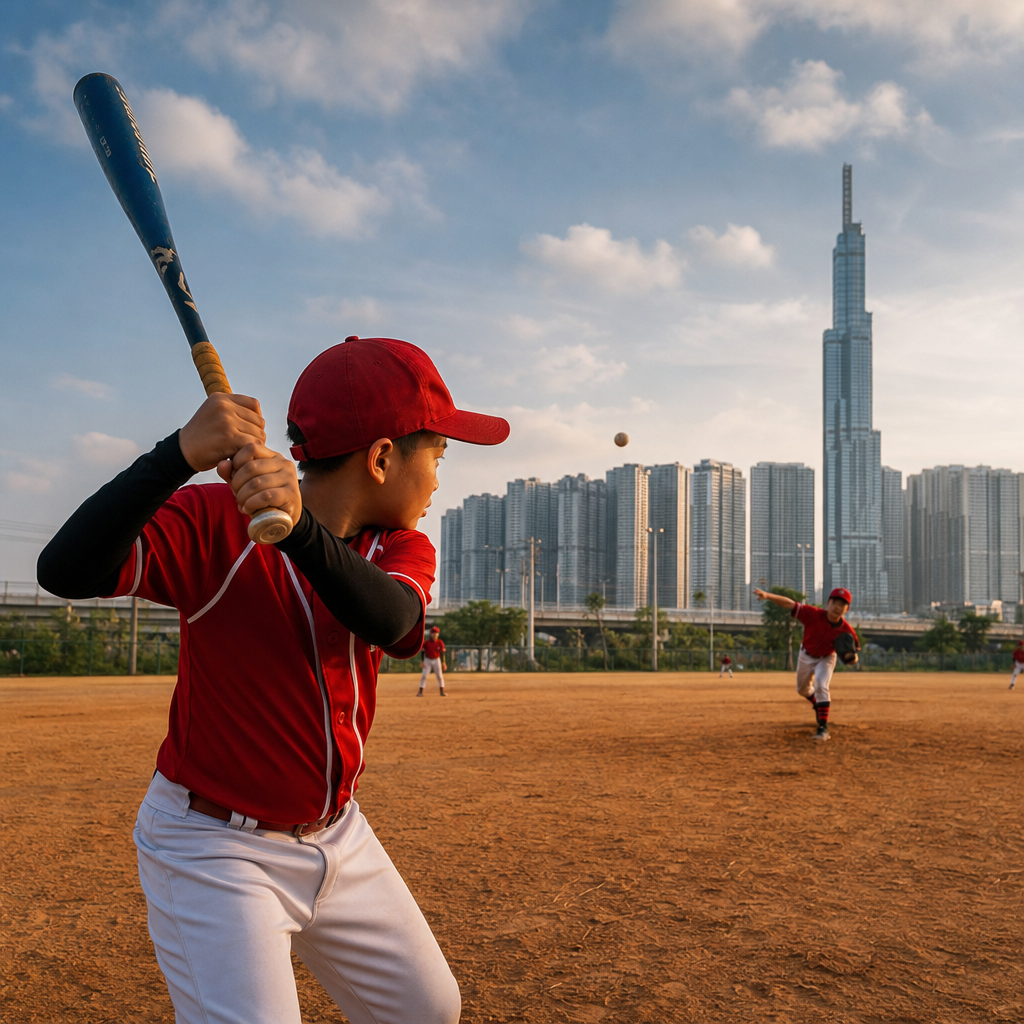
Baseball in Vietnam is still a niche sport, but its recent growth signals the beginning of a new era for athletes, schools, sponsors, and fans looking beyond the country’s traditional sporting landscape. In practical terms, baseball in Vietnam refers to organized play that ranges from youth clinics and university clubs to expatriate leagues, national team activity, and early-stage federation development. That broad base matters because a sport does not become sustainable through elite competition alone; it needs fields, coaches, equipment supply, rules education, media coverage, and a pathway that keeps beginners involved long enough to improve. I have seen this pattern repeatedly in emerging baseball markets across Asia: interest often starts with a small cluster of committed players, then expands when institutions create routine opportunities to train and compete. Vietnam is now moving through that exact phase. For readers exploring international baseball, Vietnam deserves attention because it illustrates how the sport takes root in a country without a long domestic baseball tradition yet with many of the ingredients needed for long-term adoption. A young population, growing urban middle class, expanding international education sector, and increased exposure to Japanese, Korean, Taiwanese, and American culture all create favorable conditions. At the same time, baseball faces real constraints, including limited diamonds, competition from football and badminton, equipment costs, and a shortage of certified coaches. Understanding both the promise and the obstacles is essential if you want a realistic picture of where Vietnamese baseball stands today and where it can go next.
For a hub article under international baseball, the Vietnamese case is especially useful because it connects many “miscellaneous” themes that shape developing baseball nations. These include grassroots recruitment, school adoption, expatriate influence, government recognition, women’s participation, soft infrastructure such as scorekeeping and umpiring, and the challenge of converting casual curiosity into league participation. Vietnam is not yet a country where baseball dominates television ratings or fills large stadiums, but that is precisely why this moment is important. Early eras define habits. If organizers build a stable foundation now, future growth will be easier, cheaper, and more inclusive. If they do not, interest will remain fragmented and dependent on a handful of volunteers. The story, then, is not simply whether baseball exists in Vietnam; it is whether the sport can establish enough depth to become part of the country’s broader athletic culture.
How Baseball Reached Vietnam and Why Interest Is Growing
Baseball’s presence in Vietnam has developed through overlapping channels rather than one single historical event. Expatriate communities introduced organized games in major cities, especially Ho Chi Minh City and Hanoi, where international schools, foreign businesses, and diplomatic networks already supported other imported sports. At the same time, regional exposure from East Asian baseball powers created familiarity with the game’s symbols and stars. Japanese professional baseball, the Korea Baseball Organization, and Major League Baseball clips distributed through social media and streaming platforms gave younger Vietnamese viewers access they would not have had twenty years ago. In my experience working around emerging baseball programs, media visibility alone rarely creates durable participation, but it lowers the barrier of unfamiliarity. People are more willing to attend a clinic if they have at least seen the sport played.
Another growth driver is education. International schools often act as the first structured entry point for baseball in countries where the sport is still developing. They can import bats, gloves, and safety gear; they have access to physical education staff used to introducing new activities; and they can organize games against other schools. Once students try baseball in a school environment, some seek club play outside campus. That matters because school-based exposure is usually more scalable than relying only on adult recreational leagues. Vietnam’s expanding network of international schools therefore functions as a practical incubator for future players, coaches, and even parents willing to support the sport.
Cultural crossover also plays a role. Vietnam has strong existing habits around precision skill sports and team sports that reward repetition, discipline, and tactical awareness. Those traits translate well to baseball instruction. Hitting mechanics, defensive footwork, and pitching command all improve through structured repetition, something Vietnamese athletes often adapt to quickly when coaching is consistent. The challenge is not whether athletes can learn baseball. The challenge is whether they have enough repetitions under qualified supervision to progress beyond introductory level.
The Current Baseball Ecosystem in Vietnam
Vietnam’s baseball ecosystem is best understood as a patchwork of initiatives at different stages of maturity. There are youth programs run through schools or community organizers, adult amateur groups often anchored by expatriates, and attempts to create stronger national-level coordination. In some areas, baseball shares space with softball, which is common in developing markets because softball fields can be easier to adapt from existing multiuse grounds and because introductory throwing and batting progressions can overlap. This mixed ecosystem is not a weakness by itself. In fact, many successful baseball countries built early momentum through blended baseball-softball development before specialization increased.
The biggest structural issue is field access. A regulation baseball diamond requires more specialized dimensions and maintenance than many urban spaces can easily provide. As a result, teams often practice on modified football pitches, school grounds, or open fields with temporary base paths and portable screens. That setup is workable for basic drills and controlled scrimmages, but it limits realistic defensive positioning, outfield reads, and full-game repetition. When I evaluate growth potential in a new baseball market, I look first at playable space. Talent can emerge with minimal resources, but consistent game quality cannot improve without reliable fields.
Equipment availability is the second constraint. Good beginner gloves, proper helmets, catcher’s gear, and age-appropriate bats remain expensive relative to average household budgets. Imported baseball gear also tends to move through smaller retail channels than football or badminton equipment, raising costs further. Some clubs solve this through shared equipment pools, donated gear, or sponsorship arrangements. That works in the short term, but sustained growth eventually requires more predictable local distribution. Without it, new players often stop after a few sessions because they cannot access or afford the right equipment.
| Area | Current Strength | Main Limitation | What Would Improve It |
|---|---|---|---|
| Youth participation | Strong curiosity through schools and clinics | Limited follow-up leagues | Regular age-group competition |
| Coaching | Committed volunteers and foreign mentors | Few certified local coaches | Structured coach education courses |
| Facilities | Multiuse spaces available in cities | Very few baseball-specific diamonds | Dedicated training hubs with cages and bullpens |
| Equipment | Some imported gear and donations | High cost and uneven access | Retail partnerships and shared club inventories |
| Competition | Friendly games and community events | Inconsistent season structure | City leagues and national calendar planning |
Grassroots Development, Schools, and Community Programs
If baseball in Vietnam is going to last, grassroots work will determine the outcome more than any single national team appearance. The most effective grassroots model is simple: introduce the game in low-pressure environments, use modified equipment for safety, then create an immediate next step for interested players. Tee-ball, soft toss stations, tennis-ball throwing progressions, and small-sided scrimmages are practical tools because they reduce failure early. Beginners who cannot yet catch hard balls or hit live pitching still experience success, and success keeps them returning.
Schools are central to this process. A one-day sports festival can spark awareness, but ongoing after-school clubs create habit formation. The difference is significant. In one-off events, children try baseball as a novelty. In weekly programs, they begin to understand positions, rules, and teamwork. The best programs I have observed in emerging markets also train physical education teachers, not just outside coaches. That approach spreads baseball knowledge inside the institution instead of making the sport dependent on one visiting expert.
Community clubs can then bridge the gap between school exposure and competitive play. For Vietnam, that means affordable membership structures, shared gear, and transportation solutions for families who are interested but not yet fully committed. It also means designing age-group pathways carefully. Twelve-year-olds should not be thrown into adult practice environments and expected to thrive. Clear beginner, intermediate, and advanced tracks keep players engaged because training matches their ability level. This is one of the most overlooked issues in new baseball nations: when the skill gap inside one session becomes too wide, beginners feel lost and experienced players feel held back.
Coaching, Rules Literacy, and the Need for Baseball Infrastructure
Coaching quality is the force multiplier for every other investment. A field without a coach becomes empty space; a small field with a good coach can produce real development. Vietnam needs more local coaches who understand throwing progression, hitting fundamentals, arm care, defensive sequencing, and practice planning. It also needs scorekeepers, umpires, and administrators who can run games consistently. Baseball is detail heavy. Misunderstood force plays, substitution rules, pitch counts, and safety protocols can disrupt confidence quickly, especially for beginners. Strong rules literacy makes the game feel more accessible, not more complicated.
Coach education does not need to start with advanced analytics. It should start with safe throwing mechanics, age-appropriate workloads, station-based practice design, and clear communication. Organizations such as the World Baseball Softball Confederation provide development frameworks, and national programs in Japan, South Korea, and the United States offer proven models for youth instruction. Borrowing these standards is faster and safer than improvising from scratch. That said, imported methods must be adapted to local conditions. A two-hour, equipment-rich practice model from an elite academy may not fit a Vietnamese public park session with shared gloves and limited space.
Infrastructure also includes less visible systems: scheduling software, registration processes, first-aid readiness, weather protocols, and social media communication. In newer baseball environments, I often find that organizers focus on the visible elements such as bats and uniforms while underestimating administration. But reliable communication is what convinces families and adult players that a club is serious. If practice times change without notice or league games are canceled unpredictably, participation drops. Trust in the system matters just as much as excitement about the sport.
Competition, National Ambitions, and Regional Context
For baseball in Vietnam to move from interesting project to recognized sport, competition must become more regular and more meaningful. Friendly games are useful, but leagues and tournaments create measurable progress. Players improve faster when they prepare for scheduled opponents, keep score, and experience the pressure of real innings. City-based leagues in Hanoi and Ho Chi Minh City could provide the first stable layer, followed by intercity tournaments and, eventually, stronger national championship structures. That progression mirrors the developmental path seen in many smaller baseball countries.
Regional context matters here. Asia contains some of the world’s strongest baseball cultures, and Vietnam can learn from nearby examples. Japan and South Korea show what mature baseball systems look like, with deep school competition, professional leagues, and advanced coaching science. Taiwan demonstrates how a baseball-centric identity can develop in a relatively compact market. Meanwhile, newer or smaller programs across Southeast Asia reveal a more relevant lesson: steady progress usually comes from repeated grassroots activity, cross-border partnerships, and selective international exposure rather than trying to build everything at once.
National team ambitions can help if they are handled realistically. International participation gives players a target and attracts media attention, but it should not consume all available resources. I have seen developing federations overspend on short-term tournament appearances while neglecting youth recruitment at home. The smarter model is to use national representation as a promotional tool while directing most investment toward coach education, youth pathways, and local competition. Medals and rankings may come later, but without domestic depth they rarely last.
Media, Business Support, and What the Next Five Years Could Look Like
Media visibility will influence whether baseball in Vietnam remains a hobbyist niche or becomes a recognized part of the sports economy. The opportunity is larger than traditional television. Short-form video, livestreamed games, player profiles, and bilingual social content can build audiences efficiently, especially among young urban fans already accustomed to consuming global sports online. Baseball highlights are naturally suited to digital platforms because single plays carry their own drama: a diving catch, a double play, a home run, a strikeout with runners on base. The key is consistent storytelling, not occasional promotion.
Business support follows clarity. Sponsors rarely invest in a sport simply because it is new; they invest when they can see a defined audience, regular events, and credible organizers. For Vietnamese baseball, the most likely early partners are international schools, sporting goods distributors, food and beverage brands targeting families, and companies with ties to Japan, Korea, Taiwan, or the United States. Modest sponsorships can still have outsized effects. Funding a batting cage, helmets for a youth team, or transport to a regional tournament may dramatically improve retention.
Over the next five years, the realistic success scenario is not a professional league. It is a stronger amateur pyramid: more school programs, better-trained local coaches, at least a few reliable baseball-specific venues, and a visible calendar of youth and adult competition. If that happens, Vietnam will move from isolated baseball activity to an identifiable baseball community. That shift is the true marker of a new era. Once a community exists, growth becomes cumulative. New players hear about the sport more easily, sponsors can identify where to help, and talented athletes can imagine a future in the game rather than a brief experiment.
Baseball in Vietnam stands at an early but meaningful turning point. The sport has not yet achieved mainstream status, yet it has progressed far enough to show that interest is real, repeatable, and worth investing in. The key terms surrounding this story—grassroots development, coaching capacity, facility access, equipment supply, and competition structure—are not abstract concepts. They are the practical foundations that decide whether a new sport survives. Vietnam already has several advantages: young athletes, international exposure, school networks, and regional examples to follow. It also has clear limitations, especially in fields, gear, and trained personnel. Those limitations are significant, but they are solvable.
The most important takeaway is that baseball growth in Vietnam will come from systems, not isolated moments. One clinic, one tournament, or one social media spike cannot build a durable sports culture. Repeated local training, dependable leagues, coach education, and accessible entry points can. That is why this moment matters within the broader international baseball landscape. Vietnam represents how the sport expands in the modern era: through community-building, cross-border learning, and patient infrastructure work rather than instant scale.
For readers following international baseball, keep Vietnam on your watchlist and explore the connected stories across this subtopic. If you are a coach, parent, organizer, or sponsor, support a local program, share equipment, or help create regular playing opportunities. New eras in baseball do not begin with headlines alone; they begin when people show up consistently and build the game together.
Frequently Asked Questions
1. Why is baseball in Vietnam being described as the beginning of a new era?
Baseball in Vietnam is being described this way because the sport is moving from isolated participation to a more organized and visible ecosystem. For many years, baseball existed mostly on the margins, supported by small communities, expatriate groups, and a limited number of dedicated local players. What is changing now is not just the number of people playing, but the structure around them. Youth clinics, university clubs, amateur leagues, national team activity, and early federation efforts are starting to connect into a broader pathway. That matters because a sport becomes sustainable when players can enter at different levels, develop over time, and see a future beyond casual participation.
This shift also reflects a wider change in how sports culture is evolving in Vietnam. As schools, young athletes, parents, and sponsors look beyond the country’s traditional sporting priorities, there is growing interest in new athletic opportunities that emphasize teamwork, discipline, strategy, and international connection. Baseball fits that profile well. It offers a long-term development model, room for both recreational and competitive engagement, and the possibility of regional and global exposure. In that sense, the “new era” is not about claiming baseball is already a mainstream sport in Vietnam. It is about recognizing that the foundations for meaningful growth are now more visible than they were in the past.
2. What does “baseball in Vietnam” actually include today?
In practical terms, baseball in Vietnam includes a wide range of organized activity rather than one single league or institution. At the entry level, it can mean introductory clinics for children and teenagers who are learning the basics of throwing, catching, hitting, and field awareness. These clinics are important because they introduce the sport in an accessible way and help create the earliest layer of player development. At the next level, baseball in Vietnam also includes university clubs and student-led teams, where participation often combines competition, social connection, and skill building. These groups are especially valuable because they can serve as stable hubs for coaching, recruitment, and local promotion.
Beyond schools and universities, the sport also includes expatriate leagues and mixed amateur communities, which have often played a major role in keeping baseball active. These leagues bring experience, organization, and continuity, while also creating opportunities for Vietnamese players to compete with and learn from people who have played in more established baseball environments. In addition, baseball in Vietnam includes national team preparation, participation in international events, and the early-stage work of federation or governing structures. Even if these structures are still developing, they are essential for creating rules, building networks, organizing tournaments, and representing the sport at a national level. Taken together, this broad base shows that baseball in Vietnam is not defined only by elite competition. It is defined by an emerging system that connects introduction, participation, development, and representation.
3. What are the biggest challenges facing baseball’s growth in Vietnam?
The biggest challenges are infrastructure, awareness, coaching depth, funding, and long-term continuity. Baseball is a sport that benefits from dedicated space, specialized equipment, and consistent training environments, all of which can be difficult to secure in a country where land use, facility priorities, and sports investment often favor more established activities. Without regular access to proper fields, batting areas, and safe training conditions, even highly motivated players and coaches face limits on how quickly they can improve. Equipment is another practical barrier. Gloves, bats, balls, protective gear, and uniforms can be costly, and that cost can slow participation if there are not enough sponsors, school programs, or community resources to support new players.
Another major challenge is public familiarity. Baseball is strategically rich, but for people who did not grow up watching or playing it, the sport can initially seem technical or unfamiliar. That means growth depends heavily on education and exposure. Coaches need to teach not only mechanics, but also game flow, rules, positions, and tactics. Schools and communities need examples of how baseball can fit into local sports culture. There is also the issue of coaching depth. A developing sport needs more than players; it needs instructors, organizers, umpires, administrators, and advocates who can build stable programs year after year. Finally, continuity is critical. Many emerging sports experience bursts of enthusiasm that fade if they are not supported by institutions. For baseball in Vietnam to keep growing, it needs systems that outlast individual volunteers, single events, or temporary interest.
4. How can schools, sponsors, and local communities help baseball become sustainable in Vietnam?
Schools are one of the most important pieces of the puzzle because they provide structure, regular access to students, and a natural environment for long-term athlete development. A school does not need a perfect baseball stadium to make a meaningful contribution. It can start with basic physical education exposure, after-school clubs, introductory skill sessions, or partnerships with coaches and community organizers. Once students are introduced to the game in a consistent setting, baseball becomes easier to normalize and more likely to retain participants. Universities are especially influential because they can create club systems, host competitions, and develop student leaders who later become coaches, administrators, or advocates for the sport.
Sponsors also play a central role, especially in the early stages of growth. In an emerging baseball environment, sponsorship is not just about branding at high-profile events. It can directly support equipment access, field rental, travel, coaching workshops, youth outreach, and tournament organization. For businesses, that can be a strategic opportunity to align with a sport that represents development, education, youth engagement, and international outlook. Local communities matter just as much. Parents, volunteers, organizers, and fans create the atmosphere that helps a niche sport survive. Community support can take many forms, from helping run events to attending games to spreading awareness online. When schools, sponsors, and local networks work together, baseball moves from being a niche activity sustained by enthusiasts to a sport with a realistic path toward stability and wider recognition.
5. What could the future of baseball in Vietnam look like if current momentum continues?
If current momentum continues, the future of baseball in Vietnam could be defined by gradual but meaningful institutional growth rather than sudden mass popularity. A realistic and encouraging scenario would include more youth development programs, stronger school and university participation, better access to coaching, more frequent domestic competition, and clearer pathways into national team involvement. Over time, that would help create a more complete player pipeline, where beginners can learn the game early, continue it through school, and eventually compete at higher levels without leaving the sport behind. That kind of continuity is often the turning point for emerging sports.
There is also strong potential for baseball in Vietnam to benefit from international partnerships and regional exposure. Connections with neighboring baseball communities, overseas coaches, development programs, and tournament opportunities could accelerate learning and raise standards across the board. As more players, organizers, and institutions gain experience, the sport could become more visible to media, more attractive to sponsors, and more understandable to the general public. Importantly, success should not be measured only by whether baseball becomes one of Vietnam’s biggest sports in the near term. A more useful measure is whether it builds durable structures, expands participation, and earns a stable place in the country’s wider sporting landscape. If that happens, then baseball in Vietnam will not just be growing. It will be establishing itself as a credible part of a new sporting era.