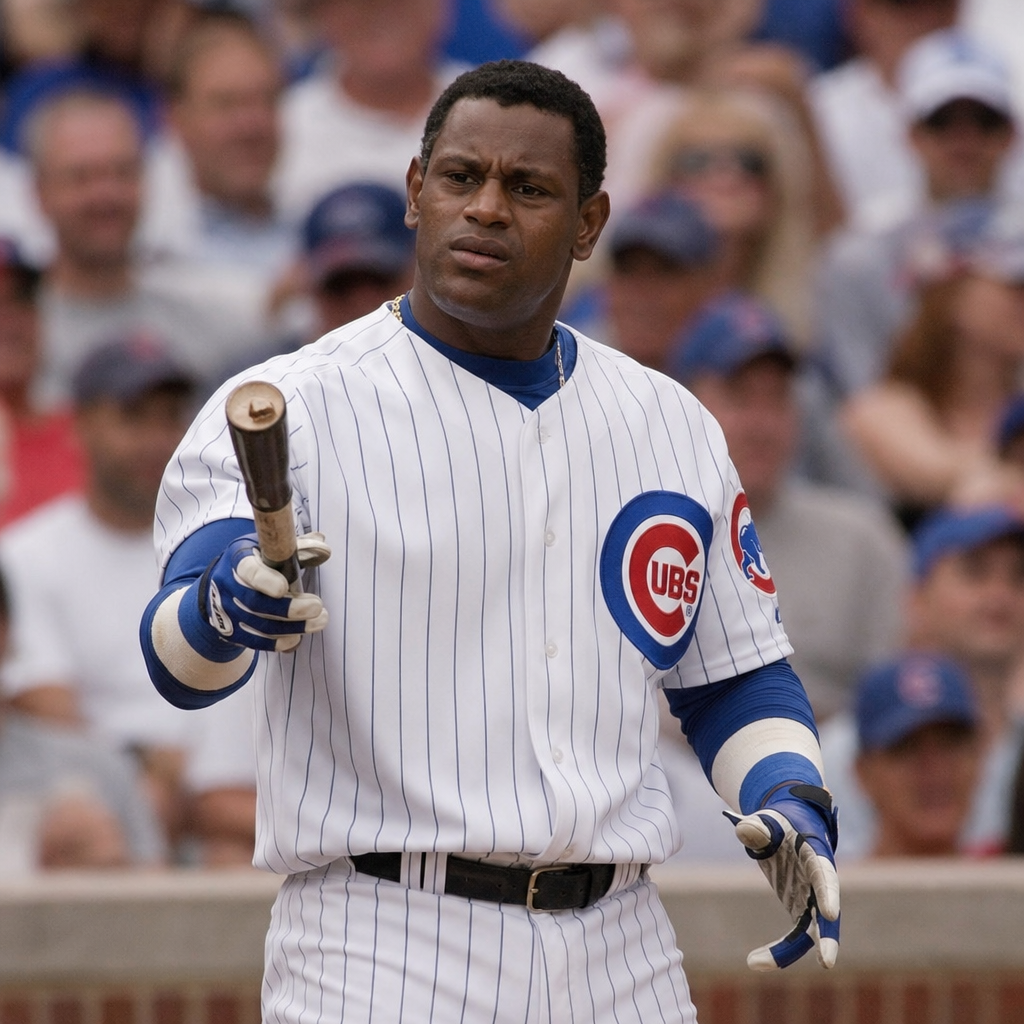
Few baseball controversies have lingered in public memory quite like the corked bat incident that put Sammy Sosa under an unforgiving spotlight in 2003. The Corked Bat Saga: Sammy Sosa’s Infamous Incident is more than a story about one broken bat and one ejection; it is a revealing case study in baseball rules, player reputation, media pressure, and the way a single moment can reshape an athlete’s legacy. In Major League Baseball, a corked bat is an altered bat, typically hollowed out and filled with lighter material such as cork, intended to reduce weight and potentially let a hitter swing faster. It is illegal under Rule 3.02, and discovery almost always triggers suspicion that a player sought an unfair advantage. Because Sosa was one of the sport’s biggest stars, the episode became national news within minutes. It mattered not only to Chicago Cubs fans, but also to anyone tracking the era’s broader scandals and controversies, from performance-enhancing drugs to sign stealing and equipment tampering.
I have covered baseball controversies long enough to know that the facts of an incident often get buried under outrage. In Sosa’s case, the essential facts are straightforward, yet the implications remain debated. On June 3, 2003, during a game at Wrigley Field against the Tampa Bay Devil Rays, Sosa’s bat shattered on contact, and umpires quickly noticed it was filled with cork-like material. He was ejected immediately. MLB confiscated the remains and later tested additional bats from Sosa’s collection. League officials reported that the other bats were clean, a detail that became central to Sosa’s explanation that the illegal bat had been used only for exhibition or batting practice. Even with that finding, the damage was real. Sosa received an eight-game suspension, later reduced to seven after appeal, and his credibility suffered at a moment when baseball was already facing deep questions about integrity.
This article serves as a broad hub for the miscellaneous branch of scandals and controversies, using the Sosa case as an anchor while connecting it to the larger themes that define this subtopic. Some sports scandals involve criminal allegations, some involve league rules, and others revolve around ethics, perception, or selective enforcement. The corked bat saga fits squarely into that last category because it mixed hard evidence, technical rule violations, disputed intent, and a media environment eager for symbolism. Understanding the incident requires more than repeating the headline. It requires looking at what corking does, how MLB investigates equipment violations, why fans reacted so strongly, and how this moment compares with other unconventional baseball controversies that do not fit neatly into steroid or gambling categories.
For readers exploring miscellaneous scandals in sports history, Sosa’s episode remains essential because it demonstrates how apparently small acts can become defining controversies when they involve a famous player, a visible rule breach, and a game built on tradition. It also shows that context matters. Corked bats are not proven home run machines; physics research and practical testing have long suggested they may actually reduce batted-ball distance, even if they can alter swing feel and bat control. Yet baseball is as much about trust as mechanics. Once a bat is illegally altered, questions spread beyond science and into character, competitive fairness, and institutional response. That is why this incident still deserves close examination.
The Incident at Wrigley Field
The pivotal moment came in the first inning of Cubs versus Devil Rays on June 3, 2003. Sosa chopped a pitch toward the infield, and his bat splintered dramatically enough that home plate umpire Tim McClelland and the crew could see unusual material inside the barrel. The game paused, the broken pieces were inspected, and Sosa was ejected on the spot. There was no long investigative delay and no ambiguity about whether the bat itself violated the rules. The visual evidence was immediate, which explains why the story exploded so quickly across television, radio, and newspaper coverage.
From a controversy analysis standpoint, this was the rare sports scandal with a clean triggering event. Unlike clubhouse rumors or leaked testimony, the public could understand it in seconds. Fans saw a superstar’s bat break open and reveal illegal stuffing. That clarity mattered. In other scandals, debate often centers on whether misconduct happened at all. Here, the main dispute shifted to intent, frequency, and competitive effect. Sosa insisted he had accidentally grabbed a novelty bat he used in batting practice to entertain fans with soft-contact grounders. Critics found that explanation difficult to accept because players at that level typically know their equipment closely, especially a hitter as meticulous and superstitious as Sosa.
Major League Baseball responded through established disciplinary channels. The league seized Sosa’s remaining bats and examined them. According to league findings, the rest were legal game bats. That fact gave Sosa some support, because a broader pattern of altered equipment was not discovered. Still, MLB did not excuse the violation. Commissioner Bud Selig imposed an eight-game suspension and a fine, and after appeal the suspension was reduced to seven games because one game had already effectively been served through ejection. The punishment signaled that MLB considered equipment integrity nonnegotiable, even if evidence suggested a one-bat episode rather than a sustained cheating operation.
What a Corked Bat Is and Why Players Use One
A corked bat is usually made by drilling a cavity into the barrel of a wooden bat and filling that space with a lighter substance, then concealing the alteration with a wooden plug. The common assumption is simple: lighter bat equals faster swing, faster swing equals harder contact. In practice, the physics are less favorable than the myth suggests. Researchers at institutions including physicist Rod Cross and analyses often cited by baseball publications have shown that while a corked bat may feel easier to accelerate, it generally reduces mass at the hitting end, lowering collision efficiency. That means the ball may leave the bat more slowly, not more quickly, unless improved control changes contact quality.
That distinction is crucial when evaluating the Sosa case. A corked bat is illegal, but illegal does not automatically mean highly effective. Some hitters who have experimented with altered bats have reportedly sought quicker hands on inside pitches or more bat control rather than extra distance. In plain terms, a corked bat might help a player get the barrel through the zone a little faster, but the tradeoff can be less power transfer at impact. This is one reason scientists and former players have long viewed corking as more psychological than transformational.
Baseball bans corked bats because the rule is about standardization and fairness, not only measurable outcome. MLB cannot allow players to self-engineer legal boundaries on the theory that an alteration may or may not help. The same logic applies to foreign substances on balls, doctored equipment, or hidden electronic signals. Once equipment leaves the approved condition, trust breaks down. For fans researching miscellaneous sports controversies, this is a recurring pattern: seemingly modest violations become major scandals because they challenge the shared baseline of competition.
How MLB Handles Equipment Violations
When illegal equipment is suspected in Major League Baseball, umpires have broad authority to inspect and remove it. Broken bats often expose internal alterations, which is exactly what happened in the Sosa game. Once the cork-like material became visible, the umpiring crew had little discretion. Ejection was the standard response, and the league office then took over for review and discipline. The process typically includes preserving the item, consulting rulebook language, examining related equipment, and considering player statements before final penalties are announced.
What made Sosa’s case notable was the speed and transparency of the initial finding. There was no need for complicated forensic reconstruction to determine whether the specific bat was corked. The league’s secondary step, however, mattered just as much: testing his other bats. That broader inspection addressed the central public question of whether Sosa had built a hidden system of bat doctoring. MLB said no, and that prevented the scandal from escalating into something even larger. If multiple altered bats had been found, the incident likely would be remembered as a sustained cheating scheme rather than a singular embarrassment.
| Issue | What Happened in Sosa’s Case | Why It Mattered |
|---|---|---|
| Detection | Bat shattered during live play and exposed cork-like material | Created immediate visual proof and instant public scrutiny |
| On-field response | Umpires inspected the bat and ejected Sosa | Showed that enforcement was swift and rule based |
| League review | MLB confiscated and examined additional bats | Determined whether the violation was isolated or systematic |
| Discipline | Eight-game suspension reduced to seven on appeal | Confirmed that illegal equipment carries formal penalties |
| Public defense | Sosa said the bat was a batting-practice or show bat used by mistake | Shifted debate from physical evidence to credibility and intent |
This process also highlights a broader truth about baseball scandals: procedure shapes perception. Clear enforcement can contain a controversy, while inconsistent enforcement can deepen it. MLB’s handling of the Sosa incident was comparatively straightforward, especially when contrasted with the league’s uneven responses during the steroid era, when testing, disclosure, and sanctions evolved slowly. In that sense, the corked bat affair became one of the cleaner, if still damaging, controversies of the period.
Sammy Sosa’s Explanation and the Credibility Problem
Sosa maintained that he never used corked bats in normal competition and that the shattered bat had been reserved for harmless entertainment. He said he sometimes used a lighter bat during batting practice or exhibitions to tap easy fly balls and make fans laugh. MLB’s finding that his other bats were unaltered gave that explanation some factual support. Yet credibility in sports scandals depends on more than partial corroboration. It depends on whether the explanation aligns with elite player habits, clubhouse routines, and common sense.
From my perspective, this is where the saga hardened into lasting reputational damage. Big league hitters are exacting about label alignment, pine tar placement, weight distribution, and game preparation. They sort bats by model and feel. That does not make accidental use impossible, but it makes it harder to sell. Sosa also entered the incident carrying the burden of his own fame. Because he was associated with towering home runs, competitive swagger, and the offense-heavy environment of the late 1990s and early 2000s, people were inclined to read the worst into any equipment violation.
The result was a paradox. The evidence did not prove a broad corking program, but the single image of the broken bat became more powerful than the league’s narrower findings. This is common in miscellaneous controversies. One vivid visual can outweigh pages of technical explanation. Fans did not remember laboratory nuance. They remembered cork spilling from Sammy Sosa’s bat.
Legacy, Context, and Why the Incident Still Matters
The corked bat saga did not define Sosa’s career by itself, but it changed the way many people interpreted it. Before the incident, he was widely celebrated as a charismatic home run icon, especially for his role in the 1998 chase with Mark McGwire that energized baseball after the 1994 strike. After 2003, he became easier to place inside a broader narrative of suspicion surrounding the era. Later developments, including persistent performance-enhancing drug questions and his complicated Hall of Fame standing, meant the corked bat episode aged poorly for him. It became one more reason skeptics felt justified.
For a hub page on miscellaneous scandals and controversies, this case is especially useful because it sits at the intersection of rule violation, scientific misunderstanding, public theater, and legacy revision. It was not as structurally consequential as the 1919 Black Sox scandal, not as technologically intricate as the Houston Astros sign-stealing scheme, and not as legally explosive as Pete Rose’s gambling case. Yet it remains memorable because it was bizarre, visible, and attached to a superstar in a credibility-fragile era. Those traits define many controversies that fall outside standard categories.
The lasting lesson is simple. In sports, minor equipment violations can become major historical markers when they expose larger anxieties about fairness and authenticity. Sosa’s corked bat did exactly that. If you are exploring scandals and controversies in their full range, use this incident as a guidepost: start with the rule, examine the evidence, test the explanation, and always consider the historical moment surrounding it. That method leads to better judgment than outrage alone. For readers building a deeper understanding of baseball’s most unusual controversies, the next step is to explore related cases and compare how leagues, media, and fans decide what deserves forgiveness and what becomes permanent stain.
Frequently Asked Questions
What exactly happened in Sammy Sosa’s corked bat incident in 2003?
Sammy Sosa’s corked bat incident took place on June 3, 2003, during a game between the Chicago Cubs and the Tampa Bay Devil Rays. In the first inning, Sosa hit a routine ground ball that broke his bat on contact. As the shattered pieces scattered, umpires quickly noticed that the inside of the bat appeared to contain cork-like material. That discovery immediately raised alarms because Major League Baseball rules prohibit the use of altered bats in games. Sosa was ejected on the spot, and the incident became instant national news.
What made the moment so explosive was not just the rule violation itself, but the player involved. Sosa was one of baseball’s biggest stars, celebrated for his home run power, charisma, and role in helping revive fan interest in the sport after the 1998 home run race. Because of that profile, the broken bat did more than trigger a routine rules issue; it ignited a debate about fairness, performance, and credibility. MLB later confiscated and examined additional bats from Sosa, and while those bats were reportedly clean, the image of a superstar standing at the center of an equipment scandal proved impossible to ignore.
What is a corked bat, and why is it illegal in Major League Baseball?
A corked bat is a bat that has been physically altered, usually by drilling out part of the barrel and filling the hollowed section with a lighter material such as cork, rubber balls, or similar substances. The idea behind the alteration is not necessarily to make the ball travel farther, as many casual fans assume. Instead, the main perceived advantage is that a lighter bat can be swung more quickly, potentially helping a hitter react faster and make more frequent contact. Even so, the exact on-field benefit has long been debated, and many experts argue that any advantage is marginal or inconsistent.
Major League Baseball bans corked bats because they violate equipment rules designed to preserve competitive integrity and standardize what players can use. Even if the actual benefit is small, the issue is that an altered bat creates the appearance of gaining an unfair edge outside the accepted framework of the game. Baseball has always been deeply concerned with the line between accepted gamesmanship and outright rule-breaking, and bat tampering clearly falls on the prohibited side. In Sosa’s case, the bat was considered illegal not because MLB proved it changed the outcome of a season, but because its altered condition itself was enough to violate the rules.
What punishment did Sammy Sosa receive, and how did he explain the bat?
After the incident, Major League Baseball suspended Sammy Sosa for eight games. That penalty reflected the seriousness with which the league viewed the use of an illegal bat, especially by a marquee player. Sosa appealed the suspension, which delayed its full effect briefly, but the punishment ultimately stood in reduced form after review, and he served the suspension. The league also inspected additional bats from the Cubs clubhouse to determine whether there was a broader pattern, but those bats reportedly did not show evidence of similar tampering.
Sosa maintained that the corked bat had been used accidentally. His explanation was that it was a novelty or batting-practice bat he used for exhibitions and to entertain fans, not for regular game action, and that he had grabbed it by mistake. That defense became a major part of the public discussion because it offered a plausible human error explanation while still leaving room for skepticism. Some fans accepted it, especially because no other altered bats were found. Others saw it as difficult to believe that a veteran player would mistakenly bring an illegal bat into a major league game. That split reaction is one reason the controversy remained so memorable long after the suspension ended.
Did the corked bat incident damage Sammy Sosa’s reputation and legacy?
Yes, the incident significantly affected how many people viewed Sammy Sosa, even though it did not erase his accomplishments on the field. Before the controversy, Sosa was widely admired as one of baseball’s most electrifying sluggers. He was a central figure in one of the sport’s most celebrated eras, and his popularity extended well beyond Chicago. Once the corked bat was discovered, however, the public conversation shifted. Instead of focusing only on his home runs and charisma, fans and commentators began asking tougher questions about authenticity, judgment, and whether his image had been too carefully polished.
The damage to Sosa’s legacy also grew over time because the corked bat incident became part of a larger pattern in the public imagination. Baseball in the early 2000s was already under intense scrutiny over performance, rules, and credibility. In that climate, any controversy involving equipment or enhancement tended to carry extra weight. For Sosa, the incident became one of those defining moments that critics returned to whenever his Hall of Fame case or historical standing was discussed. Even supporters who believed the incident was isolated often had to admit that it permanently complicated the story of his career. In that sense, the scandal mattered not only because of the punishment, but because it changed the lens through which many people remembered him.
Why does Sammy Sosa’s corked bat incident still matter in baseball history?
The incident still matters because it captures several themes that are central to baseball history: the importance of rules, the fragility of public image, and the speed with which one moment can alter a career narrative. Baseball is a sport built on tradition and detail, and small violations often carry large symbolic consequences. Sosa’s broken bat became a perfect example of that dynamic. What might have looked like a strange equipment mishap in another context turned into a lasting controversy because it touched on trust, sportsmanship, and the meaning of fair competition.
It also remains relevant because it serves as a case study in how modern sports scandals unfold. The combination of live television, instant replay, media commentary, and nonstop public debate turned a single at-bat into a defining chapter in baseball culture. For historians and fans, the saga is valuable not just for what it says about Sosa, but for what it reveals about the era. It shows how athletes are judged not only by statistics, but by symbolism, perception, and timing. That is why the corked bat incident continues to be discussed years later: it is a compact but powerful story about reputation, controversy, and the lasting consequences of one unforgettable mistake.