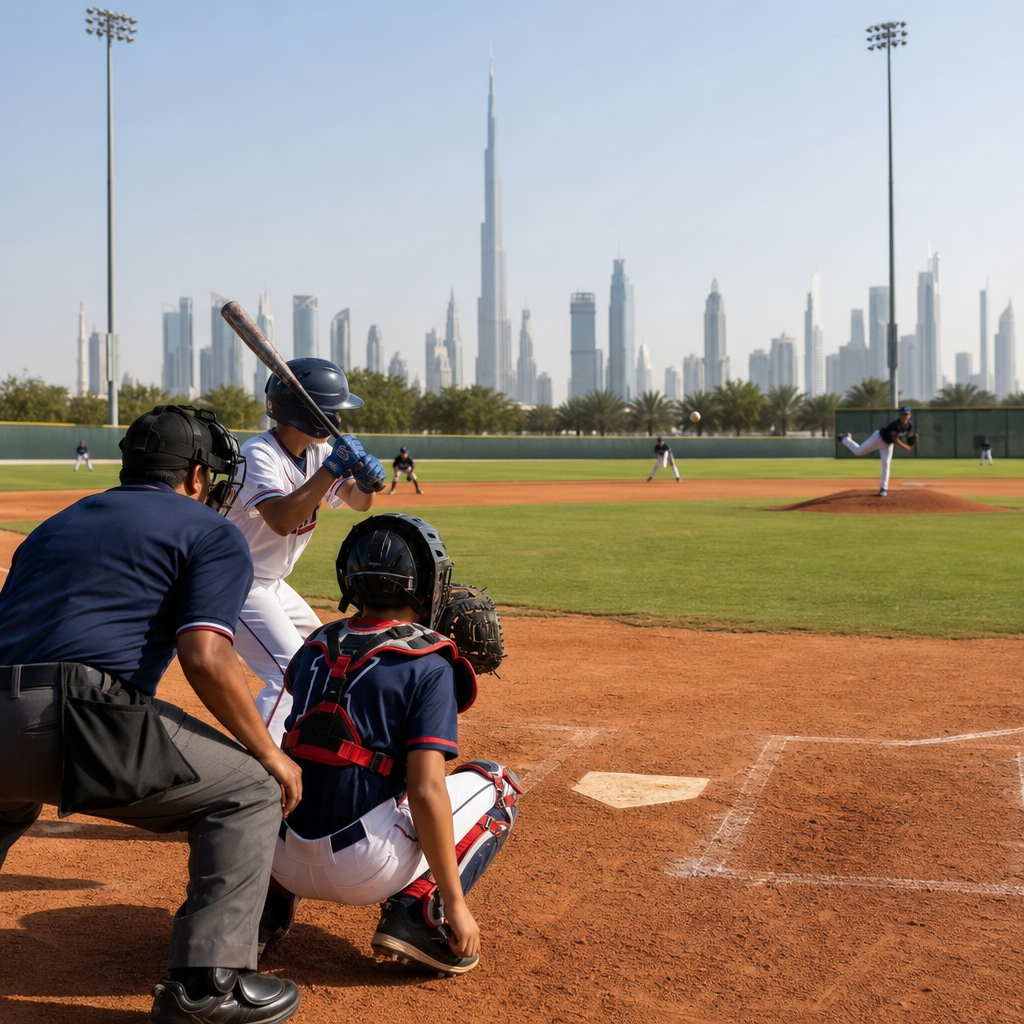
Baseball in the United Arab Emirates is no longer a novelty played on the margins of cricket grounds; it is an emerging sport ecosystem shaped by expatriate communities, youth development, private academies, and the country’s broader ambition to become a regional home for global sport. In practical terms, baseball in the UAE refers to organized and informal play across Dubai, Abu Dhabi, Sharjah, and the northern emirates, including little league programs, adult amateur competition, school activity, coaching clinics, and occasional international events. As a hub topic within international baseball, the UAE matters because it sits at the intersection of Asia, the Middle East, and Africa, making it a natural staging point for growth, travel tournaments, and cross-border player development. I have worked with emerging baseball communities and the same pattern appears here: when facilities, coaching, and family participation align, the sport grows faster than outsiders expect. The UAE offers those ingredients. It also offers distinct constraints, including climate, field access, and competition from football, cricket, basketball, and combat sports. Understanding this landscape requires more than asking whether baseball is popular. The right questions are who plays, where they train, how leagues operate, what institutions support the game, and what must happen next for sustainable expansion.
How baseball took root in the UAE
Baseball arrived in the UAE through migration, not mass media. American, Japanese, Korean, Filipino, Latin American, and other expatriate residents brought the game with them, first as casual weekend activity and then as structured league play. That origin matters because it explains why the sport developed in pockets rather than through a single national launch. In Dubai, community-led leagues often formed around schools, company groups, or expatriate networks. In Abu Dhabi, embassy ties, youth programs, and multi-sport clubs helped create demand. In Sharjah and other emirates, the pattern was similar: a few committed organizers carried the sport until enough parents and players created continuity.
The UAE’s sports model also helped. The country has invested heavily in hosting major events, building premium venues, and attracting foreign expertise across disciplines. Baseball has not received the same institutional attention as golf, Formula 1, tennis, or football, but it benefits from the same infrastructure mindset. Multi-use complexes, private coaching businesses, and year-round youth programming create conditions where a nontraditional sport can survive. Because the UAE is internationally connected, teams can also recruit coaches with real playing backgrounds from the United States, Japan, South Korea, Taiwan, and Latin America. That imported knowledge has a direct effect on player standards.
Another reason baseball has traction is family mobility. Many residents relocate from countries where baseball is established and want continuity for their children. Parents often look first for familiar schooling, then for familiar sports pathways. A functional baseball community therefore does more than entertain; it helps expatriate families settle. That dynamic is easy to underestimate, yet in emerging markets it is often decisive. Sports that solve a community need tend to endure.
Who plays baseball in the Emirates today
The current player base is diverse, and that diversity is the UAE’s greatest strength. Youth baseball includes children from American, Japanese, Korean, Filipino, Indian, Pakistani, British, Arab, and mixed-nationality households. Some arrive with years of little league experience. Others begin after trying tee-ball at school or seeing training sessions in local parks. Adult baseball is similarly mixed, with recreational players, former high school or college athletes, military-affiliated participants, and long-term expatriates who keep playing because the sport anchors their social life.
That diversity shapes how the game must be taught. In one youth session, I have seen coaches work with a player who understands force plays instinctively, another who has only played cricket, and a third who is learning the difference between a strike zone and a wicket. Good UAE programs succeed because they explain baseball in plain language without assuming shared background. They also adapt to age and experience. New players need repetition in throwing mechanics, glove work, baserunning, and game awareness before they can enjoy competition. Advanced players need velocity training, defensive positioning, and structured game situations.
The sport also attracts girls, particularly at the introductory stage. That is important for long-term growth because baseball and softball pathways often expand together. Even where formal softball structures are limited, coeducational beginner programs can widen participation and create demand for future teams, clinics, and tournaments. In a market where every participant matters, inclusive design is not a slogan. It is a growth strategy.
Facilities, climate, and the practical realities of playing
The biggest operational challenge for baseball in the UAE is not interest. It is space. Baseball requires a specialized field shape, safe fencing, bullpen space, storage, and reliable scheduling blocks long enough for practice and games. Cricket ovals can be adapted, and football or rugby spaces can handle drills, but those compromises affect player development. Infield footwork, mound work, outfield reads, and game-speed baserunning are harder to teach without dedicated geometry.
Climate complicates scheduling. From late spring into early autumn, heat and humidity make daytime baseball difficult and sometimes unsafe. Serious programs respond with early morning starts, evening sessions under lights, indoor batting facilities, hydration protocols, and shorter practice blocks. Coaches who ignore heat management lose players. Coaches who plan around it keep families engaged. This is not theoretical. In hot-weather baseball environments, session design must account for rest ratios, shade access, electrolyte replacement, and warm-up intensity. Younger players especially need clear monitoring.
Equipment access has improved but still matters. Bats, gloves, catcher’s gear, baseballs, pitching machines, portable screens, and field tools can be expensive in a market where mainstream sporting goods stores prioritize football and cricket. The most resilient leagues solve this through shared equipment pools, sponsorship, and direct relationships with specialist suppliers. When startup costs fall, conversion from curiosity to participation rises.
| Challenge | How UAE programs address it | Why it matters |
|---|---|---|
| Extreme heat | Night practices, winter leagues, indoor cages, hydration plans | Protects players and preserves attendance |
| Limited diamonds | Multi-use fields, portable mounds, shared school facilities | Expands scheduling flexibility |
| Equipment cost | Loaner gear, sponsorship, bulk team orders | Reduces barriers for new families |
| Mixed experience levels | Tiered coaching groups, tee-ball to advanced clinics | Keeps beginners and experienced players developing |
| Travel competition | Regional tournaments in Asia and the Gulf | Improves standards and player motivation |
Youth development, schools, and academy culture
If baseball is going to become durable in the UAE, youth development is the decisive battleground. Adult expatriate leagues can sustain interest for years, but only a steady pipeline of young players creates continuity, local identity, and future coaching depth. The strongest model combines school exposure, beginner-friendly league entry, and academy coaching outside school hours. International schools are especially important because they already support varied sports calendars and serve families familiar with baseball culture.
Academies play an outsized role. In established baseball countries, community fields and municipal leagues carry much of the load. In the UAE, private academies often do that developmental work. They introduce fundamentals, organize internal competition, and provide the consistency that a fragmented public structure cannot yet guarantee. The best academies use progressive instruction: tee-ball and coach pitch for early ages, machine pitch and kid pitch as readiness improves, then tactical game play for older groups. They also track throwing loads, hitting volume, and defensive reps instead of running generic fitness sessions.
Schools can help even without building full baseball programs. Physical education units that include throwing, catching, striking, and base-running concepts create familiarity. After-school clubs can test demand before committing to interschool fixtures. Exhibition days with visiting coaches often produce strong conversion because children experience the game directly rather than through explanation. Once schools and academies cooperate, retention improves. Parents appreciate a clear pathway, and children improve faster when terminology and technique stay consistent across environments.
Leagues, tournaments, and regional connections
Leagues in the UAE tend to be seasonal, community-driven, and highly dependent on organizer reliability. That is normal in emerging baseball markets. A few strong administrators can make the difference between a stable competition calendar and a stop-start year. The healthiest league structures offer age divisions, published rules, trained umpires, safety procedures, and regular communication with parents. Without those basics, participation plateaus quickly.
Tournaments are especially valuable because they create momentum. Families commit more readily when there is a visible event target, whether a local jamboree, a Gulf invitational, or travel competition in Asia. Regional links matter because the UAE alone does not yet offer enough depth across every age group. Connections with baseball communities in Saudi Arabia, Qatar, Bahrain, Singapore, Hong Kong, and wider Asia can provide stronger opposition and benchmarking. For advanced youth players, seeing a higher standard is often the moment the sport becomes serious.
International governing structures also matter. Baseball in the UAE exists within the broader framework of the World Baseball Softball Confederation and Asian competition pathways, even if local visibility is modest. Recognition, coaching certification, scoring standards, anti-doping compliance, and tournament eligibility all become easier when national stakeholders align with established international practice. That administrative foundation may sound dull, but it is how emerging sports stop being informal hobbies and start becoming durable systems.
What the UAE must do next to build a lasting baseball culture
The next phase is clear. First, the sport needs more dedicated or semi-dedicated diamonds. They do not have to be stadium-scale venues. Well-maintained community fields with backstops, bullpen areas, lighting, and storage would change development immediately. Second, coaching education must expand. Importing expertise is useful, but local coaching capacity is what sustains weekly quality. Certifications, clinic exchanges, and mentoring should be treated as infrastructure, not extras.
Third, stakeholders need a visible national calendar. Families stay in sports when they understand the season, progression points, and competitive goals. Fourth, baseball should be marketed on its own terms rather than as a substitute for cricket. The games share some transferable skills, especially throwing, tracking, and striking, but baseball’s appeal lies in its pace changes, tactical depth, defensive precision, and team rhythm. Presenting it clearly attracts the right participants.
Finally, the UAE should embrace baseball as a regional bridge sport. Its airports, safety, hospitality sector, and event experience make it an ideal host for youth festivals, coaching conventions, and club tournaments. That role fits the country’s wider sports identity. For readers exploring international baseball, the main lesson is simple: the UAE is a new frontier because the fundamentals for growth already exist. Participation is multicultural, demand is real, and development pathways are taking shape. What happens next depends on consistent facilities, better coordination, and patient investment. If you follow global baseball, keep the Emirates on your radar and explore the leagues, academies, and regional events now forming this promising hub.
Frequently Asked Questions
Is baseball really growing in the United Arab Emirates?
Yes, and its growth is becoming much more visible and organized than many people realize. Baseball in the UAE has moved beyond being an occasional pastime for expatriate communities and is developing into a more structured sports ecosystem. In cities such as Dubai, Abu Dhabi, and Sharjah, the game is being supported by youth leagues, private coaching academies, amateur adult teams, and school-based programs. That matters because long-term sports growth usually depends on infrastructure, regular competition, and accessible entry points for beginners, not just enthusiasm.
Part of the sport’s momentum comes from the UAE’s international population. Residents from countries where baseball has deep roots, including the United States, Japan, South Korea, the Philippines, and parts of Latin America, have helped create demand for leagues, clinics, and training opportunities. At the same time, the UAE’s broader strategy of positioning itself as a destination for global sport has created a favorable environment for emerging sports to gain a foothold. While baseball is still far behind football and cricket in public visibility, it is no longer operating at the margins. It is becoming a recognizable option for families, schools, and amateur athletes looking for something different.
Where is baseball played in the UAE, and what does the playing scene look like?
Baseball in the UAE is played across several emirates, with activity concentrated in major population centers such as Dubai, Abu Dhabi, and Sharjah, while interest also extends into the northern emirates. The playing scene includes both formal and informal environments. On the organized side, there are youth programs, recreational adult leagues, coaching academies, school activities, and community clubs. On the informal side, players often make creative use of multipurpose sports grounds and shared facilities, especially in a country where venue access can be one of the sport’s biggest practical challenges.
This mix of structured and flexible participation is important. Unlike countries with a long-established baseball tradition, the UAE is still building a dedicated baseball culture and physical infrastructure. As a result, the sport often coexists with other major games, especially cricket, across available fields and training spaces. Even so, that has not stopped growth. In fact, it has encouraged adaptability and collaboration among players, organizers, and coaches. For newcomers, the UAE baseball scene can feel close-knit and welcoming, with many participants connected through schools, academies, social leagues, and expatriate networks. That community-driven character is one of the key reasons baseball has been able to establish itself and continue expanding.
Who is driving the development of baseball in the UAE?
The development of baseball in the UAE is being driven by several overlapping groups rather than a single source. Expatriate communities have played a foundational role by bringing the sport with them and sustaining interest through local leagues, volunteer coaching, and grassroots organization. Parents, especially those from baseball-playing nations, have also helped create demand for youth instruction and regular competition. Without that base of committed participants, the sport would have struggled to move beyond isolated social games.
At the same time, private academies and youth-focused training programs have become especially important in turning interest into structured development. These organizations provide coaching, skill progression, age-group training, and pathways for children who want to learn the sport seriously. Schools are another major factor. Once baseball enters school sports activities or after-school programming, it gains visibility among families who may have had no previous exposure to the game. That opens the door to a more diverse player base, including children who are not from traditional baseball backgrounds.
The UAE’s larger sports vision also plays a role. The country has shown a strong willingness to host international sporting events, invest in sports facilities, and support niche or emerging disciplines when there is long-term potential. In that environment, baseball benefits from being seen not just as a foreign pastime, but as part of a broader ecosystem of international sports. The result is a development model that combines grassroots passion, private-sector initiative, youth engagement, and a national climate that is generally receptive to sports innovation.
Can children and beginners easily get involved in baseball in the UAE?
In many cases, yes. One of the most encouraging aspects of baseball in the UAE is that the entry points for children and beginners are improving. Youth programs, introductory coaching sessions, little league-style activity, and academy training have made the sport more accessible than it was in earlier years. Families interested in baseball can often find beginner-friendly environments that focus on fundamentals such as throwing, catching, batting, base running, and understanding game rules. For children who are completely new to the sport, that kind of structured introduction is essential.
Beginners also benefit from the international character of the UAE baseball community. Coaches and organizers often have experience teaching players from mixed backgrounds, including children who may be transitioning from cricket, softball, or other bat-and-ball sports. That means instruction is usually practical, patient, and designed to meet players where they are. Rather than assuming prior knowledge, many programs actively teach the basics and emphasize enjoyment, teamwork, and athletic development. This makes baseball a realistic option not only for expatriate families familiar with the game, but also for local residents and newcomers looking to try something different.
Of course, access can still vary depending on where a family lives, what facilities are available nearby, and whether they are looking for casual participation or more serious competitive development. But overall, the trend is positive. As more academies, schools, and community initiatives include baseball, the sport becomes easier to discover and more practical to pursue over time.
What are the biggest opportunities and challenges for baseball in the UAE?
The biggest opportunity for baseball in the UAE is that it sits at the intersection of several favorable trends: a globally connected population, growing youth sports participation, increasing interest in diversified athletic offerings, and a national ambition to be recognized as a regional center for international sport. That combination gives baseball room to grow in ways that would have been difficult a decade earlier. If the sport continues building junior participation, coaching quality, school partnerships, and regular competition, it could establish a durable base and become one of the Middle East’s most notable emerging baseball markets.
Another major opportunity lies in talent development. Because the UAE attracts residents from many baseball cultures, it has a unique chance to create learning environments that blend different playing traditions and coaching styles. Young athletes can benefit from that diversity. There is also potential for exhibition events, regional tournaments, and partnerships with international baseball organizations. These kinds of connections could raise the sport’s profile, improve standards, and give players in the UAE more meaningful competitive pathways.
The challenges, however, are real. Dedicated facilities remain one of the biggest issues, since baseball often competes with more established sports for space, scheduling, and investment. Public awareness is another hurdle. Cricket and football dominate the sporting landscape, so baseball must work harder to explain itself, attract first-time players, and maintain visibility. Cost and continuity can also affect growth, especially in expatriate-heavy communities where populations are mobile and participation can shift over time.
Even with those obstacles, the outlook remains promising. Baseball in the UAE does not need to become a mass sport overnight to succeed. Its more realistic path is steady, layered growth through youth development, community engagement, better infrastructure, and stronger institutional support. If those pieces continue to come together, the UAE could become a genuine new frontier for baseball in the region.