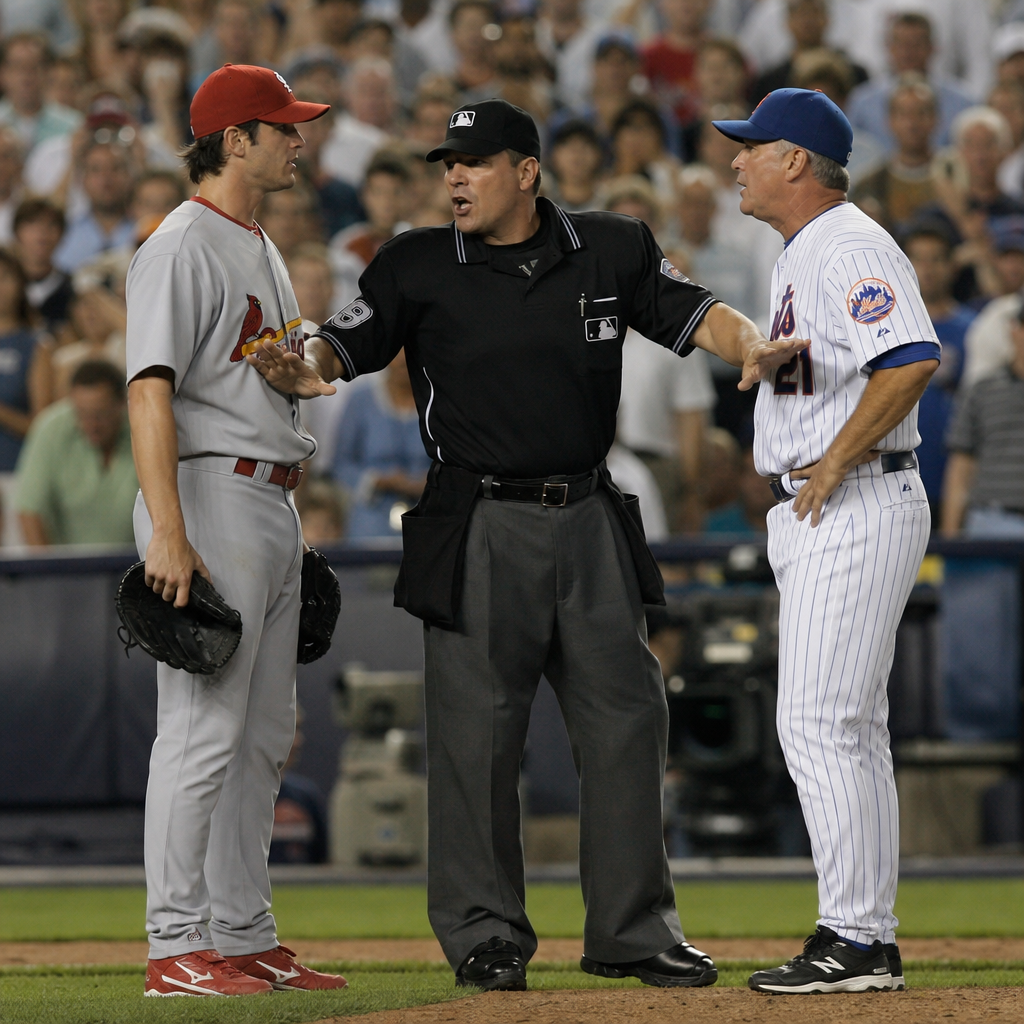
The 2002 All-Star Game tie remains one of baseball’s most debated moments because it exposed a conflict at the heart of the sport: should an exhibition prioritize entertainment, player safety, or uncompromising competition? In Milwaukee on July 9, 2002, the American League and National League played 11 innings, ended at 7-7, and left fans, players, broadcasters, and executives arguing over whether Major League Baseball had staged a showcase or undermined its own credibility. For a sport built on records, endings, and ritual, a tie in the midsummer classic felt unnatural. It also landed at a time when baseball was already wrestling with labor tension, questions about relevance, and the need to market star power effectively.
To understand why the 2002 All-Star Game tie became such a lasting controversy, it helps to define the event’s role. The All-Star Game is an exhibition between the best players from each league, but it has always carried more symbolic weight than a normal exhibition. Fans vote in starters, television networks sell it as a premier event, and the commissioner’s office uses it to present baseball as a national spectacle. Unlike spring training, this is not a loose scrimmage. It is intended to look competitive, and managers still face scrutiny for strategic choices. That tension mattered in 2002 because the event reached a point where the managers had run out of available pitchers, yet no one wanted to risk injuring star arms in a game that did not affect the standings.
From my own work analyzing baseball controversies, this episode stands out because the outrage was not driven by cheating, violence, or rule breaking in the usual sense. The anger came from expectation failure. Fans reasonably believed a nationally televised marquee game should produce a winner. Instead, commissioner Bud Selig watched from the stands as managers Joe Torre and Bob Brenly informed umpires they had no pitchers left they were willing to use. When Selig signaled for the game to end, the reaction inside Miller Park was immediate: boos, confusion, and the kind of disbelief that only comes when a major institution seems unprepared for an obvious scenario. The tie was legal under exhibition rules, but legality and legitimacy are not the same thing.
This article examines the 2002 All-Star Game tie as a central “Miscellaneous” hub within baseball scandals and controversies because it connects several recurring themes: roster management failures, commissioner leadership, television pressure, fan trust, and the uneasy status of events that are both ceremonial and commercial. It also points forward to one of the most consequential rule changes in modern baseball, when home-field advantage in the World Series became tied to the All-Star Game result beginning in 2003. That policy was itself controversial, but it shows how seriously Major League Baseball treated the public backlash. The 2002 tie was not just an awkward ending. It became a case study in how a league’s response to embarrassment can reshape the sport.
What Happened in Milwaukee and Why the Game Ended
The game itself was lively rather than sluggish. The National League jumped ahead, the American League answered, and by the late innings the score sat tied at 7-7. There were standout offensive moments, including home runs and run-scoring rallies that reflected the talent on the field. Yet beneath the entertainment, both managers were steadily exhausting their pitching staffs. All-Star rosters were not built for marathon usage, and pitchers often arrived with informal restrictions from clubs wary of overwork. Starters typically throw one or two innings, relievers are scheduled for brief appearances, and managers try to spread participation across the roster so every selected player gets on the field.
By the 11th inning, Torre and Brenly faced the same problem: nearly every pitcher had either already been used or was considered unavailable. Some were dealing with minor physical concerns, some were under pitch limits, and some teams simply did not want their valuable arms extended in a game with no standings impact. The most cited practical issue was that the game had burned through the available bullpen inventory because it stayed tied longer than expected. Torre had been especially constrained after using his pitchers according to standard All-Star patterns. Brenly was in a similar position. Neither manager wanted to send out a pitcher who might risk injury with no competitive payoff.
At that point, the umpires and commissioner’s office had to decide whether to improvise or stop. Could a position player pitch? Technically yes, but in 2002 that would have been viewed by many as a gimmick bordering on disrespect for the event. Could a previously used pitcher return? Under standard professional norms, that was not how the game was being managed. Could teams be forced to use protected arms anyway? Not realistically. Selig approved the decision to declare a tie after 11 innings, and the public saw the sport’s biggest in-season showcase end without resolution. That image, more than the box score, defined the controversy.
Why Fans and Media Reacted So Harshly
The backlash was severe because baseball had promised a meaningful spectacle and delivered an anticlimax. Fans had paid premium prices, national broadcasters had built suspense around baseball’s brightest stars, and viewers expected a finish. Instead, the ending suggested that the sport had not planned for the basic possibility of extra innings. In a regular-season game, clubs can turn to long relievers, bench players can be repurposed, and standings urgency justifies greater strain. In the All-Star format, everyone knew workload restrictions existed, but most fans did not expect those restrictions to overpower the event itself.
Media criticism focused on Bud Selig, and with reason. A commissioner is not merely a ceremonial executive; he is the steward of competitive integrity and public confidence. Selig later called the tie “embarrassing,” a fair description of the optics. Television replayed footage of fans throwing debris and booing, while commentators questioned why MLB had no contingency plan. The issue was magnified because baseball was still trying to sharpen its national appeal against the NFL and NBA, both of which had clearer all-star identities at the time. An ending that looked indecisive fed an old criticism that baseball could be rigid, overly procedural, and disconnected from fan expectation.
There was also a deeper emotional layer. Baseball culture values closure. A game can run 12, 14, or 18 innings, but eventually someone wins. The 2002 tie violated that instinct. Even people who understood the safety logic still felt cheated because the event asked for their attention without honoring the audience’s basic investment. That is why the tie still appears in discussions of sports controversies despite lacking the scandalous ingredients of steroid use or gambling. It became controversial because it undermined trust in the event’s purpose.
The Strategic Failure Behind the Tie
The simplest explanation for the 2002 All-Star Game tie is poor contingency planning. I do not say that lightly, because managing an All-Star roster is genuinely difficult. Players arrive with varying health statuses, clubs communicate unofficial limits, and the manager wants broad participation. Still, extra innings in a tie game are foreseeable. The managers and league should have reserved at least one pitcher per side specifically for extended play, even if that meant one less cameo appearance earlier. That is standard risk management: identify the low-probability, high-visibility failure point and protect against it.
Critics often focus on individual decisions, but the structural issue mattered more. All-Star incentives encourage managers to use as many players as possible before the late innings because nobody wants a selected player to sit the entire night. That public-relations pressure clashes with ordinary baseball strategy, where a manager would preserve resources for uncertainty. In Milwaukee, the exhibition logic won until the game required competitive logic, and by then the pitching options were gone. The controversy therefore was not just one bad call. It was a design flaw in the event.
| Issue | What MLB Expected | What Actually Happened | Why It Mattered |
|---|---|---|---|
| Pitcher usage | Short appearances for many stars | Both teams depleted bullpens by the 11th | No credible path to finish normally |
| Fan expectations | Competitive showcase with star participation | Game ended 7-7 without a winner | Audience felt denied a real conclusion |
| League planning | Exhibition rules would be sufficient | No strong extra-inning contingency | Commissioner looked unprepared |
| Player safety | Avoid overworking elite pitchers | Managers refused to push protected arms | Safety overrode spectacle at the decisive moment |
Bud Selig, Leadership, and the Optics of Authority
Bud Selig became the face of the controversy because commissioners inherit accountability when leagues fail publicly. His defenders note that he did not create the inning-by-inning roster constraints and that forcing additional pitching use could have risked injuries. That defense is valid, but incomplete. Leadership in a high-profile event is measured before the emergency, not only during it. MLB should have established a clear extra-innings protocol and communicated it in advance. Without that framework, Selig was left making a visibly unsatisfying decision in real time.
The optics were especially damaging because Selig had spent years emphasizing baseball’s traditions and institutional steadiness. Ending the All-Star Game in a tie made the league look improvisational. Fans do not usually separate operational failure from executive responsibility. They saw the commissioner presiding over chaos. Even if player health was the correct priority, the absence of a defined backup plan made the decision appear weak rather than prudent. In sports governance, process matters almost as much as outcome.
This is one reason the 2002 All-Star Game tie belongs in any broad discussion of baseball controversies. It reveals how governance failures become reputational crises. No one had broken the rules. No one had manipulated the score. Yet the league damaged its authority because it appeared not to have respected the event enough to finish it properly or prepare for the possibility that it could not be finished under normal usage patterns.
The Rule Change That Followed: World Series Home-Field Advantage
Major League Baseball’s response was dramatic. Beginning in 2003, the All-Star Game would determine home-field advantage in the World Series, a policy that lasted through 2016. The official logic was straightforward: if the All-Star Game had real stakes, managers and players would treat it with greater urgency, and a tie ending would be less acceptable. In practical terms, the change was an attempt to restore legitimacy after Milwaukee. It rebranded the event from a ceremonial exhibition into a contest with direct championship implications.
That solution solved one image problem and created another. Critics argued that linking World Series home-field advantage to an exhibition was irrational because pennant winners should earn such benefits through regular-season performance, not through a midsummer showcase featuring players from unrelated clubs. That criticism was strong and, in my view, correct. A Yankees or Cardinals team could gain or lose a World Series edge based on players from other franchises in July. The policy made the All-Star Game matter, but in an artificial way that did not align with baseball’s normal merit structure.
Still, the rule change demonstrates the magnitude of the 2002 embarrassment. Leagues do not alter championship procedures unless they believe public confidence has been shaken. The tie forced MLB to choose between preserving the exhibition identity of the All-Star Game and manufacturing urgency. It chose urgency. Later, collective bargaining changes returned World Series home-field advantage to regular-season records, effectively acknowledging that the post-2002 fix had been an overcorrection.
How the Tie Fits Within Baseball’s Broader Controversy Landscape
Within a “Miscellaneous” controversies hub, the 2002 All-Star Game tie is valuable because it sits at the intersection of several categories. It is partly an event-management failure, partly a commissioner controversy, partly a fan-trust issue, and partly a debate about what exhibitions are supposed to be. That makes it different from isolated scandals with a single villain. Here, the system itself produced the problem.
Comparable baseball controversies often involve unintended consequences. Replay controversies emerged because accuracy and pace can collide. Extra-inning runner rules produce debate because entertainment and tradition do not always align. The 2002 tie belongs in that family of disputes where baseball tries to solve one problem and exposes another. It reminds us that ceremonial events are not exempt from competitive expectations. If anything, their symbolic importance raises the standard.
For readers exploring scandals and controversies across baseball history, Milwaukee also serves as a useful gateway case. It shows that not every controversy is moral in nature. Some are organizational. Some are about design. Some result when a league’s incentives are poorly aligned with audience expectations. Understanding that distinction makes it easier to interpret later disputes involving scheduling, rule experimentation, player usage, and the balance between business interests and sporting integrity.
Legacy and Lessons for Modern Baseball
The lasting lesson of the 2002 All-Star Game tie is that showcase events need explicit priorities. If player safety comes first, the league must design rules that preserve safety without surprising the audience at the end. If competition comes first, managers need the tools and roster flexibility to finish the game credibly. If entertainment comes first, MLB must admit that the All-Star Game is a production as much as a contest. What failed in Milwaukee was not simply bullpen management. It was clarity.
Modern sports leagues now plan more aggressively for edge cases because viral backlash travels instantly and reputational damage compounds quickly. Baseball learned that lesson publicly. Today, contingency planning, transparent communication, and format design are standard parts of event operations. That is part of the tie’s legacy. It embarrassed the league, but it also forced a more disciplined approach to how baseball presents itself on its biggest stages.
The 2002 All-Star Game tie remains controversial because it asked a simple question that sports executives still struggle to answer: what is the true purpose of an exhibition featuring elite players under real physical constraints? MLB’s answer that night was muddled, and fans noticed. The result was one of the sport’s strangest endings and one of its clearest warnings about planning, leadership, and competitive credibility. For anyone studying baseball controversies, this episode is essential. It proves that a game does not need corruption to become infamous; sometimes confusion is enough. Revisit the broader “Scandals and Controversies” hub to see how this moment connects with baseball’s other defining disputes.
Frequently Asked Questions
Why did the 2002 MLB All-Star Game end in a tie?
The 2002 All-Star Game ended in a 7-7 tie after 11 innings because both teams ran out of available pitchers they were willing to use. In a regular-season or postseason game, managers would normally continue until one side won, but the All-Star Game is an exhibition built around limited appearances, preset player usage, and health considerations. By the 11th inning in Milwaukee on July 9, 2002, managers Joe Torre and Bob Brenly had already cycled through most of their pitching staffs. With concerns about overworking players in the middle of the season, and with no appetite for risking injury in a non-regular-season contest, the game was called. That decision immediately became the center of controversy because baseball, unlike some other sports, is deeply tied to the expectation that games should produce a winner and a loser. The tie exposed a basic tension in the All-Star format: fans expect real competition, but the event is still governed like a carefully managed showcase.
Why was the tie so controversial compared with ties or unusual endings in other exhibition events?
The outrage came from more than just the final score. Baseball has a strong cultural attachment to completion and competitive resolution, and for generations the sport presented itself as a game that keeps going until somebody wins. When the 2002 All-Star Game ended without that resolution, many fans felt the sport had violated one of its own defining principles. The frustration was amplified because the game was not treated as a casual preseason exhibition. It was marketed as a midsummer celebration featuring the best players in the sport, and viewers invested emotionally in the idea that the league’s stars were still playing meaningful baseball, even in a ceremonial setting. Broadcasters, players, and executives all responded publicly, and the reaction made clear that the tie was seen as a credibility problem, not just an awkward logistical ending.
Another reason the controversy lasted is that the game itself had been entertaining and competitive up to that point. Fans had watched 11 innings, seen momentum swings, and expected a finish. Instead, the ending felt administrative rather than athletic. That left many people asking whether Major League Baseball had failed to plan properly for its premier exhibition. The criticism was not simply that the game ended tied, but that the tie seemed to reveal an identity crisis. Was the All-Star Game supposed to be a television event, a fan festival, a player-protection exercise, or a true contest between leagues? The 2002 result forced baseball to confront that question in full public view.
How did player safety and pitching management contribute to the decision?
Player safety was at the heart of the decision, especially with pitchers. In the All-Star Game, starters rarely work deep into the game because fans want to see many players participate and because clubs do not want their pitchers overextended during the regular season. Managers typically plan short outings in advance, often one inning per reliever, with little flexibility. That approach works if the game ends in nine innings or if there are enough arms left to stretch it a little longer. In 2002, however, the game moved into extra innings after most of the pitching staff had already been used according to those limits. By that stage, continuing the game would have required sending pitchers back out beyond their intended workloads or using players in ways that teams and managers considered risky.
This is what made the situation so complicated. On one side was the competitive instinct to finish the game properly. On the other was the very real concern that an injury in an exhibition would have been indefensible to clubs, players, and fans alike. Managers are not only trying to win an All-Star Game; they are also temporary custodians of athletes whose primary obligation is to their regular-season teams. In that sense, the tie did not happen because nobody cared about winning. It happened because the structure of the event made competitive completion increasingly difficult once the game went long. That is why the 2002 controversy is still discussed as a case study in the limits of managing a serious competition inside an exhibition framework.
What impact did the 2002 tie have on Major League Baseball afterward?
The immediate aftermath was significant because Major League Baseball responded by trying to restore stakes and legitimacy to the All-Star Game. Beginning the next year, the league awarded home-field advantage in the World Series to the winner of the All-Star Game, a major rule change designed in part to ensure that the midsummer classic would be seen as more than ceremonial. The message was clear: MLB recognized that fans and commentators believed the exhibition had lost credibility, and the league wanted to make sure future games carried visible consequences. Whether that was the ideal solution is still debated, but there is no question that the 2002 tie directly influenced the decision.
More broadly, the game became a reference point whenever people discussed the purpose of the All-Star Game. It changed how league officials, broadcasters, and fans talked about roster construction, pitcher usage, and the balance between showmanship and seriousness. Even after the World Series home-field rule was later abandoned, the memory of the tie remained a powerful reminder that baseball cannot easily sell a high-profile event as both a relaxed exhibition and a fiercely competitive contest without eventually running into contradictions. In that sense, the 2002 All-Star Game mattered beyond one night in Milwaukee. It forced MLB to rethink what its showcase event was supposed to represent.
What does the 2002 All-Star Game tie reveal about baseball’s larger identity and values?
More than two decades later, the 2002 tie still matters because it captured a core conflict within baseball. The sport values tradition, competitive integrity, and endurance, but it also operates in a modern environment shaped by television, scheduling, injury prevention, and player workload management. The All-Star Game sits right at the intersection of those priorities. Fans want authenticity. Players want to compete. Teams want their stars protected. The league wants an entertaining, marketable event. In 2002, those goals collided in the most visible way possible, and the result was an ending that satisfied almost no one. That is why the game remains one of baseball’s most debated moments rather than just a strange trivia answer.
It also continues to resonate because it raised a question that extends far beyond one exhibition: when a sport built on uncompromising outcomes starts making accommodations for presentation and preservation, where should it draw the line? The 2002 All-Star Game did not just produce anger; it prompted reflection about what fans believe they are watching when baseball asks them to care. If the game is truly competitive, then a tie feels unacceptable. If it is fundamentally a showcase, then strict competitive expectations may be misplaced. The lasting significance of the controversy is that it showed baseball trying to be both at once—and discovering how difficult that balance can be.