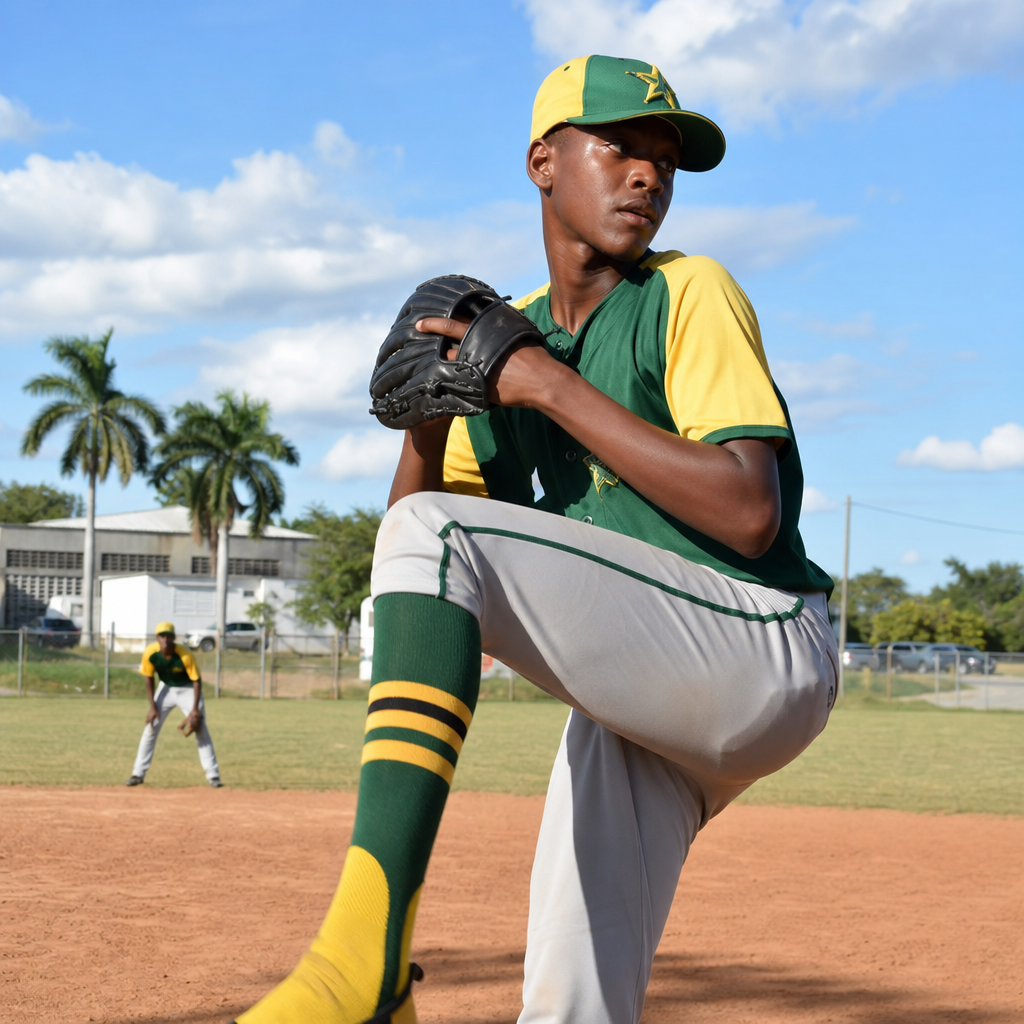
Baseball in Jamaica is often framed as a curiosity beside cricket, yet that shortcut misses a deeper story about migration, schools, military influence, tourism, and the practical challenge of building a diamond sport in a nation where other games dominate attention. In this International Baseball hub for Jamaica’s miscellaneous landscape, the goal is to explain what baseball in Jamaica actually is, where it came from, how it is organized, and why it matters to players, coaches, families, and readers tracking the sport’s growth beyond traditional powerhouses. When people ask whether Jamaica has baseball, the direct answer is yes: organized baseball has existed on the island for decades, national teams have represented the country internationally, and youth and development programs continue to operate despite limited fields, funding, and media coverage. Understanding baseball in Jamaica requires defining a few terms. “Grassroots baseball” refers to youth participation in schools, local clubs, and introductory clinics. “High-performance baseball” covers national teams, elite training, tournaments, and player pathways toward scholarships or professional opportunities. “Infrastructure” means more than a field; it includes coaching education, equipment supply, scheduling access, governing bodies, scorekeeping, officiating, and transportation. I have worked around emerging baseball markets long enough to know the same lesson repeats everywhere: a sport grows not when people simply like it, but when institutions make it easy to play repeatedly. Jamaica sits at that exact point. The island has athletic talent, a strong sporting identity, and ties to the United States, Canada, and the wider Caribbean. What it lacks, relative to cricket or track and field, is depth of system. That gap makes Jamaica especially important within international baseball because it shows how a country can possess real potential while still needing sustained investment to convert interest into durable participation.
How baseball reached Jamaica and why the comparison to cricket is incomplete
The easiest way to misunderstand baseball in Jamaica is to treat it as a simple offshoot of cricket. The sports share bat-and-ball DNA, but the similarities end quickly once you look at movement patterns, field geometry, scoring rhythm, and player development. Cricket rewards patience, line, length, and broad tactical pacing. Baseball emphasizes explosive actions, rotational power, quick reads, and repeated high-intensity plays. Jamaican athletes may transfer hand-eye coordination, throwing ability, and competitive instincts from cricket, but they still need specific baseball reps to learn infield footwork, pitch recognition, baserunning decisions, cutoffs, and defensive communication. That is why baseball in Jamaica has never grown automatically from cricket culture alone.
Historically, baseball’s presence on the island has been shaped by outside contact as much as local initiative. Migration links with North America exposed Jamaican families to the game, while travel, tourism, and returning residents carried equipment and knowledge back home. American military and commercial influence in parts of the Caribbean also helped spread baseball culture regionally in the twentieth century, though the pattern varied from island to island. Jamaica never followed the same baseball trajectory as Cuba, the Dominican Republic, Puerto Rico, or Venezuela, where the game gained an early mass foothold. Instead, it developed in pockets, dependent on committed advocates, school access, and sporadic organizational support.
That uneven history matters because it explains the current reality. Baseball in Jamaica is not fake, new, or imported yesterday; it is established enough to have a governing structure and international representation. At the same time, it remains a minority sport competing with football, netball, athletics, basketball, and cricket for fields, money, and public imagination. Readers exploring Jamaican baseball should hold both truths at once. The sport has roots, but the roots are not yet deep enough to guarantee broad visibility or elite output every year.
The current baseball ecosystem in Jamaica
Today, baseball in Jamaica revolves around a compact but meaningful ecosystem that includes the national federation, youth development efforts, local competitions, school engagement, volunteer coaches, and periodic international participation. In practical terms, the ecosystem is small, which means the same people often wear multiple hats. A federation official may also help with event logistics. A coach may source gloves, line a field, recruit players, and arrange transport. Parents often become organizers by necessity. This is common in emerging baseball countries, and Jamaica is no exception.
The Jamaica Baseball Association has served as the primary organizing body for the sport, handling affiliation, tournament preparation, and development activity. National team involvement gives the sport legitimacy because it creates a visible endpoint for players. International tournaments under WBSC and regional competition structures matter even when Jamaica does not advance deep, because they provide benchmarks. Coaches can compare velocity, defensive execution, game awareness, and conditioning against stronger programs. Without those benchmarks, development becomes guesswork.
Youth baseball is the key variable. In my experience, countries at Jamaica’s stage do not build sustainable senior programs from adult conversion alone. They need children to encounter the sport before movement habits harden around other games. That means clinics in schools, age-group competitions, and regular training schedules. It also means soft infrastructure: enough baseballs for batting practice, a safe backstop, and coaches who can teach throwing mechanics correctly so young players avoid injury and frustration. If a ten-year-old enjoys the game but can only play once every two months, the ecosystem stalls.
Jamaica’s baseball ecosystem is also shaped by geography and economics. Travel across the island costs money, especially when equipment and teams must move together. Field access can be inconsistent because baseball often shares or adapts space rather than controlling purpose-built facilities. Rain, maintenance, and competing events all affect scheduling. These are not glamorous issues, but they are the real reasons some baseball communities plateau while others break through.
Player development, school programs, and the biggest barriers to growth
When people ask what would most improve baseball in Jamaica, the best answer is a stronger player development pipeline. Talent is not the problem. Jamaica consistently produces high-level athletes in sprinting, football, and other sports because speed, coordination, and competitive confidence are already present in the population. The challenge is converting general athleticism into baseball skill through repetition, coaching quality, and competition density. A fast teenager is not automatically a center fielder. A strong arm does not guarantee command from the mound. Baseball punishes inexperience in ways casual observers often underestimate.
School programs are therefore crucial. Schools provide the one setting where a sport can reach many children at predictable times with adult supervision. If baseball appears only in occasional clinics, players may enjoy the novelty but never build technique. If schools adopt regular sessions, then basic competencies—grip, receiving, double-play feeds, bunt defense, strike-zone awareness—can become normal. Some of the most successful baseball growth models outside traditional hotspots use physical education entry points, teacher training, and low-cost introductory equipment before transitioning players into clubs.
The barriers are concrete and familiar. Equipment is expensive by local standards, especially bats, catcher’s gear, helmets, and durable baseballs. Coaching knowledge is uneven because many volunteers learned informally rather than through structured certification. Fields are scarce, and baseball diamonds require maintenance details that general-purpose grounds often lack. Competition frequency is another issue. Players improve fastest when games, scrimmages, and training happen weekly. Long gaps erode timing and motivation.
| Development area | Main challenge in Jamaica | Practical solution |
|---|---|---|
| Youth recruitment | Limited exposure in schools and communities | School clinics tied to weekly follow-up sessions |
| Coaching quality | Few formal certification pathways | Partner with regional instructors and online modules |
| Equipment access | High import cost for protective gear and balls | Donation drives plus centralized gear libraries |
| Competition | Irregular schedules and travel costs | Clustered weekend leagues by parish or zone |
| Elite pathway | Few scouts and limited showcase opportunities | Regional combines with verified metrics and video |
Scholarship pathways can help, but they should not be oversold. A small number of Jamaican players may attract overseas opportunities, especially if they combine athletic tools with academics and strong English-language communication. Yet the broader value of baseball is not only professional projection. The sport teaches discipline, teamwork, resilience after failure, and strategic thinking. In development markets, those benefits matter just as much as the dream of signing abroad.
National teams, international competition, and what success should look like
The Jamaican national baseball program is the most visible symbol of the sport on the island, but visibility can create unrealistic expectations. Success for a country in Jamaica’s position should not be judged only by qualifying for the World Baseball Classic or defeating regional powers with decades of institutional advantage. A more accurate framework uses layered goals: consistent participation, respectable competitive standards, stronger youth categories, improved run prevention, and the ability to keep games close against better-funded opponents. Those markers show whether the program is actually advancing.
International competition exposes every weakness quickly. Teams with limited baseball repetition struggle with situational defense, strike-zone control, game tempo, and offensive adjustment. I have seen emerging national programs look physically impressive in warmups and then unravel once hitters face sequencing, pitchers work from the stretch, or runners force quick decision-making. Jamaica has faced those same realities. But international play also accelerates learning. Players return with a clearer picture of what elite preparation feels like, from pregame routines to bullpen structure to video review.
Regional tournaments are especially important because they provide attainable measuring points. Competing against Caribbean neighbors and mid-tier programs helps Jamaica identify where gains are realistic in the short term. Maybe the immediate goal is reducing defensive errors. Maybe it is developing one reliable strike-throwing starter per age group. Maybe it is improving catcher receiving and stolen-base control. Those targeted gains matter more than vague talk about “wanting it more.” Baseball development is technical. Countries rise when they solve specific problems repeatedly.
There is also branding value in a credible national team. It gives media outlets a reason to cover the sport, gives sponsors something tangible to support, and gives young players a flag to play for. In smaller baseball nations, a national uniform can inspire participation more effectively than any poster campaign. It tells children that this is not just an imported pastime; it is a sport their country recognizes as part of its sporting identity.
Why baseball in Jamaica matters within the wider International Baseball picture
Baseball in Jamaica matters because international baseball grows strongest when it expands beyond its historical centers and builds sustainable footholds in countries with distinct sporting cultures. Jamaica offers a compelling case study. It has global sporting credibility, a recognizable national brand, strong diaspora links, and an athlete pool that naturally attracts interest. If baseball can deepen in Jamaica, it strengthens the Caribbean game overall and broadens the map of where the sport can thrive.
For readers using this page as a miscellaneous hub, the important takeaway is that Jamaican baseball touches several connected topics: youth coaching, infrastructure, federation management, diaspora influence, scholarship pathways, women’s and girls’ participation, community recreation, tourism-linked exhibition opportunities, and regional competition. Each deserves its own deeper article, but they belong together because baseball ecosystems are interconnected. You cannot discuss player output without discussing facilities. You cannot discuss facilities without discussing funding. You cannot discuss funding without discussing visibility and participation.
The comparison to cricket will always follow baseball in Jamaica, but that should be the starting point, not the conclusion. The real story is about adaptation. Jamaican baseball must adapt training to local facilities, recruit athletes from other sports, persuade schools that the game is worth timetable space, and give families a reason to commit. That work is slow, practical, and often invisible. It is also exactly how lasting sports cultures are built.
For anyone tracking International Baseball, Jamaica deserves attention not because it is already a powerhouse, but because it illustrates the difference between potential and system. The island has enough ingredients to matter. Turning those ingredients into consistent baseball success requires planning, coaching, partnerships, and patience. Follow the local programs, support the development structures, and treat Jamaican baseball as a serious sporting project rather than cricket’s cousin. That is where the real progress begins.
Frequently Asked Questions
Is baseball in Jamaica really established, or is it still a niche sport compared with cricket and track and field?
Baseball in Jamaica is very real, but it is best understood as a developing sport rather than a mass-participation national pastime. Cricket, football, netball, and track and field have historically commanded far more visibility, resources, and cultural prestige, so baseball has often operated outside the mainstream. That said, describing it as merely an odd copy of cricket misses the point. Baseball has built a meaningful footprint through school programs, club structures, community coaching, overseas ties, and national-team activity. In practical terms, that means there are organized players, coaches, administrators, and families who treat the sport seriously, even if the average Jamaican sports fan encounters baseball less often than other games.
What makes baseball in Jamaica especially interesting is that its growth has not followed the same path as sports that were embedded in colonial school culture or amplified by major domestic leagues. Instead, it has had to carve out space through persistence, international partnerships, and local advocates who believe the game offers educational, developmental, and professional opportunities. For young players, baseball can be a route to discipline, travel, scholarships, and exposure beyond the island. For communities, it can broaden the sporting landscape and create alternatives for children who may not fit neatly into more dominant sports. So yes, baseball remains niche in relative terms, but it is established enough to matter, and its story is far deeper than the old assumption that it lives permanently in cricket’s shadow.
How did baseball first take root in Jamaica?
The origins of baseball in Jamaica are tied to a blend of migration, military presence, educational exchange, and contact with the wider Caribbean and North American world. Unlike cricket, which became entrenched through British colonial institutions, baseball arrived through more indirect and modern channels. Movement between Jamaica and countries where baseball is prominent, especially the United States and parts of the Caribbean, helped introduce the game to local communities. Returning migrants, visiting coaches, and diaspora connections all played a role in familiarizing Jamaicans with baseball’s rules, equipment, and competitive structure.
Military influence is also part of the historical picture. In different periods of the twentieth century, the circulation of servicemen, equipment, and recreational practices helped spread American sports into Caribbean spaces, including Jamaica. Schools and youth organizations then became important touchpoints for keeping the game alive. Even where baseball lacked the institutional dominance of cricket, it gained traction because it could be taught in organized settings and adapted for youth development. Over time, local administrators and enthusiasts began to formalize participation through associations, competitions, and coaching efforts. This history matters because it shows that baseball in Jamaica was not a random import with no roots; it was built through repeated contact, local adoption, and a long process of trying to fit a diamond sport into Jamaica’s own sporting environment.
How is baseball organized in Jamaica today?
Baseball in Jamaica is typically organized through a national governing structure, supported by coaches, clubs, school-based initiatives, and national-team programs. As with many emerging sports systems, the exact strength and reach of each layer can vary over time depending on funding, leadership, facility access, and international support. At the top level, the governing body is responsible for administration, development strategy, competition planning, player identification, and representation in regional or international baseball networks. This includes managing national squads, liaising with international federations, and helping create opportunities for coaching and umpiring development.
Below that national layer, the sport depends heavily on local ecosystems. Schools are often crucial because they provide access to young athletes, regular practice spaces, and a natural setting for skill development. Clubs and community programs help sustain players beyond introductory exposure, giving them a place to train, compete, and stay connected to the game. Coaches are especially important in Jamaica because baseball is not yet a sport that most children absorb informally from family tradition or constant media coverage. In many cases, players need direct instruction in fundamentals, tactics, and even baseball culture itself. Facility access is another major organizational issue. Baseball requires specific space, field markings, and equipment, so building and maintaining suitable diamonds can be more difficult than supporting sports that use more multipurpose grounds. That is why organization in Jamaica is not just about leagues and teams; it is also about creating the infrastructure, expertise, and continuity needed for the sport to survive and grow.
Why does baseball matter in Jamaica if it is not one of the island’s dominant sports?
Baseball matters in Jamaica because sports value is not measured only by popularity. For players and families, baseball can represent access, mobility, and a different kind of athletic pathway. It opens opportunities that may not exist in more crowded sporting systems, especially for young athletes seeking scholarships, international exposure, or personal development in a structured team environment. The sport teaches coordination, patience, decision-making, situational awareness, and mental resilience. It also gives coaches and educators another tool for mentoring youth, building confidence, and encouraging long-term discipline.
On a broader level, baseball matters because it expands Jamaica’s sporting identity. The island is globally associated with sprinting and strongly connected to cricket and football, but that does not mean its athletic culture must be narrow. A developing baseball presence reflects Jamaica’s international links, especially with diaspora communities, tourism networks, and nearby baseball-rich nations. It also demonstrates that local sport can evolve in response to migration, global media, and grassroots initiative. For recreation professionals and community organizers, baseball can help diversify programming and attract children who may be looking for something beyond the traditional options. In that sense, the significance of baseball in Jamaica is cultural as well as competitive: it shows how a country with a powerful sports heritage can still make room for new traditions and new possibilities.
What are the biggest challenges and future opportunities for baseball in Jamaica?
The biggest challenges are visibility, facilities, funding, and sustained player development. Visibility matters because a sport grows faster when children see it regularly, understand its heroes, and have easy access to local games. In Jamaica, baseball competes for attention with sports that are already deeply woven into school life, media coverage, and national pride. Facilities are another obvious hurdle. Baseball needs diamonds, backstops, bases, equipment, and safe practice areas, and those requirements can be difficult to meet consistently in communities where field space is already shared or limited. Funding affects everything from uniforms and travel to coaching certification and tournament participation. Without reliable investment, it is hard to maintain momentum, especially after promising youth programs identify talented players who then need higher-level competition and support.
At the same time, the opportunities are significant. Jamaica can benefit from stronger partnerships with international baseball organizations, diaspora communities, private sponsors, schools, and tourism-linked institutions that see sport as part of youth development and national branding. Coaching education can make a major difference because knowledgeable coaches create better player experiences and more credible pathways. School-based expansion is another key opportunity, since that is often where new sports gain legitimacy and scale. There is also room to position baseball as both a competitive and developmental sport, one that offers character-building and educational value alongside athletic ambition. If Jamaica can continue improving organization, facilities, and awareness, baseball does not need to replace cricket or football to succeed. Its future lies in becoming sustainable, respected, and accessible enough that young Jamaicans who want to play can do so with real support and real prospects.