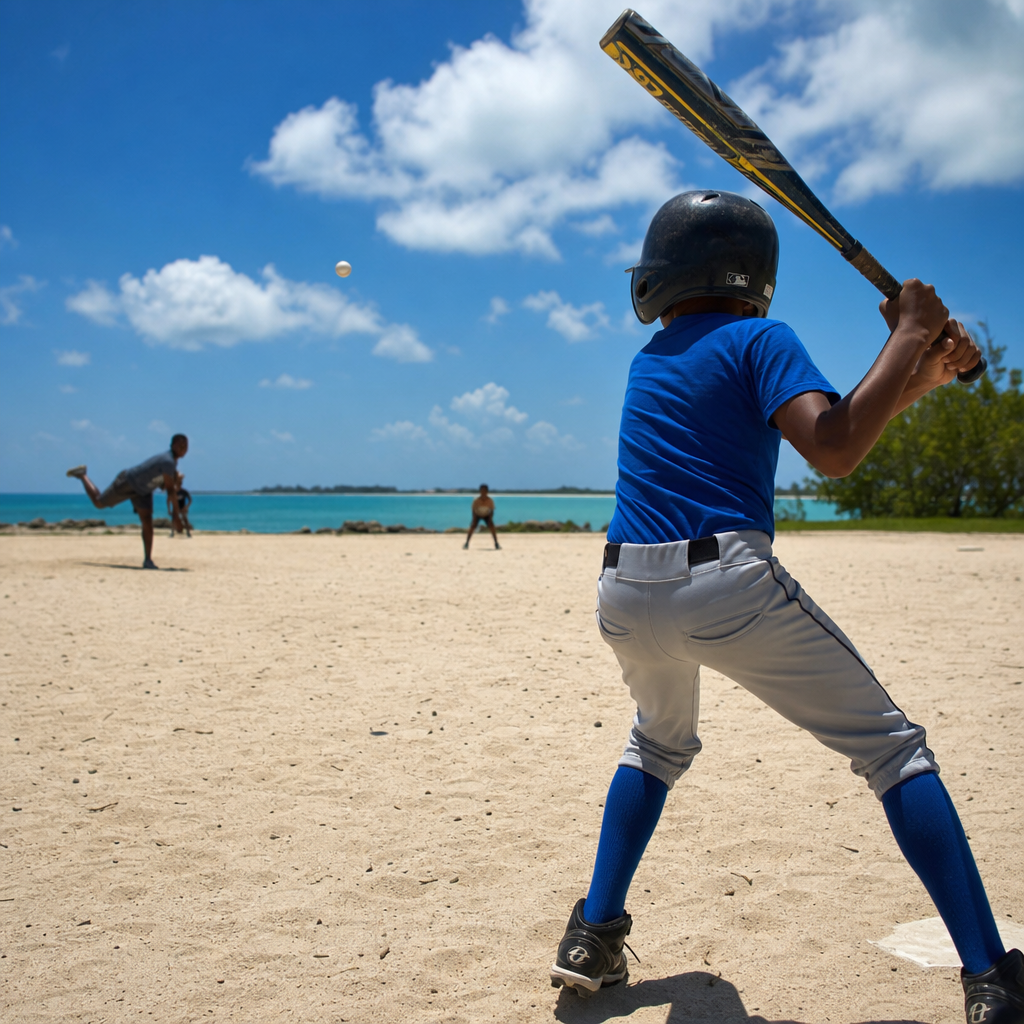
Baseball in the Bahamas remains one of the Caribbean’s most intriguing sporting stories: a game with visible talent, committed organizers, and periodic international breakthroughs, yet still searching for the infrastructure and public profile needed to turn promise into sustained national momentum. In this context, “miscellaneous” does not mean scattered or unimportant. It refers to the wide range of connected subjects that shape the sport beyond box scores alone, including youth development, school participation, facilities, governing structures, women’s baseball, softball crossover, tourism, international tournaments, coaching education, and pathways to college or professional play. As someone who has worked on international baseball content and followed federations across the region, I have learned that the Bahamas is best understood as a development environment rather than a finished product. That distinction matters. Countries with smaller populations often produce elite athletes through concentrated effort, but baseball only grows when those athletes are supported by fields, coaching, scheduling, equipment access, and institutional consistency. The Bahamas has all of those pieces in partial form. The central question is whether they can be assembled into a durable system. For readers exploring international baseball, this hub article explains how the sport developed in the Bahamas, where it stands today, what obstacles continue to slow progress, and why the country remains a genuine opportunity market within Caribbean baseball.
How baseball developed in the Bahamas
Baseball has never occupied the same cultural space in the Bahamas that it holds in the Dominican Republic, Cuba, Puerto Rico, or parts of Venezuela, but it has existed for decades through schools, local clubs, expatriate influence, and regional competition. The stronger historical current in the Bahamas has often been softball and athletics, with basketball and track drawing broader public attention. Even so, baseball found a foothold because it fits the athletic profile common in Bahamian sport: speed, coordination, arm strength, and aggressive baserunning. Those traits are not theoretical. Bahamian players who reach international events consistently stand out as quick-twitch athletes with raw tools that coaches believe can be refined.
The modern organizational center is the Bahamas Baseball Association, which has carried responsibility for national teams, youth tournaments, and relations with the World Baseball Softball Confederation. In practical terms, national development has depended less on a fully professional domestic ecosystem and more on volunteer administrators, dedicated coaches, family support, and periodic assistance from international partners. That model can produce talent, but it is vulnerable. A coaching change, field closure, or funding shortfall can interrupt an age group for years. I have seen this pattern in several emerging baseball nations, and the Bahamas fits it closely: progress happens in bursts, often tied to a few motivated people rather than a deep institutional bench.
Geography also shapes development. Nassau is naturally the sport’s main hub because population density, schools, and travel access are concentrated there. The Family Islands can contribute athletes, but regular competition becomes harder when ferry or flight costs limit league frequency. That uneven access affects player retention. A teenager who might thrive with weekly games can lose two critical years if there is no stable local schedule. For that reason, any serious discussion of baseball in the Bahamas has to include logistics, not just talent identification.
Youth baseball, schools, and the player pipeline
If baseball is going to become more than a niche sport in the Bahamas, youth participation is the decisive factor. The most reliable pipeline in emerging baseball countries starts with introductory play at primary school age, moves into structured coaching by early adolescence, and then offers clear next steps through academies, secondary schools, travel teams, college recruitment, or national youth teams. The Bahamas has touched each of these stages, but consistency remains the challenge. In many years, the issue is not whether young athletes exist; it is whether they can get enough quality repetitions in catching, throwing, hitting velocity, and situational play before they reach the age when other sports pull them away.
School involvement matters because it lowers the barrier to entry. A family may not be able to buy a bat, glove, cleats, and travel fees, but a school-based introduction can identify interest and basic ability quickly. The strongest baseball nations treat the school system as a discovery engine. The Bahamas does not yet operate on that scale, though local efforts have shown what is possible. Clinics, after-school programs, and youth leagues have repeatedly demonstrated that children respond well when the game is made accessible and fun. The lesson is straightforward: exposure drives participation, and participation creates the numbers needed for long-term quality.
Skill development in the Bahamas often depends on multi-sport athletes. That creates both an advantage and a problem. The advantage is athletic versatility. A player who also runs track or plays basketball may bring speed, coordination, and body control that baseball coaches value. The problem is limited specialization time. Hitting, especially against advanced pitching, is a repetition skill. Without regular live at-bats, players can look gifted in workouts and still struggle in game conditions. Coaches in the Bahamas therefore need development plans that respect multi-sport realities while protecting baseball-specific growth, particularly in bat-to-ball skills, defensive footwork, and catcher training.
Facilities, equipment, and the development gap
The biggest practical barrier to baseball growth in the Bahamas is not enthusiasm. It is infrastructure. A sport can survive on passion for a while, but it cannot mature without playable fields, maintained surfaces, safe fencing, bullpens, batting areas, lighting, storage, and dependable access to equipment. Baseball is more demanding than many casual observers realize. Infield quality affects fielding mechanics. Mound condition affects pitcher health. Backstop safety affects youth participation. When facilities are uneven, development becomes uneven as well.
Equipment access is equally important. Gloves are durable but expensive for beginners. Bats must match age and strength. Catcher’s gear is specialized. Baseballs wear out quickly in humid climates and on rough surfaces. In the Bahamas, where import costs can raise prices, equipment donation programs and federation partnerships often make the difference between a functioning youth league and a stalled one. I have seen coaches across the Caribbean become expert at stretching limited resources, repairing nets, mixing age groups, and using modified drills when full field conditions are unavailable. That ingenuity helps, but it should not be mistaken for a substitute for investment.
| Development Area | Common Bahamian Reality | Why It Matters |
|---|---|---|
| Fields | Limited dedicated diamonds, shared community space | Regular games and defensive repetition depend on safe, marked surfaces |
| Equipment | High costs, donation reliance, uneven sizing for youth players | Proper bats, gloves, and catcher’s gear affect safety and skill growth |
| Coaching | Passionate local leaders, but limited certification depth | Technique errors become habits when instruction is inconsistent |
| Competition | Irregular schedules and travel constraints between islands | Players improve fastest through repeated game situations |
| Pathways | Some college and national-team opportunities, no broad pro system | Visible next steps keep talented teenagers in the sport |
Facility development does not always require a large stadium. In many successful small-market baseball programs, the first major gains come from modest but targeted upgrades: one regulation practice field, one quality youth field, secure equipment storage, and a calendar that guarantees usage. In the Bahamian case, concentrated investment in a few reliable sites could create year-round hubs for coaching education, school competitions, and national team selection camps. That would be more valuable than spreading limited money thinly across too many underused venues.
National teams, international play, and visibility
International competition gives Bahamian baseball much of its identity. For countries still building domestic depth, tournaments serve three functions at once: they measure current standard, create visibility, and motivate younger players. The Bahamas has participated in regional and global qualifying structures under WBSC governance, including events tied to the Caribbean and the Americas. Results have varied, but the broader pattern is clear. The country can be competitive when it fields disciplined athletes and receives adequate preparation time, yet it often faces opponents with deeper baseball cultures and more robust training volume.
That gap shows most clearly in pitching depth and offensive consistency. Emerging baseball nations can usually assemble a few strong starters or toolsy position players, but international tournaments expose roster depth fast. Once a team reaches its third or fourth arm, command, workload management, and defensive execution become decisive. The Bahamas has had stretches where individual talent was obvious, but tournament baseball rewards entire systems, not just standout athletes. This is why developmental continuity matters more than one good generation.
Visibility from national teams still has immense value. A strong performance in a qualifier can attract media coverage, sponsor interest, and renewed youth enrollment. It also gives governing bodies a case for public support. In small sporting markets, symbolic wins matter. They tell families that baseball is not a dead end. Just as important, they connect local efforts to a larger international map. When a young player in Nassau or Freeport sees the national uniform in action, the sport becomes real in a way a clinic flyer never can.
Coaching, administration, and the role of community
Behind every emerging baseball nation is a small group of people doing far more than their titles suggest. In the Bahamas, coaches often recruit players, maintain fields, source gear, arrange transportation, and communicate with parents in addition to teaching the game. Administrators handle federation obligations, event planning, and international coordination, frequently without the staffing depth seen in larger countries. Community support therefore is not optional. It is the operating model.
Coaching quality is one of the most under-discussed variables in Bahamian baseball. Athleticism can mask technical flaws for a while, especially at youth level. Eventually, though, arm action, swing sequencing, pitch recognition, relay positioning, and situational awareness separate prepared players from merely gifted ones. Coach education needs to be continuous and standardized. Programs recognized by the WBSC or supported by experienced regional instructors can help local coaches align terminology, drill design, safety standards, and age-appropriate workloads. In my experience, one well-trained coach can transform an entire age group in a small baseball community.
Administration matters just as much. Federations earn trust when schedules are published early, selection criteria are clear, age-group events happen on time, and communication is consistent. Players stay engaged when systems feel fair and predictable. Sponsors are more willing to invest when reporting is transparent and outcomes are measurable. For the Bahamas, administrative stability may be the single biggest multiplier available because it improves nearly every other part of the baseball ecosystem without requiring immediate large-scale capital spending.
Women’s baseball, softball links, and future growth opportunities
One of the most important “miscellaneous” topics in Bahamian baseball is the relationship between baseball and softball. In many Caribbean countries, softball has stronger roots, better visibility, and more established female participation. That should be viewed as an asset, not a rivalry. The overlap in throwing, catching, field awareness, and competitive structure creates an opportunity to broaden the baseball audience and strengthen overall diamond-sport culture. Where facilities are shared intelligently and coaching cooperation exists, both sports can benefit.
Women’s baseball deserves explicit attention. Globally, women’s baseball is expanding through national programs, development camps, and WBSC competition, yet it still receives less support than men’s baseball or women’s softball. The Bahamas has an opening here. Because the country is still shaping much of its baseball identity, it can build inclusion earlier rather than trying to retrofit it later. Mixed introductory clinics, targeted girls’ development days, and visible female coaching roles would widen participation and improve the sport’s public value.
There are also growth opportunities tied to tourism and diaspora networks. The Bahamas is internationally connected, easy to market, and familiar to traveling teams from the United States and elsewhere. Well-organized youth tournaments, coaching clinics, and preseason events could create both baseball exposure and economic activity. This strategy works only if facilities and event management are reliable, but the potential is real. Diaspora relationships can help too, especially with former players, college contacts, and donors willing to support equipment drives or scholarship pathways. For a country of the Bahamas’ size, smart network-building can substitute for some limitations of scale.
Baseball in the Bahamas is best understood as a sport with clear ingredients for success but an unfinished recipe. The talent base is real. Youth interest can be stimulated quickly when schools, clubs, and clinics provide regular access. National teams offer visibility and aspiration. Softball connections, tourism potential, and diaspora support all create practical avenues for growth. At the same time, the limiting factors are equally clear: too few dependable facilities, uneven equipment access, inconsistent competition, and the constant need for stronger coaching and administration. None of those problems are mysterious, and none are impossible to solve. They require focus, continuity, and an honest understanding that baseball development is cumulative.
For readers using this page as a hub within international baseball, the main takeaway is simple: the Bahamas matters because it shows how emerging baseball nations are actually built. Not through hype, but through fields, calendars, coaches, and pathways that keep athletes in the game long enough to convert raw tools into polished performance. If you want to understand Bahamian baseball, follow the development chain from youth exposure to national representation, and pay attention to the people maintaining that chain under difficult conditions. Explore the related articles in this subtopic to go deeper into facilities, player development, regional competition, and the wider Caribbean baseball landscape.
Frequently Asked Questions
Why is baseball often described as “a diamond in the rough” in the Bahamas?
Baseball in the Bahamas earns that description because the ingredients for long-term success are clearly present, but the sport is still developing the structure needed to fully shine. The country has athletic youth, a strong sporting culture, dedicated coaches, and organizers who continue to push the game forward despite limited resources. There have also been meaningful international moments that prove Bahamian players can compete and attract attention beyond the islands. Those signs of potential are real, not theoretical.
At the same time, baseball has often operated in the shadow of more established sports, especially those with deeper school integration, stronger media visibility, and more consistent funding. That means baseball’s growth has not always been linear. A talented player may emerge, a national program may gain momentum, or a tournament result may create excitement, but sustaining that progress requires fields, equipment, coaching pipelines, youth leagues, transportation support, and regular competition. In other words, the “rough” refers less to talent and more to the unfinished environment around the talent.
It is also important to understand that the sport’s development depends on many so-called miscellaneous factors that actually matter a great deal. Community support, parent involvement, school access, maintenance of playing spaces, partnerships with international baseball bodies, and even how often the sport appears in local conversation all influence whether baseball remains a niche pursuit or becomes a stronger national fixture. So when people call baseball in the Bahamas a diamond in the rough, they are recognizing both the promise already visible and the work still required to transform flashes of excellence into a durable, widely supported baseball culture.
What are the biggest challenges holding baseball back in the Bahamas?
The most significant challenge is infrastructure. Baseball is not a sport that can thrive on enthusiasm alone. Players need safe, reliable fields; proper infield and outfield maintenance; batting cages; training areas; access to baseball-specific equipment; and organized spaces where development can happen consistently. When facilities are limited or shared with other uses, player progress becomes harder to sustain. Young athletes can lose valuable repetitions, and coaches are forced to spend too much energy managing scarcity rather than building skill.
Another major issue is visibility. In many countries, sports grow because they are seen regularly in schools, in neighborhoods, on television, online, and through community events. Baseball in the Bahamas has often had to fight for that attention. If families do not encounter the sport early, if schools are not consistently connected to it, or if local success stories are not widely promoted, then talent identification becomes more difficult. The sport may still attract dedicated participants, but it struggles to build the broad base needed for lasting momentum.
Funding and organizational continuity also matter. Baseball development requires more than one good season or one passionate generation of volunteers. It needs stable administration, long-term planning, coach education, youth outreach, and tournament opportunities that players can count on. Travel costs between islands or for international competition can create additional barriers. The Bahamas has the advantage of passion and potential, but without sustained investment and coordinated planning, progress can arrive in bursts rather than in a steady climb. That is why the conversation around Bahamian baseball often includes not only talent, but also systems, access, exposure, and institutional support.
How important is youth development to the future of baseball in the Bahamas?
Youth development is absolutely central. If baseball is going to become more than a promising but inconsistent sporting story in the Bahamas, it must build a larger and more reliable pipeline of young players. That means introducing the game early, teaching fundamentals properly, and creating regular opportunities for children and teenagers to play in structured environments. Waiting until athletes are older is rarely enough. The strongest baseball cultures are built when players grow up with the sport, not when they discover it late.
Effective youth development includes much more than simply forming teams. It requires trained coaches who understand mechanics, conditioning, game awareness, and age-appropriate instruction. It also depends on accessible leagues, school participation, equipment support, and a calendar of games that allows players to apply what they learn. Repetition is critical in baseball. Hitting, fielding, throwing, baserunning, and situational understanding all improve through consistent practice over time. Without a strong youth structure, raw athletic ability may never mature into polished baseball performance.
There is also a broader social dimension. Youth baseball can help create community identity, discipline, mentorship, and positive pathways for young people. In the Bahamian context, this is especially important because the sport needs advocates at every level. When children play, parents become invested, schools pay attention, communities begin to recognize local talent, and the sport’s profile grows organically. That kind of ecosystem is how baseball moves from isolated promise to national relevance. For the Bahamas, youth development is not just one part of the solution; it is the foundation that supports everything else, from elite competition to fan interest to the long-term credibility of the sport.
What role do international competition and overseas opportunities play for Bahamian baseball players?
International competition is one of the most important engines of growth for baseball in the Bahamas. It gives players exposure to higher levels of play, sharper competition, and different training standards. When Bahamian athletes compete regionally or internationally, they gain experience that can accelerate their development and raise the expectations of the programs they come from. They also bring back valuable lessons about preparation, discipline, strategy, and professionalism. For a developing baseball nation, those lessons can be transformative.
Overseas opportunities matter just as much. Access to foreign academies, colleges, showcases, and professional scouting networks can create pathways that may not yet exist domestically at the same scale. For talented Bahamian players, these opportunities can lead to scholarships, advanced coaching, and career progression. Just as importantly, successful players become proof points. They show younger athletes that baseball can lead somewhere meaningful, which helps motivate participation and legitimizes the sport in the eyes of families and communities.
However, international access should be seen as a supplement, not a substitute, for local development. A healthy baseball future for the Bahamas cannot depend only on exporting a few standout players. The country also needs strong domestic systems that prepare a wider pool of athletes for those chances. International breakthroughs are powerful because they inspire belief, but they have the greatest impact when they are connected to organized local coaching, scouting awareness, and sustained grassroots development. In that sense, international competition serves two purposes: it helps individual players advance, and it gives the wider Bahamian baseball community a benchmark for what the sport can become with the right support.
What would it take for baseball to gain stronger national momentum in the Bahamas?
For baseball to build stronger and more lasting national momentum, the Bahamas would need a coordinated effort across several fronts at once. First, there must be visible investment in facilities and playing spaces. Good fields are not cosmetic extras; they are basic tools of development. When players have dependable places to train and compete, standards rise. Better facilities also make it easier to host events, attract participation, and signal that the sport is being taken seriously.
Second, baseball needs deeper integration into youth and community life. That means more school engagement, more introductory programs for children, more local leagues, and stronger support for coaches. A sport grows fastest when it becomes part of everyday sporting life rather than an occasional option. If children can encounter baseball early and regularly, the talent base expands and the game becomes more culturally familiar. Over time, that creates not only better players but also more knowledgeable fans, volunteers, and advocates.
Third, storytelling and visibility are essential. Baseball in the Bahamas already has compelling material: emerging talent, dedicated organizers, international aspirations, and a clear sense of untapped potential. Those stories need to be told consistently through media coverage, community promotion, and public recognition of players and programs. People support what they can see, follow, and feel connected to. Finally, all of this must be supported by stable leadership and long-term planning. Momentum does not come from one tournament or one generation of athletes. It comes from turning isolated strengths into a system. If the Bahamas can continue to connect talent, organization, youth development, infrastructure, and public visibility, baseball has every chance to become one of the country’s most meaningful sporting success stories rather than simply one of its most intriguing possibilities.