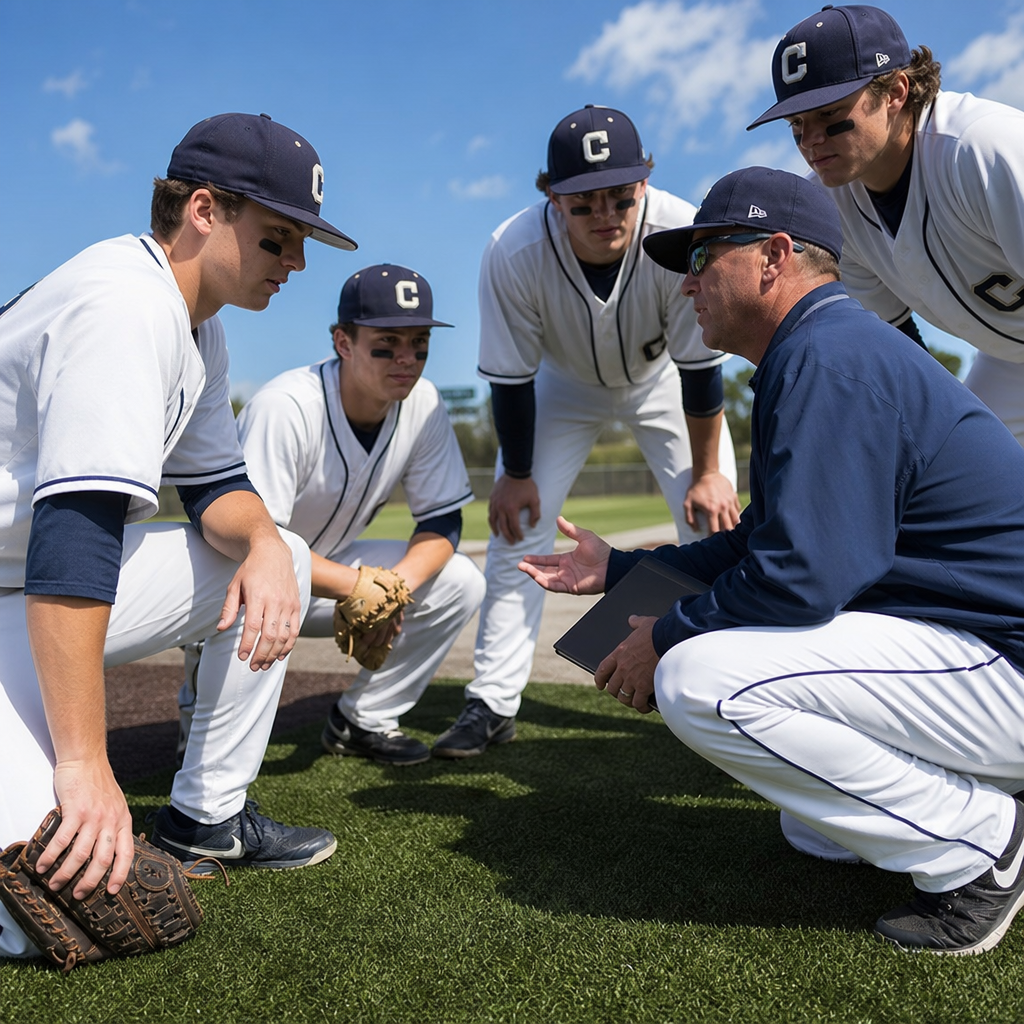
College baseball sits at a crucial intersection of education, athletic training, and professional preparation, making it one of the most important development environments in the sport. When people ask what college baseball does beyond winning weekend series, the answer is clear: it develops players physically, mentally, academically, and socially while giving them meaningful competition against advanced peers. In my experience working around amateur player pathways, the athletes who use college baseball well do not simply add velocity or hit more home runs. They learn how to manage schedules, respond to failure, communicate with coaches, and build habits that carry into pro ball or other careers. That broader development is why college baseball matters, especially within the larger ecosystem that includes high school programs, summer leagues, the MLB Draft, and the minor leagues.
To understand college baseball’s role in player development, it helps to define the core terms. Player development refers to the structured process of improving tools, skills, game awareness, physical capacity, and decision-making over time. In baseball, that includes swing mechanics, pitch design, defensive footwork, strength and conditioning, nutrition, recovery, video analysis, and the less visible skills of resilience and routine. College baseball means NCAA programs across Divisions I, II, and III, plus NAIA and junior college pathways, each with different scholarship models, competition levels, and transfer dynamics. The value of this system is not identical for every player, but its reach is extensive because it serves future major leaguers, minor leaguers, coaches, analysts, and graduates whose baseball experience becomes a foundation for life after sports.
This hub article covers the miscellaneous side of the college baseball and minor league conversation because many of the most important development factors do not fit neatly into scouting reports or standings. A player can improve because of a biomechanics lab, a veteran catcher, a sports psychologist, a Cape Cod League summer, or a demanding academic major that teaches discipline. Another can stall because a roster is crowded, a role is limited, or the program lacks individualized instruction. Understanding those variables helps families, recruits, and fans evaluate what a college program really offers. It also helps explain why college baseball has become a central talent incubator for modern baseball, not just a stop on the way to the draft.
How College Baseball Builds Better Players
College baseball develops players by combining repetition, coaching, technology, and competitive pressure in a structured setting. Unlike many high school environments, college programs typically provide year-round access to strength staffs, athletic trainers, video systems, scouting reports, and coordinated practice plans. At stronger programs, a hitter may leave batting practice with batted-ball data from TrackMan, review swing video through Synergy or Blast Motion, and adjust attack angle or timing based on measurable feedback. A pitcher may pair bullpen work with Rapsodo readings, learn seam-shifted movement concepts, and build a recovery plan that includes workload monitoring and soft-tissue treatment. These are not luxuries anymore. They are now common features in serious development settings.
The jump in competition also matters. Facing older pitchers with command, better secondary stuff, and targeted game plans forces hitters to refine swing decisions and plate discipline. Position players learn quickly that raw athleticism alone is not enough when every middle infielder can turn a double play and every Friday starter can expose a chase habit. On the mound, pitchers must sequence intelligently, hold runners, field their position, and execute under pressure with less margin for error. Those demands accelerate baseball IQ. I have seen players who were physically gifted in high school become complete college contributors only after they learned situational baseball, pre-pitch planning, and the daily consistency needed to compete over a long season.
Development is also role based. A freshman reliever may begin in low-leverage innings, then grow into a setup arm after improving strike efficiency and confidence. A backup catcher may become a defensive anchor because college games give him repeated chances to manage staffs, control tempo, and refine receiving. Even players who are not stars can make meaningful gains because college baseball exposes them to professional expectations. That is why evaluators often value players who have handled real college roles. The environment reveals whether tools can translate into reliable performance.
Education, Maturity, and Life Skills
One of college baseball’s biggest advantages is that it develops the person, not just the athlete. The education piece is not a side benefit. It directly shapes performance and long-term outcomes. Players juggle class schedules, travel, recovery, study hall, and team expectations while learning to manage time under constant pressure. That skill becomes essential in professional baseball, where routines, accountability, and self-management often separate players who advance from players who stall. A college player who has learned to prepare for an exam after a road trip is usually better equipped to handle the grind of a six-game week in the minors.
The maturity gains are often obvious by sophomore or junior year. Players learn how to live away from home, navigate teammates from different backgrounds, and take coaching without internalizing every critique. They also face adversity in ways that mirror professional sport. Slumps happen. Roles change. Injuries interrupt plans. In a healthy college program, support systems help players process those setbacks productively. Academic advisors, mental performance staff, and trusted position coaches can keep a rough month from becoming a lost year. That support can be decisive for teenagers entering adulthood while competing at a high level.
There is also practical value in earning progress toward a degree. Even elite prospects carry injury risk, and only a small fraction of college players reach Major League Baseball. According to NCAA participation data, thousands of athletes play college baseball each year, while just a tiny percentage appear in the majors. That reality does not diminish baseball ambition. It underscores why education matters. The best programs treat player development broadly, helping athletes improve on the field while building credentials and professional networks that remain useful if baseball ends sooner than expected.
Pathways: NCAA, Junior College, Summer Ball, and the Draft
There is no single college baseball pathway, and that is one reason the system works for so many different players. Some athletes go directly to four-year NCAA Division I programs, where the competition is high, the travel is demanding, and draft visibility is strongest. Others choose Division II, Division III, or NAIA schools that offer better academic fit, more immediate playing time, or a healthier development pace. Junior college remains especially important because it provides a shorter route to the draft, a reset option for late bloomers, and a bridge for players who need innings, at-bats, or academic improvement before moving to a four-year program.
Summer baseball is another major piece of development. Leagues such as the Cape Cod Baseball League, the Northwoods League, and the Coastal Plain League give players wood-bat experience, stronger competition, and exposure against talent from many conferences. For hitters, wood bats can reveal whether contact quality and barrel control are truly advanced. For pitchers, summer ball can sharpen execution against lineups full of draft prospects. Scouts value these environments because they strip away some noise and allow cleaner comparisons. A strong summer does not guarantee draft status, but it often changes how a player is evaluated.
The draft itself influences college development choices. Since MLB shortened the draft in 2020 and teams became more selective, college performance and trackable traits have grown more important. Clubs now weigh age, command, chase rates, swing decisions, contact quality, and physical projection with greater precision. College baseball helps players produce that evidence. It gives them a longer runway to improve than many prep players have, while still preserving flexibility through transfer opportunities and evolving roster structures.
| Pathway | Primary Advantage | Typical Development Benefit | Common Tradeoff |
|---|---|---|---|
| NCAA Division I | Highest visibility and resources | Advanced competition, tech-rich training, draft exposure | Roster pressure and limited early playing time |
| NCAA Division II/III | Fit and opportunity | Steady reps, balanced development, academic flexibility | Less national exposure |
| Junior College | Fast reset and draft flexibility | Immediate innings or at-bats, transfer leverage | Less long-term stability |
| Summer Leagues | Wood-bat evaluation | Stronger competition and scouting access | Added workload if recovery is poor |
Coaching, Technology, and the Modern Development Model
The best college baseball programs increasingly resemble professional development departments. Coaching is no longer limited to batting practice, fungoes, and bullpen sessions. It includes individualized plans, objective measurement, and communication across departments. A strength coach may coordinate with a pitching coach to monitor workload spikes. A hitting coach may use heat maps and swing-decision data to redesign an approach against fastballs at the top of the zone. An athletic trainer may flag mobility restrictions affecting throwing patterns. When those departments work together, development becomes more efficient and safer.
Technology has changed what coaches can teach and what players can prove. High-speed cameras help isolate sequencing issues in a swing or delivery. Force plates can show how an athlete produces ground force. Motion-capture systems and biomechanical analysis can identify inefficiencies that affect velocity or injury risk. None of these tools replaces coaching judgment, but good staffs use them to ask better questions and prescribe better interventions. In practical terms, that might mean helping a pitcher gain two miles per hour through lower-half timing and strength work rather than simply telling him to throw harder.
Still, technology has limits. Data without context can mislead players into chasing numbers instead of performance. I have seen hitters improve exit velocity while becoming less effective in games because they lost zone control and situational adaptability. Likewise, a pitcher can shape a high-spin breaking ball in a lab yet struggle when command, tempo, and confidence collapse under game stress. Strong college programs know that development is both measurable and human. They blend information with observation, communication, and honest role definition.
Where College Baseball Fits With the Minor Leagues
College baseball and the minor leagues are often framed as separate worlds, but they are closely connected. Colleges serve as one of the main preparation grounds for minor league baseball, and many aspects of the college experience mirror what players face after signing. Travel, condensed schedules, recovery between appearances, advanced scouting, and clubhouse dynamics all prepare players for life in professional systems. That is one reason so many front offices prefer polished college players in certain draft ranges. They may have lower ultimate ceilings than some prep stars, but they often arrive with clearer performance histories and habits that make the transition smoother.
At the same time, college baseball offers something the minors generally cannot: an academic safety net and a campus environment built around broader personal development. Minor league baseball is employment. College baseball is still education-based, even when the sport is intense and commercial pressures are real. For many players, that distinction is critical. It allows physical and emotional growth in a setting where mistakes are still part of learning rather than immediate job threats. Players who are not ready for the professional grind at 18 often benefit from three years in college before entering affiliated baseball.
This hub topic naturally connects to recruiting strategy, scholarship questions, transfer portal trends, summer league planning, draft eligibility rules, and the changing economics of amateur baseball. Those subjects deserve dedicated articles, but they all lead back to one central point: college baseball is not just adjacent to player development. It is one of the main engines of it. Anyone evaluating the future of the sport, from parents to scouts to player development staff, needs to understand how these college environments shape the talent pipeline.
The Limits, Tradeoffs, and What Players Should Evaluate
College baseball is powerful, but it is not automatically the right development choice for every athlete. Fit matters more than logo. A famous program with elite facilities can still be a poor environment if a player is buried on the depth chart, receives generic instruction, or lacks academic support. A smaller school may be better if it offers regular reps, a coach with a strong teaching record, and a realistic path to improvement. Players should evaluate coaching continuity, communication style, position-specific development, strength infrastructure, injury history, and how the staff handles athletes who are not immediate stars.
Financial and roster realities matter too. Scholarship structures vary widely, especially outside fully funded situations. The transfer portal has increased movement, which can help some players find better opportunities but also creates year-to-year uncertainty. Roster management changes at the national level can affect playing time and retention. Families should ask direct questions about role expectations, redshirt plans, summer-ball recommendations, academic resources, and whether development plans are individualized or one-size-fits-all. Those answers reveal far more than recruiting graphics ever will.
For players, the smartest approach is to view college baseball as a platform, not a guarantee. The platform can be exceptional: better coaching, stronger competition, education, visibility, and maturity. But results still depend on health, adaptability, work quality, and choosing an environment aligned with personal goals. That perspective keeps expectations grounded and decisions practical.
College baseball plays a defining role in player development because it brings together training, competition, education, and life experience in one demanding environment. It helps hitters sharpen decisions, pitchers refine arsenals, defenders improve reliability, and all players learn routines that matter beyond a single season. Just as important, it develops maturity, accountability, and academic progress in a sport where outcomes are uncertain and careers are fragile. The pathway is flexible enough to serve elite draft prospects, late bloomers, junior college transfers, and athletes who will build futures outside professional baseball.
As a hub within the minor leagues and college baseball conversation, this topic points to many connected questions: how recruiting works, which pathway fits different players, what summer leagues add, how technology changes instruction, and where college performance translates to pro success. The consistent answer is that college baseball matters because it offers a structured place to grow before the professional game asks for results. If you are comparing development routes, start by evaluating program fit, coaching quality, playing opportunity, and academic support. Those factors usually tell you more than reputation alone, and they are the best place to begin the next step in the baseball journey.
Frequently Asked Questions
What makes college baseball such an important stage in player development?
College baseball matters because it develops far more than box-score production. It gives athletes a structured environment where physical growth, skill refinement, academic responsibility, and personal maturity all happen at the same time. Unlike shorter or less comprehensive development stops, the college game requires players to balance training, practice, scouting reports, travel, classwork, recovery, and team expectations over an extended season. That combination creates habits that translate well both to professional baseball and to life beyond the sport.
From a baseball standpoint, players face better competition, more advanced coaching, and more sophisticated game planning than they often saw at earlier levels. They learn how to make adjustments against quality pitching, defend with greater precision, and handle the speed of the college game. Just as importantly, they begin to understand why they succeed or fail. Strength staffs, position coaches, analytics resources, and video review help turn raw ability into repeatable performance. For many athletes, college is where tools begin to become baseball skills.
It is also a critical mental checkpoint. Players are challenged by adversity, role changes, performance slumps, and the pressure that comes with representing a program. Learning how to respond to those moments is a major part of development. The best college environments teach players how to compete with discipline, recover from failure, and keep improving without losing confidence. That is one reason college baseball continues to be such a valuable proving ground for athletes with long-term ambitions.
How does college baseball help players improve physically and technically?
One of the biggest advantages of college baseball is access to a more complete training infrastructure. Players are no longer relying only on seasonal repetition or general workouts. Instead, they work inside a year-round development plan that may include strength training, speed work, mobility, nutrition guidance, throwing progression, recovery strategies, and position-specific instruction. That structure often helps athletes add strength safely, improve movement quality, and better handle the demands of a long season.
On the technical side, college programs usually provide more detailed teaching than players have previously experienced. Hitters can work on swing decisions, timing, bat path efficiency, situational approach, and how to attack different pitch types. Pitchers often develop more refined command, better sequencing, stronger pitch design awareness, and a deeper understanding of how to get outs against advanced lineups. Defenders sharpen footwork, throwing mechanics, pre-pitch preparation, and communication. These are not just cosmetic improvements; they directly affect performance consistency.
Another key piece is feedback. College players are constantly evaluated through practice, games, video, data, and direct coaching. That feedback loop helps them identify what is working and what needs to change. Instead of guessing, athletes can make targeted adjustments. Over time, those small improvements compound. A player may arrive on campus with raw talent, but through organized training, repetition, and accountability, college baseball can help turn potential into a more polished and durable skill set.
In what ways does college baseball prepare athletes mentally and emotionally for higher levels of competition?
Mental and emotional development is one of the most overlooked benefits of college baseball. The game itself is built around failure, pressure, and constant adjustment, and college amplifies all of that. Players deal with internal competition for playing time, demanding schedules, tough opponents, public expectations, and the challenge of performing when they are tired, frustrated, or under scrutiny. Learning to stay composed in that environment is a major step forward for any athlete.
College baseball teaches resilience in a very practical way. A hitter might go through a difficult stretch and still be expected to compete with confidence. A pitcher may need to recover from a poor outing and prepare for the next one without carrying the last result into the future. A player may go from starring in high school to earning limited innings or at-bats in college. Those experiences can be humbling, but they are also developmental. They teach patience, self-awareness, and how to separate identity from short-term performance.
Players also learn how to function within a team culture that demands accountability. They must take coaching, communicate effectively, accept roles, and contribute whether they are starting every game or not. These are essential traits at the professional level, where talent alone is rarely enough. The athletes who benefit most from college baseball are often the ones who use adversity to build discipline and perspective. That emotional growth can become a major competitive advantage as their careers move forward.
Why is the educational side of college baseball so valuable for players, even those aiming for professional careers?
The educational side of college baseball is valuable because it gives athletes something many development systems cannot: a meaningful foundation beyond the field. Even for players who fully intend to pursue professional baseball, college reinforces time management, communication, responsibility, and long-term thinking. Student-athletes must learn how to handle deadlines, attend class, manage travel, and stay organized while meeting the demands of a competitive sport. Those habits matter in every professional setting, including baseball clubhouses.
There is also a broader life advantage. Not every player will have a long professional career, and some will never play professionally at all. A college education helps create options. It can open doors in business, coaching, scouting, sports performance, education, or entirely different industries. That matters because player development should not be defined only by draft position or pro contract status. A successful college baseball experience can prepare athletes to thrive in many environments, not just one.
Just as importantly, education often supports athletic development rather than distracting from it. Players who learn how to think critically, process information, and manage competing demands are often better equipped to handle advanced coaching and game planning. They become more mature decision-makers. In that sense, the classroom and the field are not separate tracks. They often reinforce one another. College baseball is at its best when it develops complete people, not just more talented players.
How does competing in college baseball influence a player’s professional prospects?
College baseball can significantly strengthen a player’s professional outlook because it gives scouts and organizations a more complete picture of who that athlete is. Instead of evaluating talent only in short bursts, professional decision-makers can watch players over time against strong competition. They can see how a prospect handles good velocity, quality breaking balls, pressure situations, travel demands, and role changes. That longer evaluation window often makes college players more predictable and, in many cases, more appealing.
Another major factor is readiness. College athletes often enter professional baseball with more physical maturity, more game experience, and a better understanding of routine than younger players. They may have already worked with strength programs, analytical feedback, scouting preparation, and high-level coaching. That does not guarantee success, but it can shorten the early learning curve. Organizations value players who can adapt quickly, compete consistently, and absorb instruction, and college baseball often helps build exactly those traits.
Professional prospects are also shaped by the daily demands of the college environment. Players learn how to prepare with purpose, recover properly, adjust during a season, and contribute within a team structure. They are tested in ways that reveal makeup as much as talent. For many athletes, that is where their draft stock rises: not simply because they post better numbers, but because they become stronger, smarter, steadier, and more complete. That is the real developmental power of college baseball. It helps players become more ready for whatever comes next, whether that next step is pro ball or another meaningful path built on the same discipline and growth.