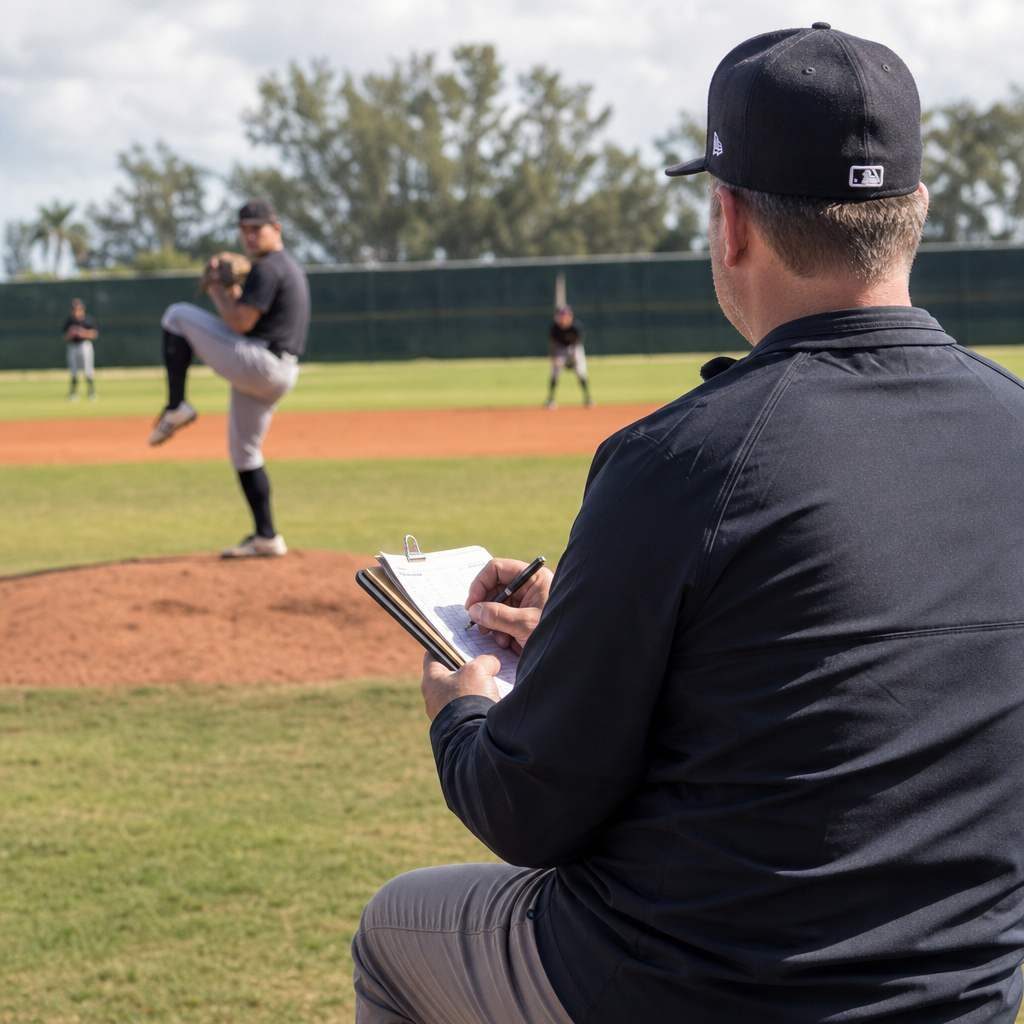
Scouting and recruiting for minor leagues sits at the center of baseball’s talent economy, turning raw athletic ability into signed contracts, player development plans, and, occasionally, major league careers. In this context, scouting means the systematic evaluation of players through live looks, video, performance data, medical background, makeup assessment, and projection. Recruiting refers to the process of identifying targets, building relationships, understanding signability, and bringing players into an organization through the draft, free agency, independent leagues, international markets, or college and transfer pathways that feed pro systems. For readers following minor leagues and college baseball, this subject matters because every roster move begins long before a player appears on a team card. The quality of a club’s scouting and recruiting operation often determines whether it finds undervalued pitchers, late-blooming hitters, or dependable depth that keeps affiliates competitive while serving the parent organization. I have spent enough time around scouting departments, showcases, and back fields to know that the public usually sees only the result, not the layered process behind it.
A strong minor league scouting and recruiting strategy balances old-school observation with modern measurement. Traditional tools grades still matter: hit, power, run, arm, and field for position players; fastball, breaking ball, changeup, command, and control for pitchers, typically on the 20-to-80 scouting scale. Yet clubs now pair those judgments with TrackMan and Hawkeye readings, bat speed, swing decisions, chase rates, spin efficiency, vertical approach angle, extension, and biomechanical markers. The challenge is not collecting information; it is deciding which signals predict future performance against better competition. That is why minor league recruitment cannot be reduced to radar gun readings or showcase statistics. Scouts must ask practical questions searchers often ask: What makes a prospect signable? How do teams judge projectability? Why do some players thrive after being overlooked? The answers usually combine context, instruction, and fit. A 19-year-old shortstop with average present strength may still profile because his contact quality, body control, and defensive actions suggest growth. A reliever throwing 96 may stall if he lacks shape, strike efficiency, or recovery habits. Minor league organizations win when they connect evaluation to development rather than treating them as separate jobs.
How Minor League Scouting Actually Works
Minor league scouting starts with coverage plans. Area scouts are assigned geographic territories, crosscheckers verify priority players, and analysts build watch lists from performance data, showcase results, and video libraries. In practice, a scout may see a college starter on a Friday night, a junior college outfielder the next afternoon, and a summer league infielder two days later, then log reports comparing present tools, future value, body type, mechanics, and makeup. Those reports are standardized so decision-makers can compare players across regions. The language matters. “Present 45 hit, future 55” means the bat is currently fringy but projects to above-average. “Average raw power, below-average game power” signals a gap between batting practice strength and in-game impact. Clear terminology prevents expensive misunderstandings.
Live looks remain indispensable because baseball is full of cues that data alone can miss. I have watched pitchers with strong pitch models lose effectiveness because their tempo unraveled under traffic, and I have seen infielders whose pregame actions looked ordinary until game speed revealed advanced internal clock and positioning instincts. Scouts study how players respond after a strikeout, an error, a bad call, or a second trip through the order. They also evaluate body maintenance, coachability, and competitiveness without turning those factors into vague clichés. Makeup is not code for personality preference; it is evidence about work habits, resilience, routine, and the ability to absorb instruction. Organizations that define makeup precisely make better recruiting decisions than clubs that rely on loose impressions.
Video and data have changed the pace of the process. Coaches and scouts can now review side-by-side clips, pull ball-flight reports within minutes, and flag changes in arm slot or swing path before a live revisit. For pitchers, metrics such as induced vertical break, horizontal movement, release height, extension, and zone miss tendency help identify whether a fastball plays above its velocity. For hitters, contact rate in the strike zone, swing decisions, hard-hit percentage, and damage on specific pitch types reveal whether college production is likely to translate. A scout who sees a hitter slash .360 but notices a pull-heavy approach vulnerable to quality spin should write that down. A model that loves a pitcher’s ride fastball should still account for command risk and health history. The best departments force live evaluation and data analysis to challenge each other.
Where Teams Find Undervalued Talent
Most fans focus on the draft, but minor league recruiting draws from a wider ecosystem. College baseball remains a major source because players arrive with stronger competition histories, more physical maturity, and larger data samples. Four-year programs produce polished performers, while junior colleges often offer players with louder tools or unusual development stories. Summer wood-bat leagues, Cape Cod League performances, and transfer portal movement all influence the board because they reveal how hitters handle velocity and how pitchers fare against lineups closer to professional quality. For clubs, the college market is often the cleanest place to compare production to underlying traits.
High school recruiting requires more projection and patience. Teams evaluate frame, athletic actions, hand speed, arm quickness, and future physical gains rather than solely current output. A lean shortstop from Georgia, for example, may not post huge power numbers, yet his rotational efficiency, contact skill, and footwork can make him more attractive than a physically mature peer dominating weaker competition. Signability becomes central here. Scouts gather intel on college commitments, bonus expectations, family preferences, and willingness to begin a pro career immediately. Missing on signability wastes picks and budget flexibility.
Independent leagues and undrafted free agent markets are where many true diamonds in the rough appear. These players are often older, less polished, or previously miscast, but they can offer immediate value if a club understands what changed. I have seen organizations sign relievers from independent ball because pitch-shape data showed a slider with major separation from the fastball, even though the player lacked pedigree. Catchers cut by one system can reappear as useful depth after improving receiving, game-calling, and throwing efficiency. Position players overlooked in the draft may earn contracts because a wood-bat sample confirms that improved swing decisions are real. The lesson is simple: talent pipelines do not end when a player is passed over once.
| Talent source | What scouts value most | Typical risk | Why teams target it |
|---|---|---|---|
| Four-year college | Track record, data quality, polish | Lower ceiling in some profiles | Faster path, clearer role projection |
| Junior college | Tools, athleticism, developmental upside | Performance context can vary | Affordable upside and flexibility |
| High school | Projectability, athletic actions, body growth | Long timeline, signability issues | Chance to acquire premium talent early |
| Independent leagues | Recent skill changes, maturity, role fit | Older age, uneven competition | Low-cost acquisitions with quick payoff |
| Undrafted free agents | Specific carrying tool, makeup, coachability | Limited margin for error | Depth and occasional breakout value |
What Scouts Look For in Players
The central scouting question is not “Is this player good today?” but “What can this player become against better competition?” That distinction drives every report. For hitters, scouts examine bat-to-ball skill, swing path, plate discipline, contact quality, approach against velocity, and adjustability against spin. Exit velocity matters, but so does where the ball is hit and how consistently a player gets to impact. A corner bat with below-average swing decisions must produce real damage to profile. A middle infielder can survive with less power if he controls the strike zone, makes enough contact, and stays at a premium position.
For pitchers, velocity grabs attention, but fastball quality is more than miles per hour. Scouts care about movement profile, command within the zone, deception, release consistency, and whether the arsenal works in sequence. A 92 mph fastball with unusual carry and plus command can outperform a straighter 96. Breaking balls are judged by shape, depth, sweep, power, and command. Changeups must show separation, arm speed, and enough movement to disrupt timing. Durability indicators, recovery patterns, and delivery efficiency often determine whether a starter remains a starter.
Defense and athleticism also anchor recruiting decisions. Catchers are evaluated on receiving, blocking, transfer, arm strength, and game management. Shortstops and center fielders carry value because they offer positional flexibility if the bat lags. Scouts watch first steps, body control, angle efficiency, and whether actions remain playable as a player fills out physically. These details are why some players are drafted higher than their surface statistics suggest. The industry pays for traits that can survive promotion.
How Data and Development Shape Recruiting Decisions
Modern recruiting is inseparable from player development. Teams no longer ask only whether a player can help; they ask whether their hitting coordinators, pitching coaches, strength staff, and analysts can improve him. If a pitcher has elite spin efficiency but poor pitch usage, a club may believe its development group can redesign the mix and unlock performance. If a hitter has bat speed and contact ability but a ground-ball-heavy attack angle, the staff may see an opportunity to create more damage. This is why the same player can rank differently across organizations. Evaluation is partly a forecast of what your own system can teach.
Tools like TrackMan, Rapsodo, Blast Motion, Hawkeye, K-Vest, and force plates have raised the standard for precision. They also create a danger: overfitting decisions to clean metrics gathered in controlled settings. I have seen showcase bullpens inflate excitement for pitchers who could not repeat the movement under game stress. Conversely, I have seen gamers with average models outperform because they executed, competed, and adjusted. Good departments treat data as evidence, not a verdict. They want enough information to reduce blind spots without losing common sense.
Medical information and workload history are equally important. Elbow and shoulder stress patterns, previous surgeries, soft-tissue issues, and fatigue markers affect draft position and contract value. Recruiting departments work closely with medical and performance staff because a player’s availability is part of his projection. The same principle applies to strength and conditioning. A body that can add good weight, maintain mobility, and recover between outings is more recruitable than one already near its physical ceiling. In minor league baseball, roster value depends as much on durability as on upside.
Common Recruiting Mistakes and How Smart Clubs Avoid Them
The most common mistake is chasing performance without context. A hitter dominating a weak conference with a favorable schedule, metal bat support, and poor opposing pitching may not be a real offensive prospect. A pitcher posting gaudy strikeout totals against free-swinging lineups may struggle once hitters stop chasing. Smart clubs normalize for competition, park effects, age relative to level, and underlying skill markers. They ask what skill created the result and whether that skill will carry upward.
Another mistake is treating makeup as either irrelevant or mystical. The right approach is evidence-based. Did the player improve after coaching? Does he keep routines? How does he prepare? What do strength staff and academic advisors say? Organizations that gather specific examples make stronger decisions than those leaning on rumor. The same goes for signability. Teams regularly miss opportunities by assuming a player is unsignable without doing the relationship work early enough.
Finally, clubs get in trouble when scouting and development are misaligned. If the front office drafts a contact hitter but the hitting group values loft and pull-side damage above all else, the player may be forced into a shape that does not fit his strengths. If scouts acquire strike-throwers while the pitching lab prefers movement outliers with raw command, confusion follows. The best organizations define player archetypes clearly, communicate across departments, and recruit with a realistic development plan already in mind.
Why This Hub Matters for Minor Leagues and College Baseball
This hub matters because scouting and recruiting connect every part of minor leagues and college baseball: the draft, transfer portal effects, summer leagues, development labs, independent ball, roster churn, and prospect rankings. If you want to understand why one farm system keeps producing useful arms, why certain college programs place players efficiently, or why a released player suddenly breaks out elsewhere, the answer usually starts here. Scouting identifies tools, recruiting secures the player, and development determines whether the initial read becomes real value. Ignore any one part, and the picture is incomplete.
The key takeaways are practical. First, minor league recruiting is broader than the draft; colleges, junior colleges, high schools, independent leagues, and undrafted markets all matter. Second, the best evaluations blend live observation, standardized scouting language, and modern performance data. Third, signability, makeup, health, and organizational fit are not side notes; they shape whether talent becomes a successful acquisition. Fourth, smart clubs look for traits that can improve with coaching, not just statistics that already look polished. That is how diamonds in the rough are found.
Use this page as your starting point for the broader miscellaneous side of minor leagues and college baseball. From here, explore player development trends, draft strategy, independent league success stories, transfer-driven roster building, and the analytics tools changing how teams judge talent. The better you understand scouting and recruiting, the easier it becomes to see baseball’s hidden supply chain before the box scores catch up.
Frequently Asked Questions
What does scouting and recruiting for minor leagues actually involve?
Scouting and recruiting for minor leagues is a layered process that goes far beyond spotting a player with a strong arm or quick bat. Scouting is the evaluation side of the equation. It includes live game looks, video review, statistical analysis, physical projection, medical background research, and makeup assessment. Scouts study how a player moves, how tools translate against better competition, how consistent performance is over time, and whether the player has traits that can be developed inside a professional system. In baseball, that means evaluating things like bat speed, swing decisions, pitch recognition, arm strength, defensive actions, velocity, spin, command, athleticism, and body control.
Recruiting is the relationship and acquisition side. Once an organization identifies a player of interest, the recruiting process begins with communication, background work, and signability evaluation. Teams want to know whether a player is open to turning pro, what other options are on the table, what financial expectations exist, and how the player and family view development. In many cases, especially with younger amateur players or overlooked talent, recruiting also involves trust-building. Organizations must explain their development philosophy, demonstrate opportunity, and show why their system is the right fit. In short, scouting finds the talent, and recruiting helps bring that talent into the organization.
How do scouts identify “diamonds in the rough” in minor league baseball?
Finding overlooked talent is one of the most valuable skills in baseball operations. A “diamond in the rough” is usually a player whose current performance, body type, background, level of competition, or unconventional skill set causes the market to undervalue him. Scouts identify these players by looking past surface stats and focusing on traits that may improve with professional coaching, strength training, analytics support, and daily repetition. For hitters, that might mean a player with elite bat speed and strike-zone awareness whose numbers lag because of poor swing mechanics or inconsistent competition. For pitchers, it could be someone with unusual movement, promising arm speed, or a projectable frame who has not yet developed command or a full pitch mix.
The best scouts balance present ability with future projection. They ask whether a flaw is teachable, whether physical tools can be sharpened, and whether the player has the work ethic to handle development. They also compare what they see against the player’s environment. A prospect in a smaller program, independent league, junior college, foreign academy, or under-scouted region may not have had access to elite training, but could still possess professional-level traits. Modern scouting also uses technology to uncover hidden value. Exit velocity, chase rate, swing path, release characteristics, spin efficiency, and movement profiles can reveal upside that traditional stat lines do not show. The goal is not just to find good players, but to find players who are better than the market currently believes.
What qualities matter most when evaluating a minor league prospect?
Minor league prospect evaluation is built on a combination of tools, performance, projection, health, and makeup. Tools remain central because baseball development is rooted in translatable physical ability. Scouts evaluate hitting ability, power potential, speed, arm strength, defensive instincts, athleticism, velocity, command, and pitch quality depending on the player’s position. But raw tools alone are not enough. Organizations also want to know whether those tools appear in games, whether they hold up over a season, and whether they are likely to improve as the player matures physically and mentally.
Projection is especially important in minor league recruiting because many players are not finished products. Scouts assess body type, movement patterns, coordination, and age relative to competition to estimate future growth. A lean, athletic shortstop with good actions may add strength and become a much more impactful hitter. A pitcher with average present velocity but easy arm action may gain several ticks with professional training. At the same time, makeup can be a separating factor. Teams look closely at competitiveness, coachability, routine, resilience, emotional control, and willingness to make adjustments. Players who can absorb instruction, handle failure, and stay disciplined through a long season tend to give development staffs more to work with. Health history and durability matter too, because availability is a major part of player value. The strongest evaluations combine all of these elements into one central question: can this player become more valuable in a professional environment than he appears right now?
How has data changed the way teams scout and recruit minor league talent?
Data has significantly expanded how teams identify, compare, and recruit players, but it has not replaced traditional scouting. Instead, it has made the process more precise. In the past, scouts relied heavily on live looks, radar guns, stopwatches, and personal judgment. Those still matter, but now organizations can support those observations with advanced metrics and biomechanical information. For hitters, teams track contact quality, swing decisions, bat path efficiency, chase behavior, zone coverage, and damage against different pitch types. For pitchers, they evaluate velocity bands, release consistency, spin characteristics, movement profiles, induced vertical break, extension, and pitch usage patterns. This gives teams a better understanding of why a player succeeds or struggles.
Data also helps clubs recruit more intelligently. If a player’s underlying metrics suggest untapped upside, a team may be more aggressive in pursuing him even if his traditional numbers are modest. Likewise, analytics can help organizations explain their development vision during the recruiting process. A team might show a pitcher how a grip change could improve a breaking ball or show a hitter how swing adjustments could unlock more game power. That makes recruiting more persuasive because it gives players a concrete plan rather than a vague promise. At the same time, experienced organizations understand that data must be interpreted within context. Numbers can reveal trends and possibilities, but they do not fully measure competitiveness, body language, adaptability, or how a player responds under pressure. The most effective scouting departments blend analytics with human evaluation instead of treating them as opposing approaches.
Why is recruiting strategy so important in building a successful minor league system?
Recruiting strategy matters because talent acquisition is not simply about identifying the best player on paper. It is about identifying the right player, at the right cost, in the right developmental environment, before another organization does. Minor league systems are built through layers of decisions: draft selections, non-drafted free agents, international signings, independent league pickups, trades, and depth acquisitions. A smart recruiting strategy helps clubs allocate resources efficiently across all of those channels. Teams must understand signability, bonus expectations, roster limitations, risk tolerance, and organizational need. They also need to know when to move quickly on a player and when to stay disciplined.
Strong recruiting strategy also helps an organization create continuity between scouting and player development. It is not enough to sign a talented player if the system is not prepared to develop him. The best teams recruit players whose strengths can be enhanced by their coaches, analysts, and performance staff. That alignment increases the odds that tools become skills and skills become production. Recruiting strategy also has a human side. Players and families want transparency, trust, and a clear developmental pathway. Organizations that communicate well and establish credibility often perform better in competitive recruitment environments. Over time, this can shape the quality and depth of the entire farm system. In a sport where development takes years and outcomes are uncertain, recruiting strategy is one of the clearest ways a club can create sustainable advantage.