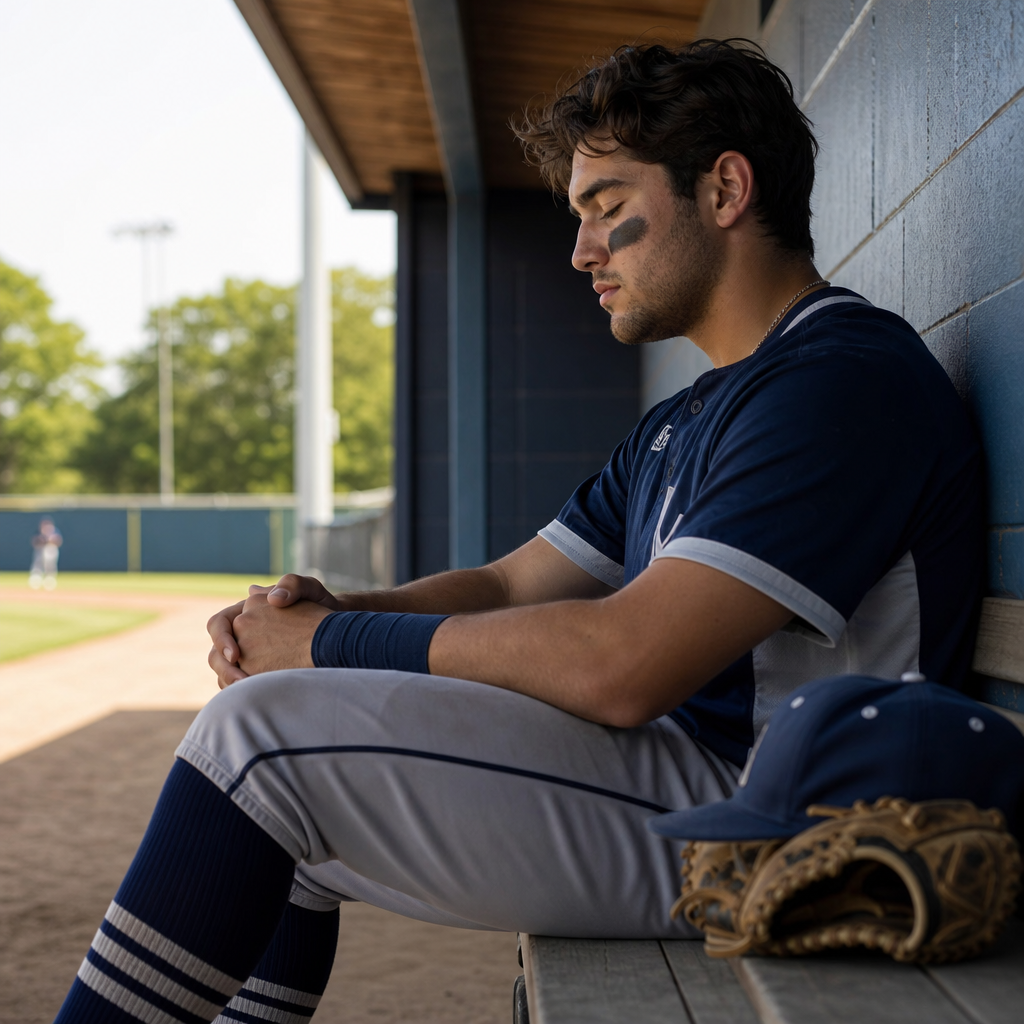
The psychology of baseball shapes nearly every pitch, swing, throw, and coaching decision in college programs, yet it is still treated as a side topic in too many conversations about player development. Mental training in college baseball refers to the structured methods teams use to improve focus, confidence, emotional regulation, resilience, communication, and decision-making under pressure. In practice, that includes breathing routines, visualization, self-talk scripts, pre-pitch reset habits, journaling, performance reviews, leadership training, and access to sport psychology professionals. I have seen the difference firsthand: two athletes with nearly identical velocity or bat speed can produce completely different results once stress, failure, travel fatigue, and role uncertainty enter the picture.
Baseball is uniquely psychological because failure is constant and public. A hitter who succeeds three times in ten at-bats is often considered productive. A reliever may carry one bad inning for a week. A catcher must process scouting reports, umpire tendencies, pitcher tempo, and base-runner threats in real time. College athletes manage those demands while balancing class schedules, social pressure, scholarship expectations, and the transition to adulthood. That combination makes mental training essential, not optional. Programs that treat the mind as trainable gain practical advantages in player consistency, injury recovery, leadership, and long-season performance.
This article serves as a broad hub for the miscellaneous side of minor leagues and college baseball by explaining how college programs build mental skills, what tools they use, where those systems succeed, and where they fall short. It also helps answer common search questions directly: what is mental training in baseball, why do college teams invest in it, what techniques work, and how does it connect to recruiting and professional development? The short answer is simple. Strong college baseball programs teach athletes to control attention, respond to adversity quickly, and repeat competitive behaviors on demand. Those skills travel well from campus fields to summer leagues, the minor leagues, and beyond.
Why mental training matters in college baseball
College baseball creates a concentrated pressure environment. Players compete for lineup spots, conference wins, draft visibility, and academic eligibility at the same time. Unlike many youth settings, the feedback loop is immediate and often harsh. Video exposes every mistake. Social media amplifies slumps. Radar guns, exit velocity data, chase rates, and command metrics make performance measurable in uncomfortable detail. Mental training matters because it helps athletes process that information without becoming paralyzed by it.
At its best, a mental skills program improves controllables. Coaches cannot guarantee that a hard-hit ball will avoid a glove or that a perfectly located fastball will be called a strike. They can teach a hitter to step out, breathe once, refocus on a simple cue, and attack the next pitch. They can teach a pitcher to reduce heart rate after an error behind him. They can teach a position player returning from injury how to separate fear from useful caution. These are practical performance gains, not abstract wellness slogans.
The best programs also understand timing. Mental training is not reserved for crisis moments. It is installed during preseason, reinforced in practice, and reviewed after games. Teams that only mention mindset after a losing streak usually treat psychology reactively. Teams that build routines before adversity arrives tend to show more stable performance. In my experience, athletes buy in when coaches connect mental work to specific baseball tasks: two-strike approach, first-pitch strike intent, baserunning reads, communication on bunt coverage, and response after an at-bat that ends badly.
Core mental skills college programs teach
Most college baseball mental training systems revolve around a few repeatable skills. Attention control is the foundation. Players learn to direct focus toward relevant cues, such as spin recognition, target location, game situation, and defensive alignment, while filtering out noise. Emotional regulation is next. Athletes must recover quickly from anger, embarrassment, or anxiety before those emotions alter mechanics or decision quality. Confidence building follows, but good programs define confidence correctly. It is not blind optimism. It is trust built through preparation, role clarity, and repeated execution under varied conditions.
Self-talk is another major tool. Productive self-talk is short, specific, and actionable. A pitcher might use “through the glove” before delivery. A hitter might use “see it deep” against a breaking-ball specialist. Poor self-talk is global and identity-based, such as “I always fail in big spots.” Coaches and sport psychology staff work to replace those scripts with process language. Visualization also plays a significant role. Done correctly, it is not daydreaming. Players rehearse sights, sounds, timing, and desired responses in detail, often before games, rehab sessions, or bullpen work.
Finally, resilient programs teach reset skills. Baseball requires immediate recovery because the game does not stop to accommodate frustration. A reset routine may include stepping off the mound, taking one diaphragmatic breath, using a focal point beyond center field, repeating a cue word, then re-engaging with the catcher’s target. Position players use similar methods between pitches. These routines become anchors, especially in noisy road environments or rivalry games where emotional spikes are predictable.
How teams build a mental training system
Effective mental training in college programs is systematic. It starts with language. Coaches, strength staff, athletic trainers, and player leaders need consistent definitions for focus, compete level, reset, and response. When every staff member uses different terms, athletes hear mixed messages. The next step is assessment. Some programs use intake interviews, leadership questionnaires, or brief inventories to identify how players react under stress, how they prefer feedback, and what situations trigger overthinking. The goal is not labeling athletes. It is building individualized plans within a team structure.
Integration matters more than motivational speeches. Strong staffs attach mental work to existing baseball activities. Bullpens include breathing and intent cues. Hitting practice may include consequence rounds that simulate pressure. Defensive practice can add communication demands after physical fatigue. Review sessions pair objective data with reflective questions: What were you trying to do? What did you notice before the miss? How quickly did you reset? This is more useful than generic praise or criticism because it trains awareness.
Specialists can elevate the system. Many Division I programs now work with licensed sport psychologists, mental performance consultants, or counseling staff who understand performance environments. The NCAA has also expanded discussion around athlete mental health resources, making collaboration more common. Still, smaller programs can build excellent systems without a full-time specialist if coaches are disciplined, informed, and willing to normalize mental skill practice. The common denominator is consistency.
| Program element | How college teams use it | Baseball example |
|---|---|---|
| Pre-performance routine | Creates repeatable focus before action | Closer uses breath, focal point, cue word before every pitch |
| Visualization | Rehearses execution and response to adversity | Hitter imagines two-strike at-bat against left-handed slider |
| Reflective review | Turns games and practices into learning cycles | Catcher logs pitch-calling decisions after weekend series |
| Pressure simulation | Builds tolerance for stress in controlled settings | Infield group practices bunt defense after conditioning |
| Access to support staff | Addresses performance and broader mental health needs | Injured starter meets with trainer and sport psychologist during rehab |
Pressure, failure, and the long season
Baseball exposes athletes to repeated failure in a way few sports match. That reality is intensified in college, where weekend series, midweek travel, exams, weather disruptions, and roster competition compress recovery time. Mental training helps because it teaches players to interpret failure accurately. A strikeout with the correct swing decision is different from a strikeout driven by panic. A walk allowed after seven close pitches is different from loss of command caused by rushing mechanics. Precision in interpretation protects confidence from random outcomes.
Coaches often talk about toughness, but the useful version of toughness is not emotional suppression. It is the ability to stay task-focused while fully aware that the moment is stressful. When teams misunderstand this, players hide concern, internalize mistakes, and become less adaptable. Better programs teach emotional granularity: frustration, tension, urgency, embarrassment, and fatigue do not require the same intervention. A player who feels rushed may need slower breathing and tempo control. A player who feels flat may need more activation and assertive self-talk.
Long seasons also test identity. Athletes who define themselves only by current statistics are vulnerable to collapse during slumps. Mental performance staff often work on separating identity from outcome. The player is not his ERA, batting average, or defensive percentage. This is not soft thinking. It is a practical way to preserve learning capacity. Once athletes stop treating every result as a verdict on self-worth, coaching becomes easier and adjustments happen faster.
The role of coaches, captains, and team culture
Culture determines whether mental training becomes habit or decoration. Head coaches set the standard by what they reward publicly. If they only praise visible intensity and never acknowledge composure, communication, or reset behavior, players quickly learn that mental discipline is secondary. Pitching coaches and hitting coaches translate values into daily actions. Captains reinforce them in the clubhouse, on buses, and during poor stretches when staff voices carry less weight.
In strong cultures, accountability is direct but not theatrical. A player can be challenged for poor body language, lazy communication, or repeated emotional drift without being shamed. That distinction matters. Shame narrows attention and reduces adaptability. Accountability clarifies expectations and keeps behavior change possible. Teams that handle this well usually have agreed language for standards, postgame review habits, and leadership models for younger players.
Trust is equally important. Athletes will not discuss concentration problems, confidence dips, or anxiety symptoms if they believe those admissions will immediately affect playing time or reputation. Programs that earn trust separate performance evaluation from basic human support. They also know the boundary between mental skills coaching and clinical care. If an athlete shows signs of depression, panic, disordered eating, or substance misuse, referral to licensed professionals is the correct move. Responsible programs are clear about that line.
Technology, analytics, and mental performance
Modern college baseball is saturated with data, from TrackMan and Rapsodo to blast metrics, video overlays, and wearable recovery tools. Used well, analytics support mental training by making goals concrete. A pitcher can connect confidence to first-pitch strike rate rather than vague feelings. A hitter can build an approach around swing decisions and damage on pitches in a specific zone. Clarity reduces noise.
Used poorly, the same tools increase anxiety. I have seen players chase metric improvements so aggressively that they lose feel, timing, and competitive freedom. Mental training helps athletes and coaches decide when numbers should guide action and when they should step back during competition. The best rule is simple: analysis belongs primarily before and after performance, while competition demands a narrow set of cues. Too much information on game day fragments attention.
Technology also supports communication across the player-development pipeline. When college programs prepare athletes for affiliated baseball or advanced summer leagues, they can explain not only what the numbers mean but how to mentally handle constant evaluation. That bridge matters because the psychological jump from college baseball to professional baseball is often underestimated.
What players, parents, and recruits should look for
Families evaluating college baseball programs should ask practical questions. Is mental training built into the weekly schedule or only discussed after losses? Who leads it, and what are their qualifications? How are injured athletes supported? How do coaches handle slumps, role changes, and mistakes in public settings? Are captains trained to support younger players? A serious program can answer those questions clearly.
Recruits should also look for evidence that a staff understands individual differences. Some players need more structure, others more autonomy. Some respond to direct challenge, others to collaborative review. Good programs do not use one motivational style for everyone. They adapt without losing standards. That is a sign of maturity and usually predicts stronger development over three or four years.
The central lesson is straightforward. College baseball performance is inseparable from psychology. Mental training sharpens focus, stabilizes confidence, improves communication, and helps athletes recover from the game’s relentless failure cycle. Programs that invest in these skills create better competitors and healthier team environments. If you are exploring the broader world of minor leagues and college baseball, use this topic as a hub: study how teams teach routines, evaluate culture, integrate analytics, and support athletes under pressure. Then follow those threads into recruiting, player development, leadership, injury recovery, and the transition to pro ball. The mental side is not miscellaneous at all. It is where much of baseball’s real separation happens.
Frequently Asked Questions
What does mental training in college baseball actually include?
Mental training in college baseball includes far more than generic motivation or telling players to “stay confident.” In strong college programs, it is a structured part of development that helps athletes manage the psychological demands of the game in the same way strength training helps them handle the physical demands. That usually means teaching players specific routines for focus, emotional control, and decision-making before, during, and after competition. Common tools include breathing exercises to lower tension, visualization to mentally rehearse successful execution, self-talk scripts to interrupt negative thinking, pre-pitch reset routines to regain focus after mistakes, and post-game reflection systems to turn performance into learning rather than frustration.
It also often includes communication training, because baseball is a team sport built on trust, timing, and clarity under pressure. Pitchers may work on between-pitch routines, catchers may practice calming mound presence, hitters may learn how to reset after a strikeout, and position players may develop readiness habits so they are mentally engaged on every pitch. Coaches in college settings may integrate this work into practice planning, bullpen sessions, scouting meetings, and recovery days. The goal is not to eliminate nerves or create robotic athletes. The goal is to help players perform with greater consistency by building repeatable mental habits that hold up when the game speeds up.
Why is sports psychology so important in college baseball programs?
Sports psychology matters in college baseball because the sport naturally creates pressure, delay, failure, and public accountability. Players have long stretches to think, which can be helpful when managed well and destructive when it leads to overthinking. A hitter may fail most of the time and still be considered successful. A pitcher may lose command for one inning and feel as if the entire outing is unraveling. An infielder may have only one meaningful chance in a game and still be expected to respond instantly. Those demands make baseball a sport where confidence, emotional regulation, and attention control directly affect performance.
At the college level, those pressures are amplified by academics, travel, competition for playing time, injuries, scholarship expectations, and the desire to advance to higher levels of the game. Mental training gives players tools to navigate all of that without becoming overwhelmed. It helps them separate one play from the next, recover faster from errors, stay committed to a plan under stress, and avoid letting external noise dictate internal performance. For coaches, it creates more reliable athletes because players are better able to communicate, self-correct, and stay composed in difficult moments. In practical terms, sports psychology is important because talent alone rarely determines outcomes. The teams that manage pressure best often perform most consistently over the course of a long season.
How do college baseball players use routines like breathing, visualization, and self-talk during games?
College baseball players use these routines as performance anchors. Breathing is often the quickest tool because it changes both physical tension and mental state. A pitcher might step off, take one slow breath, and use the exhale as a reset after a missed spot. A hitter in the on-deck circle may use controlled breathing to reduce rushing and stay present before an at-bat. The point is not simply relaxation. It is regulation. Good breathing routines help players recover from adrenaline spikes, sharpen attention, and return to the next task with more control.
Visualization is used to create familiarity and reinforce execution. Players may mentally rehearse seeing the ball well, delivering a pitch with conviction, making a clean defensive read, or handling a pressure situation calmly. This is especially useful before games, before key innings, or during recovery from slumps and injuries. Effective visualization is specific rather than vague. It often includes the sights, tempo, feel, and decision cues of real competition, which helps prepare the brain for what the athlete wants to do when the moment arrives.
Self-talk works best when it is brief, believable, and tied to an action. Instead of saying something broad like “be amazing,” a player might use phrases such as “see it early,” “one pitch,” “stay through it,” or “slow and aggressive.” These cues help direct attention to controllable behaviors. Together, breathing, visualization, and self-talk form a simple but powerful system: calm the body, clarify the picture, and focus the mind on the next job. In college programs that teach these skills well, routines become automatic rather than forced, which makes them much more effective during real game pressure.
Can mental training really improve performance, or does it just help with confidence?
Mental training can absolutely improve performance, and it does so by improving the conditions that make quality performance more likely. Confidence is part of that, but it is only one piece. A mentally trained player is often better at staying locked in on relevant cues, making cleaner decisions under pressure, and recovering quickly after mistakes. That directly affects execution. A pitcher who can reset after a walk is more likely to make quality pitches to the next hitter. A hitter who does not spiral after a strikeout is more likely to take a disciplined next at-bat. A defender who can manage anxiety in a late-game moment is more likely to trust preparation and react cleanly.
Over time, the benefits become even clearer because baseball seasons are long and emotionally demanding. Mental training supports consistency, and consistency is one of the most valuable assets in player development. It can reduce the damage caused by slumps, help athletes bounce back faster from poor outings, and improve the quality of practice because players learn how to stay engaged rather than drift mentally. It also improves coachability. Players with stronger mental skills tend to process feedback more constructively and make adjustments without taking every correction as a threat to their confidence. So while mental training does help confidence, its deeper value is that it improves focus, composure, resilience, and execution in situations where games are often won or lost.
How can college coaches build mental training into a baseball program without making it feel separate from practice?
The most effective coaches do not treat mental training as a once-a-week lecture disconnected from the field. They build it into everyday routines so players experience it as part of how the program operates. That can start with simple practice design. Coaches can require pre-pitch routines in defensive work, use pressure-based competition drills that train emotional control, ask pitchers to follow a reset process after misses, and include short reflection periods after practice where athletes identify one mental win and one area to improve. These habits make the psychological side of performance visible, repeatable, and measurable.
Language matters too. Coaches who consistently reinforce controllables such as breath, body language, communication, tempo, and response to failure help players focus on process rather than drama. Team meetings can include discussions about handling adversity, role acceptance, confidence after limited playing time, and how to communicate effectively in stressful moments. Video review can also go beyond mechanics to include body language, pace, and decision quality. Some programs work with sports psychologists or mental performance coaches, while others train their staff to integrate core concepts themselves. Either approach can work if the message is consistent.
The key is normalization. When mental skills are treated as trainable, players are more likely to buy in and use them. Just as no coach expects strength, timing, or command to improve by accident, focus and resilience should not be left to chance either. The strongest college baseball programs understand that mental training is not extra. It is part of preparing athletes to compete, adapt, and perform when the game becomes emotionally difficult, which it always does at some point in the season.