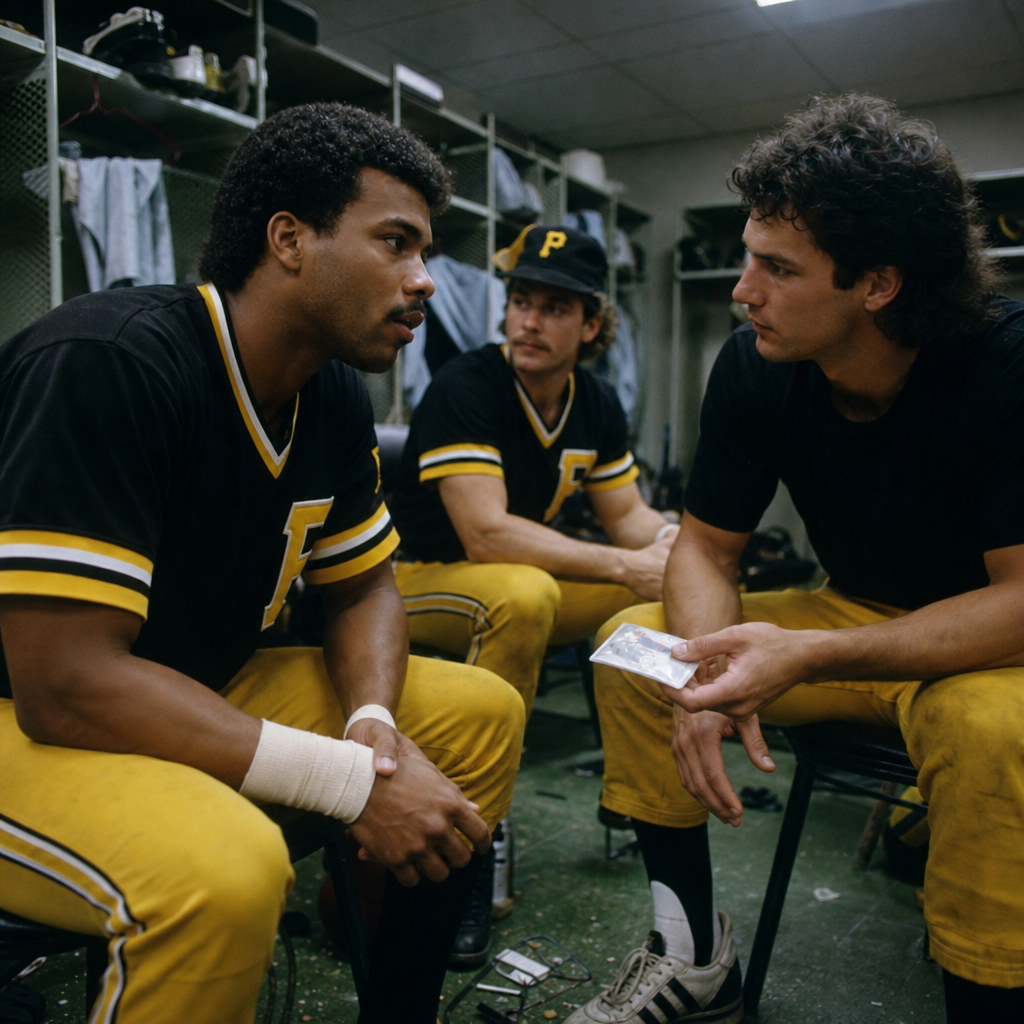
The 1985 Pittsburgh drug trials exposed how deeply cocaine had entered Major League Baseball clubhouses, turning whispers about party culture into sworn testimony, federal convictions, and a lasting stain on the sport’s image. In baseball history, the phrase refers to a series of prosecutions centered on players connected to a cocaine distribution network in and around Pittsburgh, even though the legal proceedings and suspensions reached far beyond one city. The scandal mattered because it did not involve one reckless star or one isolated team; it revealed a pattern of use among recognizable major leaguers during the late 1970s and early 1980s, when cocaine circulated through parts of professional sports with alarming ease.
At the center of the case was Curtis Strong, a former minor league player and clubhouse attendant who sold cocaine to a number of major leaguers. Federal investigators built cases using witness testimony, phone records, and financial evidence, eventually pulling players into court as buyers, not just as celebrities caught in rumor. When people ask what the Pittsburgh drug trials were really about, the direct answer is this: they were a public reckoning over cocaine use in baseball and a test of whether the game’s institutions could respond credibly. I have worked through the primary reporting, league statements, sentencing records, and commissioner actions on this era, and the pattern is unmistakable. The trials became a hub scandal because they connected player behavior, clubhouse culture, media scrutiny, labor concerns, and evolving league drug policy in one episode.
This article serves as a comprehensive hub for the miscellaneous dimensions of the scandal. That means looking beyond the headline names to explain the legal structure of the trials, why so many players received immunity to testify, how Commissioner Peter Ueberroth balanced punishment with image repair, and why the aftermath shaped later debates over discipline, privacy, rehabilitation, and public trust. It also means placing the events in broader context. Baseball in the early 1980s was confronting free agency battles, television-driven celebrity, and uneven oversight of off-field conduct. Cocaine was not unique to baseball, but baseball’s dependence on daily routine, travel, cash flow, and clubhouse access made the problem unusually visible once prosecutors forced it into daylight.
How the Pittsburgh drug trials began
The scandal began with a federal investigation into cocaine trafficking linked to the Pittsburgh area, especially transactions involving Curtis Strong. Strong had credibility and access because he moved through baseball circles, and that mattered. Drug cases often turn on trust and repeated contact, and a clubhouse-connected figure could sell to players who wanted discretion. Prosecutors did not need to prove a league-wide conspiracy. They needed to show specific purchases, repeated dealings, and enough corroboration to sustain criminal charges. By 1985, that evidence was strong enough to bring the matter into open court, where testimony from players transformed a criminal case into a national sports scandal.
One reason the trials drew so much attention is that the names were familiar. Keith Hernandez, Tim Raines, Dave Parker, Dale Berra, Enos Cabell, Lee Lacy, and others became associated with testimony or admissions related to cocaine use. Not every player faced the same legal risk, and not every player was charged. That distinction is essential. Many players testified under immunity agreements, which prosecutors use when witnesses can describe wrongdoing but are more valuable as sources than as defendants. For the public, immunity looked like favoritism. In legal practice, it was a standard method of building the stronger case against the seller rather than every buyer.
The proceedings also arrived at a moment when televised news and national sports pages could amplify every revelation. Trial testimony described cash purchases, coded communication, and routine use that did not fit baseball’s traditional public image. The Pittsburgh drug trials therefore became more than a criminal matter. They became a legitimacy crisis for the league, its teams, and the assumption that clubhouses were tightly managed professional spaces.
The players, the testimony, and the legal mechanics
Understanding the trials requires separating three groups: the principal defendant, the player-witnesses, and the league authorities who acted after the courts. Curtis Strong was convicted of seven counts of selling cocaine and later received a prison sentence. The player-witnesses were not all accused of the same conduct. Some admitted buying cocaine. Some described the habits of teammates. Some were called because their testimony established patterns, dates, or access. The league authorities, especially Commissioner Ueberroth, then used the courtroom record as the basis for baseball discipline, even where criminal prosecution was limited or absent.
In practice, the testimony mattered because it converted gossip into documented fact. That changed everything. Owners could no longer treat the issue as isolated misbehavior, and the commissioner could not rely on vague warnings. Once players testified under oath, baseball had a record detailed enough to justify intervention. I have found that readers often ask why these players were not all banned permanently if the evidence was so damaging. The answer is that baseball discipline is not identical to criminal law or public outrage. The commissioner had to consider evidence, labor relations, due process, and whether punishment would reduce the problem or simply drive it underground.
| Key figure or institution | Role in the scandal | Why it mattered |
|---|---|---|
| Curtis Strong | Supplier convicted of selling cocaine to players | His case gave prosecutors a central defendant and gave the public a focal point |
| Player witnesses | Testified about purchases and use, often under immunity | Their testimony established scale, credibility, and clubhouse access |
| Federal prosecutors | Built the criminal case using testimony and corroborating evidence | They forced a sports issue into the formal legal record |
| Commissioner Peter Ueberroth | Imposed suspensions conditioned on treatment, testing, and service | He shaped the league’s public response and future drug policy debates |
| Major League Baseball clubs | Managed player fallout, media pressure, and clubhouse consequences | Teams had to address whether they had ignored obvious warning signs |
The immunity issue remains one of the most misunderstood parts of the Pittsburgh drug trials. Immunity does not erase misconduct; it compels truthful testimony by protecting a witness from prosecution based on that testimony, subject to the agreement’s terms. Prosecutors used that tool because sellers and distributors are often easier to convict when buyers explain how transactions occurred. In this case, the resulting testimony exposed a culture that was casual enough to be frightening. Players described cocaine not as an extraordinary vice but as something available within their social and professional networks.
Commissioner Ueberroth and baseball’s disciplinary response
After the legal proceedings, the most consequential baseball decision came from Commissioner Peter Ueberroth. In September 1985, he suspended several players for the 1986 season but held the suspensions in abeyance on conditions that included drug testing, community service, donations, and participation in treatment or prevention efforts. This approach was severe in symbolism and pragmatic in structure. It allowed Ueberroth to say baseball would punish cocaine involvement while still preserving the possibility of rehabilitation and return.
The players affected included names such as Willie Aikens, Vida Blue, Enos Cabell, Keith Hernandez, Jeffrey Leonard, Dale Berra, Dave Parker, and Lee Lacy, among others connected to the broader cocaine cases of the era. The exact legal and disciplinary posture varied by player, which is why careful coverage matters. Some had already faced legal penalties. Others were disciplined based on admissions and league findings. Ueberroth’s letters were notable for their moral language and their insistence that players serve as warnings to the public, especially young fans.
From an operational standpoint, the commissioner’s response marked an early major example of conditional discipline in modern baseball. Instead of relying only on fines or permanent bans, the league tied reinstatement to monitoring and behavior. That model would echo later in sports governance: punish, supervise, test, educate, and make compliance measurable. It was imperfect, and critics argued it still protected baseball’s talent base. But it was not trivial. It publicly established that cocaine use by major leaguers could produce league-wide consequences independent of criminal court outcomes.
Clubhouse culture and why cocaine spread
To understand why the scandal happened, it helps to understand how clubhouses functioned in that era. Teams traveled constantly. Players had disposable income, irregular hours, and large stretches of unsupervised time after games. Clubhouses were semi-private spaces where attendants, friends, fringe associates, and former players could move with less scrutiny than fans might imagine. In several sports during the late 1970s and early 1980s, cocaine was wrongly treated by some users as a glamorous, manageable stimulant rather than a highly addictive drug with severe health and legal risks.
Baseball’s daily schedule made that misconception especially dangerous. A player could use at night, report the next day, and continue performing well enough for teammates or staff to rationalize what they saw. That is one reason the Pittsburgh drug trials shocked fans: they revealed that talent and routine can conceal dysfunction for a long time. In practical terms, clubhouse culture can normalize behavior long before management chooses to confront it. When veterans, stars, or socially connected players use drugs openly, younger players may interpret silence as permission.
It is also important not to overstate the scandal into a claim that all of baseball was awash in cocaine. The evidence supports a serious, visible problem among a notable group of players, not a universal condition across every roster. Balanced history requires that distinction. Still, the scandal’s scale was large enough that no informed observer could dismiss it as a handful of isolated incidents.
Media coverage, public reaction, and damage to baseball’s image
The media response turned the Pittsburgh drug trials into a defining baseball scandal of the decade. Newspapers such as The New York Times, The Washington Post, and major regional dailies covered each day of testimony with front-page urgency. Sports pages were no longer enough because the story lived at the intersection of crime, celebrity, and institutional credibility. Fans were reading about All-Stars, not fringe players, and the reporting often emphasized how routine cocaine transactions appeared in testimony.
Public reaction was split between anger and weary recognition. Some fans felt betrayed because baseball still marketed itself as a national pastime grounded in discipline and continuity. Others saw the scandal as confirmation that professional athletes lived under different rules until prosecutors intervened. Sponsors, club executives, and local broadcasters worried about reputational damage, especially with young audiences. In my review of archival coverage, one consistent theme appears: the issue was not merely that players used cocaine, but that baseball seemed reactive rather than vigilant.
This reputational damage mattered long after the trials ended. The scandal became a reference point whenever later drug controversies emerged, including steroid investigations and debates over testing policy. It taught sports media that off-field substance issues were not sidebars. They were central governance stories.
Long-term consequences for policy, precedent, and baseball history
The long-term significance of the 1985 Pittsburgh drug trials lies in precedent. They accelerated the expectation that Major League Baseball needed a more credible drug policy, clearer disciplinary mechanisms, and stronger cooperation between the commissioner’s office, clubs, and the players’ union. The policy environment of the 1980s was far less developed than what fans know today. Testing standards were contested, privacy concerns were substantial, and collective bargaining limited unilateral league action. Even so, after the trials, denial was no longer plausible.
The scandal also changed how historians interpret the period. The cocaine cases are now seen as a bridge between earlier, looser forms of clubhouse oversight and the far more structured compliance culture that later emerged. They exposed the limits of star treatment. They showed that criminal law can become the external force that compels a league to address internal failures. And they demonstrated that discipline without treatment is often incomplete. Several players did rebuild parts of their careers, which is why the story is not only about punishment. It is also about intervention, public accountability, and the tension between redemption and deterrence.
For readers exploring miscellaneous scandals and controversies in baseball, this episode belongs near the center of the map. It connects law, labor, media, health, and institutional reform in a way few single scandals do. If you are building a broader understanding of baseball controversies, use the Pittsburgh drug trials as a reference point for how hidden behavior becomes public crisis, how testimony reshapes league policy, and how reputations can survive only when accountability is visible. Continue through the rest of this subtopic with that lens, because many later controversies follow the pattern first made unmistakable in Pittsburgh.
Frequently Asked Questions
What were the 1985 Pittsburgh drug trials, and why are they such an important part of baseball history?
The 1985 Pittsburgh drug trials were a series of federal prosecutions that exposed cocaine use and distribution involving current and former Major League Baseball players, dealers, and clubhouse associates. Although the phrase points to Pittsburgh, the scandal was never just a local story. Testimony tied players from multiple teams to a broader cocaine culture that had spread through professional baseball during the late 1970s and early 1980s. What made the trials so significant was not simply that some players had used drugs, but that sworn courtroom testimony pulled the issue out of rumor and into the public record. Fans, team executives, league officials, and sponsors were forced to confront evidence that cocaine had become embedded in parts of the game’s social environment.
The trials became a defining moment because they damaged baseball’s image at a time when the sport still promoted itself as a symbol of discipline, tradition, and American respectability. Headlines described not just isolated personal failures, but a visible clubhouse problem. The proceedings revealed how access, money, celebrity, and weak oversight had combined to create an atmosphere where illegal drug use could be normalized. In that sense, the scandal was bigger than any one defendant or witness. It became a national story about accountability in sports, the vulnerability of athletes to destructive lifestyles, and the limits of baseball’s institutional response before the issue became impossible to ignore.
Who was involved in the scandal, and how did the trials connect players to cocaine use in Major League Baseball?
The cases centered on a cocaine distribution network linked to Pittsburgh-area dealer Curtis Strong, who became the most recognized name associated with the scandal. Strong was accused of supplying cocaine to a number of major and former major league players, and the courtroom testimony brought many familiar baseball names into public view. Some players testified under immunity agreements, while others were mentioned through witness accounts and investigative records. The list of connections extended beyond the Pittsburgh Pirates, which is one reason the scandal reached such a wide audience and had consequences throughout the league.
It is important to understand that the players’ roles were not all the same. Some were accused primarily as users, some as social participants in a broader party culture, and others appeared in testimony because they had knowledge of how cocaine circulated among players. The trials showed that the problem was not limited to one clubhouse, one franchise, or one social circle. Instead, they revealed a loose but very real network in which drugs moved through friendships, off-field gatherings, road trips, and nightlife. That distinction matters historically. The scandal did not prove that all players were involved, but it did show that enough were connected to make the issue impossible for the sport to dismiss as mere gossip or exaggeration.
What did the testimony reveal about clubhouse culture and the broader environment around baseball in the early 1980s?
The testimony revealed that cocaine had become part of a larger off-field culture that blurred the line between private recreation and a professional sports environment. For some players, drug use was described as part of nightlife, social status, and access to exclusive circles rather than something hidden entirely in the shadows. That helped explain why the scandal felt so jarring to the public. Fans could accept that athletes were imperfect, but many were shocked to learn how normalized cocaine use had allegedly become in certain baseball circles. The trials suggested that the problem thrived not because the game openly endorsed it, but because the culture around some players tolerated excess, secrecy, and poor judgment.
Just as important, the testimony exposed weaknesses in baseball’s institutional structure. Clubhouses and team travel created insulated environments, and those environments could protect bad habits as easily as they supported team chemistry. Younger players could be influenced by veterans, social pressure could override caution, and the prestige of being a major leaguer could reduce the fear of consequences. The scandal also reflected the era itself. In the early 1980s, cocaine was present in entertainment, nightlife, and other professional sports, so baseball was not isolated from broader social trends. Still, the trials made clear that the sport had failed to police itself effectively. That failure became one of the most lasting lessons of the episode.
What were the legal and league consequences of the 1985 Pittsburgh drug trials?
The legal consequences included federal prosecutions, convictions, and extensive public testimony that permanently linked the scandal to baseball’s historical record. Curtis Strong was the central defendant most associated with the cocaine distribution network, and the courtroom process transformed whispered allegations into documented evidence. Even for players who were not criminally convicted, being named in testimony carried serious reputational costs. Careers were affected, public trust eroded, and the stigma followed many of the individuals involved long after the headlines faded.
Major League Baseball also responded with disciplinary action. Commissioner Peter Ueberroth suspended several players, though many of those suspensions were conditioned on community service, drug testing, and rehabilitation rather than immediate permanent removal from the game. That response reflected two goals at once: protecting baseball’s public image and signaling that the league was finally willing to treat drug use as a major institutional problem. Critics at the time debated whether the punishments were too lenient or appropriately structured to encourage reform. Either way, the suspensions mattered because they represented one of the clearest early moments when the commissioner’s office used league discipline to address off-field drug behavior on a wide scale. The scandal therefore helped push baseball toward more formal policies around substance abuse, monitoring, and public accountability.
What lasting impact did the Pittsburgh drug trials have on Major League Baseball’s image and drug policy?
The lasting impact was profound. In image terms, the trials punctured the idea that baseball’s problems could stay hidden behind clubhouse doors. The sport had long depended on nostalgia, moral symbolism, and a sense of continuity with its past, so revelations about cocaine use struck at something deeper than wins and losses. The scandal made many fans question how well the league understood its own players and how seriously it took conduct that threatened both health and public trust. In media history, the trials also helped establish a pattern that would later define coverage of baseball scandals: the story was no longer just about performance on the field, but about institutional credibility.
In policy terms, the trials helped create momentum for stronger league involvement in drug prevention, treatment, and discipline. Baseball’s substance policies would continue to evolve over the following decades, but the 1985 scandal was one of the clearest early catalysts. It demonstrated that relying on quiet handling, informal warnings, or team-by-team discretion was not enough when a league-wide image crisis was unfolding. The episode also set an important precedent for how the public expected sports leagues to respond to drug issues: with investigation, rules, testing frameworks, and visible consequences. Even though later controversies, including performance-enhancing drug scandals, would overshadow it in sheer scale, the Pittsburgh drug trials remain a crucial chapter because they forced Major League Baseball to acknowledge that off-field culture could become a central threat to the sport’s legitimacy.