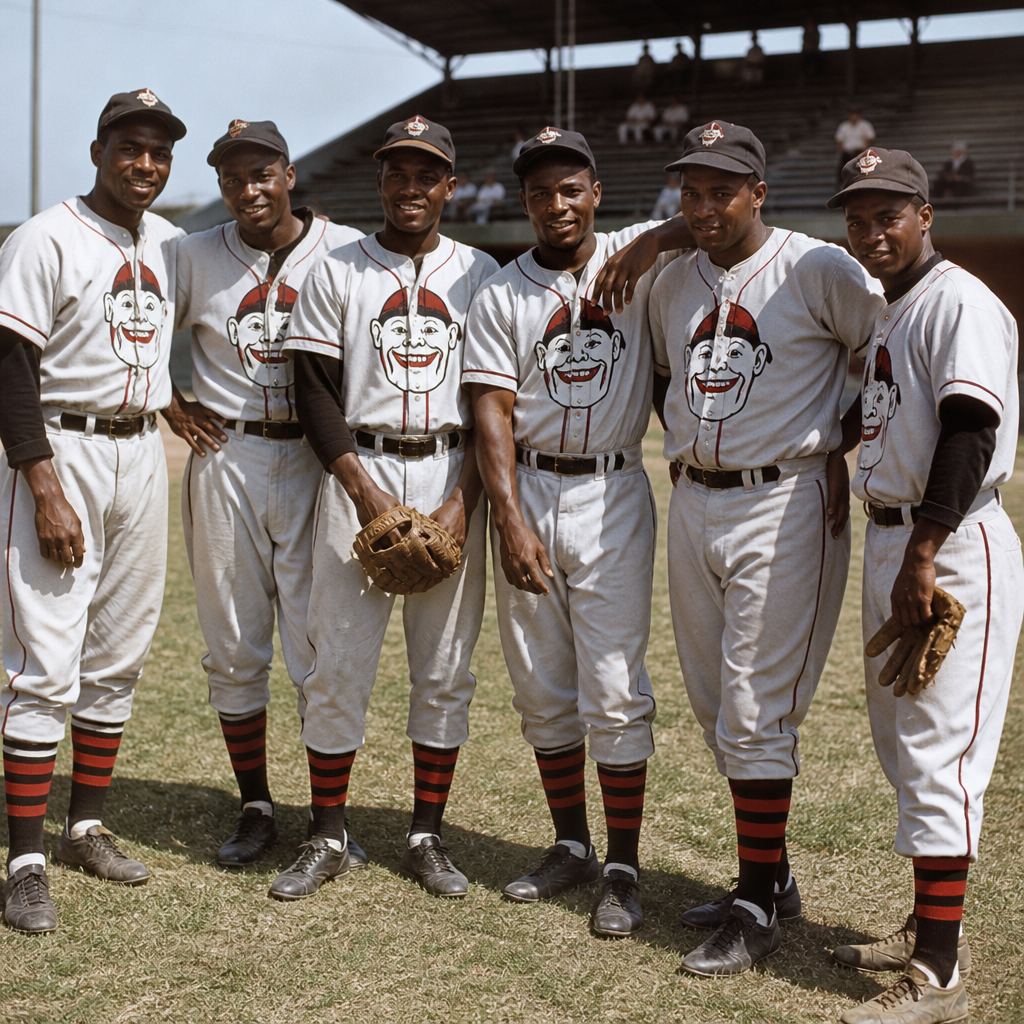
The Indianapolis Clowns occupy a singular place in baseball history because they were more than a novelty act, more than a barnstorming attraction, and far more than the comedic imagery their name sometimes suggests. As one of the best-known Negro Leagues teams of the final era, the Clowns blended showmanship with serious player development at a moment when Black baseball was being transformed by integration, shrinking league stability, and changing fan expectations. Any complete guide to Negro Leagues teams has to place the Clowns near the center because their story connects entertainment, entrepreneurship, and talent pipelines in ways few clubs did.
In practical terms, the Indianapolis Clowns were a professional Black baseball team that became most closely associated with Indianapolis beginning in the 1940s, though the franchise lineage included earlier roots and frequent travel. They played in the Negro American League, one of the major circuits that carried top-level Black professional baseball after the decline of the older Negro National League structures. Like many Negro Leagues teams, they rarely functioned as a fixed, local club in the modern major league sense. They were part league member, part touring enterprise, part community attraction, and part scouting showcase. That hybrid identity is essential to understanding both the Clowns and the wider landscape of Negro Leagues teams.
The team matters for several reasons. First, the Clowns helped preserve Black professional baseball during the difficult final decades when Major League Baseball was signing elite Black stars, often without compensating Negro Leagues owners adequately. Second, they became famous as the team that signed Hank Aaron in 1952, offering one of the clearest examples of how Negro Leagues teams continued producing world-class talent even after Jackie Robinson’s 1947 breakthrough. Third, they used comedy routines, trick plays, and crowd engagement not simply as gimmicks but as a business strategy shaped by segregation, travel economics, and competition for attention. When I have worked through Negro Leagues team histories, the Clowns consistently stand out because they reveal how adaptable Black baseball operators had to be just to survive.
To define the key terms, the Negro Leagues were organized circuits and independent Black professional baseball teams that existed because segregation excluded Black players from white major leagues and many affiliated minor leagues. Negro Leagues teams ranged from powerhouse clubs such as the Kansas City Monarchs and Homestead Grays to regional and barnstorming teams that mixed league games with exhibitions. A hub article on Negro Leagues teams should therefore do two jobs at once: explain the common business and social conditions those clubs faced, and show how specific teams embodied those pressures differently. The Indianapolis Clowns are ideal for that purpose because nearly every central theme in Negro Leagues history appears in their final decades.
Origins, identity, and why the Clowns were different
The Indianapolis Clowns emerged from a franchise history tied to earlier clubs, including the Cincinnati Ethiopian Clowns, before settling into Indianapolis as their best-known home base. The “Clowns” branding was deliberate. It drew from earlier baseball entertainment traditions and from the proven crowd appeal of teams that mixed athletic skill with comic timing. That approach invited comparisons to the Harlem Globetrotters in basketball, and the comparison is useful up to a point. Like the Globetrotters, the Clowns understood that showmanship could fill seats in towns where fans wanted a full night’s entertainment, not only a clean box score. Unlike pure exhibition acts, however, the Clowns were also competing in serious Negro American League baseball and signing players with genuine major league potential.
This combination made the team unusual but not unserious. Negro Leagues teams often had to be flexible with scheduling, payroll, and travel, but the Clowns turned flexibility into an identity. Their routines could include comic base running, hidden-ball bits, exaggerated fielding choreography, and player interactions designed to keep crowds attentive between innings. Yet the same roster might include a future Hall of Fame-level talent or a pitcher facing a heavy workload against strong regional competition. That tension between entertainment and excellence is the core of the Clowns’ legacy.
Indianapolis also mattered. The city gave the franchise a recognizable Midwestern anchor in a period when Black baseball teams needed stable booking relationships, accessible rail and bus routes, and a market with strong Black community support. Still, “home” in Negro Leagues terms never meant what it did for a modern MLB franchise. The Clowns spent substantial time on the road, playing league contests, exhibitions, and lucrative barnstorming dates. For readers exploring Negro Leagues teams broadly, this is a critical point: survival often depended less on home attendance alone than on a club’s ability to tour profitably and draw in multiple markets.
The business reality facing Negro Leagues teams in the post-integration era
To understand the Clowns’ final decades, it helps to start with the economic disruption created by integration. Jackie Robinson broke Major League Baseball’s color line with the Brooklyn Dodgers in 1947, and Larry Doby integrated the American League that same year with Cleveland. This was a moral breakthrough and an athletic correction, but it destabilized Black baseball owners almost immediately. Negro Leagues teams had spent decades identifying, developing, and showcasing elite Black talent. Once major league clubs began signing those players, Negro Leagues teams lost star power, gate appeal, and bargaining leverage. Compensation for contracts was inconsistent and often inadequate.
The Clowns adapted by leaning harder into what they controlled: entertainment value, flexible scheduling, and continued talent discovery. This was not unique to Indianapolis, but the Clowns executed it more visibly than most. In the late 1940s and 1950s, many Negro Leagues teams could no longer rely on a stable league season alone. Some clubs folded. Others became mostly barnstorming operations. The Clowns remained recognizable because they built a traveling product that could still sell to families, civic promoters, and local ballparks even after the very best Black stars increasingly jumped to integrated organized baseball.
That adaptation reflected a broader truth about Negro Leagues teams. They were not simply baseball clubs; they were Black-owned or Black-centered enterprises operating under discriminatory constraints. They negotiated stadium access, transportation barriers, lodging discrimination, irregular umpiring, and uneven revenue streams. Owners and managers had to think like promoters, logistics coordinators, scouts, and publicists. The Clowns’ comic routines sometimes overshadow the hardship in popular memory, but in business terms those routines were a rational answer to structural exclusion.
| Challenge facing Negro Leagues teams | How the Indianapolis Clowns responded | Why it mattered |
|---|---|---|
| Loss of top stars to integrated MLB organizations | Signed and showcased new prospects, including Hank Aaron | Kept the team relevant as a talent source |
| Declining league stability and attendance | Expanded barnstorming and entertainment-focused dates | Created revenue beyond formal league schedules |
| Competition for fan attention | Used comedy routines and crowd interaction | Differentiated the club in mixed local markets |
| Travel and segregation barriers | Built a flexible touring model with experienced operators | Improved survivability in hostile conditions |
Hank Aaron and the Clowns’ role as a talent pipeline
No single fact links the Indianapolis Clowns more firmly to baseball history than Hank Aaron’s time with the team. In 1952, Aaron signed with the Clowns before moving into the Boston Braves organization. His stay was brief, as was common for elite prospects in that period, but its significance is enormous. Aaron was not a sideshow signing. He was a teenage infielder with exceptional bat speed, coordination, and competitive poise, and the Clowns gave him a professional platform at a pivotal moment. Accounts from the period consistently note his immediate offensive impact, including his line-drive hitting and run production.
When people ask whether the Negro Leagues still mattered after integration began, Aaron’s path supplies a direct answer: absolutely. The Clowns were still evaluating talent, giving players paid opportunities, and serving as a bridge to the highest level of the sport. Aaron went on to become one of the greatest players in baseball history, surpassing Babe Ruth’s career home run total and finishing with 755 home runs, 3,771 hits, and a reputation for sustained excellence. His association with the Clowns proves that late-era Negro Leagues teams were not just holding on; they were still shaping the future of the game.
The Clowns also connect to another landmark story through Toni Stone, one of the first women to play regularly in a top-level men’s professional baseball environment. Stone played for the Clowns in 1953, stepping into a role long mythologized because it challenged assumptions about gender and professional sport. Her presence drew attention, sometimes exploitative attention, but she was a legitimate player with real skill. For a hub on Negro Leagues teams, Stone’s time with the Clowns is essential because it shows how Black baseball could be simultaneously progressive, commercial, and complicated. The team opened a door that white organized baseball certainly had not.
These player stories matter beyond biography. They show that Negro Leagues teams were development environments. Players learned to handle relentless travel, uneven fields, doubleheaders, varied competition, and high-pressure auditions in front of scouts. That environment was demanding. A player who succeeded for the Clowns had usually demonstrated adaptability as much as raw ability. In baseball development terms, the team functioned as an accelerator.
Entertainment, criticism, and the misunderstood legacy of showmanship
The Clowns’ comedic identity has long divided historians and fans. Some see the routines as a brilliant commercial strategy that brought Black baseball to wider audiences. Others argue that the clowning reinforced stereotypes or distracted from the quality of play. Both views contain truth, and the tension should be addressed directly. In my reading of Negro Leagues records and team histories, the most credible interpretation is that the Clowns used entertainment because it worked economically, while many players and observers still wanted their baseball respect taken seriously.
Examples help. A family in a small Midwestern town might buy tickets because they had heard the Clowns were funny, interactive, and unlike any other team. Once there, those same fans could watch a genuinely skilled middle infielder turn two, or a pitcher command a game. The entertainment opened the door; the baseball justified repeat interest. This model was not ideal in a segregated society, but it was effective. It also echoed a broader Negro Leagues tradition in which clubs had to create value at every stage of the fan experience because they lacked institutional protections available to white teams.
Criticism should not be dismissed, though. Some Black baseball leaders worried that exaggerated antics made it easier for white audiences to consume Black athletic talent without granting equal dignity. That critique remains important. Still, reducing the Clowns to comic relief misses the discipline required to execute their act and their schedule. Performance and professionalism were not opposites on this team; they were intertwined survival tools.
The Clowns within the larger story of famous Negro Leagues teams
As a sub-pillar hub for Negro Leagues teams, this article should place the Indianapolis Clowns in context with other landmark clubs. The Kansas City Monarchs were the most famous talent factory, producing or featuring stars such as Jackie Robinson, Ernie Banks, and Satchel Paige. The Homestead Grays, led by Josh Gibson and Buck Leonard, represented sustained dominance. The Newark Eagles, Pittsburgh Crawfords, Birmingham Black Barons, and Chicago American Giants each reflected different regional strengths, ownership models, and competitive peaks. The Clowns were not the most dominant of these teams, but they were among the most revealing in the postwar years because their evolution mirrored the changing economics of Black baseball.
That makes the Clowns a valuable entry point for readers exploring Negro Leagues teams comprehensively. They connect to the big themes: segregation, entrepreneurship, talent development, migration of stars to MLB, barnstorming, Black fan culture, and the contested memory of entertainment in sport. If the Monarchs represent peak institutional excellence, the Clowns represent adaptive endurance. Both are vital to understanding the whole story.
For deeper exploration, readers should continue to related team histories on the Kansas City Monarchs, Homestead Grays, Newark Eagles, Birmingham Black Barons, and Pittsburgh Crawfords. Together, those teams show the full arc of Negro Leagues baseball, from powerhouse championship clubs to flexible survivors of the integration era. The Indianapolis Clowns belong in that conversation not at the margins, but at its hinge point.
Why the Indianapolis Clowns still matter now
The Indianapolis Clowns matter today because they expose the false choice between entertainment and legitimacy, and because they demonstrate how Black baseball institutions sustained opportunity under unequal conditions. Their story reminds us that talent can emerge from unstable systems, that business creativity can preserve cultural spaces, and that historical memory often flattens teams that were more complex than their nicknames imply. The Clowns were a serious baseball operation wrapped in a performance model designed to survive the final decades of the Negro Leagues.
They also matter because public recognition of Negro Leagues history has improved. Major League Baseball’s formal integration of Negro Leagues statistics into the historical major league record helped clarify that these teams were not side notes. Museums, including the Negro Leagues Baseball Museum in Kansas City, have further expanded public understanding. In that richer historical frame, the Clowns should be recognized not just as the team associated with jokes, but as a club that signed Hank Aaron, featured Toni Stone, and adapted as skillfully as any franchise to the collapsing economics of segregated professional baseball.
The key takeaway is simple. If you want to understand famous Negro Leagues teams, study the Indianapolis Clowns closely. They reveal how Black baseball entertained, innovated, and developed elite talent while confronting integration’s unintended economic costs. Explore the related team histories across this hub, compare their paths, and use the Clowns as a guide to the final, complicated brilliance of the Negro Leagues.
Frequently Asked Questions
Why were the Indianapolis Clowns so important in the final decades of the Negro Leagues?
The Indianapolis Clowns mattered because they represented several realities of Black baseball at once. They were a competitive team, a touring entertainment business, and a crucial bridge between the classic Negro Leagues era and the post-integration period that followed Jackie Robinson’s breakthrough. By the time the Clowns became nationally prominent, the Negro Leagues were already facing enormous pressure. Major League Baseball was signing Black stars, league schedules were becoming less stable, and attendance patterns were changing. In that environment, the Clowns found a way to remain visible and financially viable by combining strong baseball with a style of presentation that drew crowds in cities large and small.
That combination is what makes them historically significant. The Clowns were not simply surviving on gimmicks; they were adapting to a changing market while continuing to field real talent. They helped preserve opportunities for Black players at a time when the infrastructure of Black professional baseball was weakening. They also kept Negro Leagues baseball in the public eye during a transitional era when many teams folded or lost their identities. In other words, the Clowns tell us not only what Negro Leagues baseball had been, but also what it had to become in order to endure.
Their story also challenges oversimplified narratives about the end of the Negro Leagues. It is tempting to treat integration as a clean turning point after which Black baseball simply faded away. The Clowns show that the reality was more complicated. Teams still traveled, developed players, attracted fans, and shaped baseball culture even as the old league structure fragmented. That is why any serious discussion of the Negro Leagues’ final decades has to include the Indianapolis Clowns.
Were the Indianapolis Clowns mainly a comedy team, or were they also a serious baseball club?
The most accurate answer is that they were both, and reducing them to only one side misses the point. The Clowns used comedy, timed routines, crowd interaction, and showmanship as part of their identity, but that did not mean they were not playing meaningful baseball. In fact, their entertainment style was part of a broader Black baseball tradition in which teams often had to be resourceful promoters as well as skilled competitors. Drawing paying customers required more than winning games; it also required creating an event. The Clowns excelled at that.
At the same time, they developed and showcased legitimate baseball talent. Players on the Clowns roster were expected to perform on the field, not merely entertain between pitches. Their reputation as a lively, engaging team sometimes causes modern readers to underestimate the quality of baseball involved, but that interpretation is misleading. The Clowns played against strong competition, traveled extensively, and operated in a baseball environment where poor performance could quickly undermine a team’s credibility and revenue.
What made the team distinctive was how seamlessly it blended the two elements. Their humor and theatrical flair helped attract crowds, especially during barnstorming tours, but the baseball itself remained central to the product. In many ways, the Clowns embodied a hard truth about the economics of Black baseball in the mid-20th century: teams often had to be excellent entertainers in order to keep supporting excellent athletes. Rather than diminishing their place in baseball history, that dual role makes them more revealing and more important.
How did the Indianapolis Clowns contribute to player development during and after integration?
The Clowns played a significant role in player development because they remained one of the visible, functioning pathways for Black talent during a period of instability. As integration advanced, the Negro Leagues lost many top stars to organized baseball, but that did not eliminate the need for teams that could identify, sharpen, and showcase emerging players. The Clowns filled part of that need. They provided competitive experience, national exposure through travel, and a professional setting in which players could prove themselves in front of scouts and paying audiences.
Most famously, the Indianapolis Clowns are closely associated with Hank Aaron, who began his professional career with the team before moving into Major League Baseball. That fact alone gives the club a major place in baseball history, but it also points to a broader truth. The Clowns were not an isolated novelty; they were part of the remaining developmental ecosystem of Black baseball. For many players, joining a team like the Clowns meant access to better competition, a chance to build a professional reputation, and an opportunity to move upward at a time when the old Negro Leagues structure was no longer as dependable as it had once been.
The team’s traveling schedule could also serve as a proving ground. Constant road games and varied competition tested adaptability, stamina, and performance under pressure. Those are valuable developmental conditions for any player. So while the Clowns are often remembered for their public persona, their baseball function was just as meaningful. They helped sustain careers, launch careers, and preserve a route into professional baseball during one of the sport’s most complicated transitional periods.
How did barnstorming and entertainment help the Indianapolis Clowns survive when many Negro Leagues teams struggled?
Barnstorming and entertainment were essential survival tools. As the formal league system weakened, a team could no longer rely exclusively on a stable home schedule, predictable league rivalries, or long-term financial security. The Clowns responded by becoming highly flexible. They traveled widely, booked games in different regions, and promoted themselves as an attraction that offered both baseball and spectacle. That model allowed them to reach audiences beyond a single local fan base and to generate revenue in a baseball economy that had become increasingly unstable for Black-owned and Black-operated clubs.
This approach was not a sign of lesser seriousness; it was a sign of business intelligence. The Clowns recognized that in the final decades of the Negro Leagues, teams had to meet fans where they were. Entertainment value helped fill ballparks, especially when audiences had more choices and when the best-known Black stars were increasingly being absorbed into Major League organizations. A club that could promise a memorable experience had a better chance of drawing families, casual fans, and local communities even if it did not have the structural advantages teams once enjoyed in earlier league years.
Barnstorming also reinforced the Clowns’ broader historical importance. By touring, they carried Negro Leagues baseball into places that might not otherwise have seen it. They kept traditions alive, extended the visibility of Black professional baseball, and maintained public interest at a time when institutional support was fading. Their resilience was rooted in adaptation, and their use of showmanship was one of the clearest examples of how adaptation worked in practice.
What does the legacy of the Indianapolis Clowns tell us about the end of the Negro Leagues?
The Clowns’ legacy shows that the end of the Negro Leagues was not a simple collapse, but a drawn-out transformation shaped by creativity, loss, opportunity, and uneven change. Integration opened doors for Black players in the major leagues, but it also destabilized Black baseball institutions that had long served as centers of community, entrepreneurship, and athletic excellence. The Indianapolis Clowns existed right in the middle of that contradiction. They benefited from the attention that came with producing major talent, yet they also operated in a world where that very talent was being pulled away from Negro Leagues competition.
Because of this, the team helps modern readers understand that the final era of the Negro Leagues was not merely an epilogue. It was a distinct historical phase with its own pressures and innovations. The Clowns adapted to declining league cohesion by emphasizing mobility, promotion, and versatility. They maintained cultural visibility while much of the traditional league framework eroded. Their continued presence demonstrates that Black baseball institutions did not simply disappear overnight; they evolved, improvised, and fought to remain relevant.
Perhaps most importantly, the Clowns remind us to look past surface impressions. Their name and entertainment style can obscure the deeper significance of what they represented: a team preserving professional opportunity, showcasing real baseball ability, and carrying forward the public life of Negro Leagues baseball in its closing chapters. Their legacy is ultimately about endurance. They stand as evidence that even in decline, the Negro Leagues continued to produce talent, shape baseball culture, and reflect the resourcefulness of Black sports history.