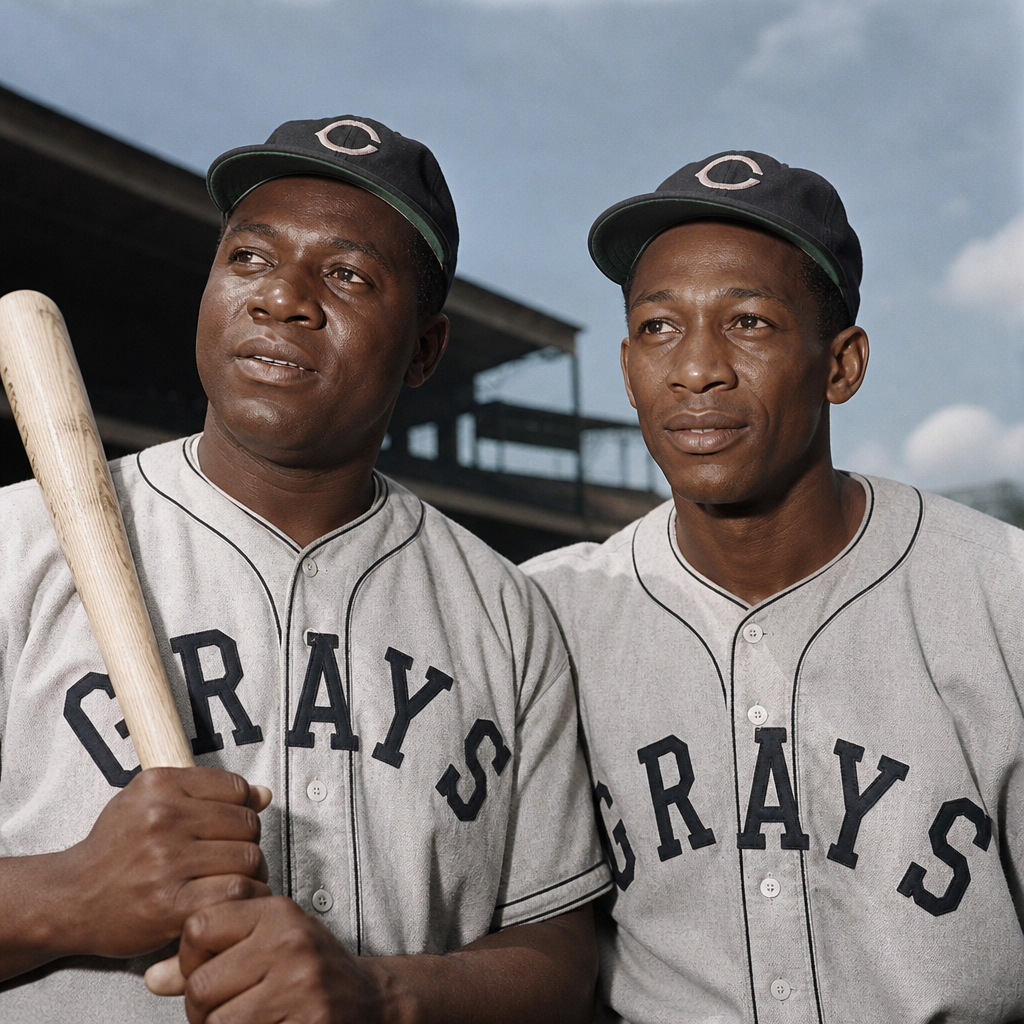
The Homestead Grays stand at the center of any serious discussion of Negro Leagues teams because they combined sustained winning, star power, business resilience, and cultural meaning in a way few clubs in baseball history ever matched. For readers exploring famous baseball teams, the Grays are not simply another championship roster from the past; they are the defining Black baseball dynasty, a franchise that helps explain how the Negro Leagues worked, why they mattered, and how legends such as Josh Gibson and Buck Leonard became enduring figures in American sport. To understand the Grays is to understand the excellence Black baseball produced despite exclusion from Major League Baseball, unstable economics, punishing travel, and chronic under-documentation.
The team began in 1912 in Homestead, Pennsylvania, an industrial community near Pittsburgh, and over time became a powerhouse associated with both Pittsburgh and Washington, D.C. In practical terms, the Homestead Grays evolved from a local independent club into an elite professional organization that dominated Black baseball through the 1930s and 1940s. Historians generally define the Negro Leagues as organized circuits created because Black players were barred by baseball’s color line from the major leagues. Those leagues included famous clubs such as the Kansas City Monarchs, Pittsburgh Crawfords, Newark Eagles, Chicago American Giants, and Birmingham Black Barons. Among them, the Grays became the benchmark for excellence.
Why does that matter now? Because the Grays connect several major themes in baseball history: the lost prime years of Black superstars, the sophistication of Black-owned and Black-supported sports enterprises, and the long struggle to win recognition in official records. When I have researched Negro Leagues teams, one pattern becomes obvious quickly: the Grays appear everywhere important. They won league pennants, played before huge crowds at Griffith Stadium, developed household names within Black America, and supplied players later honored in the National Baseball Hall of Fame. Their story anchors any hub page on Negro Leagues teams because it links team history, player biography, league structure, ballpark culture, and the broader push for historical justice.
The names Josh Gibson and Buck Leonard are usually the entry point. Gibson, the devastating catcher with legendary power, is often compared to Babe Ruth for home run ability, though that shortcut undersells his complete offensive game. Leonard, the graceful first baseman known as the “Black Lou Gehrig,” paired elite hitting with polished defense and uncommon steadiness. Together, they gave the Grays a middle-of-the-order core that could overwhelm opponents for years. Yet the dynasty was larger than two stars. It included owner Cum Posey’s vision, managers such as Vic Harris, standout pitchers including Ray Brown, and a traveling model that allowed the club to survive and thrive in a segregated economy.
How the Homestead Grays became the signature Negro Leagues team
The Grays became the signature Negro Leagues team by excelling both on the field and in organization. Cumberland Posey, commonly known as Cum Posey, was central to that rise. A former athlete and highly capable executive, Posey understood scheduling, talent evaluation, gate revenue, and regional markets. Before stable league structures took hold, many Black clubs survived through independent barnstorming, arranging games against local teams, semipro opponents, and other top Black clubs. Posey navigated that environment expertly. He built a reputation for attracting premier talent while keeping the club visible in strong baseball cities.
League membership in Black baseball could be fluid, but the Grays’ dominance was not. They competed in the Negro National League and Negro American League eras and are most famous for winning nine straight league pennants from 1937 through 1945. They also won Negro League World Series titles in 1943 and 1944. Sustained success over nearly a decade is rare in any sport. In the Grays’ case, it came during years shaped by the Great Depression and World War II, when travel, player availability, and finances were all harder to manage. Their consistency is one reason historians rank them with the great dynasties of baseball, regardless of league classification.
Their geographic identity was also unusual and strategic. Though rooted in Homestead near Pittsburgh, the Grays played many home games in Washington, D.C., especially at Griffith Stadium, home of the Washington Senators. Washington gave the club access to large Black audiences and major-event visibility. Pittsburgh remained essential to the team’s heritage, but the Washington connection expanded the fan base and revenue stream. That dual-city identity illustrates a key truth about Negro Leagues teams: they often had to be flexible and entrepreneurial in ways white major league teams did not.
Josh Gibson and Buck Leonard powered the dynasty
Josh Gibson and Buck Leonard gave the Grays their defining greatness because they blended overwhelming production with reliability in the biggest games. Gibson caught a demanding position, hit for average, drove the ball with extraordinary force, and developed a mythic reputation that spread through newspapers, oral history, and eyewitness testimony. Exact home run totals remain debated because recordkeeping in Black baseball was inconsistent and schedules mixed league, nonleague, exhibition, and barnstorming games. That uncertainty should not obscure the consensus: Gibson was one of the most feared hitters the sport has ever produced. In 2024, Major League Baseball’s statistical integration of Negro Leagues records strengthened wider recognition of his documented excellence, including remarkable batting marks in officially recognized league play.
Leonard was the ideal counterpart. A left-handed hitter with smooth mechanics, he controlled the strike zone, hit line drives to all fields, and anchored first base with excellent footwork. Calling him the “Black Lou Gehrig” reflected contemporary shorthand, but Leonard deserves to be assessed on his own terms. He was not merely a comparison piece to a white star; he was a complete player who would have fit seamlessly in any top first-baseman conversation of his era. On the Grays, Leonard’s calm style balanced Gibson’s explosive fame, giving the lineup both intimidation and structure.
What made them especially dangerous was lineup protection before that term became overused. Opponents could not pitch around Gibson without facing Leonard, and they could not relax after Leonard because the Grays’ roster had depth. Players such as Vic Harris, Jerry Benjamin, and Howard Easterling contributed important at-bats around the stars. Ray Brown and Edsall Walker carried major pitching loads. Great dynasties are rarely just two men, but nearly every great Grays team began with the certainty that Gibson and Leonard would set the standard daily.
Championship years, roster depth, and the business of winning
From 1937 to 1945, the Grays produced one of the clearest runs of dominance in baseball history. They captured pennant after pennant against strong competition that included the Kansas City Monarchs, Newark Eagles, and other first-rate Negro Leagues teams. Their 1943 Negro League World Series victory over the Birmingham Black Barons and their 1944 title against the Philadelphia Stars confirmed that regular-season excellence translated into championship baseball. The Grays were not simply beating weak opposition; they were defeating clubs filled with elite Black talent that had been excluded from the majors.
Winning required more than stars. Negro Leagues teams faced logistical obstacles that modern fans often underestimate. Travel could involve long bus rides, irregular accommodations, and back-to-back games in different cities. Revenue depended heavily on attendance, favorable dates, and profitable bookings. A rainout hurt more when operating margins were thin. Owners had to balance payroll, transportation, and stadium rental agreements while constantly protecting the schedule. The Grays managed those pressures better than most, which is another reason they became a dynasty instead of a short-lived contender.
| Factor | Why it mattered for the Grays | Real-world example |
|---|---|---|
| Star talent | Elite players created a competitive edge and drew crowds | Josh Gibson and Buck Leonard became marquee attractions in multiple cities |
| Strong ownership | Stable scheduling and roster building improved long-term results | Cum Posey used business discipline to keep the club prominent |
| Flexible home markets | Multiple fan bases reduced financial risk | The team maintained ties to Pittsburgh while thriving in Washington |
| Roster depth | Dynasties survive slumps, injuries, and travel fatigue | Ray Brown, Vic Harris, and others supported the stars consistently |
| Big-game experience | Postseason composure turned pennants into titles | World Series championships in 1943 and 1944 validated the run |
That combination of baseball excellence and operational competence is exactly why the Homestead Grays belong at the hub of any Negro Leagues teams guide. They provide the clearest case study of how an elite Black baseball franchise functioned at scale.
The Grays in the wider Negro Leagues landscape
No hub article on Negro Leagues teams is complete without placing the Grays among their rivals. The Kansas City Monarchs were the most famous long-running opponent and, in many broad histories, the Grays’ closest equal in stature. The Monarchs excelled at innovation, touring reach, and talent development, later employing Jackie Robinson before his move to organized white baseball. The Pittsburgh Crawfords, meanwhile, assembled perhaps the most dazzling concentration of stars in the 1930s, including Satchel Paige, Oscar Charleston, and Cool Papa Bell. Their peak brilliance was immense, though less durable than the Grays’ long rule. The Newark Eagles, led in part by Effa Manley’s groundbreaking ownership, became another major power and defeated the Grays in the 1946 Negro World Series.
These comparisons matter because they prevent nostalgia from flattening the Negro Leagues into a single story. Black baseball contained different business models, regional followings, and playing styles. Some clubs leaned heavily on barnstorming revenue. Others built stronger league identities. Some had a brief championship window tied to a few superstars, while others, like the Grays, sustained excellence across changing conditions. For readers building a deeper understanding of famous baseball teams, the Grays are the anchor, but the full picture includes a competitive ecosystem rich with talent and innovation.
The Grays also illustrate the consequences of segregation on baseball history. Because Major League Baseball excluded Black players for decades, teams such as the Grays became parallel institutions of excellence rather than integrated competitors. That meant fans saw championship-level baseball outside the white majors, yet mainstream sports coverage often treated those achievements as secondary. Today, scholarship by historians, the Seamheads Negro Leagues Database, Hall of Fame research, and MLB’s record recognition efforts have made it harder to dismiss what earlier generations ignored. The evidence is clear: the Grays were not a footnote to baseball history. They were one of its central teams.
Legacy, recognition, and why the Homestead Grays still matter
The legacy of the Homestead Grays matters because it reaches beyond trophies and Hall of Fame plaques. Their success demonstrates that Black baseball built institutions of genuine excellence under structural exclusion. When modern fans visit exhibits at the National Baseball Hall of Fame or the Negro Leagues Baseball Museum in Kansas City, the Grays appear repeatedly because their history touches every essential question: Who were the best players denied a full major league stage? How did Black teams survive financially? What did championship culture look like in segregated America? The Grays provide answers rooted in results, not sentiment.
Recognition has improved, but gaps remain. Statistical records for Negro Leagues teams are better than they once were, yet they are still incomplete compared with the majors. That means responsible historians avoid false precision while still making firm judgments. We may not know every Josh Gibson home run, but we know he dominated elite competition. We may not have full defensive metrics for Buck Leonard, but contemporary accounts and surviving records establish his quality clearly. Serious baseball history balances humility about missing data with confidence about the greatness the evidence proves.
For anyone exploring famous baseball teams, the Homestead Grays should be the starting point for the Negro Leagues branch of that journey. They offer elite players, documented championships, a compelling ownership story, rich ties to Pittsburgh and Washington, and a direct line to broader conversations about race, memory, and fairness in American sports. If you want to understand Negro Leagues teams comprehensively, begin with the Grays, then follow the rivalries, the ballparks, the leagues, and the players connected to them. That path leads to a fuller and more accurate baseball history, and it rewards every fan willing to look beyond the old major league-only narrative.
Frequently Asked Questions
Why are the Homestead Grays considered one of the greatest dynasties in baseball history?
The Homestead Grays are considered one of the greatest dynasties in baseball history because they combined elite talent, sustained championship success, organizational stability, and enormous cultural importance over an unusually long period. Founded in the early 20th century and eventually based primarily in Pittsburgh and Washington, the Grays became the standard by which Negro Leagues greatness is measured. They did not just have a brief peak; they built a winning machine that remained dominant through changing leagues, unstable schedules, economic hardship, and the many challenges Black teams faced in segregated America.
On the field, the Grays were extraordinary. Their rosters regularly featured Hall of Fame talent, and during their peak years they won Negro National League pennants in a remarkable run while also capturing multiple Negro World Series titles. That kind of repeated success matters because Negro Leagues baseball was highly competitive, full of star-studded clubs such as the Kansas City Monarchs, Pittsburgh Crawfords, and Newark Eagles. The Grays did not dominate a weak environment; they thrived against many of the best Black players in the country.
What makes the Grays especially important is that their story also reveals how Black baseball operated as both sport and institution. They drew large crowds, traveled extensively, survived through smart management, and became a source of pride for Black communities. Their games were not simply contests for standings; they were major public events tied to civic identity, entertainment, and racial achievement. When people describe the Homestead Grays as a dynasty, they mean more than a team that won often. They mean a franchise that defined excellence in the Negro Leagues and left a legacy that still shapes how baseball history is understood.
Who were Josh Gibson and Buck Leonard, and why were they so important to the Homestead Grays?
Josh Gibson and Buck Leonard were the two signature stars of the Homestead Grays, and together they formed one of the most feared offensive combinations in baseball history. Gibson, the team’s legendary catcher, became famous for his astonishing power, his run production, and the mythology that grew around his home runs. He was often compared to Babe Ruth because of the force with which he hit the ball, but Gibson’s greatness stands on its own. He was more than a slugger; he was a complete hitter whose reputation spread across the United States, Latin America, and the Caribbean. For many fans and historians, he is one of the greatest players ever to step on a baseball field.
Buck Leonard, the Grays’ smooth and powerful first baseman, was every bit as essential to the team’s success. Nicknamed the “Black Lou Gehrig,” Leonard brought consistency, balance, and leadership to the middle of the lineup. He was known for his polished swing, defensive reliability, and ability to hit for both average and power. While Gibson often attracted the headlines because of his dramatic home runs and larger-than-life aura, Leonard gave the Grays a dependable superstar presence year after year. His excellence made it nearly impossible for opposing pitchers to work around Gibson without paying a price.
Together, Gibson and Leonard symbolized the Grays at their peak. They gave the club star power that attracted fans, but they also delivered the substance required for dynasty-level winning. Their importance goes beyond individual statistics, especially because Negro Leagues recordkeeping was often incomplete. They mattered because teammates, opponents, sportswriters, and generations of observers consistently described them as transformational talents. In any serious telling of the Homestead Grays story, Gibson and Leonard are central because they embodied both the brilliance of Black baseball and the injustice of segregation that kept players of their caliber from the major leagues in their prime.
How dominant were the Homestead Grays during their peak years?
The Homestead Grays were overwhelmingly dominant during their peak, especially from the late 1930s into the 1940s. This was not the kind of success built on one magical season. It was a prolonged period in which the Grays repeatedly finished at or near the top, won league pennants in bunches, and established themselves as the team everyone else had to measure themselves against. Their most famous stretch included a long run of Negro National League championships, a level of consistency that is rare in any era of professional baseball.
Part of what makes that dominance so impressive is the context. Negro Leagues teams often dealt with financial uncertainty, irregular schedules, extensive travel, and the need to balance league play with lucrative exhibition games. Rosters could change, leagues could reorganize, and club finances could be fragile. Despite all of that, the Grays kept winning. They developed and retained a core of stars, benefited from strong ownership and business management, and regularly beat other high-caliber teams loaded with future Hall of Famers.
Their dominance also showed up in the way they controlled games. With stars such as Josh Gibson and Buck Leonard in the lineup, plus quality pitching and deep supporting talent, the Grays could overpower teams in multiple ways. They were not just a one-dimensional slugging team or a club surviving on reputation. They had balance, experience, and a winning culture. For modern readers, the easiest way to understand their peak is to think of them as the benchmark franchise of Black baseball: the club that combined elite players, championship expectations, and year-after-year results better than almost anyone else in Negro Leagues history.
What role did the Homestead Grays play in Black history and American culture beyond baseball?
The Homestead Grays mattered far beyond the standings because they represented excellence, opportunity, and dignity in an era defined by segregation and exclusion. At a time when Black players were barred from Major League Baseball, Negro Leagues teams like the Grays created a parallel world of professional sports that was rich in talent, entrepreneurship, and community significance. The Grays showed that Black baseball was not a lesser imitation of the white major leagues. It was a major cultural institution in its own right, with its own stars, rivalries, business models, and loyal fan bases.
For Black communities, the Grays were a source of pride and collective identity. Their games were social and civic occasions where fans could see world-class athletes perform at the highest level available to them. In cities where the Grays played regularly, especially Washington, D.C., they became woven into local life. Crowds packed ballparks not only because the team won, but because supporting the Grays also meant celebrating Black achievement in public space. That mattered deeply in a country where so many institutions were organized to deny Black Americans full recognition.
The Grays also help modern audiences understand the broader significance of the Negro Leagues. Their success exposes the falsehood behind long-discredited assumptions that excluded Black players from the majors. Their stars proved, repeatedly, that elite Black athletes had the talent, discipline, and drawing power to thrive at the very highest levels of the sport. In that sense, the Grays occupy an essential place in American cultural history. They are a reminder that great baseball was being played outside the segregated major leagues, and that the story of the national pastime is incomplete without them.
Why does the legacy of the Homestead Grays still matter today?
The legacy of the Homestead Grays still matters because they remain one of the clearest examples of excellence denied full recognition in its own time. Their story forces baseball fans to look beyond traditional major league narratives and confront a fuller, more honest history of the game. When people study the Grays today, they are not simply learning about a successful old team. They are learning about how talent flourished under segregation, how Black institutions built their own spaces of achievement, and how many all-time great players spent their prime years outside the major league spotlight through no fault of their own.
The Grays also matter because their players continue to reshape the baseball canon. As Negro Leagues research has expanded and official recognition has grown, stars like Josh Gibson and Buck Leonard have been more properly understood as central figures in baseball history, not side notes. That shift is important. It changes Hall of Fame conversations, greatest-team discussions, and public memory. It reminds fans that baseball’s past is bigger, deeper, and more diverse than earlier generations often admitted.
Finally, the Homestead Grays endure because their story combines greatness with meaning. They won championships, developed legends, and thrilled fans, but they also stood for resilience and self-determination in a segregated society. That combination is rare. Plenty of teams win. Far fewer come to symbolize an entire chapter of social and sporting history. The Grays do, and that is why they remain indispensable to anyone trying to understand the Negro Leagues, the evolution of professional baseball, and the place of sport in the broader American story.