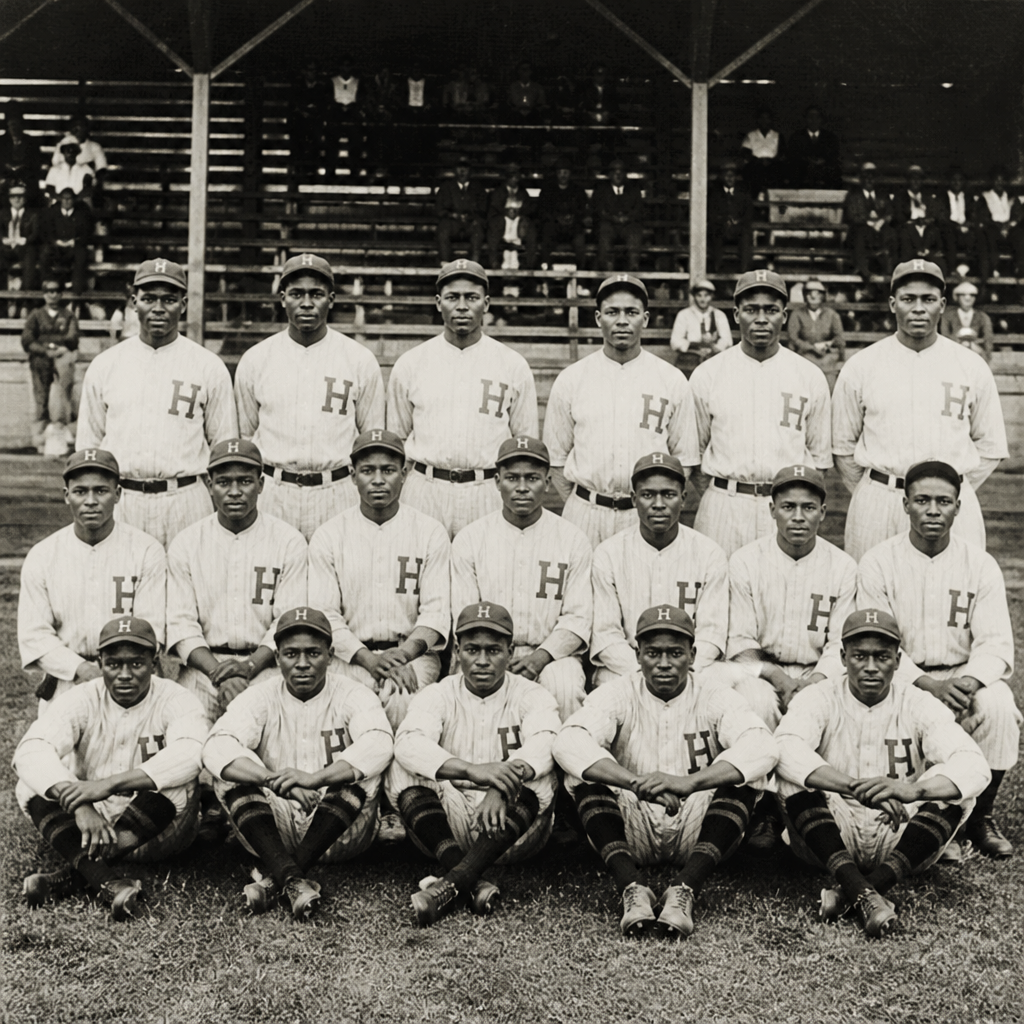
The Hilldale Club stood at the center of Black professional baseball in the 1920s, combining winning, business discipline, and star power in a way few teams matched. Based in Darby, just outside Philadelphia, Hilldale became one of the defining Negro Leagues teams of its era and a cornerstone of the Eastern Colored League. For readers exploring famous baseball teams, Hilldale matters because its story explains how Black clubs built elite competition despite segregation, unstable financing, and exclusion from Major League Baseball. A hub article on Negro Leagues teams must start here, where championship baseball, community pride, and entrepreneurial skill met on equal terms.
The term Negro Leagues teams refers to Black professional baseball clubs that operated during the era when organized white baseball excluded Black players. Those teams were not all members of a single league, and they changed leagues, schedules, and ownership structures frequently. Some were independent barnstorming clubs; others were league members with formal pennant races, contracts, and championship series. Hilldale represents the fully professional end of that spectrum. In my work researching early baseball business records and contemporary Black press coverage, Hilldale consistently emerges as a model franchise: organized payrolls, quality facilities, reliable booking, and a roster deep enough to challenge any Black club in the country.
Hilldale also works as a hub topic because its history connects to nearly every major strand of Negro Leagues history. It links to the rise of Eastern Black baseball, to the leadership of owner Ed Bolden, to the careers of stars such as Biz Mackey, Judy Johnson, and Louis Santop, and to the competitive relationship between the Eastern Colored League and Midwestern circuits led by teams like the Kansas City Monarchs. It also opens the door to broader questions searchers often ask: What made a Negro Leagues franchise successful? How did Black teams travel, schedule games, and make money? Which clubs won championships, and which players later reached the Hall of Fame? Hilldale provides concrete answers to all of those questions.
At its peak, the club was more than a local nine. It was a Black sporting institution with national reach. Hilldale drew fans from Philadelphia’s Black neighborhoods, from nearby industrial communities, and from white spectators who came to see elite baseball regardless of race. The club’s importance lies not only in wins and losses but in its proof that a Black-owned and Black-managed baseball enterprise could operate with first-class standards. That is why Hilldale remains essential in any serious guide to Negro Leagues teams, and why its 1920s run deserves to be understood in depth rather than reduced to a footnote.
How Hilldale Rose from Local Club to Eastern Colored League Powerhouse
Hilldale began in the 1910s as a community team and grew rapidly under the leadership of Ed Bolden, one of the sharpest executives in Black baseball. Bolden understood something many owners missed: talent alone did not build a durable club. Scheduling, transportation, gate management, payroll control, and press relationships mattered just as much. By the early 1920s, Hilldale had become one of the strongest independent Black teams in the East, regularly drawing top opponents and building a reputation for discipline. When the Eastern Colored League formed in 1923, Hilldale was not included at first, but that changed quickly. The club joined in 1924 and immediately gave the league a credible championship contender.
The Eastern Colored League was created to bring structure to Black baseball on the Atlantic seaboard, balancing the influence of the Negro National League in the Midwest. In practical terms, it offered scheduled league games, clearer standings, stronger contracts, and regional rivalries that fans could follow. Hilldale was ideally suited to this environment. Darby’s Hilldale Park gave the team a stable home field, and its Philadelphia-area location placed it in one of the country’s largest Black urban markets. That meant access to newspapers, rail lines, and a deep fan base. Unlike loosely organized clubs that lived week to week, Hilldale functioned like a mature sports business.
Success followed. Hilldale won the Eastern Colored League pennant in 1925 and 1926, then met the Kansas City Monarchs in the 1924 and 1925 Colored World Series, splitting those outcomes. The 1925 title over Kansas City remains the franchise’s signature achievement. It was not a fluke run built on one hot player. Hilldale won because it defended well, handled pitchers intelligently, and featured a lineup with patience, contact skill, and timely power. Contemporary accounts repeatedly praised the club’s polish. Even in an era of uneven recordkeeping, the pattern is clear: Hilldale was one of the most complete Negro Leagues teams of the decade.
The People Who Made Hilldale Great
Every great team needs a visionary executive, and Hilldale had one in Ed Bolden. He was not simply an owner signing checks. Bolden recruited talent aggressively, fought for contracts, demanded professionalism, and treated scheduling as a strategic weapon. In Black baseball, where player raiding and unstable finances were constant threats, that kind of leadership could decide whether a club survived. Bolden’s standards helped make Hilldale attractive to players who wanted steady work and a serious baseball environment.
On the field, catcher Biz Mackey became one of the franchise’s defining stars. Mackey was an elite defender with a strong arm, excellent game-calling instincts, and enough offense to anchor a lineup. Historians and former players have often placed him among the greatest catchers in baseball history, not only in Black baseball. His presence mattered because a catcher in the 1920s managed pace, pitcher confidence, bunts, and running games with far less relief from coaches than modern players receive. Hilldale’s staff benefited directly from Mackey’s intelligence.
Third baseman Judy Johnson brought another form of excellence. He was a smooth defender, quick thinker, and respected clubhouse leader who later reached the National Baseball Hall of Fame. Johnson did not need loud numbers to control a game. He fielded cleanly, positioned himself well, and delivered professional at-bats under pressure. Louis Santop, one of Black baseball’s most feared hitters, also spent key years with Hilldale. Though his best athletic years came earlier, his reputation and run production added weight to the lineup and credibility to the club’s status.
Pitching was equally important. Hilldale relied on accomplished arms such as Nip Winters and Phil Cockrell, men capable of handling league play and the intense spotlight of championship series. Negro Leagues teams often played packed schedules that mixed league games, exhibitions, and travel demands, so a strong club needed adaptable pitchers rather than a single ace. Hilldale had enough quality and depth to compete consistently, and that depth separated it from clubs that looked dangerous on paper but wore down over a season.
Why the 1925 Championship Team Became a Negro Leagues Benchmark
Hilldale’s 1925 season is the clearest example of why the club belongs among famous baseball teams. The team captured the Eastern Colored League pennant and then defeated the Kansas City Monarchs in the Colored World Series. That result carried enormous weight. Kansas City was not merely another opponent; it was the premier benchmark franchise in Black baseball, known for strong management, star players, and national reach. Beating the Monarchs in a championship setting established Hilldale as a true national power.
The series showcased the qualities that defined the club. Hilldale played sound defense, ran the bases with discipline, and avoided beating itself. In championship baseball, that matters more than style points. Teams in the Negro Leagues often faced uneven field conditions, long train rides, and compressed schedules. The club that stayed composed usually gained the edge. Hilldale’s roster had enough veteran calm to handle those variables. When people ask what made a Negro Leagues champion, Hilldale in 1925 offers the practical answer: stable ownership, a balanced roster, dependable defense, and stars who accepted structure.
| Season | League or Status | Result | Why It Mattered |
|---|---|---|---|
| 1924 | Eastern Colored League | League contender; Colored World Series appearance | Proved Hilldale could compete with the best Black clubs nationally |
| 1925 | Eastern Colored League | Pennant winner; Colored World Series champion | Signature season that established Hilldale as a top Negro Leagues team |
| 1926 | Eastern Colored League | Pennant winner | Confirmed that 1925 was sustained excellence, not a one-year surge |
Just as important, the 1925 club became a useful comparison point for other Negro Leagues teams. If you are building out a broader Famous Baseball Teams cluster, Hilldale’s title season naturally connects to pages on the Kansas City Monarchs, Homestead Grays, Pittsburgh Crawfords, Chicago American Giants, and Bacharach Giants. Those clubs defined different eras and regions, but Hilldale helps explain how Eastern Black baseball matured into a championship-level ecosystem.
How Hilldale Fit into the Wider World of Negro Leagues Teams
No hub article on Negro Leagues teams is complete without placing Hilldale in the larger map of Black baseball. The Negro Leagues were not static. Leagues formed, collapsed, reorganized, and competed for players and dates. Teams survived through a mix of league games, local rivalries, exhibitions against white semipro teams, and high-revenue barnstorming. Strong franchises became anchors around which leagues could organize. Hilldale was one of those anchors in the East, much as the Monarchs and Chicago American Giants had been in the Midwest.
That matters because many modern readers assume every club functioned like a current Major League Baseball franchise. In reality, Negro Leagues teams operated in a more volatile market. Weather could erase a week’s income. A star player might jump clubs. A league schedule might be revised midseason. A promoter could overpromise guarantees. The best owners responded with flexibility and relentless networking. Hilldale’s reputation for order, good baseball, and credible administration made it easier to secure quality opponents and maintain fan trust.
Hilldale also illustrates the regional character of Black baseball. Eastern teams drew from dense urban corridors and railroad access, while Midwestern powers often built broader touring footprints. That shaped roster construction and revenue strategy. In Philadelphia’s orbit, Hilldale could cultivate repeated local interest through league rivalries and nearby travel. The result was a club with both neighborhood identity and national relevance, a combination shared by only the strongest Negro Leagues teams.
Business, Ballpark, and Community Impact
Hilldale Park was more than a field. It was a business asset and a cultural gathering place. Having a dependable home venue allowed the club to control dates, ticketing, concessions, and presentation. That stability increased revenue and gave fans a consistent place to follow the team. In segregated America, Black-controlled recreational spaces carried special importance. A game at Hilldale was entertainment, but it was also public proof of Black excellence in management and performance.
Philadelphia’s Black newspapers and word-of-mouth networks amplified that effect. Coverage of Hilldale did more than report scores. It celebrated accomplishment, debated management choices, and promoted upcoming games as major social events. Successful Negro Leagues teams needed that ecosystem. Fans did not simply buy admission; they invested identity and pride in clubs that represented them when mainstream institutions refused to do so.
There were limits, of course. Even elite Black teams faced chronic structural barriers. Segregation restricted access to capital, hotel accommodations, media reach, and stable league partnerships. Financial downturns hit hard. By the late 1920s and early 1930s, shifting economics and league instability weakened many franchises, including Hilldale. That decline should not obscure the achievement. If anything, it highlights how much the club accomplished against conditions that would have crippled less organized operations.
Legacy: Why Hilldale Still Matters Today
Hilldale’s legacy reaches beyond nostalgia. The club offers one of the clearest case studies in how Negro Leagues teams built excellence under exclusion. It shows that Black baseball’s best organizations were sophisticated enterprises with sharp executives, tactical depth, and loyal fan communities. It reminds us that segregation did not suppress quality; it redirected it into parallel institutions that deserve full historical recognition.
For modern readers exploring famous baseball teams, Hilldale provides a gateway to the broader history of Negro Leagues clubs. Start with the names on this roster, then branch outward to the Monarchs, Grays, Crawfords, American Giants, and Black Barons. Look at how leagues were formed, how championship series were staged, and how players moved through a baseball world denied equal access but rich in talent. The more closely you study Hilldale, the clearer the larger picture becomes.
The main takeaway is simple: The Hilldale Club was not a minor footnote but a 1920s powerhouse that helped define Black professional baseball. Its championships, Hall of Fame talent, disciplined ownership, and community importance make it essential reading within any Negro Leagues teams hub. Use Hilldale as your starting point, then continue deeper into the teams, players, and leagues that built one of baseball’s greatest traditions.
Frequently Asked Questions
What made the Hilldale Club one of the most important Black baseball teams of the 1920s?
The Hilldale Club became one of the defining teams of 1920s Black professional baseball because it combined three qualities that were difficult to sustain at the same time: consistent winning, strong business organization, and elite talent. Based in Darby, Pennsylvania, just outside Philadelphia, Hilldale was more than a successful local club. It developed into a model franchise during a period when Black teams had to operate under the pressure of segregation, uncertain finances, uneven scheduling, and limited access to the resources available to white major league organizations. In that environment, simply surviving was hard. Hilldale did much more than survive.
The club earned a reputation for professionalism on and off the field. It attracted standout players, played a high level of competition, and became a cornerstone of the Eastern Colored League after that league formed in the 1920s. Hilldale’s success showed that Black baseball was not a sideshow or a temporary enterprise, but a sophisticated and deeply competitive branch of the sport with its own stars, rivalries, fan bases, and championship ambitions. For many historians and baseball fans, Hilldale matters because its story captures the broader reality of Negro Leagues baseball: Black teams built first-class competition and loyal followings despite being shut out of Major League Baseball by the color line.
Where was the Hilldale Club based, and why was its location significant?
Hilldale was based in Darby, Pennsylvania, a community just outside Philadelphia, and that location was a major reason for the club’s prominence. Being close to a large urban center gave Hilldale access to a substantial fan base, strong Black community support, and regional transportation connections that were important for scheduling games across the East. In the Negro Leagues era, geography mattered enormously. Teams depended on ticket sales, efficient travel, and the ability to draw crowds not only at home but also on the road. Hilldale’s position near Philadelphia helped it operate as both a local institution and a regional power.
The Philadelphia area also provided a setting where Black baseball could flourish culturally and commercially. Fans in and around the city followed high-level baseball closely, and Hilldale benefited from that enthusiasm. At the same time, Darby gave the club a distinct home identity rather than simply making it another city attraction. That combination helped build loyalty and recognition. The club was able to represent a community while also competing on one of the most important stages in Black baseball. For readers trying to understand why some Negro Leagues teams became especially influential, Hilldale’s location is part of the answer: it sat in a strategic place where baseball, business, and community support could reinforce one another.
What role did Hilldale play in the Eastern Colored League?
Hilldale was one of the signature teams of the Eastern Colored League, and its presence helped give the league credibility and competitive strength. The Eastern Colored League was formed in the 1920s to bring greater structure to Black professional baseball in the East. That mattered because many Black teams had previously operated in looser arrangements, balancing league games with independent barnstorming and exhibition schedules. A stable league offered the possibility of more organized competition, clearer standings, stronger rivalries, and a better business framework. Hilldale was exactly the kind of franchise such a league needed.
Because Hilldale was already known for talent and discipline, it became a standard-bearer within the league. Its games carried weight, and its success helped define the quality of play that fans could expect from top Eastern Colored League clubs. The team’s participation also highlighted a larger historical point: Negro Leagues baseball was not a scattered collection of informal teams, but a serious professional network with championship races and recognized powerhouses. Hilldale’s standing in the Eastern Colored League helped establish the league as a major force in Black baseball and gave fans one of the era’s most reliable contenders to follow.
Why is Hilldale still important in baseball history today?
Hilldale remains important because its history reveals how Black baseball institutions achieved excellence under exclusion. The club’s story is not just about wins and losses, although those certainly matter. It is also about how Black ownership, management, players, and supporters built something durable and respected in an era when white organized baseball barred Black athletes from the major leagues. Hilldale demonstrates that the Negro Leagues were full of high-level teams that operated with ambition, strategic thinking, and competitive pride. That makes the club essential to any honest telling of American baseball history.
Hilldale also matters because it helps modern readers understand that many of the most famous teams in baseball history were not part of Major League Baseball at the time. If someone studies only the white major leagues of the 1920s, they miss a huge part of the game’s true landscape. Hilldale stands as evidence of an alternate baseball world that was vibrant, popular, and expertly played. Its legacy connects to larger themes of racial exclusion, Black entrepreneurship, community identity, and athletic achievement. In that sense, Hilldale is important not only to Negro Leagues history but to the history of professional sports in the United States.
Who were the kinds of players and personalities that helped define Hilldale’s reputation?
Hilldale’s reputation was built by the kind of roster every great team needs: star players, dependable contributors, and respected baseball minds who understood how to win consistently. One reason the club became so admired was that it was associated with genuine talent and not merely local popularity. Hilldale attracted players capable of excelling in top-level Black professional competition, and that star power helped draw crowds while reinforcing the team’s status as a contender. In the Negro Leagues era, where schedules were demanding and competition could be intense across league games and exhibitions, depth and versatility were just as valuable as headline stars. Hilldale had both.
Just as important was the sense of professionalism surrounding the club. Teams of lasting significance usually project more than raw ability; they project order, confidence, and seriousness of purpose. Hilldale became known for exactly that. The players represented a club that expected to compete at the highest level and conduct itself as a first-class organization. That combination of talent and discipline is a major reason Hilldale still stands out among famous Black baseball teams of the 1920s. Even for readers who may not know every individual name on the roster, the larger point is clear: Hilldale earned its reputation because it consistently fielded strong teams and carried itself like a powerhouse.